
The Face That We Must See

AAEAAQAAAAAAAAoxAAAAJGYwYWNmM2FlLTk5ZjEtNGU1MS05ZTMxLThjMjVkZGNmN2Q1Nw

Two hundred thousand is a number, twenty percent of a million. It’s an amount that is difficult to imagine, a little less than half the number of people who fit into Kyle Field, the stadium at Texas A&M University. If dollar bills representing this amount were stacked one on top of another they would be around ninety thousand feet high, forty five times higher than the largest building in the world. In other words the more we think about it, the more we realize that two hundred thousand is a very large number, and yet it still doesn’t quite register when a headline announces that two hundred thousand immigrants from El Salvador are quite suddenly in danger of losing the protection which has allowed them to live legally in the United States since the early nineteen nineties. A number does not really tell a story or reveal a human face, and yet with a flick of the pen an entire group of people has been lumped together in a move that does not take their individual struggles and successes into account.

Back in 1991, President George H.W. Bush gave citizens of El Salvador who were living in the United States temporary protective status after a devastating earthquake hit their native country. Every eighteen months the immigrants were required to pay hundreds of dollars in fees to maintain their work authorization. Most of them gladly performed the the required registrations rather than facing the growing violence and poverty in their home country. In the process the vast majority have become thoroughly integrated into the communities in which they live. They have held down jobs, purchased homes and raised families. They have been Americanized in almost every since other than becoming citizens and earning the right to vote. For the most part they began to take their status for granted as Presidents Clinton, George W. Bush, and Obama continued their protective status, particularly in the face of the rise of dangerous gangs in El Salvador like MS13. The people thought that they would be safe here, and they built their lives around that belief. Now the Trump administration has suddenly announced that they will no longer enjoy protected status, throwing into question what will eventually happen to them unless Congress somehow provides them with a reprieve via immigration reform.

Most people don’t pay much attention to such actions because they do not affect them in any personal way, but I happen to know a lovely family whose lives have already been touched  by this decision, and I am both fearful and heartbroken that they must endure the uncertainty that lies ahead. They are literally at the mercy of lawmakers who have no idea just how wonderful they actually are, and I worry that it will be more important to members of Congress to take a hard line to impress voters than to do the right thing. Friends of mine are in trouble and few people in the United States even care or want to know about them. It is a situation that makes me immeasurably sad, not just for this wonderful family but for the character of our country which has grown so seemingly cold hearted.

I learned of these Salvadorans when their daughter attended the high school where I was working. She was the eldest in her family, a young woman determined to take full advantage of the sacrifices that her parents had made to insure that she would have a good life. They had left their homeland behind in the hopes of protecting their child from the horrors that were unfolding there. They found solace in Houston, Texas and began working hard to prove themselves and to be role models for their children. They were quite successful in their quest to be the kind of people that we all hope to be. They attended church regularly and inculcated a strong value system in their children. They emphasized the need for education and encouraged their young ones to work hard. They paid their bills and saved their money and eventually became owners of a lovely home where their extended family lived together in great harmony.

Their daughter, who was one of my students and has over time become a dear friend, lived every single day with determination and gratitude. She earned a high school diploma with honors, demonstrating extraordinary leadership skills. She was selected to attend a youth conference in Washington D.C. where she shone so brightly that she was interviewed by NPR. She spoke with the grace and wisdom of the maturity that her parents had helped her to achieve. She went on to attend the prestigious Bauer School of Business at the University of Houston where she continued to demonstrate her exceptional attitude and abilities. She headed student organizations and maintained exemplary grades, eventually being highlighted as one of the premier students at the school. All the while her parents reregistered every eighteen months and did all that was asked of them. They were good people who more than deserved the protection that the government gave them. They and their children contributed to the welfare of our city, our state and our nation in extraordinary ways, and they were proud of their accomplishments.

This past December the young lady graduated from the University of Houston with honors. I was there to watch her walk across the stage and I rejoiced with her and her parents. I attended a gala at her home to celebrate her accomplishment with her many friends. Her boyfriend surprised her with a proposal of marriage on that evening, and it seemed as though all of the hopes and dreams that the family ever had were coming true. It was the happiest of times for all of us until news of the suspension of their protective status was announced. Now for the first time they are very afraid of what will happen to them. They wonder if all of their hard work will only lead them back to a place from which they fled. They worry that they will somehow be split apart. The situation has become an uncertain nightmare for them, and I find myself feeling so helpless. I want to do something for them, but have no idea what that might be. I feel their pain intensely and I grow more and more angry that they must endure this at all.

They are but a few of those two hundred thousand people who never thought that they would one day find themselves in such a situation of uncertainty. They are our students, our neighbors, members of our churches, hardworking employees, people about whom we truly care, and we want everyone else to really know them as we do. It is only when they become flesh and blood and real that it is so apparent that we cannot let them down. We must help them to stay in the place that is now most truly their home. We must ease their concerns and embrace them as the incredible people that they are. To do less is a travesty of the highest order.

I honestly don’t know what will happen. I cry at the though of somehow losing them. I pray with a sense of desperation that our lawmakers will find a sense of decency and fairness in their hearts and save them. My voice is so small, but I want to shout loudly from atop that ninety thousand foot platform of dollar bills that represents people like them. I want all of the world to understand the importance of demonstrating our collective compassion by reaching out to them in kindness. I want the uncaring attitudes that have made them so insecure to evaporate. I want all of us to think about who we are as people and to remember how many of us came from ancestors not so different from the members of this family and the other thousands who truly believed that they had found comfort in our midst. I want them to feel welcomed once again. I want their status to allow them to be one of us. I want everyone to see the face that we all must see.

Some People Are Too Special For That

2016-09-28-1475071877-4911931-OprahI love, love, love Oprah Winfrey. I used to record her talk show every single day. It was one of my favorite programs, mostly because of Oprah. She introduced me to so many books that ultimately became treasures. I have subscribed to her magazine since its inauguration and garner many wonderful ideas for my blogs from its pages. I probably watch OWN as much as any other cable channel. Oprah understands me and what I like. I almost feel as though we are girlfriends even though we have never even met. I think so much like her that we might as well be sisters. I was certain that she would choose my school for her annual teacher giveaway the year that we took over four hundred kids from New Orleans under our care when their city was so destroyed by hurricane Katrina. The letter that I wrote to Oprah describing the wonderful sacrifices that our teachers had made was heartfelt, just the sort of thing that usually attracts her attention. I didn’t get angry when I didn’t even get an acknowledgement of my efforts. I understand that she is so busy and has the whole world asking her for attention and favors. I still loved her when we did not win and always will, and one of my most cherished dreams is to spend an afternoon talking with her over a cup of tea.
Oprah’s speech at the Golden Globes was wonderful, breathtaking. She definitely knows how to bring down the house. She has such a genuine way with words that few possess. I believe that she is a truly compassionate woman, a role model for all of us, especially young girls. I’m also enough of a realist to acknowledge that there will probably never be an end to the kind of behaviors that some men have forced on women for centuries. I suppose that I am a bit of a cynic when it comes to evil. I don’t see it evaporating any time soon, not even if we work hard to eradicate it. There was a time when I was a cockeyed optimist, but those days are long past. I’ve seen too much to honestly think that the tide has completely turned. We’ll no doubt see some improvement, and that is a good thing, but the beautiful picture that Oprah painted in her speech won’t materialize in totality. Still I suppose that there is nothing wrong with aiming high. After all who would ever have thought that a young girl from Oprah’s circumstances would have become one of the most powerful people on earth? She showed everyone what is possible, and has done it with so much grace that there is now great excitement over the prospect of an Oprah Winfree presidential bid.

I suppose that if a rather ignorant goofball who is little more than a very successful salesman can become president there is no reason why Oprah should feel any reluctance to run. Her  speech was stunning, and proved that she can command our attention. In truth that is part of the problem for me. Oprah provided us with a wonderful collection of words, but the job of president is much bigger than nice thoughts.  Even running a business doesn’t appear to be as important as we once may have thought. I’m frightened every single day by the lack of knowledge and experience of the man who now sits at the helm. Frankly I would prefer that we replace him with someone who has run a city or a state or at least served in Congress.

The problems that we face are way bigger than a personality. We need to tackle real issues and that is going to take a great deal of understanding of how things work in the government. Maybe Oprah is diplomatic and intelligent enough to deal with those who have a handle on things, but I have grown weary of watching an amateur attempt to learn on the job. Then there is also the selfish reason that I so love Oprah that I do not wish to see her torn apart, and that is almost a certainty if she tries out for the job. Every minor blip in her background will become fodder. The most popular woman in the country will gain enemies from among people who were once her fans. It will be a feast of scavengers attempting to dig up dirt on her or her family and friends. It will be ugly and heartbreaking. I so desperately need to have at least one unadulterated icon, and for me that is Oprah Winfree. I want her to be a beacon of hope in a world that is far too dark. I see her purpose as being everyone’s best friend, mentor, sister, inspiration. I don’t want her to have to focus on nitty gritty when she does so much good right now. She has found a beautiful niche that helps us to see the good in the world. I just don’t want to lose that by having her play a very difficult role. Instead perhaps she should stick to finding great candidates and endorsing them like she has done in the past. That is her real talent.

Maybe Oprah can guide us to the person that she views as our saving grace. Perhaps it will be another run by Bernie Sanders, or maybe she thinks that it is Corey Booker’s turn. This may be the moment for Joe Biden. He’s a good man with a great deal of experience and a phenomenal sense of humor. I sometimes think that we need to find our sense of humor again and he’d be great at that. We may instead be more ready for a woman or an Hispanic, but please don’t take Oprah from the things that she does so well. We need her just the way she is right now.

I’ve already heard the rumblings of the kind of critiques that will be hurled at Oprah. There are mentions of some of the pseudo scientific ideas that she has supported. Those will become even bigger issues if she decides to run and we frankly don’t need the distractions. Furthermore I just don’t think that I will be able to handle the insults that will fly out of Donald Trump’s mouth, not the ones aimed at Oprah anyway.

We have had a tendency in the last many decades to choose our leaders based more on a cult of personality than the real issues. We lean toward charisma and dynamic speaking ability rather than a sound resume. We tend to forget or ignore how complex the world has become in the search for easy answers, quick fixes. If the last year has taught us nothing, it should be that we need a president who is utterly familiar with the national government and the issues that are most in need of repair. Let’s keep Oprah as our counselor in chief, the person who cares for our social needs and leads us to knowledge. That’s where her strength lies. I want to know that her lovable reputation will remain intact. I don’t want her to feel anything but the love we have for her. She has provided us with so much pleasure and that’s the way that I want it to stay.

The last years of my professional life were particularly rewarding. Had it not been for Oprah Winfrey they never would have happened. I watched her interviewing Mike Feinberg and Dave Levin the founders of the KIPP Charter Schools and I became intrigued. When I had an opportunity to get a job at one of their campuses I was already onboard based on what I had heard on Oprah’s program. I have her to thank for bringing such great pleasure in my life, and I want her to be free to continue in that direction for as long as possible. We need Oprah Winfrey, but not for President of the United States. Some people are more special than that.

Unrest

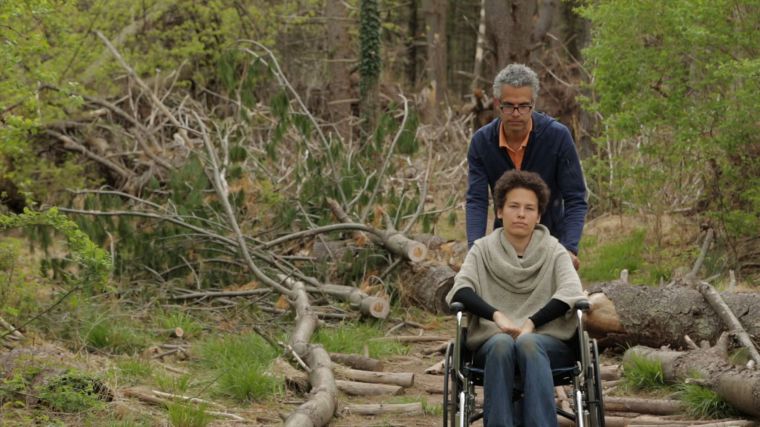
omar-jen-wheelchair-woodsShe is incredibly bright and beautiful, a graduate of Harvard who was about to complete her doctorate at Princeton. She was in love with a brilliant man and the two of them travelled the world together. They made plans to marry, have a family, build their stunning careers together, and then she caught the flu. It was a particularly harsh case with fevers of one hundred four degrees. When she was well once again she felt debilitated, but thought little of the residual effects. She had after all been very ill. She told herself that it would simply take time to regain her energy, but something was very wrong because instead of growing stronger she began to feel more and more weak. There were even times when her mind did not seem to work properly. She was unable to find the proper words to express herself. It was all so frightening.

Eventually her symptoms became so concerning that she sought the expertise of a medical doctor. He insinuated that it was all in her head, diagnosing her with what used to be known as hysteria. He suggested that she was reacting to some deep seated trauma that she most likely was unable to remember. He sent her home with no real explanation for what was happening, and she began to wonder if she was indeed going crazy. That’s when she got an idea.

The next time her symptoms became so severe that she literally collapsed in pain, unable to move or express herself, she asked her husband to film the incident. She took the video to a neurologist who was stunned by what he saw. He eventually told her that she had ME. Myalgic Encephalomyelitis, a strange disease that is thought to afflict ten to fifteen million people worldwide. There is no definitive test for the illness and no cure. The diagnosis is made based on symptoms alone which include excessive fatigue after mental or physical activity, intolerance to exercise, joint and/or muscle pain, memory problems, difficulty walking, sore throats, headaches, flu-like symptoms, sleep disturbance, bowel problems and mood swings.

The disease is also known as chronic fatigue syndrome and affects those who have it along a spectrum from individuals who endure a mild attack and then recover fully, to those who become completely homebound and bed ridden. There is no known cause but the disease appears to follow otherwise fairly typical and minor illnesses like the flu. Some believe that the roots of the problems lie in hormonal or allergy issues, but none of the research has proven any of the theories. It is a greatly misunderstood disease that sometimes results in psychiatric diagnoses rather than physical ones.

The woman whose life was so impacted by ME is Jennifer Brea, and she has a debilitating case of the disease that has radically altered the trajectory of her life. In a fashion keeping with her personality she decided to film her journey along with that of four other victims so that she might shed light on a mostly misunderstood illness. In conjunction with Sundance Films she created the documentary. Unrest, that chronicles her experiences as well those of the four others whose lives have been so radically changed after contracting ME. The film debuted on the PBS program Independent Lens this January and its power to visually explain what happens to those who have ME is emotionally visceral.

Jennifer Brea holds back nothing in her depiction of what ME has done to her and the relationship that she shares with her husband. She honestly expresses the fears and disappointments that plague her as much as the symptoms. She presents a compelling argument for more research by noting that those who are stricken often become like missing persons as they are forced to be hostages to their illness. She tells a compelling story of families broken apart and individuals losing their identities all while the rest of the world remains mostly ignorant of the horrors of this strange condition.

Her own story is one of the love that she and her husband share in spite of the problems that have so changed the way that they once thought they might live. She wants to be able to give him the kind of relationship that she had thought they would have, but instead is continually thwarted by recurrences of the most trying symptoms. Her husband has nobly stood by her, but even his patience is often tried by the confusing nature of his wife’s illness.

Ms. Brea shows a family in Sweden whose child was institutionalized in a psychiatric facility because doctors there were unwilling to accept a diagnosis of ME for her. Brea also introduces us to a woman who had been a happy wife and mother, one who had no idea that she would eventually be confined to bed with her own husband believing that she was just insane rather than physically ill. Her marriage deteriorated and she struggled to survive. When one of her daughters came down with the same disease her world unraveled even more.

The film is so personal, so real that those of us viewing the stories become involved with the characters, particularly Jennifer Brea herself. We watch her gaining strength and find ourselves hoping as much as she and her husband do that she will somehow miraculously improve. We cry with empathy as we become all too familiar with the struggles associated with ME.

Unrest is a touching and important documentary and quite worthy of the accolades that it has received. Hopefully it will also become the impetus for more research into the mysterious illness that it depicts with so much unflinching insight and compassion. At the present time very little is being done to learn how and why this illness affects certain people. There is only a smattering of interest in finding something that will cure those afflicted with its devastating symptoms. It is a grand mystery that shows no signs of being solved while real people suffer from the misunderstandings and lack of knowledge surrounding it. Hopefully Jennifer Brea has opened a door of awareness that will ultimately lead to the studies that will eradicate it or at least lead to more hopeful treatments. Perhaps just by spreading information about ME Unrest will at the very least bring more compassion to those who deal with its tragic effects.

Thinking Inside the Box

clichés-900x675“It’s such a cliche,” she says. “I am weary of platitudes,” he complains. “That comment was so trite,” they observe.

I often see such statements in the quibbling that arises in discussions involving politics or religion. The putdowns are intended to be an assessment of the quality of ideas rather than a sound rebuttal. There is more emotion than rational thought in such outbursts, more insult and arrogance than counterpoint. The use of snide commentary has become fashionable in the modern world of tweets and soundbites. The more outrageous the idea, the more memorable it becomes and so we eschew the old ways of using parables and fables and familiar sayings or themes to explain our human natures. Instead we search for originality and condemn the laziness of quoting ancient ideas.

The dictionary tells us that a cliche is a phrase or opinion that is overused and betrays a lack of original thought.

“the old cliché “one man’s meat is another man’s poison.””

synonyms:

platitude, hackneyed phrase, commonplacebanality, old saying, maximtruism, stock phrase, trite phrase; old chestnut

“a good speechwriter will steer clear of clichés”

As someone who strives to string words together in unique ways there is probably no greater disappointment than to be considered trite, and yet I know full well that much of what I communicate is as old as the dirt on the ground. There are few totally original ideas. The themes and phrases that we use tend to simply be variations on ways of expressing ourselves that were actually invented eons ago. Furthermore, there is a usefulness of maxims that rings true through the centuries and captures our imaginations even though we have heard them many times before. The best of the old sayings are powerful educational tools perhaps because they are so familiar.

Each day those who watch television find hundreds of possible viewing choices, many of which feature programming that is quite original, modern, even avant guard, and yet in the month of December it was the Hallmark Channel that achieved the highest ratings. This of course was due in the main because of the 24/7 airing of Christmas films most of whose plots were as easy to predict as the fairytales of our childhood. They featured characters who had become lost and eventually found, families that were united in love, communities where the spirit of the season was bright. The stories were predictable and filled with the commonplace, all of which viewers enjoyed with unadulterated delight. They provided an often wished for break from the anger and confusion of our present day situations, and the comfort of the familiar that is all too often missing in the angst driven programming that is the fare of more critically acclaimed features.

The fact that such mundane movies were so embraced should tell us that people are generally weary and prefer light hearted positive messages over the portrayal of the complexities of life that daunt us in the real world. The public is voting for a break from gritty depictions of trouble, and instead choosing hackneyed positivity because sometimes we simply need a time out and a return to the familiar.

Cliches have in fact served as potent truisms whether in the form of fables or films throughout history. They are teaching tools that help us to remember and reflect on important ideas. Just because they are so on target that they are often quoted does not make them useless, but rather timeless and memorable. They provide us with a compact way of expressing important thoughts when our own minds are unable to create new phrases. There is a usefulness in them that we should not eschew simply because they are old and well known, or because they express ideas with which we do not agree.

There are indeed times when we find ourselves at a loss for words. When we hear of a mother who has lost a child or a spouse whose mate is dying, we often find it difficult to know what to say. We turn to the old masters who somehow found the brilliance to create comforting phrases that have a universal appeal throughout the ages. To argue that they make a comment moot simply because they have been used before is a kind of cliche in and of itself. It is a smug put down without really addressing the actual situation. The person who does such a thing may feel superior, but is in reality showing little original thought. An insult is rarely an effective argument as we see all too often in social networking.

There is a disconcerting haughtiness in the insinuations of those who mock the use of time honored phrases that is frankly disturbing to me. It is as disquieting as suggesting that one way of living is superior to another. In reality the abundance of variety speaks to the human need to be free to choose, a reality that we should respect rather than mock.

I would so love to see 2018 become the year of understanding and acceptance. It would be grand if we were somehow able to put an end to so much division and unwillingness to allow everyone to live and let live, and we might start by listening to the intended meaning of what people say rather than parsing their words for significances that are more in our minds than theirs. Our constant critiquing and arguing has become so loathsome that we find ourselves wanting to tune out and tune in to make believe worlds where everything comes out well in the end. We prefer staying inside the security of the box to venturing into unknown thoughts.

The truth is that if we worked just a bit harder to be open to differences of opinions and ideas we might indeed find closer approximations of the happy endings portrayed on those Hallmark movies. The platitudes that our mothers and fathers and teachers taught us were not meant to be nags, but guidelines for living more fully. There was a reason why they became so popular that everyone was repeating them, and they may in fact provide us with ways of better enjoying our human experience. Let’s not be so quick to dismiss them or the individuals who remind us of their power. We needn’t snicker with superiority. We all have much to learn.    

Yesterday Today and Tomorrow

default-1464355425-834-scientists-believe-they-have-explained-the-great-flu-outbreak-of-1918A hundred years ago in the fall of 1918, there were many who seriously wondered if the world was coming to an end.  A great war was still raging in Europe and decimating the young male population. Across the globe there was unrest and a general feeling that life would never be quite the same again. The worst surprise of that autumn was to come in the form of a tiny virus not yet visible to the human eye with the microscopes of the day. It would lead to an outbreak of influenza that eventually killed as many as five million people worldwide and hundreds of thousands in the United States. One sneeze from an infected person had the potential to infect ten thousand, and for a time nobody knew what to do.

It appears to have begun at a military base in Kansas where it was first thought to be little more than the typical seasonal outbreak of illness. It soon became apparent that the new strain was unlike anything doctors and biologists had ever before seen. It started with coughing and a fever that quickly grew ever more severe. It filled the lungs of the ill with so much fluid that they literally drowned. Before long there were not enough beds or doctors for the affected, and not enough coffins for those who died. During the months of September and October of that year the disease spread like wildfire, sparking dire accusations that the Germans had somehow planted germs in the bodies of soldiers fighting in the trenches. The fact that German troops were just as susceptible to the sickness did not allay the fears of those who were losing loved ones and friends so rapidly that it felt as though there was nothing that was going to stop the rampage of death.

More American citizens died during those weeks than in all of the wars of the twentieth century, and yet there was no cure, no idea of what the cause might be. For some reason the virus was more likely to spare the very young and old, but was most deadly for strong and healthy adults in their twenties and thirties. It would be years later before researchers found the virus that had wreaked such havoc on the population, and began to understand that the sickness had burned itself out when those who survived became immune without any form of medical assistance. Our understanding of such diseases grew over time, but always there continues to be a silent fear that something similar may one day return to infect humanity like a plague.

I had never heard about the horrific influenza of 1918, until I read a book shared by my daughter. She is a nurse and science teacher who has a great deal of interest in such things, and she thought that I might find the topic interesting as well. I was stunned to learn about the horrific events and to realize that none of the older people I had known who would have been young adults during that period had ever mentioned the event. I was particularly surprised that my grandfather who was well known for his vivid stories of the past had not brought up the topic. Since I was unaware of that part of history I had not known to quiz him about what he remembered regarding that sad chapter, and so I was not privy to his eye witness account.

Historians conjecture that this particular episode must have been so personally horrific that those who had endured it did not want to speak of it again. Perhaps it was the impetus for the roaring liveliness of the twenties when people appeared to throw all caution to the wind. Living through such tragedy must have caused people to view the world much differently than they otherwise might have. Most certainly they would have wanted to blunt the memories that must have been quite horrific. When the next decade of frivolity was followed by a worldwide depression and eventually another war, the personal stories of illness and death might have seemed trivial to them by comparison. In truth, they would have been right to wonder if the bad news would ever stop, and when it finally did they most probably decided never to speak of it again.

My father-in-law served in Korea during the war there. He has only mentioned what he saw there once in all of the years that I have known him. His eyes filled with tears as he recounted his experience and his voice was shaky. It was much too painful a memory for him to think about for very long. I have noticed that my uncles who fought during World War II were just as reluctant to share stories of their adventures as were my peers who fought in Vietnam. I suppose that there are events that are so horrible that we prefer to bury the thoughts of them deep within our psyches. It is simply too much to dwell on them for very long. 

I suspect that those who were witness to the 1918 influenza epidemic simply did not want to speak of the unspeakable. They lost loved ones and friends in a matter of days and weeks. They worried that the horror might return at any moment. To dwell on their heartbreak and fears would have been unbearable and so they did not include mention of the outbreak in their tales of living. The story languished until curious souls began to ferret out the details and bring them to light once again. What is a curiosity for those of us removed by a hundred years was all too real for those who were there when it happened.

Each generation has its share of tragedy. For those of us who grew up just after World War II the events etched permanently inside our brains include the good, the bad and the ugly. We recall with clarity exactly where we were when John F. Kennedy was assassinated. It pains us to think of the deaths of Martin Luther King, Jr. and Robert Kennedy that made is wonder if anarchy was going to rule the day. Many of have personal tragedies that affected us as well, the death of a father or hearing that a friend was killed in Vietnam. We smile when when we think of the first man to walk on the moon, and recoil at the vision of the twin towers in New York City falling like toy constructions before our eyes. These things affect us and change us and our ways of viewing the world, but we don’t often speak of them because the thoughts associated with them are too powerful and emotional. I suppose that the reality is that no matter how conversant we are there are no words sufficient to describe such things, and so we are silent just as my grandparents were about so much of the history that affected them.

Today we have new worries, but mostly go about our business hoping and praying that none of our biggest concerns will ever take place. Our natures compel us to be optimistic and to carry on even when situations seem dire. Like Scarlett O’Hara we believe that tomorrow will be a better day and we concentrate our thinking on the future rather than the past and the present. It’s how we survive. Still, there is something so fascinating about events like the influenza epidemic of 1918, that we can’t avert our gaze. We have to look if only for a moment so that we might remember that we are not immune to the same kinds of heartbreaking situations that plagued our ancestors. We are as human as they were, and we can only hope that when faced with tragedy we will respond well and not be judged too harshly for any mistakes that we make.

It’s all too easy to form opinions of what might have or should have happened. but we will never know what we might actually have done if we had faced similar hardships. It must have been a dark time, but somehow those who came before us found a way to keep moving forward without focusing too much on a past that they could not change. Perhaps we might learn from them and embrace each new day as an opportunity rather than dwelling on the heartache of the past. Yesterday is gone, today is an opportunity, and tomorrow allows us to repair any mistakes we have made. It’s the cycle that keeps the story of humanity alive.