Anyone Can Do It!

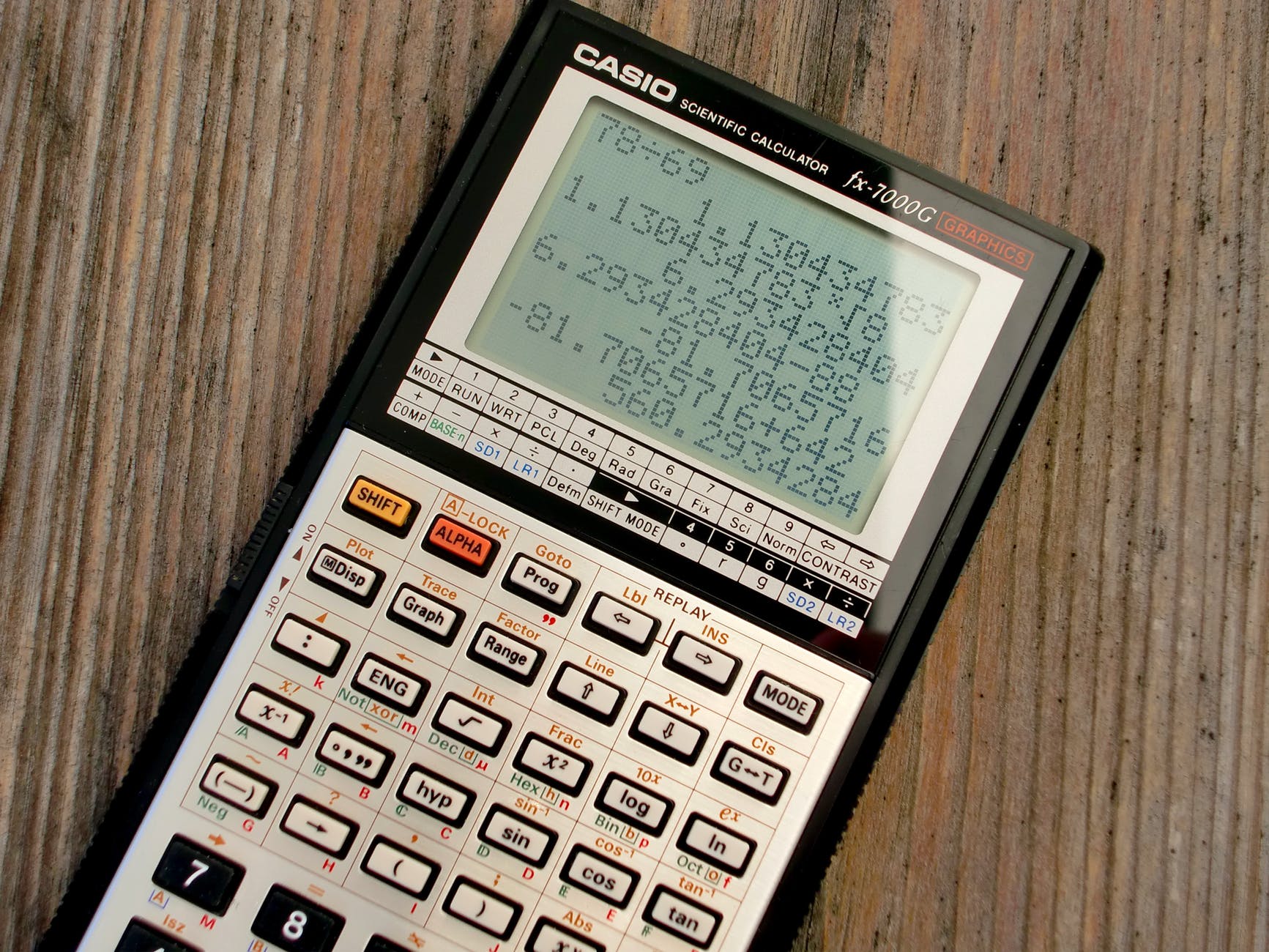
black and grey casio scientific calculator showing formula
Photo by Pixabay on Pexels.com

In all of my years of teaching mathematics the refrain that heard most often was, “I’m no good at math.” My job became to convince my students that anybody has the ability to learn the algorithms and fundamentals of math given a willingness to invest time and effort.

We all know someone who has a natural ability with all things mathematical. In my own case it wasn’t me. It was my brother. I had to go home from school each evening with my math book and my notes and work through problems until a light bulb lit up inside my brain. Sometimes that took just a few minutes and other times it took a couple of hours, but in the end I mastered one concept after another.

Most of my students have insisted that it is impossible to study for a math test. They are accustomed to memorizing facts for their liberal arts classes and they tell me that one will never know what problems will be on the quiz. Therefore they assume that working sample problems is fruitless, but I insist that it really helps. Just as doing reps in the various sports generally brings about improvement in muscle memory, so too does practicing mathematical ideas help imprint problem solving methods on the mind.

It took me several years before I understood the value of homework in math. I used to grudgingly do the problems as quickly as possible and I was unwilling to ask questions about things that I did not comprehend lest I be regarded as being not so bright. I was literally in college before I understood the value of asking my professors for help. I not only became more enlightened, but I also became known by them which was a big plus in my large university. I encourage anyone who is struggling with anything, particularly mathematics, to take full advantage of tutoring opportunities with teachers. It is one of the keys to mastering skills that may at first seem far too difficult.

I like to think that my own struggles with mathematics in my early years led me to being a better and more understanding teacher. I know how it feels to read a word problem and draw a complete blank. I recall tearful sessions with my mother after school when I would insist that I was never going to be good at solving problems. She taught me how to first work with the words, taking them apart enough to discover what I was being asked, and then applying the knowledge that I had learned. With pictures, highlighters and diagrams I now find that I am able to tackle any challenge, but it wasn’t so until I followed my mom’s advice.

I have a granddaughter who used to think of herself as being a bit slow on the uptake when it came to math. It bothered her that her brother never seems to have a problem to immediately understand even the most difficult concepts. She and I talked for a long while about my own struggles when I was her age, and she took my advice regarding the value of hard work in mastering her math lessons. Last year she was anxious about the end of course Algebra I exam that she would have to take. She spent hours studying definitions, processes and different types of problems. Whenever she came up with an incorrect answer she found out why and then worked dozens more until she was consistently getting the correct answers. In the end she received one of the highest scores in her class, but more importantly she learned that it is not only possible to study mathematics, but preferable indeed.

Confidence is usually the element that is missing whenever a student who is bright in every other way does poorly in math. At some point in time he/she has become convinced that it is useless to even try. Such students truly believe that they are missing some gene that would allow them to do better. They take tests feeling defeated before they have even lifted their pencils. It’s up to their parents and teachers to help them to find the good feelings that they need to do well with mathematics, and to show them how to work hard to get there. That means eschewing a temptation to tell the young ones that they come by their dread of mathematics naturally because difficulty with math runs in the family. There is little worse than instilling such fear.

We have to be certain not to create self fulfilling prophecies in our young. It is possible to master mathematics slowly but surely and often with a great deal of work. It is no different than practicing a butterfly stroke or learning a new techniques for drawing. It takes patience and determination in some cases, but it can be done. I have watched hundreds of my students become adept in a subject that had previously been terrifying for them. My job was not to trick them, but to show them the way.

The best mathematics teachers that I have known all rejoice when someone who has struggled finds the light. There is no better feeling. If I were able to accomplish one thing in my lifetime it would be to replace comments like “This is too hard. I can’t do it. I’ve always been terrible in math.” with ideas that speak to the value of practice, asking questions and being positive. One day I hope to hear more of “I don’t get it now, but I know I will. I know that anyone can do it.”   

My Horn of Plenty

abundance agriculture bananas batch
Photo by Pixabay on Pexels.com

I knew a man who had suffered greatly during the Great Depression. He and his family oftentimes went hungry and their mealtime staple was usually a pot of beans. When he finally made it into the middle class as an adult he refused to have beans at his table, not even red beans, although he was a bonafide Cajun.

My mother sometimes struggled to put food on the table, but she liked to brag that in spite of our meager budget we never once missed a meal. She was incredibly creative when it came to stretching the offerings in the pantry. She was such a good cook that we rarely noticed that we were sometimes nearing the end of our stores. Only once in a great while would the refrigerator be almost empty, and the cupboards be bare. Even then Mama used her ingenuity to whip up what felt like a feast. She told us that she had learned from her mother who fed a family of ten during the great depression. She told us the story of how our grandmother would cook a whole fish with head still attached. After everyone had taken their share Grandma would eat the head. Mama laughed and said the her mom was actually getting the part with the most vitamins.

I was a skinny girl who barely weighed eighty eight pounds on my wedding day. Food didn’t really matter that much to me. I rarely ate breakfast which was no doubt a bad thing, but I never really missed it. I took a sack lunch to school and it usually consisted of either a bologna sandwich on white bread or a fried egg sandwich. The egg was the more delicious of the two, but it embarrassed me to open the wax paper and let the aroma of cold egg waft across the cafeteria. Someone invariably made a comment, and I quietly did my best to disavow the idea that it was all that we had for that day.

It was supper time when my mother became like the Julia Childs of the low economic set. She was literally able to make hot dogs into a gourmet dish, often making up recipes to use the ingredients that she had on hand. After my Grandmother Little she was the best cook that I have ever known.

I suppose that I was much more affected by the scarcity of food in our home than I ever dreamed because I eventually developed a kind of fetish for fresh fruits and vegetables as well as lean cuts of meat. I like to have my larders well stocked at all times, and I get a bit nervous when they are not. I’m not much for purchasing junk food because that was never something that we kept around my childhood home. Instead I take great joy in visiting a farmer’s market or a really good produce department. I become like a kid in a candy store in such places. In fact, I actually enjoy going to such venues for fun. I suppose that if I am honest I must admit to carrying a hidden fear that the food will one day run out.

Nothing pulls at my heart strings more than seeing photos of starving children in distant lands. My mama used to caution us not to waste food, reminding us that children in some places would be more than happy to have the plenty that she put on our table. My brothers sometimes joked when she was not around that it wasn’t as though we could put our waste in a little box and send it somewhere that it would be appreciated. Of course, that was before we grew up and realized that even though we lived on the edge, we still had more than millions of souls whose misfortunes made ours seem like nothing.

I worked as a volunteer at the Houston Food Bank a number of times. Some of the students that I have taken with me ironically had used the services on a regular basis. It was humbling to realize that even within my own city there are families struggling to get the proper nourishment. I’ve often thought of my own mother and her incredible knowledge of ways to create a healthy diet on a very small income. We may have eaten beans and greens, but she understood the value that they gave to our diet, and cooked them so that they were also delicious. A problem that far too many people have, is a lack of understanding of how to feed themselves and their loved ones with only a small number of ingredients.

I have a good friend who is much like my mom. She uses every part of every kind of food that she purchases. She boils the tops of beets and the peelings from potatoes and all the rest of the seemingly unusable parts of vegetables to make broth that is filled with vitamins and flavor. She purchases big bags of overripe bananas that are practically being given away and freezes them for the smoothies that she makes her husband each morning. Whenever I’m looking for a good way to use food to its utmost she provides me with dozens of ideas. She even knows how to make her own chocolate and has devised a method for making ice cream that doesn’t even require a machine.

I used to shudder whenever I had cafeteria duty in the schools where I worked as I watched the garbage cans filling with perfectly good items that the children simply did not want to eat. I thought of those babies with bloated bellies and wondered if they would have been more than happy to munch on the food that would end up in a landfill. I found myself understanding what my mother had been thinking when she told me and my brothers not to take what we did not think we could eat. 

Food is one of our most basic needs. It is also a way to celebrate and gather with friends and family. We humans have turned eating into an art form. It is one of life’s great joys, and as I grow older it has also become a source of contentment for me to choose a juicy red tomato or find a display of perfectly formed apples. As I store away the meats, fruits, vegetables and grains I feel so thankful. Now when I make an egg sandwich for myself I see it as a great gift. The horn of plenty that is my refrigerator and pantry makes me feel quite thankful, particularly for having a mother who so quietly and courageously fed me an my brothers with no complaint and great joy. She taught me to have an appreciation for whatever I have and to never forget those who have so much less.

I Found My Purpose

42678886_10217646777023389_6852434799655649280_nI recently had dinner with a group of former students and a teaching colleague. It was incredibly rewarding to see how well the young ladies who were once my pupils have done. One of them, Jennifer, is a teacher who recently earned an advanced degree in educational leadership. Another, Christine, works in the development department of the KIPP Charter Schools and she was recently rewarded with a promotion. The third, Joana, is working on a post graduate degree in Social Work. All three are articulate, hard working and filled with compassion. They have literally become more like peers than pupils. Our gathering was like a reunion of old friends and it was quite exciting to hear their stories of life and work.
While its tempting to take some credit for how well they have turned out, I know that they are fully responsible for their amazing accomplishments that came only with extraordinary dedication and much sacrifice. Talking with them tells me that they continue to work toward exciting goals and that they have fully become exemplary adults of whom I am so very proud.

I also learned at this meeting that my friend, Ann, is still working to educate high school students. She’s a phenomenal educator whose expertise has helped to launch the careers of a host of exceptional people. It’s reassuring to know that someone like her is still out there making a difference in people’s lives. That’s perhaps the most important aspect of being an educator and she is among the best.

There are times when I forget the real rewards of being a teacher. We rarely get paid as much as we should, and our retirement programs are far from being sufficient. I would have done far better financially if I’d had a pathway in business or even if I’d worked for the federal government which offers some of the best pension plans that there are. If I’d held office in Congress for even one term I’d be set for life. With all that said, when I talk with the individuals that I once taught and realize how remarkable they are, I know in my heart that I was actually blessed by being a teacher. There are very few professions that provide such satisfaction.

The frustrations of teachers are legend, but in the cacophony of complaining we sometimes forget to boast of the wonders of being an educator. Much like being a parent we can get caught up in the day to day routines and problems that sometime blind us from seeing the pure joys. It takes a bit of stepping back to gain the perspective that reveals our sense of purpose and meaning.

I know that I did not reach every heart and mind that I attempted to touch. There are probably even those who disliked me for one reason or another. As with anything I have fans and I have detractors, but on the whole I believe that I made some kind of difference in making this world of ours a bit better place to be. The value of that is priceless to me, and I would not be willing to give up even one day of my many years as a teacher for monetary profit.

Each kind of job and each person has value for our society. We really do need everyone and to rank the importance of work would be silly, but an argument might be made that teachers make it possible for the remarkable diversity of skills and talents that bring progress and innovation into our lives. We build the foundations from which all else springs. It is a breathtaking responsibility to consider.

I worry that we are somehow diminishing the importance of teaching these days. All too often I hear people arguing that they would never encourage a bright young individual to participate in such a terrible profession. I hear parents shudder when one of their children expresses an interest in being an educator. They worry that talents will be wasted in a job that lacks respect and a salary commensurate with intellect. They attempt to steer their sons and daughters into more prosperous and promising professions.

It saddens me that I so often find myself defending the occupation to which I devoted so much of my life. I am questioned as to why I didn’t pursue more stimulating and lucrative fields. I sense that some see my choice as a kind of failure to use my talents to their fullest.

Then I go out to dinner with a colleague and three phenomenal young women whom I once taught and I remember again how glorious it felt to go to work each and every day. I know in my heart that mine was a true vocation and that those of us lucky enough to find our true reason for  existence have something that no amount of money or even regard will ever buy. I am and always will be a teacher. I bear that designation proudly and without regret. 

In Search of a Better Way

We were racing to an appointment in a driving rain when we spotted him standing by the side of the road. He was one of the far too many souls who spend their days hoping to get donations from passersby. Most of them appear to be mentally ill, alcoholic or strung out on drugs, but he was different. He was young and appeared to be healthy save for the stub that had once been his right arm. It dangled just above the place where his elbow had been. In the brief moment of our passing I wondered what horrific event had left him in this state. Was he a veteran who had been injured in the war? Had a terrible accident of some kind left him this way? Did he have diabetes?

I would never know the story behind this man, but I would find myself thinking about him long after seeing him. I was saddened that we had not had to opportunity to stop and give him a donation. I wondered why he had not been better rehabilitated so that he might find more meaningful work than begging on the street. I thought of the person he was before this happened to him. It seemed quite sad that his life was not better and I wondered why.

In cities all over the world there are souls whose lives have been utterly changed by injuries, addictions and mental illnesses. They sometimes wander aimlessly among us and we often want to look away when we see them. We never know quite what to do to help them. We worry that just handing them money will only insure that their problems will never be fully addressed. We wonder if it is right or wrong to give them a handout. We think that doing so might only feed their addictions or insure that they will remain on the streets. Surely, we think there must be something positive that we might do to help. They haunt us because they seem so very lost, and yet we know that they are sons, daughters, perhaps even mothers or fathers.

Whenever my mom became exceedingly ill with the symptoms of her bipolar disorder my brothers and I always worried about what might happen to her if she were freely driving around. She had been in minor wrecks before. She often became confused and lost. At stores she behaved suspiciously because of her paranoia. She even became so rattled that she forgot that she was holding an item for which she had not paid. We were happiest when she no longer had access to a car, but even then she would ask neighbors to take her places or she would call cabs. On many occasions she became so disoriented inside places of business that people became afraid of her. Luckily they always chose to help her rather than calling the police. They found the phone numbers of me and my brothers and called us to come retrieve her. Still, we were concerned that one day we would not be so fortunate. We imagined her getting lost in a system that actually protected her from our intrusions. We wondered if the time would come when we might find her wandering along the streets.

After one of her most terrible bouts of paranoia she was hospitalized, and our contact with her only came with her permission. She was still in a fragile state when the doctor who was treating her decided to release her without informing me and my brothers. When we asked how she would have gotten home, we were told that the facility would have called a cab. Little did they realize that her home was in a terrible state, without water or gas because she had asked to have those services turned off. There was no food in the house and no way for her to drive to get some. Furthermore, she had no medication. Had we not accidentally found out about her impending move back home, she might have been caught up in a very unsafe situation, and who knows what might have happened. I suspect that many mentally ill individuals end up in homeless camps because of just such an event.

We really need to do a better job of helping the homeless. There are many kind and loving individuals who make it their business to offer aide. Sadly, there are also laws prohibiting how much they can do. For example, in my city providing food is against the rules and carries stiff fines when someone is caught doing so.

We have shelters and places that they might go, but so many of them are not of sound mind and they are frightened by the regulations of such places. They prefer to be free regardless of how dangerous it is to be so. What we can do for them is limited by frustrating laws.

I see the homeless and I feel so powerless. I have to even admit that some of them frighten me because their minds are so muddled. I want to help more but have little idea what to do. It is frustrating and yet I am certain that theirs should be an important cause but we all too often ignore their plight.

Instead of arguing about silly things like whether or not an athlete should take a knee we would do well to ask ourselves what we might do for the individuals among us who have somehow become so lost that they must live under bridges and beg us for enough to make it from one day to the next. Surely there is a better way for them. It’s time we get serious about finding it.

My Hybrid Feminism

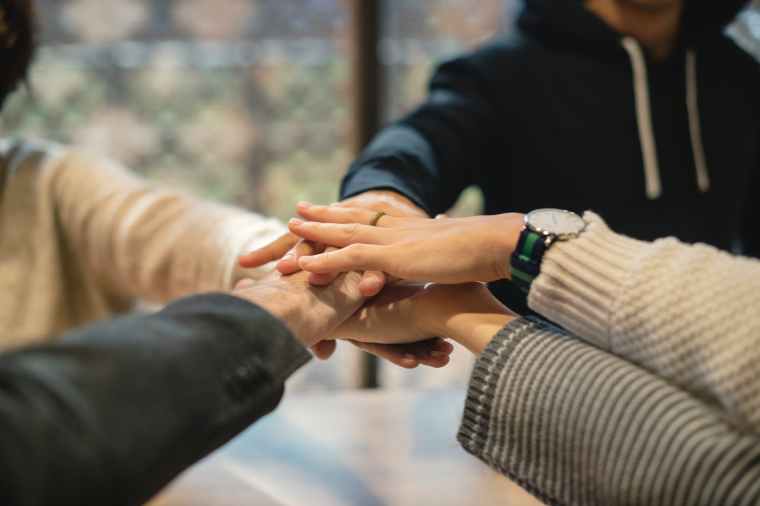
shallow focus photography of five people holding each other hands
Photo by rawpixel.com on Pexels.com

If there is one thing of which I am certain it is that politics have become toxic, and there is no such thing in most cases of a rational conversation about beliefs. While there are multiple points of few, most of them are immoveable. The idea of possibly changing someone’s way of thinking is ridiculous for the most part, and yet so many continue to try. Their posts and rants litter the commentaries of social media essentially for naught other than allowing the world to see where they stand. Those who agree with them rally in support and those who are at odds often condemn them for their ignorance and even ugliness. For those of us caught in the middle it can become a kind of irrational nightmare as we too struggle to enforce a bit of diplomacy which never quite gains traction. Instead we are accused of being without moral compass, cafeteria citizens who pick and choose what we support. We independents are seen as the worst form of persons because we don’t appear to be guided by a philosophy that might describe from whence we form our opinions.

I’m a combination of many different political persuasions. As a woman I am a hybrid feminist, part progressive and part conservative. I grew up in a world when most women stayed home to care for their families. My mother was somewhat unique in our neighborhood in being a single parent due to our father’s death. She was the child of a woman who was unable to either read or write. Mama’s high school diploma was considered a great achievement, and she might have been content with stopping her education there had she not suddenly found herself responsible for supporting a family. She worked hard to hold down a job and earn a college degree, but at the same time she urged me to always put my husband and children first because she believed that nothing was more important.

I grew up surrounded by friends with large families because birth control was still somewhat unreliable. My mother cautioned me to be “ladylike” and to save myself for someone who loved and cherished me. While she emphasized the power of education and urged me to go to college, she also maintained that all of that was secondary to building a strong foundation for the family that I would one day have. Once I was married, she urged me to be respectful of my husband, and sometimes criticized the amount of time that I spent on my job when I would become involved in projects that kept me away from my family far into the night.

I rallied around the feminist movements of the sixties and seventies. I planned my family by carefully using birth control. I earned two degrees and moved up the ranks in my profession. All the while my always enlightened husband supported every single idea that I had for living my life both in conjunction with his, and independently at times. I fulfilled my own wishes while also somehow balancing the many duties of family life. To this day, my husband and I see each other as equal partners, and we confer with one another in all of our decisions. He is as proud of my accomplishments as I am of his. As a woman I have enjoyed the freedom to be the person that I want to be.

Sadly, for the most progressive women, my brand of feminism is not enough to satisfy them. When I note that I struggle with the concept of abortion because in my heart I believe that it is a form of murder, they maintain that I am ignorant and that I obviously don’t care about the plight of women. When I mention that I did not work full time during my daughters’ early years so that I might build a strong foundation for them, I am told that my thinking is old fashioned and quaint. If I suggest that all women should allow each other to form their own opinions, I hear that there is only one way on  “ the right side of history.” If I complain that the rhetoric about men is often too generalized and damning, I am met with derision and disbelief. I am often made to feel that I am not a feminist at all, but an ancient throw back to a time when women were degraded and made to be prisoners of a male dominated society.

I’m not an angry woman. Perhaps I have been lucky in my interactions with men and the world of work. I have found boorish “male chauvinist pigs” to be the exception rather than the rule. I have been supported again and again by amazing people both male and female. I have enjoyed a freedom of mind and action that might have amazed my female ancestors. I don’t want to have to walk in tandem or be dominated by any form of group think. I take each issue individually and after study and contemplation form my own personal opinions. I firmly believe that this is the way feminism is supposed to be. I support my sisters by allowing them to think however they wish, but ask them to respect my philosophies as well. We need not argue because I know that we react to the world based on a lifetime of experiences. We form our conclusions depending on who we are and who we have been.

I suppose that many women are still trying to determine what their places in society should be. To attempt to create a one size fits all way of doing things is ridiculous. Neither do we need to destroy the men who live beside us with insults and slurs that demean them. Ours is not so much a fight as a process of discovery. Each girl child should be encouraged to approach life in a way that feels right. She should understand that men need not be her enemies. There is good and there is bad in both sexes. We must teach our daughters and granddaughters how to discern who is who, and that it is always okay to have personal beliefs and preferences, even when they diverge.

I like being a hybrid. I like being independent. I have had a very happy experience as a woman because the people closest to me have allowed me to be the person that I choose to be. In turn I hope to always honor the choices that my “sisters” decide are best for them. True feminism demands that we understand that there is no one pathway, and our quest is doomed if we demand that it be so. Our journey has to include a wide range of views and the other half of the human race known as men. Our power will come only when we see ourselves as individuals with all of the rights that such and idea implies.