It’s Nice to Remember

El PatioLike many big cities much has changed in Houston since I left my childhood home fifty years ago. My family moved a time or two until my father died and then we stayed in one place until my brothers and I were grown and finally gone.

The first place I remember was on Kingsbury Street just a few houses from South Park Blvd. which is now known as Martin Luther King Boulevard. Ours was a quiet and modern neighborhood that echoed the growth of Houston and other American cities after World War II. Our neighbors were young like my parents save for a couple of older folks here and there. There were a slew of kids with whom I played, and we were free to roam around all by ourselves even though some of us were not yet old enough to attend school.

The area began with little more than our subdivision and a U Totem convenience store where a man named Shorty regaled all of us with his humor and friendliness. Eventually one of the first ever shopping centers, Palm Center, was built just within walking distance of our house. It was like a wonder of the world to us and we spent many an hour wandering through the stores or just walking around gazing into the shop windows.

My father was doing well with his engineering career and he grew weary of driving a rather long distance to his job near the refineries along the Houston Ship Channel. His coworkers told him about a brand new area just a bit farther into the suburbs that was booming with progress and attracting great schools and a quieter form of life. Best of all it was only about ten minutes away from the plant where he worked.

Before long we were moving into Overbrook and an all brick home that my father and a builder had custom designed. Our place on Northdale sat close to a wooded area along Sims Bayou clustered among homes so new that they still smelled of fresh paint and just sawed wood. I was sad to leave behind my friends on Kingsbury Street but in no time I was riding my bicycle through the streets and playing with other children who would literally become friends for life. Ours was a kind of kid heaven that seemingly had no restrictions as we explored the Bayou and trudged through the woods.

The neighborhood was filled with young families just like mine and every house was teeming with life and possibilities. A bridge linked Overbrook with Garden Villas, an older area with huge lots and pecan trees around homes many of which had been built in the 1930s. Together the children from each subdivision filled the schools and sent up the joyful sounds of playtime that echoed happily into the open windows of homes not yet fitted with air conditioning.

My father was as changing as the city of Houston itself and before long we were following him to California and even bigger dreams. For reasons that I will never know things didn’t work out for him and within months we were back in Houston again looking at even newer and bigger properties. His untimely death changed all of our family plans, and my mother decided to move us back to Overbrook for the sake of continuity. There we would be able to reunite with friends and make new ones on Belmark Street.

Ours was a very happy place to be back in the nineteen fifties and sixties. We had little need to venture far from the confines of our neighborhood. All of the conveniences we needed were close. Eating out was still a kind of luxury, and even when we splurged now and again we had local favorites that we visited. Our mother took us to the Piccadilly Cafeteria at the city’s newest shopping mall, Gulfgate, where we were admonished to only order one meat and two vegetables or one meat, one vegetable and dessert. We usually chose the later.

I suppose our favorite place was El Patio Mexican Restaurant on Telephone Road. As kids we thought that their dishes were gourmet delights, especially the cheesy enchiladas. Since our mom was devoted to cooking healthy food for us, getting to deviate from vegetables was a treat.

I suppose that if I had to pick one food that I would be willing to eat over and over again it would be a hamburger, and back then I thought that the very best came from Chuc Wagun. There was no indoor dining there. Instead a clerk and a cook worked inside a tiny building designed to look like a covered wagon. The beefy guy who made the delightful sandwiches was gruff and married to his work. He grilled beef patties by the hundreds and chopped his onions and tomatoes like a Ninja warrior. The resulting burgers were pure heaven.

We bought all of our cakes at the Kolache Shoppe on Telephone Road. My mom loved the lemon ones and even years after we had all moved I would sometimes return to that spot to get her one for her birthday. The kolaches were rather good as well.

My brothers and I spent many a Saturday morning at the Fun Club inside the Santa Rosa movie theater. Our mom would drop us off with a quarter each which was enough to purchase a ticket and a candy sucker that lasted for the duration of the double features. The event included games with great prizes and films suitable for kids. It was a wonderland for us and a great break for our parents.

Most of the places that were so delightful back then are either gone or very different from what they once were. The neighborhood itself has a worn look and nobody would dare allow their children to roam freely anymore. It would be considered too dangerous. The Disney like atmosphere that defined my youth is now just another memory from my past. When I take my grandchildren to see the places where I played and grew, they have little understanding of the lifestyle that I describe. Theirs has been a more structured way of doing things, a routine of play dates and adult monitored activities. I suppose that my stories of southeast Houston don’t ring true to them as they see fifty years of change that have transformed the places where I lived.

My friends and I all agree that ours was a glorious time to be young. We were innocent and unafraid as we roamed together finding adventure. By the time we were young adults we learned about hardships and injustices that were unfamiliar to us. We revolted as a group against the signs of racism and unfairness that we finally saw. Our city grew i and grew and grew in the name of progress consuming much of what we had experienced in our youth. Now and again we like to look back to a time when we didn’t have a care in the world. Its nice to remember.
I Needed This Reminder

MLK_500x500

One of the best aspects of being retired is that I now have time to ponder more than I did when work required me to adhere to a strict schedule. I am able to read more and even to indulge in moments of sitting in silence with my thoughts for long stretches of time. I still serve my many grandchildren with my educational expertise whenever they require a bit of guidance or encouragement with their studies. Each summer I read the same books that they are assigned for their pre-advanced placement and advanced placement classes, so that I might help them to analyze and discuss the works when they return to school in August.

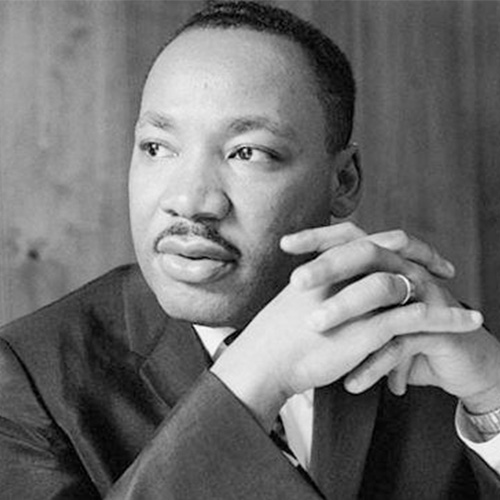
One of my grandsons is reading Martin Luther King Jr. I Have A Dream: Writings & Speeches That Changed the World edited by James M. Washington. When my daughter requested that I familiarize myself with the text so that my grandson and I might talk about its implications I was more than eager to delve into the heart of the essays. I have long considered Dr. King to be one of the greatest orators and most influential leaders of the twentieth century and indeed the entirety of history. He is a hero of mine, one of the people I would love to meet when I eventually make it to heaven.

I grew up in the era during which Martin Luther King Jr. did his incredible work. In the year I was born Dr. King was ordained a minister following in the footsteps of both his father and grandfather. He had been a child during the Great Depression, growing up in Atlanta, Georgia when segregation was still very much a fact of life for blacks just as it still was for most of my own youth. In 1954, when the Supreme Court ruled in Brown v. Board of Education that racial segregation was unconstitutional Dr. King was the pastor of the Dexter Avenue Church in Montgomery, Alabama and I was about to head to the first grade.

A year later, in 1955, Rosa Parks famously refused to surrender her seat on a Montgomery bus to a white man, an act for which she was arrested. Her brave action led to a boycott and Martin Luther King Jr. was elected president and voice of the efforts to integrate the buses in Montgomery. By then I was joining droves of Baby Boomer children in second grade classrooms that were still mostly segregated in spite of the earlier Supreme Court ruling. I would overhear rumblings of discussions from my father and grandfather who believed in those days that children should be sent from the room when politics were the subject of conversations. I was a nosy child who would hide behind a wall listening to their voices as they spoke of the coming changes.

In 1957, President Eisenhower federalized the Arkansas National Guard to allow nine black children to enter a previously all white school in Little Rock. I did not watch or witness the historic moment on television back then, but I vividly recall the many times that my dad and granddad talked about it when we visited my grandparents’ farm in Arkansas. That year Martin Luther King Jr. was elected as president of the Southern Christian Leadership Conference and  the reach of his crusade for justice widened. I would enter the third grade at the same time that those little children so bravely struck a blow for freedom in Arkansas. I was not totally unaware of the importance of that school year in the struggle to end segregation but I would not be affected by it in the little bubble that was my neighborhood.

The work to break the hold of Jim Crow laws and segregational policies continued throughout my elementary and middle school years. By the time I entered high school the Civil Rights movement was in full force and Dr. King had become one of its most admired voices. The concept of non-violent passive resistance was being used to integrate restaurants and universities and to expand the voting power of black citizens. Just before I entered my second year of high school the famous march on Washington D.C. captured my attention and I listened to Martin Luther King’s I Have a Dream speech with rapt admiration. I was hooked by its message and forevermore there would be no turning back to the ugliness and injustice of segregation for me. I was a devoted disciple of Dr. King and would hang on his every word and action. His influence over me would be enormous.

Just before I entered my senior year of high school President Lyndon Johnson signed the 1965 Voting Rights Act. Sadly the arc of justice was still far from complete. In college I would become more and more passionate about causes of equality and fairness. My generation was literally taking to the streets to protest all signs of legally condoned injustice. The laws of separate but equal were no more, but the seeds of racism still grew like weeds and I was eager to pluck them wherever they grew.

In the spring of 1968, I was planning my wedding when I heard the news that Martin Luther King Jr. had been assassinated in Memphis, Tennessee. I had been washing dishes when the word came and I remember slumping onto the floor in front of the sink where I sobbed uncontrollably. I was devastated beyond words and wondered how our country would be without the conscience and profound thoughts of this great man. His insights stay with me and guide me for the next fifty years of my life.

I am a seventy year old woman now. Martin Luther King Jr.’s words and influence have been a defining force for me even to this day. Reading his speeches and essays once again has brought me to tears and helped me to consider both the progress and the difficulties that remain in the long fight for justice. We have yet to achieve his dream, and of late we seem even to have slid back into a kind of ugliness that he had hoped to one day eradicate.

If Dr. King were still alive today he would be a very old man. I wonder what he might say about the state of our union. There are certainly things of which to be proud, but the work is not done. Would we be farther along in our progress if we still had his voice of reason and love, or would he be discouraged that we still have remnants of violence and hate? Whatever the case, reading his words has enlivened my own spirit and told me that the road to making his dream a reality is a worthy albeit difficult pathway.

As I write this I am gratified in knowing that my grandson is unfamiliar with concepts of segregation. I love that he innocently sees no color in his friends. The fact that I have to explain the evils that Dr. Martin Luther King Jr. spoke of indicates to me that we have indeed moved the arc of history ever closer to the ideals of agape which Martin Luther King so eloquently explained as “an overflowing love which seeks nothing in return…when we rise to love on the agape level we love men not because we like them, not because their attitudes and ways appeal to us, but because God loves us. Here we rise to the position of loving the person who does the evil deed while hating the deed that the person does. With this type of love and understanding good will we will be able to stand amid the radiant glow of the new age with dignity and discipline. Yes, the new age is coming”      (Dr. Martin Luther King, Jr. Facing the Challenge of a New Age, 1957)

I needed this reminder!