A Tiny Grain of Sand

alex-wild-leaf-cutting-ant-carrying-a-sand-grain-atta-saltensis.jpg

A home is not a particular structure with objects inside. It is the sum total of the people who inhabit it. A neighborhood is likewise not just an address, a golf course or a community pool, but the essence of the many folks who live and work inside it. A school is so much more than just classrooms and desks and curriculum. It’s heartbeat is found in the students and teachers and parents who pour their hearts into it. A church is not the edifice or the clergy but the people who share a spiritual journey. A nation is far more than domed buildings, memorial statues, politicians and laws. It is the collective hope of the people.

We humans with all of our potential along with our imperfections are the true reason that any of the institutions that we have formed soar with the eagles or crash and burn in a state of destruction. Whether we realize it or not we have the power to set the tone wherever we decide to engage. When we see problems it is up to us to first look within ourselves and ask what we might have done to prevent the difficulties in the first place and what we plan to do to ensure that things improve. When we simply sit on the sidelines ignoring those who parade without clothes our troubles are sure to endure. More often than not making a difference means walking in the shoes of those who appear to have failed before we begin advocating far flung changes.

There are certainly enormously toxic situations in the world today that may worry us. Few people have the power to actually influence the entirety of society, so we have to conserve our energies by wisely choosing the battles that we are going to fight. Perhaps we should always keep in mind the old adage of putting our own house in order first. Love literally emanates from a home in which each person is loved and respected. Because we are all very human and prone to making mistakes, some of which are more grave than others, we must always be certain to include mercy in the daily workings of our households. An old adage suggests that we never allow the sun to set on our anger toward the people that we hold dear. In justice we may have to hold them accountable for bad behavior, but in mercy we should always forgive them once they have shown a willingness to atone.

Each of us have particular causes that resonate in our hearts. It may involve improving and providing excellence in education or reforming government systems. We can certainly vote to express our desires but the results often fall short of what we had hoped to accomplish with our trip to the polls. Keeping ourselves informed and taking the time to use all available avenues to express our ideas are ways that each of us can work toward the goals that linger in our hearts and minds. Sitting on the couch grumbling or shouting at those with opposing views does little to move the dial of any institution. Like the ants that almost silently move dirt to build a mound so too must we work with the people around us to quietly create a better world.

Each of us has a particular talent that will bring the kind of positive change that works for the betterment of the entire community. If we are respectful of what each person has to offer great things may happen. Teamwork is of the essence and we have to be aware that all groups and organizations follow a continuum of behavior that includes the process of forming and assigning tasks, periods of confusion and perhaps even disagreements, and eventually states of performing smoothly. Sometimes simply realizing that a situation is ignoring our human natures is all that is needed to grease the rails of success.

One of my heroes is Rosa Parks. She was a seamstress who lived in Montgomery, Alabama and worked at a popular department store. She altered the clothing of most of the well dressed white women in that city. She was liked by the customers of the store but her blackness reduced her to indignities that were untenable for such a refined and dignified woman. After work she rode home at the back of a city bus and on particularly crowded days she had to surrender her seat to any white person who wanted it.

We all know her legendary story by now. We marvel at her courage in refusing to participate in the demeaning injustice toward her people. Like the shot heard round the world, her simple act of refusing to leave her seat launched a movement that continues even today in the spirit of upholding the unalienable rights of all people. She demonstrated like so many have done that individuals begin the process of improving the world in which we live. All change happens one step at a time, one tiny pressure after another and its spirit lies in the willingness of humans to come together one by one.

All groups are complex. Creating a healthy family is no easy task. Guiding a school to caring for every individual inside its walls is daunting. Making a community or a city or a church or a nation a place noted for harmony is a balancing act of fully respecting each of the many beliefs of the participants. It requires great diplomacy and wisdom to keep all of our institutions working together. We can help by sending support to those who agree to work for a common good rather than a single idea. Doing so means that there will be many moving parts and numerous possibilities for disagreement, but it also provides a framework for the mutual respect needed for compromise. It is a system that works in the smallest and largest of relationships as long as all parties are willing to value and understand people.

There are no unicorns and always blue skies. There is no place like Atlantis. We can’t always have puppies and kittens making us happy. The reality is that it’s tough to make things work for each of us, but it is a worthy task. It’s only when we find ways to work together that great things begin to happen and sometimes such a relationship begins as quietly as that ant moving a tiny grain of sand.

We Can Do It!

c1950sbellaire

It’s true that the city of Houston floods, and that flooding affects large numbers of people whenever it happens. What is not necessarily true is that the floods that we see are something new in the grand scheme of Houston city life. As a matter of fact there are recorded incidents of inundated streets from time to time dating back over one hundred years. Both my mother and my mother-in-law spoke of witnessing Mother Nature’s soggy fury in their childhoods. The city’s proximity to the Gulf of Mexico which is only about fifty miles away makes it vulnerable to violent storms that dump indescribable amounts of rain in a short period of time. Add to that the countless bodies of water that dot the landscape and a recipe for periodic trouble emerges. 

Before World War II Houston was a rather small town. Neighborhoods ringed the city center which has the highest elevation in the area. People studied the behavior of the bayous and the patterns of storms and built homes accordingly. To this day it is extremely rare for the houses near where my mother and mother-in-law grew up to flood. There was a certain care taken in choosing a site on which to build a homestead but the war created a demand for oil and Houston became a boom town with its location near production sites and its port to deliver the products.

The growth of Houston necessitated new neighborhoods and the new suburbs were sometimes built rather hastily with little regard or knowledge of flooding patterns. Nonetheless there was still so much open land that drainage was often accomplished by vast open fields. In the meantime the population continued to expand so that more and more of the raw land was being developed into roads, businesses and houses. The prosperity continued without any sign of slowing all the way into the nineteen eighties and with it came construction in areas that previously might have been considered unsuited for safe habitation. The old timers had always had a sense of where the water might flow in a big storm, but the push for expansion negated all of their concerns. 

All of the places where I lived as a child in Houston often became islands when big storms came but literally they have never once taken on water inside. Not Allison nor Harvey nor our most recent Imelda have encroached on them. My husband’s experience has been the same. Many of the places around town that flood regularly were built from the nineteen sixties to the present. They were erected on land too close to bayous and river ways which made them attractive in dry spells but posed danger when the rains came. The demand for housing created more and more risk taking thus increasing the likelihood of damage and loss when the inevitable storms come our way.

My husband lived within walking distance of Interstate 45 and remembers when it was being constructed. He used to watch the construction crews create the roads and the overpasses. In the evening when they went home he rode his bicycle on the unopened highway. He pointed out that the massive system was actually designed to serve as a place for water to go when it rained so that the side streets in the neighborhoods would be spared. Whenever he sees images of a flooded freeway near his home he notes that the construction is working as it was supposed to do. His old house is always high and dry and the addition of that massive expanse of concrete has actually protected it from harm.   

It has only been recently that there have been serious discussions about how to deal with the big storms that are certain to rage over Houston and flood the streets just as they always have. The question becomes how we might manage to provide housing that will withstand the effects of the weather. It is apparent that some areas will need to be turned into parks or wildlife refuges and construction will need to take storms into account. Hunkering down in safe conditions until the rains end is not all that inconvenient, but having to repair thousands of homes that fill with water is unnecessary and untenable.

Stricter rules about where and how construction takes place have to be considered. Advanced drainage systems should be installed. More land needs to be left open. Bayous should be deepened and widened. The city should invest in studies and partnerships with engineers in places like the Netherlands where once historic flooding has been virtually eliminated with modern technologies. There are things that can be done with a bit of imagination and sacrifice if only we have the will.

Houston proves again and again that it is a magnificent city because of its people. When disaster strikes ordinary folks come to the rescue without regard to race or socioeconomic status. Nobody riots or loots or burns places down. Instead they rise to the occasion again and again. Perhaps the time has come to think of improvements that might prevent some of the destruction. It won’t be easy and it will cost a great deal but the investment will make Houston stronger in every conceivable way. Our ancestors understood the dangers from the periodic flooding. They built for safety and long lasting value. With all of the modern technology that we have we should be able to do things even better than they did to transform this glorious and worthy city into a model of human ingenuity.

Flim Flam

drum.png

One of my all time favorite movies is The Rainmaker. It’s one of those timeless pieces that focuses on family life and the meaning of love. Burt Lancaster stars as a film flam man who travels from town to town peddling dreams. In the movie’s story he promises to create rain for a place that is suffering from drought. During the course of his stay he manages to pull a troubled family back together and to help a woman gain confidence in herself. It eventually becomes clear that all he really did for everyone is help them to see the truth of what was always inside of them.

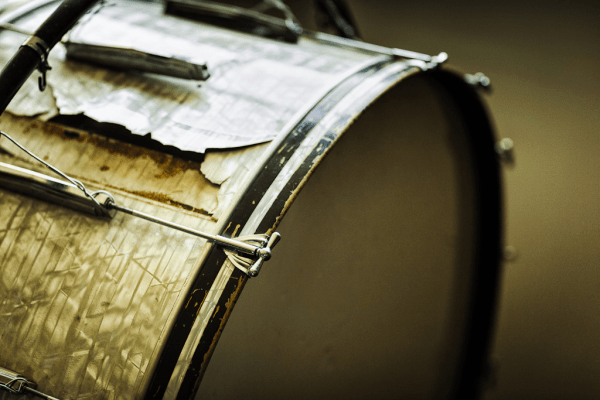
We have far too many hawkers of this and that idea doing everything possible to convince us that they somehow know all of the answers to providing a better life for everyone. Print, electronic and televised media are filled with people hoping to create the next buzzwords and soundbites. Once something catches on we all too often rather sheepishly begin quoting it as though it is truth and wisdom. We sometimes align ourselves with people and ideas without doing a great deal of thinking. The hucksters of old who banged their drums and spun a good story have become the gurus of advertising and political operations. We find ourselves enchanted with quips and pretty faces, audacious lines and promises.

Now we seem to enjoy quantifying and labeling virtually everything and everybody as though all the world is a commodity. A great deal of the modern ways of selling products and ideas began when I was just a child. That’s when television became both a source of entertainment and a way of hawking ideas, not the least of which was naming an entire generation of children as Baby Boomers and then labeling them with generic traits that somehow define them in many minds to this very day.

I suppose that somebody actually thought that it was a brilliant idea to attempt to generalize about millions of people within a certain age group and so they even went backward in time honoring the parents of the Baby Boomers with the title of The Greatest Generation. Next came the Generation X group followed by the Millennials. Somehow the negativity of the descriptions of each classification became more and more extreme until we were pointing fingers and blaming one set of people or another for the difficulties that we face today. In the meantime there are those who began to delight in shaming the post Millennials as uniformed, lazy “snowflakes.”

My entire life has been spent working with people from all of the aforementioned generations and while I see certain environmentally induced differences from one group to another, I find that in the long run people are far too individual to turn them into cardboard cutouts that are all alike. We are not a row of identically dressed Barbie dolls regardless of what the sellers of words may attempt to make us think. In fact, the key word here is “think” and when we step back just a bit we see the truth just as the folks in The Rainmaker eventually did.

I suppose that I got riled up a bit about the idea of stereotyping people based upon the decades in which they were born after having a conversation with a young man who had been told that many employers prefer hiring Gen Xers rather than Millennials because the thirty something set is lazy and inclined to complain.

I was shocked to hear such a thing but in my heart I do understand that there are many who allow misconceptions and ridiculous stereotypes to become their truths. It goes without saying that I have worked with some incredible Millennials who are dedicated to hard work and high standards. In fact, those who are not are the exception rather than the rule. The very idea of drawing conclusions about an individual based on age is abhorrent to me, and yet our society has become driven by the idea of making assumptions based on very unreliable indices.

Someone recently floored me by remarking that a person that we saw passing by us was probably a redneck who had guns in his house and voted for Donald Trump simply because he wore a gimme cap and drove a pickup truck. I wondered how it was possible to jump to such judgmental conclusions with rather skimpy evidence and yet such non sequiturs have become more and more common. We hear about people being identified as being of a certain type because of where they live or what they wear or which church they attend. It’s even gone so far that some advocate for getting rid of the color red for clothing as though it is some kind of secret sign of a person’s political leanings.

It’s long past time that we regain our senses and quit falling for the salesmanship of those would sell us lies. We can’t create rain by banging a drum and we can’t properly think by spewing canned responses. We should also steer clear of any situation that asks us to believe an idea that feels ludicrous or that leaves entire groups of individuals nameless and faceless. We have to have enough common sense to see that the purveyors of shady shell games are continually trying to captivate our thinking. Perhaps a bit of caution and disbelief is what we really need.