The Best of the Best

rough-collie-dog-names

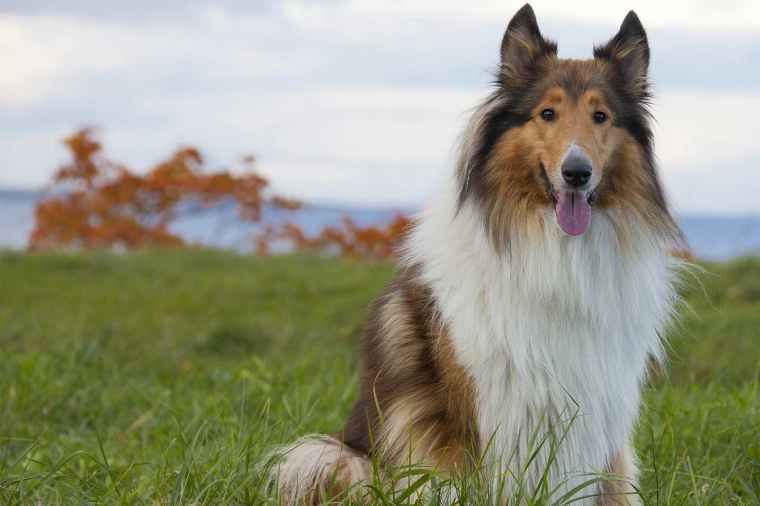
When I was a child we had exactly one dog. His name was Buddy and he was one of the finest pets ever.  Buddy was a beautiful collie that we rescued from the local animal shelter. He was still rather young when we decided to make him a member of our family. He already had his name and we decided not to change it lest he be confused. We saw that he was already a bit nervous about coming home with us and we wanted to let him know that he was going to be safe.

Buddy was smart and always gentle. Even though he was a very big dog we sensed that we did not need to be afraid that he might harm us. Back in those days most animals lived outside all of the time and so it was with Buddy. We let him inside the house for short visits but mostly his domain was inside the fence that marked the extent of our property behind the house. Because he was an energetic dog from a breed known for herding sheep he enjoyed running around the perimeter as though he was a sentinel watching over us. Before long he had created a grassless pathway marking his exercise track.

We always felt quite safe with Buddy acting as our security system. While we understood that he was as mild    as a lamb, outsiders were afraid of his ferocious bark and his tenacious insistence that nobody that he did not know should get past him or dare to enter the yard. We never worried about marauders intruding into our home when Buddy was on guard.

It did not take Buddy long to learn how to climb the chain link fence so that he might explore the neighborhood. In the beginning we worried that he might never return when he wandered away but he always found his way back home before dark, waiting patiently at the gate until we let him back inside his province. After a time Buddy became a celebrity of sorts in the neighborhood. Everyone seemed to know and love him. They watched over him when he took his strolls and guided him back in our direction when he appeared to be a bit confused about how to get back to his little empire.

Our garage was attached to the house but we had to cross under a little covered porch to actually get to an entry door that went directly into the kitchen. Our mom kept Buddy’s food and water under the roof of the porch and always left the side door to the garage ajar so that Buddy would be able to find shelter from rain or cold weather conditions. Mama kept a quilt in there for Buddy to use when he was sleeping but he generally slumbered right in front of the back door to the house as though he was our protector.

My brothers taught Buddy a few tricks but mostly he was just a good fellow who loved us with every fiber of his being. When our friends came around he was as sweet to them as he was to us. I recall a time when I found a little neighbor boy of no more than about three years old hitting Buddy with a thin board that had a nail on the end. Amazingly Buddy endured the pain that the boy was inflicting on him as though he realized that the child was too young to understand what he was doing. Buddy was always like that. He loved all of the kids in our neighborhood.

In the summers my mother had Buddy’s hair cut so that he would not be too hot. He always looked a bit like a lion because the groomer left his mane intact and kept a little ball of hair on the end of his tail. Years later I would learn that he was probably better off with his coat intact but so much was different then and people didn’t possess as much knowledge about how best to care for dogs. They thought that dogs were simply animals who belonged in the great outdoors. I don’t think I knew a single person who kept a pet inside the house unless it was a hamster, a fish or a snake.

Eventually my brothers and I grew older and so too did Buddy. His coat that had once gleamed with a healthy sheen became mostly gray and white, especially around his muzzle. He walked rather than ran and his fence climbing adventures ceased. He spent most of his time sleeping under a big fig tree. He ate less and less and had to make more and more visits to see the veterinarian for little problems. Still he defied the odds of having an exceptionally long life by easing into his twelfth year of faithful service to our family and fourteenth year of life. One day when I was about nineteen I noticed that he had not touched his morning meal. I found him panting under the fig tree and he was unable to even lift his head to acknowledge my presence. It looked dire for him and I knew he needed medical attention quickly. Since nobody else was home and I did not drive I called on help from a friend who quickly came to the rescue.

We drove Buddy to see the vet who had always cared for him with a sense of deep sorrow and foreboding. His breathing was shallow and he seemed unable to move. An aide had to carry him inside for us and the face of the doctor was grim as he surveyed Buddy’s condition. I suppose I knew all along that Buddy was dying but I kept hoping that some miracle might cure his condition. Sadly it was not meant to be. I stood in a state of shock as the kindly veterinarian announced that the only compassionate thing to do would be to put Buddy to sleep.

That was the first time that I had to let go of a beloved pet. Even knowing that it was the most humane thing to do it tore at my heart. Buddy was so good, so faithful, so innocent and I could not imagine our family without him. He was our animal brother who loved more deeply and loyally than any human is capable of doing. I hated being the one who had to end his beautiful life.

My brothers and I would have other dogs over the years. They were wonderful in their own right but somehow they never quite gained the status that we reserved for Buddy. He was our childhood pet at a time when our family needed stability and love, two qualities that Buddy gave us without reservation. He was the best of the best, our most beloved and beautiful pet ever. 

We Must Provide the Heart

trs-80-level1-1920x

Way back in the nineteen eighties my husband, Mike, came home bearing a big box with almost childlike excitement. Inside the cardboard container was a computer from Radio Shack, an early rendition of the TRS 80 that ironically earned the nickname “Trash 80.” We were very much on a budget at that time, saving for college for our children and working at jobs not known for their generosity in salary. We carefully watched our purchases so it was unusual for Mike to spend what was then a rather large amount of money without discussing it with me. My initial reaction was to be a bit angry but Mike countered my protests by claiming that computers were going to change the world and our family needed to become intimately familiar with them. I was somewhat unimpressed but decided to just humor him since he rarely bought anything for himself.

Our first family computer, if you dare to call it that, was driven by a tape deck and seemed to be operated by a turtle. It did little more than provide Mike with an opportunity to explore a couple of primitive games and learn new ways of incorporating it into our daily activities. If I touched it more than once or twice I don’t remember. It gave Mike something to do after work and so I mostly ignored it.

It wasn’t long before computers were becoming a bit more sophisticated. Inventiveness in that arena was moving quickly and Mike soon enough wanted a bit more power than our machine afforded. In a sweet bow to me and my profession the next model that he brought home was an Apple II of the kind that was showing up in classrooms across the country. It operated with a floppy disk and our model had two drives. Since there were already several educational programs in use in my school I was able to find some practical use for it in my work. Our daughters took interest in the possibilities of the model as well and before long it was a center of family activity. 

My eldest daughter and I learned how to actually create programs for our Apple II but it was Mike who took an understanding of its power to a new level. He found ways to use the machine far beyond games and word processing while dreaming constantly of the possibilities of a technologically driven home and work life. It was as though he had become obsessed with the idea of making the world a better place through the use of intelligent machines. He constantly cornered other aficionados of computing and picked their brains about the future of a brave new world.

I soon realized that Mike was willing to drive a car until the wheels fell off but he was not content with keeping a computer past its prime. Again and again he would suddenly arrive home with the newest and most powerful model of computing and we would learn the ins and outs of the enhanced mechanisms. Before long I was incorporating the technology into every aspect of my work as a teacher. I even had a specially designed spreadsheet for keeping student grades. I got permission from my principal to replace the old style handwritten grade book with copies of my computerized system. It allowed me to keep a running average for each student at the instant I entered a grade. It was tied to a word processing program that gave me the ability to send home a weekly progress report to the parents. I became more and more convinced that Mike had been prophetic in his certainty that those machines were going to change our lives.

Of course things just got better and better in the world of technology. I now hold more power than all of the computers used to send a man to the moon in a tiny laptop that I can carry anywhere. I use technology on a daily basis to get the latest news, communicate with businesses and my doctor, keep up with friends, write my blog, do research, make purchases. The list of how my computer has changed my life is almost endless, and it has enabled me to do more in any given day than ever before. It’s difficult for me to even imagine the world as it was before and yet there are indeed times when technology drives me to the brink of frustration.

It’s quite difficult to communicate with a real human being when conducting business these days. I have to jump through a series of computerized hoops before finally hearing a human voice, often from a continent away. I have so many passwords that I sometimes  become annoyed by the task of having to retrieve them from my memory. I’ve been hacked and had to spend countless hours repairing the damage. I have had to create a routine of checking email and messages on my phone because important information is always coming in electronic form. Almost every type of business in which I engage relies heavily on the internet, which may or may not be up and running when I need it most. The frustrations of our modern conveniences have created their own form of stress including a toxic political environment and a haven for bullies.

For the most part I am in awe of the conveniences that I enjoy as a result of the continually improving technology that I use. Nonetheless I see its flaws and they are dramatic. As a society we have yet to understand the implications of instant communication around the world. We have a power that can go terribly wrong if we are not careful. Our inventiveness is moving forward so quickly that we barely have time to understand it before it changes. The lessons we teach about it are often years behind. It is a power that is both truly wonderful and frightening.

There is no doubt that today’s technology has improved life for millions. I can attest to that on a very personal level. We just have to be careful in how we use this great gift. We must be aware of its dangers and not rely so heavily on it that we become paralyzed when it fails. In the end we have to remember that we are dealing with machines that have no heart. We must be the ones to provide the human feelings.

Real Heroes

superheroes

I tend to be ever the stoic, quietly taking whatever life throws at me. I adjust to circumstances as needed. I’ve learned how to survive over the years without drawing attention to myself. I let emotions run free in the quiet of night inside the privacy of my own mind and then I appear to bravely carry on. It’s a routine that I adopted as a child whenever fears or sorrows threatened to overcome me. It’s not exactly a perfect way of adapting but so far it has worked for me. Still, there have been moments when I had to cry, “Uncle!” or literally lose every sense of calm that I possessed. I learned that it is not just okay to admit to hitting a wall, but quite necessary for survival to know when enough is enough.

The conclusion of 2019 and beginning of 2020 turned into a kind of nightmare beginning with the death of a dear cousin and an aunt and concluding with news that two longtime friends had suffered very serious strokes. During that time I also grieved for a special and dear woman whose favorite aunt lost a battle with cancer. As I pushed on in my usual fashion I watched those closest to my departed family members struggling with the reality of loss while juggling demands from jobs and irritating challenges like broken appliances and even sickness. I observed the loved ones of my hospitalized friends spending long hours at the hospital attempting to keep a spirit of optimism in full view. I witnessed their suffering with a sense of frustration because I had no magic words to soothe their hearts or heal their wounds. Nonetheless I continued moving forward one step at a time.

I put away my Christmas decorations and attempted to find a bit of normalcy in the raging sea around me. I brushed up on some Pre-Calculus so that I might help my grandsons master concepts of trigonometry. I kept writing and writing, one of my favorite forms of therapy. I invited my niece over for tea and went to visit my ninety year old father-in-law and mother-in-law. I found solace at church and falsely began to feel as though I had weathered the emotional storm without no scars. Fortunately my body had other ideas. It set me straight by falling apart quite suddenly and forcing me to stop long enough to consider all that had happened.

My tongue and my lips broke out in sores. My throat and my chest hurt as my sinuses filled with congestion. My head felt as though it would crack open and my teeth seemed on the verge of falling out of my mouth. My knees ached to the point of forcing me to lie down. That’s when I finally faced the pain that had been slowly building in my heart and admitted to myself that I was not made of steel. I was as ordinary as any other human.

Our heroes are all too often characters with superhuman strength. They save lives, are supremely virtuous and seem capable of acts that defy our own abilities. We walk around with wooden smiles in times of distress and pretend that all is well when in reality we want to let out primal screams. If we are truly lucky we find a more real kind of hero, someone willing to admit to their weaknesses and ask for help.

My sweet cousin who had spent weeks watching her mother die was willing to publicly acknowledge her own breaking point. She was not whining but simply stating the fact of her exhaustion, frustration and sadness. Her truth was a kind of gift to the rest of us because she is generally so perfectly put together. Knowing that even an icon like her has moments of profound distress reminded us that being human is a complex venture.

When my friend who lost her aunt proclaimed the depth of her emotional pain it was difficult to hear, but also a beautiful form of trust that those of us who love her would not turn away. She was able to vocalize the feelings that each of us endure at one time or another in the most loving and beautiful way. It was as though she was helping us to know how to react to her loss.

I suppose that there is nothing innately wrong with putting up a brave front when we are in reality ready to fall apart and sometimes it is the only sensible thing to do, but for our own sake and those around us we also need to know when we have to surrender to the feelings bearing down on us. Being brave often means admitting that we are not as unbreakable as we may have thought. Like fine glass each of us has a point of fragility. Knowing when we are approaching that moment and pausing to mend our bodies and minds is a very good thing.

Just as we must put on our own oxygen masks in an emergency on a plane before attempting to help others, so too should we know when we need a break, a hug, a moment to let out our feelings. Sometimes the very bravest thing we might do is to openly face our weaknesses and our fears. That’s what real heroes do.

The Ultimate Reward

golden-trophy-design_1355-4

My doctors always ask for an updated family medical history. Mine demonstrates a rather promising line of longevity. The youngest age at which any of my ancestors died of natural causes is eighty two, my paternal grandmother who had colon cancer. She used to always say that everyone in her family died from gut trouble so I suppose that to some extent her fate was almost inevitable. She ignored her own symptoms when they first arose. She was too busy working on her farm to worry about what she saw as trivialities. By the time things got worse she had waited too long to be saved. The doctors tried a few things but ultimately sent her home to die. There was no Medicare back then so her end wiped out my grandfather financially but his only complaint about that was that he had lost his “buddy.”

My mom lasted until the age of eighty four. She had lung cancer no doubt brought on by smoking which she unwittingly did until she was forty. Everyone enjoyed the habit when she was young. It would be decades before smoking was linked to so many diseases. By then the damage to her lungs was already done. Like my grandmother, Mama mostly ignored her symptoms until they became pronounced. Early detection and treatment might have allowed her to reach her mid nineties like her sisters but she had an aversion to doctors and tended to avoid them as much as possible.

My maternal grandmother lived until she was eighty eight years old. She never left her home aside from an occasion when her appendix burst and she had to be rushed to the hospital by ambulance. She recovered from that scare with no problem and lived quietly and happily without ever stepping a foot from her property. Without regular medical care it was inevitable that something would overtake her as she aged otherwise I suspect that she may have lived as long as the three of her daughters who made it past ninety.

My paternal grandfather made it well past one hundred before things began to fall apart. We became so accustomed to his constant presence that it was shocking when he actually died. He had seemed to be somehow immortal as each year passed leaving him as spry as he had always been.

Since I’ve had problems with my gastric system for many years I suspect that my paternal grandmother’s prediction that gut trouble will one day take me down is fairly accurate. I’ve regularly visited a gastroenterologist since I was in my forties so I’ve managed to control any problems and keep them rather minor. Barring accidents or the unexpected I may actually follow in the footsteps of my grandfather and my mother’s three sisters. That means that I have a good shot at being around for another twenty five or thirty years.

It boggles my mind to think in those terms. I realize that my grandchildren will be middle aged if I make it that long and my daughters will be numbered among the elderly. I worry a bit about my potential for being a burden on them. They are quite loving and would be appalled to think that I have such concerns but I know full well how difficult it can be to care for an aging parent who can no longer live independently. It becomes a tremendously demanding task financially, physically and emotionally.

I am in awe of individuals who care for an elderly parent. I’ve watched friends and cousins devote untold hours to the task. They rarely complain but I witness how tired and stressful the job is for them. A lingering illness in a loved one takes its toll on everyone. I find that nobody wants to do that to their children but sometimes they outlast even their sons and daughters just as my grandfather did. Extreme old age can be lonely.

Life is uncertain. None of us know when our time here will end. I’d like to think that when I finally reach those final days that I will be as courageous and undemanding as my mother and grandmothers were. All three of them made us feel that they were comfortable with the thought of leaving this earth just as God had planned it for them. They gave us a beautiful gift of calm and certainty that they were ready. Somehow their deaths became celebrations of their lives.

I have been a somewhat competitive person for most of my life. I must admit that I do like to win and be noticed and honored. I’ve received a few awards here and there. I find that the joy in receiving them is somewhat fleeting. Life is a series of challenges and if the focus is always on excelling beyond others, it can become tiresome and meaningless. In the end the great joy of living is found in fulfilling a purpose, no matter how humble that may be. It is about loving and doing for others and using the talents that each of us have to one extent or another.

In spite of what Yoda advises there is greatness in trying. If every person tried to be the best versions of themselves our world would be even more wonderful than it already is. We make a mark on this earth not through fame or fortune or achievement but by the manner in which we treat the people who come our way. Each of us will be remembered by individuals whose hearts we have touched. There is no better reward than that.

What We Need

common-ground-dove

There were horrid things happening across the globe before I was born. There were horrid things happening across the globe when I was a child and a teen. I have witnessed horrid things happening as a young adult and now that I am in my seventies I still see horrid things happening both near and far. For a cockeyed optimist like myself it can be quite distressing to admit that there is something in our human natures that is sometimes violent and cruel. I always wanted to believe that mankind has been slowly evolving into a better version of itself, and I still think that is indeed true, but sadly it is such a slow process that it’s difficult to define the progress at times.

On a more personal level I see goodness in each of my friends and family members, people striving even sacrificing to be kind, loving, wise. Each individual has small moments of imperfection but on the whole they are grand examples of what mankind might aspire to be. They give me hope for the population at large because I do not believe that they are the aberrations, but rather that it is in the hateful and violent members of society that we find the outliers. Normal is good, abnormal is an unusual data point removed from the cluster of morality that defines most of the people in the world.

There are those who believe that the current times are somehow worse than other eras, but I would urge them to more carefully and thoughtfully study history because there is little that is actually new in the ways of our relationships and our politics. People have been lead astray by demagogues and tyrants for all time whether it be in a family, a friendship, a neighborhood, a town, a state or a nation. You would think that we would be more circumspect given all of the information about past troubles that we have, but in truth most of us are busy taking care of ourselves and those that we love. We tend to only have time to react rather than to reflect. Besides, with so many ideas and ideologies being thrown at us at once it is daunting to determine what is actually best. Instead history has often been a vast experiment of trial and error with some decisions enhancing mankind and others being dangerously abysmal failures. All too often hindsight becomes our teacher.

We can indeed learn from past mistakes but even then it’s important to realize that we are different from our ancestors. Times continually change and we are influenced heavily by our environments, what we love and what we fear or even hate. Making choices that will affect us and the people around us can be a gamble. Because each person on earth is unique there is no one size fits all way of educating or governing and yet we try even as we know that it is impossible to exactly meet everyone’s needs. Someone always seems to feel left out, abandoned either by family or nation. Such is the conundrum of our human attempts to make sense of the world and the reason why it is so difficult to enact solutions to the problems that plague us.

Freedom is a word with many meanings. Taken too far it can lead to trouble. Constricted too much it creates hostility. The key to a healthy person and society is providing just the right dose of fairness which may mean that the balance will sometimes seem unequal. Even within families a wise parent understands that no two children are identical, not even twins. So too it is with societies that attempt to be fair and just. It is difficult to know the best course of action.

As a school administrator I learned that some of my teachers wanted to be free to be themselves without much direction while others actually desired to have precise sets of rules by which to guide themselves. The trick in working with them involved crafting individual plans that took their specific needs into account. Allowing for differences sometimes created tensions because there were always those who insisted that everyone had to be treated exactly the same. The trouble with that logic is that it does not consider our human uniqueness and sounds good until it is executed in a real situation.

I find myself becoming increasingly disturbed by the urge of various forces to make us all think and act the same. We become enraged when we witness someone deviating from the thoughts and actions that we find the most appropriate. We harangue or shame those who disagree with us in the false hope that we might force them into submission to our way of looking at the world. Such has become a national pastime with celebrities being lauded or ostracized based on what they believe. In truth it is a kind of nationalized bullying that we need to abandon. We should be extremely careful that we are not ruining people’s reputations based solely on a desire to force agreement to our individual thoughts about how things should be. 

Propaganda and unwillingness to allow freedom of speech is growing all around us. Such efforts to control beliefs has been tried throughout history but it has never worked. We should be wary of those who would insist on conformity and resistance to divergent ideas. Right now we have people on both the far left and far right attempting to shut down our freedoms. What we need is for those who treasure liberty to lead by example which means acknowledging that we must make more efforts to consider the needs of each voice, not just our own. We must curb the outrage and find ways to understand and respect the very natures of our humanity. In doing so we might find the common ground that we both desire and need. As long as we keep censoring one another we will escape from the current cycle of outrage.