Nothing Is Taboo

Photo by Andrea Piacquadio on Pexels.com

My family loves a good rousing discussion in which everyone is free to voice his or her beliefs without insults or ridicule. Our only rule is that any comments be supported with sound examples and facts. It’s okay if voices become a bit loud or people take sides. When all is said and done we leave one another with as much love and admiration in our hearts as we had before the debates began. It’s always been that way and I enjoy it more than I will ever be able to describe. It keeps us all, including the children, open minded and delivers the message that free thinking is not just allowed, but actually encouraged. 

I remember an occasion when the subject of evolution made the rounds in our family debates. One of my brothers who is a mathematician, scientist and engineer by education and profession outlined the reasons that he believed that evolution was a sound theory. My other brother chose to take the con side of this perennial argument. His was a more religious based approach and he carefully defined why evolution was a theory rather than a totally provable reality. The two were going at it so forcefully that the rest of us just sat back and enjoyed the show as if we were part of some interesting kind of live entertainment. 

Suddenly one of my brothers announced that he needed to take a break to answer a call of nature and get a glass of water to soothe his raspy voice. When he came back refreshed he began to make his arguments once again, only he had switched sides without even hinting that he was going to do so. The other brother picked up the pace without hesitation and began to advocate for the side that he had previously been refuting. We were both delighted and amazed at how fluidly they had managed to change sides seemingly without any kind of previous agreement. The grins on their faces were evidence of how the art of debating was more important to them than being tied to a strict point of view. 

This is how I grew up. I learned from an early age that we humans hold a vast variety of opinions and that it is not only okay, but important to consider the differing ideas without anger or insult. I suppose that all of us might have been excellent lawyers able to represent either the prosecution or the defense. We played the mental game of discussion and critical thinking from the time we were young even as we knew that our beliefs were often divergent. We did not measure each other according to whether or not we agreed, but in the artistry of persuasiveness.

I know that people who happen upon our family gatherings often leave thinking that we are all a bit over the top. The topics we discuss and the ensuing back and forth can be loud and sometimes even sound angry. It never bothers us because a lifetime of hosting intellectual salons has shown us that nothing is personal. It’s all about pushing the envelope of thought.

My mother encouraged us to be individuals and we are. I still attend the Catholic Church based on my childhood religious upbringing. One of my brothers has opted for the Baptist Church. The other brother is agnostic and hasn’t seen to inside of a church for anything other than weddings and funerals in decades. The same is true of our politics. We run the continuum of far right, moderate and far left political leanings. We joke with each other about how different we are and sometimes wonder how we became so, but ultimately it does not matter that we will probably never completely agree on anything other than how important our family relationships are. 

Our children and grandchildren cut their teeth on the family debates and they love them. They often mention how polite and boring gatherings are at other places. They joke that a test of whether or not they have selected the right life partner lies in their ability to witness the rowdy discussions and still agree to come back. Some of those who come late to the family just sit back in awe and others jump into the fray with abandon. Ironically it is often the quietest person in the room who ultimately wins the day with his or her thoughts.

I have always loved the stories of intellectuals gathering in Paris sharing ideas and innovative theories. I am charmed by the communications between John Adams and Thomas Jefferson who had once been political enemies but ultimately became friends who corresponded until the ends of their lives which occurred on the same day. I think of Socrates challenging his students and enjoying those who were capable of challenging him back. Lively debate without unkindness is the backbone of compromise and good decision making. We learn simply from listening and suspending judgement for a moment. 

I love that no subject or idea is taboo in my family. We challenge each other to consider alternate possibilities. We are open to new ways of doing things and determined to provide every member of our group with the freedom to ultimately make their own decisions. Our mother encouraged us to be this way and it has kept us interesting. 
I Have A World Inside My Pocket

Photo by Tracy Le Blanc on Pexels.com

My life is filled with apps that make my smartphone a world unto itself. I can order groceries, communicate with friends, turn lights on and off inside my home, make appointments, listen to podcasts, purchase everything from paper to televisions. When my phone goes out, as it recently did, I come unglued. 

I woke up one morning to a black screen on my phone. I found that to be rather odd since I had plugged it into a charger, so I began to test it on other charging stations. In spite of my efforts the screen remained dark. Before long I really freaked out because the phone would ring but I was unable to answer. I had to get past the locking mechanism which was totally impossible. Nothing I did revived the once reliable phone. 

A quick trip to the store where I purchased the phone brought more questions than answers. The people there had no idea what was happening ,but they reminded me that I had insurance on the phone. They provided me with information on how to contact the manufacturer as well as the insurer. Before long I received notification that I needed to take the phone to a specified repair shop that was close to my home. An appointment had been made and the technicians would be waiting for me to arrive with my non functioning phone.  

Initially the people there concluded that I must have exposed the phone to water, which I knew was not possible, but I did not wish to argue with them. I pleasantly thanked them for whatever help they might have and surrendered my phone for a diagnosis and hopefully a repair. I felt totally distraught. I had not realized how much I depended on my phone. I needed it for directions to places unfamiliar to me. I worried about what I would do if I had car trouble. I realized that I did not know anyone’s phone number anymore because all of that information was stored on my phone. I had no games to play while I exercised on my stationary bike. My music was being held hostage. I was like a little lost soul. 

i worried about how long I would be without my trusty phone. If the technicians were unable to repair it the next step would be to send it back to the manufacturer and then wait until they received it and sent me a new phone. I knew that could take over a week, so I felt panicky, and even a bit silly that I had come to rely on my phone so much. It held so many aspects of my life including my calendar and the record of my exercise routine and diet. I used it to renew prescriptions and to feel safer knowing that I had the power to call 911 with the touch of a button. My photos were there. That phone was like my biography in a tiny package.

Things turned out well. The repair shop had to replace the screen. They were as bemused as I was regarding what had gone wrong, but just as I had thought, it was not water that did the damage. All was well the ended well and I felt great relief in having my phone at my fingertips once again. Somehow I have not taken it so for granted since then. I realize just how much I depend on its features and I’m rather amazed. 

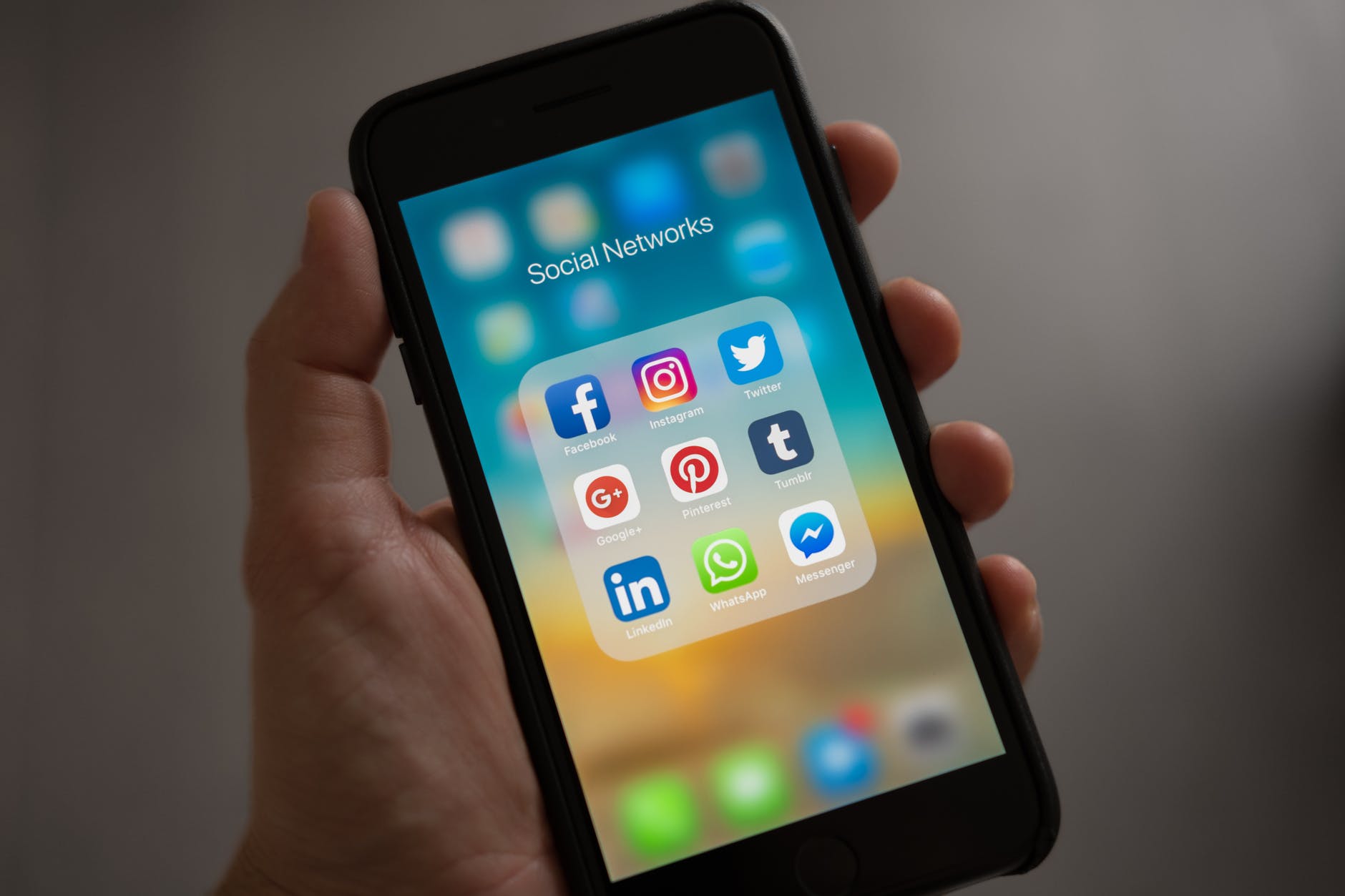
My little red phone brought friends into my home during the long lonely months of the pandemic. Whether we simply talked or saw each other with FaceTime I felt so much less isolated. As long as the phone is with me and fully charged I don’t worry about getting lost or being unable to get help in an emergency and then of course there is Facebook and Twitter to keep me amused. 

Some time back I spoke of joining Twitter but being unable to figure out how it worked. I got so bored during the Covid times that I did a bit of studying. Before long I was zipping around on Twitter like a pro. In the process I became totally addicted. I found out that I can follow almost anyone that I wish. I learned that the Henry Winkler whom I follow is the real article. The little check by his name tells me so. Sadly, the Brad Pitt who liked my replies and began to follow me is a fake, but I did get a nod from Rob Reiner one day. I even have to admit to getting a kick out of having more followers than I ever imagined and I dream of someone with influence discovering my blog and asking me to publish some of my writing.

My phone is very smart indeed. I never would have thought of such a thing back in the days when there were still party lines and a single phone for everyone in the family to use that was stuck to the wall with a cord. If someone had asked me to imagine a future with such a device I would have thought that it was an idea from a science fiction movie or maybe The Jetsons.

I am content again, but now wondering where all of this innovation will ultimately lead. The future is already with us and I suppose it will remain bright as long as we support the brilliant engineers and scientists and doctors who are helping to create an amazing world. We would do well to encourage them to dream their dreams. People like them created a world that I carry in my pocket.

The Glories of Technology!

Photo by Obi Onyeador on Pexels.com

I know a little boy who was born with a hearing disorder. His mother is my friend and an extraordinary educator, so she has spared no expense in time, money and sacrifice to help him to lead a more normal life. He spent many of his toddler days at Texas Children’s Hospital and in special programs for those with hearing impairments. Through it all he has remained happy, friendly and optimistic. Recently he received a new more powerful pair of hearing aids and his mother posted a video of him wearing them for the very first time. The smile on his face as he listened to the sounds around him was breathtakingly beautiful. I found myself having one of those ugly cries of joy as I watched this little fellow beam with excitement.  I grinned often for the rest of the day just thinking of him.

We all too often take the precious sense of hearing for granted. Mine is still rather sensitive even as I age, but my husband and many of my friends are now using hearing aids in order to hear more precisely. I can’t imagine anyone having to deal with a loss of hearing age but I have known many people who battled with hearing problems even from very young ages. 

When I was in college I met a girl who was deaf. She was able to read lips and understand words by placing her hand over a person’s mouth as they spoke. She amazingly went to college in spite of her handicap and excelled in her classes even though she was unable to hear the lectures from her professors. The teachers provided her with written synopses of their lessons and she used her sight to “hear” what they had said. Much of the world was still a mystery to her. Closed captioning was not as fully developed back then so she never really had the opportunity to enjoy television programs or movies. Amazingly she was able to listen to records and to dance and keep pace with the rhythm of the music because she said that she could feel the vibrations of the instruments on her skin. She was amazingly optimistic and inspiring to all of us who knew her.

Later I would meet a man who had lost a great deal of his ability to hear after he had become an adult. He had great difficulty understanding what people were saying when he was in a crowded situation even as the hearing aids he used were perfected more and more. What made life better for him was modern technology. Talking on a phone was impossible, but smart phones allowed him to text. He was able to communicate with his daughter every morning via text messages after his wife died. He watched television and movies with closed captioning. He was even able to see live musicals because the theaters close captioned the dialog and lyrics. He used email as another means of communication. All of these things provided him with a freedom that kept him independent and happy. 

When I was teaching I had a group of students from the Houston School for the Deaf in my mathematics class. They had to sit at the front of the classroom so that they would be able to read my lips and see the board clearly. I had to wear a transmitter and they wore receivers that somehow sent my words to their brains. I never completely understood how the technology worked, but I was able to communicate quite well with them and they were model students. 

My own daughter developed hearing problems from having a multitude of ear infections. Over time she stopped singing and talking as much as she had as an infant. I had no idea what was happening and her pediatrician was missing all of the cues as well. In kindergarten her teacher deemed her to be slow and recommended that she be placed in the low reading group for first grade. Thankfully her first grade teacher was not convinced that my little girl was a slow learner. The teacher noticed that my daughter was tracking her lips so she moved her to the front of the classroom and even repeated instructions to her to be certain that she was hearing them. When my girl caught on quickly to the lessons, the teacher decided to have the school nurse test her hearing. The nurse found that she had a forty percent hearing loss and suggested that we take her to an ear nose and throat specialist immediately.

After surgery my daughter’s hearing was incredibly better, but to this very day she dislikes talking on the phone because she often has trouble catching every word. Nonetheless, he has mostly done well thanks to the remarkable observations of her first grade teacher. She has enjoyed a very normal life that might have otherwise been very difficult. 

For me, being blind would be the worst possible affliction of the senses, but losing my hearing would not be a much better fate. I love the sounds of my neighborhood, the amazing music that humans create. I like talking with others and being able to communicate with them through sound. Knowing the hearing impaired has been a valuable lesson for me. It has taught me to cherish the fact that I can clearly hear the world around me. It has also given me the opportunity to both understand and admire those who are not as fortunate. I don’t get frustrated with them because I have learned how important it is for them to be able to partake in the the social interactions of the world. Today I’m smiling whenever I think of the little boy who demonstrated his unadulterated joy in hearing sounds that he had never before experienced. Modern technology is glorious and his life will be so much better than it might otherwise have been.

It’s Time For Some Gratitude and Respect

Photo by Max Fischer on Pexels.com

An extraordinary educator that I know has moved to Ecuador where he has already landed a wonderful teaching position for the coming school year. He was an award winning instructor beloved by his students, but the lack of respect for his talent drove him to seek an opportunity to work where he will be held in high regard. He is not alone among American teachers in a quest for respect and dignity within a profession that has become more and more of a target for attacks from politicians and the public. 

As a new school year looms ahead teachers are already gearing up for a season of working with our nation’s children. This year there is a kind of pall over the process as they learn of colleagues who decided to retire early, landed other jobs, or called it quits entirely. School districts are panicking over the unusually large number of vacancies that they are still attempting to fill with little success. Not even the Teach for America corp is able to fill the gaps, so they are reaching out to anyone who has a certification wherever they may live in the hopes that they will consider relocating to another city to take on a class. They are enticing recent college graduates with any major and in some cases offering to pay those who are still in the process of earning a degree an opportunity to work and study at the same time. The most desperate districts are even hiring individuals with only high school diplomas and GEDs to take up the slack as substitutes until a more qualified individual comes along. 

I have a daughter who is certified to teach middle school science who is receiving offers from cities all over Texas. A niece is concerned that schools will have to open with highly unqualified individuals manning some classrooms. It seems that many teachers have simply had enough, but the important question is what is prompting the massive shortage of highly qualified teachers. 

Teacher pay has always been subpar and yet there have been dedicated men and women who sacrificed monetary rewards for the more intangible recompense of having a profoundly important purpose in society. Most of these individuals were capable of entering a multitude of professions that might have made them wealthy, but they instead understood that teaching was one of the most important professions in any society. Good teachers build the foundation of a nation. Every individual depends on them to develop great minds and future workers. Without a strong educational system the economy collapses. Teachers know this even as they take the financial hit that gives them just enough income to survive, but never enough to rise into the ranks of wealth. They accept their fate because they are altruistic souls who find joy in having a profound purpose in life.

Teachers have willingly responded to the pandemic with characteristic devotion to their students. They have taught remotely, worked with masks, adapted to whatever was needed to keep things going. None of it was easy, but they carried on with only minor complaints. It was only when parents began to abuse them with untrue and unnecessary complaints that educators began to waver. Suddenly there were instances all over the country in which angry parents accused teachers of grooming and propagandizing their students. Legislatures banned books and rewrote curriculum. There were instances of excellent teachers being called on the carpet simply because one parent did not like what they were doing in the classroom. A dark cloud of fear hovered over every teacher’s mind as they considered whether or not teaching had become so toxic that the joy they had once derived was lost.

Bringing standardized testing back so soon after the disruptions created by the pandemic did not help to reassure anyone in the educational landscape. Teachers understood that many children had lost ground during the remote sessions. Some had been traumatized by losing members of their family. The 2021-22 school year should have been only about slowly returning to a more normal routine, but instead legislators decided to bring back testing and to grade teachers on their performances in preparing the students. It was a very bad idea to put so much pressure on everyone so soon. Then came yet another school shooting in Uvalde, Texas.

I suppose that for some teachers that horrific loss of children and educators was the last straw. They saw that on top of every other difficulty that they now face as teachers there is always an element of danger just being at work each day. The thoughts and prayers for those who had died were not enough to convince many educators that the public cares enough about them to make their difficult working conditions worth enduring any longer. The exodus began in campus after campus and even in schools of education where enrollment is disturbingly down. Somehow the teaching profession has become increasingly unattractive because we have literally not appreciated those who work in schools as much as we should. 

We need our teachers. They are the backbone of a working society. Without them we will collapse. It is untrue that anyone can teach. Good educating involves talents that not everyone possesses. Teachers play a multitude of roles inside a classroom. They understand how intricate each subject is and how the pieces of the educational puzzle work together. It takes a great deal of learning and experience to know these things and teachers have quietly and literally been donating hours of unpaid labor to become the best for the children that they encounter. As a society we have let them down and we should be ashamed, but it is not too late to rally as a nation and finally give them the respect and honor that is due them. If we abandon them it will be bad for all of us.

Games People Play

Photo by Suzy Hazelwood on Pexels.com

Before huge televisions with countless programs in living color, kids created ways to have fun with their friends. Most of the time the activities took place outside away from the watch of parents. We were on our own and more often than not created adventures that would have made Tom Sawyer and Huckleberry Finn proud. Since our summers were a full three months and the heat often soared near one hundred degrees in August, we often found refuge from the sun inside someone’s home where we had to play quietly or invoke the wrath of our mothers. That’s when we took out the board games or cards and designed championship tournaments whose only prize was status among our peers. 

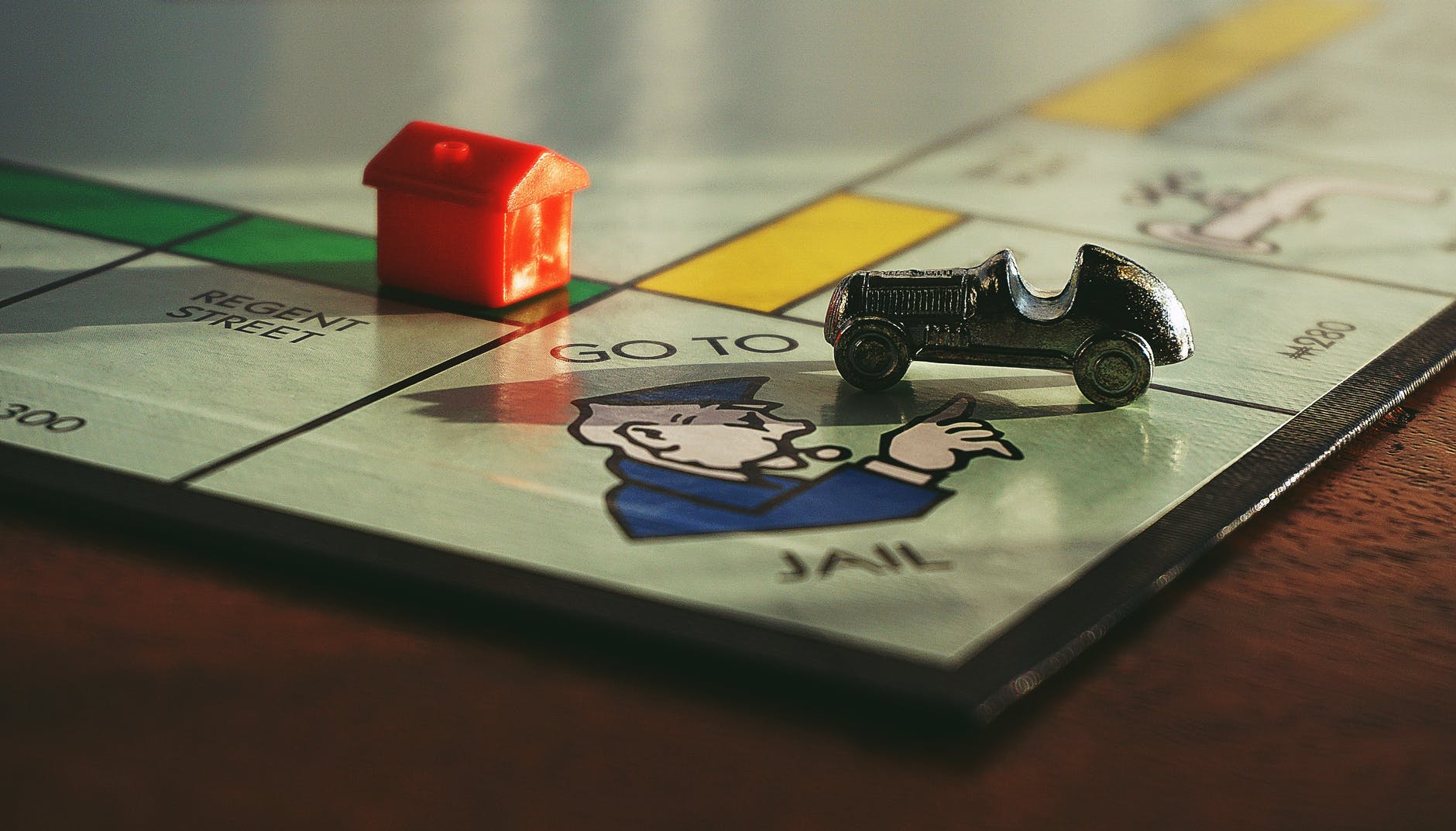
The favorites back then were Monopoly, Scrabble, and Clue along with a variety of card games like canasta and poker. My favorite was Scrabble because I have always had a way with words. Clue reminded me of the mysteries that were my reading fodder from an early age. Monopoly depended a bit too much on luck for my taste and I rarely won, but now and again the gods of dice gave me the numbers I needed and I managed to become a real estate baron. Somehow I have always felt that those gaming days indirectly guided me in choosing the direction of my life. 

I’m not a gambler or a risk taker, so poker was probably my least favorite diversion. My face always gave away what I was thinking because I never really learned how to successfully tell even a little white lie as a bluff, and really did not want to do so. I wasn’t interested in counting cards either, so I don’t think I ever won such a competition. I left everything to luck and the skill of others always overcame my efforts. 

It was Scrabble that won me over because I have collected words for all of my life. While some of my fellow students hated the vocabulary lessons from our teachers, I devoured them. I saw words as one of the greatest gifts that we humans enjoy. Communicating was my thing and I practiced diligently until I learned how to do it well. Words were essential in my quest, so a game that featured them was glorious to me. Playing Scrabble gave me an opportunity to demonstrate one of my very best skills, but sadly few of my friends shared my enthusiasm for the game. More often than not the group chose something else to play. 

Everyone seemed to enjoy Monopoly and we always agreed to play the long version of the game. I mostly wanted to be either the old shoe or the thimble, which in some ways was indicative of my personality and how I would actually do in the real world of finance. Some of my friends were already demonstrating incredible talent for earning money as they traveled around that board with their top hats, race cars, or battleships. They were as serious about real estate and banking as I was about words. While I often grew bored before the game was done, they were intensely focused until they had gathered mountains of cash and run the rest of us out of business.

Clue tended to be the great equalizer. We all had a bit of the sleuth in us, but as my mother often noted, I noticed little things that made me a natural detective. Besides, I have always been addicted to mysteries. If someone demanded that I choose only one genre of book to read for the rest of my life it would have to be mystery. In fact, when I first entered high school I stunned my English teacher when I admitted on a survey that I had mostly read Nancy Drew, Sherlock Holmes and Agatha Christie novels while disregarding the other wonderful fiction and nonfiction authors. 

To this very day I am an avid fan of Dateline, 20/20 and 48 hours. I listen to podcasts about crimes while I exercise. I am fascinated by the human mind and people who engage in violent and deviant behaviors. i might have worked for the FBI or the CIA. That would have been a great job for me with my observational and language skills. Instead I chose teaching which also used my talents with great success. 

These days most young people compete in computer games. I suppose that adults think of the time they spend on such things as being a waste of effort much as the adults of my time may have considered the gaming competitions of my youth. I suspect that we too often fail to see how games can actually translate later into real life skills. 

I remember reading that the military has found that today’s youth learns how to manipulate weapons and perform other related tasks with greater dexterity than recruits of the past. The kids who once played games that required great hand eye coordination learn to fly a plane or drive a tank quickly. The time spent in front of a screen making animated creatures react to changing conditions makes them perfect for a host of jobs that once took much more training to master. 

Medical schools have also noticed that students training to become surgeons or to handle diagnostic tools have steadier hands and much quicker reaction times than those of the past. Those hours of sitting in front of a screen seeming to be wasting time literally translate into highly usable skills in the real world.

Games people play are not just frivolous entertainment. We learn as we compete and take those skills forward into our lives. While I knew people who flunked out of college because they spent too much time at a card table or in front of a video game, most unconsciously use the skills that they learned in the world of games outside of formal learning and turn those skills into a way of earning a living. So take out those board games or sit down and play a video game. There is more to those pastimes than we think. They may lead us to success in the real world.