The King Center Drive In

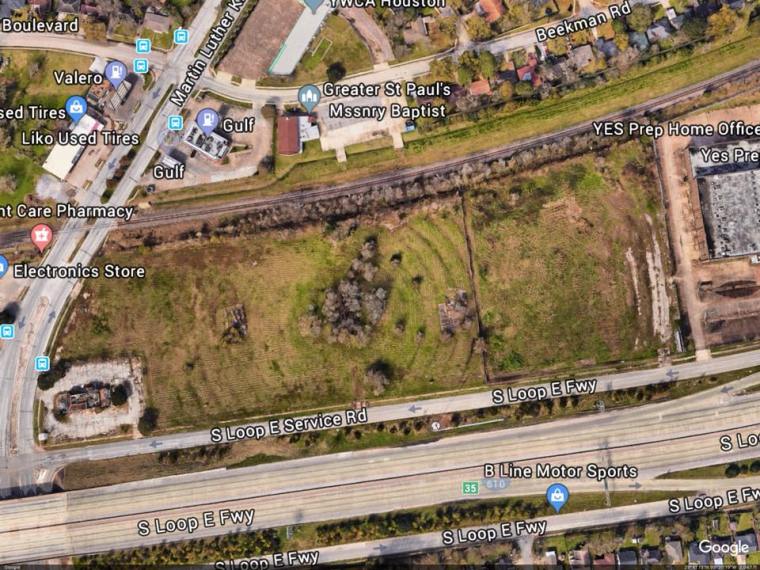
37400793_10204729964807004_1633942547380305920_nA high school friend posted a photo of an empty lot that is for sale in Houston, Texas for $1,975,000. The raw land located at Martin Luther King Drive and Loop 610 was once the home of the King Center Drive In, a glorious place that served up entertainment to the folks who lived in southeast Houston for most of my childhood, teen years and early married life. Eventually the place closed down and went the way of other outdoor theaters, attracting fewer and fewer customers as we became less acclimated to the heat and mosquitoes over time. Nonetheless those of us who saw the image of the long gone movie mecca were filled with grand memories of good times with friends and family.

I have to admit that there was nothing more exciting to me as a kid as going to the King Center Drive In on a Friday or Saturday night. I’d check the newspaper to see what was showing, and if it was fit for family watching I’d connive with my brothers to work with me to get our mother to take us. We often used my youngest brother as our secret weapon because Mama somehow never seemed able to turn him down. He’d go to her with all of his cuteness and hint that he’d love to spend an evening at the movies. Since our mother enjoyed such outings as much as we did it was never really that difficult to get her to say yes to our proposals.

There was always a snack bar at the theater but we were on a fairly strict budget so our mom made sandwiches and iced down bottles of coke to satisfy our hunger. She also made enough popcorn in her iron skillet to fill a grocery bag. We’d stow away our food and a few pillows inside the car and head off for what was sure to be a fun evening.

Mama always wanted to get there early to secure a prime spot. She’d test the speakers before settling for a specific place and then while she set things up in the car we’d run to the playground located just in front of the big screen. We often saw friends from our neighborhood or made new acquaintances as children seem to so naturally do. Mostly though we were eager for the sky to grow dark so that the movie might begin.

Mama always kept something called a Pic in the glove compartment along with a box of matches. The incense like coil was supposed to discourage mosquitoes from entering the car, but we still had a few of the brave pests nipping at our skin. I suppose that it was actually quite hot in the summer, but since we didn’t have air conditioning at the house we never noticed the temperature. Instead we munched on our sandwiches, sipped our cokes and topped off our feast with the popcorn while glorious films of the fifties and sixties played out larger than life right before our eyes.

The initial feature was always a first run film, but it wasn’t always our favorite of the movies. After an intermission designed to lure us to the snack bar there was a second feature that was older, a kind of rerun. If Mama was feeling flush she’d give us some money to purchase whatever we wanted at the snack bar before the next movie began. It was so hard to decide what delicacies to choose. There were donuts, chips, candies of all kinds. Since we never had sweets at home I almost always chose some chocolatey, gooey delight filled with caramel.

Sometimes one of my brothers would be unable to fight off sleep and surrendered to slumber in the back seat. I proudly fought off all inclinations to doze off if only to prove to my mother that I was worthy of the prime seat in the front of the car. Also the really cool movies with more adult content came in the second slot, and I enjoyed feeling a bit more mature than my little brothers.

As I grew into my teen years I began attending the movies with my friends. I was a dateless wonder in high school but I had great fun with big groups of girls. We went with whoever was able to get a car. We did a great deal more talking and giggling than paying attention to the movies. My favorite times were with Karen, a neighbor from across the street. She drove her mother’s big yellow Buick which held enough gals to qualify as one of those clown cars at the circus. At first I was embarrassed when my mother shoved a grocery bag of popcorn into my arms as we were leaving for one of the outings, but the yummy snack was such a hit that the girls always requested that I bring my offering along.

I often laughed at the antics of people in other cars. There were of course the couples whose only purpose in coming seemed to be to make out. Then there were the goobers who honked their horns whenever a love scene came on the screen. There were groups who hid some of their passengers until they were safely past the pay station since the cost was sometimes based on the number of folks inside the car. There were families that made way too much noise, and since we mostly had to keep our windows open that was quite annoying. Then of course there were the malfunctions of the speakers and projectors that drove everyone to honk in protest.

Eventually I was going to to the King Center Drive In with my husband and my small children. Those days didn’t last very long because by then we had become spoiled by the air conditioned comfort that was almost universal. It just seemed nicer to watch a movie at an indoor theater. Of course that meant paying way too much all around. Soon enough it became preferable to wait for the release of tapes and then DVDs to see our movies in the comfort of our homes. For little or no money we could watch while wearing our pajamas and munching on fabulous snacks. By then the King Center Drive In was long gone, but not our memories.

Perhaps we lost something special with the closing of those once fabulous places. Whole generations have no idea how fun it was to wait in a long line of cars anticipating an evening of make believe. The lot for the King Center Drive In may now be empty but our memories of being there are still as vibrant and colorful as ever.
Only Time Will Tell

33750316_1843978448978317_6669086996591280128_nThere was a time when I believed that the first twenty years of the twentieth century were boring, a bit of a snooze. I have since become wildly fascinated with that time in history because it was responsible for perpetuating so many changes and problems that are affecting us even to this very day. Learning more about my grandparents has also enlivened my interest in this particular time because it ultimately had such a profound influence on me.

As children all four of my grandparents grew up in homes without plumbing or electricity. Neither of my grandmothers had enough education to know how to either read or write. At the dawn of the twentieth century they were both still wearing long dresses that modestly covered their legs, and women in the United States did not yet have the right to vote.

My European grandparents were subject to the rule of the Austro-Hungarian Empire, a conglomerate so vast and diverse that ruling it was unwieldy, leading to laws that prohibited the use of their native tongue and culture. Life in Slovakia was difficult but moving to the United Sates of America brought the promise of possibilities. Thus my grandfather bought a one way ticket to Galveston, Texas on a steamer that he boarded in Hamburg, Germany only a couple of years before the outbreak of World War II. What an adventure that must have been!

After working on all sorts of odd jobs, scrimping and saving every penny, and living all alone in a boarding house near present day Minute Maid Park in downtown Houston he was able to send for my grandmother. The two of them worked in the fields of a farm near the Houston Ship Channel and in the wooded forests near Beaumont just as oil was being discovered.

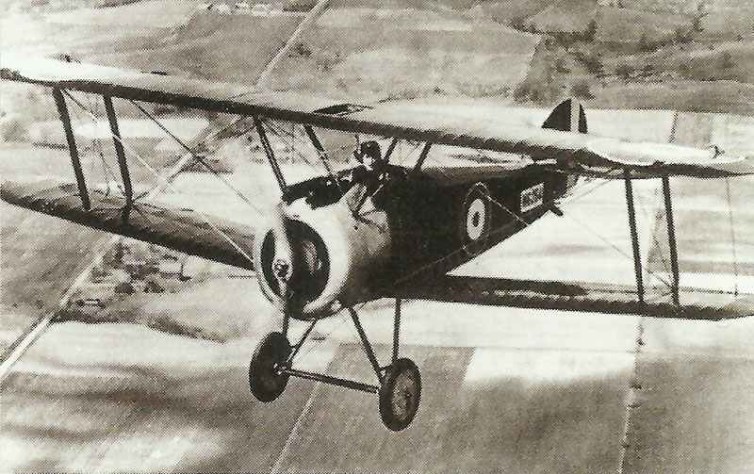
The little country of the United States that was still somewhat of a joke to the powers in Europe was on the move with an industrial revolution and an inventive spirit that thrust the United States into the modern era. Towns were being lit by Mr. Edison’s marvel known as electricity and two brothers had flown a plane for the first time in North Carolina. Mr. Ford was making cars affordable for the common man and people were marveling at having running water and working toilets inside their homes. It was an exciting time when the sleepy giant known as America was waking up and stretching its limbs.

My paternal grandparents were both working in Oklahoma where oil and almost free land was luring people from all parts. They would meet each other in a boarding house crowded with people seeking a living and, if lucky, even riches. Wild and crazy places like Tulsa and Houston were booming at a time when everyone seemed to be on the move in search of something.

Back in Europe the winds of war and revolution were blowing ominously in ways that would ultimately change the face of not just that country but places as far away as the Middle East and Africa as well. By 1914, everyone was honoring alliances and choosing sides in a battle that was supposed to end all battles once and for all. Modern warfare reared its ugly head producing weapons more terrible than anything ever before seen.

In the middle of it all the Communist revolution unseated the Czar of Russia and locked the world into an idealogical and political battle between Communism and Capitalism that continues to this day. My Slovakian grandfather was said to have been eternally grateful to be safe in Texas rather than locked into a lifestyle that would have limited his options and those of his children had he stayed in his native country. 

In 1918, the world experienced one of the worst outbreaks of influenza in history. Research into the disease did not lead to a cure in time to save the millions who died, but would create a better understanding of how such diseases are spread and lead to the discovery of antibiotics that would help to stem the tide of future outbreaks.

By 1920, women in the United States finally had gained the right to vote. Along with this victory came short skirts and other once unimaginable freedoms. Their homes began to fill with modern conveniences and appliances that made daily routines easier to perform. Radios provided instant news from the world and travel became available to even the common man and woman thanks to Mr. Ford.

In the meantime the treaty agreed upon at the end of World War I created unresolved problems across the globe that still echo in places like Afghanistan, Iraq and Iran, not to mention much of Europe. The United States was seen as less of a backwater nation and more of a possible partner in world affairs, and the spirit of innovation accelerated along with an emphasis on more universal education for both men and women.

The stage was being set in motion for my parents to be born and to live far more prosperous lives than their parents had ever known. The city of Houston continued to attract men and women with a pioneering spirit and a willingness to take audacious risks. It was not the boring and quaint time that I once imagined it to be, but in fact was exciting and bursting with some of the most important changes that humankind had ever known.

We often hear the men and women of the World War II era being called “the greatest generation” but there is great evidence that those who navigated the first two decades of the twentieth century like my grandparents may well have been even better. They were members of the transitional forces that led the way to modernity, unafraid to enter brave new worlds.

My Grandpa Little often spoke of experiencing the wonders of that era firsthand. He recalls seeing a city lit up with lights for the very first time. He remembers the first radio broadcast that he ever heard. He brags that he went from a tiny home with no plumbing and no electricity to using a television in the comfort of his home to view a man walking  on the moon. He did this all in a single lifetime. 

I sometimes wonder if the first twenty years of the present century will bring the same sense of awe to future generations. What is happening now that will still have an impact on the world in a hundred years and will we be remembered for being creative and courageous? Sometimes I fear that we are guided more by a tendency to cling to the past than a willingness to imagine the future. Only time will tell if we possess the same can do spirit that so defined the first years of the modern age .

When Two Beautiful Hearts Become One

37125721_10212650429280251_3292675091942342656_oThey were a cute couple, high school sweethearts who fell in love. Paul was a football hero, an all state lineman who was a beast on the gridiron, but a teddy bear off the field. It is little wonder that he was attracted to Shirley who was a real beauty with a warm and inviting smile. They found each other when they were still young kids, but they both understood that somehow their relationship was meant to last for the duration, and so they married fifty years ago.

Our world is overrun with problems these days. Divorce is on the rise, almost commonplace. Families are often torn apart by differences, disloyalty, and neglect. All too often relationships fizzle out before they have even begun to take hold. Single parent families are on the rise. Young people are wary of making promises to one another. Not so with Paul and Shirley. They not only pledged to honor and cherish one another till death, but they made good on their oaths to one another as their lives unfolded in one decade after another.

I knew Paul from a time when he and I were a young children. I met Shirley in high school. I was in awe of both of them even back then because they each appeared to be so genuinely kind and humble. Shirley was a particularly sweet person who rarely thought of herself, but always did her best to make those around her feel welcome. She was the kind of person who went out of her way to notice the one individual who was feeling uncomfortable or ignored. With her ever present calmness and inviting smile she took the time to say a hello or just to inquire about how someone was doing. I loved and admired her so, thinking myself quite fortunate to know her.

Paul was so handsome and gifted in his athletic prowess. I on the other hand was so awkward that he scared me just a bit, but like Shirley he had a million dollar smile and a way of being so open and friendly that I somehow felt okay around him. His innate sweetness was both charming and refreshing, and when he and Shirley began dating I thought that they were indeed a most perfect couple that somehow the angels had put together.

High school graduation came and I lost track of many of my classmates, just as always seems to happen. I went my way and Shirley and Paul went theirs. It would be almost five decades before I saw them once again and I learned that they had enjoyed a beautiful life together. As always both of them spent more time listening to the tales of others than boasting about their own accomplishments. They were as sweet as they had ever been, and it did my heart good to know that with a few ups and downs, they had mostly enjoyed the years.

Shirley was even more beautiful than ever, and her iconic smile still radiated the same loveliness that lit up her eyes and revealed the inner beauty of her heart. Paul was like a rock, one of those incredibly kind men who is unafraid to show just how much he cares about people. Together they had created  a loving family and worked to cement the relationship with each other that they had built so long ago.

Just about a year ago Shirley and Paul’s home flooded from the rains of Hurricane Harvey. Instead of complaining about the slowness of the recovery, the pain of losing so much, they instead smiled as they always seem to do, and worried about how everyone else was doing. In the midst of their own troubles they took the time to send me a lovely card expressing their hopes that my husband would fully recover from his stroke. I suppose that they never really knew just how much their thoughtfulness meant to me in that moment, but it was so typical of them to be selfless.

Anyone who has ever met Shirley and Paul Jauma knows just how much they love one another. Theirs is a union grounded in a deep faith that God is a partner in all that they do and endure. They have taken their vows to a spiritual level that is not often seen and have made good on the promises that they exchanged with each other on their wedding day. Their fifty years together have inspired the people who know them as evidenced in the many tributes that have come their way.  We find ourselves feeling so happy for them, and fortunate to number them among the people that we have known.

Shirley and Paul are quiet people who laugh at any suggestions that they are somehow icons, but I know differently. They represent the best of humanity with traits that are all too infrequently seen. I suspect that if there were more people like them in the world, we would be a much happier lot. They have much to teach all of us about love and what it really means to honor and cherish another person for a lifetime.

I’m quite delighted for Shirley and Paul Jauma, and I pray that they will be blessed with many more years together. We all need to witness their model of a loving couple, and I thank them for sharing the goodness of their hearts.

Still Young and Beautiful

14711048_10209517113076623_2425488735163912169_oI’ve often been told that my blogs about people that I know are my best. In all honesty they are also the easiest to compose. The stories write themselves mostly because people are innately interesting, and the ones who have been part of my life are particularly so.
I grew up in a little neighborhood in southeast Houston. At the time it was almost on the far edge of the city, just barely outside the area that now encompasses Loop 610 which was not constructed until I was a teenager. The enclave was part of the post World War II boom and it centered around churches and schools and family life. In many ways it was a “Leave It To Beaver” kind of environment in which children were generally protected from the troubles of the adult world.

I attended a Catholic school because back then parents were told that it was their duty to provide a religious education for their children. The tuition was minimal, so it wasn’t a particular sacrifice for my parents to pay the monthly fees, particularly when my engineer father was still alive. After his death it became a hardship for my mother, but the nuns who taught at my school hired her to work for them and announced that free tuition was one of the perks of employment. Thus my brothers and I spent our earliest years in classrooms together with other Catholic children.

In the fifties and sixties in seems as though adults didn’t change their addresses nearly as much as they now do. Once we moved into our home on Belmark Street we essentially had the same neighbors until we ourselves became adults and struck out on our own. The same was true at school. With only a few exceptions we grew up with the same set of kids and got to know them quite well. Their parents were friends with ours, so it was as though we all belonged to a huge extended family.

Many of us went on to attend Mt. Carmel High School after the eighth grade. I received a scholarship which made it possible to continue my education in familiar surroundings with friends I had known from the time I was six years old. Sadly there were those who opted for the local public high school which had one of the best reputations in town. I missed them terribly when they were gone, but I made knew acquaintances with kids who came from a variety of Catholic schools in the southeast and east Houston areas.

As is true with most high school students I foolishly believed that the people that I met during my four years would all be lifelong friends. I did not realize that graduation was a turning point at which time we went forth in far too many directions to remain as devoted to one another as we had once been. Over time I slowly lost track of all but a handful of the people that I had known and loved, often wondering where the others were and how they were doing, but too busy to take the time to track them down.

Decades passed and suddenly there was this thing called social media that allowed us to communicate with friends and family without leaving our homes. Little by little I found long gone but never forgotten friends and began to vicariously follow the routines of their lives. Through the extraordinary efforts of individuals like my friend Carol more and more of my former classmates were found and just seeing that they were still alive and well cheered my heart.

It’s difficult to adequately describe what we shared in those long ago years when the foundations of our academic and spiritual educations were being built on very solid ground. Our differences came in the years that followed, but in many ways they were only superficial. What bound us together was a long history of learning the importance of the one commandment that truly matters which is “Love thy neighbor.”

I am neither a republican nor a democrat. Instead I am fiercely independent, but many of my school chums are die hards in their political persuasions. My own philosophies often confound them and they have even been known to chastise me for what they believe to be unwise thinking. This sometimes angers people that I have met later in life, but it only makes me smile. What I know is that even in our differences there is a commonality of truly caring about our world and each other that was imbued in our very natures long ago. We were not so propagandized that we became nonthinking clones, but rather we were taught to consider many points of view before choosing our own. The one constant, however, was the knowledge that God is our protector and that we in turn must be protectors of His people.

From what I can tell we’ve done a grand job each in his or her own way. We run the gamut from  Paul who is as progressive as anyone might become to Ted who is a staunch defender of conservative ideas. What guides us is memory of those long ago school days when we learned and played and laughed together. Somehow those times glued us together even as we went out on our own to discover more of the world. We now come together with little thought of our differences because what we share is far stronger.

I feel blessed to have the opportunity of getting to know my old friends once again. There was a time when such reunions would have been unlikely. Now I have the privilege of sharing the ups and downs of their lives. I see the smiling faces of their children and grandchildren. I commiserate with them in times of stress, health problems or deaths. I celebrate their birthdays and marvel at images of their vacations. Mostly though I remember them when they were young and beautiful and full of boundless hopes and dreams. I see that like me they have survived the roller coaster ride and are doing their best to be the kind of people that the adults who guided us hoped we would be.

I am so proud of my classmates, my friends. They have worked hard to be good people, and all of them are. I hope they know how much I admire them, and how happy it makes me to know them. My heart fills with joy whenever I think back to our school days. I laugh at the stories that I recall and wonder if they realize how much they have meant to me.

As we all enter our seventies we can no longer claim to be young, but from my vantage point I see that we are all still quite beautiful and young at heart.

Learning From the Past

green grass field during sunset
Photo by David Jakab on Pexels.com

I was not born when it happened, but it was close enough to the time when I entered the world that I often heard about it. It was during the reign of terror brought on by Adolf Hitler that book burnings became common place in Germany. Any writing that Hitler and his men thought to be counter to their beliefs was deemed inappropriate, confiscated and burned in the public square. The idea was to eliminate works that might cause citizens to ask questions, to actually think. Books and philosophies have been banned in other eras and societies as well. It has been the topic of dystopian novels and movies depicting dark governments where freedom is obliterated in favor of a set of ruling beliefs. It is something that we particularly find abhorrent here in America, but nonetheless such extreme control sometimes creeps in, often with good intentions. We have learned that there is a very fine line between judging the appropriateness of the written word, and becoming authoritarian in controlling it. If we are to protect our freedoms we must be very careful in our approach to ideas that we find uncomfortable.

It is one thing to avoid certain books or authors on a personal level, and quite another to suggest that particular writings be removed from the public domain. I may find the Shades of Grey books to be offensive, but I would never suggest that others who enjoy them be denied the pleasure of reading them. The rantings of Adolf Hitler in Mein Kampf are impossible to accept, but I plowed through them just so I might know how the mind of a true fanatic actually works. Often our best option with volumes that disturb us is to become more familiar with them. As the godfather said we should keep our friends close and our enemies closer. There is much to be learned from the words of those with whom we disagree. We may never embrace their philosophies, but we know what they are thinking which is always a good defense.

Lately we have a kind of policing of writings that is far from being akin to the Nazi methodologies, but nonetheless should be troubling to all of us. The latests dust up is over the Little House on the Prairie books from Laura Ingalls Wilder. In a series of stories written for children Ms. Wilder described her life with a pioneer family moving west. She spoke honestly of the people and events that she encountered and for many decades now the volumes have been a favorite among readers, even spawning a long running and successful television program. For her efforts a literary award was even named in her honor, but recently the society of librarians who distribute the distinction decided to erase her name from the prize because of a perception that her works demonstrate racist and mysoginistic tendencies. The parsing of her words and ideas has even led to suggestions that schools named for Ms. Wilder be changed, and some question the appropriateness of reading them to children.

I find myself feeling a tiny bit squeamish about all of this, especially since the judgement of the books doesn’t appear to take into account the realities of a bygone era. Instead of using the tales to demonstrate how far we have gone or to hold discussions of how offensive some common ways of past thinking were, we want to just wipe the author away as though none of what she described actually happened. Children really can handle the truth, and usually do it better than some adults. It might be shocking to hear Ma Ingalls making disparaging comments about Native Americans, but think of what a teachable moment reading about it might be for youngsters. When Pa takes off his belt to whip one of the kids yet another dialogue about changing ways of discipline might ensue. It is important that our young understand that in judging historical events we are almost certainly going to encounter ways of doing things that seem foreign in today’s world. It’s a fairly certain bet that our own times will have elements that confuse and confound the people of the future. We are slowly but surely changing and evolving and approaching situations differently than our ancestors did. It should not hurt us to learn about their ways, but instead should enlighten us.

Whenever I read books written in a time passed I always consider the influence of the people and events that were taking place then, not now. Our manners and even our language adapt over the decades. I often wonder how shocked my great grandparents would be if they were suddenly plopped down into the twenty first century. They died without ever having electricity or running water. They lived in the wilderness in an atmosphere of quiet. They had little education and never traveled far from home. Their experiences were limited to a tiny geographical area. They did not enjoy the educational opportunities that we today take for granted. With such a limited worldview it is likely that they may have had philosophies that would make me cringe, but I would not be comfortable judging them because they were not exposed to as much diversity of thought as I have been.

Read the books from Laura Ingalls Wilder or not. It is an individual prerogative. Don’t however indict her for an honest telling of a time when minstrel shows were common and thought to be fine entertainment. Don’t call her racist simply because some of her characters were afraid of the Native Americans that they encountered. Don’t parse her every word to find omissions or slips of the tongue that appear to demonstrate a hidden agenda. I suspect that she was simply a talented writer who wanted to tell her story of a time and people that even she understood were not without flaws. In fact she made her characters very human and did not mince words in pointing out their problematic features. She should be applauded for that, not condemned.

So far nobody has suggested banning or burning Ms. Wilder’s books but a bit of a dust up of indignation has indeed occurred. If we let the ruckus go too far we might find ourselves obliterating the magnificent works of Mark Twain or even William Shakespeare. We need to be certain that our goal is only to critique, not to banish. Every voice must be allowed in the spirit of freedom, otherwise we run the risk of overstepping the bounds of liberty.

Life has changed in so many ways. My mother-in-law often told of the time that her father was beaten by a teacher when he misbehaved at school. She proudly noted that her grandmother demonstrated her disapproval of the punishment by summarily whipping the offending educator with a buggy whip. We know that such behavior would have ended badly for both women in today’s world, but the memory is expressive of just how much we have changed. My mother-in-law was one of the most nonviolent people I have ever known. To attribute bad behavior to her because she repeated the story would be absurd. Perhaps we need to think about things that trouble us with less judgement and more joy in realizing that we have moved beyond such beliefs. Use the past as an educational tool, not a whipping post.