We Must Lead Ourselves Into the Promised Land

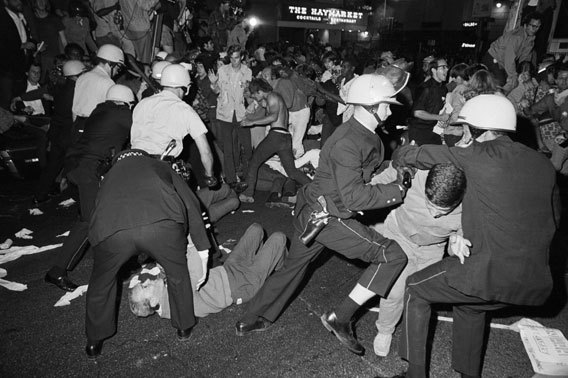
chicago-anti-war-protests-1968

I began my personal journey through the pandemic back in March. When I decided to write my thoughts on what was happening in my tiny corner of the world I did it to leave a record for my grandchildren and great grandchildren yet to come. I would have liked to have had a written day by day account of how the Spanish Flu of 1918 affected my grandparents, but of course they were too busy simply surviving to have the luxury of journaling about their experiences and thoughts. Neither of my grandmothers were literate and both of my grandfathers were laborers who only got paid when they showed up for work. I feel certain that they simply pushed through that pandemic hoping that they would stay well so that they might provide for themselves and their families.

My writing has not so much been an unbiased historical account of Covid-19 as a depository for my feelings. In describing what I see happening I almost naturally draw on a lifetime of experiences and perceptions. At first I viewed the virus as a kind of adventurous challenge. I would surely show my mettle in being able to stay well and navigate through the restrictive days of isolation. I saw it after all as mostly a matter of staying busy and creating purpose for myself, but over time my emotions overtook my resolve. I looked outward and saw suffering on a grand scale. It became more difficult to simply enjoy the quiet time in my home when the numbers of sick and dying steadily increased. These were people and I could not even begin to imagine how their lives had been turned upside down. My goal became less and less about protecting and entertaining myself and more and more about doing whatever I needed to do to flatten the exponential curve of disease.

I was bemused and saddened as I saw great rifts developing within our population over how seriously to take Covid-19. I am a mathematics teacher and from a family of engineers and scientists and doctors. I suppose that I am inclined to make decisions based on research and data from experts and so it seemed ridiculous to listen to anyone other than those respected for their work with medicine. As the anger in the nation grew and armed citizens stormed state capitols I found myself harking back to the year in which I married.

It was 1968, and at nineteen I was far too young to be making a lifetime commitment and yet events from that year had convinced me that reaching for love was the best decision I would ever make. In that fateful year Dr. Martin Luther King, Jr. had been assassinated in Memphis, Tennessee. Not long after presidential candidate, Robert Kennedy, was gunned down following his primary victory in California. The year was filled with student protests and when the Democratic Convention was held that summer in Chicago things turned violent as protestors clashed with the police. I would always remember 1968 as both the year that I married and perhaps the worst year in the country’s history during my lifetime.

At my wedding the priest who gave the homily spoke of how much courage and optimism it took for two people to look to the future given the violence and divisions that seemed to permeate every corner of the nation. He applauded Mike and I for demonstrating the certainty of our love in uncertain times. I felt and understood every word that he spoke and prayed on that evening that peace and justice would one day become the rule for America.

Now more than fifty years later I was spending day after day inside my home with Mike and we both somehow felt as though what was happening was profoundly worse than anything our country had endured in our lifetimes. Little did we know that in the very week when the nation recorded its one hundred thousandth death that ghosts from our past would rise once again.

I wonder how it can be that only about a week ago we watched in horror as police officers took the life of George Floyd in a brutally cavalier fashion. He was only forty six, young enough to have been one of my children. He had grown up in Houston, my hometown. He attended Yates High School and played on their football team. By all accounts from those who knew him he was a sweet man who traveled to Minnesota to get a fresh start in life. On the day he was murdered he had used a counterfeit twenty dollar bill to make a purchase. We don’t know if he was even aware that it was bogus but that is neither here nor there. The manner in which he was ultimately mistreated is all that really matters and as I watched the painful last moments of his life it felt as though all of those years when I chose to set the pain and injustice of 1968 aside had been a selfish unwillingness on my part to face bitter truths. We have problems that have yet to be addressed and no slogans or hats or pretense that they are not still with us will make them go away anymore than pretending that Covid-19 is a hoax will allow us to resume business as usual without fear of more sickness and dying.

I have forced myself to watch the unfolding tragedy of pent up anger night after night. It is a painful thing to see. I do not like it. I want it to stop, but I know deep down inside that it will not go away permanently until we face it squarely and fairly just as we must face the virus. The tragedy of what is happening in our country today is not that we don’t have normal graduations or that our European vacations have been cancelled but that people are suffering and yet we are anxious to get everything back to normal even as we sense that nothing is normal. We are fooling ourselves if we just ignore the cries for our attention, for our help.

Using dogs and force to control human beings was a common method for those who enslaved the ancestors of many of the young people who are shocking us with their behavior in the streets of America’s cities. Vigilante lynching was used to keep the newly freed slaves in line after the Civil War. Even when Martin Luther King led peaceful protests the great grandparents and grandparents of today’s young people met with billy clubs and rubber hoses wrapped with barbed wire. When American athletes quietly kneeled during the National Anthem to demonstrate that Black Lives Matter they were loudly criticized and their efforts were mocked and ignored. I wonder how far any group of people can be pushed before their anger boils over in the kind of lawlessness that we are seeing? I wonder how we and our children and grandchildren would be acting if the tables were turned?

There are forty two million black Americans living in our country today. Only a handful of them have taken to the streets and even among those who are protesting an even smaller number are committing illegal acts. Nonetheless the vast majority of all African Americans are viscerally hurt and filled with grief and anger that even after all this time discrimination based on the color of their skin still exists. They are the group most affected by Covid-19 in this country. They are the most affected by the massive unemployment that has resulted from the pandemic. Nearly every problem our country has affected them more than any of us.

Our African American coworkers and neighbors and friends need us to finally hear their pleas and understand that while slavery was long ago the indignities associated with it have yet to be fully resolved. We cannot fool ourselves into thinking that just because we do not personally discriminate that there is no need to continue the efforts to eradicate the underbelly of racism. We can no longer rely on an Abraham Lincoln or a Martin Luther King to do the heavy lifting for us. We must lead ourselves out of this wilderness and into the promised land by setting things right once and for all. For surely if we only clean up the damage and go back to our normal lives the ugly stain of slavery will continue to haunt us all. 

We Can’t Keep Looking Away

Georgia-shooting-of-Ahmaud-Arbery-will-go-to-grand-jury

I have a grandson who is a runner. Seeing him gracefully striding around a track is a thing of beauty, the ultimate vision of human endurance and grace. He has a particular racing style that reminds me of a gazelle and I never tire of watching him in action.

This would have been a record breaking year for him but sadly after only a few track meets the season ended when schools were closed due to the virus. He has continued to run each day nonetheless. Those moments when he is able to feel the wind on his face and achieve a feeling of being totally in sync with the world have been good for him. They allow him to forget about the troubles we are facing if only for a few minutes each day.

I thought of my grandson when I first heard of the killing of Ahmaud Arbery in Georgia by two men claiming to have taken him down under suspicion of being a thief on the run. When I eventually saw the video of Ahmaud in his last moments I was stunned. I saw his jogger’s stride before he encountered his attackers. This was not the furtive motion of someone evading capture. It was most certainly the pace of a seasoned runner who was pursuing a most innocent pastime. He must have been terrified as he realized what was happening and he struggled unsuccessfully to get away from the danger. Watching the film is exceedingly difficult and heart wrenching but we cannot look away from it because it holds a truth that we must face.

Of course there is a difference between my grandson and Ahmaud that is striking. Ahmaud was a black man while my grandson has blonde hair and blue eyes. Ahmaud had a lovely smile that lit up his face, but those vigilantes who became judge, jury and executioner without even a consideration of evidence would never have seen his sweetness. The color of his skin and the fact that he was running was all they needed to know.

Sadly they got away with their crime for a time. Law enforcement accepted their story and seemingly decided the case was closed. Ahmaud might have been just another casualty of racism, the victim of a lynching, had not his mother continued to question the circumstances surrounding her son’s death. Eventually videos of the scene that had been filmed by passersby emerged providing an unavoidable clarity for determining what had actually happened. Over seventy days later the two men were arrested.

My daughter says that she does not worry when my grandson runs in the neighborhood. He is a good boy and almost everyone knows him, but she understands that if she and he were black she would be terrified each time that he set out from home with his track shoes. We still have far too many in our country who seem to believe that color, not character defines people. They are suspicious of anyone who does not fit the stereotypes of their minds and sadly too many among us excuse their flawed thinking. It is easier to look away when people spew their hate and sometimes even our leaders attempt to cover the ugliness of such actions by insisting that those who spread their foul beliefs are really just good people who are frustrated or feeling left out.

As humans we often feel so uncomfortable confronting truth. When athletes kneel during the National Anthem to shed light on the racism that still exists we tend to ignore or insult them. On the whole we are unwilling to admit that there is a double standard that lurks beneath the veneer of our society. Groups among us will become enraged when a white hairdresser is jailed for flaunting restrictions during our pandemic, but they can’t see the reasoning behind the Black Lives Matter movement. If groups of minorities protest it is often called a riot but if gun toting white men scream in the faces of state troopers because they do not want to be restricted by pandemic rules even our president applauds them for fighting against tyranny. Then those same folds scratch their heads in wonder when any minority feels beset upon.

I’ve been having a difficult time maintaining my usual optimism for the past couple of weeks. I am witnessing a level of anger and ugliness that I have not seen since my high school and college days when we were engaged in a struggle to end segregation and a war in Vietnam that had gone so very wrong. It was a frightening time during which the curtain that had been hiding the rot that festered in our nation was drawn wide open. A schism rocked the country and we all found ourselves either choosing sides or averting our glances and joining the silent majority. When the dust finally settled we were eager to just go back to a more normal state, but far too much had simply been swept under the rug where it has been sitting ever since becoming foul. Somehow our nation’s biggest mistakes have never been properly faced and rectified. We are still too afraid to admit that while we have freed the people whose ancestors were wrongfully enslaved and even given them the rights that we take for granted they are still struggling to be free from judgement and persecution. We have yet to adequately call out the racism that exists in corners of our society and because of that it only tends to grow.

I realize that we will never be able to eradicate hatred. It is been a part of the human experience since Cain killed Abel. All across the globe one group fights with another. What we can do is call out those who flaunt their racism in the public square. We must insist that our leaders deride any person or group who discriminates and foments violence against a particular group. We have to quit categorizing individuals based on the characteristics of color or ethnicity or sexual preference or religion and we need to voice our disdain for those who do.

Our future in the coming weeks and months is uncertain but while we are rebuilding our economy we would do well to consider insisting that our leaders understand that we have grown weary of accepting a status quo that still allows stereotyping. We need to finally speak up. Looking away is no longer an option.

How Do We Talk To The Children?

landscape-1445910041-g-talk-555173815We turn on the television to watch a couple of football teams duke it out on the gridiron and before the first play begins we see many of our heroes kneeling during the playing of the National Anthem. It angers some of us, and others appreciate that every citizen enjoys the freedom to protest. We begin a national discussion that sometimes devolves into an argument about how we should react to this development. Our president insinuates himself into the commentary using a pejorative to address the athletes that he finds offensive and suggesting that those who dare to insult the country should be fired. We line up to take sides. Some turn off their televisions and vow to never watch the NFL again. Others celebrate the rights of Americans to exercise their freedom of speech regardless of whether or not we agree with their sentiments. Many simply shake their heads and attempt to ignore the whole thing. In the midst of all the brouhaha we wonder what we should tell our children. How should we explain to them what is happening?
We live in a country that was founded with a rebellion against the perceived tyranny of a government that had lost touch with the needs of the people. At first there were merely demonstrations of dissatisfaction with the ever growing demands and limitations being placed on the colonists in America by a king and parliament too removed from the realities of daily living in the strange faraway place that seemed so rough and wild. Eventually the whispers and grumbles took on a more daring turn with rebels pouring tea into the Boston Harbor and concerns becoming more and more vocal and strident. Then came the shot heard round the world, the volley that began a war for liberty. It was a treasonous time when the leaders of the revolution risked death by hanging to create a nation far different from anything the world had ever before seen.

Perhaps it was a fluke that the ragtag band of revolutionaries somehow managed to defeat the most powerful nation in the world at that time. Whatever the case they found themselves freed from the dictates of a government that had often ruled without consideration of the people, ordinary citizens who had insisted that they it was their birth right to have a voice in how they were to be treated. The new nation needed a Constitution, a set of rules to guide the decision making and management of a disparate group of people. The document that they created was at once both brilliant and imperfect, but it held the seeds for eventually moving toward a more inclusive and more perfect union. More than two hundred years later we still have work to do. We have had to face the hypocrisy of having been a democracy that allowed humans to be held as slaves and denied that women had the same rights as men. It took us perhaps to bit too long to remedy those situations, but we eventually managed to become more inclusive. In the meantime the residue of problems not adequately addressed from our government’s beginnings continue to demand attention, and so we have protests from some of our star athletes. Just what is it that they want?

If we begin with the individual who first remained seated during the playing of the national anthem we find that he was concerned that there is still racism in our country. He believed that in spite of a civil war, a civil rights movement, and civil rights legislation there are still too many people in our country who do not receive the same level of equality as those who have held the privileges of liberty from the beginning days of our nation. He worried that many whose ancestors were once slaves are more likely to be brutalized or even murdered by law enforcement officers. He wanted to bring attention to these issues and so he remained seated. After a discussion with a member of the army after his first demonstration he changed his tactic to going down on one knee out of deference to those who have served our country in the military. His point was not to show a lack of respect for our flag, our national anthem or our veterans, but to shine a light on issues that he felt we need to address as a nation.

This athlete’s cause had lost its energy to a large extent until President Trump made remarks at a political rally in Alabama that some felt were out of line and threatening. He called out any athletes who demonstrate their dissatisfaction by taking a knee and referred to them as “sons of bitches” who should be fired from their jobs. His remarks were well received by some citizens and abhorred by others. A national disagreement has ensued resulting in ever more professional athletes joining in the revolt by kneeling in solidarity with teammates who had been quietly protesting. So what is really going on here? Who is being patriotic and who is treasonous? How should we respond?

Let us start with a bit of the history of our national anthem and our pledge of allegiance. First it must be noted that we did not have a national anthem until March 3, 1931, when Herbert Hoover signed a law deeming The Star Spangled Banner to be our national song to be sung at official gatherings. Several other tunes had been in the running and the winner was selected by a rather narrow margin. We might just as well have been singing America the Beautiful, The Battle Hymn of the Republic, Yankee Doodle, Hail Columbia, or My Country Tis of Thee all of which were finalists in a contest that began with a cartoon from Robert Ripley of Believe It or Not fame. It seems that on November 3, 1929, Mr. Ripley registered his amazement that the United States was one of the few countries in the world that did not have an official anthem. He urged his readers to write Congress asking the lawmakers to rectify this omission. More than five million people sent letters and the search for a fitting song ensued. Even after the decision was finalized there were many who were gravely disappointed by the ultimate choice and others who felt that if the Founding Fathers had wanted to formalize an anthem with all of its ritualistic insinuations they would have done so. Since that had not happened many took it to be a sign that the founders did not approve of such things. Nonetheless we had an official anthem and slowly but surely it became a fixture of American life.

The Pledge of Allegiance to the flag did not happen until 1942, when some citizens began to worry that the large numbers of immigrants who had come to this country might not understand the true nature of our nation. It was used mainly as an educational tool for children rather than a symbol of patriotism. The original version was written by a socialist newspaper editor and did not contain the words “under God.” That phrase was added in the nineteen fifties, so the history of pledges and anthems is a rather recent cultural phenomenon. Many religious groups exempted themselves from participating in such rituals because they felt that they should only swear their loyalty to God and not to a country.

So here we are today taking sides or ignoring the dust up altogether when the truth is that we can’t be certain that those who wrote our Constitution ever intended for our country to enshrine such symbols as indicators of patriotism or a lack of it. The protestors themselves insist that their intention was never to be disrespectful but to take advantage of their rights of freedom of speech as it was written in the First Amendment. Perhaps when discussing all of this with our children we would do well to attempt to determine how our leaders have interpreted that right over the history of the United States. So forthwith are a few quotes of merit. I will let the words of the individuals speak for themselves.

If the freedom of speech is taken away, then dumb and silent we may be led, like sheep to the slaughter. —-George Washington

Without freedom of thought, there can be no such thing as wisdom and no such thing as public liberty, without freedom of speech. —-Benjamin Franklin

To announce that there must be no criticism of the President, or that we stand by the President right or wrong is not only unpatriotic and servile, but is morally treasonable to the American people. —-Theodore Roosevelt

Once a government is committed to the principle of silencing the voice of opposition it has only one way to go, and that is down the path of increasingly repressive measures, until it becomes a source of terror to all its citizens and creates a country where everyone lives in fear. —-Harry Truman

We must always take sides. Neutrality helps the oppressor, never the victim. Silence encourages the tormentor, never the tormented. —-Elie Wiesel

Those who make peaceful revolution impossible will make violent revolution inevitable. —-John Fitzgerald Kennedy

Congress shall make no law respecting an establishment of religion, or prohibiting the free exercise thereof; or abridging the freedom of speech, or of the press; or the right of the people peaceably to assemble, and to petition the Government for a redress of grievances.

Read to your children. Look up ideas together. Discuss issues from both sides. Dialogue with them without rhetoric or preconceived notions. Teach your children to open their minds to new possibilities. That is what they need. That is how to talk with them about what they see happening.

For the Love

mlk8We hear a great deal about patriotism these days but what is it really? Is it only about displaying outward signs of allegiance to this great nation of ours, or is it something deeper, more visceral? I happen to believe that it is all about loving the United States of America so much that one is always concerned about it’s welfare. Sometimes that means having to do difficult things to ensure that democracy remains robust and available for each of us. That might mean serving in the military to protect freedoms, one of the noblest sacrifices that a citizen may make. It may also mean that an individual has to take a stand for what is right and just that is uncomfortable and maybe even misunderstood. Both of these behaviors are necessary at times in order for our country to sustain the principles upon which it was founded, and those which needed to be part of the compact made for the people of this land but were unfortunately omitted from the original declaration of rights. It is not only those who sing anthems and place their hands on their hearts who demonstrate patriotism, but also those who urge us to consider problems that need to be addressed to create an ever more perfect union.

I love this country in a very emotional way. I am filled with gratitude that I may call this glorious land my home, but I am not so prideful to believe that we are without our problems. We all know that there are certain difficulties that have plagued us from the very beginnings of our most remarkable government. It surely must give us pause to realize that we began this great democratic journey with slavery legitimized by law. How can we read the documents that counted enslaved people as two thirds of a person without feeling sorrow? Certainly we eventually had the moral courage to do what was right, but it should never have taken as long as it did. It is the main reason that I sob each time I stand inside the Lincoln Memorial and think upon the courage and patriotism that Abraham Lincoln possessed even to the point of being murdered for his beliefs. Thank God that he so loved this country that he was willing to endure great sorrow and the slings and arrows of criticism to finally set it on the right course. That was patriotism at its very best.

Most of our black neighbors are the descendants of slaves, people who came to this country in chains. A visit to an historic plantation is a painful experience. Walking through the splendor of the antebellum homes of slave owners and then seeing the horrific conditions in which their slaves lived is humbling and causes me to experience great sorrow. It doesn’t take much imagination upon seeing the implements by which the slaves were kept in line to realize how horrible their existence was. It is a blot on our history which we will only eliminate when we are all willing to accept that what happened to those who were treated as property was very wrong.

If we had simply moved forward once slavery was outlawed perhaps we would now be living as brothers and sisters. Instead we spent another hundred years segregating the blacks from our lives. I vividly remember what that looked like and it was ugly. Blacks lived in neighborhoods far from the rest of us. Their children were often housed in inferior schools, although there were incredible efforts made by their own people to overcome all of the educational handicaps that were thrown at them that even included barring black children from libraries. I remember the signs that kept our black neighbors from using our water fountains or bathrooms. We so cavalierly embarrassed our fellow citizens again and again. Sometimes there were even those who terrorized them with fiery crosses. I shudder when I think of a symbol of Jesus Himself being used in such a hateful way.

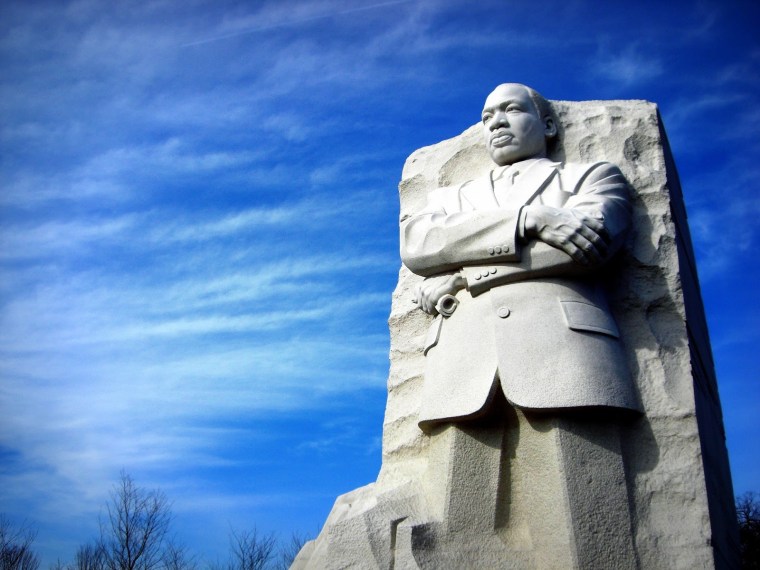
I could go on and on about what I witnessed, inhumane treatment that seemed unfair even to the child that I was. It was with great elation that I saw heroes like Dr. Martin Luther King, Jr. challenge our country to correct the inequalities that were legitimized with laws that were unjust. Without violence he led a movement that would eventually overturn many of the inequities, but not until he and his cause had endured great strife and violence. He is to this very day another of my heroes, equal in stature to Abraham Lincoln. Dr. King is in my mind one of the great patriots of American history who raised our consciousness and challenged us make our country a better place.

Many seem to believe that the equitable evolution of the United States of America is finished. Sadly there is still work to be done, questions to be considered. As long as we still have situations in which certain classes of people are considered less eligible for our God given rights and freedoms, we must continue to insist that we have the moral fortitude to continue the discussions and take the needed measures to perfect our system of government. Those who wish to make America better are the true patriots, and it up to all of us to acknowledge rather than condemn their efforts.

We tend to view violence and riots as nonproductive ways of fighting for rights. We don’t really listen to people who would burn and destroy. It somehow seems counter to their arguments for justice. So we should be open to hearing the grievances of those who choose more peaceful means of highlighting their causes. What are people to do when we reject both methods? What are they to think? How frustrated they must be when we turn out backs without attempting to understand their frustrations. Thus it is with our current situation. Our history with the people whose ancestors we treated with so much disrespect are merely asking that we try harder to show them that we no longer view them as somehow being lesser citizens than we are. We insult them when we only react to their pleas with anger or when we ignore them altogether and wrap ourselves in our flags of patriotism as if we are somehow better Americans. One who truly loves this country would want to pause long enough to consider why people would subject themselves to our ire. If things felt okay and wonderful to them surely they would not risk so much to stand up for what they believe to be right and just. Why then can we not at least take the time to listen and dialogue rather than indicting them and accusing them of being unAmerican? Isn’t that a dramatic step backward? Can’t we see the irony in suggesting that they go away if they don’t like what is happening to them?

My heart is filled with nothing but love and appreciation for this country, but I also understand that it is not yet perfect and maybe never will be, but I am enough of a patriot to want it to be. I truly believe the the greatest patriots that this nation has known have been those who stood for something so important and so real that they were literally willing to make every imaginable sacrifice for the good of their fellow citizens. I stand with Abraham Lincoln, Dr. Martin Luther King, Jr, and the men and women who fight for all of our freedoms in foreign lands. I also stand with those who have an important message for us to really hear. I will still get goosebumps when I hear the national anthem. I will feel a sense of relief when I return to my country from foreign soul. I will pledge my allegiance with all of my heart, but I will never turn my back on anyone who simply wants to improve this great land. Like a parent who guides a child and builds his/her character, so too are those who alert us to the things that we are doing imperfectly the true patriots among us. 


Our Greatest Gift

bn-fi133_speech_gs_20141031151239I have long been a voracious reader, a willing student of things both old and new. I enjoy considering ideas and long for the days of my youth when academic institutions were places of free discussion, fountains of information from multiple avenues of consideration. I was taught by my academic mentors to be open to points of view different from my own and to listen carefully to even the strangest sounding arguments, for within even the ridiculous there is much to be learned. “Perception often defines individual truth” my professors suggested. Our beliefs are built on the foundations of our unique experiences. Our thinking is the sum total of the knowledge that we have learned and the emotions that we have felt. Our outlooks are slowly programmed as we travel through life. Unless we are willing to understand the totality of what has brought an individual to a particular conviction our arguments for or against will fall on deaf ears.

I loved the frankness of unforgettable discussions from my college days. We were encouraged to feel comfortable with a variety of philosophies. Our reading lists often included the works of thinkers who ran the gamut from the far left to the far right. We were told not to blindly accept any argument but rather to consider both the pros and cons of everything that we encountered. Lemmings and sheep were rarely welcome in the classrooms of my youth. We debated each idea on its merits and everyone felt free to hold a forum. The experience was exciting and it molded me into the open minded person that I have always attempted to be.

In the present days we seem to have adopted a different way of approaching conflicting ideas. The debates of old have evolved into wars of words. Certain ideas are not even allowed to be uttered. We are more often than not forced to choose sides even before we hear the totality of the arguments. Those who suggest that we look for compromise in thinking are thought to be non-thinkers, weaklings unwilling to take a stand. We are told that we must be on the right side of history as though there is a clear and concise way of determining which side that is. Our leaders expect us to be automatons who utter our beliefs in unison and without thoughts or questions. I shutter whenever I hear the same lines being repeated regardless of whether they come from the right or the left. Too many of us have become consumers of propaganda, believers without doing research. We follow the boy who cried wolf rather than the one who pointed out that the emperor has no clothes.

I have had to counsel college students who received failing grades on persuasive papers not because their arguments were not rational and grounded in research but because they did not regurgitate their professors’ points of view. I have spoken with young people who fear making their true beliefs known lest they become ostracized. I have watched friendships dissolve over conflicting philosophies. I wonder when our democratic society began to forget the importance of the liberty imbedded in our right to freedom of speech.

I came of age in turbulent times. My male peers were being sent to a war that many of us questioned and others supported. The dream of full integration for our Black brothers and sisters was yet to be fulfilled. My own religion was being transformed from an archaic Latin based liturgy to one that embraced many languages and tore down barriers between the clergy and the congregation. Women were forging new territory in careers once thought to be the exclusive domain of men. There was an excitement in the conversations that we had with one another. Sometimes we found ourselves in the company of friends whose thoughts were diametrically opposed to ours. We gathered around tables and debated sometimes heatedly but always in the spirit of learning. We almost always walked away with our friendships intact despite our differences.

Open debate is frowned upon today. We politely avoid topics that might bring about conflicts. We no longer know how to enjoy a lively discussion without becoming emotional. We spout sound bites rather than reasoned ideas. We close our minds and leave the room if anyone dares to utter political notions. Our feelings are so easily hurt. It is a sad state of affairs.

I find myself missing my mother-in-law more and more. She and I used to sit at her dining room table enjoying tea and cookies while our husbands watched football on Sunday afternoons. She was a convert to conservatism and I was still in my intensely radical progressivism days. We often spoke about the history of the world and the possibilities of its future. She wanted to know what I thought about the economy, international relations, religion and other subjects that would be taboo in most of today’s polite circles. She always listened with respect and then quietly presented her own reflections. We learned from each other without judgement. She was a brilliant woman who might have been intimidating had she simply closed her mind to what I had to say. Instead she taught me the power of truly open debate among friends. It is difficult to find such enjoyable adversaries like her in the super charged environment as we begin 2017.

I suspect that I am not the only one who is weary of the unofficial civil war that is waging across the globe. I’d like to think that our teachers and professors will one day return to a way of teaching our young that allows for great freedom in the exchange of ideas. I would like to see an end to the rampant use of group think in our institutions. We need more reality television like the thought provoking debates between Gore Vidal and William F. Buckley that were so popular in the late sixties. I want our news reporters to state facts, not opinions. I would rather have them ask questions and then simply listen rather than arguing and attempting to push their own opinions on all of us. I will miss Gwen Ifill because she was one of the few journalists who always remained fair minded

I was impressed by something that Van Jones of CNN recently did. Rather than repeating the idea that those who voted for Donald Trump are mostly deplorable woman hating racists he set out to learn what had really prompted them to give their nod to Trump. He travelled to different parts of the country and sat informally across from Trump voters encouraging them to talk while he listened. What he found was that their main motivation was in wanting to be heard. They felt as though they had been forgotten and somehow Trump had made them believe that they were as important as anyone in America. It was not hatred that drove them to the polls but a sense of longing to be noticed.

In the long history of the world people have time and again asked for the freedom to voice their personal concerns and to state their ideas for solving problems. It has only been when humans have been willing to consider alternative points of view that progress has been made. Our Founding Fathers understood that. They set up a republic rather than a pure democracy because they realized that it was a way to hear the voices of even those in remote corners of the nation rather than only those in our most populated areas. They long ago sat through a hot summer risking their very lives so that we might one day be able to speak our minds without fear of being silenced or imprisoned. They heard the different voices from the colonies and compromised to insure that farmers would have as much power as industrialists. They found consensus between great thinkers as different at John Adams and Thomas Jefferson, those who advocated for a strong federal government and those intent on guarding the rights of the individual states. Their genius, with the help of James Madison, eventually gave us freedom of speech in a Bill of Rights that was unmatched in the history of the world.

Let us think twice before we continue to abridge our right to peaceably assemble or petition the Government for a redress of grievances. Let’s honor our differences rather than recoil from them. There is still room in this country for both the Black Lives Matter Movement and the Tea Party, for socialists and libertarians, for democrats and republicans. We might all want to become better acquainted with the members of each group and open our minds to what they are trying to say. Freedom of speech is perhaps our greatest gift as citizens let us all encourage its unfettered exercise.