It Goes On

dark swamp2

I suppose that my Facebook wall is mostly like the idealized version of what Mark Zuckerberg once intended it to be, due to my incredibly insightful and interesting friends and family. Each morning I scan the posts to find lovely photos of children, grandchildren, pets, travels, and good times. In the mix there are invariably yummy recipes, guides to local events, and inspirational thoughts or articles. Now and again there are pleas for prayers from someone who is experiencing difficult times, a health problem or even the death of a loved one. My wall has never really been a respository for attempts to influence my thinking on politics or any other topic save for a random comment now again from one of my more politically minded acquaintances. Instead it is a source of joy and support and a way of keeping in touch with people about whom I truly care.

I check my wall each morning while I sip on my tea and munch on my breakfast. I usually rise earlier than my husband so the house is quiet save for the chatter and laughter of the children waiting to catch the school bus on the corner. I sit in my front room and enjoy a moment of peace and serenity while learning about whatever has happened while I was sleeping. Now and again someone posts something that burrows deeply into my heart. I think about it throughout the day and sometimes long past the moment when I first read about it. Such it was a few days ago when two of my sweet cousins both shared the story of a young poet.

It seems that there was once a young man with a creative and poetic mind who was struggling mightily with the seemingly unrelenting tragedy of his life. His father was an alcoholic who eventually died from complications related to his drinking. He left the family all but penniless and struggling. Both the young man and his mother suffered from bouts of depression which was perfectly understandable given their circumstances. Adding to the young man’s woes was the fact that his attempts to publish the poems that he had worked so hard to produce had been totally unsuccessful. To make matters even worse he had a devastating row with the young girl who had stolen his heart and they had a soul crushing breakup. In a moment of sheer desperation he gave her a copy of his poems and tore up the only remaining one that he had. Then he walked away determined to end his life.

He appeared to wander aimlessly even though he had a plan for ending it all. He went into up in a dark swampy area that seemed to match the sorrow of his mood. Even though he had originally determined to end it all he just kept walking and at some point he changed his mind, found his way out of both the swamp and his sadness, and decided to carry on with the rest of his life.

The man whose journey almost ended before it had truly begun was Robert Frost. He went on to become one of the most beloved American poets in the world, winning multiple Pulitzer Prizes and earning the title of Poet Laureate. On the occasion of the inauguration of John Fitzgerald Kennedy as the President of the United States Robert Frost was honored by being selected to read one of his poems. (Oh, and he even made up with the girl that he so loved and she became his wife.) His life was celebrated by people from around the world as he lived to a prosperous and honored old age. When later asked about his advice for life he remarked, “It goes on.”

This was a message that I needed to hear and one that I know to be so very true. Few of us have an easy time here on this earth. Life is hard work and often filled with disappointments and suffering. There are moments when our burdens become so heavy that we wonder how we might possibly keep fighting the good fight. Sometimes it feels as though nothing is going our way. We walk in the miasma of a dark and dank swamp seeing hopelessness at every turn. It is only in “going on” that we eventually see the light of day once again. We invariably find that while our lives may not have taken the turn that we had hoped, they sometimes become even better than we had hoped.

I think of this often. I recently recalled a time when I was working in a school with people that I dearly loved. I literally believed that I would be like a female Mr. Chips and work there for the duration of my career. Sadly a new principal came and upended everything that I had enjoyed about being there. I realized that I could not bear the authoritarian and contrary nature of her leadership and so I reluctantly left without really knowing where I would ultimately land. I was anxious and melancholy and even angry. It took me weeks to get over the despair that I was experiencing. Then I found a new job that would change the course of my life. It was there that I learned how much strength I really had and it was there that I found some of the very best years of my educational career. It was also there that I truly experienced the realization of how life indeed “goes on.”

I cannot imagine how different I would have be if not for some of the moments when I was challenged to keep going into the darkness or choose a different unknown path that lead to the light. Sometimes it is truly in our most hopeless moments that we find what we really need. Like Robert Frost we learn from our suffering and choose to just go on.


Taking Some Stress Out of Christmas

dishes

So many people get annoyed with those of us who start shopping and prepping for Christmas when Halloween has barely passed, but I find that if I don’t do a bit here and a bit there for many weeks I get caught at the last minute expending all of my energy in one fell swoop. Instead I learned long ago that if I slowly chip away at all of my Christmas tasks and I will have time to enjoy the season with friends, neighbors and family. It takes a bit of planning but I learned how to do that quite well as an educator when I had to be certain of teaching all of the concepts within a certain timeframe.

One aspect of my holiday traditions is the sit down dinner that I host on Christmas Day. I truly enjoy readying my home for that gala but in the past few years I have found that I spend most of the day getting the food served and then cleaning all of the dishes and pans for hours afterward. I have lovely Christmas place settings that are so festive but they generally have to be washed by hand and doing so takes far more time than it should. I have guests who quite sweetly attempt to help but the problem is that they get to visit with every one even less time that I do when they volunteer, and that isn’t much fun for any of us.

This year I decided to do something about the one Christmas duty that I abhor. I made a visit to the Party City website and ordered plastic plates that appear to be elegant china with matching bowls, dessert plates and even cups. All I need now are a few of those huge Costco garbage bags and the cleanup will be quick and easy. I will spend my time actually enjoying my guests rather than making sure that my kitchen stays orderly enough not to be designated as a toxic waste dump.

I still plan to use my Christmas tablecloths and napkins. They are easy to just toss into the washing machine. I also plan to set out my mother’s silver and the pewter utensils that my dear friend Egon left for me upon his death. I really don’t care to eat with plastic knives and forks and spoons and using the real thing will not create much mess at all. The entire lot will fit nicely into a sink of hot soapy water where it can soak until later. I’m thinking of maybe going with throw away serving bowls as well, but I have a wonderful Christmas platter that I always use for my roast or turkey or ham. It is a tradition that I refuse to surrender. It won’t take much to clean it and put it safely away. 

I feel a bit guilty about possibly damaging the environment with so many disposable items. The modern trend is to recycle everything but I will be seventy one this month and quite frankly I am tired of the annual cleanup. My mother-in-law announced her retirement from hosting the Christmas gala when she was younger than I am. My mother followed suit rather quickly thereafter. I don’t want to give away my day to provide the family with a feast just yet, but I am going on strike over the task of using all of the good china. I don’t think anybody really cares what the plates look like as long as what is on them tastes good. I’ll spend more time perfecting my menu and less washing and drying crystal and china.

Everyone seems to have a great time on Christmas Day. They have lively conversations and play games. I tend to be puttering about for so long that by the time I finally join the group they announce one by one that it is time to go home. I suspect that such has been the lot of women for decades. We eat our food cold and perform the “Martha” role to the point of missing all the fun. This year I am going to remedy that.

I’ve even sent out a family email to determine what everyone actually wants to eat this year. I have set a deadline of November 18, for the input and I will go by majority rule. I think it will be fun for everyone to have some say in what we our feast will be.

Many have suggested that I have a potluck but I don’t mind the cooking at all. It is one task that is fun for me and I prefer knowing ahead of time how to balance the meal. Besides the idea is that the dinner is a gift from me to the family. It is the one time of year when everyone comes and I have the honor of treating them. I get great joy out of the entire event.

I’ve bought a few Christmas gifts already. It’s easy to find great gifts for some people and almost impossible for others. I don’t know how it is for anyone else but the men are the hardest for me. I can only purchase so many ties or shirts or books or whatever. The guys tend to have very specific desires whereas women like just about anything. It will take me many weeks to figure it all out and then I will just have to hope that I have hit the spot.

Christmas is undoubtably my favorite time of the year and I plan to keep streamlining it so that I can get every bit of enjoyment out of the season and keep stress at a bare minimum. I’ll let you know how the plastic place settings work out. I suspect that they will be a hit.

Our Human Dilemmas

uyghurs-680x444

There was a time when most of us who are common folk knew little about what was happening in the world outside of our own little communities. News from other parts came slowly if at all. We humans concentrated on the problems of daily life that affected us directly with little thought of what life was like outside of our narrow sphere of reference. Even as late as the end of the nineteenth century most people lived in relative isolation.

My grandfather often spoke of life on his grandmother’s farm and his lack of knowledge of the happenings outside of the insulated world of his youth. It was not until World War I that the average person began to take notice of the symbiotic nature of world politics. That feeling of being part of something larger than a radius of a few square miles beyond our homes grew even stronger with World War II. By the mid twentieth century we were developing a worldview that even included a foray into the universe.

As we have navigated the political waters of worldwide citizenry we have had to determine what exactly our obligations to people outside of our own borders are. There are few clear guidelines and so we tread a wary line between isolationism and serving as geopolitical saviors of those who are being persecuted across the globe. Sometimes it is difficult to determine who the players are. There are no perfect guidelines for choosing sides, and often we wonder if we should even think of getting involved in the politics of places so far from our own. Moral questions abound in the many decisions that we must make, none of which are without contradictions.

Our human natures prefer clear choices between good and evil and so we often attempt to distill complex issues into very simple ideas. In the process we are bound to make mistakes because very few political questions have easy answers. When we make our issues partisan we run the risk of ignoring realities on either side and making things ultimately worse. Rhetoric and emotion are more likely to result in stop gap measures rather than long tern solutions that will endure the tests of time.

The world is on fire in so many places, few more frightening the Xinjiang region of mainland China. In the north west corner of that nation there live a Muslim minority group known as the Uyghurs ( pronounced “Weegurs”). The Uyghurs speak a Turkic language and have a culture far different from the rest of China. They were incorporated into the country in 1949, but mostly lived in their own way until more recent times. Of late the Chinese government has cracked down on them with tactics that should alarm the entire world, but very little of their plight has been discussed by the world powers.

It is believed that upward of one million Uyghur men have been sent to reeducation camps that were hastily built in the Xinjiang region. Some of them have seemingly disappeared and are thought to be dead. Stories of torture and murder are rampant. While the men are imprisoned Chinese males from other parts of the country are sent to take over the Uyghur homes, often forcing the wives who have been left behind to cohabit. Whispers of rapes and great fear are captured by the thousands of cameras that police the region. At any given moment the people are subjected to random searches and accused of being enemies of the state simply because of the way that they walk or present themselves.

There are countless stories of minority people being threatened, imprisoned, and killed in places across the globe. Our instincts tell us that we should somehow help but caution asks us to wonder if and when it is right to interfere in the workings of countries that are not our own. After all, we argue, we have enough of our own problems right here. There are signs of injustice in our own backyards. Should we clean our own house before we are audacious enough to find fault with others? What is the red line beyond which we can no longer simply sit back and watch horror unfolding? How much of our own human and financial treasure are we willing to invest in problems that don’t appear to directly affect us?

These are the questions that plague us and none of the answers are either obvious or without grave concerns. Doing nothing or doing the wrong thing has consequences, some of which we cannot foresee. Our natures leave us frozen with indecision while ideologues rush in head first  often seizing the day and the power. For the most part the rest of us just quietly go along, allowing the squeaky wheels to get all of the attention until things come to a dangerous head forcing us to act one way or another. In the meantime there is so much suffering in the world that is seemingly unchallenged.

Our own civil war was bound to occur because slavery was indeed wrong and our nation was irreparably divided as to how to uncouple itself from something so horrific. In the end as is too often the case it took outright war and horror to force the issue. Perhaps the fact that the rest of the world chose to simply watch as we fought brother against brother rather than choosing sides whether for humane or financial reasons was the right response. Maybe in the long run each country has to find its own way out of social and political divisions, but what about those instances that aggressively overtake and murder innocents? Are we morally bound to help them in some way?

These are the kind of questions that fill my head and I know enough about history and human nature to understand that the world has been filled with intrigue since its very beginning. Knowing when to intervene on behalf of a person or a group is a tricky thing but something that we should always seriously consider not as a means of gaining our own power but as a way of protecting those unable to protect themselves. Such discussions should not be a matter of partisan preference but honest communication in search of reasonable answers.

Right now it feels almost impossible to achieve such noble goals. I worry about what may have to eventually happen to bring us to our senses, to help us understand that we should not be enemies. History tells me that it may be a very unpleasant learning experience that we must endure before we find our way. I pray that we figure that out before it is too late.

A New Way To Praise

christ5d-2.jpg

I once went to a church service with one of my former students. As a cradle Catholic I grew up with a very formalized kind of religion that has often been critiqued and misunderstood so I kept an open mind as I experienced a very different way of connecting with God. After a reading from the Bible and a few words from the minister the people began praying aloud, sending their petitions to God all at one time in a confusing mix of sound. I was not quite sure how to react so I simply attempted to quiet my mind. That’s when I began to hear the profound beauty of their individual prayers and their deep faith that God would somehow comfort them and ease their pain. Before long the sounds of their very personal pleas brought tears to my eyes and a realization that each of us longs for hope and peace in different ways.

My mother was a confirmed Catholic. She believed in its teachings and traditions with all of her heart. Nonetheless she was quite open to other religions and often voiced her philosophy that her main hope was that each person would find a relationship with God in the manner that worked best. To that end she was just fine with the idea of people following their own hearts in deciding which kind of religion worked best for them. She believed that God comes to humans in many forms. She had great respect for the beliefs of others but was always troubled by those who thought that the very idea of a
God of any kind was a human myth. She prayed that each person might find the goodness and power that she felt from a closeness with a personal God.

I watched my mother’s faith and prayer life take her through challenges that might have defeated a lesser person. There was nothing easy about her life and yet she was known far and wide as an optimistic and happy person, someone who gave when she had so little of her own. I witnessed her love of God firsthand and I saw the incredible strength that it gave her. It convinced me that she was not just experiencing some human fairytale. What she felt was unexplainable in the scientific sense but nonetheless quite real.

Religions of all kinds have taken heat in the long course of history. My own Catholic Church is a target for derision these days because of scandals that shake the very foundations of belief. Other sects sometimes appear to be far less kind that they ought to be. The human discussion of all things spiritual is often fraught with anger and hypocrisy and yet at the heart of the matter is the idea that there is a being much bigger than our humanity upon whom we should depend. For some this is the stuff of legend and a source of ridicule, but for people like me and millions of others it is a deeply held conviction.

The most recent class that I have been taking at Rice University School of Continuing Education centers on the Stuart kings, the monarchs who took the throne of England after the death of the childless Elizabeth I, the last of the Tudor rulers. That particular moment in history was marked by sometimes violent religious struggles between the Church of England, more fundamentalist sects like the Puritans, and the Catholic Church. At that point in time the tendency was to attempt to eliminate any group of believers who did not concur with the monarchy and the national church. Strict laws prohibited true freedom of religion and in many ways served to influence later attempts to form fairer democracies, including the one that resulted right here in the United States of America. By law we are supposed to be as tolerant of all faiths as my mother always was.

I bring up all of this because I see so many instances of derision and sometimes even hatred being aimed at various religious groups and individual beliefs. We all too often presume to understand what is in the hearts of people who profess particular philosophies. We judge in places where we have no business to do so.

A perfect example of this is to be found in the person of Kanye West, a brilliant and talented musician and master of words who has by his own admission led a troubled life. Much like my mother he is challenged by the sometimes crippling mood swings of bipolar disorder. He has courageously admitted to having this terrible illness even knowing that it is so misunderstood. We are still in the dark ages when it comes to tolerance and compassion for the mentally ill, and so Kanye has been ridiculed and sometimes even spurned in his journey to find peace of mind. Along the way he has experienced a seemingly dramatic conversion to the Christian faith.

His enthusiasm for Christ has been mocked by those who think that perhaps he is just going through a manic phase. They call him crazy and joke about the strange twists and turns of his life. Others cynically suggest that he has just found a new way to make money. They see his foray into religion as nothing more than a scheme. Thus his new album Jesus Is King has been panned by many of his critics as little more than the mad ravings of a diseased mind.

I have listened to Kanye’s songs that praise the glory of Christ and I hear instead the work of a genius who has found a power that had previously been missing from his life. I applaud his courage in putting his entire career and reputation on the line with such a daring project. He will no doubt be questioned and misunderstood by many but the message in each track tells the story of someone who truly believes. He has taken his God given talents and used them to shout the good news that he has found. Jesus Is King is a gloriously creative gift, not the ravings of a madman and it is impossible and even wrong for any of us to question what truly lies in the heart of Kanye West. Instead we should celebrate the happiness and comfort that he appears to have found in God.

Liturgical music has included the compositions of giants. There have been Gregorian chants and litanies, symphonies and gospel pieces. Now the voice of Kanye West uses rap to tell of the glories of Jesus. It is both brilliant and lovely. His is a new way to praise. We should all celebrate that he has found a way to ease the tempest in his mind by sharing his genius with those of us who believe.

Hats

hat

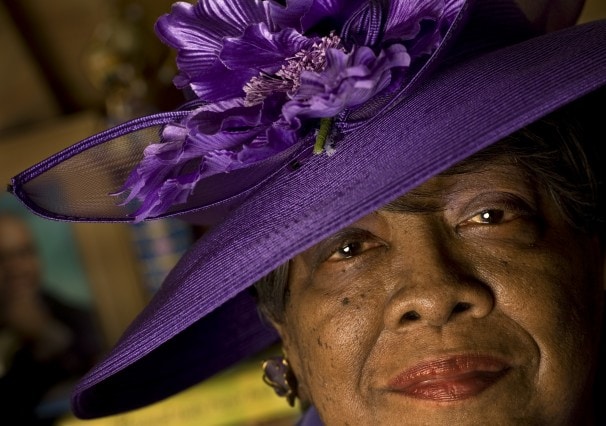
I love watching the old black and white movies from the thirties, forties and fifties. They remind me of my childhood and how lovely my mother and aunts were when they were young women. In those old films the ladies always wear glamorous hats and the men sport fedoras. It’s actually the way people dressed whenever they went out on the town back in the day and it was always fun to watch the parade of people styling in their finest fashions. I sometimes think that most of us have lost the sense of elegance that was more commonplace decades ago. We are certainly more comfortable but there was something so refined about the efforts that people made when they went to church or just on a downtown shopping excursion.

I still see those who go all out for Sunday services. They wear fashions worthy of a visit to the Queen of England. They don lovely bonnets and wear stockings with their polished pumps. They are a lovely sight and in my mind they present an aura of respect for the occasion. They take the time to elevate their style from the more casual look of jeans and flip flops or sneakers. they stand out from the norm in their fastidiousness unlike the times when dressing up was more common place. 

When I was a young I always had a pair of dress shoes, gloves and a hat at the ready for Sunday services at church and special occasions. The millenary sections of department stores were filled with delightful bonnets of every conceivable style designed to perfectly compliment whatever outfit a woman or girl might wear. In all honesty I never looked particularly good in hats but I loved them nonetheless. I always managed to find at least one that complimented my features that I kept in a round hatbox of the kind that was a mainstay in most women’s closets.

I must admit that all of the lovely styles were sometimes distracting at church, especially on Easter Sunday when there was a virtual parade of fascinators bearing flowers and feathers and veils. It was a day when the old hats that were beginning to fray just a bit were put aside in lieu of the newer models for the spring and summer months. Along with all of the spring frocks, white shoes and spotless gloves the hats were indeed a sight to see.

Whenever we went shopping in downtown Houston my mom would insist that I dress in my Sunday best which meant polishing my shoes until they gleamed, wearing nylon stockings, putting gloves on my hands and donning whichever hat I had that went with the season. We’d catch the city bus so that we would not have to worry about parking a car and ride to Main Street feeling a sense of growing excitement about our adventure.

When we entered the splendor of Foley’s Department Store we felt as grand as any of the ladies wearing Chanel suits, designer hats and furs even though our fashions had been purchased in the bargain basement downstairs. I always thought my mother was one of the most beautiful women of all in her lovely dress and chapeau. She had an elegance that transcended the cost of the things that she wore. She carried herself with so much dignity and confidence that she might have been a resident of River Oaks. I always felt that those little accoutrements like gloves and stockings and hats were the keys to adding a touch of glamour to the occasion.

My husband tells me that he too accompanied his grandmother on shopping excursions downtown on many Saturdays. She had a large collection of hats that she always wore whenever she went out. She was a rare beauty who was able to choose any style and look stunning. She might literally have stepped out of one of those old films that I so enjoy with her sense of fashion and the hats that complimented her lovely features.

The days of men and women wearing fine hats as a matter of fashion are all but gone. The gimme cap is the choice of most men and women rarely cover their locks. Hats are more likely found in antique shops than in department stores. They are the stuff of  history that is slowly fading. We find hats for sale at amusement parks and quirky gift shops. We wear them on Halloween and at festivals but not so much on fine occasions. We seem to prefer to be relaxed and unencumbered by excess gear. Comfort is our accessory of choice.

I enjoy the notion that the members of the royal family in England still adhere to the old ways. Their custom demands that the ladies wear hats for special occasions. The queen always reminds me of my own mother whenever she appears in public. She has her lovely suits and still wears stocking on her legs and always there are her beautiful hats that make her look elegant even as she grows old.

Some traditions are so lovely that they should always have a place. Wearing hats is one that I think we should revive. I greatly admire those who have never given up the custom. They are so wonderfully lovely.