The Stranger

active adults bars blueprint
Photo by Fancycrave.com on Pexels.com

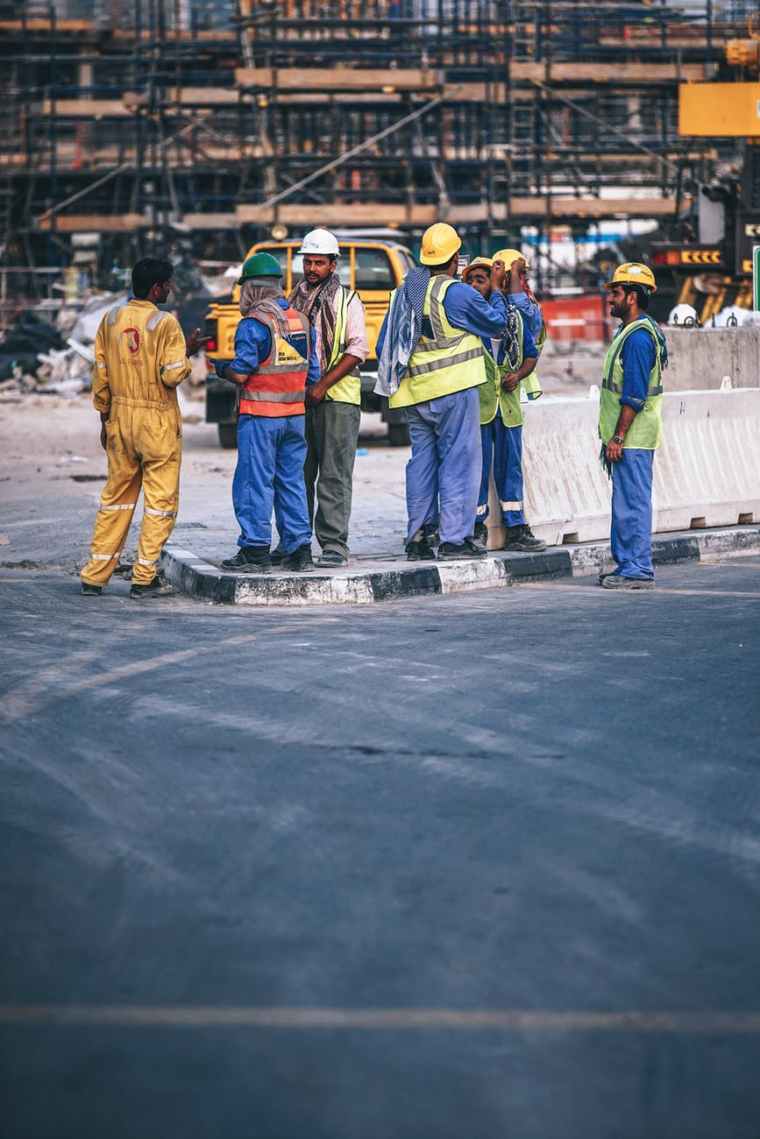
It was a very hot August day when the sky began to darken and lightning cracked nearby. I was a passenger riding in the comfort of my truck when a I saw him, an elderly man with skin darkened to the color and texture of leather from working outside all day. He was on a riding lawn mower, desperately attempting to finish his job before the rains came. He wore a straw cowboy hat and a bandana was tied around his neck to prevent the sun from burning his skin. His work clothes included a pair of khaki pants and a long sleeved shirt, a uniform well suited for the kind of labor he performed. I thought of how noble he looked as he continued to cut the grass and the weeds even as the threat of a storm became more and more imminent. I found myself wondering who this stranger was, where he and his family lived, how he had come to be so dependable and hard working. I wanted to know his story, for he reminded me of my grandfather who had once labored in a meat packing plant cleaning carcasses and dirty floors. He too had worked proudly and reliably to feed and clothe and house his wife and children.

All too often people like this man go unseen, invisible figures in the routine of our lives. We do not think to notice the challenges that such people face or to wonder how the world is treating them. Does he get stereotyped merely because of his complexion or the dirt and sweat on his clothes and skin? Do people turn up their noses at him simply because he does a task that few of us would ever want to do? Is he viewed as an outsider, an outcast, someone that we would not care to have near us even though he is doing an honest day’s work? How often is he misjudged?

I found myself thinking of this man long after our brief encounter. The rains started within minutes after I drove past him, no doubt either drenching him or interrupting the cadence of his work. I thought of how there are so many individuals who labor long and hard day after day only to earn barely enough to stay afloat, and yet they show up to perform their duties again and again because they are unwilling to simply exist through the charity of others.

I recalled a conversation that I once had with one of my students who revealed that he and his mother cleaned office buildings until the early hours of the morning. It was how they paid their rent and kept food in their pantry. He would return home each evening to sleep on the couch rather than in a bed because his siblings had already filled the bedrooms. He snoozed for a few hours and then awoke to go to school to wrangle with his teachers before heading to his night time job. He was a bright boy, but his grades were dismal because he had little time to complete homework assignments. He had to choose between studying and helping his family, and, of course there was no contest as to which to do in his mind. He was perennially exhausted, so he considered dropping out and maybe getting a second job and a bit more sleep. So many people thought that he was lazy, having little idea of how truly wonderful he actually was. Eventually his fate was determined by the economic demands that he faced. He left school, knowing of the dreary prospect of living from hand to mouth for the rest of his life unless some miracle allowed him to return to his studies.

We only think we know and understand those who struggle with poverty or live differently from the ways that we do. We pontificate about the importance of education and working hard and adhering to a budget as though the people who are facing unimaginable challenges are always responsible for their own fates. We choose not to see through their eyes, instead passing unfair judgements that are not backed up with evidence.

Another of my students once cried in my office as he spoke of his mother. This was a big and tough young man who seemed to have no fears. In truth he worried about the woman who loved him so much that she worked double shifts even though her health was rapidly failing. He described how she often came home from her job so tired that she fell asleep in the car, unable to make those last steps into the comfort of her home. When she did manage to stumble inside he would see that her ankles were swollen twice their normal size and the veins in her legs were bulging. She would be out of breath, almost unable to even speak. It was a sight that worried him, but he felt as though there was little more that he might do than earn a high school diploma, become certified for a trade, and then support her so that she might finally rest. He hid is concerns behind a kind of bravado peppered with jokes and attitude. He too was often estimated wrongly by well meaning adults who truly believed that he would never amount to anything. Their expectations for him were nonexistent, so he created his own goals and dreams.

I’m happy to say that both of these young men eventually did well through sheer will and a great deal of hard work. They have survived in ways that few of us would be able to manage and created bright futures for themselves in spite of their circumstances and little encouragement or support. They make me quite proud because I know what it has taken for them to make the changes in their lives and those of their family members. They are glorious in my mind just as that man on the tractor and my grandfather are.

It is sadly true that far too often those who do not match our own standards are thought to be somehow inferior. If we were to take just a moment to walk in their shoes we might learn that they are instead quite remarkable. Such wonderful souls deserve a salute for they are truly the salt of the earth. Think about that next time you see someone toiling away.

Honor the Young

person wearing hearing aid
Photo by rawpixel.com on Pexels.com

Every single time that I  hear some older person calling young people “snowflakes” I go into a slow burning rage inside my head. It is an epithet invented to cast aspersions on the thinking of  teens and twenty somethings who hold progressive points of view. The idea is that the youngsters are so fragile that they simply can’t bear critiques or differing ideologies. The insinuation is that they are silly, close minded and of little substance.

While there may very well be some young folk who are a bit spoiled and unwilling or unable to accept philosophies that run counter to theirs, the truth is that there are also middle aged individuals of more conservative bent who have the same trouble. Some of them are actually in high political positions and they often tweet their discontent. For the most part, however, I find the current crop of young men and women to be exceedingly hard working, earnest and determined to make a very positive difference in the world. The fact that they are a bit more liberal than their more aged counterparts has little to do with their level of courage or good intent.

It has long been a trend for young adults to be on a kind of search for truth and meaning in their world. It is in their natures to question the status quo and seek changes that they deem to be fair and more just.


Socrates once said, “The children now love luxury. They have bad manners, contempt for authority: they show disrespect for elders and love chatter in places of exercise.” This of course was noted about four hundred years before Christ walked on the earth, and I find it remarkable how it might have been said last week by some pundit making observations about today’s kids. In fact there are many such quotes that are part of our discussions of the young versus the old in political matters. We’ve all heard the quote, “If you are not a liberal at twenty five, you have no heart. If you are not a conservative at thirty five you have no brain.” It is a bit audacious in its sweeping assumptions, but we laugh at it because it bears a grain of truth. Indeed we often become more cautious as we grow older, but that does not make us wiser or more righteous. Thus, I find it beneficial to show more respect to the thinking of our younger generation than we generally do.

In 1776, when our Founding Fathers signed the Declaration of Independence their average age was forty four. That being said more than a dozen of them were younger than thirty five and among those some were still teenagers. In fact, the American Revolution as with all such sweeping changes was much more of a young man’s cause than that of older men. James Madison was only twenty five when he penned his name on the Declaration of Independence and the current hero on Broadway, Alexander Hamilton, was a mere twenty one. Young adults are more often than not as passionately concerned about the world as those thought to be more mature.

I enjoy the conversations that I have with my former students and my grandchildren regarding the political conditions of the world today. I prefer listening to them and asking them questions rather than challenging their ideas. I find it enlightening and quite hopeful to hear just how much they have considered the various issues with which we continually grapple. They are far less likely to simply accept a particular way of thinking without considering many different possibilities. Their beliefs are mostly based on a great deal of thought and research. They are involved in internal debates as they search for the best ways of doing things. They have the audacity to think outside of the box and come up with ideas as radical as revolting against the most powerful government in the world to create a new nation conceived in liberty.

I find myself spending hours listening to young men and women who are more than ready to do their share of the heavy lifting in the world. Of course they differ somewhat from me because many of their experiences have been different from mine, but they are not unpatriotic or inconsiderate or lazy or spoiled. They simply look at the challenges that we all face from the vantage point of having an entire lifetime ahead of them rather than having walked through a lifetime. Their youthfulness does not make their thoughts any less valid than mine or any other older adults, but it does tend to make them more inclined to envision new and exciting possibilities. I find that when I listen respectfully the favor is returned when I speak. A rational and fruitful discussion ensues. It is when we disregard the fervor of a young person’s enthusiasm that we create an emotional impasse.

Each of us longs to be heard, to be understood. All we ask is that we be accorded an opportunity to speak our minds with impunity. All too often we create situations by dismissing certain forms of speech before they are even uttered, leaving us in a “them or us” kind of division. Hurling insults without thought only further inflames the situation.

During the height of the Vietnam war when so many of us were protesting what we believed to be a terrible mistake, far too many adults treated us as though we did not love our country. They did not seem to understand that it took great courage and much patriotism to speak out against what we saw as a wrong. There was a great divide that lead to unnecessary violence and clashes that might never have happened if only each group had been willing to sit quietly and consider each point of view. The frustrations came from all of the misunderstandings that came from assigning insulting labels to each cause, and pitting young people against their elders. Sadly we did not seem to learn from those mistakes.

The next time you find yourself wondering what a young person might possibly be thinking, instead of writing him/her off as a snowflake, try encouraging a true conversation with the intent of learning rather than judging. I believe that you will find that we are all seeking most of the same things, we simply have different ideas about how to achieve them.

Honor our young. They will one day be taking the reigns of leadership and helping us in our final days. I for one feel comfortable that we will be in very good hands.

Changing the World One Person At a Time

36285163_10214036549806978_1792077685531344896_o.jpg

I watched an interesting movie, An Inspector Calls, a few nights ago that has stayed on mind. It was based on a play written by the English author J.B. Priestly and was first performed in 1945. It alludes to the impact that each of us has on the people that we encounter, even when those meetings are impersonal and brief. Each day as we go about our lives we are leaving impressions that either enrich or hurt the people with whom we interact. What we say and do is affecting someone’s psyche in deep and meaningful ways, making it imperative that we think before we act. 

All too often we are wrapped up in our own trials and tribulations, forgetting the power that we yield in even the most mundane situations. If we are irritable, taking out our frustrations on complete strangers we may think little of our actions, but our anger may in fact ruin the day of the person who is the recipient of our barbs. How we choose to treat people actually matters, and may in fact have lasting consequences of which we are completely unaware. So why wouldn’t we continually do our best to more pleasant and understanding?

According to a recent 20/20 episode road rage has become a national problem. In city after city there have been tragic cases of individuals who become so angry that they lose their composure and end up creating mayhem in the process. Far too many people are coming unglued and overreacting to snarls of traffic. Everyday folk become Mr. Hyde when they take command of the driver’s seat in a car. They forget that the automobile can become a weapon with fatal consequences when emotions take hold.

Extreme examples of people snapping and resorting to violence are still mostly rare, but we all too often use our words to tear people apart. It has become more and more acceptable to speak our minds, as though being brutally forthright is a badge of honor rather than the destructive force that it actually is. We sometimes even applaud those who utter vile things about the people with whom they disagree. It’s supposed to be a sign of toughness to be able to take an insult on the chin, but I find myself wondering how much damage is being caused by the deep hurt that is being so nonchalantly used to win arguments. Sticks and stones may indeed break our bones, but words are often even more powerful in breaking spirits.

I have to admit to feeling a bit sad these days as I see so much mean spirited behavior being bandied about without much thought. I find myself wondering how many souls are quietly hurting because of the suspension of manners in so many situations. Surely we must all be somewhat affronted by commentaries that threaten and insult. Where is the kindness that we know is far more effective in healing?

I was impressed by former President Barack Obama’s speech in South Africa upon the occasion of what would have been Nelson Mandela’s one hundredth birthday. He pointed out that Mr. Mandela understood the importance of forgiveness and understanding in leading a nation. Even though he had been imprisoned and treated badly, he chose not to hold grudges against those who had tormented him. He realized that the only way to bring his country together was to mend the divisions and bring all of the people together.

I have found that the greatest people of all time have understood the basic principle and power of love. Abraham Lincoln, Gandhi, Dr. Martin Luther King, Jr., and of course Jesus Christ followed a righteous path of justice, inclusion, and above all nonviolence. They were willing to forgive, to understand, to create alliances between people of different beliefs. In the final analysis we are all stronger when we come together in a spirit of forgiveness and peace.

I have a friend named Andriel who personifies the way in which each of us may play a small role in making our world a better place to be. Andriel’s life was shattered a few years ago when her beautiful daughter was killed in an automobile accident. The tragedy touched many of us, but its effect on Andriel was unimaginable. From the ashes of that time, Andriel has worked her way back to wholeness not by stewing in anger over the unfairness of her plight, but by reaching out to one hurting soul at a time and embracing them in their moment of need. She has healed herself by healing others, and continually being conscious of the power of even the smallest of her actions. She encourages  and inspires all who know her to consciously embrace and appreciate the people around them with positivity. She is a life coach who has walked in a valley of pain and sorrow only to emerge more whole than ever before. Her secret to being a joyful minister lies in opening her heart in all that she says and does, remembering how fragile each of us sometimes may be.

Andriel has advised those who follow her to spend some time each and everyday helping to mend someone who is broken. Make that phone call. Send that text. Say those words that are in your heart but somehow remain unspoken. Let people know how much they mean to you, how much you love them. Your efforts may make all the difference in someone’s life.

We don’t have to be victims of a movement of so called strong men and women who would abase and belittle us. We can do what we know is right and muffle the sounds of ugliness. There are more good people than bad. That has always been true. We have the power to change the world, one life at a time.

When Two Beautiful Hearts Become One

37125721_10212650429280251_3292675091942342656_oThey were a cute couple, high school sweethearts who fell in love. Paul was a football hero, an all state lineman who was a beast on the gridiron, but a teddy bear off the field. It is little wonder that he was attracted to Shirley who was a real beauty with a warm and inviting smile. They found each other when they were still young kids, but they both understood that somehow their relationship was meant to last for the duration, and so they married fifty years ago.

Our world is overrun with problems these days. Divorce is on the rise, almost commonplace. Families are often torn apart by differences, disloyalty, and neglect. All too often relationships fizzle out before they have even begun to take hold. Single parent families are on the rise. Young people are wary of making promises to one another. Not so with Paul and Shirley. They not only pledged to honor and cherish one another till death, but they made good on their oaths to one another as their lives unfolded in one decade after another.

I knew Paul from a time when he and I were a young children. I met Shirley in high school. I was in awe of both of them even back then because they each appeared to be so genuinely kind and humble. Shirley was a particularly sweet person who rarely thought of herself, but always did her best to make those around her feel welcome. She was the kind of person who went out of her way to notice the one individual who was feeling uncomfortable or ignored. With her ever present calmness and inviting smile she took the time to say a hello or just to inquire about how someone was doing. I loved and admired her so, thinking myself quite fortunate to know her.

Paul was so handsome and gifted in his athletic prowess. I on the other hand was so awkward that he scared me just a bit, but like Shirley he had a million dollar smile and a way of being so open and friendly that I somehow felt okay around him. His innate sweetness was both charming and refreshing, and when he and Shirley began dating I thought that they were indeed a most perfect couple that somehow the angels had put together.

High school graduation came and I lost track of many of my classmates, just as always seems to happen. I went my way and Shirley and Paul went theirs. It would be almost five decades before I saw them once again and I learned that they had enjoyed a beautiful life together. As always both of them spent more time listening to the tales of others than boasting about their own accomplishments. They were as sweet as they had ever been, and it did my heart good to know that with a few ups and downs, they had mostly enjoyed the years.

Shirley was even more beautiful than ever, and her iconic smile still radiated the same loveliness that lit up her eyes and revealed the inner beauty of her heart. Paul was like a rock, one of those incredibly kind men who is unafraid to show just how much he cares about people. Together they had created  a loving family and worked to cement the relationship with each other that they had built so long ago.

Just about a year ago Shirley and Paul’s home flooded from the rains of Hurricane Harvey. Instead of complaining about the slowness of the recovery, the pain of losing so much, they instead smiled as they always seem to do, and worried about how everyone else was doing. In the midst of their own troubles they took the time to send me a lovely card expressing their hopes that my husband would fully recover from his stroke. I suppose that they never really knew just how much their thoughtfulness meant to me in that moment, but it was so typical of them to be selfless.

Anyone who has ever met Shirley and Paul Jauma knows just how much they love one another. Theirs is a union grounded in a deep faith that God is a partner in all that they do and endure. They have taken their vows to a spiritual level that is not often seen and have made good on the promises that they exchanged with each other on their wedding day. Their fifty years together have inspired the people who know them as evidenced in the many tributes that have come their way.  We find ourselves feeling so happy for them, and fortunate to number them among the people that we have known.

Shirley and Paul are quiet people who laugh at any suggestions that they are somehow icons, but I know differently. They represent the best of humanity with traits that are all too infrequently seen. I suspect that if there were more people like them in the world, we would be a much happier lot. They have much to teach all of us about love and what it really means to honor and cherish another person for a lifetime.

I’m quite delighted for Shirley and Paul Jauma, and I pray that they will be blessed with many more years together. We all need to witness their model of a loving couple, and I thank them for sharing the goodness of their hearts.

Still Young and Beautiful

14711048_10209517113076623_2425488735163912169_oI’ve often been told that my blogs about people that I know are my best. In all honesty they are also the easiest to compose. The stories write themselves mostly because people are innately interesting, and the ones who have been part of my life are particularly so.

I grew up in a little neighborhood in southeast Houston. At the time it was almost on the far edge of the city, just barely outside the area that now encompasses Loop 610 which was not constructed until I was a teenager. The enclave was part of the post World War II boom and it centered around churches and schools and family life. In many ways it was a “Leave It To Beaver” kind of environment in which children were generally protected from the troubles of the adult world.

I attended a Catholic school because back then parents were told that it was their duty to provide a religious education for their children. The tuition was minimal, so it wasn’t a particular sacrifice for my parents to pay the monthly fees, particularly when my engineer father was still alive. After his death it became a hardship for my mother, but the nuns who taught at my school hired her to work for them and announced that free tuition was one of the perks of employment. Thus my brothers and I spent our earliest years in classrooms together with other Catholic children.

In the fifties and sixties in seems as though adults didn’t change their addresses nearly as much as they now do. Once we moved into our home on Belmark Street we essentially had the same neighbors until we ourselves became adults and struck out on our own. The same was true at school. With only a few exceptions we grew up with the same set of kids and got to know them quite well. Their parents were friends with ours, so it was as though we all belonged to a huge extended family.

Many of us went on to attend Mt. Carmel High School after the eighth grade. I received a scholarship which made it possible to continue my education in familiar surroundings with friends I had known from the time I was six years old. Sadly there were those who opted for the local public high school which had one of the best reputations in town. I missed them terribly when they were gone, but I made knew acquaintances with kids who came from a variety of Catholic schools in the southeast and east Houston areas.

As is true with most high school students I foolishly believed that the people that I met during my four years would all be lifelong friends. I did not realize that graduation was a turning point at which time we went forth in far too many directions to remain as devoted to one another as we had once been. Over time I slowly lost track of all but a handful of the people that I had known and loved, often wondering where the others were and how they were doing, but too busy to take the time to track them down.

Decades passed and suddenly there was this thing called social media that allowed us to communicate with friends and family without leaving our homes. Little by little I found long gone but never forgotten friends and began to vicariously follow the routines of their lives. Through the extraordinary efforts of individuals like my friend Carol more and more of my former classmates were found and just seeing that they were still alive and well cheered my heart.

It’s difficult to adequately describe what we shared in those long ago years when the foundations of our academic and spiritual educations were being built on very solid ground. Our differences came in the years that followed, but in many ways they were only superficial. What bound us together was a long history of learning the importance of the one commandment that truly matters which is “Love thy neighbor.”

I am neither a republican nor a democrat. Instead I am fiercely independent, but many of my school chums are die hards in their political persuasions. My own philosophies often confound them and they have even been known to chastise me for what they believe to be unwise thinking. This sometimes angers people that I have met later in life, but it only makes me smile. What I know is that even in our differences there is a commonality of truly caring about our world and each other that was imbued in our very natures long ago. We were not so propagandized that we became nonthinking clones, but rather we were taught to consider many points of view before choosing our own. The one constant, however, was the knowledge that God is our protector and that we in turn must be protectors of His people.

From what I can tell we’ve done a grand job each in his or her own way. We run the gamut from  Paul who is as progressive as anyone might become to Ted who is a staunch defender of conservative ideas. What guides us is memory of those long ago school days when we learned and played and laughed together. Somehow those times glued us together even as we went out on our own to discover more of the world. We now come together with little thought of our differences because what we share is far stronger.

I feel blessed to have the opportunity of getting to know my old friends once again. There was a time when such reunions would have been unlikely. Now I have the privilege of sharing the ups and downs of their lives. I see the smiling faces of their children and grandchildren. I commiserate with them in times of stress, health problems or deaths. I celebrate their birthdays and marvel at images of their vacations. Mostly though I remember them when they were young and beautiful and full of boundless hopes and dreams. I see that like me they have survived the roller coaster ride and are doing their best to be the kind of people that the adults who guided us hoped we would be.

I am so proud of my classmates, my friends. They have worked hard to be good people, and all of them are. I hope they know how much I admire them, and how happy it makes me to know them. My heart fills with joy whenever I think back to our school days. I laugh at the stories that I recall and wonder if they realize how much they have meant to me.

As we all enter our seventies we can no longer claim to be young, but from my vantage point I see that we are all still quite beautiful and young at heart.