In Defense of Boys

pexels-photo-277477.jpeg

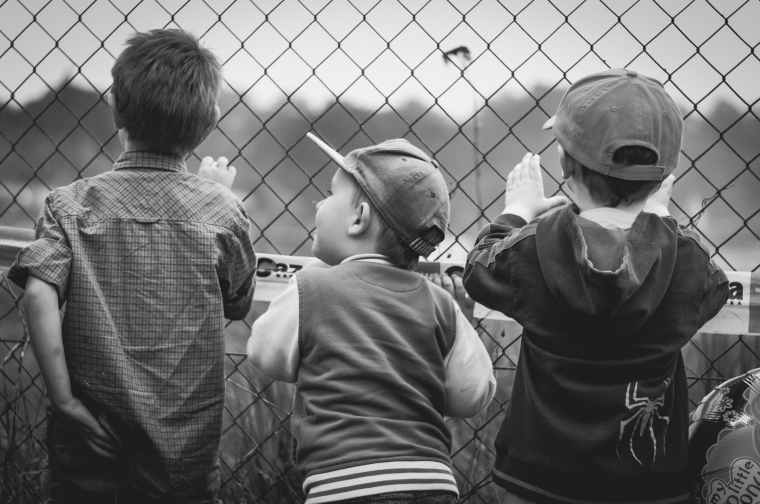
My time as a child was filled with boys. I had two brothers and a gaggle of male cousins. The only other girl, Ingrid, and I were the only girls at extended family gatherings, at least until the guys began to marry. When I became a mom my world changed completely when I had two girls. I sometimes wondered if my husband felt overwhelmed by all of the estrogen. As a grandmother I was back to what I had known as a young girl when six of my seven grandchildren turned out to be boys. I adjusted to the rough housing and gross jokes quickly because the habits of young males were all quite familiar to me. 

I have to note that neither my brothers nor my cousins ever treated me as though I was somehow less than they were just because I was a girl. The only abuse that I sometimes endured from them came in the form of crass jokes that I soon enough learned to laugh about. All of those guys celebrated my successes and encouraged me to reach for all of my dreams. When I met my husband the supportiveness continued on steroids. I grew up believing that I was one hundred percent equal to any man which is why I find myself wanting to defend young boys these days from a kind of implied assault from rabid feminism. As sometimes happens the effort to create a level playing field for women has at times resulted in some people believing that the only way for girls to rise up is to pull down the guys. Because of my own positive relationship with boys I find this kind of thinking not only to be troublesome, but more pervasive than it needs to be.

Of late, and in particular during Women’s History month, I have read a number of opinion pieces that are tearing into parenting practices for young boys and even the record of male accomplishments in the past. It is as though our society is in attack mode when it comes to maleness and that worries me for the sake of the boys as well as the girls. It’s important that we keep our perspective when it comes to raising our children and preparing them for the adult world. We have to remember that there are physical and psychological differences between all children and most especially between males and females. Teaching each person how to become healthy and happy requires individualization and an appreciation of diversity.

We sometimes hear of the battle of the sexes, and in truth we should not think of the realization of goals as being a kind of war. Certainly there are instances when girls are abused or harassed by men, but we all know of cases when women have taken advantage of good men as well. We should be aware of such outlying behavior, but also admit that for the most part the relationships between boys and girls, men and women is more akin to my own positive experiences. Our goal in raising our children should be to continually emphasize a spirit of mutual respect between all people regardless of sex. We only create more tension by insisting that boys are somehow a privileged lot who must be humbled so that girls will finally get their turn.

I go to the gym five or six times a week and I am steadily becoming stronger but I can’t help but notice that even the weaker men who use the weight machines before me are capable of lifting poundage that is far beyond my capacity. I don’t believe that this is because we have somehow given men more opportunities and encouragement for physical development, but because they have a different genetic and physical structure. When it comes to intellect the playing field is much more equal. Through hard work I was able to rise to the number one rank in my high school class. I did that not because someone held back the young men so that I would make better grades, but because I put in a bit more effort. Nonetheless, I always understood and appreciated that the males in my classes were as capable as I was. I just ended up with a slightly higher GPA than they did. In the end we were generally equal in abilities.

I had every opportunity accorded to the men both in college and in my career. I made my own choices and when I encountered the occasional male chauvinist pig I ignored him and worked even harder. Mostly the males with whom I worked pushed me to advance and be successful just as my brothers and boy cousins had. Ironically I was more likely to find problems with women than men when it came to road blocks on the job, so I’ve always wondered why our society is more and more often setting up barriers for boys while opening the gates for women.

Don’t get me wrong. I applaud the efforts of women to tackle male dominated jobs, and I am a realist when it comes to accepting the fact that there will be those who still harbor very old fashioned ideas about the roles of men versus women. I just want to be certain that in our enthusiasm to remember the women we do not steamroll the men. Progress is of little value if it comes at the cost of damaging half of the population.

So as we celebrate the advances of women and do our best to continue the progress that has been made, let’s all agree not to trample on the boys in our enthusiasm. We need for all people to be able to make the best of the talents and intellectual abilities that they have. Our goal should be to raise each child in an environment that motivates and inspires. Our focus should be more on the future and less on the mistakes and injustices of the past. If we are constantly indicting the boys for sins that we worry that they might one day commit we will stifle them in nonproductive ways just as was sometimes done in the past with girls.

Girl power is wonderful, but so is boy power. Together we can make a better more equitable world, but if we continually devolve into quibbling and put downs we haven’t got a chance. It’s time to work for everyone in a spirit of fairness. That’s how we create the adults who will one day be able to carry on the work of humankind.

Becoming Our Personal Bests

pexels-photo-618612.jpeg

I was driving home in the dark after spending the evening helping my grandsons complete a Geometry test review. It had been a long day and I was quite tired so I needed some sound in the car to keep me alert during the fairly long journey. I keep my radio tuned to NPR and just as I had hope there was an interesting program on the air. All of the guests were speaking about the idea of giving humans a small nudge to motivate them to do something difficult. It seems that there is a right way to get people to take risks and a wrong way that makes them complacent and uncomfortable with trying new things. Unfortunately much of the parenting and guiding and teaching that we tend to do is often exactly the opposite of how best to inspire humans,

As a mom, grandmother and long time educator I found myself instantly fascinated with the topic, so I turned up the volume and listened intently to a parade of experts giving pointers on how to create adults who are willing to push themselves beyond their comfort zones. It seems that every single theory was grounded in the idea that making mistakes can be a powerful tool for learning as long as it happens in the right kind of environment. If the emphasis is on personal growth rather than ranking, an individual is far more likely to demonstrate a willingness to venture into uncharted waters. There is something in our human natures that wants to be adventurous, but we throw on the brakes of caution whenever we realize that we are being compared and judged. We don’t want to be embarrassed by our mistakes and so all too often we quietly give up rather than endure the pain associated with failure.

One of the guests discussing this issue spoke of an horrific childhood experience that she had with a teacher who seated children in the classroom in order of IQ, from highest to lowest. Aside from the personal humiliation associated with such an arrangement she noted that it created artificial barriers to learning in which those lowest in the ranking began to believe that they didn’t have a chance to improve or master new concepts. It also segregated the students from one another by making them believe that those at the front of the class were smart and part of an exclusive group and those at the end were hopelessly doomed to uninteresting lives. The woman who was subjected to this horrible situation still shudders at the psychological damage it did to her and her peers.

My own high school experience was not much better. We were grouped according to an entrance exam and previous grades. Each six weeks a list noting our class rank was posted on a bulletin board in the main hall. We gathered together each time it appeared to determine where we were in the order, trying not to look at the very bottom because we somehow understood that there was indignity associated with being last. To this day I shudder at the idea of such shameless and ignorant humiliation that the listing created and the fear that it planted in me.

As humans we are born with a willingness to try different things. As babies we innocently explore and develop. Nobody thinks it odd that each little one grows at his/her own pace. It is the natural way of things and generally there is no worry unless the child shows signs of some type of extreme difficulty. In those early years our curiosity is at a peak. We want to know about and try everything. Learning is natural and fun. It is only when we begin to impose the artifices of tests and grades and competitions that many children begin to waver. When they feel that they are being judged badly because they are not quite as good as their peers, they sometimes slowly become and less and less inclined to participate in the process. In fact, even those at the top reach a certain comfort level and sometimes stop exploring lest they fail and lose their status.

As adults we want to encourage our young to be the best versions of themselves and so whenever they succeed at an endeavor we tend to praise them not so much for the attempts as for the outward judgement of their accomplishment. In other words we celebrate a good grade more than we cheer on effort. We pin our hopes on winning rather than a willingness to try. There is a kind of invisible ranking by IQ or ability that destroys a young child’s natural instinct to try things out. It deadens their souls just a bit, and in the worst case scenario convinces them that their possibilities for life are severely limited.

Sometimes it has the most deleterious effect on those children who started out at the top. They become so accustomed to being the best that they come unglued at the first sign of a challenge. They question themselves and withdraw from the race. They choose easy pathways that allow them to maintain their status, but their interest in reaching higher and higher is stifled. This is particularly true whenever a child suddenly fails after a lifetime of seeming perfection. We sometimes neglect to show them how to rebound from disasters.

The world will no doubt always be competitive but during the formative years the ideal is to instill a growth mindset into our young. We must strive to praise hard work and progress as much as mastery. We need to break learning down into doable chunks and celebrate the achievement of reaching particular milestones as much as we do high marks.

I have learned from watching my grandsons in swimming and track that each effort that they make is measured in personal improvements that may be little more than a tenth of a second. The focus of competition is with themselves. They understand that by beating their own records they move closer and closer to besting those who run with them. Races are generally won with very small but important differences. My grandsons work hard to close the gaps and they begin with themselves. Even if they do not gain a medal, they feel excited when they learn that they have shaved just a bit more time off of their own records. Improvement is a slow but focused process that they keep chasing because they are willing to stay in the race.

We can do so much much better with our young, but for now it is a difficult battle as long as tests are used to rank them, their teachers, their schools, and their communities. We are killing the natural instincts and curiosity one mistake at a time. Instead of encouraging our children to develop a love of reading we force them to submit to comprehension tests having little to do with how we humans enjoy the written word. We make the world of mathematics terrifying and far more difficult than it needs to be. We mystify science and insinuate that only a select few will ever be bright enough to work with its principles. We categorize children before they have even had the opportunity to explore and enjoy the wonders of learning. By the time we are adults we have boxed ourselves into rigid mindsets from which few of us ever escape.

It’s time for an overhaul of how we guide and teach our children. We have the know how and potential to use our most precious resource to the fullest. We just need to begin.

So Beautiful To Me

pexels-photo-658687.jpeg“She woke up every morning with the option of being anyone she wished. How beautiful it was that she always chose herself.” —-Unknown
I was a gangly, awkward girl all the way through high school, so shy that I often hid in the library pretending to do homework so I wouldn’t have to mix it up with my fellow classmates in the cafeteria each morning. I often found myself wishing that I was more like this girl or that. There was the beautiful young woman with that almost electric smile, the sweet person who was able to talk with anyone. All of them had something that I wanted and thought that I would never have, a car, a boyfriend, tons of confidence. I was a mound of teenage angst, and all the while so was everyone else but I had little idea that they were as confused and self conscious as I was.

Ultimately I grew up, literally overnight. When my mother had her first and scariest mental breakdown I found myself mostly on my own in finding her the care that she needed. My love for her was so strong that I was able to pull strength from deep inside my mind that I never thought that I had. At first I simply copied the attitudes of the women that I knew and admired for their courage. Eventually muscle memory trained from encounters with doctors and bankers and such transformed me into my own person. I no longer needed to pretend to be someone. I knew that I was someone.

I met a married a remarkable man who loved to tell the story of how he was “thunder struck” from the moment that he first saw me. He became my best friend and my muse. He thought that I was beautiful just as I was and that even my imperfections were made me unique. I was hardly the kind of person who would turn heads in a room full of people, but he convinced me that loveliness begins from inside and radiates outward with little relationship to external features. It is an aura derived from depth of character and inner determination to live life with joy.

I vividly recall the very day when I totally embraced and chose myself. It had started with an unremarkable daily routine of washing my face and brushing my teeth. I was in the process of hopelessly attempting to tame my fine fly away hair when I caught a unique glimpse of my image in the mirror. It was as though I was seeing myself with a new set of eyes, and I realized how much I liked me. I smiled at the realization that even if I had the option of being anyone I wished, I would choose myself. It was a stunning moment that transformed me forevermore. It was as though I had unlocked the power that had always been there, but I had never before realized.

Over time I worked with young adolescents in middle schools and high schools. I saw their unsteadiness firsthand, and understood that even the most self assured among them was in truth filled with self doubts and sometimes even self loathing. Trying to fit into our own skin is a painful developmental process that takes as much time to achieve as physical or academic growth. Researchers into such things now know that our brains are not fully developed until well into our twenties and even then some of us take a bit longer. Just as babies meet their milestones at varying ages, so too do we adults find and believe in ourselves at different times of life. Sadly there are those who sometimes never reach a point of fully appreciating their own essences.

Of course it is in our natures to question ourselves from time to time. The stresses of living bear down on us and cause us to become dissatisfied. We look over our fences and invariably find grass that is greener than ours. There is always someone who ages more gracefully, drives a better car, lives in a more exclusive neighborhood, earns more money. If we spend a lifetime of comparing we are continually wishing to be someone other than ourselves. We never quite reach that joyful moment of truly liking ourselves and wanting to be no other, or we interrupt our contentment with waves of jealousy.

I once read a book whose title now eludes me that posited a theory that even if we were to have multiple opportunities to think and act in ways other than the ones that we initially chose we would in all probability react to various people and events in much the same way. In other words we each view the world based on our genetics and environmental realities, and those factors guide our thinking through a series of motions and emotions that slowly but surely teach us how to be. We become ourselves through trial and error, and hopefully learn to accept ourselves with whatever strengths and weaknesses we may have. As mature adults we work with what we have to make the changes that we desire. We learn to use our best traits not so much to make ourselves more attractive, but to better the world around us. The most lovely among us are those who have been able to think less about how they may appear and more about how to help the people they encounter.

I now enjoy and embrace the opportunities to be with the individuals who once walked the halls of my high school with me. We have all grown older and wiser and far more beautiful than ever before. Our thoughts are not of who seems to have done the best, but simply of each other’s welfare. We know and like who we are as individuals and we revel in the well being of every member of our group. Looking back we are able to see that our blessings have outweighed our trials. All of us know that our thinning hair and expanding waists do not define us. The wrinkles on our faces and wear and tear on our hands are badges of honor, bearing witness to our hard work and compassion. The mistakes we have made attest to our adventurous spirits. We smile at the images in the mirror without seeing the flaws or wishing that it were that of someone else. It is beautiful to choose ourselves.

The Legacy

Mary B. Ulrich & Sharron

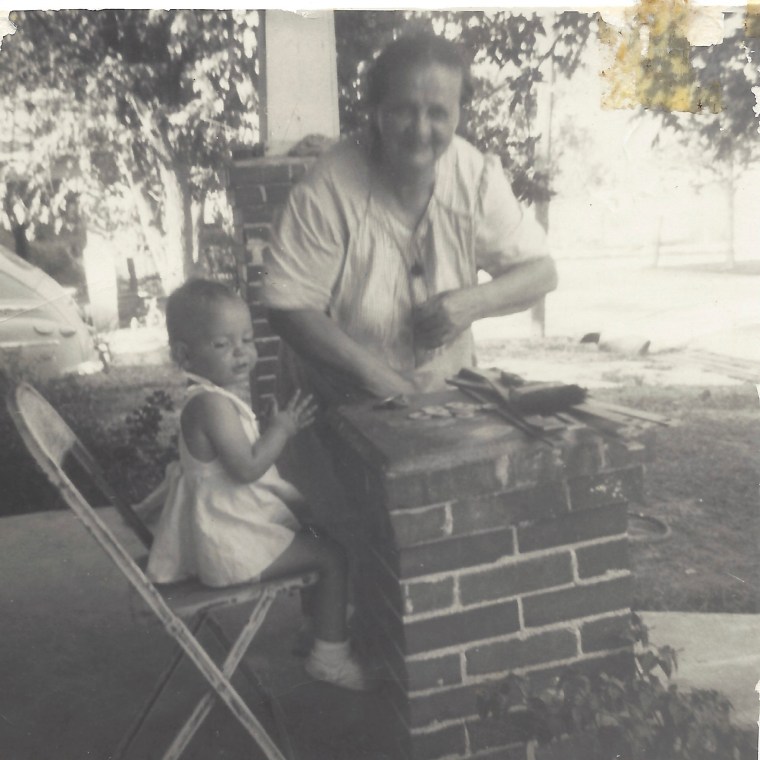
We each possess a unique gift which we might give our children and our grandchildren. It is the story of who we are and from whence we have come. The links that we provide from one generation to the next form a foundation for the young. Sometimes to get where they are going they need to know where they have been. They learn this when we tell them about our family history. 

I grew up in two different worlds. The first was marked by refinement and a certain level of privilege. Before my father died we lived in homes that were newer and more spacious than those of the other members of our extended family. Our house was always beautifully furnished and filled with books and music. We went on yearly vacations, traveling all over the United States in fancy cars. I mostly took my good fortune for granted. I had little idea how much work it had taken my father to earn his college degree so that he might have a well paying job that supported our lifestyle. I did not then understand that our position in the middle class had been an enormous social leap for both of my parents. I had no idea that our situation was as fragile as it actually was.

Part two of my biography was one of great challenges. My father’s death changed our situation in palatable ways. Our economic status shrunk overnight. My mother had to use her intellect and resources to stretch our budget into almost impossible proportions. Every decision had to be weighed and measured with great care lest we find ourselves without the basics of living. Somehow she always managed to see us through each struggle that we faced, but I still find myself wondering how she performed so many miracles. We had just what we needed to survive and not a bit more. Vacations became a thing of the past other than visiting our grandparents’ farm. Somehow in spite of the rigidity of our budget we never felt deprived. Our mother put food on the table at every meal and kept our few articles of clothing clean and mended.

As children we were entertained by friendships with children in the neighborhood. We built forts out of Christmas trees or by hanging sheets and bedspreads on the clotheslines where our laundry dried on warm sunny days. We held games of Red Rover and Swing the Statue in the front yard and rode our bicycles down to the woods or the park. Someone was always inventing some adventurous way of spending the daylight hours, and everyone ran free in their shorts and bare feet so that we hardly noticed that we may not have had clothes as fine as theirs.

On Friday nights we always went to visit our Slovakian grandmother who welcomed us with  mugs of sugary coffee laced with so much milk that we hardly noticed the taste of the brew. She gave us slices of fresh rye bread from Weingarten’s grocery and on very special days fried up slices of round steak in her big iron skillet.

The most English we ever heard from her was her greeting of “Hello, pretty boy/girl.” She made us feel loved and special even though we never once were able to have a conversation with her. Most of the time she sat in her chair and in the corner of her tiny living room smiling at us while we ran around like a bunch of noisy hell cats. My aunts and uncles engaged in games of penny poker or argued as though they were still young children vying for their mother’s attention. We played “hide and find,” our own version of the childhood game that has been around for centuries. Sometimes we created our own family newspaper or watched episodes of “The Twilight Zone” or Friday night wrestling.

We often sat in our bachelor uncle’s bedroom talking and telling jokes within view of his loaded pistol which we would never have dared to touch. Sadly we did use his records as coasters for our drinks, but he didn’t seem to notice our disrespect for his prize collection of music from Louis Armstrong and other jazz greats. We knew that he worked for the Post Office and had once been a railroad man until he broke his leg in an accident. He had matchbooks from gambling spots in Galveston and there was a mysterious air about him. He was both a bit scary and a great big teddy bear at one and the same time and he loved us all.

We often wondered about our grandfather who had died before most of us were born. We knew little of him, but heard that he had worked at a meat packing plant all the way up until the time that he had a stroke from which he eventually died. He had built a huge library of books of all sorts that he brought home one at a time each Friday evening after he was paid. He owned a cow that provided milk for his eight children and cherished the goal of one day having a farm of his own. Each Sunday afternoon he gave his family lessons on morality and good citizenship and taught them to be proud of who they were. I would have like to have met him because I think he must have been a very interesting man.

On Sundays we always went to see people from our father’s side of the family. Our mother thought that it was important for us to stay in contact with them. My paternal grandmother was a tiny woman who was famous for her cooking. Going to her house always meant that we would be treated to an extraordinary meal. When she wasn’t busy creating yummy dishes, she was either crocheting or embroidering or making quilts. Her sewing was like delicate works of art and her crooked old hands belied her ability to weave intricate stitches and knots. Her gardens were legendary and she even knew how to talk with birds. I always found it fascinating that her knowledge of the world was encyclopedic given that she was illiterate. I don’t have any recipes or instructions from her because she carried all that she knew inside her head.

My grandfather was a strong man with great big hands that he used to build things. He smoked a pipe and told the most delightful stories. He might have been a wonderful writer but for lack of time. He worked until he was eighty eight years old and only quit because his supervisor thought that his advanced age made him a liability. He read for hours every single day and was able to quote passages well into his nineties. He drove an old black Plymouth whose leather seats smelled of sweet tobacco. Life had always been hard for him, but he was a survivor of the highest order and insisted on maintaining optimism no matter how terrible things became.

I learned that I was from strong stock, people who were determined to live and love and carry on regardless of what befell them. They taught me the value of hard work, education and determination. They helped me to realize that I need not be held back by my circumstances. They encouraged me and my brothers to dream big and to believe in ourselves. They were always there in both the good and bad times. We knew that we were never alone, and still aren’t. This is who we were and what has made us who we are. Our children and grandchildren are part of the unending thread that traces back through the centuries. I hope that they always remember how grand and noble their heritage truly is. The legacy of their family is indeed rich.

The Dialogue

28280054_10215824501665701_6479894520174864930_n

Teachers talk all of the time. They desperately want to do the right thing for their students. They literally take their worries and concerns home, sometimes keeping them awake in the dark of night. Their constant worry is whether or not they have done all that they possibly can. They wonder what is really most important for preparing their charges for life. Is a laundry list of knowledge and skills enough, or is there actually something more important than grades and test scores? What is the recipe, the correct ingredients, the proper method for putting a life together?

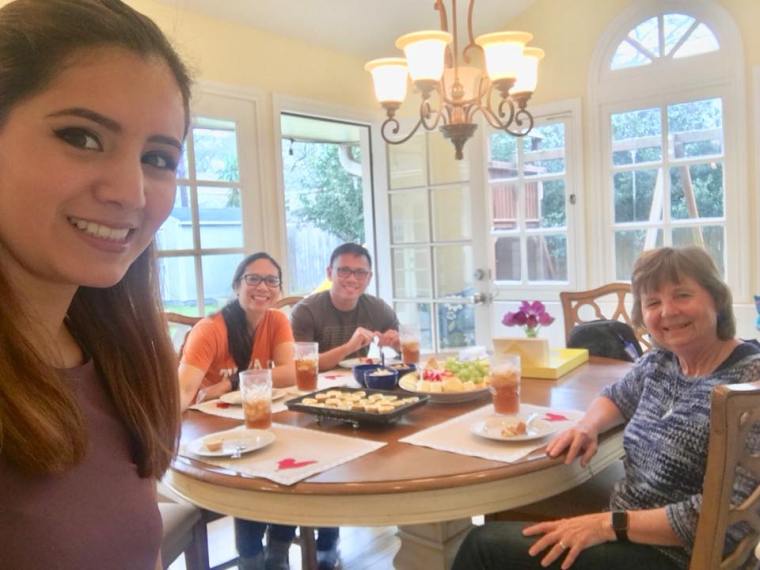
This past weekend I was with two extraordinary educators and a student who is on the brink of launching her career after spending most of her life learning. We spoke of our concerns about education and all agreed that what is too often missing is the opportunity to help young people develop a foundation of particular traits that will serve them well in any situation. The young lady who had once been our student is a stunning example of a process gone right. She earned a bachelors degree in psychology and immediately followed up by working toward a masters degree in clinical counseling. It has taken her almost eight years to reach her goals. In that time she has had to work as well as study. Somehow she understood the need to focus on the prize, often with great sacrifice. She adhered to an unwavering belief that God must always be first, family second and career third. All are important, but always in that order. She values life from birth until death and plans to work in palliative care at a hospital. Somehow she has made her journey appear to be easy, but we know that it was not. She had the same kind of stresses and problems that all humans have. perhaps even more, and yet she was able to overcome them and remain healthy, optimistic and kind. What we wondered gave her the courage and confidence that she must have needed on many different occasions? Why was she able to find joy and success when so many falter and fail?

One hint that she humbly provided was that her core of values guide her along the way, but mostly her faith. Her heart is strong and it is her foundation. She is willing to work, and always determined to make a difference in our society. She is less concerned with grades or scores or rankings, and more inclined toward finding purpose in the things that she wants to do. In other words, she has found a passion for people and good works that motivates her to keep going even when times become difficult.

As we explored many ideas we concurred with her philosophies and noted that as educators we have the power to help our young develop a sense of meaningfulness, but all too often our jobs force us to concentrate on areas that are far less important. We become distracted and fractured and unlikely to have either the time or the energy to encourage each and every one of our students. We want to help them on a deeper basis but know that other demands cause us to fall short. It is frustrating, maddening even. We are in the trenches with society’s most important resource and all too many times we are bombarded with so much bureaucratic minutiae that we have to ignore our own instincts about what is most important in the care and guidance of our young.

I recall a workshop from long ago criticizing the American tendency to teach a vast array of concepts in a shallow manner as opposed to going deeply into a few key concepts. As a mathematics teacher I always felt as though I was in a race to keep up with all of the topics. Too many times I was forced to move ahead even when I sensed that my students had not yet mastered what they needed to know. I wondered why I had to teach them how to create a stem and leaf plot when they lacked an understanding of fractions and decimals. I felt that I was somehow contributing to the slow destruction of their confidence, I wondered if they would one day be telling people that they were not good in math because I had made them feel inadequate by ignoring their need for just a bit more time to master certain ideas.

During my career I worked in a variety of schools. The best of them created situations that allowed our students to feel as though they were members of a caring family. There were adults watching over them and helping them to develop traits that would serve them well in any situation. We taught them to work hard and be nice. We reminded them to remember and appreciate kindnesses. We urged them to leave any place where they wandered in a better state than they had found it. We rewarded character as much as grades. We taught them about wisdom and honor. We joined hands with their parents in the work of caring for them. We showed them how to rise to great expectations even as they stumbled in the process. We encouraged them to demonstrate true grit, helping them to realize that those unwilling to give up will ultimately enjoy great accomplishment and happiness. Mostly we wanted them to know that they were never alone. There would always be someone on whom they might rely.

Dialogues such as the one I enjoyed with my colleagues and a former student are commonplace among teachers. We understand how critical our roles truly are. Educational reform is happening every day in small ways inside the classrooms of the majority of dedicated individuals on whom our future depends. Teachers are changing lives one student at a time, and when they witness the fruit of their labors in the form of an adult who is ready to commence the heavy lifting of important work, they know that their efforts have not been in vain. Such a realization is a teacher’s greatest reward.