Two Women of Distinction

34998_3943853494874_2015763148_n

I was a Catholic school girl. I attended Our Lady of Mt. Carmel Elementary School from the second grade all the way through the eighth. The years when I was there were at the height of the Baby Boom, and so we had multiple classes for each grade and the classrooms were always crowded. I knew everyone’s name, but didn’t always have the opportunity to become close friends with all of the students in my grade. Still, there were certain people who stood out as being quite special even as children. Because I felt gawky and shy I found myself longing to be like some of the kids that I considered to be a cut above the rest of us ordinary souls.

In the eighth grade an annual ceremony honoring the Blessed Virgin Mary took place each May. We had the honor of voting for the one girl that we believed to be worthy of such a high distinction. We were instructed to consider our choices carefully, not basing them on popularity, but rather on evidence of impeccable character. Even though I only knew her from afar at that time, I did not hesitate to vote for Linda Daigle, a friendly and generous young lady who always appeared to be thinking of others more than herself. I saw her as the embodiment of the lessons that we were taught in our daily religion classes.

Eventually Linda and I matriculated to the same high school. I still only observed her from from admiration rather than a close relationship, but she only impressed me more and more over the next four years. Somehow she had a way of making people feel so comfortable and she was humble about her talents and her good nature. I continued to believe that she was someone whose character I wanted to emulate. Imagine my surprise when we ended up becoming fast friends once we had moved on to the same university. Over more the than forty years that we have shared a friendship absolutely nothing has changed my original assessment of Linda as a model of compassion and love.

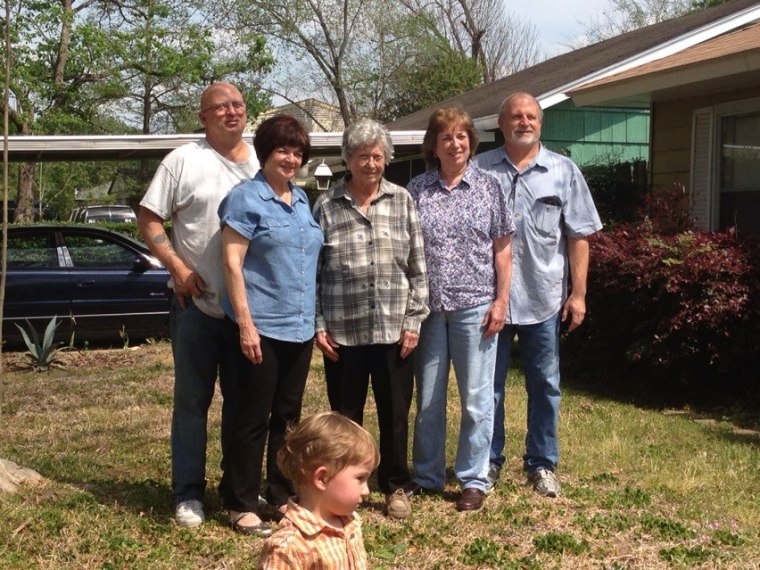
When Linda and I first began to grow close I finally had the pleasure of meeting her mother, Rose Daigle. In Rose I saw the beauty that was the source of Linda’s attractiveness. I also found the same ever present welcoming nature and spirit of boundless hospitality. I loved visiting that house where we often sat at the kitchen table enjoying one of Mrs. Daigle’s special homemade treats. She spoke with a unique accent that is only found in the speech patterns of people born and raised in New Orleans, and I found it to be delightful. I always felt so special just listening to her.

Rose Daigle had grown up in New Orleans but eventually set up a household in Houston, Texas with her husband Bernard. Together they raised four very bright and well mannered children. Rose made her home quite lovely with her skills at sewing, decorating, gardening and cooking. I liked the atmosphere that pervaded her house and thought her to be as wonderful as her daughter Linda.

I’ve been friends with Linda for decades now. We raised our children together and somehow managed to keep in touch even if we only saw each other once a year. When we talk we are able to converse for hours, mostly because Linda is such a good listener and a truly sensitive and concerned person. I suppose that I have told her as much about myself as anyone knows, because I feel as safe with her as I often did when I visited her mother.

Rose Daigle lived quietly in her home long after her children had all left and many years beyond the time when her husband had died. Her life centered on her children, grandchildren, her church and her home. She loved to putter in her yard and always got a kick out of showing her handiwork to visitors and giving them cuttings of her plants. She began to slow down though as her energy waned and her mind became more and more muddled. Her children finally realized that she had reached the point at which she would no longer be able to stay alone at her house. They tried various solutions and ultimately found a secure place for Rose in an assisted living facility.

True to form Rose’s daughter Linda was completely devoted to her mother’s care. She lovingly visited her mother three times every single day, making certain that all of Rose’s needs were met. Linda did all of her mom’s laundry and created little celebrations not just for her parent, but for all of the workers who watched over Rose. She was steadfast in her resolve to make her mother’s twilight years as lovely as possible and she did a yeoman’s job in that regard. Over time Rose thrived because of Linda’s efforts and seemed to become even more beautiful and ageless than she had ever been. I loved seeing photos of the birthdays, the Mardi Gras celebrations, and the Christmas parties that put huge smiles on Rose’s face. She seemed to revel in the love and attention that she received from Linda as well as the children, grandchildren and great grandchildren who religiously visited with her

In the past few months Rose’s health began to fail. She was 98 years old and becoming more and more weak. She had stays at the hospital and even received the last rites at one point, but somehow she rallied time and again. Sadly last week she seemed to have lost the old spark that had so defined her life. Linda continued to stand vigil over her mom while still managing to help Houston flood victims by washing mountains of clothing and linens as well as dishes, antiques and kitchen utensils. I suspect that she was just being wonderful Linda the way that her mother had so often showed her how to be, always giving in every regard.

Rose died this past weekend. She became another precious angel in a heaven that is being crowded with the parents of my generation. I suspect that she is free of pain and glowing radiantly like the vision of loveliness that she always was. She’s no doubt reuniting with friends and relatives and maybe even puttering in a perfect garden or creating a culinary delight. She was indeed a very good woman of distinction of the kind that all of us should strive to be. She loved with all of her heart and now she is receiving her just rewards.

My heart is heavy for Linda and her family. No matter the circumstances it is always difficult to lose a parent, especially one as remarkable as Rose Daigle. I pray that Linda will find peace and comfort in her heart and that she will also get some much needed rest. In my estimation Linda is as close to being a living saint as anyone I have ever known. I suppose that I will continue to be in awe of her forevermore.

We Are Beautiful

maxresdefaultThe sun was out yesterday. It was a beautiful day in Houston, Texas and it’s surrounding suburbs. Our “pet” gecko Stubby returned and the next door neighbor hung his American flag again. Children were outside playing, dogs were barking, cars were moving along the streets. Complete strangers were smiling and waving and shouting greetings. I’ve never seen so much celebrating of a very ordinary day that suddenly felt so extraordinary.
I had to keep checking the calendar to know what day it was. I’ve lost track of time. Was it only a week ago that my little corner of the world was completely normal, or was that years ago in another time and place? How is it even possible that so much can happen in the space of only days? Why is everyone so discombobulated? What is causing our voices to quiver with so much emotion?  Why do I sense that every one of us who experienced the great Harvey flood of 2017 has forever changed?

There was a woman on television advising us to let our feelings out. She counseled that our tears that keep falling are a good thing, part of the process of healing. We have a city of over four million people who are suffering from PTSD. We have endured a lifetime of shock and awe in a very narrow space of time. Our minds and our bodies are reacting exactly as they were designed to do. We should not deny the hurt and the sorrow that is lurking just behind the courage and determination that is driving us to put our city back together. We each need outlets for our quiet worries. We need to embrace each other, hold hands allow the words that we are stifling to leave our lips. We must admit that we need help, even as we attempt to pull ourselves up on our own.

There is great power in reaching out to aid those who did not fare well in this disaster, but there are so many who need our help that it can feel overwhelming. It will be impossible to be in as many places as we want to be, so we must each contribute to the restoration process one step at a time, one day at a time. Even small gestures done collectively will make a great difference. We have to pace ourselves and conserve our energies for the long haul. We need to coordinate our efforts by sharing needs so that nobody will be forgotten, and realize that everyone has a role to play in the long marathon that lies ahead.

We are enthusiastic right now. The whole world is coming to our rescue. Everything seems possible in our present mood of rejoicing that the rains have stopped, but we have to remember that we humans are fickle. Long after interest in our city’s situation has waned, the work of rebuilding will remain. It will be up to us to keep the momentum going. We will need patience, grit, determination. There will be roadblocks and frustrations that will tempt us to lose our hope and rise up in anger. We need to be prepared for the long challenges that lie ahead.

I have marveled at the demonstrations of unity and friendship that I have seen over and over again. I always knew that Houston, Texas was the most remarkable city anywhere, but I guess I really didn’t understand just how deep its compassion and nobility actually is. I have been astounded over and over again by the spirit of this place. Where else is there a furniture store owner who opens his business to those seeking shelter from the storm? In which other place would a hometown sports hero challenge the world to send donations to bring immediate aid to his fans? Is there another town in which the local grocer would send food trucks into the most devastated areas? How do friends and family manage to wade through standing water to help those that they love pull saturated carpet and debris from water logged homes? What is it about Houston that is impressing the entire world?

I awoke this morning to find posts on Facebook that made me smile. Friends who live in Katy braved the waters surrounding their home yesterday to get a first look at what kind of damage had been done to their house. Before the sun had set an army of friends had come to help them to do the preliminary work needed to bring their house back to a habitable state. They filled the curb with carpet and sheetrock and celebrated their accomplishment with a photograph of their smiling crew. Such scenes were repeated all across the soggy landscape, and in every single case there were acquaintences and strangers alike helping in both big and little ways.

There are four million stories unfolding in Houston, each of them important and meaningful. Nobody here should feel alone or unseen. We have linked hands and will not let go. Neither will any of us ever again take our city and its people for granted. We were on the abyss, but we did not fall inside. Today as the sun rises again we marvel in its beauty. We see clearly with eyes that had been blinded to the wonder of this great place. We mark our time with a new kind of calendar that delineates the years before the flood and those that will come after. In the AF years we will surely become even stronger than we have ever been.

In the meantime we roll up our sleeves and we work. We have to think out of the box in finding solutions for today’s problems and planning for a better future. We must be willing to request assistance. People are waiting for the calls for help. They want to help, and they will respond. Give them the blessing of being able to do so for they too need to heal. Just ask for the aid that you need, and for those who can’t seem to find a cause, just seek. Somebody will be very happy for a donation, a meal, a cup of coffee, a friendly ear, a babysitter, a fan, a bottle of bleach, a hug. There is a student who would like a bag of school supplies or needs a counselor. Each of us must find a our role in the process, a way of helping.

We won’t be done tomorrow or even in a few weeks, but there will come a time when we will be able to look back on what we accomplished as a community with great pride. We’ll wear our Houston t-shirts and boast about a city that can’t be understood until you become one of us. We are proud. We are strong. We are beautiful. We are Houston.

When In The Course

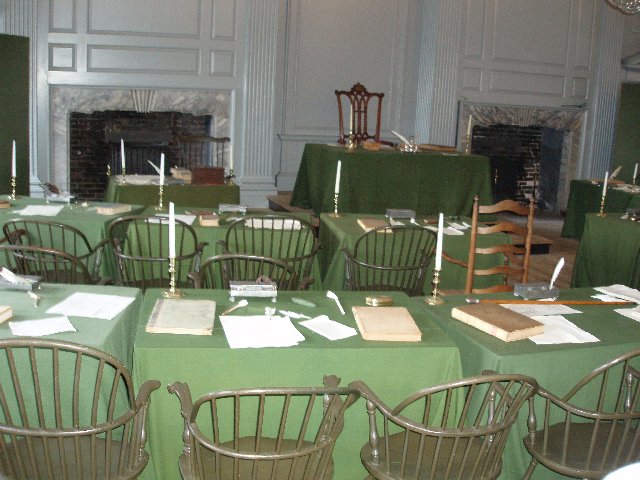
228935-room-where-the-declaration-of-independence-was-signed-at-independence-hall-in-philadelphia-pa-philadelphia-united-states

It always amazes me how we humans generally follow the rules. On any given day millions of people adhere to speed limits, stop at red lights even if there is nobody around, stay inside their designated lanes. There is always an implied threat of being caught and given a citation for breaking the law, but mostly people do what they are supposed to do because they realize that the statutes have been set in place for safety and the common good. We innately understand the value of working together for the benefit of all even if it is sometimes a bit inconvenient.

There are thousands of examples of how most of us know, understand and appreciate conformity to the directives that keep our society running smoothly. Now and again, however, we encounter situations in which it becomes uncomfortable to simply sit back and adhere to the status quo. In those moments we feel a grip in our stomaches and ask ourselves what our role should be. Do we sit back and quietly watch or do we rise up to voice our concerns? When is it best to avoid the fray, and when must we say something lest we no longer be able to gaze at ourselves in the mirror? How do we decide which aspect of a complex disagreement is the most right and just?

Since I am a huge fan of history I tend to be a documentary fangirl. Netflix is all too aware of my viewing preferences, and they continuously alert me to any new features that are available for my viewing pleasure. Recently they suggested that I might enjoy a program about Winston Churchill and his role during World War II. The story began at a time when much of the world was doing its best to ignore the warning signs that Adolf Hitler was a maniacal and dangerous dictator. Churchill was one of the few who consistently voiced concerns about the direction in which Germany was heading, in part because he was so vocal, Churchill’s views were initially thought to be a bit kooky. Nobody wanted to engage in controversy, and doing so was thought to be risky. Thus most of the world donned rose colored glasses and went about their routines hoping that the shenanigans in Germany would at worst be little more than an annoyance. Of course we know that such was not the case and Churchill was proven to be the right voice at the right time. His analysis of Adolf Hitler was insightful and he never quelled his criticisms of the dangers that he saw unfolding in Europe. If not for his steadfast diligence, Britain might have endured the same fate as Czechoslovakia, Poland and France.

Churchill somehow sensed that quietly accepting Adolf Hitler and hoping that he would simply fade away was an untenable stance. He raised his voice at a moment in time when it was unpopular to do so. People were tired. They had lost much in World War I. They worried that becoming divisive might shatter the peace that was precarious at best. it felt better to just ignore the craziness, keep the boat from rocking. Eventually the entire world would be forced to take a stand, choose a side, something that most had hoped to avoid. The question that lingers to this day is what people might have done from the very beginning to prevent the carnage that ensued. How different would that phase of history have been if Hitler had been defied not just by other nations, but by the German people from the moment that his ideas began to appear unhinged? 

The problem with such wishful thinking is that it is utterly useless after the fact. It is only in the moment that each of us has an opportunity to be heard and to do what we believe to be right. The trick is in unravelling the complexities of a situation and reaching the heart of the matter. To be willing to stand on a mountain top warning our fellow human beings of danger, we must first believe with all of our hearts that we will not be viewed as just another boy crying wolf. We must sense that what we have to say is so important that to secret it away in our hearts would be morally wrong. In such instances we sense that we must bend or even fracture the mores and rules that confine us so that our warnings might be heard.

My Facebook wall has been filled with impassioned pleas for love and understanding of late. Mothers worry about the contentious world in which their children must grow into adults. It feels as though hate is festering in the most unexpected places. We can’t even get a sense of well being from listening to our president, because he is more concerned with defending himself than being a beacon of hope. It feels as though we are being torn apart as a nation and within our relationships. So many are choosing to lock themselves away from it all. Only a few brave souls are willing to take the heat of criticism by voicing their concerns. The rest try to pretend that the unrest will soon all just go away, but even recent history has shown us all too clearly that the issues that trouble us only become more and more complex when we ignore them. Furthermore, they are rarely resolved when we are unable to find ways of working together.

I truly believe that the evil of this world represents a small minority, but it is nonetheless up to all good people to keep it in check. The hate that we see must always be called out for what it is. There can be no excuses, no watering down of our contempt. We cannot just look the other way when we see it, for it is when the good people join forces that they transform into an immovable power. They cannot be stopped until the depravity is eradicated. This truth has been demonstrated time and time again, so I wonder why we are so often reluctant to use it.

The fact is that there are groups of people in our country today who advocate the most detestable ideas possible. Under the guise of protecting an object, a statue, such groups held an abhorrent rally in Charlottesville that ultimately resulted in the death of an innocent young woman and the injury of others. Their only intent was to spread their poisonous ideas, not to somehow save the history of the south. They travel from venue to venue hoping to gain attention and new followers. They besmirch the legacy of the generation who defeated Hitler and all for which he stood when they parade through towns imitating the one of the most vile regimes that the world has seen. They are petty and lost souls who fester in anger, blaming imagined  slights for their own inconsequential lives. Any good thinking person should shun them and their despicable ideas, not find excuses for their behavior and thereby fuel their momentum. In other words, this is a watershed moment in which decent people must stand together to let such groups know that we will not accept their torches, their Nazi salutes, or their philosophies of hate. We will not allow them to enlist us in their misdirected causes. We will not find ways to mitigate their responsibility for spreading a disease of prejudice. We will make them the pariahs that they deserve to be.

Don’t turn away. Don’t tune out. Sometimes we have to make noise. Sometimes we have to demonstrate our courage. Our children are watching. Let’s show them what to do when in the course of human events we have no other choice than to stand firmly, proudly and publicly for what is right.

A Knock at the Door

knock-door-e1412094721215.jpg

It was nine thirty on a Saturday night. We were watching a Poirot mystery on television when there was a loud knock at our door. By the time I walked down the hallway to peek outside whoever had been there was gone. I had just settled back into my chair when there was another banging noise. This time I dashed to the entryway more quickly and turned on the porch light. I saw two young boys who appeared to be around fourteen or fifteen years old. One of them sprinted away quickly and the other stood like a deer in the headlights exclaiming his sorrow for bothering us and adding that he was just trying to sell Girl Scout cookies. Of course I understood immediately that we had been pranked. I sensed that the boy who didn’t manage to get away was someone I had seen in the neighborhood. He seemed very familiar and the more I thought about it, the more certain I was that he often plays basketball just down the street with a number of his friends.

There was a time when teenage mischief was almost a right of passage. My own girls wrapped houses with toilet paper and celebrated when our home was decorated with long strands of tissue as well. I did a bit of knocking on doors and making silly phone calls in my time. Such tricks are generally done with no ill intentions and I suspect that the young boys who visited our home were just continuing the tradition of being silly on a Saturday night. Nonetheless I found myself quite troubled after our surprise visitors had left, not so much because they had bothered me, but because I worried about what might happen to them if they continue their nighttime visits to other homes.

The world is not the same as it once was. When I was young we rarely locked the doors to our home until just before going to bed. Even then we slept with our bedroom windows wide open because our home was not air conditioned. The only thing between us and a home invader was a screen which might have easily been removed. In those days it never even occurred to us to worry that someone might attempt to do us harm while we were dreaming. Our world seemed so innocent and safe.

Now we live in times of uncertainty. We hear of criminals breaking into houses on a regular basis. There is fear in people’s minds. Many of them install cameras and alarms to warn them of danger. Others add an arsenal of guns and ammunition to their security program in case they need to defend themselves. Doors are now routinely locked all day long. In some ways we act as though our castles are under siege, and I suppose that it is rather prudent to be safe rather than sorry. The problem is that in such an environment individuals may act before they have all of the facts. Those same outrageous boys who came to my door might find themselves on the wrong side of a gun if they hit a home with a very nervous and excitable person inside. They might literally be injured or even killed all because they thought it was funny to scare people.

Years ago two of my daughter’s friends decided to pull a prank on her. They dressed in dark ninja style clothing and crept up to our back window and peered inside while we were watching a movie. Since I recognized them immediately their joke backfired. I was livid, not because I did not have a sense of humor, but because I knew for a fact that many of my neighbors were armed and would not have hesitated to shoot at strangers wearing dark masks while creeping through the dark of night. I scolded the boys for their stupidity while my heart raced at the thought of what might have happened to them had they been seen by someone who did not realize who they were. I was upset that they had been so unthinking.

I feel the same way about the two boys who were out having fun when they targeted our home. I know from an online neighborhood chat room that there have been several incidents of strangers knocking at night to determine if anyone is at home. So far nobody has been robbed or hurt but the comments that people make regarding what their response will be if anyone threatens their personal space make me realize that those boys are at great risk. Many of my neighbors insist that they will call the police. Others assert that they will shoot first and ask questions later. Such is the reality of today’s world, and such is the danger that the boys might encounter.

On that chat line I asked parents of teenagers to have a talk with their children emphasizing that they should not engage in reckless behaviors. I would be gravely upset if I learned that the young people were hurt or killed, but I would also understand why someone might overreact when they feel threatened. It’s up to teachers and parents to instruct the young on the folly of pranks that involve frightening people. What may have once seemed to be innocent fun is likely to be interpreted as a reason for defense in today’s environment.

Teenagers’ brains are still developing. They often do things that are more risky than they ought to be. I was the quintessential good girl and yet I also engaged in adventures that in retrospect might have resulted in great harm to me and my friends. I once crawled under the fence of a property where trucks were stored near my grandmother’s house. An armed guard roamed the area. I had no business in there but I thought it was exciting to be able to come and go without being caught. My antics were silly but they gave me a rush, made me laugh and felt liberating. It never once occurred to me that I might have been in danger.

It is imperative that we speak frankly to our kids before we let them lose on the world at large. Sometimes we shelter them because we do not want them to be fearful when we might be wiser to discuss the realities of various situations in which they may find themselves. We need to be frank with them about peer pressure and how to extricate themselves from situations that feel uncomfortable or wrong. We should discuss how to behave if they are stopped by the police. Just as most parents practice fire drills and show their kids where to go if a tornado hits, so too must we review the skills they will need when they are not with us.

Time and again experiments show that our children just don’t think when danger is lurking. They go with strangers to look for a lost dog. They follow other kids into strange places. They simply have not internalized the necessary skills for keeping themselves safe because we haven’t instructed them as well as we should.

We certainly don’t want to make our teenagers paranoid. Most of the time they will be just fine. What we must do is provide them with the survival tools they will need in those rare cases when things just don’t seem right to them. If we have practiced such things and given them the reasons why they should be vigilant and resourceful they should be okay.

I can’t help thinking about the two visitors to my home and wondering if they are still engaged in an activity that may one day end in tragedy. I hope that perhaps their parents will be informed by someone who knows them and that they will put a stop to their dangerous behavior. It’s sad that we have reached this point, but it is the new normal. It’s up to us to instruct our youth and then hope that they remember what we have taught them.

Summers and Huckleberry Finn

1622398_origI have to admit that I have never much liked August for the same reason that I used to have an aversion to Sunday evenings. August meant that it was nearing the time when I would have to return to school, something I did both as a child and later as an adult. August seemed to be the dog days of the entire year, a month in which the heat had built to a climax and the fun and relaxation that I had enjoyed in the summer was in its waning days. When August came around I was generally filled with a sense of dread knowing that my vagabond adventures would soon be replaced by early rising each morning and working on school related projects until late in the evening. I seriously didn’t want to even think about all of the labors and restrictions on my time that lay ahead.

Don’t get me wrong. I was a devoted student as a child and once I became a working adult I threw myself wholeheartedly and enthusiastically into the teaching profession. I enjoyed being in school, but I had a love/hate relationship with the entire experience. On the one hand I felt a rush of excitement about the new challenges that I would most certainly encounter in each new year, but on the other hand I fully understood how much intensity I would surely throw into my labors. Thus each time August rolled around I longed to extend my freedom and relaxation just a bit longer.

When I was a child I had the luxury of enjoying all thirty one of the final days of my annual holiday. Not even once did we return to the classroom before Labor Day. The trend of beginning  the school year before the eighth month of the year had ended did not come about until I had been working for a time as a teacher, and so our family often planned a big vacation to cooler climes to take a break from the heat. Some of our best vacations to places like Montana and Wyoming happened during the first couple of weeks in August. I didn’t even think about school until the middle of the month, and even then the transition from vagabond days to almost total preoccupation with work were usually gradual enough to help me grow accustomed to a return to my labors.

All of that began to change over time. The old school year ended later and later and the new one began earlier and earlier. Expectations regarding professional development became more demanding, so much so that I often spent most of June attending classes designed to improve my teaching. By the first week in August I was already planning lessons and visiting the school to prepare my classroom. My summers became more and more constricted as did those of my daughters who had to attend practices and complete summer assignments.

When August rolled around we were no longer able to make family plans because everyone in the household was quite busy gearing up for the coming months. I adapted to the changes albeit a bit grudgingly. I knew that many of my friends had little sympathy for me because they worked all year long with only one or two weeks of vacation. It was difficult for them to understand just how much I needed the down time of a full three months when such an extended break was an unheard of luxury for them. What I knew is that very few of them would be grading papers and creating lessons at eleven in the evening and all weekend long just to stay afloat of the demands of their jobs. The extra work that I did at home every day of the school year was easily equivalent to the eight to ten hour days that they spent at their jobs all summer long. In other words our labors were equivalent, even though they were not performed in the same time frame.

Now I’m watching the demands of the school year begin as soon as August rolls around. A grandson who is in his middle school orchestra has already been practicing for several weeks for a performance that his group will give to returning teachers. Another grandson is working with his band from seven in the morning until five at night. Teacher friends are attending conferences and training sessions that will dovetail with requirements to be on duty beginning early in August. Many schools will open their doors to their students by the middle of the month, making the summer seem shorter and shorter. Soon the buses that stop at my corner will be rolling again and everyone will be in full swing.

Part of me feels quite sad about the abbreviated summer vacation for students and teachers even though it really doesn’t affect me anymore. In retrospect I think that as a youngster I learned as much during my time off as I did during the school year, maybe even more. By the age of fifteen I had a job as a receptionist for our family doctor from June through August. I learned how to work with the public and deal with emergencies. I became an expert at keeping books and running a small office. I developed people skills and found talents that I had no idea even existed. I also learned how to spend and save the money that I earned in a wise and reasonable manner. I would have been unable to go on my senior trip or purchase a class ring without the income that I generated during the three months that were mine to use in exploring the world.

Those three months also allowed me to read purely for pleasure. It was in my self selected forays into literature and nonfiction that I have the most wonderful memories and grew most fond of reading. I had time to learn how to dance and twirl a baton, how to paint and mold clay into sculptures. I enjoyed being creative with the other kids in the neighborhood and spent hours writing and performing in backyard plays or creating a neighborhood newspaper. I had bridge tournaments with friends and made my first attempts at cooking. I had time to do exciting things that I was too busy to tackle during the school year when my teachers filled my calendar with assignments of their choosing. Summers were glorious moments spent on my grandparents’ farm soaking in their folk wisdom. It was an opportunity for education of a different sort than the kind that is ruled by curriculum guidelines or a scope and sequence of learning. Summer was the frosting on the cake of my learning.

I suppose that today’s kids have little idea of what they are missing. They go with the flow and follow the new rules because it has always been that way for them. Everything in their lives is far more organized than my experiences were. I don’t see many children playing outside even on the hottest days. Summer jobs like the ones I had are hard to find. It’s a different world and I suppose that everyone takes the new ways for granted just like I did those glorious three months of freedom. Perhaps it is best to prepare students for the realities of a world that is far different from the one that existed when I was growing into an adult. With air conditioning there is little difference between August and November, so schools may as well be open for business. Still I find myself wondering which way really is the most effective. Somehow I think that I would not be nearly as interesting if I had not had those precious three months each year in which to develop myself just as I wished. Those were my Huckleberry Finn moments and I am all the richer for enjoying them.