Shall We Begin?

barn-raising-the-farm-at-walnut-creek-ohio-Large

There was a time when the world was a quieter place. There were fewer sounds, no cars, planes, trains, televisions, radios, telephones, complex machines. People heard each other, the calls of animals, the wind, the rustling of water. Life was stiller, slower and in most ways more difficult. The very things that so often annoy us, cause us to feel stressed and steal the silence that we often desire also make our lives easier than those of our ancestors. The conundrum that we face in the modern world is how to keep a balance between simplicity and over consumption. It is the tightrope that we walk in our pursuit of happiness and comfort.

I live in a southern climate. I might be happy to eschew using a great deal of energy in the winter because the days are mostly mild and even on an abnormally cold day a heavy coat and a pile of blankets make the chill go away. The summer presents me with a far greater challenge when temperatures linger in the mid nineties for weeks at a time. It is so hot that I take refuge in my air conditioned home and car during the middle of the day. The thought of being without the cool air is almost untenable and yet there was a time in the not so distant past when I lived through nineteen summers without air conditioning and never felt beset upon.

It was a normal and accepted way of life back then. We simply adjusted to our circumstances and carried on the way people had done for thousands of years before us. We led simpler lives that were still more modern than those that our grandparents had known. It never occurred to us that we may have been disadvantaged. We coped with what we had.

Somehow in spite of the multitude of improvements in American life our society seems to be more dissatisfied than ever. We tend to believe that we should all have more and more and more when just maybe we have reached a tipping point at which we should consider cutting back on some of the things that we do and take for granted. We often argue that each successive generation should do better than the last but what if that idea is flawed? What if our real goal should be to find ways to enjoy the best of our modern inventiveness without being so obsessed with accumulating wealth and things? Is it possible to live the good life while also being more frugal in our use of resources and capital? These are our modern day questions. Our dilemma is in finding the answers that will benefit the most people in the world, a gargantuan task at the very least.

I believe in the concept of liberty and as such I mostly disdain the idea of forcing a particular lifestyle on people. I prefer that we each decide on our own how to partake of the world’s benefits. Still I would like to encourage everyone to find their own personal ways of stepping back just a bit and considering how they might simplify and thereby save for the future. By that I mean in terms of both money and our precious resources. Small measures taken collectively often lead to great gains. Our ancestors knew this well and they pulled themselves out of a major depression and two world wars with determined effort and a great deal of patience.

When I describe the world of my youth it sounds absolutely antiquated. My family had one car, one phone, one television. Computers and cell phones were but dreams of inventive souls. Travel was by car for most people other than the wealthiest among us who had the means to fly from place to place. Eating out was a rare luxury. The books that we read mostly came from the library. I only knew one person who had a swimming pool in her backyard. The rest of us went to the city pool on hot afternoons. Air conditioning was a luxury that was only beginning to come into vogue and even then it was in the form of a unit set in a window. Homes usually had a single bathroom often shared by as many as six or seven people. Children bunked together in rooms. Most of us had two pairs of shoes, one for special occasions and the other to be worn for daily activities. We exercised by running and walking and riding our bicycles. It was a happy time and it never occurred to us that one day people would look back on how we lived and think it quaint and wonder how we were able to endure such seeming want.

The average household of old would appear to be more like a state of poverty today. We have improved things considerably but what have we lost in the process? Our desires seem almost insatiable. Our complaints would confound those who lived in another era. They would wonder at the luxuries of even an average person and ask why we still feel as though we need even more.

We argue over the state of our planet ad infinitum. Why would we risk being wrong? The simple answer is to always think about the consequences of our actions. Our golden rule should be to leave every place better than we found it. If that means recycling, planting trees, composting garbage, picking up trash, adjusting our thermostats, buying only what we really need, turning off lights, or finding our own ways of using less energy why would we complain? These are actions that our ancestors took for granted. It doesn’t matter who is wrong or right when it comes to climate change. We should all still want to be kinder to our world.

We probably will never receive the entire cake of benefits but we are certainly capable of sharing pieces of it with our fellow men and women. We will never be able to achieve perfection but surely we will find more contentment in working together just as our ancestors once did. They raised barns as a community and made certain that people experiencing hard times were cared for. My grandfather told countless stories of people coming together to insure that all members of the community were safe and secure and happy. It was understood that this was behavior expected of everyone. They had so much less than we have today but they willingly gave whatever they were able in times of need.

Sometimes it seems as though we have closed ourselves off inside our modern day castles. We have everything that we need inside and we may have anything that we want delivered to our front doors. We isolate and insulate ourselves from the problems outside our domains, often not even knowing the names of our neighbors or what challenges they are enduring. We come and go and rarely think of the difficulties that are ongoing all around us. We turn off bad news and idealize existence and quibble over issues that should have compromised solutions. We have lost our way on so many levels when we need look no farther than the examples of the past to know what to do.

Thoreau admonished us to simplify, simplify, simplify. Mother Theresa showed us how to share. Our grandparents demonstrated courage and a willingness to adapt to changing situations. Marshall rightly urged us to help our struggling European neighbors after World War II. Dr. Martin Luther King, Jr. taught us how to open our hearts to differences. The lessons to be learned tell us how to live without the worry and strife that exists in so many corners of our world today. If each person were to change just one way of doing things for the better perhaps we might all wake up to brighter days. It’s time to cease all of the grumbling and work together. Shall we begin?

The Long Run

120601_SN_runnersEX.jpg.CROP.rectangle3-largeWe live in a society of almost instant gratification. If we want a pizza we only have to make a phone call, send a text, or pull one out of the freezer. There are hundreds of television channels at our fingertips offering virtually any kind of viewing pleasure that we may seek. We receive almost instantaneous new alerts on our phones and have the power of capturing memories in photos with the click of those same technological wonders. While we accomplish other tasks we have machines that wash and dry our clothes, vacuum our floors and water our lawns. If we live in a smart home we don’t even have to walk to a light switch to illuminate our rooms, adjust the temperatures or show us who is knocking at our doors. Waiting is becoming more and more of a lost art in our daily lives and yet there are still remnants of frustratingly slow processes and situations that demand our patience.
I have to confess that I have never been particularly good at waiting. I possess a bonafide type A personality which makes me a control freak of the ultimate variety. In facing the realities of living I have had to learn how to curb my anxious and perfectionist tendencies and slow down my expectations for myself and others. Life does indeed march at its own pace whether or not I wish to move it along more swiftly. This truth becomes all too apparent in so many situations.

Like most people I was anxious to grow up and get on with life back when I was a young woman. I had a love/hate relationship with school. I actually enjoyed the classes that broadened my knowledge but desperately wanted to reach an endpoint. There were moments when earning a degree seemed so far away. I was exhausted from studying and so desirous of finishing, and yet it felt as though I wasn’t inching any closer than I had been before. I had to force myself to keep my eye on the prize because if I had followed the urges that often crept into my brain I would surely have chucked the whole thing.

The same has been true of so many life events. Illnesses have to run their courses. Finding a life partner is not something to be rushed. Climbing the ranks in a career takes as much patience as persistence. In fact most of our journeys are riddled with stops and detours that force us to slow down and dig deeply into our psyches for the strength to stay focused when we are not making a great deal of progress.

It is said that children who are willing to delay gratification are the most likely to be successful as adults. A famous psychological experiment gave little ones the choice of getting one marshmallow immediately or a whole bag if they were able to wait for an unspecified later time. The children who chose to forego the small treat for the larger one demonstrated the same self possession and fortitude as adults. To this day graduates of Stanford University traditionally toss marshmallows into the air to signify their ability to stay the course of hard work and study in pursuit of a reward far more significant than the temptations that might have drawn them from completing their educations.

It’s not that easy to teach our children how to develop patience but it is worth our efforts to do so. We can begin my modeling the behaviors that will help them whenever opportunities present themselves. We should show them how to set goals, perhaps beginning with those that may be accomplished in a relatively short time, and slowly but surely move the bar higher and higher until they are able to look far into the future and plan for the big dreams that they wish to pursue.

The same should be true of how to use money. I am as guilty as anyone of going for the quick fix of instant satisfaction. Instead we should train both ourselves and our children to create budgets and stay within them. We might help them to create categories for saving and spending and show them how to keep track of the ebb and flow of money. It is a lifeskill that will serve them well if they learn it when they are young. Far too many people enter adulthood without any conception of financial planning. Sadly most individuals end their work years without either savings or investments upon which to draw in emergencies.

I still lose my cool when I’m in a traffic jam even though I know full well that there is nothing I might do to change the situation. I despise the long waits in hospitals and doctors offices, wanting answers now rather than later. I grow weary of waiting for my plants to bloom again after a long and brutal winter. If I don’t lose weight in a week during which I have kept to a healthy diet I am all too tempted to just chuck my efforts and eat a huge piece of chocolate cake. Even as I tell myself that the world reveals all that I need to know at its own pace, my leg moves up and down with impatience. Being calm while carrying on is an art that must be reviewed and practiced again and again. Patience is a glorious virtue that we never seem to value as much as we should. Perhaps now more than ever in a world that sometimes appears to have gone mad it is the one trait that well serve us best of all.

So set your goals, pursue them and then find a quiet place in your soul where you may retreat when your anxieties tempt you to lose focus. Life really is a long run that requires endurance and a willingness to work through stress and pain. Those who learn how to stay in the marathon will ultimately win the race.

They Dance Alone

IMG_1914-e1373088974248For days now They Dance Alone, a song from Sting, has been playing in my head. It begins with the words, Why are these women dancing on their own? Why is there sadness in their eyes? It refers to those who were widowed by the war of revolution, but it might apply to anyone who has lost a spouse.
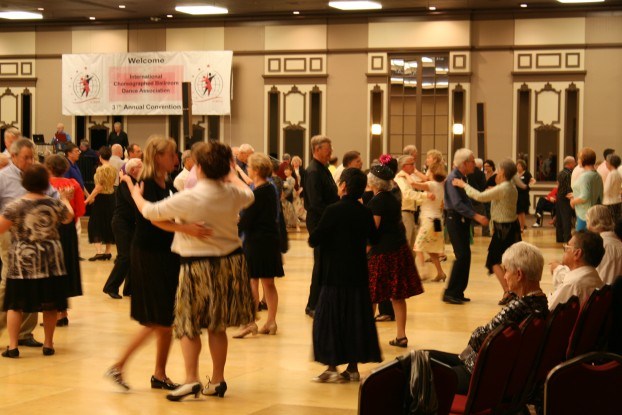
I’ve always imagined that I have enough empathy to truly understand what it is like to lose that person who has been one’s best friend, soulmate, lover. I thought I had the concept down pat until my own husband had a stroke. Just seeing him become so vulnerable nearly brought me to my knees, and even though he is still with me I find myself constantly looking for him and listening to him breathe at night. Having him gone forever is unimaginable. I now know that I did not ever truly understand what it has been like for friends and relatives whose spouses or partners are already gone. I now feel the raggedness of the hole that punctures the heart. I think of those who dance alone constantly.

I remember the devastation that my mother endured after my father died. Only now do I think that I am moving closer to understanding the extent of her emotional breakdown. I find myself wondering how she found the strength to pull herself together. I suspect that it was only her love for her children that pushed her to rise up from the despair that she must surely have felt.

Not long ago I attended the funeral of a young man who once lived next door to me. I still think of him as a cute and friendly teenager who was always eager to help. He was far too young to die and his widow was bereft. I have since followed her on Facebook and she struggles every single day to continue without him. Now more than ever I somewhat comprehend what she is experiencing.

And so it goes. There is the young widow whose husband left on a business trip and never returned, the neighbor whose husband was sick for years but somehow overcame each challenge to his health, our dear friend whose wife died of cancer. There is my cousin whose husband passed just before Thanksgiving after years of fighting to survive heart failure, the colleague whose spouse finally fell victim to heart disease. I suddenly have a far deeper kinship with them. I feel the visceral attack that such an incident engenders.

I’ve also been thinking of the people that I know who are caring for spouses who are very very sick. A long time friend literally devotes every hour of every day to her husband who had a major stroke that left him unable to do anything for himself and attacked his brain so violently that he suffers from early onset of dementia. I have been watching the courage and grace of my son-in-law’s mom who has spent months visiting one doctor after another with her husband. Her life has been upended and yet she keeps a smile on her face and demonstrates a level of optimism that inspires everyone. Still another friend has been caring for a husband with Alzheimer’s for many years now. She literally has to plan for someone to be with him each time she leaves home. I also have a cousin who has been watching over her husband who has Parkinson’s disease for longer than I can remember. These women are so remarkable and before now I underestimated the love and devotion that they so generously share with their husbands.  It’s so difficult to think of the fear that they have somehow managed to subdue as they watch their loved ones suffer through their illnesses.

The old saw that we sometimes see our lives flash in front of us is all too real. During the days since my husband’s stroke I have literally thought back on the first time that I met him when he was so handsome and enchanting and I got that tingle of love each time I saw him. I’ve had flashbacks of him holding our girls when they were babies. I’ve remembered the times when he helped me hold it together when my mother was very sick. I’ve relived every single trip that we ever took. It is as though the chronicles of our time together have played in my mind like a biographical movie. In my heart I have laughed and cried and always in the end I worry, which is sadly so much a part of my nature. I once again have been feeling that little tingle of unadulterated love just at the sight of him. I also find myself thinking of all of those people who dance alone.

I just attended a wedding in Cancun where two people began their lives together. They celebrated their love and I thought even then of how happy I was to be there with the love of my life. In just a little over a year we will have been married for fifty years. He has been the most important person in my world for so long now that it feels impossible to ever be without him.

I have great faith that his stroke was only a warning of what might be if we are not more careful. We will change our ways and do everything possible to help him to heal and become stronger. It will be a partnership as we work our way back to a healthy lifestyle. Our friends and family will be with us. Of this I am certain. We are surrounded by prayers and positive thoughts and love. Still I feel guilty that I never fully appreciated the gravity of loss until this moment. I was cavalier in believing that I was somehow so sensitive that I might comprehend what they were feeling. Now I know that I wasn’t even close. I need to send lots of love to the people whose hearts have been rent in two. I have to congratulate them on being so strong, often without the level of compassion that they really needed. Now I know why there has been sadness in their eyes. I feel how awful it must be to dance alone. I promise to remember them.

Words As Weapons

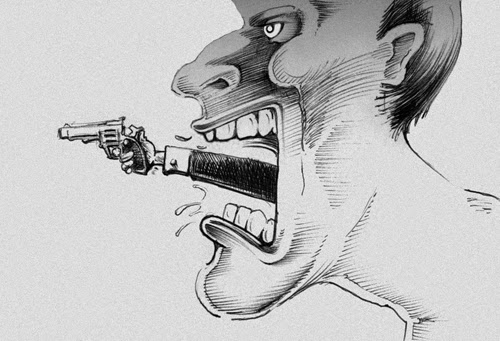
words-are-weapons“The tongue has no bones but is strong enough to break a heart. So be careful with your words.”

How often do we hear of words “killing” someone’s soul? Jesus tells us that gossip is like letting a bag of feathers loose in the wind. No matter how hard we try we are never able to get them all back. What we say has repercussions that are sometimes irretrievable. We know this and yet time and again cruel sentences leave our lips or end up floating in the ether on Twitter or Facebook. Sometimes this happens in a moment of anger but other moments are the result our intent to brutally harm someone with our most ugly thoughts. We say that sticks and stones can break our bones and words can never hurt us, but we know that this really isn’t true.

Sadly we read again and again of young people who are so harassed by their peers that they are driven to killing themselves. I suspect that none of the individuals who poke at someone and make them feel weak actually intend for harm to happen but all too often it does. I recently watched a program about a young woman who was recently found guilty of manslaughter for taunting a depressed friend into committing suicide. Texts on his phone showed that he was reluctant to take his own life, but eventually went through with it at the urging of this young lady who assured him that his family might grieve briefly, but would quickly get over their loss. When he admitted to her that he was scared to follow through on his plan she insinuated that he needed to man up. Eventually he did the deed. The jury felt that without the woman was complicit in his death because he was trying to back out, and she pushed him to follow through on what he had started.

While this is an extreme example of how words have the power of being lethal there are so many examples of youngsters whose confidence is ravaged by the horrific comments of their peers. It’s all well and good to teach our children how to ignore such behaviors, but we also must implore them never to be part of such destructive actions. We’ve all witnessed individuals who become the butt of jokes and sometimes we do so little to help them. It’s very difficult to stand up to kids who are popular or powerful, and yet we need to show our kids how to draw upon the courage to always do the right thing. We cannot sit back and watch the suffering of another even if it means losing our own place in the pecking order. Our children need to understand that they will ultimately be much happier if their own character is strong and just.

Most of the time none of us become involved in such extreme examples of using words as weapons, but we do sometimes say things to the people with whom we are the closest in the heat of a moment. We know their weaknesses and we charge ahead ready to hurt them with a little sting. We have to be very careful in such situations because once our barbs have landed we can’t really take them back. We would all do well to think before we speak and to consider the damage that our words may cause.

We seem to believe that we have a certain level of anonymity whenever we post comments on social media. We believe that out of the millions of words being slung around each moment there is little reason to think that ours will be noticed, but time and again people have lost jobs, tested relationships and angered friends over a snarky response, when the truth is that the only result that is likely to happen in such instances is to upset someone. We rarely change anyone’s opinion with our insulting remarks, so why would we take the risk of speaking out and possibly hurting feelings?  I have literally cringed over the words that I have heard people express or seen them write.

We have almost unlimited freedom of expression in this country, but it is up to each of us to know when saying certain things goes beyond the pale. A joke about assassinating the president isn’t funny. Racist comments about those who are different from ourselves have no place in the public forum. While we cannot and should not restrict speech, it is up to each of us to monitor our own utterances and to consider the effects of what we say. Perhaps it is time to instruct our young in such things as well.

Words can be as sharp as any sword. They can mortally wound a soul. We really do need to watch what we say. Gossiping, lying, bullying, threatening, hurting should all be anathema to us. We would not point a gun at another human being, so why do we so blithely allow our words to sting? Whether we shout them or whisper them or write them down they should always be intended for the betterment of the people that we encounter, but never to tear them down.

Real Life

Yoda-peace_670I read the following words on Facebook the other day, “No matter how you feel–get up, dress up, show up and never give up.”

I actually like the idea behind that statement, and it’s a philosophy that I have followed for most of my life. I suspect that most people do the same. We muddle through even when times get really hard. We paste those faux smiles on our faces, gulp down enough caffeine to keep us awake and slog through whatever mess is doing its best to hold us back. Somehow though I suspect that there are unfortunate souls among us who simply can’t push on no matter how much they wish to do so. For reasons of physical or mental illnesses they reach a point at which keeping calm and carrying on is absolutely impossible. They are trapped inside circumstances that they did not ever wish to endure, and I wonder how platitudes such as the one above that actually inspires me must sound to them.

It’s rather easy for most of us to adjust our attitudes, but when someone’s brain is chemically imbalanced it can be akin to climbing Mt. Everest without oxygen tanks. Depression, bipolar disorder and anxieties cripple those afflicted with such diseases just as strokes, heart disease and other serious physical ailments all too often sideline individuals who might once have been warriors of activity and optimism. In our eagerness to keep everyone feeling as happy and productive as possible we sometimes forget to note that courage isn’t always measured by getting up, dressing up and showing up.

Some of the bravest people that I have known are those who deal with chronic illnesses, either physical or mental. They often become homebound from time to time when their symptoms overwhelm their bodies or their minds. They certainly never want to just give up but they are often stymied by the realities that they must face. It’s rather natural for them to want to rage at the unfairness of their situations, but as a society we tend to prefer for them to make the rest of us feel good by pretending that everything is just fine. We generally don’t like hearing bad news or the honest voices of those who are suffering. We discourage discourse that accurately describes the truth. Instead we elevate those who appear to overcome adversity without ever uttering a single angry or negative thought, never considering that they may need to vent the feelings that are in reality bearing down on them.

I wonder how many people break apart simply because they are afraid that admitting their fears and their anger will alienate everyone else. Our culture rewards stoics and those who manage to maintain the course. We deem Yoda to be a font of wisdom because he tells us that fear leads to hate and hate leads to suffering. He makes it sound easy to have better lives simply by eliminating our fears, but how many times have we been shocked to learn of someone who was crushed under the weight of pretending that everything was fine? How often do we avoid an individual who attempts to tell us about the hurt and pain? Why do we recoil so whenever someone brings up delicate truths?

I thank God every single day that I awake and realize that my body and my mind are sound enough that I have the capacity to face whatever challenges come my way. I have learned not to be smug about my ability to be strong in the face of hardships because I have realized that at least for now I am enjoying a great gift. I have seen what it was like for friends and family members who did not have the luxury of being able to push themselves as their bodies or their minds shut down leaving them struggling to face the day. I remember the rage of a friend who was dying at a young age. She did not want to pretend that she was content to accept her lot. She unburdened her heart to me and only smiled as though she was at peace when strangers came looking for strength from her. She resented that she so often had to hide her tears and be the adult in the room. She needed to be honest so that she might ultimately endure her fate, but so often she was the one who was comforting everybody else. They thought that she was such a beautiful soul and in fact she was, but she so wanted to be able to speak of the pain that filled her thoughts.

My mother in turn grew weary of always wearing a mask when her mind seemed almost to take control over her free will. She spoke of the terror of hearing herself say things that she did not want to say that seemed to be coming from voices inside of her brain that had taken control of who she would be. When her mental illness became the most unbearable she hid behind drawn drapes fearing that someone might come to her door and see her in her weakened state. She too was furiously enraged over her illness which she fought with her very being. Over and over again she rose from the ashes of defeat but always with fewer and fewer friends willing to walk with her when she was the most ill. Before long my once vivacious and stalwart mother who had been the life of so many parties found herself alone save for family because the symptoms of her illness were too difficult for people to observe.

We all need to learn how to stand by the people that we know who are suffering and unable for whatever reason to pretend that all is well. We should be ready to offer understanding and a willingness to accept them even when they feel as though they just want to surrender to the negativity that is stalking them. We should all learn how to just listen and not be so quick to force platitudes on them. Our role should be to assure them that we will not abandon them and that our love for them will never waver. They need to know that it is safe to be exactly the person that they need to be. Real life is not always pretty and that is okay.