The Conversation

early_summer_morning_513429I had a long conversation with my grandson this past weekend. I had traveled to visit him and his family during the long holiday day weekend. One morning he and I arose before the rest of the household and we had an opportunity to quietly talk about this and that.

He is a serious and sensitive young man who only recently became a teenager. He thinks long and hard about a number of things. He loves to build with Legos and his room is filled with Star Wars spacecraft and enough buildings for an entire town. He has bridges and cars and trains all made from the tiny blocks. He is quite proud of his collection. He assembles the pieces and then displays the intricate items that he has but together on bookshelves and table tops. His room is a veritable Lego museum. It’s fun just to browse all of his creations.

He is a rather interesting fellow. He collects elements and put them in little jars attached to a magnetic board in the shape of the Periodic Table. He has models of the planets hanging from his ceiling. He’s rather sentimental about his possessions, many of which date back to the time when he was a toddler. He could name the planets and their moons when he was only twenty months old and he has always had a curiosity about the world and how it works. He enjoys mathematics and appears to have a profound sense of numbers. He is a deep thinker so it didn’t surprise me much when our early morning talk turned to ideas about the world and the seeming unfairness that exists in the distribution of food and wealth.

My grandson was feeling a bit guilty because he desperately wanted a new Lego set but would have to wait until he had earned enough money doing chores around the house. He was feeling impatient and had even felt a bit sorry for himself but now he was sensing that his greed was inappropriate. His guilt was couched in the knowledge that he has had a very good life from the moment that he was born. He thought of all the young men his age around the world who live in terrible conditions both because of economics and political situations. He knew that his impatience in wanting to purchase those Legos right now was somehow wrong but he confessed to sometimes wishing that he had even more resources so that he would never have to wait to gratify his wishes. He even admitted that he had never really known any people his age who were poor. He had only read and heard about them.

We spoke of children that I had taught who literally lived in cars or garages or homes with dirt floors. I mentioned a little girl who had only wanted a bed for Christmas because she was tired of sleeping on the hard wood of her living room. He said that he often thought of the children engulfed in the civil war in Syria. He found it difficult to even imagine what it must be like to have an entire way of living torn asunder. He wondered what he might do at his age to help to right some of the wrongs that occur around the globe.

We spoke of change and how difficult it often is to break from comfortable routines. He is a creature of habit who prefers the quiet of his home and familiar friends. He has a certain way of doing things but he realizes that the demands of the world are such that he will have to learn how to adapt. I spoke to him of my own fears of the unknown and how we all worry more than we probably need to do.

It was quite nice having the special time with him. We are usually surrounded by a house full of people and rarely have the occasion to just talk and let the conversation go wherever it may lead. It was a treat for both of us, confirmed by the especially big hug that he gave me once our little soiree was interrupted as the rest of the family began to awaken.

I so often hear negative assessments of today’s young people. It is sometimes suggested that they are self centered, lazy, prone to feeling entitled, unthinking. My experience with them is just the opposite. They are as concerned about our world and its future as we were when we were young. They are feeling pulled in hundreds of different directions including attempting to become accustomed to their changing bodies. They constantly feel the pressure of the high expectations that adults have for them and desire more than anything to make their elders happy while also being true to themselves. Like my grandson their concerns are not always about themselves. They are very aware of the inequalities that exist and they are desirous of finding ways to decrease or eliminate them. They are curious but frightened about how world events will unfold and what effect they will have on them. They want to be brave and strong and good but sometimes wonder if they are up to the challenges that they face. In other words they are much like youth have been throughout history.

I have always believed that each of us have multiple duties in life. We must fulfill our own destinies but we also have responsibilities to both those who are too old to care for themselves any longer and those who are young. We have rights but with those rights come duties that we can never neglect. The lessons of childhood must teach our kids how to be proud of themselves as individuals but also how to care about the people around them. Nobody exists in a vacuum. Each of us has to consider the needs of others. Our lifetimes are filled with ups, downs, triumphs, tragedies and we must be able to cope with whatever comes our way. All of us are constantly modeling behaviors to the children around us. They will mimic whatever they see us doing. If we show respect to all people they will as well. If we are willing to sacrifice now and again so too will they. By the same token if we are abusive or selfish they will come to believe that they don’t have to care about anyone but themselves. Behaviors are learned and very difficult to undo once they have been ingrained.

I feel quite optimistic about the future. I have seen damaged youngsters for sure but more often than not I encounter teenagers who are experimenting a bit but never wandering very far from the beliefs of their families. For the most part parents continue to do their jobs quite well and their children continue to grow into happy and healthy adults just as people have for centuries. We all have a stake in how things will turn out. Hopefully each of us will do our best to provide our young with the support and models that they need. It’s also a good idea to have conversations with them now and again. They can be quite enlightening. 

Generations

leadership-generationsWe have a tendency to name and classify entire generations of people. I’m not sure whether this trend was started by social scientists or journalists but at least during the twentieth century and beyond we have created artificial designations meant to describe the general characteristics of groups of people born within certain eras. Thus we have the men and women born and raised during the twenties and thirties who became “the greatest generation” due mostly to the contributions that they made during World War II. Then came my group, often known as the baby boomers, because “the greatest generation” lacked effective birth control methods and had one child after another, creating one of the largest increases in population in the history of the world. Of course modern medicine allowed more of us to stay healthy after we were born as well so we have tended to hang around longer than our ancestors. We boomers have gotten a bad rap for most of our lives. We annoyed our parents with our rebellious spirits and our own children who became Generation X often struggle to understand what makes us tick. Currently we are in the age of the millennials who are vastly different from any group that has come before them. They are idealistic even beyond the dreams of those of us who once ran with the hippies and anti-war crowd.
Of course anyone with an ounce of common sense understands that it is all but impossible to paint an entire generation with a broad stroke and be entirely accurate. Each of us is a product of our genetics, our home environment and the happenings of the wider world. Had there been no World War II “the greatest generation” might never have earned that designation. They were hard working men and women for sure and mostly had good hearts and pure intentions but they were often unconcerned with injustices that did not directly affect them. They tended to go about the business of daily living without much notice of problems with race or poverty. It was the role of their children to challenge their thinking and ask them to consider questions of fairness, race and feminism. Their rowdy kids demanded that they begin to question the status quo.

To be fair my parents’ generation somehow raised me and my contemporaries to be openly critical and defiant. We didn’t just suddenly hatch out of an egg with our revolutionary ideas. Our elders had insisted that we be educated far better than they had been. We were exposed to ideas that demanded creative thinking and it was our parents who encouraged us to take full advantage of the knowledge that we acquired. The result was that we were a bold generation that drew upon the theories of intellectuals and realized that we had voices that deserved to be heard. In some cases our youthful enthusiasm was chaotic but on the whole it began to change the world in ways that were sometimes frightening and confusing to many of the old guard who saw our impertinence as a slap in the face.

Still we did not march in unison as a group. Some among us maintained a more conservative approach to life just as some of our parents were even more liberal than we were. While changes were affected there were still tendencies to pick and choose past traditions that needed to be cherished. Each of us was a bit different while we clung to our individual identities.

I never liked the label of Generation X that was attributed to our children. It seemed so nondescript, as though this group had little to distinguish them other than the dates within which they were born. They enjoyed fairly peaceful childhoods filled with the creation of one innovation after another that we now take for granted. There was a kind of happiness and rainbows feeling during their era. They did not worry about the possibility of being sent to a war. The world appeared to be calm but that was little more than an illusion. Already there were stirrings in the Middle East that would come to haunt all of us. The economy had a tendency to slide up and down at inopportune times that sometimes left them without work. They were a bright and well educated generation, more progressive even than the boomers. They attended church less frequently and had fairly liberal ideas about sexuality and the role of women. Their children became known as the millennials.

Most millennials have little understanding of the impact of events in the twentieth century other than what they have learned in history books. The grainy black and white photos of mid-century America seem ancient and quaint to them. They can’t quite fathom what it was like to watch the civil rights movement unfold or participate in the Cold War with Russia. They have lived with a twenty four hour news cycle that brings stories of war and terrorism into their living rooms on a continual basis. They are one of the best educated groups in history but often have difficulty finding jobs. Unlike the boomers who were usually out on their own by the time they were twenty one years old, the millennials often stay within the family unit well past the middle of their twenties, sometimes out of necessity because they have been unable to secure work. They are less likely to marry at a young age if at all. They earnestly crusade for justice and equality, often spending time working in non-profits for free before launching careers. Many of them are more dedicated to the pursuit of science than religion. They often view the world from a very different vantage point than their grandparents and great grandparents whom they see as being out of touch with the realities of the new age.

The truth is that we tend to progress and change with each new generation mostly in concert with events and inventions that define how we see the world. Our perceptions are determined by the totality of our experiences. We show general characteristics based on the things that we endure as a society and our individuality comes from the less public aspects of our personal relationships. Truth be told it is our very humanity that affects our worldview. Television and social media have the power to impact numbers of us in ways that were unimaginable before the dawn of the twentieth century but we still react to more regional influences as well. Someone born in the nineteen forties in rural Texas will be different from someone who lived in a large eastern city at the same time. It is the amalgam of all that we see and hear and do that ultimately defines each of us, not a particular label. It is the nature of mankind to slowly evolve but often that process is an erratic curve rather than a smooth line.

Perhaps it would be best if we were to engage in conversations between the generations. Our table needs to be round and inclusive and open to a place for everyone. We need to eschew labels and stereotypes and learn to honor and respect the power of the journeys that each of us have taken. We are who we are not so much because we were born in a certain time frame but because we have lived. It is impossible to move from one day to the next over a lifetime without growing and changing in some way. Whether we accept it or not age and group memberships matter less than our common desire to improve our society with each passing generation. Our hope is to leave the world a bit better than it was when we first entered it. That is a worthy goal and one which we all can support.

Memories of Another Time

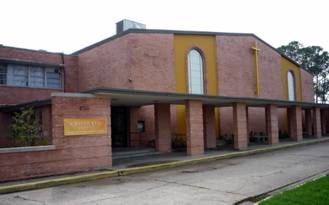
cristoreyhoustonI return to the neighborhood where I grew up at least once a week to tutor high school students in math. The area has changed more than a bit since I once walked the short blocks from my home to the high school that I attended. I suspect that only a few if any of the people who once lived there are still around. It was a working middle class suburb back in the day with a mix of blue collar types and professionals. The entire subdivision centered on the Catholic Church and school that most of us attended. There were other denominations and public institutions as well but Mt. Carmel was the main attraction. Everybody knew everybody and the community spirit was probably the best aspect of living there. It’s not an exaggeration to boast that it was heaven on earth for kids.

Our parents were quite active in providing us with a faith filled life, a great education and lots of after school activities. There was always something wonderful happening and the whole neighborhood felt like a combination of “Leave It To Beaver” land and an episode of “The Wonder Years.” My mother was quite wise to find us a home there after my father died. Our little place provided us with a sense of stability as we were growing up as well as hours of fun.

Of course things never seem to stay the same. Once I was grown and gone the whole area began to change as the old timers moved to newer homes in newer parts of town or to land they had purchased for retirement. It was just never quite the same. The new folks who moved in stayed mostly to themselves and my mother lost her sense of security. Her home was burglarized so many times that on the last break-in the thieves left without taking anything. We joked that we were surprised that they didn’t feel sorry for her and leave something behind. All of her valuables were long gone. Because she was alone and no longer had old friends on whom to depend nearby she became more and more frightened. Each time that she came home to discover an invasion of her property she was less and less willing to stay in the place where we had all shared so many memories. She decided to sell.

It was truly a shame because she had managed to pay for the house in full. She enjoyed having the extra income to make repairs and purchase a luxury now and again.  Because the area had generally deteriorated, at least on our street, she was unable to get a good price for the place. Essentially she had to start all over again making payments on a home that was little better but at least felt more safe. It stretched her already small income to the breaking point but she was always optimistic, believing that the good Lord would work things out, and somehow He always did.

I don’t think that Mama ever went back to see how our old homestead was doing which was actually for the best. The people who bought it did little to keep it in good condition. By the time that I finally drove by a few years back it was a sad broken down property. The roof was sagging and it looked as though it hadn’t been painted since the last time that Mama and me and my brothers had put a fresh coat on it. Mama had always taken pride in having a nice garden and had planted trees, bushes and flowers over the years. Literally all of that was gone. There wasn’t even much grass growing in the yard. It was stark and ugly in the saddest imaginable way. It literally hurt to see it like that. I couldn’t decide whether to be angry or just to cry.

I haven’t dared to go back again. I really don’t even like to think about how battered and neglected the house looks. I drive to my tutoring sessions from a direction that doesn’t take me near the old place. That way I keep only the positive memories of my youth that were so delightful. I picture our home at its best when it represented love and safety.

On sunny days when the temperature isn’t too hot there is a certain kind of breeze in the neighborhood that gives me a strong sense of deja vu. I can close my eyes and listen to the planes flying overhead as they approach nearby Hobby Airport and feel transported back to a time when the subdivision and the school were among the best in town. The sounds of the birds are just like they were when I was a kid and I can almost hear all of the old neighbors laughing and living inside their homes at a time when people still left their windows open and their doors unlocked. For a moment I find myself believing that they are all still there and that I might go see them after finishing my tutoring, but then something always stirs me back to reality and I remember.

The school where I was once a student has a new name now. It used to be Mt. Carmel but the Carmelites and the School Sisters of Notre Dame left and over time there wasn’t enough interest or financial help to keep things afloat. The school began to operate in the red without enough students or help from the diocese and finally was forced to close its doors. It was threatened with destruction until the Jesuits purchased the property and renovated the inside, creating a whole new high school called Cristo Rey. They brought in wealthy individuals willing to help support the education of students who might not otherwise have the privilege of an exceptional private school education. I now tutor some of those same kids and I have to admit that I am quite impressed with how well the hard working teachers and administrators have revitalized things for them.

It sometimes feels quite strange to be back in my old school fifty years after graduating. I tell my tutees about my own adventures there and they stare back at me as though I have two heads. I suspect that it is difficult for them to imagine an old lady like me as a young person with all of the same hopes and dreams that they have. I somehow feel that I am supposed to be there helping them. I have a deep connection and respect for the history of all of the wonderful things that happened inside those walls over the years. So many lives have changed for the better in the classrooms and the laboratories. I feel the spirit of all of us who launched our own lives there with the knowledge and confidence that we developed under the guidance of teachers and parents who truly cared about us.

As I walk through the hallways toward the library where I once devoured the words from books that opened whole new worlds to me I see the newest students experiencing the same emotions of joy and fear and discovery that were once mine. I know that we are somehow brethren. Some things like the freedom and wisdom and growth that come with knowledge never change. Whether they realize it or not those young men and women are part of the same long red thread of learning that wove through my mind so many years ago. We are bound together and no matter how different the world may become that red brick edifice will always represent the everlasting power and beauty of education.

The Brotherhood of Man

frederick-douglass-1852The first slaves were brought to North America in 1619, when the colony at Jamestown, Virginia was formed. It was not until 1863, that all slaves were freed by President Abraham Lincoln’s Emancipation Proclamation. If you quickly do the math you begin to realize that there were slaves on our soil for two hundred forty four years before that barbarous practice was finally outlawed. It is difficult to even consider how anyone might  have ever believed holding another human being in bondage was anything other than immoral. Even considering that times and ways of thinking were different doesn’t seem to absolve the ignorance and evil associated with that custom. The old argument that it was legal so it must be okay trumped common sense and the concerns of religious groups and abolitionists. Those who advocated freedom for all people were often considered overzealous kooks who simply did not understand the complexities of the situation. Most citizens simply looked the other way rather than honestly face the horrific realities of slavery. It was easier to keep it in place than to insist that it be abolished forever.

As with all of history there have always been courageous individuals who have been willing to endure unremitting criticism in a quest for what they believed to be right and just. Frederick Douglass was one of those people. Douglass was born in Maryland in 1818, and named Frederick Augustus Washington Bailey. He was a slave who had little memory of his mother who was traded away while he was still a baby, a common practice designed to keep enslaved people from forming strong attachments to one another. Frederick was moved from one master to another over time. When he was twelve the wife of one of his owners taught him the alphabet and the basics of reading. From this humble beginning he stealthily taught himself how to read and write, often glimpsing newspapers and books when no one was watching. For the rest of his life he believed that “once you learn to read, you will be forever free.” In that spirit he taught other slaves how to decipher the words of the Bible when they came to Sunday school. Once the owners learned what was happening they put an end to the lessons by beating the congregants and disbanding the services for good.

Eventually when Douglass was sixteen years old he ended up in the hands of a man known to be adept at breaking the spirit of slaves. The overseer beat Douglass mercilessly but the sixteen year old fought back in both body and mind. He had already read enough to understand fully that his imprisonment was morally wrong and he became more and more determined to find a way to freedom. After multiple attempts he finally managed to make his way to New York City where he was protected in a safe house run by David Ruggles. He was twenty years old and eager to advocate for other slaves still held in bondage. The year was 1838. It would be twenty five years before Douglass saw his dream of emancipation come true.

Frederick married a free black woman whom he had previously met and they settled in Massachusetts. It was at this time that he chose Douglass as his new last name. He quickly became known as an eloquent orator and writer among abolitionists and was often featured at gatherings of anti-slavery groups. This was a difficult route to follow. He and those with whom he worked were often the victims of violence. Still he dedicated his life not only to abolishing slavery but also to advocating for the rights of women to vote noting, “If there is no struggle, there is no progress. Those who profess to favor freedom and yet depreciate agitation are men who want crops without plowing up the ground. They want rain without thunder and lightning. They want the ocean without the awful roar of its many waters. This struggle may be a moral one; or it may be a physical one; or it may be both moral and physical; but it must be a struggle. Power concedes nothing without a demand. It never did and it never will.”

Douglass was a highly religious man who openly criticized those Christians who remained silent about slavery saying that their refusal to speak up for what was right and just was an abomination of the teachings of Christ. “Here we have religion and robbery the allies of each other – devils dressed in angels’ robes, and hell presenting the semblance of paradise.”

By the outbreak of the Civil War Douglass had become one of the most famous and outspoken black men in the country with his views being published and discussed in gatherings across the globe. His influence was so great that he often conferred with President Lincoln whom he was not loath to criticize for taking too long to free the slaves. He worked tirelessly to secure the passage of the 13th, 14th and 15th amendments which outlawed slavery, provided citizenship and equal protection under the law and protected all citizens from being discriminated against in voting.

Douglass continued to work for causes of fairness and equality for another twenty five years after the war had ended. He understood that there was still much to be done and many injustices to be overcome. He wrote for newspapers and authored books. He spoke all over the world reminding people that “where justice is denied, where poverty is enforced, where ignorance prevails, and where any one class is made to feel that society is an organized conspiracy to oppress, rob and degrade them, neither persons nor property will be safe.” 

Frederick Douglass died at the age of seventy four of a heart attack or possibly a stroke.  He had energetically fought for the rights of all people for his entire life admonishing his fellow man to consider our shared humanity. “A smile or a tear has not nationality; joy and sorrow speak alike to all nations, and they, above all the confusion of tongues, proclaim the brotherhood of man.”

Ever Forward

childhood-011I suspect that there are often times when those of us who are adults wish that we might return to that age of innocence that was ours when we were children. We long for the times when we were yet to realize that evil and hatred exist in our midst. We ask ourselves when we began to lose our sense of wonder. How is it that we find ourselves lacking in trust? What makes us so afraid and reluctant to take risks? When do we begin to pull back on exploring the people and the world around us? Is it in fact true that ignorance is bliss? Does knowing too much make us unhappy?

Perhaps the lessons that we learn from life’s hard knocks teach us to be wary. One of my grandmothers came all the way from Slovakia all alone with little more than a few meager possessions and a profound faith that joining my grandfather in this foreign land would be a good move. For a time she threw herself wholeheartedly into work and learning about her new country but the strain of caring for an ever growing family and dealing with prejudice aimed at her and her kids sent her into a mental tailspin. She had a breakdown and ended up in the state mental hospital. Her trust was broken by this experience. When she returned home she never again left with the exception of the time when her appendix burst and she had to be rushed to the hospital. She was content to stay in the safety of the tiny house that defined the rest of her days. She chose to be purposely insulated from the horrors of the outside world. Her children became fully responsible for her care, paying bills, doing shopping, and repairing her home.

Most of us would not want to withdraw so permanently from reality and yet there is something rather tempting about no longer having to deal with the irritations that seem to take up so much of our time. Such are the dreams of hermits but the truth is that there is little chance that any of us might successfully ignore the ebb and flow of progress. We allow ourselves mental health days and vacations but we ultimately have to return to our duties. It is ridiculous for anyone to believe that there is a way to avoid the hurts that we begin to experience from our earliest childhood days.

We all remember the schoolyard bully who terrorized recess as well as the hero who shut him/her down. We learned how to watch for such people and how to avoid them when possible. We formed friendships that were based on immature connections. Sometimes they didn’t work out and we felt the sting of abandonment and loneliness. With each new experience we catalogued the pluses and minuses of how to react. The Forrest Gump in our natures slowly faded away but oh how we loved to see someone like him operating so fearlessly. It reminded us of the times before we skinned our knees and understood that putting our hands over a flame might result in a burn.

Of course we need to learn caution and how to interpret cues if we are to survive. Fright and flight is an instinct that we must have. We must discover how to tell the difference between good and bad just as importantly as we need the skills of reading and writing and arithmetic. We have to become adults and learn to fend for ourselves. It is the way things are.

The real problem is that even with careful attention and research we find ourselves wondering how we should respond. Should we open our hearts with openness and kindness or is it in reality a dangerous game to be so guileless? Is it wiser to enjoy life while we have the opportunity or should we be more inclined to saving for a rainy day? Do we allow ourselves to love and possibly be hurt or do we lock ourselves away in safety? Is the best person the one who works tirelessly or the one who makes time for family and friends? Who are we? What are our responsibilities? These questions and the like keep us awake at night and make us anxious and sometimes even filled with guilt. We see those who seem to care less than we do and wonder if they have found the secret to a good life or if they are simply selfish. Why can’t we go back to that lovely state of ignorance and should we even think of doing so?

We have watched bright lights among us being snuffed out far too soon because they relied on foreign substances to still the worries in their hearts. They became addicted to the false promises of alcohol and drugs, silent killers murdering their bodies and their souls. We have seen broken souls who were trampled by people to whom they gave their trust and their love. We wonder what we might have done to help them and why we were so busy looking the other way when they were in trouble. Why did we pretend to be ignorant. Did the not knowing really bring us the bliss that we wanted?

The wounded souls are all around us. It is difficult to see their pain and even harder to attempt to do something to help them and yet we all know of brave individuals who open themselves to criticism and misunderstanding by having the courage to take a stand. Whenever someone steps forward to admit to being human they are invariably subjected to insults. It is not easy to walk out of the dark shelter of a closet and tell the world exactly who we are and who we want to be. Just as my grandmother’s children had rocks thrown at them only because they were different from their neighbors, so too do we have a tendency to laugh at and torment those who appear different from ourselves. Where do we learn to do such things? Is it a fact that  ignorance is not bliss at all but instead an evil that causes us to do and say ridiculous things? Is the truth that in learning we actually begin to free ourselves from the chains that bind us to our narrow minds? Should we be less afraid of venturing into unknown territory and more of never going outside? Does our isolation lead to the very heart ache that we most fear?

Each life is a blessed creation that should receive care and feeding. We are born to interact with the universe and to learn as much about ourselves and the people who share the world with us as we possibly can. The happiest souls are not the ones who shutter their windows and never risk being hurt. We become stronger and better even from the most difficult moments of our lives if we are willing to grow from each experience. Ignorance is a false bliss. Knowledge can be frightening but it can also bring truth and truth is ultimately what we all seek. No matter how much we want, it is unwise to turn a blind eye to reality. If we are to find happiness we must first be honest with ourselves. That means having a willingness to learn new ideas and to accept that nobody ever has all of the answers. Ours lives should be exciting adventures in which we steadily increase our knowledge of the world and its people. Regardless of the number of times that we stumble and fall its up to each of us to keep moving forward, ever forward.