Our War of Words

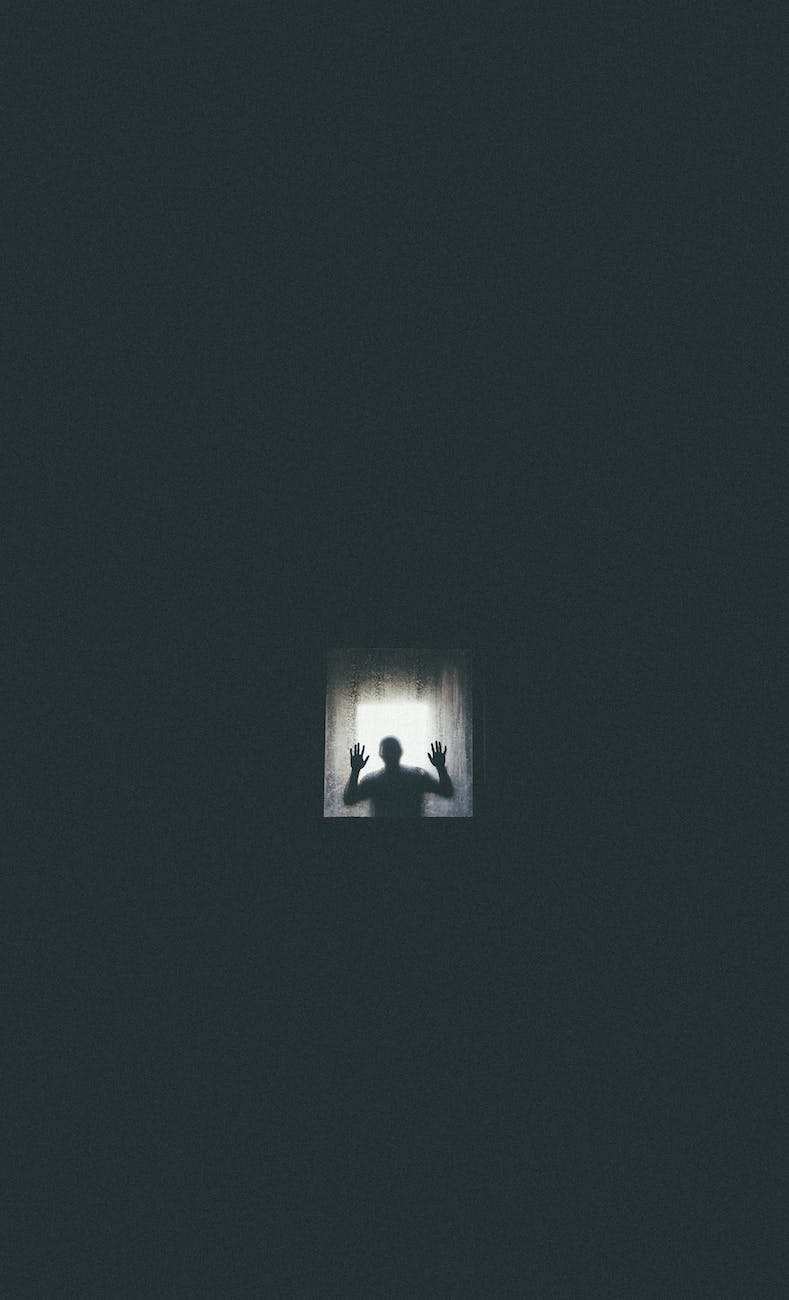
Photo by Barnabas Davoti on Pexels.com

Since Thanksgiving I’ve been mostly behaving exactly like I did before the pandemic arrived in my city three years ago. I have not worn a mask in many months now unless I have a medical appointment. I go about my daily routines mostly not thinking about the long stretch of caution and isolation that many of us endured over a very long period of time. I mostly lost contact with humans outside of my family during that time so I was amazed at how I seemed to get back into the swing of things quite easily. 

I’ve enjoyed seeing my students in person again. I find that they their learning accelerates when I am with them instead of just being a face on a screen. The holidays were wonderful with most of my old traditions once more in place. I felt a great deal of relief at finally enjoying those personal contacts that had been missing for so long, and yet now and again I’ll be somewhere and without warning I feel as though I am little more than a fly on the wall. I watch the people around me and if feels uncomfortably strange to be with them again. it is as though we are all forcing ourselves to simply move beyond the traumas and the losses of the past three years as if they never happened. Everything seems the same and yet is also feels terribly different. 

I sometimes wonder if others have the same experience of suddenly sensing that we are not yet as healed as we think we are. Is it just me attempting to reintegrate into the bigger world outside of the confines of my home, or is it possible that we are pretending that everything is fine when it actually is not? There has been so much loss for which we have not properly grieved because it was so overwhelming that it felt better to just keep moving forward without acknowledging the hurt that we were feeling. 

Our collective journey divided us based on our different reactions to the virus. I expected to see a global union of human compassion on display and instead we engaged in an angry argument that has resulted in violence and wars in some cases. It has been disturbing to see how quickly we devolved into a kind of worldwide civil war over our differing points of view. My Pollyanna outlook on life has been shaken and while I have mostly moved past the disappointments that surprised me during the height of Covid, I still sense that residual effects continue. The virus did great harm to good people but it also unveiled the reality that we don’t necessarily work together when times get tough. That has been difficult for me to accept. 

I suppose that we will slowly build back trust and goodwill in our society, but not without effort from all of us. I don’t think that we can just go back to where we once were without effort and a willingness to honestly talk about what happened and why we were so divided. Our true healing will only begin when we are willing to ask ourselves why a national emergency became so political and why we used the pandemic to launch a culture war.   

I always harken back to a metaphorical moment in my life. At the time I had a huge backyard filled with many trees whose branches touched the above ground utility lines that carried electricity to the homes in my neighborhood. While I was at work one day a crew from the power company removed many of the branches and left them in random piles in my yard. After many weeks and entreaties on my part that they come to clean up the mess that they had made I realized that I was going to have to do the hard labor of sawing the huge limbs into smaller segments and binding them for the trash. It was an overwhelming task that I kept avoiding even though I knew it had to be done. 

Then came September 1, 2001, and the attack on the twin towers of the World Trade Center in New York City. I remember coming home from work that day feeling numb, but also filled with anxious energy. I could not sit in my house. I had to have something constructive to do, so I began to work on the downed limbs in my yard. After a time I had managed to create my first bundle and I took it to the curb, nodding at my neighbors who were in their front yards. None of us said a word because there were no words for that day. Only those brief movements of our heads conveyed our feelings in that moment. 

I returned to my backyard to work on the next pile. Shortly thereafter the man next door came with his tree saw and some twine and began working next to me, again without saying anything. As time went by another and then another neighbor came and before long the onerous task was done even as none of us had spoken a word. It was as though we somehow knew what each person was thinking and utterances were unnecessary. We had all felt the need to do something in that terrible time, something constructive that would unify us in the fear and grief and anger that we were feeling. We came together as neighbors just as we would seem to do as a nation, but soon enough everything had changed even when we tried to pretend that it had not.

We have ignored the many wounds to our nation for too long. The unity of Sept. 11, 2001 has become a war of words, a choosing of sides, an unwillingness to work calmly and quietly together. Perhaps it’s time for all of us to face the task at hand and join in the effort to work together again to end our war of words.

Taxation Without Representation Is Tyranny

Photo by Nataliya Vaitkevich on Pexels.com

I’ll be teaching some financial literacy lessons in the coming weeks. There are always some students who are shocked to learn that they will not keep every dime of the salaries they earn, nor will the cost of an item they purchase at a store be based only on the listed price. When we calculate payroll taxes, sales taxes and income taxes they begin to realize how their earnings will slowly decrease from what they thought they might be. They quickly learn that purchasing a twenty dollar item will require more money than a single twenty dollar bill.

The mere mention of taxes in polite conversation often elicits groans and even anger or dread. Taxes without fair representation in Parliament led to a very famous revolution in the British colonies that would one day become the United States of America. The art of supporting a government with taxes of one sort or another has never quite been mastered to the satisfaction of either the citizens or the politicians. Much of the disagreement among the American people centers on how to most fairly create taxing structures that will provide adequate funding without placing undue burden on a particular group of taxpayers. Sadly our country has yet to find a system that seems to work for everyone, so ideas for change pop up regularly. 

We Americans pay a variety of federal, state and local taxes. On the national level income mostly determines how much each individual will pay. Of course there are a variety of tax laws that allow deductions and rebates. Often the wealthiest among us have so many legal ways of eluding taxes that they pay very little or none at all while the middle class seems to bear the brunt of funding through taxation. 

The dreaded tax season drains the earnings of the average taxpayer on a yearly basis. In places like Texas where I live there are also sales taxes that add to the cost of non food or prescription items as well as property taxes that pay the local bills. We tend not to notice how much sales taxes pull from our coffers until we purchase a high dollar item, but if we were to save all of our receipts and calculate the total sales taxes we paid for a year we might be shocked at the additional drain on our incomes.

So how should we pay for all of the services provided by our federal, state and local governments? Which kind of taxes provide the most funding? Which taxes are the most fair? Who should be getting breaks on their taxes, only the poorest among us or everyone? Should the wealthy be paying less than the middle class? These are questions that we all pose and consider and even study. Somehow there seem to be problems with every type of taxation that we try, but we wonder if one way is better for all than another. 

In his bid for leading his Republican party Speaker of the House Kevin McCarthy agreed to bring a bill called the Fair Tax to the floor for a vote in the House of Representatives. Essentially the idea behind this bill is to eliminate income taxes and substitute a national thirty percent sales tax as the mechanism for revenue. The IRS as we have known it would no longer exist. Yearly payments of income taxes would be gone. Citizens would pay the thirty percent tax as they purchased items including food and prescriptions all year long. If an item was listed for one hundred dollars they would pay an additional thirty dollars in taxes. Sounds simple, but maybe it’s not.

Those who tout this idea insist that it would place the onus of how much each person pays to the government each year on their individual spending habits. They insist that each citizen would have more control over their incomes by deciding how much they are willing to purchase thus determining how much tax they pay. Unfortunately those with lesser funds would be disproportionately affected by such a regressive tax and the richest would still have shelters for their businesses that would likely result in tremendously lower proportion of taxes for them. Even with rebates for the poor this kind of tax would actually make it more expensive for all but the richest to buy their most basic needs. This kind of tax would no doubt have the worst impact on the elderly whose incomes are generally fixed. I even wonder if such a tax would create a black market for goods and services unlike any we have ever before seen.

There is little chance that this bill will take effect because it would also have to be approved by the Senate, which is unlikely, and it is certain the President Biden has already insisted that he will veto this bill if it were to pass. Still, even the symbolic passing of such a bill in one branch of the government is a wakeup call for all of us. We may need some changes to our taxing systems but this plan is a non-starter for so many reasons. The Brookings Institution and other reputable financial researchers have all balked at the idea that such a plan will either provide the needed funding to run the government or the fairness that it portends to seek for the American taxpayer. We all need to be vigilant when such plans are proposed and note who is backing them when we vote in elections. It’s important that we contact our representatives to voice our opinions on issues that will hit us in the pocketbook. If we allow a small group of radicals to determine our financial fate, then we are once again victims of taxation without representation.

I hate paying taxes as much as anyone. Like our Founding Fathers I balk at unfairness in the way that tax laws are sometimes written. Nonetheless, I shudder at the thought of allowing a hair brained idea like the so called Fair Tax bill to even be considered. Let your voice be heard. Make sure you are being represented. Our ancestors died for our rights. We should always protect them.  

Living Together In Harmony

Photo by Hakan Erenler on Pexels.com

When my father-in-law came to live with us last summer we had to make many changes to the way we lived. Ours had been an empty nest for almost thirty years except for the year and a half when my mother lived in our home. Her stay was barely disruptive because she settled into our upstairs guest room and we were still working full time back then. Our encounters with her were rather brief given that we shared dinner each day and then she usually retired to her room to listen to the radio or read her Bible. Additionally my brothers took her on outings several times each week and agreed to provide us respite whenever we wanted to travel. All in all it was quite comfortable. 

When my father-n-law arrived he was unable to climb stairs or walk without a cane. He needed to sit in the shower and have a special seat for the toilet. We knew we would have to surrender our downstairs master bedroom and bath to accommodate his needs. We hurriedly relocated to the room where my mother had stayed during her sojourn with us. In the meantime we retro-fitted the master bathroom to serve his needs and even created an area to house his computer.

Even the configuration of our kitchen changed as we made space on the countertops for his medications and boosted one of the dining chairs with a cushion. We filled the refrigerator with items that he liked to eat and drink like Silk almond milk, Glucerna, and bottled water. We even altered our schedules which had been rather loose and flexible since retiring a decade ago. 

You can almost set a clock by my father-n-law’s habits. Unlike my husband and I he regularly rises early in the morning and goes to bed no later than nine at night, sometimes even earlier. He has lunch at noon and expects a glass of wine with a small snack at five followed by dinner between five thirty and six. Then he enjoys watching a bit of television before retiring for the night. 

In truth my husband and I had floated through our days without any great plans since we finished our last days working at full time jobs. There was no telling when we would rise, go to bed or eat. We set out on random trips at the drop of a hat. We were spoiled by at least ten years of being co-captains of our own ship with very little responsibility for others. We had also grown older ourselves and set in our unplanned ways. Changing so quickly was like trying to teach old dogs new tricks, but somehow we have managed to reset our course and settle into a compromise for living.

In many ways having an upstairs area has been our life saver. Our bedroom is tiny compared to the one we once had, but it is quite comfortable and we only use it for sleep and storing our clothes. The bathroom is tiny as well, but no smaller that the ones that we used when we were young. We only need the basics to take care of our needs, so that has not been a problem. We even transformed a little nook upstairs to hold a couch and a small television that we can watch after my father-in-law has gone to bed without disturbing him. It’s quite comfortable. 

We have adjusted and my father-in-law has grown quite strong. Now he ascends the stairs each day to walk on our treadmill. He spends time on his computer and enjoys the magnificent view from the window of his room. Of course he still rises early but he eventually insisted on preparing his own breakfast. He now does quite well after a few bad starts that burned food and filled the air with smoke and a bit of concern on my part. He takes care of his own lunch as well. It is only his evening cocktail hour and formal dinner time that forces us into his schedule and I have resigned myself to temporarily abandoning our free floating ways. 

We have found a steady routine that works for him and that we are flexible enough to accept. I miss the luxury of spending dreary or cold days lounging in my pajamas while I write my blogs and read the news. I mostly have to get dressed because I have not adapted to the idea of being around my father-in-law in my bed clothes, mostly because he arrives each morning fully dressed with his shirt tucked into his trousers and a belt around his waist. It just does not seem right to be informal around such a formal person. 

My sacrifices are rather small and I’m happy that I have been able to make this work. I talk constantly with God asking him to give me patience. I want to be nice and there are some days when everything makes me grouchy. I have a tendency to think too much about my new restrictions that no longer allow me to wander off on an unplanned trip on a sunny day. I know that as well as he is doing, my father-in-law now needs someone to be with him everyday. It is a huge responsibility but I have to remind myself that it is a blessing that we are able to do this for him. 

Without those honest conversations with God I suspect that I would not be doing well at all. I have had to be flexible and also learn how to forgive myself when I grow weary. I know that my anxieties and complaints are nothing compared to the problems faced by most of the people in the world. I’ve taught myself how to just take one day at a time and enjoy each moment  with my father-n-law while I can. I don’t know when travel will be in my future again, but I sense that somehow we will figure that out as well. For now we’ve all found a way of living together in harmony and it feels nice.   

Meanness Only Begets More Meanness

Photo by Karolina Grabowska on Pexels.com

I often hear people my age or older pining for the days of physical punishment for children and teens. They point out that young people don’t seem to behave as well as they did when parents and teachers used a paddle to punish infractions. They seem to believe that if we brought back a tiny bit of pain for childhood misbehavior, we might live in a much more peaceful world. 

Before I comment on this idea, I have to give a full disclosure about my own childhood upbringing. I only got one spanking from my father for something that absolutely merited a wake up call. It was more like a swat with his hand on my backside that didn’t even leave a mark on my skin. He lost his temper with me because I had done a tap dance with tap shoes on his new Pontiac while singing The Eyes of Texas, a mortal sin for the children of die hard Aggies from Texas A&M like he was. 

Daddy had provided me with an opportunity to simply comply with his request to get down from the hood of the car and stop singing the song that irritated him. If I had obeyed I don’t think he would have even yelled at me. Instead I giggled, gave him a daring look and kept dancing and singing. At that point he lifted me off of my stage, turned me upside down and popped his hand against the padding of my buttocks a couple of times. I was in complete control of my faculties and understood what I had done, so I did not hold it against him for responding in such and uncharacteristic way.

That was it, my one and only spanking and I grew up to be a rather considerate and law abiding citizen. The same goes for my brothers neither of whom ever got spanked. Both of my parents seemed to believe in the value of long talks and incredible role modeling to help us to become good citizens in this world.

I suppose that my own experience has led me to have extremely negative thoughts about corporal punishment. I have never wanted to redirect either the behavior of my children or my students by hitting them. Sadly in the early years of my teaching career the paddle was still alive and well in schools and I either had to witness the whack of a board on a child’s backside or sometimes do the deed myself.

I was terrible at hitting a student. I merely went through the motions as demanded by my superiors. I don’t know how the kids kept from laughing out loud because I barely touched them and sometimes even missed on purpose. My inability to beat kids did not seem to result in a classroom overrun by barbarians, but instead endeared me to my students who seemed to realize how much I despised physical classroom management. They tried hard not to put me into the unenviable position of being told to bring someone to the office for a trial and punishment all rolled up in one. 

When it finally became illegal to use corporal punishment in schools I was ecstatic. I found that the students did not overrun the school once it was gone. Instead I learned that the most effective way to gain the respect and cooperation of my pupils was to first show them how much I respected and cared for them. I was honest with them about why I demanded certain things and we openly talked about the need to work together in a group with so many different personalities. It worked.

That is not say that there was never any mischief. I had to correct the chatty students who seemed unable to be quiet. I had a few spitballs and staples whiz past me. There were a precious few who refused to do homework. Once in a blue moon something was stolen from the classroom. When I got frustrated I referred a handful of students for detention, but mostly I saved that for the most serious infractions. 

Many of my students were already being either physically or emotionally abused at home, so they were unfazed by meanness. They had already developed tough skin and lots of anger. They responded to my encouragement and belief in them. They often noted that I was strict in my demands but quite fair in consequences for breaking the rules. They seemed to all know that I loved them and they reacted in kind. 

I find that there is already too much violence in the world. Too many people answer their frustrations with anger, guns and even war. I can’t imagine the value of returning to a time when teachers were allowed to strike their students on the knuckles with a ruler or lift them off of the ground with a paddle. My parents did not find the need to correct our behaviors with switches or belts or even blows with their hands. It probably took more time and effort to model integrity, kindness, compassion, truth but it was a powerful way of teaching me and my brothers. 

I not only do not want to return to the days of adults hitting their children, I don’t even know how to do those things. We can’t allow our youngsters to grow up without rules and ethics, but we don’t have to hurt them to instill character. Meanness only begets more meanness. I’m so glad my parents knew this and most of all I am happy that nobody is allowed to physically hurt someone else’s child at school. We’ve moved forward and should not look back.

The Future Beckons

Photo by Lukas on Pexels.com

I grew up watching the Jetsons and imagining the world of the future. I often dreamed of having my own Rosie the Robot to do my chores. I remember how hilarious it was to watch Maxwell Smart talking on his shoe phone. I recall being astonished by a program with Arthur C. Clarke in which he predicted that one day we would all have the capacity to live anywhere on earth working from home if we wished. The predictions of life in the future seemed as impossible to me as the ideas of H.G. Wells must have been to people who read his books at the end of the nineteenth century, and yet I have lived to see the most amazing inventions becoming available to ordinary people like me. 

Five days a week my Roomba, whom I have named Reggie, busies itself vacuuming the rooms in my home. My floors are dust free most of the time without my having to lug out my big Dyson. I listen with great joy to Reggie making my home immaculate and the only thing I have to do to keep the little machine happy is to regularly charge it with electricity and provide it with a new bag for trapping all of the dust now and again. I keep a few small spare parts on hand to do minor emergency repairs, but all in all Reggie quite independently and regularly completes the tasks without a fuss even when I am away on a trip.

As a youngster I took turns with my mother washing the dishes each day. Mama was quite fastidious and insisted that I perform my duties immediately after each meal on the days that were allotted to me. She insisted that I follow her strict guidelines in the art of washing and rinsing each item. It wasn’t the worst job I ever had, but I have to admit to enjoying simply placing my kitchenware inside a dishwasher, pushing a few buttons and walking away as I now do. The onerous task of handwashing is almost becoming a lost art.

I remember once having to walk for several miles to find a phone to call for help when my car broke down. I surely would have appreciated having my smart phone with me on that occasion. Like Maxwell Smart I might have called for help from the comfort of my car rather than searching for signs of civilization on a long hike across unsparing terrain. Who knew that I’d one day be able to carry such a powerful apparatus in my purse. How could I have guessed that it would become my map, my encyclopedia, my entertainment and my means of contacting people all in one tiny package?

My husband is determined to make ours a smart home that responds to our commands the way a highly professional assistant might do. We can turn things on and off without lifting a finger. Our assistant will fill our home with music if we request, or provide us with a recipe for dinner while keeping a timer going as well. We can wake up and ask about the weather and find out what has happened in the world while we were still sleeping without ever crawling out of the comfort of our bed. 

Not long ago I had major surgery from a robot directed by my doctor. With only four small entry points that are hardly noticeable now I recovered much more quickly than I would have in an earlier time. I had no large abdominal scar that needed to heal, no major pain that prevented me from getting around. It was almost unbelievable. 

Of course during the pandemic most of us learned how to work from our homes. I taught my small group of students from an upstairs bedroom for two years with my trusty laptop computer that is more powerful than the huge mainframes that guided humans to the moon. I realized that Arthur C. Clarke had been right when he predicted that we would one day be able to perform the duties of our jobs wherever we wanted to be. 

Even though all of these things have become common place I still find myself being in awe of the advances that scientists and engineers have made in providing us with tools for taking care of tasks that once required our focused efforts. We have gone beyond the realm of George Jetson in so many ways. We have enjoyed the dreams of futurists of the past. Anyone born in the last two decades no doubt takes everything that I have described for granted. It is simply part of everyday life to have such conveniences in the modernized world, and yet there are still people who toil each day with old fashioned tools. They live in homes without the luxuries that I enjoy. I try to keep in mind how fortunate I am. 

I look forward to watching the wheels of progress turn ever so much more quickly. I dream of the wonders that are still to come. Will I one day travel in a self driving car? (That’s a bit frightening to me.) What are the greatest minds in the world planning for us? Will people indeed live on the moon or Mars? Will someone find a way to eradicate mental illness with just a few adjustments to the brain? What lies ahead and how equitable will it be for all of the world, not just the parts that are wealthiest? I’m certain there is much more to come and I can’t wait to see it and to use it. The future beckons.