Out of Love

Photo by A Koolshooter on Pexels.com

Way back when I was in my mid twenties I experienced what I call my “year from hell.” It began when I was diagnosed with hepatitis just before Christmas. I had been feeling lethargic and lightheaded, but I pushed on. With two little girls under the age of six and classes to teach at my church I had little time to pamper my symptoms. I kept pushing myself even as I silently worried that something was quite wrong. It was not until my next door neighbor, Carol, looked me in the eyes and saw their yellow tinge that I agreed to contact my doctor to find out what was wrong. By the time I actually knew that I had a legitimate reason to feel so bad, I was too weak to do the simplest of chores and both my husband and mother-in-law had contracted the same disease. To say that the Christmas holidays were a bust that year would be an understatement. It would not be until the end of February that I finally beat the illness and began working my way back to good health.

Just when things began to look sunny my husband, Mike, became feverish and weak with a strange illness unlike anything either of us had ever seen. After a disturbing rash appeared on different parts of his body, he consulted with a doctor who was as baffled as we were. He referred Mike to a specialist in infectious diseases who eventually determined that Mike had somehow contracted a fungal disease called blastomycosis. The treatment for the sometimes deadly illness was a long stretch of chemotherapy with a drug called Amphotericin B. 

From May until well into the fall of that year Mike spent three days each week in the hospital while an IV slowly dripped the drug into his body. It took hours for the process and sometimes resulted in violent reactions like chills that made his entire body shake. Meanwhile I was at home caring for our two girls and wondering at night if I was going to become a young widow like my mother had been. There were no guarantees that that treatment would work and the doctor prepared us for the possibility that the fungus would overtake Mike’s body in spite of the aggressive drug and end his short life. 

I remember being beside myself at the time. I had never really recovered from my father’s death when I was a child and I worried that my children might have to endure the kind of grief that had stalked me for so long. Additionally I had already become a part time caretaker for my mom whenever her bipolar disorder raged out of control. I felt a huge weight on my shoulders and all I wanted was for all of it to just go away. 

I have incredible friends who stepped up to watch my children so that I might sit with Mike during his infusions of the drug. I’d go to visit and always found my mother-in-law already there taking charge of the situation. It was an uncomfortable time for me because it never seemed to occur to her that I should have been the person conferring with Mike’s doctors and discussing potential outcomes with them. It bothered me that she was treating both me and her son like children. The family dynamic felt totally out of whack. 

I broke down one day and complained to my mother about the situation. She listened patiently and without voiding my feelings, she noted that since Mike was my mother-in-law’s only child it was quite natural for her to be invested in his care. She noted that our concern for Mike should not become a contest between two women who loved him. She suggested that for Mike’s comfort it was important that I understand how frightening the situation was for everyone and be willing to step back and allow his mother to handle it the way it made her feel best. She reminded me that I needed to be the adult in the room. 

The dynamic between grown “children” and their parents can be difficult. Loving concerns have the potential of turning into battles for independence and even dominance. Letting go of the parenting role can be incredibly hard. Passing the baton of leadership to the next generation can be almost impossible for some parents. Knowing when to step in and when to simply watch in silence it tricky. I learned in that moment the importance of respecting the feelings of my mother-in-law. It did not diminish my role as Mike’s wife to allow her to focus her entire being on her son. I instead decided to spend more time with my children, reassuring them that we were all going to be okay in the end. 

Since that time I have twice had to step into the role of caretaker for a parent. The first time around it was my mother who came to live with us in her final year and a half of life. I saw then how maddening it was for her to let go of being the parent while I administered her medications and created a new routine for her. The conflicts were many, but we always settled down once I remembered to deal with the situation with less demand and more finesse and understanding of how she was feeling. 

Now I have spent almost eight months with Mike’s father living in our home. At times it is wonderfully comfortable, but the strangeness of the dynamic rears its head again and again. In his mind he is supposed to be the head of the household, the adult, the caretaker. In ours, we are responsible for him and this is our house. The push and pull is a delicate balance and once again I often find myself giving in to my father-in-law because I understand how horrible this must be for him. None of us want to be treated like children. 

I read today that there are probably fifty two million households in which traditional roles are reversed. Adult children are caring for their parents and often their own children as well. There is a great deal of love involved, but also much tension. Finding the balance that works for everyone takes compromise and sometimes, as my mother taught me, one person has to be willing to lead the way. This is what we do out of love. 

Shame On Them

Photo by Pixabay on Pexels.com

Recently I spoke with one of my former students. He’s accomplished quite a bit since graduating from high school thirteen years ago. He was an outspoken person even as a teen. He had definite opinions about justice, equality and other political issues. It did not surprise me that he would eventually enroll in law school, earn his degree in jurisprudence and become a lawyer working for many of the causes that excited him when he was in high school. 

I was quite happy when he called me. He spoke of the teachers and other adults who had influenced him. The common thread that they all shared was an interest in helping students like him to not just obtain skills for living, but also to develop themselves as mature adults. Many of them kept in touch with this student over time as I had also done. They provided guidance and encouragement that helped him to ultimately achieve his goals. They let him know that they truly cared about his future. 

I was contrasting this approach to helping young men and women to become the best versions of themselves with what has been happening with Kyle Rittenhouse, the young man who shot three people during a protest and then was found not guilty in a sensational trial. Kyle received a chance to proceed with his life with an verdict that might otherwise have landed him in jail for most of his life. Sadly, it does not appear that he has conscientious adults guiding him to the next phase of his life. Instead they appear to be using him to propegate their political views. 

This is a time when Kyle should be preparing for the adult phase of his life. Instead he attends political rallies and is featured on television as a spokesperson for gun rights and other issues. While I believe that he is more than free to have a platform for his beliefs, I have to ask what he is going to do with his life once his fifteen minutes of fame are gone. Who is counseling him or even cares enough about him to guide him to the next step in his life? He seems to just be living from one day to the next without a plan and there is no adult who appears to care enough to help him find direction. 

He first insisted that he wanted to be a nurse, but failed to apply to any educational institutions where that might happen. He spoke of going to various universities or junior colleges but never enrolled anywhere. He seems to be a person who is adrift, tantalized by attention and publicity but without anything to anchor him when he is no longer a fad. Why would the adults around him do this to him? Why would they use him for publicizing their own causes? They have to know that one day Kyle will be old news with nothing to offer and then he will have to find a job without the requisite skills that most work requires. Instead of making him a flash in the pan star at rallies a person who was concerned about his welfare would be encouraging him to determine what he really wants to do and then show him how to gain the knowledge and certifications that he will need for that work. 

I am decidedly not a fan of Kyle Rittenhouse, but I am also a devoted educator and part of my work has always involved helping even the most lost souls who came to me. I am known for finding the best in my students regardless of how they have been in the past. For the life of me, I can’t understand why nobody is taking Kyle aside and being honest with him about the things he must do to insure that he will be able to take care of himself in the future, with or without fame,

I think of David Hogg, the student from Parkland High School who became a vocal advocate for gun control after an horrific shooting at his school. David has proclaimed his views on television, in essays and on Twitter, but at the same time he also enrolled in college and earned a degree. He seems to understand that ultimately he will have to make a living and that his crusade may or may not keep him in the limelight. He certainly continues to voice his views, but he also quietly prepares for his future which I suspect has been supported by adults who understand the realities of life. 

It is heartbreaking to me when I see young people being misguided or left to their own resources. It is the duty of each generation to consider the needs of the young folk who follow behind them. Whether we mentor them or teach them or simply advise them we should be honest about the everyday trials that they will one day face. If we have done our jobs they will be prepared for the worst or the best that happens to them. Providing less than that is wrong.

I wish all young people well, but I sense that there may be difficult times ahead for Kyle. Political winds are as fickle as the weather. Stars today are ignored tomorrow. Everyone needs a backup plan and so far it does not seem that anyone has helped Kyle Rittenhouse find one. Once again adults are leaving him in a dangerous place where he is not yet ready to be. Shame on them. 

What About Harry?

Photo by Sonya Livshits on Pexels.com

I am among the the 1.4 million people who purchased Prince Harry’s memoir, Spare, on the first day that it became available. I was not so much interested in learning salacious details about the royal family in England as attempting to understand why Harry felt compelled to flee so dramatically from the duties and the life he had been trained to experience from the time he was born. I had already watched his interview with Oprah Winfrey as well as the multi-episode documentary on Netflix in which he and his wife Meghan attempted to explain their decision to leave Great Britain behind and begin a new life in the United States. I had my theories about Harry’s reasons for his public need for raw honesty about himself and his family, but I wanted to verify my thoughts by studying his words. 

As an educator and through my own experiences with trauma I have learned that each of us bears wounds that affect how we approach life. Some people are willing to share the secrets and concerns that affect them and others believe that it is best to keep such things private. Many, like me, remain silent and stoic about our trials until they become so unbearable that we have to talk with someone or set down our thoughts in journals. If people are kind when we reveal our suffering we may learn to become more and more open to telling the darkest stories of our lives. It is indeed a freeing experience to be honest. Not having to hide behind a facade is healing, but it is also fraught with possibilities of being totally misunderstood and even spurned. 

The key to Prince Harry’s motivation is sprinkled throughout his book, but it is in the first fifty or so pages that the heart of his thinking may be found. He begins with a dedication to his wife, his children and “of course” his mother. Then in a brief but moving introduction he speaks of a meeting with his “Pa” and his brother “Willy” after his “Grandpa’s” funeral. It is there that we learn of his love and admiration for Prince Phillip, a man who liked a good joke and needed to stay busy, the man who seemed to best appreciate Harry’s “mummy,” Diana. As Harry nervously waits for his father, Charles, and his brother, William, he thinks of all that his family and his country mean to him but he nervously hopes that the two men that he most loves will finally understand why he has decided to step down from his duties and relocate to another land. When they arrive and seem as clueless as ever about Harry’s feelings even after his explanations it becomes apparent that they are tied to the stoic traditions of their duties. It is then that Harry proclaims that the book is meant to help “Pa” and “Willy” see more clearly why he has chosen his new path in life. It is his ultimate cry for compassion from the family that he still very much loves. 

The ultimate moment in Harry’s life centers on his mother’s death. He beautifully articulates how much he adored her and she loved him. He points out that there are no words that adequately describe what an exceptional person she was. His descriptions of his relationship with her and the shock and sorrow that he felt upon her death resonate quite personally with me. I would only have to change a few words and insert my father’s name to tell of how I felt as a child who was awakened to learn of her parent’s death in a car crash. Like Harry I softened the blow by imagining that Daddy would one day return. It was all too terrible to believe as truth. I created a fantasy in my mind even as I knew that he was really gone. 

The central moment in Harry’s life is the death of his mother. Everything before and everything after has affected who he is as a person. He admits that much of his memory of her death is a blur and yet critics of his book are pointing out that some of his assertions are inaccurate. They do not seem to understand, as I do, that our memories in times of great sorrow may not be the same as those of others, but they often explain our states of mind. Harry is not writing an historical tract supported by research, but rather explaining the impact of his mother’s death. He was a little boy who was expected to be stoic and dutiful at a time when his entire world had crashed around him. 

It was the end of summer vacation when Diana died. Harry was soon back at boarding school walking through a kind of fog. He seemed disinterested in his studies, mischievous in his behavior. All of it was a way of coping with the feelings that were most certainly haunting him. He became almost silly. I became withdrawn and serious when my father died. Each of us deals with death of a parent differently. All we know how to do is somehow cope or surely our loss will drive us mad. We put on a face simply to survive. 

Harry speaks of a fall break when he returns home from school and his “Pa” suggests that they travel to South Africa together. He loves his “Pa” who calls him “his darling boy” and is excited that they will have time together, just the two of them. He longs for connections and time alone to process the devastating feelings that he has. Somehow there is never time for such a thing to happen. Adults around him don’t seem to understand that he is a child who is suffering and needs help. He pushes his feelings deeper and deeper inside. 

Harry mentions that he saw sadness in his father and that he wanted his “Pa” to be happy. When Charles brought Camilla to visit with the boys Harry did his best to be nice to her even though he vaguely understood that she had been part of his parents’ breakup. Harry wanted to see his father smile and have joy in his life once again, so he understood that Camilla would become part of his family’s life. He admittedly did not want his father to marry Camilla, but he also accepted his father’s needs. 

Harry is his mother’s son in every sense of that idea. He has charisma like she did. He spurns the stodgy traditions and prefers spending time interacting with people just as Diana did. He does not want a repeat of history with his family and so, like his mother, he is honest about his feelings, his struggles, his mental health. He believes that the forced lack of emotion associated with royal duties stunted his father and ultimately destroyed his mother. When he saw the same things beginning to happen with his wife he knew that someone had to finally draw a line in the sand and address the most toxic aspects of pretense. His book is his attempt to set things right. Sadly from the reactions I am seeing, it is clear that he has been totally misunderstood by far too many.  

I admire Prince Harry for his dedication to his wife and children and his mother. I applaud his honesty and willingness to speak about difficult topics like mental health. I hope that one day his father and his brother will learn to understand and accept him and to embrace his family. I believe that he needs them and that his mother would want them to love him and protect him in ways that they denied to her. It would be wonderful if this book were to finally bring healing to the royal family. After all, at the end of the day they are just people like the rest of us and their emotions matter.

The Real Housewives of Pasadena, Texas

Photo by Frans van Heerden on Pexels.com

For a couple of years my husband and I lived in an apartment in Pasadena, Texas, a generally blue collar town just outside of Houston. It was a place dotted with refineries and manufacturing alongside nicely groomed neighborhoods and a multitude of churches serving it’s generally family oriented population. Much has changed since I lived there in my twenties just as I have changed from the wide-eyed innocent who grew up in a quantum leap of maturity during my short time there. 

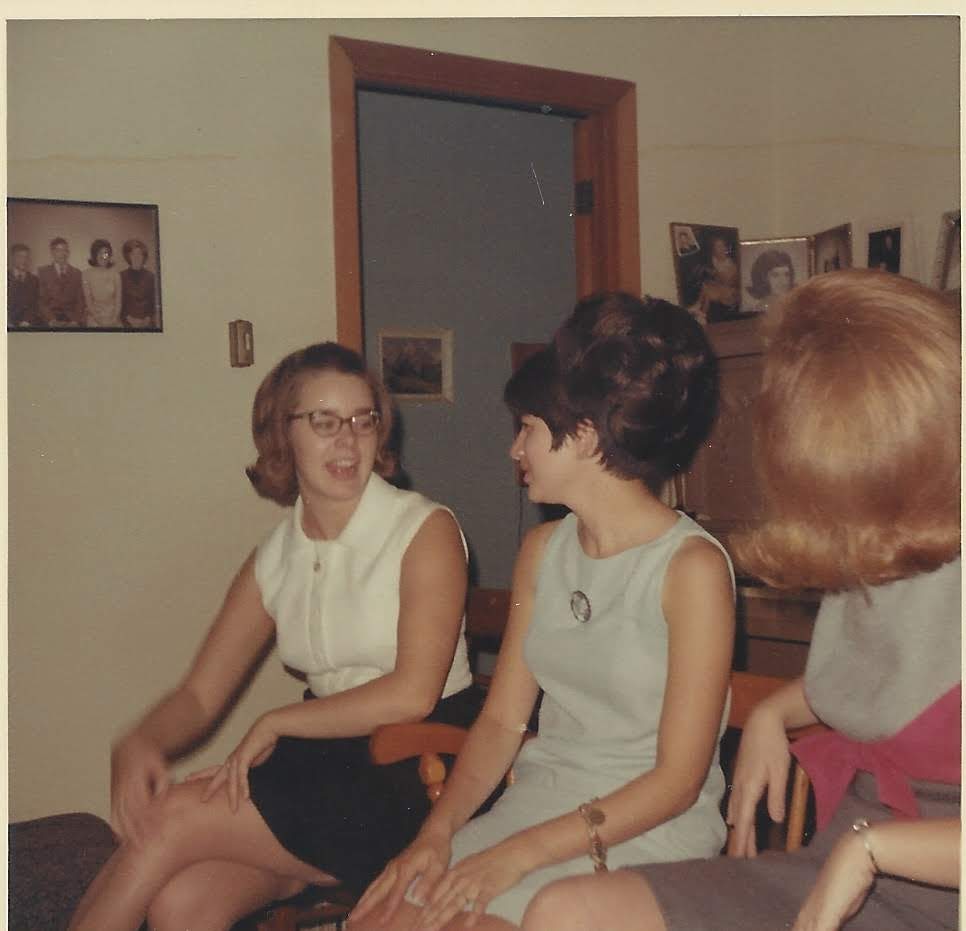
My eldest child was only two years old when we moved into our two bedroom apartment on the first floor. Ours was a quiet community of about sixteen units creating a square that overlooked a small garden like area. I quickly learned that the young women who lived there gathered on most days to chat with each other while they watched their children play in the sunshine. Before long a sweet gal from Pennsylvania named Debbie knocked on my door to welcome me and invite me to join them in their daily gab sessions. 

I soon found myself in a group rather unlike the people with whom been friends up to that point in time. Most of these women had a rough edge brought about from life experiences that were gritty and well beyond those of my heretofore mostly insulated life. Of course I had lost my father at an early age and had begun to care for my mother after her diagnosis of mental illness, but for the most part had only interacted with people who were highly educated and often rather circumspect in their behavior and their willingness to discuss their problems. Such was not the case with my newfound acquaintances. 

These women smoked and cussed without filters. They showed up for our daily meetings in bare feet with tousled hair, totally unconcerned with pretense. They shocked me day after day with their total honesty about their lives. I learned that one of them had worked in a movie theater that showed pornographic films. She laughed about her job of cleaning the seats after an especially vivid film. I sat wide-eyed as I listened to her hilarious descriptions of the “creeps” who came ther.

I heard about the woman whose husband was physically abusing her and later witnessed one of his tirades in person. I heard stories that curled my hair and helped me to realize that the world is filled with a great deal more tragedy than I had ever imagined, but it is also a haven for survivors with determination to overcome the hardships that have befallen them. I listened to their homespun and rather incredible advice about how to live and I loved every minute of being with them, of seeing a slice of life that felt so genuine and wise.

One day we were stunned to learn that one of our members had been raped. She had left her sleeping infant for a couple of minutes to race to the laundry room in order to place her washed clothes inside a dryer. When she returned to the apartment, which she had left unlocked. a man leapt out and attacked her. The tale of her ordeal haunted all of us. We whispered about it for days urging each other to be more circumspect and observant in our comings and goings. We grieved for our friend who out of fear and trauma remained locked in her apartment until she moved without ever saying a word to us. 

The incident left a pall on our gatherings and slowly the women moved one by one to rental homes in quiet neighborhoods. While I was waiting for my lease to end I too searched for another place to live. In the meantime I visited my friends in their new abodes. Our one on one conversations became ever more revelatory as I learned more about their backgrounds and the tragedies they had overcome. They had an earthiness about them, a kind of survivor’s honesty about themselves. They were determined to take charge of their lives and to teach their children and me how not to be victims. 

I suppose what I really learned from them is the value of those who seem different from ourselves. I was certainly better educated than any of them with a background of book learning that had somehow precluded the everyday common sense that they possessed. I was in awe of their confidence and grit, but most of all of their willingness to be shockingly honest about their mistakes. It felt good to be around such transparent women who also allowed me to express my feelings and my fears without judgement. With them it was okay to be imperfect and I found my time with them to be emotionally freeing. 

One by one members of our once close group moved away like the vagabonds they had been for most of their lives. The woman from Pennsylvania moved to Dallas. The gal from New York state went to live in the tiny town of Brazoria. Another chose east Texas as her next residence. We tried to stay in touch from afar but those were the days before cell phone and computers. Our efforts soon lapsed into longer and longer periods of time between reaching out to each other. Then they stopped altogether. 

I’ve often thought of these mighty women who played such a crucial role in forming my personality. Being with them was akin to attending a kind of reverse finishing school. They taught me about the realities of life, not just how to carry myself like a lady. They showed me how to find myself just as I was, not how I thought people wanted me to be. They enlightened my beliefs and showed me a confident and open way of approaching the world. The helped me to burst from the cocoon that had sheltered me and showed me how to emerge into the world like a butterfly, happy with who I am. 

I’m not sure where any of them are right now. I often contemplate attempting to find them on the Internet but I’m not so sure what I would do if I found success in doing so. Instead I remember them with so much joy and appreciate what they unknowingly did for me. They were a great big wonderful surprise in my life and I’d like to think that in some tiny way they know how much I enjoyed my time with them.

A Gift To Us All

My cousin, Paul, has died. That makes four from our baker’s dozen who have left this earth. Paul was a most delightful human being from as far back as I can remember. He was calm and happy and full of laughter. We all loved him because he seemed to be almost perfect and quite humble in his giftedness with words and human interactions. I can’t remember a single time that he got mad at any of us, or for that matter any other person. He was easy going, forgiving, understanding and compassionate in the most honest ways. We all looked up to him and felt proud to be related to him

Paul was a favorite of everyone and that seemed to be true everywhere he went. He loved his time in the Air Force and that love was reciprocated by his fellow soldiers. He was proud of serving the country and he would tell stories of his time given to our nation until his mind made him unable to voice the honor that he felt in doing his duty. He wore his Air Force ring as a sign of his devotion to freedom and democracy. 

Paul loved jokes and stories. He had a knack for delivering a punch line with precision. His tales were fascinating and revealed much about his values and the unmitigated joy that he found in the people that he encountered. That his coworkers loved him as much as we cousins did was not at all surprising. Paul was such a truly good person that it was almost impossible not to feel how truly good and special he was.

Paul was the quintessential husband and father. He loved his wife Carolyn and daughter Jan with all of his heart. He worked hard to care for them and provide them with a good life. The pride that he had for them was apparent on his face. They brought out his beautiful smile whenever he was with them or even thought of them. 

Paul was incredibly loyal to his God and his country and his family. The stories of times that he helped people are legendary. Of course, he never told us about his good deeds because he was never one to boast. We had to hear them from those who had learned from him or been better because of him. He loved deeply and that love was returned by virtually everyone who knew him.

Paul’s mother and father died when he was still rather young. My mama felt compelled to watch over Paul and to pray for him. She did not announce her intentions but she was forever requesting that I accompany her to watch Paul’s daughter perform on the ice or to attend a special occasion. She loved Paul like a son and he in turn was always so good to her.

Until Covid halted my partying I was happy that Paul and his family came to my yearly Christmas Day dinner. Everyone enjoyed having him with us, especially me. I remember how often he rolled up his sleeves to help me wash dishes after the meal. He smiled while he worked as though he had done nothing special at all, but I always appreciated his thoughtfulness.

We lost touch a bit during the pandemic but Paul was quite good about posting jokes on Facebook or telling stories that made us smile through all of the isolation. He loved to walk in the park and when he set goals for himself he met them rain or shine. I was always amazed at how many steps he took in a single day, even it that day was so hot that the rest of us were lingering in our air conditioned homes rather than enduring the heat.

I suppose that I have always had a tendency to block the idea that anyone that I love will actually die. I even thought as a child that one day my father would walk back into our house and reveal that he had not died at all. When I heard that Paul had an advanced case of dementia and that his days were numbered, I spent hours on Google hoping against hope to find out that there was an easy cure for the disease inside his brain. It was hard for me to imagine a world without him and yet when I visited him I saw that he was not the storyteller that he once was and that somehow his mind had been attacked in the most horrific of ways. Still, he managed to smile and weakly laugh during our conversation. 

I held onto that little bit of positivity thinking that at least he might be with us longer than the prognosis from his doctor predicted. I longed to keep him for just a bit more, crying for his family and for all of us cousins who loved him so. A day or so before he died I was storing Christmas decorations away when I came to a nativity set that my mother had given me. Somehow I felt her presence in my mind and it was as though she was helping me to understand that it was time for Paul to get some rest. I understood completely that he was not going to be with us much longer for the very first time. I sobbed uncontrollably as I grieved the loss of such a great man and how it would affect his wife and daughter and all of us. A day or so later I got the call that he had passed. 

Paul was truly a gift to all of us on this earth. He was a beautiful soul who seemed untouched by the darker natures of humanity. If ever there was an angel or saint on earth, it was Paul. We were lucky to know him and now he is resting and enjoying his reward in heaven. I’m happy for him. I have little doubt that he is back to telling stories and jokes and lighting up heaven with his beautiful and impish smile.