I Needed This Reminder

MLK_500x500

One of the best aspects of being retired is that I now have time to ponder more than I did when work required me to adhere to a strict schedule. I am able to read more and even to indulge in moments of sitting in silence with my thoughts for long stretches of time. I still serve my many grandchildren with my educational expertise whenever they require a bit of guidance or encouragement with their studies. Each summer I read the same books that they are assigned for their pre-advanced placement and advanced placement classes, so that I might help them to analyze and discuss the works when they return to school in August.

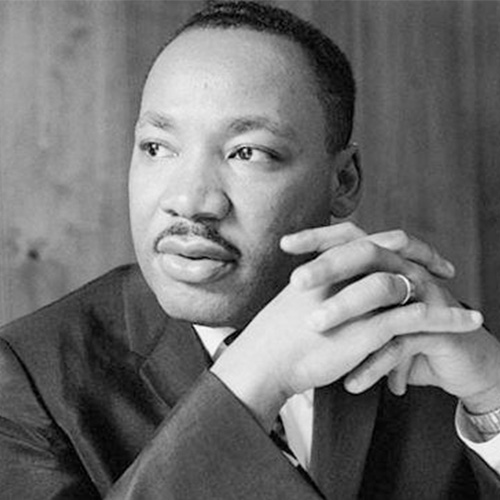
One of my grandsons is reading Martin Luther King Jr. I Have A Dream: Writings & Speeches That Changed the World edited by James M. Washington. When my daughter requested that I familiarize myself with the text so that my grandson and I might talk about its implications I was more than eager to delve into the heart of the essays. I have long considered Dr. King to be one of the greatest orators and most influential leaders of the twentieth century and indeed the entirety of history. He is a hero of mine, one of the people I would love to meet when I eventually make it to heaven.

I grew up in the era during which Martin Luther King Jr. did his incredible work. In the year I was born Dr. King was ordained a minister following in the footsteps of both his father and grandfather. He had been a child during the Great Depression, growing up in Atlanta, Georgia when segregation was still very much a fact of life for blacks just as it still was for most of my own youth. In 1954, when the Supreme Court ruled in Brown v. Board of Education that racial segregation was unconstitutional Dr. King was the pastor of the Dexter Avenue Church in Montgomery, Alabama and I was about to head to the first grade.

A year later, in 1955, Rosa Parks famously refused to surrender her seat on a Montgomery bus to a white man, an act for which she was arrested. Her brave action led to a boycott and Martin Luther King Jr. was elected president and voice of the efforts to integrate the buses in Montgomery. By then I was joining droves of Baby Boomer children in second grade classrooms that were still mostly segregated in spite of the earlier Supreme Court ruling. I would overhear rumblings of discussions from my father and grandfather who believed in those days that children should be sent from the room when politics were the subject of conversations. I was a nosy child who would hide behind a wall listening to their voices as they spoke of the coming changes.

In 1957, President Eisenhower federalized the Arkansas National Guard to allow nine black children to enter a previously all white school in Little Rock. I did not watch or witness the historic moment on television back then, but I vividly recall the many times that my dad and granddad talked about it when we visited my grandparents’ farm in Arkansas. That year Martin Luther King Jr. was elected as president of the Southern Christian Leadership Conference and  the reach of his crusade for justice widened. I would enter the third grade at the same time that those little children so bravely struck a blow for freedom in Arkansas. I was not totally unaware of the importance of that school year in the struggle to end segregation but I would not be affected by it in the little bubble that was my neighborhood.

The work to break the hold of Jim Crow laws and segregational policies continued throughout my elementary and middle school years. By the time I entered high school the Civil Rights movement was in full force and Dr. King had become one of its most admired voices. The concept of non-violent passive resistance was being used to integrate restaurants and universities and to expand the voting power of black citizens. Just before I entered my second year of high school the famous march on Washington D.C. captured my attention and I listened to Martin Luther King’s I Have a Dream speech with rapt admiration. I was hooked by its message and forevermore there would be no turning back to the ugliness and injustice of segregation for me. I was a devoted disciple of Dr. King and would hang on his every word and action. His influence over me would be enormous.

Just before I entered my senior year of high school President Lyndon Johnson signed the 1965 Voting Rights Act. Sadly the arc of justice was still far from complete. In college I would become more and more passionate about causes of equality and fairness. My generation was literally taking to the streets to protest all signs of legally condoned injustice. The laws of separate but equal were no more, but the seeds of racism still grew like weeds and I was eager to pluck them wherever they grew.

In the spring of 1968, I was planning my wedding when I heard the news that Martin Luther King Jr. had been assassinated in Memphis, Tennessee. I had been washing dishes when the word came and I remember slumping onto the floor in front of the sink where I sobbed uncontrollably. I was devastated beyond words and wondered how our country would be without the conscience and profound thoughts of this great man. His insights stay with me and guide me for the next fifty years of my life.

I am a seventy year old woman now. Martin Luther King Jr.’s words and influence have been a defining force for me even to this day. Reading his speeches and essays once again has brought me to tears and helped me to consider both the progress and the difficulties that remain in the long fight for justice. We have yet to achieve his dream, and of late we seem even to have slid back into a kind of ugliness that he had hoped to one day eradicate.

If Dr. King were still alive today he would be a very old man. I wonder what he might say about the state of our union. There are certainly things of which to be proud, but the work is not done. Would we be farther along in our progress if we still had his voice of reason and love, or would he be discouraged that we still have remnants of violence and hate? Whatever the case, reading his words has enlivened my own spirit and told me that the road to making his dream a reality is a worthy albeit difficult pathway.

As I write this I am gratified in knowing that my grandson is unfamiliar with concepts of segregation. I love that he innocently sees no color in his friends. The fact that I have to explain the evils that Dr. Martin Luther King Jr. spoke of indicates to me that we have indeed moved the arc of history ever closer to the ideals of agape which Martin Luther King so eloquently explained as “an overflowing love which seeks nothing in return…when we rise to love on the agape level we love men not because we like them, not because their attitudes and ways appeal to us, but because God loves us. Here we rise to the position of loving the person who does the evil deed while hating the deed that the person does. With this type of love and understanding good will we will be able to stand amid the radiant glow of the new age with dignity and discipline. Yes, the new age is coming”      (Dr. Martin Luther King, Jr. Facing the Challenge of a New Age, 1957)

I needed this reminder!

That’s Not What I Meant At All

toys letters pay play
Photo by Pixabay on Pexels.com

Words matter. The words we use and how we choose them matters. Even when we are careful the things that we say may appear to be offensive. Communication can be like walking through a minefield. One misstep in how we express ourselves may lead to irreparable misunderstandings. Even the tenor of our voice might be misconstrued. When we write things down the potential for imprecise interpretations of our thoughts becomes even more likely. For that reason it’s generally a good idea to really think before speaking or writing lest the nuances of our communication become twisted into something that we never intended.

The Love Song of J. Alfred Prufrock has always been one of my favorite poems because it encapsulates so much of our fragile humanity succinctly in some of the most clever lines ever written. For some reason I have often thought of the words of the protagonist of that work when he stammers, “That’s not what I meant at all.” Each of us has found ourselves in situations in which we meant one thing, but were thought to have said something completely different. Crawling out of such a hole is both difficult and dangerous because as we attempt to set things rights we often find ourselves falling deeper and deeper into trouble. This is particularly true whenever we speak without much forethought or in the heat of an argument. Our words become muddled, distorted and capable of taking on new life in a manner that we never intended. In the world of education we refer to such situations as having unintended consequences.

I was once participating in an exceedingly heated discussion of school policy that turned nasty when one of the members of the committee verbally attacked another member. Thinking that the moment called for a bit of diplomacy I attempted to forestall the ugly comments by reminding the speaker, who was a black man, of the kinder methods of Dr. Martin Luther King, Jr. The combative nature of the meeting cooled down and we ultimately found solutions without insulting one another, or at least that’s what I thought was happening. I later learned that many members of the faculty who had not even been at the gathering were intensely angry with me for what I had said to the man who was verbally attacking another member of our group. I was befuddled because my intent had only been to find a way to cool the heat of the arguments in a non combative way. I did not see that I had done anything wrong and wondered why the argumentative man was seen as the good guy while I was being viewed as he villain.

I immediately went to the man who had been so outspoken in his criticism of the other faculty member to find out how and why what I had said had been so insulting that it had created a frenzy of anger and mistrust aimed at me. He was not shy about insisting that my mistake had been in using the words of the great Dr. King against a black man when I was a white woman who had no way of truly understanding what they had meant to an entire people who still struggled for their rights. I was so shocked and taken aback that I burst into tears in front of him, something that I rarely do. He was stunned by my stammering, “But I love Dr. King too! He is my hero. I was honoring him, not insulting you.” With my admission our mutual understanding of one another was suddenly complete and we hugged by way of apology.

I’ve thought about that incident for years. I did not understand in the moment in which I chastised the man who was haranguing another that I might as well have stabbed him in the heart. He heard my words as just another attempt by a white person to cut him down. The insult was compounded by my use of the words of someone who, like him, had suffered the indignities of racism. I thought that I was simply defending a colleague, but what actually happened was steeped in a long history of struggle. I had embarrassed this man publicly and in the worst possible way without ever realizing what I had done. Luckily the evidence of my sorrow as witnessed in my tears demonstrated to him that I had not meant to hurt him at all.

My mother repeated the old saw about taking care with how we communicate over and over during my childhood., “If you can’t say something nice. Don’t say anything at all.” We might do well to make that a national goal for a time much like the campaigns against smoking or drugs or drunk driving. We take our freedom of speech so for granted that we have pushed it to a new level of insult and hurtfulness. We bandy about words and phrases without really thinking about how they may sound. It’s just way too easy to tap our fingers on a keyboard and post our grievances in the space of seconds. We react without considering who may be hurt by what we say. Even when we believe that we are protecting some person or some group we may inadvertently be inflaming another. We think ourselves immune from the consequences of our utterances because we have grown to honor the most outspoken among us and thought of those who measure their words out of respect as wimps. Little word bombs go off all around us and we have grown immune to the dangers. Friendships erode. The tension rises.

There is nothing good about verbally attacking someone. We should all agree on this, but it is also wrong to be unwilling to admit and clarify unintended mistakes or misunderstandings. We are not less of a person when we make amends for hurtfulness that we did not expect to happen. It is a sign of courage to be willing to hear and understand differing points of view and to attempt to come together as people with the common goal of bettering the world. The bravest among us think before they speak, and strive to unite rather than to tear apart. Maybe we’d all be in a better place if we were more circumspect when we speak. Words are powerful and we must bear that in mind each time we choose to utter them. 

A Cry For Help

stars and clouds at nighttime
Photo by Arnie Chou on Pexels.com

Life is serendipitous. In spite of our best efforts there is so much about each day over which we have no control. We may leave early for work to get a head start on the day only to encounter a huge traffic jam caused by a stalled car. Our outdoor wedding may have to be rushed indoors when an unexpected rain storm comes roaring through. Of course there are even worse things that burst into our world like a phone call in the dark of night bringing us unwanted news of a loved one’s death or a serious look from a doctor delivering a diagnosis that we don’t want to hear. None of us can escape such moments. They are an inevitable part of our humanity, and yet we all know of souls who appear to be stronger and more optimistic and capable of overcoming even the most horrendous situations.

We often wonder why one person falls apart in the face of challenges and another appears to react with grace and courage. Is it good fortune? Is it a quirk of DNA? Are there actually people who don’t have to experience as much pain and sorrow as the rest of us? These are the kinds of thoughts that may come to mind whenever we feel beaten down by life events. It always seems as though the whole world is spinning in delight while we are left alone with our worry or grief.

I’ve said little about the historic fiftieth anniversary of mankind’s landing on the moon in 1969. In different circumstances I might have been ecstatically happy when I watched Neil Armstrong plant the American flag on the rugged surface of the orb that seems to light the sky each night. I had been watching the progress of space travel since my science teacher, Mrs. Colby, heightened my enthusiasm in the seventh grade. I watched Alan Shepard become the first American to travel into space in her classroom, and later gathered with my classmates in front of a black and white television to witness John Glenn orbiting the earth. My brother had walked around the house clutching my father’s copy of a book describing a journey to the moon written by Wernher von Braun. I lived in the very city where NASA was headquartered. I should have been over the moon with joy on that July day, but instead my mind was focused on other things, worries that were threatening to overwhelm me.

The summer of 1969 had begun well enough. I was a young bride of only seven months still in honeymoon mode. My husband Mike was working as an electricians’ helper for the summer, taking a hiatus from his graduate studies at the University of Houston, and making good money pulling cable under the floors out at NASA in preparation for the big journey to the moon. He worked long hours, sometimes coming home only to grab a bite to eat, shower, change clothes and return to his job again. He traveled with his uncle so that I might have our car to run errands and visit with family and friends while he was occupied.

I beat a path between our apartment and my mother’s home more often than not. At first everything appeared to be normal there, but before long I noticed how preoccupied my mother was with her thoughts. Her usual joyful nature was clouded over in ways I had only seen in the days just after my father died. My mother had been let go from her teaching job and I suspected that her pride was mortally wounded. She had always been quite successful at anything she tried, so this was an experience that she didn’t quite know how to handle. She had also been dating a man for quite some time but had begun to feel that her relationship with him was toxic. She vacillated between wanting to walk away from him and feeling a certain level of love for him. She often asked me for advice, but I was young and inexperienced and unable to fathom the depth of her concern. I thought that with a bit of time she would soon be her old self.

Instead of getting better as June turned to July her behavior became ever more concerning. She kept the blinds and curtains in her home drawn tightly shut, blocking out the summer sun. She became less and less able to follow a simple conversation and tended to burst into tears without warning. She refused to turn on the air conditioner or even open the windows, so her house was stiflingly hot. Nothing seemed to draw her from her ever darkening frame of mind, not even visits to see her mother.

Soon traveling the short distance to see how she was doing became my daily routine. Her behavior was unlike anything that I had ever witnessed in my life. I grew ever more worried when she took to her bed and began speaking of unreal fears. She suspected that our family was being watched by the FBI and that someone was trying to poison her. Her eyes darted in terror as she described her paranoid thoughts. I hoped that with time she would become her old self, but instead she only became worse.

About the time that the whole country seemed to be celebrating the landing on the moon, I was conferencing with our long time family physician and attempting to understand what was happening with my mother. I remember watching the historic moment in a state of detachment. As I planned strategies to get my mom the help that she needed it felt as though I was all alone in an otherwise jubilant world. It never occurred to me that at the very moment when I was feeling so down there were no doubt others like me who were dealing with situations even worse than mine. While in the throes of tragedy we rarely consider that our woes are as much a part of existence as our joys. In the moment of worry and grief it is so difficult to see any kind of light, and yet there are people who somehow find it.

What I learned during that dreadful time is that sharing my story helped. I soon enough realized that I was not as alone as I had thought. There was not a crowd that surrounded me, but those who did were incredibly special, and often unexpected. Over the next forty years I would turn to the kindness of both friends and strangers again and again whenever my mother’s mental illness returned. I began to realize that even in the darkest hours there is a ray of hope. We have all experienced unbelievably trying times during which it is tempting to feel as though we have somehow been abandoned. The real truth is that nobody is ever all alone. There will always be someone who will help. All we need do is open our hearts and humbly and gratefully grab the lifelines that are there. It is the small step that may help us to make a giant leap.

Free to Pursue the Truth

america ancient architecture art
Photo by Pixabay on Pexels.com

The truth is found when men are free to pursue it.” —-Franklin Roosevelt

So we have a football player objecting to all sorts of American flags and many conservatives objecting to him. We have baristas at Starbucks asking law enforcement officials to leave because they are triggering other patrons. This person bothers that person and before long we are removing books from libraries, taking down crosses and monuments, refusing to shop or eat in certain places. How about just calming down and allowing each individual the right to his/her own thoughts, occupations, and choices? As long as nobody is being hurt why do so many of us come unglued? The thought patrol is making it feel dangerous to express ourselves publicly, because even the most benign ideas have the potential of being misunderstood, misinterpreted, and considered offensive. The mere choice of a wrong word may unintentionally cause pandemonium.

The quote that I chose to use at the beginning of this post might be construed to be sexist because it applies the word “men” to all humans. The idea of freedom to pursue the truth in today’s world often involves narrowing the parameters of what and who a person may choose to study. Unlike the days of my youth when I was encouraged to consider multiple points of view including before drawing conclusions, these days it has become risky to admit to actively searching out the merit of diverse ideas. Now there is a kind of closed mindedness requiring each of us to choose a particular side and then eschew all others. It flies in the face of all that I was taught to view as the pathway to wisdom.

I’ve learned over the years that there is rarely perfection in any person, organization, nation. As humans we make mistakes. Judging anyone or any group or any idea with a snapshot of only one moment is a ludicrous act. Instead we have to consider the totality to truly understand the nature, the character of all human pursuits. Each of us grows and evolves and changes over time as do even organizations. It matters less what someone did or said as an adolescent than how that individual eventually chose to live. Few of us would pass muster if the only yardstick for determining our morality were to view a few random moments from our youth. So t0o it often is with people who have spent decades in the public view. Our question should always be how they have changed to become better versions of themselves, not how they once were. The same is true of our country.

What I have always loved the most about being a citizen of the United States is my right to express myself without fear of being incarcerated or ruined. I have always understood that I had to follow certain guidelines with regard to my job because when I spoke, even in the private sector, I was still representing my employer. Nonetheless I always felt comfortable in supporting causes that I believed to be important. Mostly nobody really cared one way or another if I differed with them. Of late, however, it suddenly feels very different. People seem compelled to argue with me and tell me that they are disappointed whenever my views differ from theirs. Complete strangers come unglued by the mere mention of certain hot topics, even when I point out that I am attempting to hear the voices of as many different philosophies as possible before drawing conclusions.

It has become fair game to be close minded. Even in our universities where free thinking was once the norm, we shut down alternative discussions in the name of making everyone feel unsafe. Our debates are no longer ways to display differing ideas, but rather showcases for solidarity. Nobody wants to stray from the party line lest they be derided for abandoning the mutual cause. The result is a kind of stagnation of thought that is preventing solutions to very real problems and causing fear among those who genuinely wish to carry on lively discourse to find the truth.

I become wary whenever I hear the same phrases being mindlessly repeated again and again. I know that I am in the midst of propaganda rather than receiving facts. I have to explore different sources on my own, hoping that there will be people who have been willing to speak rationally about various topics even as they worry that their words may land them in a world of trouble.

We still have liberty in our country, but it does not feel as comfortable as it once did. The thought police are everywhere making it feel a dangerous game to engage in meaningful dialogue. As a nation we are far too busy pontificating rather than asking questions and then really listening to the answers. Sloganeering has become the fashion and in the process it is eroding the very freedoms that the grand experiment begun by the founders of this nation had hoped to achieve. So far we have yet to completely cross the line into tyranny, but our freedoms are threatened from both the far right and the far left. It’s time we demonstrate the courage to protect our precious liberties by letting those who would constrain our thoughts know that we are not so easily intimidated or bribed into submission. We are thinking people who want facts and information, not politicized propaganda.

Our process for selecting leaders has become as silly as a high school popularity contest or a beauty pageant. We don’t need clever soundbites, or demonstrations of insulting behavior. We need concrete ideas that are likely to actually become solutions to looming problems. We also need leaders who will accept our many differences and then use well thought out judgement to work for all the people, not just a small slice of supporters. It’s time for each of us to once again feel free to pursue the truth.

Finding Beauty In Life and Death

red rose flower
Photo by Cindy Gustafson on Pexels.com

I’ve seen more than my share of death. As the calendar moves relentlessly forward I have had to watch the passing of my elders, the people who loved and guided me when I was a child. Of late I have seen far too many of my peers leaving this earth as well. Death is inevitable and yet still such a frightening and unwanted state for most of us. We cling tenaciously to life even as we understand that not one of us is immortal.

A friend posted an article that defined the ways in which one might experience a “good” death. It was filled with all sorts of ideas that might work if one has the luxury of knowing that the end is near because of an illness that points in that direction. For many death is more sudden and unexpected, making it impossible to take charge of the event as described in the article.

My mother always spoke of being ready to die at any moment. She did not broach this topic in a morose manner, but rather from the standpoint of living life in such a way that no matter what might happen she would be ready whenever her time on earth was over. She did this with several routines from which she rarely diverged and from open discussions about her preferences long before there were any signs that her death was drawing near. As a result her passing was beautiful, and done on her terms just as she had always wished.

Mama never let a single day end in anger or hurtfulness. She asked for forgiveness for her transgressions which were always of the very minor variety anyway. She communicated her love for the people that she knew daily. There was no need at the end of her life for her to make an act of contrition to either God or family members. We already knew as I’m sure God did as well that she was sorry for anything that she had done that hurt anybody.

My mother expressed her desires to refuse all artificial means of prolonging her life on many occasions. She only hoped to be as free of pain as possible, but beyond that she insisted that we not take any extraordinary measures. We therefore felt comfortable conveying her wishes to her doctors who all smiled in agreement with her wisdom.

Mama lived a faith filled life that never wavered. She believed with all of her heart that our earthly home is only temporary and imperfect. She looked forward to an eternity of peace and happiness with God. On her last day of life she had an angelic glow and a beatific smile as she motioned toward heaven whenever we asked how she was feeling. She believed that her reward for a life well lived was coming soon. She had no anxiety and her peacefulness spread to each of us who visited with her in those final hours.

One by one the people who had meant the most to her came to pay their last respects. She made each visitor feel her love as she held hands and did her best to help them to accept the inevitable. She orchestrated final moments that none of us would ever forget, and gave us a gift of peacefulness that is unimaginable. In fact, even the nurses who cared for her in the ICU felt the joyousness that she projected. One of them cried as she left her shift, telling me and my brothers that she had never witnessed such a blessed ending to a life. She understood as we did that my mother had chosen this way of spending her final hours by living her entire life in preparation for the end.

My mother was always a caretaker who sacrificed for the needs of others. She asked for very little for herself and she certainly had moments when she was filled with all of the human frailties that we have. Somehow she always found her way back to a kind of inner peace and a total dependence on God to comfort her. She never asked Him for things or even to take away her sorrows or pain. All she wanted from Him was a bit of help in managing her attitude toward whatever was happening. Sometimes it took awhile, but always she found the serenity that she sought.

Mama’s life was difficult from beginning to end and yet she was one of the happiest people that I have ever known. From the time that I was a child she explained her joy by reasoning that she was able to tackle any challenge because she always knew that God was not going to leave her to act alone. Even, and perhaps most especially, in death she had a certainty that He was with her and that the best was coming. She was never angry with Him for the difficulties that mounted at her door. She accepted her travails as being a part of life.

I understand that it is difficult for many of us to curtail our anger, resentments, suffering and sorrow. Life can appear to be very cruel and death is often prolonged and painful. Keeping the faith and finding a way to smile even under the worst of circumstances can seem impossible, and yet I saw firsthand the power and beauty of my mother’s unwavering determination to be in charge of her life and her death by choosing an attitude of trust, faith, hope, and joy. She showed me and those who knew her how to have a beautiful death. I only hope that I will be able to follow her lead whenever that day comes for me.