Wonder

121009_DX_WonderBook.jpg.CROP.promo-mediumlargeWe pretend not to care about physical appearances, but then our responses to beauty or lack of it tell a different story. Our world is filled with products and procedures that we purchase and use to improve our looks. We study the icons of pulchritude with an eye to imitating the imagery that they project. We don’t want to be shallow enough to react on the basis of someone’s physical traits, and yet whether consciously or subconsciously we somehow seem to judge facial features, body types, hairstyles and clothing. Researchers have told us that those with pleasing physical attributes are often perceived as being more intelligent and worthy of leadership positions. Even as we pray that we ourselves will not be judged solely by the way we look, we somehow fall victim to viewing others in such ways and worrying about how they in turn are seeing us.

We are often our own worst critics. I remember reading an interview with Keira Knightley in which she laughed at the very idea of being a beauty. She proceeded to point out every flaw in her face and her body as though it was common knowledge that she was in truth a rather homely girl. I recall thinking that we all do such things with ourselves as we gaze in the mirror day after day. Each of us sees aspects of our appearance that go unnoticed by others. I hate my lack of a strong chin and the fact that one of my eyelids droops just enough to make my eyes seem uneven. I suspect that most people really never think of those things when they see me, and yet deep down inside I am self conscious and even find myself wondering what they are thinking about my features.

Sadly we are a superficial society in spite of our protests that such things don’t really matter, particularly when it comes to women. We dissect every inch of our female political figures, critiquing their hairstyles and their wardrobe choices. Little wonder that young girls begin to worry so much about how they are developing as they bloom into womanhood. They take note of whether are not they are ever complimented as a beauty even when they understand that such things should not matter.  They watch the cruelty of their classmates toward those who don’t possess the attributes deemed attractive by the public. Adolescence can be an extremely stressful time for anyone who is a bit different and most of us have endured that trying time, so we should know better than to fall victim to superficialities.

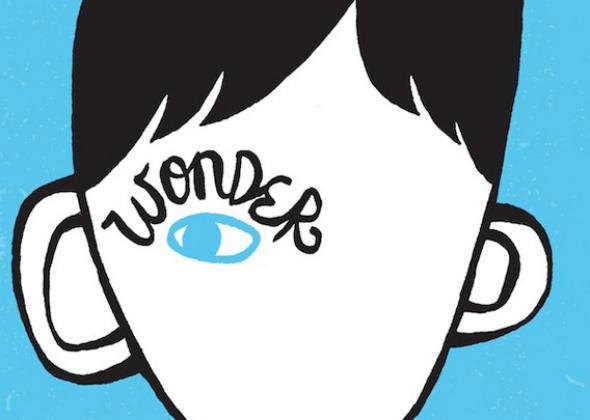
There is an exceptional book by R. J. Palacio called Wonder that tackles the topic of who we really are by telling the story of Auggie, a young boy born with Treacher Collins syndrome, a rare disease in which the facial bones do not form properly. Auggie has been homeschooled because of the many health issues and surgeries associated with his illness. Now he is ready for middle school, and his mom believes that it is time for him to attend public school and learn how to navigate in a world that can sometimes be very cruel. His journey is fraught with not just the usual junior high taunts and stresses, but with the added difficulties resulting from his physical differences. In the end Auggie and his best friend learn the importance of what really makes each of us incredible, and Auggie himself realizes that he is truly the wonder that his mother tells him that he is.

Wonder has become a best selling novel that is treasured by young and old readers alike. My granddaughter who is an avid reader counts it among her all time favorite books. This summer a grandson will read it as part of his summer assignments for entry into the sixth grade. I suspect that many people have been challenged to rethink how they view the people around them while learning about the miracle that is Auggie. The novel demonstrates that sometimes the people who appear to be the most lovely have very ugly souls, while those who do not fit our standard definitions of beauty are in fact the most gorgeous people in our lives. It reminds us not to judge a book by its cover or a person by his/her face.

We all know that once we truly love someone we lose the ability to see them as anything other than amazingly wonderful. We care little about how they look for we have experienced their kindness, their generosity the very depth of their souls. We are able to see inside their beautiful hearts rather than only gazing at the skin deep aspects of their appearance. Wonder laments those who are incapable of experiencing the true meanings of life even while it celebrates our true essences. It focuses on the importance of friendships, character and the uniqueness that makes each of us special.

This summer a movie based on the book will be released and it is sure to become a classic. We owe it to our young people to either watch the film or read the novel together and then discuss a topic that we too often ignore. It is our duty as adults to help our children to realize that each of us is absolutely perfect just as we are. It is in finding the beauty in ourselves that we begin to see it in the people around us. Once we move past our own worries and concerns a whole world of possibilities opens up for us and it is spectacularly lovely.    

Make Waves

Waves.jpgWhen the waves of life crash down on you, pick yourself up, get ready for the next one, and ride it like you own it!!!

I’ve enjoyed living only fifty miles or so from the beach for all of my life. While Galveston Island, Texas doesn’t compare to the grandeur of Destin, Florida or La Jolla, California it has definitely been adequate enough to bring me decades of pleasure. When I was still a young girl there was hardly any adventure that I enjoyed more than riding the waves of Galveston Bay. I loved how the water would lift me off of my feet and propel me in directions over which I had no control. The laws of physics created a ride that made me squeal with delight and I would spend literally hours repeating the process of floating and bobbing like a piece of driftwood over and over again until my mother demanded that I come back to shore lest the sun blister and burn my skin.

There is something liberating about freeing ourselves from the constraints of gravity and just letting go. When we allow ourselves to be one with the waves of the ocean we become part of a great cosmic ritual that ties us to the universe. It is a primal pleasure that gives us both a sense of our own power and the reality that we are but a tiny speck in the grand scheme of things. Somehow our worries and cares don’t seem to matter as much when we surrender to the surge of water that washes over us. We learn that thrashing and fighting against the tide may cause us harm, but simply floating and enjoying the ride will provide us with a rush of pleasure and happiness. Life is so much like that. There are things that happen to us that we can command and others over which we have little or no control. Knowing the difference will help us to lead much more joy filled lives.

A couple of weeks ago the skies darkened to a leaden gray as we finished our dinner outside on our patio. Within minutes the wind was gusting at fifty miles per hour. Our phones warned us to find shelter because tornadoes had been spotted in the area. Rain came crashing down on our roof. We were lucky. The storm blew over almost as quickly as it had come, but not far down the road it was a different story. Most of the community was left without power. Eighteen wheeler trucks had been blown on their sides. Trees were down and shingles from roofs littered the ground. The people were left with great damage and a terrible mess that needed cleaning up. They had been blasted by one of those waves of horrible luck that none of us ever want to face. By morning they were calmly doing what we all have to do in such circumstances, assessing the damage and planning the repairs. In other words, they bravely carried on.

It is in our natures to take on the blows of the outrageous fortunes that knock us off of our bearings. Somehow we find the courage to get back up and do our best to take charge again and again. We find silver linings even in the middle of storms. Whether it be losing possessions or people that we love, we bear our sorrows and eventually find our way back to seeing the best in our lives.

I have often thought about the tragic souls who were sent to the Nazi concentration camps. I can think of no more hellish situation than the one that they endured. They witnessed horrors that nobody should ever see. Many of them managed to stay alive and be freed only to find that their entire families had been murdered. It seems impossible that any of those people might have been able to go on to lead happy and productive lives, and yet most of them did. They managed to find a slice of normalcy and perhaps to celebrate the rising of the sun each morning in a way that none of us might ever understand. When all but your own beating heart has been stripped from you, maybe you develop a defiant courage and a realization of what is most important. Freedom becomes a treasure and you squeeze everything you can out of it.

At the beach there are also moments of low tide when the ocean is almost placid. It’s not nearly as much fun as when the waves are roaring, but there is a remedy for the lack of action. That is when you must make your own waves by kicking and stirring up the water with your hands. It takes a great deal of effort and energy to make things happen, but it can be done. So too are there moments when we somehow know that it is up to us to speak out in the name of all that is right and just. We can’t simply sit on the sidelines waiting.

My generation had a reputation for being trouble makers. We prefer to think that we were more like change makers. We spoke out against long accepted policies that had become the status quo. We had grown up in the shadow of segregation even while our minds told us that it was wrong. We watched our peers being sent to a questionable war and we began to ask why. We made waves and changes slowly began to take place.

We are in a new era with new problems. The wave makers are still at work and that is not a bad thing. It is from those willing to kick up a froth that we often realize the reforms that we must all make, and history is replete with individuals who were willing to take action. Galileo certainly whipped up a frenzy. Harriet Tubman risked her own safety and freedom. Today various people and groups also ask us to consider new ideas and ways of living. We don’t have to agree with them, but we should respect their courage in speaking out, for ours is a nation founded on the idea of providing everyone with the freedom to voice their concerns. It’s important that we protect that right with all of our might.

I’ve gotten myself into a bit of trouble now and again by standing up for my fellow workers or particular students. Some of my superiors have not appreciated my boldness, but others have seen my willingness to make waves as a sign of leadership. They understood that my goal was not to defy them, but to introduce them to slightly different points of view that needed to be heard. I did not always get their approval but I  usually won their respect.

The whistleblowers and protesters, editorialists and reformers are important to our progress as a nation. Any organization that does not have those who are willing to push back when things don’t seem quite right is doomed to failure. We need to hear all of the opposing philosophies. The day that we all walk in tandem and total agreement is the day that our way of life is on the verge of collapse. It’s up to each of us to know when it’s time to speak out and when we must kick as hard as we can to make waves.

No Fear

8550140-3x2-700x467We protect our children. When they are babies we install monitors in their bedrooms and rush to their aid when we hear crying or unusual noises. We buckle them into crash tested car seats when we travel by automobile. We place padding on the brick fireplace hearth. We install gates near stairs and locks on kitchen cabinets. We know how curious toddlers are, so we prevent them from straying into things that may harm them. We are deliberate in choosing who will watch them in our absence.

As our babies grow older we continue our vigilance. We teach them how to ride bicycles but insist that they wear helmets in case of a crash. We provide them with knee and elbow pads when they are learning how to roller skate. We give them a healthy diet and learn as much as we can about their friends. We enroll them in swimming lessons so that they will be safe around water. We talk with them about how to behave. We teach them and model our values for them. We are always ever watchful.

It is difficult for us to allow our teenage children to become more and more independent. We give them driving lessons and warn them again and again of the need for safe habits when behind the wheel of a car. We gauge their moods lest they be in some sort of psychological trouble. We continue to instill high moral character in them, hoping that they have heard our voices and that we have been good enough examples for them. We enforce curfews and insist that they keep us apprised of where they are and who is with them. We continue to look after them. They are our children and it is our duty to provide them with as safe and healthy an environment as possible.

Our children are innocent. They view the world with open arms, at least until they are hurt. They sometimes laugh at our concerns about them. They view our cautions as a sign of age. They long to be free and to experience life unfettered. Theirs is mostly a joyful time of exploration and risk taking. They often learn best in the school of hard knocks even when we have warned them of the possible difficulties that they may encounter. They love being with their friends and sometimes treasure the thinking of their peers more than ours. Their push back frustrates us, but we know that it is part of the natural progression of growth and development. We don’t worry unless we see indications that they are somehow changing for the worse, then we intervene. Always we are watching.

The time comes when our children ask to be part of the culture of their generation. They want to go see one of their favorite performers just as my granddaughter did when she learned that Maroon 5 was coming to the Houston Rodeo. We adults buy them tickets because we see no harm in letting them enjoy the music that is so popular in their circles. We smile at how joyful and excited they are. We give them extra money to purchase a t-shirt to remember the occasion. We understand how they are feeling because we too went to the concerts of our favorite rock stars back in the day. We remember dancing and singing along. It was a very happy time for us. Now it is their turn to experience a live performance. We know it will become one of their best memories.

Nobody expects to have a special evening turn into a tragedy. It is unthinkable that something as innocent as going to hear Ariana Grande sing will somehow become dark and evil, and yet we know that it did at Manchester Arena in Great Britain. A cowardly murderer found a way to kill and maim young children and teenagers, mostly girls. More importantly and sadly, he also managed to introduce terror and fear into their lives. The occasion that should have been so enjoyable will instead always be a source of horror and a moment that stole their innocence. What happened there was as despicable as any form of violence might be, for it not only hurt the young but it also sent a strong message to adults that their children may not be as safe as they had believed. Therein lies the ultimate definition of terror.

We are in a most unfortunate era of history. We find ourselves considering whether or not to visit this place or that, this event or another. We tell ourselves that we do not want to be constrained by fears and yet our imaginations nag us in the recesses of our minds, particularly when we think of our children. We have learned that few places are sanctuaries. People have encountered violence at churches, movie theaters, concerts, sporting events, restaurants, shopping malls, schools. The attacks are random and unpredictable. In the grand scheme of things the probability that something will happen to us or to our children is actually quite small and yet we worry, knowing that we will never forgive ourselves if we become too lax and suddenly find that our loved ones are among the count of victims. We don’t want to be careless even as we understand that there is no way of knowing whether or not someone with a twisted mind is lurking. We refuse to be afraid but must admit that some primal part of our brains is always alert.

We don’t know what to do to stop the madness. We pray for wisdom and miracles. We wonder if we should answer with an eye for an eye or stand on the side of peace and diplomacy. Should we erect barriers or be more inviting? The answers are unclear and each time that a heartless act occurs we begin the endless debates again. We sometimes surrender to the idea that this is simply the new way of the world, something that we must endure as a matter of course. We shudder at the thought that our reality may include telling our children that there is a boogeyman for whom they must be watchful. We worry that we may have to confine and restrict them even more for their own safety. Then we cry that they must be subjected to such fears because we remember the glorious freedoms that we enjoyed when we were young. How can they be carefree when the world is in such a state of chaos?

We have to talk with our children. We must reassure them while being truthful. We need to allow them to express their fears and then it is up to us to help them to understand that we will always do our very best to keep them safe. It is important to emphasize that most people are truly quite good, but then teach them how to best survive when they are in a difficult situations. We have fire drills knowing that most of the time we will never need to use the procedures. So too should we discuss what to do in other emergencies, including terror attacks. Keeping a cool head may mean the difference between safety and harm. It will also provide youngsters with a greater sense of control and well being.

We don’t need to take unnecessary risks but we still need to show our children how to enjoy life. We have always dealt with a certain level of uncertainty. Life throws us curveballs whether or not we encounter a terrorist attack. Every single day someone is in a car accident or receives a worrisome diagnosis. Weather has the power of changing the landscape in an instant. We cannot allow ourselves or our youth to become paralyzed with fear, but we can prepare them to use their heads and react properly in any dangerous situation. Most of the time they will never have to use those skills, but we must give them a sense of power so that they might go forth and explore the wondrous world around them with no fear. 

The Man on the Train

cta2061I was seven years old and with my family enjoying a vacation in Chicago. We had spent the day seeing the sights and were riding an elevated train back to our hotel. It was somewhat late at night so we were quite tired. There was only one passenger in the car with us. He was a rather nondescript soul who sat muttering to himself and staring at the floor. We thought nothing of him as we laughed and spoke of the fun that we had enjoyed that day. I suppose that our enthusiasm may have been a bit loud and over the top, but we were children. It’s the way that little ones react.

Without warning our fellow passenger focused his gaze on us and began loudly cursing. When our only response to his outburst was to quietly look at him in astonishment he stood up and began gesturing wildly as he spoke directly to our father. He insisted that Daddy either remove his “brats” from the train or face the consequences. Our dad immediately lost his cool and suggested that the strange man was the one who needed to leave the train which by then was already rumbling down the tracks. The two men stood within striking distance of one another in a contest of wills, and I found myself astounded that my father was capable of becoming as ferocious as he now appeared.

I was suddenly quite terrified and I sensed that our mother was feeling as frightened as I was. She pulled us behind her tense body and quietly watched the proceedings unfold in a posture that told me that she was ready to pounce into protective mode if needed. The man was out of control and noticed my mother’s demeanor. He immediately began to curse at her and call her horrific names that I remember to this day. Daddy turned red and it almost seemed as though smoke was coming from his ears. As he attempted to step forward to answer the man’s taunts with a clenched fist Mama grabbed his belt and pulled him back with all of her might.

This prompted our attacker to hurl even more insulting epithets at both our mother and our father. He boasted of violent things that he was going to do to both of them, and he promised that when he was done he would throw me and my brothers onto the train tracks where we belonged. This outburst so enraged Daddy that he broke away from Mama’s hold spewing threats of his own. Mama in the meantime kept begging both of the men to calm down and move away from one another. Just when it seemed that a bloody battle between the two men was about to ensue the train arrived at the next station and as the doors opened Mama ordered all of us to follow her out of the train while she tugged with all of her might on our father’s hand. Within seconds we were free, and the train sped away with our attacker still cursing and flailing his hands.

I have never forgotten that episode even though it has been six decades since it occurred. I have always believed that had it not been for my mother’s cool thinking there might have been a terrible tragedy on that night. Somehow she understood that the only way to deal with the deranged man was to ignore him and flee as soon as possible. While she never again mentioned our dangerous encounter, she often reminded us to walk away from insulting taunts from out of control individuals. She even used yet another story as an example. It involved a time when our grandfather attempted to aid a young woman who was being verbally harassed by the man accompanying her. Grandpa ended up being badly beaten by both the man and the woman because of his ill timed intervention and felt lucky to get away alive.

I have thought of my own family stories in light of the recent verbal attack of two young Muslim girls in Oregon that resulted in the fatal stabbing of one man and the injuring of another. It seems that the perpetrator of the crime somewhat randomly began insulting the two women drawing the protective ire of two Good Samaritans. Little did they know that he was bearing a knife or that he would even think of using it on them.

I have since seen a number of articles outlining what people should do in such situations, and I can’t help but think of my mother’s quick thinking. I have generally found that the first level of defense is to silently ignore the rants because they are usually indicative of someone whose mental state is out of control. Only when the verbal assaults turn into dangerously violent physical action is there any need to react. Words may hurt but they are nothing compared to the harm from actual fights, and it is very unlikely that anything someone does or says in such a super charged moment will change the assailant’s mind. In other words, the most heroic maneuver is to quietly shield the targets of the rage and then help them to leave the scene as quickly as possible. Any arguments no matter how logical they may seem have the potential to inflame the situation. My advice is to get out and get help.

Years after I had been so traumatized on that train I learned that an acquaintance had been killed as he attempted to help a woman who was being assaulted by her boyfriend in a bar. Just as with my grandfather both members of the couple turned on my friend slamming a metal bar stool into his head in retaliation for his interference. Ironically my friend had just returned from a tour of duty in Vietnam only to be cut down for an heroic act in his own hometown.

We have given a great deal of press to individuals who are coming to the aide of people who are being harassed with racist rants. Ellen even presented a monetary reward to one kind soul who stood up to a contemptuous and vile verbal attacker. While it seems to be the noble thing to do, I would humbly suggest that everyone be careful in assessing the situation before jumping into the fray. Sometimes the very best thing for everyone is to do nothing other than get away from the situation as soon as possible. There are truly crazy and evil people whose actions cannot be predicted. Giving them a wide berth and ignoring their remarks may in fact be the best reaction.

As a teacher and school administrator I often encountered people who lost their control. I’ve had individuals threaten to follow me home and beat me to a pulp. I have been called some vile names. I found over and over again that I had to be the one to maintain my composure by staying calm and refusing to react in such situations. As my mother often advised, I had to consider the source and understand that there was far more happening inside the minds of such individuals than anything that personally affected me.

Our father wanted to protect his family on our train ride from hell, but it was our mother who understood what needed to be done. We should all try to think first before attempting to deal with such insanity, or our original intent may end up leading to even greater problems. Sometimes remaining silent and running away is the most courageous route that we might choose.

A Memorial Day

american-flags.jpgThere was a time when Memorial Day was celebrated on May 31, regardless of when that day fell on the calendar. Thus it was in 1957. I had just completed the third grade after a rather adventurous year of moving from Houston to San Jose to Los Angeles to Corpus Christi and back to Houston. My father had begun working for Tenneco and we were living in a rented house in southeast Houston. My parents were thinking of closing a deal on a home in Braes Heights and we were all excited about meeting up with all of my aunts and uncles and cousins on Memorial Day at the beach.

My mom had spent most of May 30, preparing foods like potato salad and baked beans as well as her famous homemade barbecue sauce that my father would use on the burgers that he planned to grill the next day. We were beside ourselves with the anticipation of launching our summer vacation with our relatives. We knew that it would be a day of playing in the waves, fishing and crabbing on the pier, rollicking on the playground and listening to stories from our hilariously funny family members. It felt so good to be back in Houston after having been so far away for so many months.

My brothers and I went to bed before our father arrived home that evening. Mama explained that he had to complete a project that was due right after the holiday. He was a mechanical engineer and I was so proud of the work he did. I knew that if he failed to come home for dinner what he was doing had to be very important. I twisted and turned for a time but finally fell into a deep slumber with dreams of the fun that lay ahead. I did not awake until the sun peeked through the blinds in my bedroom window.

When I opened my eyes and acclimated myself to the new day I heard my mother talking on the phone in the hallway of our house. She sounded as though she was crying and her voice broke now and again. She seemed to be answering questions about my father and her answers were strange. She used past tense verbs which immediately alarmed me. Somehow without ever asking I had the idea that something dark and terrible had happened. I lay in my bed listening and grew ever more worried.

I finally crept into the kitchen searching for a glass of water because my anxiety had caused my throat to become dry. I was both surprised and alarmed to see my Aunt Valeria puttering about. Now I was convinced that this was not a good sign. I sat down at the kitchen table without saying a word while she nervously began attempting to explain to me that my father had died. It was difficult for her to get out the words and her eyes were filled with grief. I sat motionless and stunned as though I had not understood what she was saying, but truthfully I had figured things out before ever entering the room. I felt for my aunt because she literally did not have any idea what to do and I had no energy to help her. I suppose that we were both in a state of shock.

There have been few days in my life as terrible as that May 31, 1957. It has now been exactly sixty years ago since my life changed so dramatically. I was one person on May 30, and became someone completely different on May 31. I was only eight but I felt eighty, and in many ways forced myself to become an adult so that I might deal with the tragedy that so altered my world. I wanted to scream. I wanted to cry. I wanted to lock myself in my room forever. I wanted to run away. I wanted to tell my father one last time how much I loved him. I wanted to scream at him for going away from us. My emotions were a jumble that left me bereft for months. I wanted to know exactly what had happened but never really would. I could only draw inferences and surmise what might have brought his brilliant life to such a crashing end.

Based on conversations with my mother and stories in the newspaper my best guess is that after working late my dad went out with some of his coworkers and had a few celebratory drinks. I suppose that my mother became angry when he finally came home and they had a fight. Perhaps he left in a huff to attempt to calm down. He decided to drive to Galveston. He was on his way back home on a freeway system that was still under construction. Instead of being on the main road he was on the feeder. There was a deep unmarked ditch directly ahead of his path. He was driving as though he was on a highway when he was in reality heading to a death trap. Too late his car slammed into the cavernous depression. The front of the auto was crushed and caused the steering wheel to slam into his chest stopping his beating heart. He died instantly and so did a little bit of everyone who loved him. It seemed such a meaningless end.

Of course I eventually adjusted to the reality of the situation but a profound grief lay under my thin veneer of courage. I was never quite the same after that. I worried more and often found myself avoiding adventures lest I be the source of more pain for my mother. I grew up almost instantly while somehow being in an eternal childhood. A piece of my heart would always be eight years old and every Memorial Day it would hurt again. I would experience a lifetime of questions and what ifs. I learned the importance of empathy because I had needed it so on that day and there were special people who provided it for me when I most wanted it.

I have friends and acquaintances who have also suffered unimaginable losses. I suspect that those who have not had such experiences don’t quite understand how we never really and truly get over the pain. Our wounds heal but now and again something triggers an ache. In my own case I have so much more that I want to know about my father. I would give anything to experience an adult relationship with him. I wonder if the images that I have of him are just a creation of my mind. I want to hear his voice for I can no longer remember it. It would be nice to share stories with him and see his reactions to my accomplishments. I would so like for my children and grandchildren to know him.

I have a friend whose husband died suddenly. She has young sons who are suffering. When I read of their hardships I literally feel their pain and cry for them. They are lucky to have a wonderful mom who allows them to express their feelings, so I believe that like me they will one day have the courage to move on with life. It is what we do even when we think that surely we too will die.

Sixty years is a very long time. I am almost twice the age my father was when he died. My memories of him are all pleasant for he was a very good man. They have sustained me again and again. It doesn’t really matter how or why he died, but only that he set the world afire while he was here. He loved fiercely and squeezed every ounce out of life. He left his mark and I have told stories of him all throughout the years. He still lives in me and my brothers and our children and grandchildren. Sometimes I see him in my brother Pat or my nephew Shawn. His life had great meaning and we continue to keep his spirit alive.