
Science or Art?

yam.jpgWhen my grandson runs the 1600 meter race only time determines the winner. It is a feat that is as objective as any measure might possibly be. Unless there is a photo finish or one of the time keepers doesn’t do his/her job properly there is no doubt about the victor. When another grandson performs in a one act play and a panel of judges decide who the best actors were and which troupe gave the finest overall impression, the yardstick is far more subjective. Hundreds of people seeing exactly the same thing will rate it differently depending on the background that they bring to the theater. There will be questions as to the authenticity and fairness of the evaluations, thus leaving the final votes open for criticism. Most of life is more like the later, subject to preferences rather than a set of hard and fast rules.

Each year when the Oscars are awarded I find myself scratching my head in dismay. I truly wonder how it is possible that Casey Affleck won the best acting prize when Denzel Washington was in the same category. I rail at the television and ask no one in particular if he/she was blind. Of course all such determinations are just a matter of opinion rather than fact. So it is with evaluating a teacher, a student or a school.

There are certain guidelines that are universal aspects of a well run classroom but we have not yet even agreed on whether teaching is an art or a science. There are those who maintain that if an individual understands and uses certain best practices, the results will be quite grand. Such beliefs rely on the idea that there is truly a science that leads to being an effective teacher, and there is something to be said for knowledge of pedagogy. Still, after spending decades inside classrooms both as a teacher and an administrator I have learned that there is something quite artistic about the process that elevates an educator to a magical level. Two people using the exact same methods often achieve very different results that can only be explained by noting that one is unimaginative while the other is an artist.

We attempt to measure educational success with numbers found in the scores of students on standardized exams. Of course we intuitively know that hundreds of factors affect the final outcomes of such attempts to quantify the teaching process. The list is so huge that it would be impossible to name all of the possibilities but a few examples might be the health of each student, the amount of rest each has had, the home environment, the presence of testing fears, hunger and so forth. None of these things can be totally controlled by the teacher and when a preponderance of them are affecting the child negatively the test score may be less than stellar. Somehow our society ignores such things in judging the value of our educational system. The numbers are king and yet they only tell a small part of the story and because of this they have a negative impact on everyone in the classroom.

Our present system of testing students at virtually every turn has created a totally unnecessary level of stress. We decide the futures of our children and their teachers even as we understand that those exam scores do not tell the whole story. Study after study has shown that most standardized tests favor middle class white males. For whatever reason all other groups do not do as well. It would be a stretch to assume that this is because the middle class white males are more intelligent. In fact, they are not, but they respond to the questions and answers differently because of their life experiences. The test items that are supposed to be neutral are far from that. They are often subject to interpretations that result in responses deemed to be incorrect. When students are given the opportunity to explain their reasons for selecting certain answers, interesting trends appear, including the fact that the questions are often more subjective than the creators imagined they would be. Given the importance that test scores are given in today’s world, it is quite distressing to realize that the element of subjectivity is often present.

As we learn these things it seems logical that we would begin to admit that our efforts to judge our students by the numbers is still rather ineffective, but in truth we appear to be relying on such evaluative measures even more than ever. The three ring circus created by this situation is disturbing to everyone involved including students, teachers and parents and yet it continues unabated. I suspect it has to do with our human tendency to desire easy answers for complex problems. Once we suggest a solution it is often impossible to rid ourselves of it even when it is obviously a mistake. Other than the realization that Prohibition was a stupid idea, we rarely turn back once we have chosen to pursue a certain path. Sadly I think that we will remain hell bent on using tests to quantify progress until we finally realize the magnitude of the damage that is being done to our educational processes.

The acquisition of knowledge should be an adventure and there are certainly gifted teachers who manage to achieve that even with the specter of testing hovering over their heads. Unfortunately far too many educators struggle under the pressure to perform. They are more like drones laboring away in a massive hive of routine. They use the prescribed methods but don’t quite know how to elevate them beyond the ordinary. They may even reach very satisfactory results but the love of learning is missing and their students feel the loss.

We have turned education into a political football. How we design curriculum and provide resources tends to depend more on which ideology is victorious in elections rather than a reasoned appraisal of student needs. If we test children it should not be to determine how rewards and punishments should be meted out but rather what educational designs are needed for each individual situation. Testing should be a positive experience rather than one that strikes fear and loathing into everyone concerned. It should be much like a physical exam at a doctor’s office, providing information on the educational health of each child and then determining what measures are needed to insure growth. We need to halt the practice of using exams as evaluative clubs to beat our children and teachers down.

I return to this topic again and again because it is so important. As citizens we have the power to demand that something be done to change the present system into one that generates a positive experience rather than a negative one. We have to admit that the way we evaluate is all too often flawed. There is a better way to determine how well our students are doing and what the results mean. If we return to the original intent of such tests we will do everyone a service. They were never meant to grade schools or teachers but rather to determine how much progress a student has made from one school year to the next and then to devise a learning plan that best suits each individual. If we manage to do this, we won’t need vouchers or children moving from one school to another. We will finally begin to do the work of educating as it should be done. We will finally enhance classrooms with both science and art.

Magical

downloadI’ve been retired from a four decades career in education for almost six years and I still can’t seem to avoid following the academic calendar. Perhaps it’s because a school bus stops in front of my home each morning to pick up the neighborhood children and I am daily reminded that the process of educating our youth has endures with or without me. Maybe it’s because I still tutor students twice a week at two different schools and in the evenings. I suspect that it’s mostly because I followed the August to June routine for so long that it has become embedded in the heart and soul of who I am. So it is that I continue to immerse myself in spring break rituals each year even though that special week for students and teachers shouldn’t make much difference to me now that I am free to do whatever I wish whenever I wish.
I made no plans for the annual March respite this year and yet the serendipity of my activities made it one of the most memorable and relaxing weeks that I have experienced in all of my years of partaking of the annual spring fling. It began with an evening track meet in which grandson Eli broke the district record for the 1600 meter run. Watching him plying his craft is akin to viewing a gazelle. His form is a breathtaking sight of beauty. Even better is his determination to continually compete with himself to be his personal best. I am in awe of him and watching him on that night was magical just as the rest of my spring break adventure would prove to be.

Husband Mike and I traveled to bluebonnet country the following day, enjoying the lovely blue carpets of the state flower that are so glorious each spring. We had bonafide Texas barbecue and sampled fruit kolaches that warmed the Slovakian half of my heart. We walked among the rows and rows of flowers at the Rose Emporium and brought home two more gorgeous bushes to join the collection that we already have. It was one of those absolutely perfect days that reminded me just how much I truly love the people and the sights of the place I call home.

The weather took one of those unexpected dips in temperature a day or so later just as it always seems to do this time of year. It was a perfect moment for making paprika stew for my grandson Andrew who had arrived for a sojourn from his studies at Purdue University. We had one of those old fashioned Sunday night dinners with him and his family. We caught up on all of his news and lingered at the dining table with stories and lots of laughs, ending our meal with pies that we had purchased at a bakery in a small town known for its sausages, baked goods and ice cream. It felt good to fill the house with our children and grandchildren. It had been quite some time since they had been able to steal a few hours from their busy school time schedules. Not wanting to end the joyful feeling of the evening we all agreed meet up again the following day for a musical light show at the Burke Baker Planetarium followed by dinner in Rice Village.

Just when it appeared that I would return to a somewhat uneventful week my granddaughter Abby who lives in San Antonio called me to request my presence at her home for the next few days. Mike had things to do, like taxes (ugh), so I hit the open road on my own. The drive has become second nature to me since my daughter moved there a little over ten years ago. I break down the distance into discrete parts that tell me that I am moving ever closer to the other half of my ever growing family. The weather was spectacular much as it generally is in March. The bluebonnets were even more profuse than they had been only days before and now they had been joined by the red Indian paintbrushes that shouted out, “This is Texas at its very best!”

My daughter is about to move to a new home so she was busy sorting and packing belongings while I was there. She reluctantly took a small slice of time to join us for gourmet burgers and milkshakes at Hopdoddy as well as a round of bowling at a rather unique emporium. Afterward we played board games and watched old Star Wars movies until late into the night. It felt so much like the kind of activities that we used to enjoy back when we my daughters were just girls and we spent our spring break time chilling out and enjoying life in slow motion.

While my daughter returned to her duties the children and I continued our adventures with a visit to a small hill country town called Boerne where we found treasures in the many different antique shops, including a slightly damaged kachina doll that grandson William named Footless Fred. We laughed with delight as we scored a tiny house fit for the gnome garden that the kids are designing, an old Stars Wars book, a poncho, and a set of quilted placemats. We ended our day with a side trip to Guadelupe River State Park where we skipped rocks and told one silly joke after another.

It was with a certain level of reluctance that I headed back home toward the end of the week, but the kids had things to do that they had been putting off while I was in there. I too needed to get back to reality, but not until I enjoyed what may well have been the most magical day of my spring break.

Mike and I began the final Saturday of my mini vacation by meeting Andrew once again for a farewell lunch. He looked so happy, rested and ready to tackle the next six weeks at Purdue. Like me had had been energized by the people and places that he most loves. He had an optimistic and determined twinkle in his eyes and I felt quite comfortable sending him off to joust with his challenging  engineering and mathematics classes. He will be halfway through his collegiate journey by May. He sees the light at the end of the tunnel and it is a beautiful experience to listen to him voice very adult and wise pronouncements about the future and life in general.

From our sojourn with Andrew we traveled to the home of one of my former students, a young man named Bieu. We have known each other for well over twenty years now and he faithfully maintains a constant connection with me just as he promised he would when he was just a boy in my math class. On this day he was hosting a crawfish boil, another March tradition in the Houston area. He had great pots of the lobster like creatures turning a bright delicious red as the water bubbled around them. He cooked potatoes and corn as friends and family enjoyed the cool afternoon in his backyard.

I continue to marvel at what a fine person Bieu has become. I am as proud of him as if he had been my own son. I laugh that he was the one who most closely followed in my father’s footsteps by earning a degree in mechanical engineering from Texas A&M University. I feel quite certain that my dad would have loved Bieu and his family as much as I do had he been around to meet them.

I ended my glorious week that evening at the seventieth birthday party of Josefina Carrillo. She once worked for Mike at a bank in southeast Houston and he insists that she was his best employee ever. I also had the privilege of teaching her daughter Josie at South Houston Intermediate. Because southeast Houston has always been a small and very friendly kind of world the connections to Josefina go even deeper. Her son married the sister of one of my daughter’s best friends from our old neighborhood, so it was like old home week at the gala.

We feasted on fajitas and sipped on margaritas while a mariachi band played “otra mas” tune after another. There was dancing and enough smiles to light up a city. We learned that many of the people who had come to honor Josefina had lived in our old neighborhood and been involved in the same circles that had defined our lives for years. The kinship centered on the birthday girl bonded us all together and we had an incredibly lovely time remembering how many joys and blessings we had all experienced.

As I think back on my week of simple pleasures I realize how lucky I have always been. I not only have happy, healthy children and grandchildren but a host of friends who have brought sunshine into my life over and over again. I thought of how so much of my good fortune came to be because of the time that I have spent in what must surely be the most inviting city anywhere, Houston and its surrounding areas. Where else would I eat New York style pizza, crawfish and Tex Mex all in one day? Where else would I be so welcomed by Vietnamese and Hispanic families within the space of only a few hours. Where else would the people be so hospitable? Where else would I have enjoyed such a magical spring break? Where else would I rather be?

Tick Tock

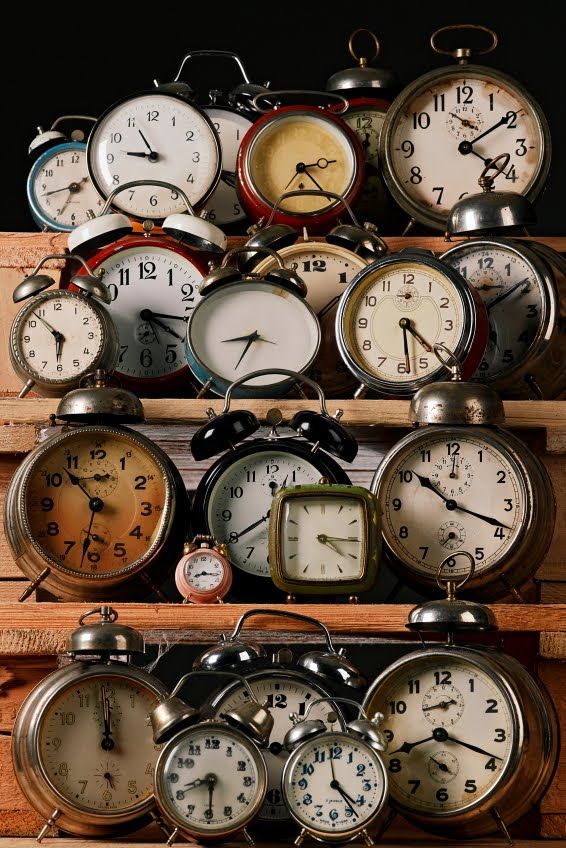
collection of vintage alarm clocksChange, chaos, confusion! No, I’m not speaking of the political realm but something far more insidious, the springing forward to Daylight Savings Time that occurs each March. Even after a week people are still dragging around trying to adjust their internal clocks to the loss of an hour and wondering just why we insist on torturing ourselves by moving the hands of our mantlepieces twice a year. Who thought of this process and does it really make a difference of any kind?

During World War I someone decided that Daylight Savings Time might help the country save energy. Maybe it was a good idea back then but somewhere along the way as our world turned into a twenty four hour frenzy of lights, television programming, computer use and shopping the concept of everyone quietly turning off their lights and going to bed doesn’t appear to be what it might once have been. Research shows that having an extra hour of daylight does little to curtail the use of electricity, gasoline, natural gas or any other form of energy, not the least of which is because we use the same hour’s worth of lighting when we rise in the dark each morning that we would have used if night came a bit earlier in the evening.

I recently read that more people have heart attacks and wrecks in the first weeks after a time change than at other moments in the year. Farmers report that their animals have difficulty adjusting to changing routines as well. So the burning question that keeps coming back to mind is why we torture ourselves by doing something that most of us dread? Why don’t we just choose either Daylight Savings Time or regular time and then stick with it forever? It would certainly be easier on the constitution.

I generally reach the point at which I am fully accustomed to the new timing just shortly before it is about to readjust again. I sleep well in those last weeks and feel a level of energy that is unbounded. Once we go through the gruesome alteration process I find myself dragging for weeks and I am plagued by insomnia for months. I suspect from comments that I hear that most people feel the way that I do. I don’t particularly care if my mornings are dark or my evenings come a bit earlier as long as I get to become acclimated to one way of marking time or another and then never again have to change unless I choose to travel to a different time zone.

Unfortunately we seem to be doomed to continuing the silly tradition of switching from one method of timing to another simply because we once started it. Have you ever noticed how reluctant we are to abandon a process once we decide to try it? It is some crazy aspect of human nature to prefer sticking with a plan even if that plan proves to be ridiculous. We see it most especially in government where that status quo becomes the way of doing things ad infinitum. We fear the idea of admitting that we my have been wrong about the merit of an idea and so we commit ourselves to absurdities again and again. It almost takes a rebellion to repeal a rule once we have made it part of our routine.

I applaud states like Arizona and Indiana that don’t go along with the time change shuffle. They merrily buck the tide and enjoy the certainty of no loss or gain in hours. They have no need of clock changers who must spend wasted time moving the hands of timepieces back and forth, back and forth twice each year.

I once saw an interesting documentary detailing the unbelievable number of days that it takes just to adjust all of the clocks that belong to the Queen of England. Many of them are complex antiques that must be very carefully calibrated and only experts are able to do so properly. It is a herculean task that is both expensive and time consuming.

I feel as though we have so many truly important problems in the world and recalibrating the time again and again should not be one of them. I advocate for suspending this policy and freeing ourselves from the tyranny of sleepless nights and energy-less days. I call for letting the natural rotation of the earth determine the timing of our habits just as it did for the thousands of years before someone got the not so bright idea of artificially determining when our days should begin and end.

Since it is more than likely that we will never rid ourselves of this onerous habit I instead extend my sympathies to those who become discombobulated each March and then again in the fall. I feel for all of the teachers who must spend the next many weeks looking at students slumped lazily on the tops of their desks. My heart goes out to the mothers of babies who insist on keeping to their sleep routines regardless of what the clocks may say. I understand the frustration of pet owners whose kitties and puppies react to the sun rather than the manmade schedule. For those like me who are now spending their nights staring at the ceiling I give you the hope that this too shall pass sometime around September or October just in time for it all to begin again.

What a piece of work is man. We sure know how to make things more complicated than they need to be. Maybe instead of making so many more new rules we may want to consider getting rid of some of the ones that make our lives more difficult. Starting with omitting all of the time changes seems to me to be a great place to start.

Let Squirrels Be Squirrels

squirrelsI’ve been watching a couple of squirrels terrorize each other as well as the peaceful doves who usually congregate in my backyard. The rascally critters have broken my bird feeder and spread seeds all over the grass. When I commented to my husband that I was angry that they had taken over my usually scenic area, he noted that they were just being what they were born to be.

It’s interesting that we allow members of the animal kingdom to follow their instincts but we so often want to push humans into being someone or something that just doesn’t feel right for them. We have this idea that everyone should go to college but the fact is that there are many wonderful jobs that require some training but not a degree. Someone who is a master electrician or plumber can have a comfortable and enjoyable life but we tend to freak out if our kids suggest that this is something that they would like to do.

I will never forget a long conversation that I had with one my students whose goal in life was to be a welder. His uncle was training him even before he had completed eighth grade. He had no desire to prepare for college. He loved the work that he was already doing.

I’ve known other young people who knew how to build custom wood floors and lay tile like it was going to be featured in the Taj Mahal. They were skilled in carpentry and able to fix cars. They had little desire to major in history of psychology. They wanted to work at refineries or in oil fields. They dreamed of becoming ranchers or farmers. They understood that they would make enough money to live rather well and it irritated them that instead of helping them to learn a viable trade those of us in the education biz were constantly attempting to wedge them into a collegiate box.

The same is true when it comes to choosing majors. There are those who honestly believe that if we just make science, mathematics and engineering seem exciting enough that more and more students will study for jobs in those fields. The truth is that some people simply are not interested in any way whatsoever in pursuing such technical careers just as my brother, the rocket scientist, would have been appalled at the idea of studying literature or poetry. Instead of insisting that every single high school student be required to build a college bound resume maybe it’s time for us to be more realistic and actually take the time to find out where each individual’s interests and talents lie.

One of the best classes that I ever took was one that I initially dreaded. It was a futures course entitled “Careers.” It seemed to be a total waste of time but once I had completed all of its requirements I understood myself so much more. It was far easier to outline work goals and to have an idea of where I might go in life. It identified my altruistic nature and the fact that I needed to feel as though I was making a difference in people’s lives to be truly happy in a job. It noted my creative bent, my diplomatic skills and my need for human interactions. Suddenly I realized that education was the perfect avenue in which I might use my talents. Indeed I found great happiness in my work, if not a fortune in earnings, something that was never that important to me.

Perhaps the gravest mistake that we make with our young is in placing more importance on certain lines of work than others, giving the impression that some occupations are not particularly worthwhile. We groan if our children suggest that they want to be writers and often redirect their interests before they have even had the opportunity to test the waters. I was told over and over again in high school that my desire to be a journalist was a silly pipe dream, a waste of my valuable time. My mentors wanted me to be a doctor, an engineer or a certified public accountant, none of which sounded like something that I wanted to do day in and day out. The adults in my life felt that I had the intellect to enter a career that would bring wealth to me but I was of a different mind. In the end happiness is as important in deciding such things as monetary gain.

I suspect that the entire educational system would greatly improve if we were to spend more time listening to our students and attempting to help them to find out how to use their abilities and interests to build a career. We need to be honest with them in admitting that a college degree alone does not insure a productive and happy life. We need to provide them with more choices than just a STEM or Liberal Arts degree. We need to particularly work with students who may not have any idea of the many possibilities for satisfactory work.

I was one of those kids who was quite limited in my knowledge of the world. My  isolated point of view had little idea of many careers that I might actually have enjoyed. It would have been wonderful to have more guidance from my teachers and counselors than how to fill out a college application. I got lucky when I took that Careers class in college and found my way on my own but not everyone is so fortunate. Far too many young people today graduate with enormous amounts of debt and no idea of how to transform the knowledge that they have gained into a real position that they will enjoy. Many times they fall into majors without much information as to how to use them in real world settings. There is a certain immorality in the ways that we so often mislead our students into believing that any kind of college degree will bring them the success that they seek. It’s time that we begin to rethink the way we help them so that they might find out what they were born to be.

Each of us have special aptitudes, talents and characteristics which if channeled properly lead to incredibly happy and secure lives. It should not be as difficult to find out what those things are as it presently is. We have the tools for unlocking the essence of each person.  We need to use that information more effectively. If we can let squirrels be squirrels then we should be willing to celebrate the incredible variety that is who each of us might be.

Finding Beauty in Humble Places

Minolta DSCBlessed are they who see beautiful things in humble places where others see nothing.

— Camille Pissaro

How does one define beauty? Is it the latest super model on the cover of a magazine? Is it a sleek new car? Perhaps it is a stunning symphony or sunset over the Grand Canyon. For some it might be the laughter of a toddler or the words of a Shakespearean sonnet. For others it is a bouquet of roses or a rare jewel. While these are all stunning examples of loveliness, sometimes it is in the most unlikely corners of the world that we find the most elegant.

I loved my grandmother Minnie’s hands. They were wrinkled, swollen and misshapen. They had tilled soil, picked crops, milked cows, fed chickens and carried heavy loads. They had also held babies, rolled out dough for biscuits, and assembled guilts. They caught Grandma’s tears when her son died and fluttered to her cheeks when something made her laugh. They held a gun to shoot a squirrel for dinner and hauled in many a fish as well. They chopped off the head of a snake with a hoe and mended clothes to be used for another season. They were hard working and loving hands that showed their age without apology. They were indescribably beautiful.

I often find myself gazing at the simple loveliness of a glass of milk. I delight in its creamy color and velvety texture. I enjoy watching the bubbles that sometimes form at its edges when it has been newly poured. I see my good fortune in that liquid that builds bones and provides energy. I wonder how I have always been lucky enough to have as much of it as I have needed while others in the world are denied its hunger chasing powers.

When I attempt to unveil the mysteries of mathematics to my students there is nothing more glorious than the kind of smile that lights up a face at the moment of understanding. It is a marvelous sight indeed. The eyes glow and I can almost see right into the souls of my newfound geniuses. Their mouths curve in an upward smile showing a confidence that wasn’t there only moments before. We share a silent bond of accomplishment. Theirs is the joy of learning and mine is the satisfaction of providing possibilities.

The sound of the school bus stopping on the corner of my street each morning and afternoon tells me that I will soon hear the delightful voices of the youngsters who live in my neighborhood as they laugh and chatter with one another. I exalt in their playfulness and innocence. They remind me of how fantastic the future will most certainly be. The melody of their voices is an alluring concerto.

The first buds of spring, the cooing doves, the tree branches stretching heavenward and the deep blue sky on cool clear days are all gifts from nature, unique works of art. I take great joy in observing the bounty that is there for me to observe on my walks. I see turtles sunning themselves along the banks of the drainage ditch like armed sentinels. I laugh at the cats that skitter across my path taunting me with their agility and energy as I lope along.

A bird’s feather, a heart shaped rock, a golden leaf, a wildflower are all treasures that delight me. A baby’s foot keeping time to music or the friendly smile of a stranger bring glee instantly to my heart. The earnest drawing and sentiments of a young child are worthy of placement in the gallery of my soul. The warmth of a quilt on a cold night or an icy glass of tea on a summer’s day satisfy my wants and needs in ways that great wealth might never bring. A hug from someone that I love is the simplest but most incredible of pleasures.

It takes so very little for the ordinary to become extraordinarily beautiful. All we need do is pause from the hurry and scurry just long enough the hear the breaths that we take and the beats of our hearts. Savoring the quiet and using our senses to be totally in the moment reveals how much exquisiteness is all around us. Beauty is available for our enjoyment whenever we wish. When we take the time to notice we suddenly realize the glory of our universe with its patterns and colors and magnificence. We revel in our own humanity and realize that every shadow and crevice and nuance of our individuality is pleasing. We become one with the world and its people once we are able to still the negative voices in our heads.

It is not that difficult to meditate and reflect in such a way that we feel peace and are able to see the splendor in all things. It only takes a bit of practice and once we learn the tricks it brings us infinite contentment and optimism. It requires watching and listening and accepting, not talking, worrying, arguing or over thinking. It brings heavenly contentment to our bodies and our minds and we begin to see that there truly is beauty everywhere.