One Hundred Years

art blur bright candlelight
Photo by Hakan Erenler on Pexels.com

When I think of my Aunt Valeria I think of her raisin and pecan cookies that she called “hermits” and her carrot cake that was the best that I have ever tasted. She was is a woman with simple tastes, not needing much in the way of luxuries to be content. She was born in April of 1919, the first daughter of Paul and Mary Ulrich, two recent immigrants from the Slovakian region of Austria Hungry. Of course, if you do the math, you realize that she is turning one hundred years old, a milestone that few of us ever reach, but I’ll talk about that later.

Aunt Valeria was a good child who dutifully helped her mother as the family grew and grew. She was there to watch the birth of most of her siblings and to help her mother care for them. By the time she was sixteen she was already well schooled in household duties and the intricacies of raising children, for she had been a source of great assistance to every one of her eight brothers and sisters, often setting aside her own needs to care for them. She was the essence of the responsible eldest daughter, but she had fallen in love and was hoping that her father would be amenable to the proposal of marriage that her boyfriend, Dale, had delivered to her. She waited expectantly as Dale asked for her hand in a deep conversation in which his true intentions were being assessed by her dad.

Dale passed muster and before long he and Valeria were married. They settled down in a bungalow on the East end of Houston where he would be close to his work at one of the refineries that were popping up along the Ship Channel. He was as good a man as ever there had been, and he was quite handsome to boot. Valeria loved him with all of her heart and wanted little more than a quiet and steady life with him. Before long they had a baby boy whom they named Leonard who was followed by another named Delbert Dale who quickly earned the nickname D.D.

The boys went to St. Christopher’s Catholic School and attended mass each Sunday with their mom who was devoted to her faith. They were already teenagers who had matriculated to St. Thomas High School when Valeria surprisingly learned that she was again pregnant, this time with a little girl. Valeria gave the gorgeous child the name Ingrid after the beautiful movie star Ingrid Bergman who had so impressed her in The Bells of St. Mary’s.

The family squeezed into the house that had been Valeria’s home since the earliest days of her marriage and made do with the tight fit, adding a little bed to the dining room to accommodate everyone. Dale often suggested that they purchase a bigger home, but being a practical woman Valeria never felt the need to expand. She was happy in knowing that the house was paid for, free and clear. She had grown up in a much smaller place with more people, and she had seen the hardships of the Great Depression. She was not willing to take financial risks that to her seemed unnecessary.

I remember visits to my Aunt Valeria’s house. My mother loved and admired her older sister so much. The two of them called each other on the phone every single day, and my mama often spoke of the wise advice that she received from her sister. Aunt Valeria represented stability and no nonsense to me. She was the first person to come to my mother’s aid in the middle of the night when my father died. When a kid at my school insisted that I would be sent to an orphanage if my mother also died, I was able to protest that I knew that my Aunt Valeria would take care of me even though I had never asked her if that was true. I simply assumed that the extra little bed in her dining room was there for me if I ever needed it.

Aunt Valeria liked to watch Nat King Cole and Bing Crosby on television. I recall sitting on her sofa, which was perennially covered with a sheet to make it last longer, while the two crooners enchanted her. She had copies of movie magazines on her coffee table with tantalizing headlines about scandals and such. I always wanted to read them or at least sneak a peek at what was inside, but children didn’t dare do such things back then.

Aunt Valeria was very religious, devoted to her faith. She often tuned in to hear Bishop Fulton Sheen preach. When I had to sit quietly while she and my mother listened to his homilies I silently squirmed inside wishing that I were watching my father’s comedies or my uncle’s westerns. Nonetheless I was always deeply respectful of my Aunt Valeria because my mother was so in awe of her. I felt that I was in the presence of someone quite special and I truly was.

When I think of my Aunt Valeria I immediately hear her little giggle and see her face with an impish smile. She has always been responsible, but also a bit girlish with her joy for music and movie stars. Some of my all time favorite moments were spent seeing musicals like Oklahoma with her in gilded movie theaters that we attended in our finest regalia. I liked being with her because she always made me feel special, happy and so relaxed. I knew that she loved me and hoped that she understood how much I loved her.

Somehow my Aunt Valeria was always the person who showed up whenever I needed someone on whom to lean, but the years went by and she and her beautiful first love, Dale, grew older. One day he died quite peacefully just as she was serving lunch to him in the house that they had purchased decades before. She was bereft and alone, so she called my mother more and more often, the two of them sharing their widowhood and all of the love that they had for each other. Eventually Aunt Valeria became disabled and moved to St. Dominic’s Village where she would receive the kind of care that she had always given others. My mom and I often visited her, bringing her a burger from Burger King or potato salad from Pappa’s Barbecue. Always we snuck in a coke and a snickers bar and Aunt Valeria was as delighted as a child with our presence.

When my mother spent her last year of life in my home I grew to look forward to taking her to see Aunt Valeria for those visits. It seemed that my aunt was ageless and her magical effect on my mother and I was a constant in our lives that we dearly needed. After my mother died there was a kind of sadness in my aunt that I had never before seen. I suppose that she was slowly watching one loved one after another pass away while she still remained. Now there are only two of her siblings left and they are no longer healthy enough to make the journey to visit her. Even her children are growing old and becoming less and less able to be as devoted as they once were. She spends her days in a never ending routine, but whenever any of us visit that same beautiful smile lights up her face and we know that we have made her happy.

One hundred years of service to everyone that she ever encountered is my Aunt Valeria’s legacy. She asked for little, but has given so much. She has been her mother’s helper, her husband’s partner, her children’s devoted caretaker, her sister’s lifeline, my rock in a world that was so confusing and frightening, a faithful servant to her God. Her one hundred years have been well spent. There is no feminist or member of Pantsuit Nation who is as phenomenal as my aunt. Hers has been a life well lived.

Happy Birthday, Aunt Valeria!
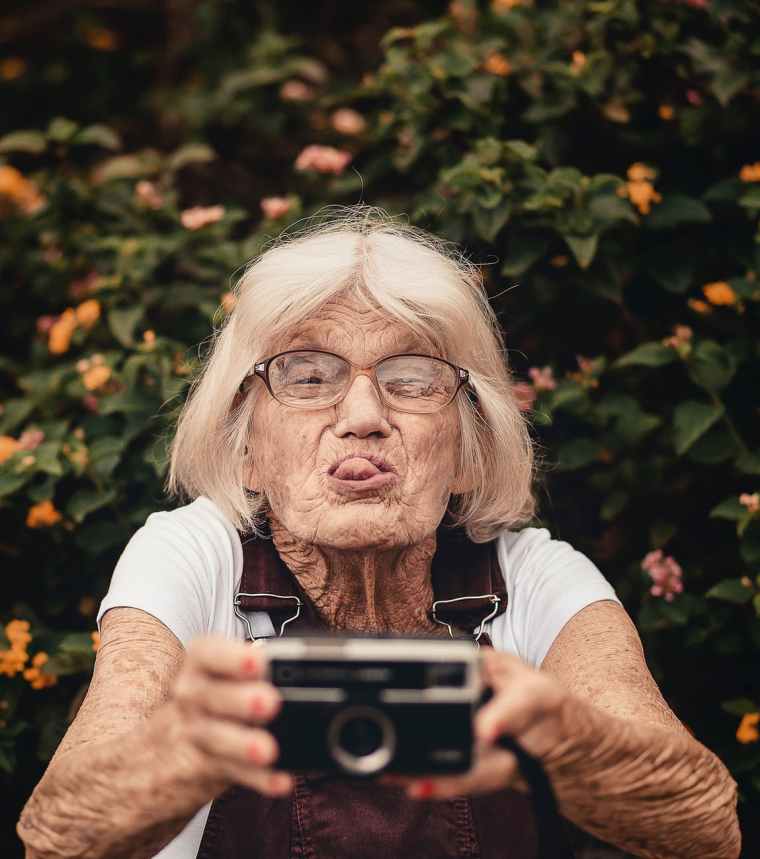
    

A State of Mind

woman taking selfie
Photo by Edu Carvalho on Pexels.com

A couple of little girls were trying to guess my age and gingerly asked if I was over fifty. My response was a vague, “Sure,” which seemed to satisfy them and made me wonder how I actually appear to the world, not that it really matters. Getting older puts an all new meaning into the concept of making plans. There is always a somewhat higher probability that a sudden illness or some other change may alter a schedule. More and more often setting a calendar is a tentative affair barring undue circumstance. It makes for a bit of anxiety and uncertainty.

Last year hubby and I had tickets to go see Joe Bonamassa play his masterful guitar licks, but we had relied on memory rather than putting the date on a calendar, and memory failed us. We actually showed up a week too late. I understand that the performance was incredible, but we were not there to see it because we now know that our own minds are no longer as reliable as they once were. I should have realized that fact every time that I walked to another room to do something and then just stood there wondering what it was that I had set out to do.

This year we excitedly purchased tickets to see the Rolling Stones in what was supposed to be their final tour. Taking no chances, we recorded the date on a number of calendars and on all of our devices. We were confident that Google, Alexa, and our phones would provide us with enough reminders to get us there without a hitch this time. We were taking no chances on reliance of our “feeble” minds. Who knew that Mick Jagger would suddenly need heart surgery and have to cancel the tour? This is the man who at seventy five seemed ageless with his healthy lifestyle. If he is being called a septuagenarian in the press what hope is there for the rest of us? The irony is that Keith Richards who has ignored all of the conventional platitudes about clean living appears to be in relatively good health even as he chain smokes and ingests enough alcohol (among other things) to pickle his brain.

The fact is that we can do our best to take good care of ourselves but none of us are immortal or will miss the unavoidable signs of aging. I know people young enough to be my children who are scheduled for procedures like hip replacement, heart surgery, and chemotherapy. We may be able to stall the inevitable if we work hard to maintain our health, but nobody yet has found away to live forever. Such a realization can be depressing, or it can be an incentive to squeeze as much out of whatever time we each have as possible. It should prompt us to do that thing that we have always wanted to do, or to be that person that we have dreamed of being. The clock is ticking, but it isn’t holding us back.

I am in awe of friends my age who are still accomplishing wondrous things. They are learning how to paint, recording songs, writing novels. They go birding in the early morning hours and photograph the beautiful creatures that they see. They never miss a game or activity that involves their grandchildren. They are active in politics. Sometimes they work their adventures around doctors’ appointments and exercise regimens, but they are actively pushing themselves to enjoy each day and to continue to be part of the vibrancy of the world. They optimistically make plans, and when life throws them a curve they tackle the challenge and then get right back into the saddle.

I remember a time when a friend was caring for his mother who was not a great deal older than I am now. He often remarked that she had given up on herself and rarely left the confines of her home. She spent countless hours watching the news and becoming more and more depressed about the future. He felt that by isolating herself and giving up on the possibility of still finding meaning in each day she had condemned herself to a very dreary existence. In spite of his continual efforts to pull her from her self inflicted doom, she insisted that she just was just deferring to her age and the way life was supposed to be. She actually lived well into her late eighties with a kind of anger that drove her to complain about how long she had felt useless to the world.

I always felt sorry for both my friend and his mother because I had seen the example of my grandfather who never gave up squeezing the most out of life even as one challenge after another came along to defy his optimism. He lived to the ripe old age of one hundred eight and with the exception of the last few months he was clear headed and happy. The key to his joy filled longevity was certainly a bit of good DNA, but also his determination to greet each day with joy and gratitude. He loved the world and the people in it. He was fascinated by those who remained strong regardless of what they had to endure. He focused on actively treating his body and his brain with respect, and he believed that our best days are continually unfolding.

We’ve been told to hang on to our Rolling Stones tickets. Mick is vowing to recover quickly and reschedule the tour beginning in July. His surgery went well and he is determined to rock us once again.  He appears to be a believer that his story isn’t over until it is over, and so do I. I’ll keep making plans, taking new risks, learning new things, and getting out of my head and my house. I don’t feel thirty anymore, but that fifty that the little girls suggested as my age is about right. There is still way too much fun to be had to lock myself away with worry. Age really is a state of mind.

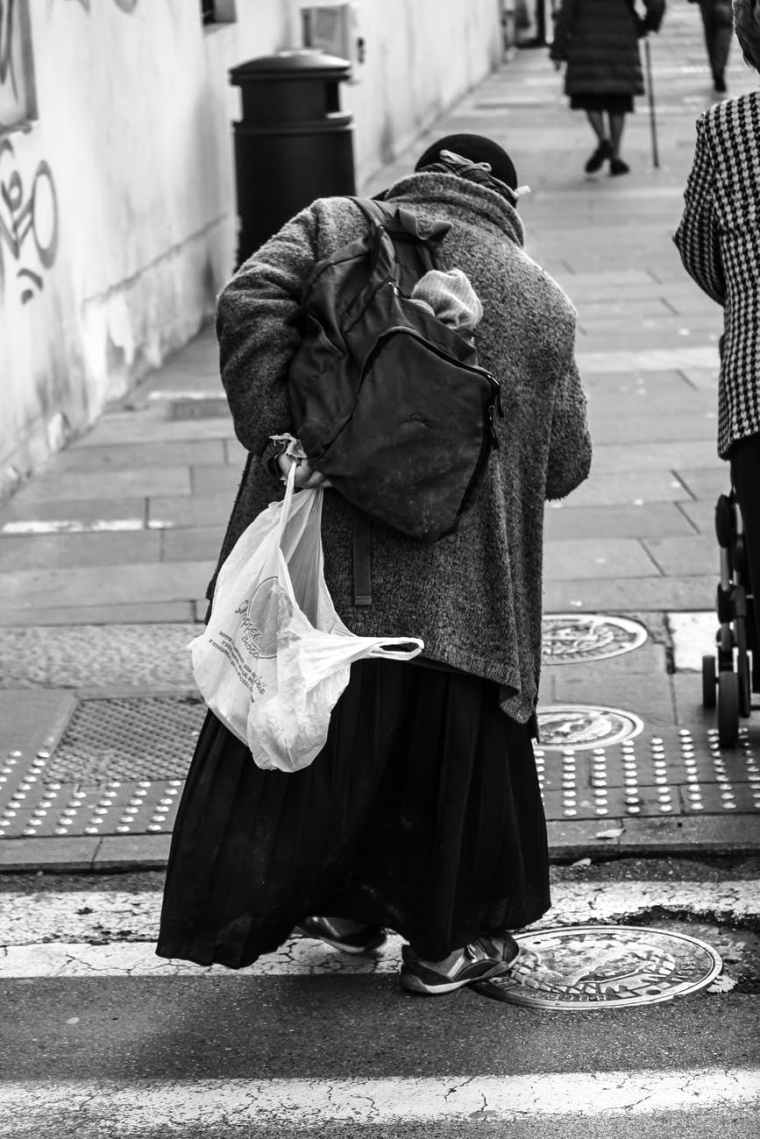
Lost

man holding plastic bag with coat
Photo by sergio omassi on Pexels.com

Some stories stay in a little corner of the mind and never go away. I suppose for me one of those is something that I read in Texas Monthly magazine years ago. No doubt my reaction was tempered by my experience of caring for my mother when she was struggling with mental illness, but even beyond that it was a cautionary tale that said so much about the state of mental health in our society.

A college professor was enjoying coffee and a lively conversation with her colleagues inside a little cafe on the Drag just across the street from the University of Texas Austin campus. She was having a relaxing time until a bedraggled woman entered the eatery and began yelling at the cashier in the front of the establishment. Virtually all of the customers including the professor stared at the commotion with a sense of dismay and embarrassment. It was obvious that the woman was inebriated, high on drugs, or out of her mind. She wore the strange rags of a homeless person, her hair filled with tangles and even bits of debris. Nobody knew quite what to make of the situation or what to do. It was left to the manager to escort the woman back onto the street outside before things returned to normal.

At that moment the professor looked furtively at her watch and explained that she had forgotten an appointment with a student, and had to leave immediately. She apologetically put two twenty dollar bills on the table indicating that they should take care of her share of the charges and rushed out in a noticeably agitated state.

When she reached the sidewalk she searched for the woman who had just been in the cafe. She was relieved to see the old lady limping slowly just a few feet away. The professor rushed to the woman’s side, smiled and implored, “Mama, it’s me, your daughter Elizabeth. Do you remember me?”

The woman paused and with a faraway look appeared to be attempting to remember something very important. She touched the professor’s face with her grimy hands and then grinned as though a warm memory had come into her mind. “Lizzie,” she whispered, “I’m so glad to see you. How have you been?”

The professor expressed her own joy in finding her mother and then suggested that they go to her home where they might have a more comfortable place to catch up on what had been happening in their lives. She guided the still somewhat confused woman across the street, into the campus, and toward the parking spot where the car awaited. While the professor drove she exchanged small talk with her mother and thought of all of the time that had passed since she had last seen her.

The professor’s mom had been a brilliant and beautiful woman, an accomplished artist and a stunning mother. Life back then had been so happy and devoid of any indication that tragedy was looming. Her mother’s illness demonstrated itself quite slowly. At first it simply seemed as though the woman was a bit depressed, but the depression led to mania and the mania exhibited itself in paranoia. Before long the professor’s mom was undergoing treatments for mental illness that worked until she refused to take her medications. Then one day she disappeared. All efforts to find her had been in vain. The professor became frantic and lost all sense of normalcy while she invested in private detectives and spent evenings and weekends driving up and down streets hoping to find her mother. Was she in jail or dead or in another town?

Eventually so much time went by that everyone told the professor to just give up. She was becoming ill in her own way from all of the stress. It was time to live again, which she did, but always with the hope that one day she would find out what had happened to her mother. Now here she was sitting next to this raggedy lady who was not anything like the once accomplished person that she had called Mom.

In the following days the professor took a sick leave from work. She cleaned up her mother, fed her healthy meals, gave her new clothes and a safe place to sleep. She made appointments with doctors and began to think that life was finally going to return to normal. The doctors agreed that her mother’s mental and physical health was so fragile that she needed to go to the hospital for a time. The professor visited her each morning and evening. The two women began to have conversations that made sense. They expressed their love and devotion for one another. They began to make plans for the future.

One afternoon the professor went to the hospital with a celebratory bouquet of flowers for her mom. She was over the moon with happiness as she went to her mother’s room until she opened the door and found the room empty. In a panic she rushed to the nurses’ station to find out what had happened. She was informed that her mother had been released earlier that day and nobody knew where she had gone.

The professor upbraided the staff demanding to know how they could have sent her away without any notification. She demanded to know what they had been thinking. Their response was that it was the woman’s right to leave without permission from anyone. The laws did not include making the professor a party to any decisions. They were sorry, but it was just the way things were.

The professor looked for her mom for weeks and then months all to no avail. Someone suggested that her mom might have taken a bus to another city like Houston or Dallas. The professor drove to those places on weekends in a fruitless attempt to find her mother. At the time that the article was published the professor still had no idea where her mom may have gone. She was lost to her once again.

Finding Hope

people gathered inside house sitting on sofa
Photo by Daria Shevtsova on Pexels.com

Statistics can be a powerful way of understanding trends in our society, but they can also be misleading. Learning the truth about the numbers that we see requires analysis, critical thinking. Since we are continuously bombarded with information regarding the state of our world based on statistics we need to consider what that data is actually telling us. Something as simple as the intervals of a graph has the power of visually changing the way we interpret the facts. So it is with the ever recurring claim that the lifespan of the average American has continued in a downward direction since its apex in the nineteen sixties. It’s important that we begin to understand what that bit of information actually means, and what we may need to do to halt the decline.

We are often told of the need to improve medical care in this country by the use of this astounding statistic. For most of us it simply seems almost impossible to believe that we have such phenomenal medical facilities and still are losing the battle of saving lives, and yet it is real. A deeper analysis demonstrates that the downward trend is related mostly to alcoholism, drug abuse, and suicide. It is not so much that our country is lacking in quality medical care as that we have an epidemic of self harm that results in deaths from overdoses, cirrhosis of the liver, and increasing numbers of suicides, especially and shockingly among our middle age population. It is a quiet and grim trend about which we say little, but it is prevalent all across the country and most particularly in areas where businesses have failed and lifestyles have drastically changed.

HBO in conjunction with Dr. Sunjay Gupta filmed a documentary called One Nation Under Stress that attempted to get to the heart of why so many are turning to drugs, alcohol and even death as answers to problems. We know that addictions can be difficult to overcome, but what attracts people to chemical means of coping with anxiety in the first place? Why are ordinary middle class individuals in so much pain that they feel compelled to shut out their sadness with chemicals that alter their brains and damage their health?  What is really happening?

Dr. Gupta and the experts that he consulted note that our society is continuously and relentlessly changing, particularly in small towns that often rely on particular industries for the welfare of the populace. Many of the old avenues for work are being eliminated and in the process people find themselves suddenly left with no meaning or income in their lives. The losses that they incur both physically and emotionally drive them to seek solace in harmful ways or to despair entirely. Additionally our society has lost many of the support systems that were once so prevalent. The extended family units and neighborhood associations that were once so common have crumbled in many ways leaving individuals feeling alone and unable to cope. In fact, a certain irony is that recent immigrants are actually doing better than long time citizens because they cling to one another in communities that emphasize care and support.

Those in the middle of the economic spectrum are the most likely to feel the weight of stress. They are subjected to a kind of collective pressure and worry about losing their status and all of their comforts. They often feel quite alone in their struggles and so the abuses to their bodies and minds begin. They are reluctant to share their concerns, and often feel that they have nobody whom they trust enough to do so anyway. The anxiety bears down on them both mentally and physically.

I experienced a kind of microcosm of such feelings during the rains of hurricane Harvey which so inundated my city. My husband Mike and I were alone in our home hearing reports of devastation that was affecting both strangers and dear friends and family. Mike had suffered from a stroke only a few weeks earlier and we had been told that his chances of suffering from another attack were at their highest during this time. I was quietly frantic with worry, so much so that I was hardly sleeping and had to keep my mind occupied by preparing my home for the possibility that it might flood. When my daughter and her family had to leave their neighborhood for fear that the levee that protected their home high fail I felt incredibly alone with the realization that they were now so far away and Mike and I were so isolated from everyone. It was a series of reassuring texts from a former student who assured me that he was on alert if Mike and I needed a rescue that kept me from totally losing my composure. The lifeline that he gave me quelled my fears as did the random meetings with a neighbor across the street with whom I spoke as we both assessed the drainage system that was working to keep the water away from our homes. Facebook also gave me a way of knowing what was happening to friends and members of my family. It provided me with a way of expressing my anxiety rather than bottling it up inside. Ultimately I made it through those horrific days, but I found myself wondering if it would have been possible without those human connections that kept me grounded.

What happens when a person feels that there is no one to help? How does one cope when the pressure is not for just a few days but over a long period of time? What might each of us do to help those who have lost their way? Do we sometimes underestimate the power of a text, a message, a phone call in changing the tenor of a person’s thoughts? Have we emphasized independence so much that we have lost the emotional support of multi-generations living and working together?

Mike and I were recently discussing the Great Depression. Our parents were children during that time. It was our grandparents who bore the full brunt of that era. We noted that they survived by sharing responsibilities and resources. Whole families of sons and daughters and cousins and grandparents pooled their funds and their food to keep afloat. It was a cooperative effort that brought our ancestors through the tragedy. Hidden in their efforts was a great deal of love. Our people understood that the were going to make it because so many cared about the welfare of each individual.

We would do well to reinstate the power of family and neighbors to ease suffering. Old people should feel assured that they will find the care that they need if they become sick. Young folk should know that they will have the encouragement and support to launch themselves as adults even when they make mistakes. Those in the middle should never be reluctant to ask for help when things go awry. If we open our hearts and begin to embrace the people for whom we care perhaps we can stem the tide of self medication and self destruction that is literally killing people in our midst. The change that we need is to be found inside our relationships. If we focus on strengthening them many of our problems will be solved.

The Lady in the Window

brown wooden chair
Photo by Daria Shevtsova on Pexels.com

It was a lovely spring day at the end of March when the bluebonnets begin to emerge in the fields of Texas. Mike and I decided to take a drive to Brenham to see this year’s crop of wildflowers. Since we would be within minutes of Texas A&M University where our grandsons attend college we added a visit with them to the day’s schedule. It just knew that we were going to have a glorious time, and as predicted we were not disappointed. Carpets of red yellow and blue covered hillsides and strips of land along the roads that we traveled. We had not quite come at the most prolific time for the wildflowers, but what we saw sufficiently satisfied us. A stop for lunch at a quaint cafe, a visit to several shops, and a walk through the gardens of the Antique Rose Emporium filled out our adventure. Then it was time to head over to College Station to meet up with our grandsons Andrew and Jack, as well as Andrew’s girlfriend, Araceli.

As we drove along country roads we saw so many sights that made me wonder what the stories of the people who lived there might be. There were majestic farm houses and abandoned shacks, fertile fields and patches of land littered with junked cars. We saw neat mobile homes and those that appeared ready for an installment of “Hoarders.” My curiosity was in overdrive as I viewed poverty and neglect existing side by side with plenty. I wondered what makes the biggest difference in the tenor of a person’s life. I suspect that if we only knew exactly what causes such differences we might be able to one day eliminate them, but for now we struggle to know what to do to make life more secure and equitable.

We had some time to kill once we reached College Station which was alive with the kind of energy that Friday nights seem to engender in young people who have theoretically been studying all week. We decided to pass the time at a Starbuck’s near the apartment where one of our grandson’s lives. As we approached the establishment I noticed a shopping cart filled with sheets and blankets standing on the pavement as though it had been suddenly abandoned. Nobody made a move to investigate or move it. Passersby simply walked around it.

Inside the Starbuck’s a woman swathed in white sheets from head to toe sat alone at a table near the entrance. She was almost motionless as though she were deep in thought. The other customers of the coffeehouse seemed unaware of her presence. They read their books, typed on their laptops and conversed with one another as though there was nothing strange or out of place with the woman. I decided to follow their lead and attempted not to look in her direction too often or to stare in amazement, a bad habit that my curiosity causes me to to do more frequently than I should.

Mike and I ordered our drinks and sat down just across from the interesting soul who was holding court with herself. Her clothing was made entirely out of white sheets, including an elaborate headdress that seemed perfect for an exotic ceremony of some sort. She actually looked quite lovely and I was impressed with her creativity thinking that if I were to try to fashion such an outfit it would surely fall from my body. Her robes were secure and gave her an exotic air. Still I wondered how she was able to sit so placidly without a beverage or any sort of food and appear to be so content with herself, so relaxed. Surely she realized that to others she was an unusual sight, and her cart appeared to be an indication of a homeless situation.

The workers in the Starbuck’s did nothing to disturb her repose. I suspect that after the fiasco that ensured a while back at another Starbuck’s where a manager asked someone who was waiting for a friend to leave the employees were leery to make waves. Thus the interesting figure by the window simply sat trancelike and seemingly without much notice, save from me.

Eventually Jack met us at the Starbuck’s and we left for the restaurant to meet the rest of our party. As soon as we were in the car he noted that we had seen a kind of celebrity in the college community. For lack of a true name he called her “sheet lady.” He told us that she is often seen walking or resting all over the area. He wasn’t sure what her true situation was, but like me he marveled at her ingenuity and survival skills. Nonetheless we engaged in a discussion of the homeless and the problems that they face. He told us of a man who had recently harassed students as they walked to and from class who seemed to be in a kind of psychotic state. He pointed out that the lady on the other hand always appeared to be quite harmless, and so nobody felt uncomfortable around her other than to worry about her safety.

At dinner Andrew remarked that he had seen the lady walking with her cart miles away from the university. He told of a rumor that she was part of some religious group and there her behaviors were part of the rituals associated with the sect. Of course we all conjectured that she was most likely suffering from some form of mental illness. Sadly it appeared that she preferred her vagabond lifestyle to accepting charitable offers for housing with behavioral strings attached.

I still think of the lady in the window even as I sit in my home. I truly wonder what brought her to such a lifestyle and if there is some loved one searching for her. I’m glad that she has a safe place to sit and rest. I hope that when it rains or is cold someone offers her refuge for the night. She appeared to be quite content, but perhaps that was simply a facade. I’d like to know what musings pass through her mind, but then that is a private thing for me to know only if she wishes it to be so. Still I wonder, “Who is she really?”