The Heartbreak of Misbehavior

pexels-photo-256657.jpeg

In my early years of teaching I worked with many students who had very troubled lives. My kids were known for moving from one school to another in three month increments. That’s because it took about that long for them to either exhaust the free rent promotion at apartment projects, or for their families to be evicted for nonpayment of rent. I used paper grade and attendance books back then and they were riddled with marks denoting subtractions and additions of students. My classroom was like a revolving door with many tearful goodbyes on Friday afternoons and greetings of new faces on Monday mornings. It was hard enough on me as a teacher to maintain a sense of continuity, but even worse for the students whose lives were constantly in a state of flux. In some ways the ones who went from one low rent apartment to another were the luckiest ones, because I also knew of kids who were living in someone’s garage or in the family car.

I struggled to manage my emotions in those days and often felt as though I was making little educational progress with my pupils. Sometimes I focused my anger on the parents and in other moments I simply felt a sense of extreme frustration. So many of my kids were listless and seemingly unwilling to take advantage of the opportunities that education afforded them. They didn’t appear to care about learning no matter how exciting I attempted to make it. They came without supplies and rarely did homework. Many possessed skills far below grade level. It was a daily battle to keep them engaged and all too often just as I had finally reached them they left for a new school.

I remember voicing my complaints to my mother who had been a teacher herself. I literally ranted about the situation and the fact that I felt as though I was the only one who cared. My mom listened calmly and then turned the discussion on end when she calmly but forcefully suggested that I needed to take the difficulties of my students into account. She noted that a hungry child can’t think of anything but the pains in his/her belly. A frightened child is only focused on the dread of going back home to a bad situation. An abused child doesn’t have time to worry about homework. In other words I had to consider the most basic needs of my students first and then worry about learning.

I knew from my mother’s stories about her own childhood that she was in many ways much like my students. She grew up in a tiny house with seven siblings who shared two bedrooms. Hers was an immigrant family that was often scorned and even abused by the people in her neighborhood. When she first began school her mom was in a hospital recovering from a mental breakdown. I suspect that there were many moments when she was too worried to learn, but she always spoke of how her teachers made school a haven for her, a place where it felt comfortable. For that reason education became a source of positive reinforcement in her topsy turvy world.

I changed the way I did things with my students after that conversation with my mother. I got to know my students and mastered the art of showing sincere concern for them. The stories that I heard were often heartbreaking, but I began to also see the courage and resilience that they possessed and I praised them for that. Once I adapted my methods to their needs my students began to demonstrate talents that had been hidden. They bloomed like lovely flowers and my classroom became a happy place where all of us wanted to be.

What I learned about my kids was at times so tragic that I had to steel myself to keep from crying in front of them. There was the girl with thick wavy black hair whose mother shaved those locks in a fit of anger. There was the boy who was an emotional wreck because his mother had attempted to set him on fire when he was only three. Then there was Robert whose mom was a prostitute who left him in charge of his younger sister while she worked each night. He was little more than a child himself but he bore the responsibilities of an adult. When his sister was raped one evening it was Robert who called the police and waited up until dawn to tell his mom what had happened. She flew into a rage, not at the man who had committed the crime, but at Robert who in her mind had shirked his duty to protect his sister.

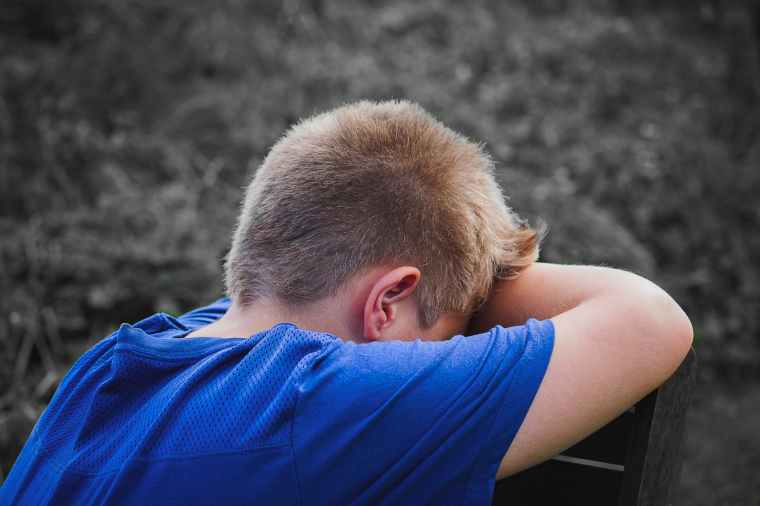
Students with such severe problems acted out and sometimes appeared to be lazy or even defiant. The reality is that they were simply attempting to deal with the horrific realities of their lives. Somehow learning how to perform operations with fractions was not at the top of their priorities list and I had to learn how to help them to concentrate on the moment rather than fretting over what might happen when they returned home. It was a balancing act that took great compassion on my part.

Whenever I would witness bad behavior from kids who had such terrible lives it would break my heart. I knew their stories all too well and only had control over what happened to them when they were with me. I wanted to make that time as positive as possible, even in the face of horrific challenges. I’d like to believe that in some small way I gave them a tiny break from the ugliness and maybe even taught them something along the way. All too many times they left my care just when I felt that we were on the verge of breaking through the issues that were holding them back. I would never see them again but I would always remember them and worry about them and wonder how things turned out for them.

Every educator and psychology student learns about Maslow’s hierarchy of needs. It appears to be such a simple and common sense theory. We should all understand that until the most basic requirement are satisfied little else will happen, and yet we still ignore the signs of trouble far too many times. Hunger, hurt, fear, pain overtake a mind and shut it down. Once we understand that basic truth and begin to address those things, then and only then will we be able to extract the full potential of our young. It’s a big goal, but one that we must pursue just as my mother taught me to do.

Becoming Our Personal Bests

pexels-photo-618612.jpeg

I was driving home in the dark after spending the evening helping my grandsons complete a Geometry test review. It had been a long day and I was quite tired so I needed some sound in the car to keep me alert during the fairly long journey. I keep my radio tuned to NPR and just as I had hope there was an interesting program on the air. All of the guests were speaking about the idea of giving humans a small nudge to motivate them to do something difficult. It seems that there is a right way to get people to take risks and a wrong way that makes them complacent and uncomfortable with trying new things. Unfortunately much of the parenting and guiding and teaching that we tend to do is often exactly the opposite of how best to inspire humans,

As a mom, grandmother and long time educator I found myself instantly fascinated with the topic, so I turned up the volume and listened intently to a parade of experts giving pointers on how to create adults who are willing to push themselves beyond their comfort zones. It seems that every single theory was grounded in the idea that making mistakes can be a powerful tool for learning as long as it happens in the right kind of environment. If the emphasis is on personal growth rather than ranking, an individual is far more likely to demonstrate a willingness to venture into uncharted waters. There is something in our human natures that wants to be adventurous, but we throw on the brakes of caution whenever we realize that we are being compared and judged. We don’t want to be embarrassed by our mistakes and so all too often we quietly give up rather than endure the pain associated with failure.

One of the guests discussing this issue spoke of an horrific childhood experience that she had with a teacher who seated children in the classroom in order of IQ, from highest to lowest. Aside from the personal humiliation associated with such an arrangement she noted that it created artificial barriers to learning in which those lowest in the ranking began to believe that they didn’t have a chance to improve or master new concepts. It also segregated the students from one another by making them believe that those at the front of the class were smart and part of an exclusive group and those at the end were hopelessly doomed to uninteresting lives. The woman who was subjected to this horrible situation still shudders at the psychological damage it did to her and her peers.

My own high school experience was not much better. We were grouped according to an entrance exam and previous grades. Each six weeks a list noting our class rank was posted on a bulletin board in the main hall. We gathered together each time it appeared to determine where we were in the order, trying not to look at the very bottom because we somehow understood that there was indignity associated with being last. To this day I shudder at the idea of such shameless and ignorant humiliation that the listing created and the fear that it planted in me.

As humans we are born with a willingness to try different things. As babies we innocently explore and develop. Nobody thinks it odd that each little one grows at his/her own pace. It is the natural way of things and generally there is no worry unless the child shows signs of some type of extreme difficulty. In those early years our curiosity is at a peak. We want to know about and try everything. Learning is natural and fun. It is only when we begin to impose the artifices of tests and grades and competitions that many children begin to waver. When they feel that they are being judged badly because they are not quite as good as their peers, they sometimes slowly become and less and less inclined to participate in the process. In fact, even those at the top reach a certain comfort level and sometimes stop exploring lest they fail and lose their status.

As adults we want to encourage our young to be the best versions of themselves and so whenever they succeed at an endeavor we tend to praise them not so much for the attempts as for the outward judgement of their accomplishment. In other words we celebrate a good grade more than we cheer on effort. We pin our hopes on winning rather than a willingness to try. There is a kind of invisible ranking by IQ or ability that destroys a young child’s natural instinct to try things out. It deadens their souls just a bit, and in the worst case scenario convinces them that their possibilities for life are severely limited.

Sometimes it has the most deleterious effect on those children who started out at the top. They become so accustomed to being the best that they come unglued at the first sign of a challenge. They question themselves and withdraw from the race. They choose easy pathways that allow them to maintain their status, but their interest in reaching higher and higher is stifled. This is particularly true whenever a child suddenly fails after a lifetime of seeming perfection. We sometimes neglect to show them how to rebound from disasters.

The world will no doubt always be competitive but during the formative years the ideal is to instill a growth mindset into our young. We must strive to praise hard work and progress as much as mastery. We need to break learning down into doable chunks and celebrate the achievement of reaching particular milestones as much as we do high marks.

I have learned from watching my grandsons in swimming and track that each effort that they make is measured in personal improvements that may be little more than a tenth of a second. The focus of competition is with themselves. They understand that by beating their own records they move closer and closer to besting those who run with them. Races are generally won with very small but important differences. My grandsons work hard to close the gaps and they begin with themselves. Even if they do not gain a medal, they feel excited when they learn that they have shaved just a bit more time off of their own records. Improvement is a slow but focused process that they keep chasing because they are willing to stay in the race.

We can do so much much better with our young, but for now it is a difficult battle as long as tests are used to rank them, their teachers, their schools, and their communities. We are killing the natural instincts and curiosity one mistake at a time. Instead of encouraging our children to develop a love of reading we force them to submit to comprehension tests having little to do with how we humans enjoy the written word. We make the world of mathematics terrifying and far more difficult than it needs to be. We mystify science and insinuate that only a select few will ever be bright enough to work with its principles. We categorize children before they have even had the opportunity to explore and enjoy the wonders of learning. By the time we are adults we have boxed ourselves into rigid mindsets from which few of us ever escape.

It’s time for an overhaul of how we guide and teach our children. We have the know how and potential to use our most precious resource to the fullest. We just need to begin.

So Beautiful To Me

pexels-photo-658687.jpeg“She woke up every morning with the option of being anyone she wished. How beautiful it was that she always chose herself.” —-Unknown


I was a gangly, awkward girl all the way through high school, so shy that I often hid in the library pretending to do homework so I wouldn’t have to mix it up with my fellow classmates in the cafeteria each morning. I often found myself wishing that I was more like this girl or that. There was the beautiful young woman with that almost electric smile, the sweet person who was able to talk with anyone. All of them had something that I wanted and thought that I would never have, a car, a boyfriend, tons of confidence. I was a mound of teenage angst, and all the while so was everyone else but I had little idea that they were as confused and self conscious as I was.

Ultimately I grew up, literally overnight. When my mother had her first and scariest mental breakdown I found myself mostly on my own in finding her the care that she needed. My love for her was so strong that I was able to pull strength from deep inside my mind that I never thought that I had. At first I simply copied the attitudes of the women that I knew and admired for their courage. Eventually muscle memory trained from encounters with doctors and bankers and such transformed me into my own person. I no longer needed to pretend to be someone. I knew that I was someone.

I met a married a remarkable man who loved to tell the story of how he was “thunder struck” from the moment that he first saw me. He became my best friend and my muse. He thought that I was beautiful just as I was and that even my imperfections were made me unique. I was hardly the kind of person who would turn heads in a room full of people, but he convinced me that loveliness begins from inside and radiates outward with little relationship to external features. It is an aura derived from depth of character and inner determination to live life with joy.

I vividly recall the very day when I totally embraced and chose myself. It had started with an unremarkable daily routine of washing my face and brushing my teeth. I was in the process of hopelessly attempting to tame my fine fly away hair when I caught a unique glimpse of my image in the mirror. It was as though I was seeing myself with a new set of eyes, and I realized how much I liked me. I smiled at the realization that even if I had the option of being anyone I wished, I would choose myself. It was a stunning moment that transformed me forevermore. It was as though I had unlocked the power that had always been there, but I had never before realized.

Over time I worked with young adolescents in middle schools and high schools. I saw their unsteadiness firsthand, and understood that even the most self assured among them was in truth filled with self doubts and sometimes even self loathing. Trying to fit into our own skin is a painful developmental process that takes as much time to achieve as physical or academic growth. Researchers into such things now know that our brains are not fully developed until well into our twenties and even then some of us take a bit longer. Just as babies meet their milestones at varying ages, so too do we adults find and believe in ourselves at different times of life. Sadly there are those who sometimes never reach a point of fully appreciating their own essences.

Of course it is in our natures to question ourselves from time to time. The stresses of living bear down on us and cause us to become dissatisfied. We look over our fences and invariably find grass that is greener than ours. There is always someone who ages more gracefully, drives a better car, lives in a more exclusive neighborhood, earns more money. If we spend a lifetime of comparing we are continually wishing to be someone other than ourselves. We never quite reach that joyful moment of truly liking ourselves and wanting to be no other, or we interrupt our contentment with waves of jealousy.

I once read a book whose title now eludes me that posited a theory that even if we were to have multiple opportunities to think and act in ways other than the ones that we initially chose we would in all probability react to various people and events in much the same way. In other words we each view the world based on our genetics and environmental realities, and those factors guide our thinking through a series of motions and emotions that slowly but surely teach us how to be. We become ourselves through trial and error, and hopefully learn to accept ourselves with whatever strengths and weaknesses we may have. As mature adults we work with what we have to make the changes that we desire. We learn to use our best traits not so much to make ourselves more attractive, but to better the world around us. The most lovely among us are those who have been able to think less about how they may appear and more about how to help the people they encounter.

I now enjoy and embrace the opportunities to be with the individuals who once walked the halls of my high school with me. We have all grown older and wiser and far more beautiful than ever before. Our thoughts are not of who seems to have done the best, but simply of each other’s welfare. We know and like who we are as individuals and we revel in the well being of every member of our group. Looking back we are able to see that our blessings have outweighed our trials. All of us know that our thinning hair and expanding waists do not define us. The wrinkles on our faces and wear and tear on our hands are badges of honor, bearing witness to our hard work and compassion. The mistakes we have made attest to our adventurous spirits. We smile at the images in the mirror without seeing the flaws or wishing that it were that of someone else. It is beautiful to choose ourselves.

The Car

pexels-photo-681335.jpeg

The stories on the television series This Is Us are so heartwarming and real that rarely a week goes by that I do not identify with some aspect of an episode. They have a universal appeal that reaches into the heart and soul of who we are as members of a family. I have duly noted the kinship that I have with the characters depicted on the show. As with my own situation there are three siblings, a girl and two boys, who continue to struggle with the impact of their beloved father’s death. I have known the pain of their loss of their father all too well, and like them I have never quite come to grips with the reality of the situation even years later. The writers of the series are certainly gifted to make each of us feel as though they have somehow tapped into our own personal memories. The title itself hints that we are all part of a great big family of mankind that endures the same types of struggles. The characters are us. Their history is ours.

A recent episode of This Is Us was titled The Car, a brilliant look at how an inanimate object becomes a symbol for a father’s love and all that is good about a family. The storyline was particularly touching for me because it was one car that devastated my family and another that brought us a new day of hope.

My father was a Pontiac man. He loved the sporty nature of that brand and insisted on getting a new one almost as soon as the last payment was made on the one he was driving. He had proudly purchased a brand new Pontiac with all of the bells and whistles for our move from Houston, Texas to San Jose California. It was an automobile boasting the kind of luxury that earned second glances as we drove down the road. It carried us in grand style and comfort thousands of miles to our new home. When things didn’t work out there it brought us back to Houston and the promise of a fresh start in familiar surroundings. We used it to visit friends and family whom we had missed while we were gone. We drove it to inspect houses that we might purchase to set up a household. We were planning to take it to the beach on Memorial Day to launch a summer on the Gulf Coast. We loved that car and the sight of our daddy sitting so happily behind the wheel. How could we have known that it would become the instrument of his death?

He died in that car on a lonely stretch of road when he accidentally drove into a deep ditch that was unmarked and laying in wait on a dark night. It had no seatbelt to protect him, no collapsable steering wheel, no exterior designed to take the brunt of the crash. Instead the car built as it was became a weapon that crushed his chest and stopped his heart. It would change our lives and create questions in our minds that haunt us even to this day.

We would later find evidence of our father’s loving nature in the gifts that he had already purchased in anticipation of his wedding anniversary and my mother’s birthday. A card would arrive in the mail from him with a postmark from the day before he died. He had used his car to plan for a future that would never come for him. He was dead and the car had become a heap of scrap.

My mother had to pull herself together somehow. She began the process of building a new kind of life for us, and for that she needed a car. The one that she purchased became the auto that would carry us through our youth and into our adulthood. It was a homely thing, almost ugly, but it was reliable. It was painted in a two tone pattern of white and a strange beige color. It had ordinary cloth seats and rubber mats on the floorboard. It was as basic as a car might be, not even possessing an automatic transmission or an air conditioner. It was so unlike anything our father might have purchased, but my mother was able to pay for it with the insurance money that she received from his accident. It was so stripped down that there was very little that might break, and best of all she owned it. It was a good car in spite of its appearance and it became the vehicle that drove us into our future.

Once we managed to move beyond our grief that car became a source of great fun. We used it to visit our grandparents in Arkansas, and piled inside on Friday nights to meet up with our aunts and uncles and cousins. We sat inside it at drive-in movie theaters enjoying grand epics on the big screen even as we batted the mosquitoes that buzzed about. We ran our weekend errands and drove to church in our ever faithful auto. We motored to Dallas and San Antonio for vacations, and went to Corpus Christi to enjoy the ocean that our dad had so loved. When we were sick we sat safely inside the car as we traveled to see the doctor. The car took us to ballgames and bowling alleys, pancake breakfasts and excursions at the mall.

From time to time one of our mechanically inclined uncles would change the oil, rotate the tires, or install a new battery. Year after year passed and it was that ugly old car that took us to the places where we celebrated the milestones of our youth. It was ever dependable, always waiting to help us enjoy a new adventure. It helped us to heal and to move on from the tragedy that had so changed us. It served us as well as anything might have, requiring little attention to keep faithfully working.

About the time that I was close to graduating from high school my mother decided that it was time to replace the car which was nearing its eighth or ninth year of service to our family. One of my cousins purchased it from her and our next car was a great deal fancier, but somehow not as comforting as the old one had been. I found myself missing our friend even as we toured the city in grander style more akin to the kind that our father had always enjoyed. We had carpet on the floorboards and air conditioning to keep us cool, but somehow it would never feel as secure as “The Car” had been. In fact, I have few memories attached to the new model. It would always be that ugly old stripped down Ford that I would remember with so much fondness.

It’s funny how a car can become such a vivid part of life, representing all of the things that are good about its owners. That’s the way it was with ours. The car was one of us and we loved it.

The Virtue In The Body Of The People

pexels-photo-296881.jpeg

“The general Government…can never be in danger of degenerating into a monarchy, an Oligarchy, an Aristocracy, or any despotic or oppressive form; so long as there is any virtue in the body of the people.” George Washington

People that I love are afraid. People that I love are deeply saddened. People that I love are angry. People that I love have grown cynical. My daughter worries that her beautiful sons may become targets for a crazed gunman at their schools. A former colleague in education just wants to cry as he hears his students asking what they should do if a shooter comes to their classroom. A principal fields the concerns of his teachers who now see every backpack brought into their classrooms as potential trouble. A former student struggles to recover from the trauma of being in the recent shooting incident in Las Vegas, and even as she makes progress news of more tragedy shakes her confidence. She attends a movie to help alleviate her stress and overhears children discussing what to do if an attacker brings havoc to the theater. As a nation we are deeply troubled and we want to do something, but all we hear are the same knee jerk reactions from our President and Congress and little desire to do anything other than say prayers or blame everything on guns. We already think we know that this will end with nothing being done almost ensuring that there will be yet another mass shooting sometime and somewhere in the future.

Washington D.C. has lost it’s resolve and worries most about invoking the ire of the various and sundry bases. Instead of representing all of the people our leaders now see themselves as only being beholden to a narrow group of people who finance their campaigns and mold their political philosophies. They don’t seem to realize or care that vast numbers of citizens need them to work for them as well. This should not be a nation of laws built only on the voices of about thirty percent of the electorate at any given time. Our lawmakers and executive should be attuned to the concerns and desires of the nation as a whole. While each elected official certainly has a foundation of devoted supporters, most elections are won with the votes of independent thinkers who choose sides based on a multitude of reasons. They need to be heard and their opinions heeded. All ideas both pro and con must be considered without knee jerk reactions. Taken together answers to the problems that face our nation will be found, but if our leaders continue to voice the same tired platitudes nothing will be done. It is up to the virtuous citizens of our country to demand a sincere effort to curb the murderous trends.

Gun violence is a plague on our nation. We have all heard that most of the shooters in such incidents would not have been subject to many of the proposed laws. The thinking appears to be that since none of the suggestions for solving this dilemma would be a hundred percent effective then it is best to do nothing at all. On the other hand there are those so focused on gun control issues that they continue to miss the point that law abiding gun owners fear that their rights will ultimately be curtailed. Both of these groups need to set aside their prejudices regarding this issue and open their minds and hearts to the myriad suggestions that are circulating among the people of this country.

One of my former students noted that this is a heart issue. He was of course alluding to the social, emotional and mental health aspects at the core of many of the shooters’ motivations. While there are exceptions, in general most of the killers have displayed signs of gravely deviant behavior long before embarking on their murderous sprees. All too often they live in isolation, growing more and more dark while those who know them either throw up their hands in frustration or turn away entirely. We have to create avenues and programs for helping them even if ultimately that means committing them to psychiatric care facilities. It will be difficult but the process of dealing with those whose minds have become sick is almost always a long journey. We should not leave the individuals or their families to travel alone.

A former principal posted an article about a teacher who uses a simple exercise to find the students in her class who are feeling alone or being bullied. Each Friday before they leave her room she tells her pupils to name four people with whom they would like to sit in the next week. She prompts them to tell her whom they most admire in the class as well as the names of students about whom they are worried. She spends hours over the weekend studying the responses so that she might identify the loners, the unloved, and then she makes certain to reach out to those children and their parents. This same teacher insists that parents attend tutoring sessions with their children. She wants the adults to understand what their children are learning, but mostly she wants to create a bond between the school and the families.

We need far more of this type of involvement from our teachers and our schools if we are to identify troubled souls long before they are so sick and enraged that they are killing others. Dividing large schools into smaller, caring groups can often solve the problem of having students fall through the cracks. In one of my former jobs each teacher belonged to a team that consisted of educators representing each of the core subjects. All of the the team members taught the same students and met several times each week to stay apprised of any brewing troubles whether they be academic, behavioral or both. They discussed ways to support one another and their students. Part of their discussions always included making note of pupils who had become withdrawn or who appeared to have few or no friends. Such a team approach needs to be implemented in all schools so that no child will become a cipher.

I recall a teacher with whom I worked talking about the community efforts to help children when we were growing up. She noted that if one of the neighborhood kids did something vile his/her actions were immediately reported to the parents. The youngsters understood that they were being watched and protected. They realized that there were many people who cared about them. I loved such stories because they reminded me of my own situation. My father had died when my brothers and I were very young. The people of our neighborhood quietly took on the job of helping us. There were wonderful men who encouraged my brothers to join sporting teams and taught them how to build things. All of us were included in the family circles of so many of our nearby friends People took the time to let us know that we were not alone and should not be afraid. We turned out well through the efforts of my mother, but also because of a vast support system from the people who lived near us. Thus it worries me that we have so little interaction in many of our local communities these days.

Of course there is also the issue of controlling the use of guns in our nation, even knowing that there will no doubt always be an illegal underground just as there always is in such instances. There are many common sense things that we can try that will have no effect on law abiding gun owners. The old Brady Bill from the Bill Clinton era had some notable ideas. Perhaps we should revisit that law and then find ways to improve it. It makes sense to strengthen the kind of background checks that we presently have to fill in the cracks that exist. We can take another look at tightening the ages at which individuals can purchase and own guns to mirror the laws for alcohol. We have to ask ourselves what type of guns and ammunition need to be prohibited. The average gun owner doesn’t require an arsenal for protection, so instituting such changes will hardly affect most people but it may help to reduce the availability of weapons for those contemplating mass murder.

We can tighten security at schools with architectural changes and the use of technology. We don’t need to arm our teachers. That will only create a whole new set of problems. If we want to hire well trained guards, we need to understand that they will not provide a complete answer. It will only be by admitting to the complex nature of overhauling the many problems that lead to such tragedies that we may begin to reduce the violence.

When I was as young as many of the victims of the horrific massacre in Florida movements to end the egregious war in Vietnam and to provide basic civil rights to all Americans began on high school and college campuses. It was when students across the country joined the efforts of adults who were already working to foment change that more attention was drawn to these issues. A revolution not unlike that of the founders of our country began to unfold and it continued until all of the collective voices exerted enough pressure that they were finally heard.

In this present time there are plans for young people to mount a campaign to bring about changes to make our schools and our movie theaters and our music venues safe again. I applaud them in advance and urge them to remain patient and willing to stay the course. I believe that this is a watershed moment in our country being lead by the virtue in the body of the people. I suspect that George Washington would approve.