Meh?

winter-dayThe twinkly lights are gone. The tinsel is packed away in the attic. It’s that time of year when the year stretches alarmingly in front of us with more work on our schedules than entertainment. We’ve made resolutions to avoid all of those yummy but unhealthy foods that we secretly love so much and find ourselves munching on raw carrot sticks and celery. The days tend to be dark and dreary with winter storms popping up again and again. Here in my hometown a series of training storms dumped several inches of rain yesterday leaving roads flooded and impassible in many parts of the city. The memories of the recent holiday seem to be in the very distant past rather than just a couple of weeks ago. It’s back to the routine with a vengeance and for some of us it’s the time of year when we have the most difficult time being enthusiastic.

We have taxes to pay and have to face those bills that we accumulated over the holidays. We get notices that our heath insurance premiums will rise once again. We wonder if we will even have health insurance with all of the arguing in Washington D.C. We hear of layoffs in businesses near us and watch the price of gasoline rising again. Some of us look forward to the inauguration of a new president with the same level of excitement that we would feel in undergoing a root canal. We dream of hibernating like a bear until the sun returns in April. Even better are thoughts of escaping to a tropical paradise.

In the schools so many teachers are noticing that their students have seemingly shut down. They arrive unprepared and listless. Their grades are tumbling and they appear to not even care. Motivating them is sometimes a Herculean task. Frustration abounds.

What is it that causes us to become so lethargic and sometimes even depressed each year as January rolls around? Only days after making all of those noble promises to be better so many of us lose interest. It feels as though we are in our sophomore year of high school once again. The best part of the year feels so far away and seemingly endless piles of work loom ahead. Why is it so ingrained in our natures to hit the doldrums in the grey days of winter?

We’ve all heard about people who become so despondent in January that they are said to have SAD disease, seasonal affective disorder. It is the tendency of some individuals to suffer with deep feelings of melancholy at the same time each year. Notably there appear to be more cases of SAD disease when the days are short. It is often linked to a surfeit of sunshine and one of the recommended treatments is to spend time under lighting that mimics the rays of the sun. Somehow this therapy actually works in many cases because we need a certain amount of daylight to feel balanced. As with almost anything, some of us need more than others.

I suspect that most of us experience particular days or times when we don’t feel as energetic and enthusiastic as normal. We feel a certain sense of dread when we face tasks that appear to be almost insurmountable. We have a difficult time envisioning how to break down our demands into doable chunks. We are often overly doubtful about our abilities to maintain the strict routines that we need to ultimately lead to successful conclusions. When the days are long and we have opportunities to end our work days with rewarding relaxation in the sun, we feel a bit better about our responsibilities. When our days begin and end in the dark it is less likely that we will be able to shake the feeling that life is filled with drudgery. We get low and just want to crawl under our blankets and wait out the long winter months.

The trick to finding the happiness that we seek is to keep moving forward, one step at a time. Each of us has more power within ourselves than we have the capacity to imagine. We just have to push ourselves enough to free the talents that are always there. We also need to accept that true achievement is rarely easy.

I saw a news item about a young man who was born with no arms or legs. He has pushed himself to overcome his disabilities from the time that he was a young child. In the process he has mastered a number of athletic skills. He runs with prosthetics. He learned to use the stubs that should have been his hands to type and catch and throw. The one thing that he most wanted to do was climb a mountain. It at first seemed to be an impossible goal but with the help of skilled adventurers who had reached the summit of many a peak he began to practice moving over rugged rocks. He had to literally crawl using the four stumps of his appendages. He wore specially designed leather covers to keep from tearing his skin as he slowly pulled himself along. Because of his disabilities it took him four or five times longer to cover the same ground as his fellow climbers. Even with the protective gear that he wore his skin became raw and excruciatingly painful. For many it seemed as though he was embarking on a hopeless task that was far too dangerous to even try but he was insistent that he only needed to concentrate on making one small bit of progress at a time. With a will of steel he not only made it once but has now climbed multiple mountains and has no intention of stopping. Instead of drowning himself in sorrow and regret he has constantly pushed himself to accomplish his dreams by realizing that all that it really takes is a willingness to face each day with a spirit of can do optimism, rather than wasting time worrying about what he lacks.

My husband’s famous words to our family have always been, “Stick with the plan.” That doesn’t mean that there will not be delays or that our routes will never change direction. It simply implies that we need not give up in frustration when things get really tough. Realistically we can all expect to have some days when our energy wanes and we just don’t have the oomph that we need. There is nothing wrong with giving ourselves a mental health vacation now and again. Sometimes that may take the form of sleeping in and staying in our pajamas all day long. The important thing is to get back on the path again and follow our individual yellow brick roads. Happiness really is to be found inside ourselves and nothing makes us feel better than overcoming our fears and realizing that we are capable of far more than we had imagined.

We’ve all experienced the elation of a wonderful moment when we manage to tame the voices inside our heads that hold us back. For me it was connecting a bat to a baseball and watching it soar over an open field. I have known that feeling of elation when I managed to bring true understanding to a struggling student. Getting to the end of a difficult road is as wonderful as the merriment of Christmas. As we begin our journeys anew each January we need to remind ourselves that it will be spring before we even know it so there is nothing to frown about in the dreary days of winter. Instead, embrace the moment. Enjoy the diversity of the year and never forget that there will always be fellow travelers to help us as we crawl along. We’ve all got this no matter how difficult it may seem, so don’t grumble with a “Meh,” just smile.

We Are Our Own Narrators

come-with-me-7-2011_1-1024x671There is a certain irony that my grandson Jack performed in his last musical with the varsity theater group at his school this past weekend and that the play was Into the Woods. The piece was wildly popular on Broadway in the nineteen eighties about the time that Jack’s mother was ending her own days in high school. It is a profound story of relationships and the consequences of the choices that we make. It is a study of the fine line between childhood and becoming a true adult. Nothing is as it really seems or as simple as we would like things to be.

Jack played both the narrator and the mysterious man, a rather fitting dual role whose significance for me he may not fully understand until I explain. I found myself enthralled by the brilliance of his performance and his ability to nuance the subtleties and complexities of the parts. All in all Jack and his co-actors ultimately moved me to both tears and reflection which is as the authors of the play no doubt intended. 

Jack is named for a man that he never met, my father who would have been his great grandfather. The two Jacks are far more alike than almost anyone might suspect. My grandson like his long dead ancestor is a kind of renaissance man, someone who is as comfortable in a world of mathematics and science as in the domain of artistry. Like my father he is a sensitive soul who often finds himself questioning the ways of the world. He has so many talents and interests that he might follow a variety of paths in life just as was the case with his namesake. Both are known for looking at the world from many different angles. At the same time they might both be described as having a kind of innocent boyishness and joy of living that has made them attractive to others.

My father Jack loved to read and he passed that hobby down to me beginning when I was very young. He purchased two volumes of fairytales that he read faithfully to me. Those stories created a secret bond between the two of us and kept his memory alive long after he had died.

At first my thoughts of my father were romantic and childish much like the first act of Into the Woods and the stories that he read to me. I missed him terribly and often found myself having foolish dreams that he would one day return to guide and comfort me. Sadly reality never really works like that as is so profoundly revealed the second act of Into the Woods. There comes a moment when we all realize that we must cross over from the fantasies of our childhood into the world of reality. We learn that each of the choices that we make have consequences not only for ourselves but also for the people around us. We can only rely on our parents for so long and then we must face the fact that as we make our own ways we will undoubtedly make mistakes just as they did.

My grandfather was a kind of narrator, just like Jack was in his school play. Grandpa was the father of my father Jack. He often told stories of his own childhood and related history as he had lived it. He gave me great comfort any time that I was feeling down. He was a living link to my own father. His stories were not as lovely as the fairytales of my youth. He spoke to me with honesty because I was an adult and he understood that I must face even dark stories. He admitted to overcoming alcoholism and enduring profound depression and loneliness before encountering my grandmother and starting a family of his own. Like the songs in Into the Woods he found ways of bringing humor to situations that were actually quite tragic. He had developed a wisdom that allowed him to realize that sometimes we laugh and cry at the same time. Sometimes we are both frightened and curious. He had lived long enough to see that no person or situation is usually all good or all bad. He taught me that life is complex and we can neither run away from it nor tackle it alone. Like the mysterious man that grandson Jack also portrayed in his play, my grandfather had faced up to his own demons and conveyed to me the wisdom that he had learned from those battles.

I suspect that my grandson Jack has little idea how much his musical affected me. I thought of all of the times when I wanted to run away from the very adult responsibility of caring for my mother that was thrust upon me even before I had begun to explore the world. I had believed that she was supposed to be my rock and foundation but instead our roles were often reversed. I found myself making silly wishes with regard to our difficult relationship when she was very sick. Time again I had to rely on the kindness of others to help me through the most trying situations. I learned that I was much stronger than I had ever imagined and that I really didn’t need a narrator to tell me how my story should go.

I want to share my thoughts about his play and his role in it with my grandson Jack. I want to tell him the tale of his family thus far and how we all worked together and with an odd assortment of friends in reaching this day and time. I want him to know that we have seen triumph and tragedy, jubilation and bitter disappointment. Ours has been a very imperfect family but somehow we have managed to keeping traveling in and out of the woods, overcoming giants and wolves. We have been as human as the characters in the musical in which Jack had a starring role.

Hopefully my grandson will have learned more from his acting experience than just his lines and the melodies that he performed. If he reflects carefully he will see that there is an important message for each of us contained in the wittiness of the words and songs that he and his friends executed so very well. I wish for him to reach the depth of wisdom that is to be found in this musical that is not so much for children as for the child that lives inside all adults.

I suspect that Jack does indeed understand. He would not have been as convincing in his acting if he had not realized the power of the message that he was conveying through his expressions and the tenor of his voice. It is a good way for him to step out of the world of children and onto the pathway that will lead him into the adventure that he will one day call his life. I hope he knows now that he and only he is the teller of his story. How it proceeds and where it ultimately ends is up to him. It is an exciting journey that will not be without its misdirection and loss but will also bring him the realization of some of the most wonderful wishes that enter his head in the quiet of night. Along the way he will have unexpected encounters with people who will both help and hinder him. If he has truly learned his lessons well he will be ready for whatever comes. He will realize that all of us have a once upon a time that is only as lovely as we work to make it be. The magic is not in witches or beans or potions but within our own minds.

Love Is Still The Answer

two-people-holding-hands-connection-love-vulnerability1I was nineteen years old that April when Dr. Martin Luther King, Jr. died. I felt as though I myself had been attacked by a bullet when I heard the news of his assassination. I was shocked, devastated. He was and remains my hero, a larger than life figure who made a lasting imprint on my life when I was only tentatively entering adulthood. That was almost fifty years ago and in the years that followed his murder I have lived through a lifetime and become what society views as an old woman. Still the memories that I have of Dr. King are as fresh and vibrant as if they had occurred only yesterday. I cherish the fact that I was old enough to remember the world as it was before he so courageously sought to change it. For it is in knowing the impact of his influence that I am able to understand why he is perhaps the most important figure of the twentieth century.
I am a child of the south who saw the injustice of segregation. I used to ride a bus to downtown Houston with my mother from our home just a block away from what was then called South Park Boulevard. I enjoyed those adventures on public transportation far more than simply jumping into our car and riding to our favorite shopping spots. My mother had grown up taking a bus into town from her childhood house near Navigation. She regularly jumped aboard the carrier that transported her to shopping, movies and her first paid jobs. It felt natural to her to take a bus to get around the city rather than to fight traffic and so we often waited on the corner until the great big conveyance stopped to let us on.

There were not usually many people on the bus when we first stepped aboard but by the time that we reached our downtown destination it was packed. Back then I was only five or six years old and thought little about the seating arrangements that were literally dictated by law. There was an invisible line of demarcation separating those of us with white skin from our fellow Houstonians with darker complexions. They mostly joined us on our journey as we got closer to downtown, usually around Scott Street, obediently moving to the seats in the back, quietly enduring their humiliation.

As a child I was curious to know why such traditions existed but the way in which my mother would silence my inquiries told me that there was something secret and painful about the situation that I was not deemed old enough to understand. I remember sneaking peeks at my fellow travelers and wondering why we needed to be set apart from one another. I was still an obedient child and dared not question my elders but the whole thing seemed rather silly to me.

Our city was filled with shameful rules that prohibited those same folks who sat at the back of the bus from eating in the restaurants where we enjoyed lunch. There were separate water fountains and bathrooms for them as well. I didn’t understand but I complied with the unjust directions while questions began swirling inside my head even back then. I suppose that I have always been a bit of an old soul and my five year old mind felt the wrongness of what was happening even while the adults around me seemed not to even notice.

I came of age in the nineteen sixties, turbulent times defined by war, violence and open protest and questioning. Television had become a commonplace way of viewing world events on a nightly basis. I was educated by nuns and priests from the north whose points of view were often more radical than those of the southerners who were my neighbors and fellow citizens. I had eagerly watched the civil rights movement unfold from the summer when I took my last vacation with my father before he died. I was seven then and those weeks were punctuated by an awakening within my mind. I had overheard discussions between my father and grandfather about integration efforts in schools in Arkansas. I saw African Americans mingling with whites during our trip to Chicago as though there was nothing more natural. Somehow I realized that the way of doing things in my hometown were wrong and I audaciously announced my feelings to my parents who urged me to be cautious in pronouncing such radical ideas to strangers who might not take so kindly to my thinking.

By the time I was a teenager my sense of justice was full blown and I was no longer afraid to speak my mind. Dr. Martin Luther King, Jr. had become the embodiment of all of the values that I held dear. He was a hero of enormous magnitude in my mind. His was a message of love and tolerance. He was noble and brave and seemed to follow the teachings and example of Jesus Himself. Little did I truly understand the depth of this remarkable man. I worshipped him only superficially without knowing how human he was and how difficult and dangerous it was for him to assume the mantle of leadership in a cause that would ultimately lead him to his death. I would be nearer to the age that he was when he died before I would truly understand his greatness.

I have read many books and stories about Dr. Martin Luther King, Jr. He was thrust into a battle for justice that he did not seek. He was given a gift of oratory that was able to put the frustrations of his brothers and sisters into unforgettable words. Time and again he had to pray for the strength to endure the hatred that followed and threatened him wherever he went. He might have turned away from his destiny but somehow he soldiered on again and again. Always he spoke of unity and tolerance and the power of love. The more I learned about him, the larger his influence loomed in my mind. He was undoubtedly one of the the greatest Americans of all time, deserving of a place in history alongside the likes of George Washington and Abraham Lincoln.

Martin Luther King was struck down before his work was finished but he had accomplished so much. Young people today can’t even begin to imagine the horror of segregation that I witnessed and thankfully didn’t have to endure simply because I was born with white skin. We have truly come a long way from those days but there is still divisiveness in many circles. While it should not make the least bit of difference, there are still those who make judgements about their fellow humans based only on the color of skin or texture of hair. A residue of the kind of hatefulness that prompted the assassination of Dr. King remains even almost fifty years later. When, I wonder, will the ugliness be completely eradicated from our thinking and what will it take to get us to a place where there are no more Dylan Roofs who slaughter innocents peacefully going about their lives at church?

I am almost thirty years older than Dr. King was when he died. He never got the opportunity to see the changes that I have seen. He did not live to witness the first African American President of the United States. He never realized the ultimate power of his legacy. He was instead quite weary on the day that he died. His energy and enthusiasm were severely taxed because there was still so much more work to be done. He experienced profound agony in understanding that man’s inhumanity to man is an evil that must be overcome one person and one situation at a time in an almost endless cycle. Still he held fast to a belief in possibilities, reminding us again and again that “love is the only force capable of transforming an enemy into a friend.” He fully believed those words as do I to this very day.

Our world is in a state of tumult once again. Our young in particular are questioning the way we do things just as our children have throughout history. They look at our society with fresh eyes and wonderment. They are searching for answers to the questions that daunt them and redress to the unfairness that they see. I pray that they too will find a hero as magnificent as mine. Dr. Martin Luther King, Jr. was imperfect like those who founded our country but he rose above his fears and his flaws to lead us in a cause that was far bigger than himself. He did so with grace and sacrifice and showed us what we can accomplish if we put love at the forefront of our lives.

Why We Love “This Is Us”

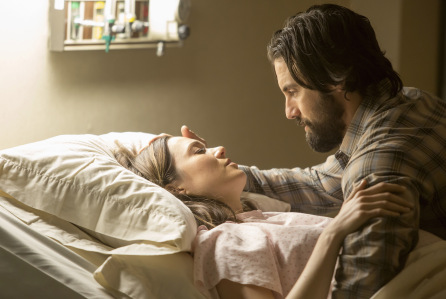
This Is Us - Season PilotJack, Rebecca, Kate, Kevin and Randall visit living rooms all across America on Tuesday evenings and the nation is in love with them. The hit series This Is Us tells the story of complex familial relationships through flashbacks and the present. The show provides us with a look at the dynamics of an unusual family that manages to seem so real and so much like us. It has stolen the hearts of fans and critics alike. After each new episode Facebook and Twitter fill with commentaries from devotees whose emotions have been aroused once again by the sheer humanity of the writing and the acting of the ensemble cast, but there is more to the This Is Us phenomenon than talent. There is something so relatable about the characters and stories that it reaches deep into our psyche’s and pulls out thoughts and feelings we have experienced in our own lives. It is so very real.

The series begins with Jack and Rebecca, a young couple very much in love but struggling with the fears that are part and parcel of married life, a lack of ample funds, worry about differing beliefs and the surprise of becoming the parents of triplets. Almost immediately there are kinks in their best laid plans that both strain and bless their lives. Their family’s journey into the present day is littered with the ups and downs that we all experience. Sometimes they seem to hit home runs with their wisdom and at other times they fall far short, creating damaging secrets and hurts that affect everyone.

Kate, Kevin and Randall are the children. There is a brilliant twist in their story that I will not reveal lest I be a spoiler for those who have not yet tuned in to this acclaimed show. Kate struggles with her weight and more importantly, her confidence. She has fought the temptations of eating from her childhood, a difficulty made even more intense because her mother seems to her to be a perfect and exceedingly beautiful woman. Kate is giving and loving and never appears able to put her own needs before those of her brothers and even her boyfriend. She lives to please but finds herself continuously unhappy and confused about what her true role in life should be. She has her own beauty and talents but has subjugated them for so long that she doesn’t even appear to know that they exist.

Kevin is handsome and seemingly full of himself. When we first meet him he is an actor in a successful television series that is nonetheless ridiculously silly. He longs to be more than a shallow caricature and seeks a more serious part, quitting his steady job in a fit of pique. In spite of all of his attributes he is as unsure of himself as Kate. There is an emptiness in his soul that he doesn’t know how to fill. He relies on his family, particularly Kate, for the reassurances that he seeks.

Randall is the odd man out. He is far different from his siblings, highly successful and brilliant. He is the only one who has a family of his own with a gorgeous wife and two adorable daughters. Still, he too longs to know himself better and in his quest for his identity he discovers long buried secrets that test his relationships with the other members of his family. 

This Is Us charts the dangerous waters of real life. It holds up a mirror to the human experience in which we see our own reflections juxtaposed with those of the very believable and lovable characters. They are us with their sibling rivalries, bad choices, and deep devotion to one another. We laugh and cry with them each week because we understand both their pain and their triumphs, for we have walked in their shoes both as children and as parents. We understand what it is to muck up situations when our intentions are so good. We have felt the same slights and unwanted jealousies in our own relationships. We all seek the best of ourselves but too often fall short of expectations. Our lives are wrought with failures and victories. We pick ourselves up from defeat over and over again and keep trying because that is who we are and how we are made. We feel the pain and the joy of Jack, Rebecca, Kate, Kevin and Randall in the most gut wrenching ways. We root for them as though they are real. That is how good the writing and the acting on this show is.

Even with the hundreds of channels and thousands of twenty four hour choices that we have for our watching pleasure in today’s media driven world television is still mostly a vast wasteland. This Is Us is one of those rare jewels that becomes an instant hit from the first moment that we meet the incredible and believable characters. It is a grownup version of The Wonder Years in which the angst of childhood has matured into the difficulties of being an adult. Human imperfections and resolutions drive a narrative that comes to life in the hands of incredible actors like Sterling K. Brown, Milo Ventimiglia and Mandy Moore. Each week the ensemble cast provides us with a tour de force of raw emotion and laughter that we discuss over the water cooler and dining table until the next installment as though we are speaking about our own families.

At times I feel like Rebecca, a mom doing her best to provide her children with the finest possible upbringing but being equally unsure that I have done things properly. At other times I am Kate walking in the shadow of a mother who seemed to be perfection itself and two brothers who never really understood what it has been like to be a woman competing for attention with men. I have known Kevin’s frustrations and the sense that I might do better things with my life than I have already done. I have known the same feelings of being an outsider that stalk Randall. Mostly I have been totally and unapologetically in love with my family just as these characters are with each other. I know that at the end of the day no matter what has happened my brothers will be there for me and I for them. Together we share a bond built on a lifetime of adventures. It is who we are.

If you haven’t yet begun to watch This Is Us I highly recommend that you do so when it returns for the winter season. Previous episodes are now available for catching up with the story. Start from the beginning to better understand why they are who they are. You won’t regret letting this lovable family into your heart. Be sure to bring some tissue with you because the tears will surely flow as you tag along with them and recall your own family memories. Their story belongs to all of us.


A Girl Who Can’t Say “No”

stress-2.jpgI’ve always been what people might call a “good girl.” People pleasing is in my DNA. I work hard to make everyone that I encounter feel good. I rarely make waves even when it is apparent that someone is taking advantage of my good nature. I smile and ignore slights and continue to behave the way that I always have. I like the way I am. It feels nice to do for others rather than for myself.

The trouble is that now again I realize all too well that I am being used and abused in certain situations. Not everyone operates from good intentions. Of that I am all too aware and yet I often fall into such devious webs without saying a thing. I quietly fulfill the obligations that I so meekly accepted and then move on, wiser but still unwilling to say that one word that comes so reluctantly to my lips, “No!”

My mother was much like me. I suppose that I am the way I am because of her influence. She was an obedient and giving soul who would not hesitate to give someone in need her last dime. She exhausted her energy and bank account taking care of others. Then she experienced her first mental breakdown. Her symptoms were quite frightening to most people and only those who were exceptional human beings and the inner circle of people who loved her unconditionally were willing to remain steadfastly by her side.

Our home had always been a mecca for individuals who wanted to feel the warm touch of comfort that my mom was so good at providing. Our door was as open as her heart. She always made time for anyone who sought her counsel or a quick loan that would never be repaid. After Mama’s mind was attacked by bipolar disorder most of the hangers on and acquaintances were never to be seen again, even when she generously invited them for a visit. She rarely mentioned the abandonment that was so obvious nor the way people often avoided her, but she knew that it was happening. She felt lonely and hurt now and again and once even insisted that I was spending too much time emulating her old persona which had proved to be ridiculously naive. She suggested that I instead determine who would be my steadfast friends if I were to suddenly become a pariah to society. “Those are the people and causes that deserve your time. Just say no to everyone else” she advised.

Unfortunately I had already been programed to be the first to volunteer. I actually enjoy the feelings that come from sacrificing my own needs. There is a kind of selfish gain in doing for others. Of late, however, my energy is not as ramped up as it has always been. I am in my sixty eighth year of life and I have more and more limits on what I am able to give. I tire more easily and my income is fixed. I understand that I must be more selective in my generosity lest I reach a point when I am no longer able to share my bounty. I think of things that my mother told me in her days of madness and realize that there was often great wisdom in her words. I can’t be all things to all people and so I must choose my causes well.

Learning how to say “no” is a difficult task at my age. I mentioned in a Facebook post that I was going to try to do so and I found out that I am not alone in my quest to bring more balance into my life. I received a barrage of “likes” and confessions of the guilt that often comes with the simple act of refusal. One of the acquaintances that I most admire reminded me that “no” is a complete statement and requires no further explanation. She is one of the most giving people that I know and yet she fully understands that we are under no obligation to respond to every plea that we receive. In fact, if we attempt to do so our efforts will be far less effective or meaningful than if we carefully consider which causes are most important.

My sudden insight into developing a healthier attitude came about the time that my cousin was dying. I was so busy with a number of responsibilities that I had accepted that I never quite found the right moment to visit him. I assumed that there would be plenty of time to do so once my self imposed duties calmed down. Of course the scenario did not play out the way that I hoped it would. He died before I was able to wish him godspeed. It was a heartbreaking and illuminating moment for me.

I had been chasing my tail working for a woman who demanded more and more of my time without showing even a tiny bit of gratitude. When I missed a deadline during the week of my cousin’s funeral she became exasperated with me and insinuated that I had been out having a good time while she was holding down the fort. When I tried to explain the situation to her, she was unmoved. After many sleepless nights during which my anxiety level peaked at the thought of returning to work for her after the holidays, I found the answer. It was as if my mother was speaking from the grave. I knew that I had to stand up for myself and leave the situation that was rewarding in the work that I did but painful in the way I was being treated. I took a deep breath and resigned.

Of course I still feel the pangs of guilt and wonder if I should have set aside my concerns. I am a novice in the game of asserting myself. I keep wondering if I acted in haste and yet I have slept soundly since finding the courage to eliminate a worry that I never needed. I feel as though a gigantic weight has been lifted from my chest. I am quite excited about returning to a tutoring gig at South Houston Intermediate where the students and teachers treat me with dignity and appreciation. I am looking forward to having more time for my grandchildren and godson. I plan to make the calls and visits to shut ins that I have heretofore only spoken of doing. I will now be able to give more quality time to my father-in-law who has expressed more of a desire to see me as he becomes older and less able to get about.

We humans often lose our way by trying to do too much. There are limits for all of us and those become ever more apparent as we age or lose our health. We have a tendency to put ourselves in last place, forgetting that if we wear ourselves down we become less and less useful and happy. Our bodies and our minds constantly send us cues as to what we need. It is in our best interest to listen to the voices in our heads that make us anxious. They are the sentinels designed to warn us when we have taken on more than we can bear. Taking charge of our lives is not a matter of recrimination. It is a must. It’s time that we taught ourselves to stand tall and utter the most powerful word of healing that we possess, “No!”