The Hero We Need

mattress-mack-548x365

What the world needs now is love, sweet love

It’s the only thing that there’s just too little of

What the world needs now is love, sweet love,

No not just for some but for everyone.

We live in a confusing world these days. We dream of seeing stories and images of great love in our midst. We know it’s there. We’ve witnessed it in our families and with our friends, but we long to see a public figure who demonstrates a level of generosity and concern for mankind that seems to typify the kind of self sacrificing for which we are desperately searching. We witnessed acts of great love and heroism when my city of Houston was inundated with water. Images of strangers helping strangers inspired and uplifted us, sustaining our hope that mankind is still at the end of the day a force for great good in this world. We innately believe that underneath the rhetoric and divisiveness that has been tearing away at society there is a common yearning for decency and compassion. We just need that one person who has the capacity to represent each of us as a beacon of light in a world that has gone dark far too often of late. I believe that I have found him right here in the place where I live, and he is no doubt in my mind the real deal.

Who would have thought that a furniture salesman who jumped up and down on a mattress frenetically waving wads of cash would one day become one of the most beloved individuals in the city. Mattress Mack as all of us in Houston know him set up a furniture store in North Houston and garnered our attention with television commercials that appeared to have been filmed by amateurs. He made bold claims about his wares and the savings that he offered, but mostly he caught our attention with his cheesy spots that tickled our funny bones and our curiosity. “Who was this character?” we wondered even as we smiled at his antics. Over time his modest business thrived, becoming a local empire. When other furniture stores closed, Mack’s Gallery Furniture continued to thrive with retailing innovations like same day delivery. Soon enough we all understood that Jim Mcingvale was no joke, but rather a business genius whose sales acumen had made him a wealthy man. Even better was the realization that Mack was more than just an entrepreneur. He was also a humanitarian with a heart even bigger than his massive store.

Mattress Mack as we lovingly and respectfully call him slowly but surely began to show up all over town doing good works. He provided scholarships to students and hauled truckloads of free furniture to people who were devastated by personal tragedies. He remodeled teachers’ lounges and honored first responders and veterans. He seemed to be everywhere donating his time, talent and goodwill to the people of Houston. No request was too large, no task too difficult to handle. Mack was a fireball of energy and good intentions. We all cheered his success as his philanthropy became more and more legendary in our town. We began to collectively love this man whose heart appeared to be limitlessly huge. Before long he had opened multiple stores and his television spots took on a professional patina but the essence of Mack remained as down home and unpretentious as ever.

Mack let us into his most private world, sharing the personal journey of his family in caring for a daughter who is afflicted with a mental illness. He wanted us to understand how to see the signs of trouble and to know that there is help for those who are affected with various disorders of the mind as well as their families. He was not afraid to show his emotions and let us see his very human side. We learned about the courage that it took for him to take the risks that eventually lead to victories over his own struggles with confidence. He visited schools and spoke to students about taking charge of their lives. He encouraged them to go after their dreams and told them how to create plans that would make things happen.

We saw Mack everywhere spreading joy and hope in Houston and we really did love him, but we had no idea that we had not yet even tapped the surface of his remarkable character. It was not until the rains of hurricane Harvey began falling unrelentingly on our city that we began to truly understand that the inspiration for which we had been searching had been with us all along and his name was Jim Mcingvale, our Mattress Mack.

There was so much desperation when the homes in Houston began to flood. The waters were in the yard one minute and then gushing through walls the next, filling the rooms so quickly that there was little time for thoughts other than baling out to find safety. People understood that they had to flee with little more than the clothes on their backs or they might be hopelessly trapped in very dangerous situations. Many of those whose homes had been so rapidly rendered unsafe lived near the original Gallery Furniture store, and remembering Mack’s history of generosity they turned to him for help because they had no other place to go. Like the Good Samaritan, Mack invited them into his store. He gave them shelter from the storm and turned his place of business into a safe haven where they would have beds on which to find the comfort of sleep. He allowed them to relax in the recliners that he so often featured in his adds. He requested their presence at the solid wood tables for which he was famous where he sated their hunger with food and love. Before long the word was out that Mack had opened his stores for shelter from the storm, all because he understood that it was his duty as a fellow human to render aid in a time of great distress.

Now that the waters have receded and people are attempting to return to normal Mack is making another in his long line of incredible offers of good works. For the next twenty weeks he will provide an entire house of furniture and mattresses to individuals who lost everything in the floods. He is requesting that members of the community nominate worthy candidates for his largesse. What he hasn’t boasted about is the fact that he has already very quietly been donating items from his store. There is no telling what the true extent of his charitable nature has been.

Jim Mcingvale is the good soul for whom we have been waiting. He is the man who has been a bright light in a world that might otherwise have seemed so dark. He demonstrates the goodness of the human heart day in and day out and we love him. Mack himself will tell you that he is not a hero or a perfect man, but what he is to all of us is a representation of the most positive values that we all seek and cherish. He embodies the qualities of the kind of person that we want to be. We are so glad that he is among us, showing us how to be compassionate and what it means to live a life of purpose. Jim Mcingvale, aka Mattress Mack, is our hero.
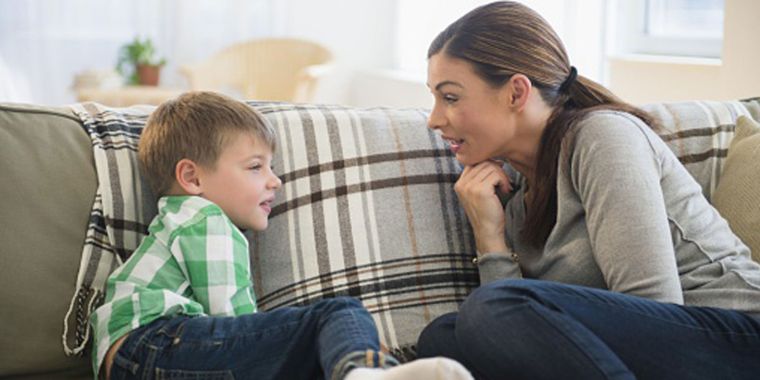
How Do We Talk To The Children?

landscape-1445910041-g-talk-555173815We turn on the television to watch a couple of football teams duke it out on the gridiron and before the first play begins we see many of our heroes kneeling during the playing of the National Anthem. It angers some of us, and others appreciate that every citizen enjoys the freedom to protest. We begin a national discussion that sometimes devolves into an argument about how we should react to this development. Our president insinuates himself into the commentary using a pejorative to address the athletes that he finds offensive and suggesting that those who dare to insult the country should be fired. We line up to take sides. Some turn off their televisions and vow to never watch the NFL again. Others celebrate the rights of Americans to exercise their freedom of speech regardless of whether or not we agree with their sentiments. Many simply shake their heads and attempt to ignore the whole thing. In the midst of all the brouhaha we wonder what we should tell our children. How should we explain to them what is happening?
We live in a country that was founded with a rebellion against the perceived tyranny of a government that had lost touch with the needs of the people. At first there were merely demonstrations of dissatisfaction with the ever growing demands and limitations being placed on the colonists in America by a king and parliament too removed from the realities of daily living in the strange faraway place that seemed so rough and wild. Eventually the whispers and grumbles took on a more daring turn with rebels pouring tea into the Boston Harbor and concerns becoming more and more vocal and strident. Then came the shot heard round the world, the volley that began a war for liberty. It was a treasonous time when the leaders of the revolution risked death by hanging to create a nation far different from anything the world had ever before seen.

Perhaps it was a fluke that the ragtag band of revolutionaries somehow managed to defeat the most powerful nation in the world at that time. Whatever the case they found themselves freed from the dictates of a government that had often ruled without consideration of the people, ordinary citizens who had insisted that they it was their birth right to have a voice in how they were to be treated. The new nation needed a Constitution, a set of rules to guide the decision making and management of a disparate group of people. The document that they created was at once both brilliant and imperfect, but it held the seeds for eventually moving toward a more inclusive and more perfect union. More than two hundred years later we still have work to do. We have had to face the hypocrisy of having been a democracy that allowed humans to be held as slaves and denied that women had the same rights as men. It took us perhaps to bit too long to remedy those situations, but we eventually managed to become more inclusive. In the meantime the residue of problems not adequately addressed from our government’s beginnings continue to demand attention, and so we have protests from some of our star athletes. Just what is it that they want?

If we begin with the individual who first remained seated during the playing of the national anthem we find that he was concerned that there is still racism in our country. He believed that in spite of a civil war, a civil rights movement, and civil rights legislation there are still too many people in our country who do not receive the same level of equality as those who have held the privileges of liberty from the beginning days of our nation. He worried that many whose ancestors were once slaves are more likely to be brutalized or even murdered by law enforcement officers. He wanted to bring attention to these issues and so he remained seated. After a discussion with a member of the army after his first demonstration he changed his tactic to going down on one knee out of deference to those who have served our country in the military. His point was not to show a lack of respect for our flag, our national anthem or our veterans, but to shine a light on issues that he felt we need to address as a nation.

This athlete’s cause had lost its energy to a large extent until President Trump made remarks at a political rally in Alabama that some felt were out of line and threatening. He called out any athletes who demonstrate their dissatisfaction by taking a knee and referred to them as “sons of bitches” who should be fired from their jobs. His remarks were well received by some citizens and abhorred by others. A national disagreement has ensued resulting in ever more professional athletes joining in the revolt by kneeling in solidarity with teammates who had been quietly protesting. So what is really going on here? Who is being patriotic and who is treasonous? How should we respond?

Let us start with a bit of the history of our national anthem and our pledge of allegiance. First it must be noted that we did not have a national anthem until March 3, 1931, when Herbert Hoover signed a law deeming The Star Spangled Banner to be our national song to be sung at official gatherings. Several other tunes had been in the running and the winner was selected by a rather narrow margin. We might just as well have been singing America the Beautiful, The Battle Hymn of the Republic, Yankee Doodle, Hail Columbia, or My Country Tis of Thee all of which were finalists in a contest that began with a cartoon from Robert Ripley of Believe It or Not fame. It seems that on November 3, 1929, Mr. Ripley registered his amazement that the United States was one of the few countries in the world that did not have an official anthem. He urged his readers to write Congress asking the lawmakers to rectify this omission. More than five million people sent letters and the search for a fitting song ensued. Even after the decision was finalized there were many who were gravely disappointed by the ultimate choice and others who felt that if the Founding Fathers had wanted to formalize an anthem with all of its ritualistic insinuations they would have done so. Since that had not happened many took it to be a sign that the founders did not approve of such things. Nonetheless we had an official anthem and slowly but surely it became a fixture of American life.

The Pledge of Allegiance to the flag did not happen until 1942, when some citizens began to worry that the large numbers of immigrants who had come to this country might not understand the true nature of our nation. It was used mainly as an educational tool for children rather than a symbol of patriotism. The original version was written by a socialist newspaper editor and did not contain the words “under God.” That phrase was added in the nineteen fifties, so the history of pledges and anthems is a rather recent cultural phenomenon. Many religious groups exempted themselves from participating in such rituals because they felt that they should only swear their loyalty to God and not to a country.

So here we are today taking sides or ignoring the dust up altogether when the truth is that we can’t be certain that those who wrote our Constitution ever intended for our country to enshrine such symbols as indicators of patriotism or a lack of it. The protestors themselves insist that their intention was never to be disrespectful but to take advantage of their rights of freedom of speech as it was written in the First Amendment. Perhaps when discussing all of this with our children we would do well to attempt to determine how our leaders have interpreted that right over the history of the United States. So forthwith are a few quotes of merit. I will let the words of the individuals speak for themselves.

If the freedom of speech is taken away, then dumb and silent we may be led, like sheep to the slaughter. —-George Washington

Without freedom of thought, there can be no such thing as wisdom and no such thing as public liberty, without freedom of speech. —-Benjamin Franklin

To announce that there must be no criticism of the President, or that we stand by the President right or wrong is not only unpatriotic and servile, but is morally treasonable to the American people. —-Theodore Roosevelt

Once a government is committed to the principle of silencing the voice of opposition it has only one way to go, and that is down the path of increasingly repressive measures, until it becomes a source of terror to all its citizens and creates a country where everyone lives in fear. —-Harry Truman

We must always take sides. Neutrality helps the oppressor, never the victim. Silence encourages the tormentor, never the tormented. —-Elie Wiesel

Those who make peaceful revolution impossible will make violent revolution inevitable. —-John Fitzgerald Kennedy

Congress shall make no law respecting an establishment of religion, or prohibiting the free exercise thereof; or abridging the freedom of speech, or of the press; or the right of the people peaceably to assemble, and to petition the Government for a redress of grievances.

Read to your children. Look up ideas together. Discuss issues from both sides. Dialogue with them without rhetoric or preconceived notions. Teach your children to open their minds to new possibilities. That is what they need. That is how to talk with them about what they see happening.

Big Girls Do Cry

woman-cryingI didn’t cry much when my father died, not because I had no emotions but rather because I somehow believed that I needed to stay strong for my mother and my brothers. I don’t think that it was particularly healthy of me to prevent the natural feelings that were causing me so much internal pain from becoming public. For a great deal of my life I have tended to be stoic. I’ve often put forth a strong face when what I really wanted to do was allow myself to sob. Over time I realized that tears and sadness are a natural aspect of our humanity that is to be celebrated rather than hidden. We are made to react to hurt and loss and pain with a release of our real feelings. Big girls really do cry and it is not just an okay thing to do, but a therapeutic release. When our minds and bodies urge us to set our tears free, we should feel comfortable responding to the instinct.
Of late I have been crying a great deal, but still not so much in front of other people. I’m in the process of becoming able to do that. It have been through a difficult three months as have so many. I find myself reliving the moment when my husband had his stroke, and I cry, mostly because I am relieved that he is still alive and thriving. I have cried almost every single day for the last month because invariably I see or hear something related to the horrible flood in my city, and I sense the struggles that so many are still enduring and will face for months to come. I can hardly watch the news reports of the conditions in Puerto Rico, a place that I recall being so friendly and beautiful. The images that flash across the screen are heartbreaking, and I feel helpless, so I cry. I have cried for my friends whose loved ones so recently died, as well as for those who are reliving anniversaries of their losses. I cried for my father-in-law who had an accident that has left him barely able to move. I shed twelve hours of tears while watching the Ken Burns series on Vietnam that ran for the last two weeks on PBS. The memories of that era of my life are still raw with emotion and the poignancy of the presentation brought long past feelings to the surface once again. I have cried for the state of our country today which seems as divided and angry and confused as it did back then. Problems that I believed to have been solved were evidently just festering beneath the surface. All of it has made me feel weary because I know of no magical solutions to make things better, and so I cry.

I am by nature a peacemaker. I have always wanted to help people to get along. I have loved living the role of a supporter, a motivator, an inspirer. I feel uncomfortable when people are angry and fighting. I suppose that this is because I learned so long ago that our lives are quite fragile. We simply do not know from one moment to the next how much more time we have on this earth, and so I believe that we must make the best of however many hours that we have. My heroes have been individuals like my Uncle William who was the epitome of kindness. I would be quite surprised to learn of even a single time when he purposely set out to hurt someone. He was a man who mostly set aside his own thoughts and did his very best to consider the wants and needs and dreams of everyone else around him. He was always willing to listen and to love. In that regard as a child I viewed him as the strongest person that I ever knew, and even as I have grown older I still think of him that way.

I remember our neighbor Mr. Barry whom everyone seemed to regard as a living saint. There was nothing wimpy about him. He had served in the Navy during World War II. He managed a large bank for years. He knew how to get things done, but he always accomplished them with an eye toward being sympathetic and good. He was one of those people who noticed the individual who was unseen by everyone else. He didn’t know it, but he was the male role model that I needed after my own father died.

There is a tendency these days to admire people who possess what I call a false bravado, individuals who bully, blame others for their mistakes and take pride in demeaning those who do not agree with them. I personally find such folks to be offensive and weak. They remind me of a student that I once had who found joy in hurting other kids. When he went after a blind girl in order to increase his own popularity I put him down with a vengeance that I have never used on another student before or after. I was unwilling to allow him to parade like a champion when what he had done was so vile and cowardly. For that reason I have cried a  great deal of late, because our society appears to be mesmerized by those who behave the ugliest. It is something that I can’t understand.

Social media was a lifesaver during our Houston floods. I kept my sanity because I was able to stay in touch with friends and family members during the long days and nights when the waters filled our streets and homes. Unfortunately there is a negative aspect of that same wondrous means of communication that is hacking away at our decency. I suppose that it is simply too easy these days to dash off a quick and dirty reply to any person or situation that offends us. When we don’t have to look someone in the eye it is more likely that we will be willing to vent in ways that are hurtful. Too often we forget to think about how our comments may affect someone else. Too many among us don’t take the time to consider the impact of their words. When I see the fighting that ensues among people who were once friends and family members it make me cry. There is simply no reason for any of us to be hateful and yet even some of our leaders are not able to control their basest tendencies.

I am weary of hearing epithets of snowflakes, commies, ingrates, sons of bitches, entitled kids, abominable people, fascists, racists, homophobes, rednecks, ignoramuses. I listen as we devour one another with words and accusations that often have little or no basis in fact, and yet we speak as though they are gospel. I grow tired of seeing memes and tweets that trivialize serious situations or poke fun at entire groups of people. We seem intent on boiling a pot of furor, and so I cry.

I remember a time when I went on a civil rights tour with my students. We sat in the church in Birmingham where little girls were murdered because of hate. We crossed a bridge in Selma were fire hoses and snarling dogs had once been let lose on protestors whose only crime was asking for the same rights as their white counterparts. I walked down the street toward the capitol building in Montgomery and remembered the hateful rhetoric of  George Wallace. I cried as I looked at my students and remembered the violence and racism that I had witnessed when I was young. I stood in Dr. King’s kitchen and ran my hand across the very table where he sat and prayed for God’s guidance. I cried as I thought of his courage and wisdom and I knew that he too would always be one of my heroes.

I cry when I think of Jesus and the lessons He taught us, the sacrifices that He made. I wonder why it seems so difficult for us humans to follow His very simple message of love whether we believe He was God or not. What is it in our natures that makes us complicate and misinterpret His teachings? Why did we not learn how horrific hate can become from His death on the cross? What prevents us from being like my uncle or the man who was my neighbor?

As I grow older I find that I remember the kindnesses that were extended to me and I cry tears of joy and gratitude when I recall the people who touched my heart so beautifully. I also think of the ugly things that I have witnessed. They make me cry as well. I had hoped that we would be evolving toward a better way of living with one another by now. Unfortunately we are instead being taunted to take the low road, to dialogue with our fellow men and women with rancor rather than understanding. We give power to the rabble rousers instead of ignoring them and siding with those who would challenge us to bring out the good that resides in our souls. The fact that this is happening makes me cry.

I would so much rather cry over a beautiful sunrise or sunset. I want to shed tears when I see people helping people. I want to release those positive emotions when I watch a toddler so innocently embracing the world. I would prefer feeling a heave in my heart from listening to music or sharing a wonderful time with friends and family. I know that there will be uncontrollable events like natural disasters and deaths, but I am so tired of seeing the kind made by people. It really is up to all of us to begin to demonstrate the kind of understanding that was the hallmark of Uncle William’s and Mr. Barry’s lives. Those two men were so loved because they never hesitated to love. Perhaps the most telling story about my uncle came when he was delivering mail along the route that had been his for years. He came upon the mother of a notorious serial killer and the emotion that he felt for her was unadulterated love. He spoke of how sad it must have been for her to lose her only son under such circumstances. He did not judge the woman nor consider that she might have somehow been responsible for how her son had become. Instead he simply cared for her and worried about how she would be now that her son was condemned to prison for life. My uncle taught me how to love. I’m still trying to be as good as he always was and while I am learning I sometimes cry.

A Time For Understanding

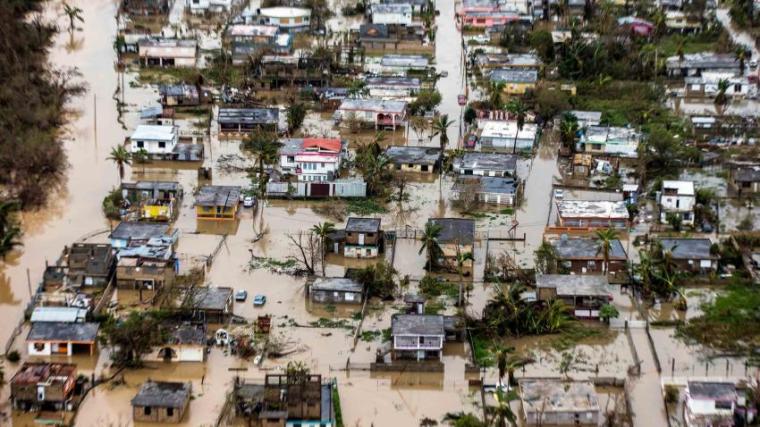
puerto-rico-9-28-17-4I’m enrolled in a continuing education class at Rice University. The professor has spoken of the atmosphere in the United States just prior to Pearl Harbor. Much of the rest of the world was already engaged in conflict but most people in our country were intent on keeping peace and isolating ourselves from the disagreements. My teacher noted that the concerns about either Germany or Japan were most notable in parts of the country that were closest to possible invasions from those respective countries. The east coast was particularly observant of happenings in Europe, while the west coast was watching the Pacific nations. The big middle of the United States was almost blissfully unaware of the looming war in which our country would one day find itself. Such is the way in which we view events. Those of us who have more at stake in particular situations are more likely to have more interest and understanding of them.

I live in a part of the United States that is subject to hurricanes. Each year when the season for those storms arrives I am alert to every change in the ocean waters of the Caribbean, the Atlantic Ocean and the Gulf. I have personally experienced the frightening and devastating effects of hurricanes on multiple occasions. Thus it is that I have a visceral understanding of what it is like to endure both the passage of a hurricane and its after effects. I have had my roof blown away, my fence flattened, my roads made impassible by rising waters, and the flow of power inside my home interrupted by downed lines. I know what it is like to wonder and worry how long it will take to repair the damage and return to normalcy. I have stood in long lines to get food from nearly empty shelves. I have seen my city broken and confused. Such events are difficult even in the best of circumstances when relief pours in quickly and repairs are tackled from volunteers from all parts of the world. When those things do not happen in a timely fashion people get sick. Some of them die. Frustrations and fears begin to form inside even the most calm among us. It is a scenario that I have seen firsthand. I am close enough to such situations to have an idea of how people feel about them.

My father-in-law was born and raised in Puerto Rico and I have learned a bit about that island from him. I know that the people there are citizens of the United States, something that many Americans don’t seem to realize. They serve in the military just as my father-in-law did in Korea. They are free to come and go from their island to the mainland of the United States. Puerto Rico is a territory rather than a state and as such the citizens do not have representation in Congress, but their rights are otherwise much like ours.

The people of Puerto Rico are industrious and generous. I have found them to be interesting and delightful. In my one visit to the island I marveled at the beauty of their land and the depth of their history. I also know that they are even more conscious of the possibility of hurricanes than I am. They build their homes out of cinderblock in anticipation of the arrival of the strong winds of those storms that seem to be almost magnetically attracted to their homeland that sits so precariously in the Caribbean. As with my city every new hurricane season brings the possibility that a storm will hit, and this year was no exception. Sadly the brunt of destruction that the people of Puerto Rico have had to bear has been, as in my city of Houston, more horrific than any in more than eighty years.

In September not one but two hurricanes passed over the island with unimaginable force. The second storm took aim for the center of the territory and left indescribable damage in its wake. Now the people of that island are suffering mightily with little hope for a speedy conclusion to the hurt and pain that has been inflicted on them. The category four winds destroyed buildings and took out power across the entire landscape. Without electricity, with roads damaged and impassable, and with shortages of virtually every major need from food to medicine, the citizens are beginning to panic. I for one intimately feel and appreciate their sense of anxiety because I have only lately lived through the worst flood in the history of our country. The uncertainties of such dilemmas are fraught with fears.

Some would have us believe that the Puerto Rican people are responsible for their own misfortune because they have accumulated debts and neglected the country’s infrastructure. I would argue that such discussions are meaningless, having little to do with what has happened. Our own country is hopelessly in debt and we know for a fact that our roads, bridges and power plants are outdated and in need of upgrades. Nonetheless, natural disasters over which we have no power will visit our towns and cities. When they do it is a waste of time to point fingers and attempt to determine guilt. Our only response should be to render aide as quickly as possible. Such emergencies are not political contests. Nor should they provide opportunities for airing personal grudges. The person who needs dialysis and cannot get it cares little for excuses. The individual who doesn’t know how to store medications that require refrigeration is not interested in debates. Those without water or food only want to know that their hunger and thirst will soon be satisfied. They really don’t care if their aide comes from Republicans or Democrats, governors or presidents. They only pray that someone will recognize their plight and take pity.

We are a generous nation. In fact we are a generous world. I have watched volunteers from all parts of the globe coming to my city to help people that they have never known and whom they will probably never see again. Their motives are kind and generous. They do not expect praise for their efforts. They just want to make life a bit better for those who have undergone terrible loss. So it should be in Puerto Rico.

I understand that it is a bit more difficult to transport workers and supplies to an island in the middle of the Caribbean Sea, but that challenge should not become an excuse for the chaos that continues to hamper the relief efforts that the Puerto Ricans so desperately need. There should be less talk and more action. That is what saved the day here in Houston, and it is what will get the people of Puerto Rico on a road to recovery more quickly. We also need sympathy and understanding from everyone. Memes and soundbites critiquing those who have been victimized by nature’s fury are the very last activities that should be engaging us. Prayers, supplies and action are the only things that will suffice. We need leaders who will manage the process with loving concern.

Long ago when my paternal grandfather was born his last name was Mack. Those who new me as a school girl will remember that my maiden name was Little. That is because my grandfather was orphaned as a young boy and had to choose a guardian to watch over him. He selected an uncle who was a graduate of West Point. That man was named Little. After a horrible hurricane devastated Puerto Rico near the beginning of the twentieth century he was given the job of managing the relief efforts. History says that his attempts were remarkably effective. My grandfather would have asserted that it was because the man who provided him with his care and his name was a noble and kind man of the highest character. He was successful in his mission because he approached it with kindness and leadership. That is the type of person that we need to put in charge right now, someone who will demonstrate genuine feelings for the people and who will not be afraid to do whatever it takes to get things done.

I pray for Puerto Rico and my heart hurts for its people. I hope that our leaders remember that the people there are just as entitled to our help as any other United States citizens are. We all need to push for the aide and the leadership that they need.


Resilience

21766401_1868966163120008_6720605651907966418_nI’ve written a great deal about the massive floods that inundated the city of Houston a month ago. The national media has featured multiple stories from varying points of view about the tragedy that befell my town. We will be working to rebuild for years and debating how best to prevent such destruction in the future for an even longer time. To say that all of us who live in Houston and surrounding areas have been deeply affected by what happened is an understatement. What has struck me most is the courage and resilience of the people with whom I share my part of the world as well as the outpouring of support and love that has been showered on us. I thought that I had written about most of the main themes regarding this event and its impact on human nature until I saw a photo from one of my Facebook friends that moved me so strongly that I have not been able to erase that image from my mind.

I still think of the woman who posted the picture as the little girl who lived across the street from me many years ago. She spent so many hours inside my house playing with my two daughters. She was always a very sweet child and I never minded having her around. She seemed to be smiling even in her sleep and she possessed a pleasant optimism about life that just felt so good. Her name is Priscilla and I never really forgot how much I liked her as the years marched by and we lost touch.

Eventually through the power of social media we found each other on Facebook and became friends again. I learned that she was happily married and had a handsome son of whom she was understandably proud. She lives in the same part of town that I do, and so one Christmas season I met up with her and my two daughters at a local restaurant. We celebrated our reunion with hours of conversation and recollections of happy memories. Now and again I encounter Priscilla at stores and eateries, but mostly I keep track of her via the Internet, and I enjoy hearing of her adventures with her family.

Not too long ago Priscilla made a move to her dream home in Pearland, a suburb of Houston. She excitedly kept her friends apprised of the decorating and landscaping that she and her husband undertook to make their house special. I was excited for her and enjoyed seeing all of the updates. So it was with a very heavy heart that I learned that Priscilla’s home was among those flooded by hurricane Harvey. In fact, the place took on water on the first day of the massive rains. It broke my heart to think of the sadness and fear that she must have been feeling.

I had forgotten that Priscilla is one of those people who is a survivor by nature. In almost no time she had managed to find a safe hotel in which to ride out the rest of the storm. She did her best to remain upbeat even in the face of so much uncertainty. It was as though she was more concerned about easing the fears of the rest of us than concentrating on her own fate. She kept us posted so that we would know that she and her family were secure and she exuded a confident belief that ultimately all would end well for them.

Almost as soon as the storms had moved from our area she was back at her house doing the work of cleaning out all of the muck that had found its way inside. She continued to send communications showing the progress that she and her family were making, somehow finding ways to joke about the pile of debris that grew and grew on their lawn. She always managed to allay our anxieties with photos of the cleaned out rooms now devoid of half of the sheetrock and all of the flooring. In essence she and her family had taken the place down to the studs, at least on the bottom half of the rooms.

I laughed at images of Priscilla’s garage which now housed a big screen television, a few lawn chairs, a barbecue smoker and a toilet. Priscilla had noted with a hint of sarcasm that the scene was about as redneck as one might ever get. She remained upbeat, at least publicly, and it was among the few times that I smiled rather than cried over what I witnessed after the storm.

Last week Priscilla posted an image that seemed to capture her spirit and that of my hometown. She and her family had moved back into their house even though there was still much work to be done. With a great deal of imagination she and her husband had created a makeshift kitchen that was a true sight to behold. The bottom cabinets were gone as was the flooring and even the sink. Only the sheetrock had been replaced. Instead of the normal amenities there were long folding tables serving as countertops, clear plastic bins providing cabinet storage, a camping sink acting as a station for washing dishes, and a new stainless steel stove gleaming like a beacon of hope. That photo spoke of Priscilla’s fighting spirit and resilience and at the moment that I saw it, she became for me the symbol of all that is good in our town. Hers was the story that I knew I needed to tell.

There is no doubt that Priscilla and so many others have suffered in ways that should not have happened. We all understand that we must address concerns about climate change, shoring up of levees around neighborhoods, improvements to dams, aggressive building in flood plains, increased attention to drainage systems and so forth. In our quest to reflect on what happened we cannot forget to applaud the human spirit that Priscilla so embodies. Rather than complaining or waiting for someone else to help, she and her family did indeed pull themselves up by their bootstraps. They tackled the hard work and found ways to make do until their world is rebuilt once again. They are models of how to react with positivity and inspiration in hard times.

I wish that Priscilla’s story and photos would be shared until they become viral because hers is a lesson that we all should strive to follow. Life is a series of events both wonderful and sometimes even horrific. We have little ability to control many things, but we always are in charge of how we react. Priscilla has chosen faith and joy and hope. We are all the better for seeing her example, and we somehow know that she will find a way to be just fine. We’d all do well to emulate her spirit. I’m thankful that she has been willing to share her journey. I know that I am humbled by what I have seen and I vow to attempt to be as resilient as she most assuredly is.