

The stories on the television series This Is Us are so heartwarming and real that rarely a week goes by that I do not identify with some aspect of an episode. They have a universal appeal that reaches into the heart and soul of who we are as members of a family. I have duly noted the kinship that I have with the characters depicted on the show. As with my own situation there are three siblings, a girl and two boys, who continue to struggle with the impact of their beloved father’s death. I have known the pain of their loss of their father all too well, and like them I have never quite come to grips with the reality of the situation even years later. The writers of the series are certainly gifted to make each of us feel as though they have somehow tapped into our own personal memories. The title itself hints that we are all part of a great big family of mankind that endures the same types of struggles. The characters are us. Their history is ours.
A recent episode of This Is Us was titled The Car, a brilliant look at how an inanimate object becomes a symbol for a father’s love and all that is good about a family. The storyline was particularly touching for me because it was one car that devastated my family and another that brought us a new day of hope.
My father was a Pontiac man. He loved the sporty nature of that brand and insisted on getting a new one almost as soon as the last payment was made on the one he was driving. He had proudly purchased a brand new Pontiac with all of the bells and whistles for our move from Houston, Texas to San Jose California. It was an automobile boasting the kind of luxury that earned second glances as we drove down the road. It carried us in grand style and comfort thousands of miles to our new home. When things didn’t work out there it brought us back to Houston and the promise of a fresh start in familiar surroundings. We used it to visit friends and family whom we had missed while we were gone. We drove it to inspect houses that we might purchase to set up a household. We were planning to take it to the beach on Memorial Day to launch a summer on the Gulf Coast. We loved that car and the sight of our daddy sitting so happily behind the wheel. How could we have known that it would become the instrument of his death?
He died in that car on a lonely stretch of road when he accidentally drove into a deep ditch that was unmarked and laying in wait on a dark night. It had no seatbelt to protect him, no collapsable steering wheel, no exterior designed to take the brunt of the crash. Instead the car built as it was became a weapon that crushed his chest and stopped his heart. It would change our lives and create questions in our minds that haunt us even to this day.
We would later find evidence of our father’s loving nature in the gifts that he had already purchased in anticipation of his wedding anniversary and my mother’s birthday. A card would arrive in the mail from him with a postmark from the day before he died. He had used his car to plan for a future that would never come for him. He was dead and the car had become a heap of scrap.
My mother had to pull herself together somehow. She began the process of building a new kind of life for us, and for that she needed a car. The one that she purchased became the auto that would carry us through our youth and into our adulthood. It was a homely thing, almost ugly, but it was reliable. It was painted in a two tone pattern of white and a strange beige color. It had ordinary cloth seats and rubber mats on the floorboard. It was as basic as a car might be, not even possessing an automatic transmission or an air conditioner. It was so unlike anything our father might have purchased, but my mother was able to pay for it with the insurance money that she received from his accident. It was so stripped down that there was very little that might break, and best of all she owned it. It was a good car in spite of its appearance and it became the vehicle that drove us into our future.
Once we managed to move beyond our grief that car became a source of great fun. We used it to visit our grandparents in Arkansas, and piled inside on Friday nights to meet up with our aunts and uncles and cousins. We sat inside it at drive-in movie theaters enjoying grand epics on the big screen even as we batted the mosquitoes that buzzed about. We ran our weekend errands and drove to church in our ever faithful auto. We motored to Dallas and San Antonio for vacations, and went to Corpus Christi to enjoy the ocean that our dad had so loved. When we were sick we sat safely inside the car as we traveled to see the doctor. The car took us to ballgames and bowling alleys, pancake breakfasts and excursions at the mall.
From time to time one of our mechanically inclined uncles would change the oil, rotate the tires, or install a new battery. Year after year passed and it was that ugly old car that took us to the places where we celebrated the milestones of our youth. It was ever dependable, always waiting to help us enjoy a new adventure. It helped us to heal and to move on from the tragedy that had so changed us. It served us as well as anything might have, requiring little attention to keep faithfully working.
About the time that I was close to graduating from high school my mother decided that it was time to replace the car which was nearing its eighth or ninth year of service to our family. One of my cousins purchased it from her and our next car was a great deal fancier, but somehow not as comforting as the old one had been. I found myself missing our friend even as we toured the city in grander style more akin to the kind that our father had always enjoyed. We had carpet on the floorboards and air conditioning to keep us cool, but somehow it would never feel as secure as “The Car” had been. In fact, I have few memories attached to the new model. It would always be that ugly old stripped down Ford that I would remember with so much fondness.
It’s funny how a car can become such a vivid part of life, representing all of the things that are good about its owners. That’s the way it was with ours. The car was one of us and we loved it.
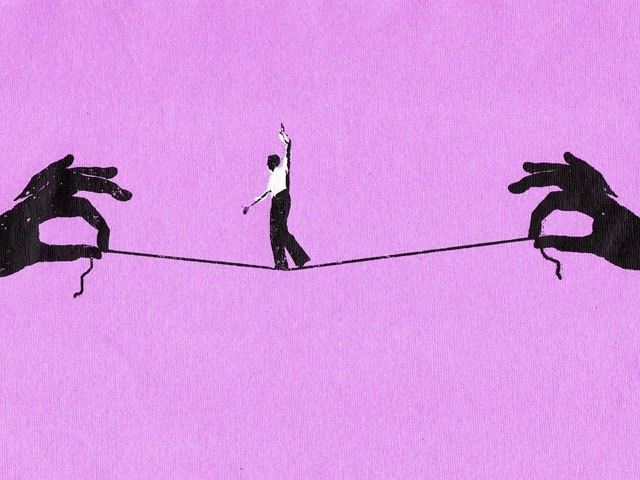 There it was, a meme that spoke to me more than I cared to admit. “You’re killing yourself for a job that would replace you if you dropped dead within a week.” It’s a rather simplistic thought that generalizes a bit too much, but it’s point is thought provoking. It’s main thrust might be applied to almost any situation in life with just a few changes of words. The fact is that we sometimes become so over involved in certain situations that we lose sight of what is really most important in our lives. Our work ethic overtakes us to the point of wearing us down, and then we grieve when we realize that perhaps our efforts were not appreciated nearly as much as we had thought. Finding that sweet spot that allows us to achieve balance in our lives is one of our greatest challenges, and one that is far more important than we might imagine.
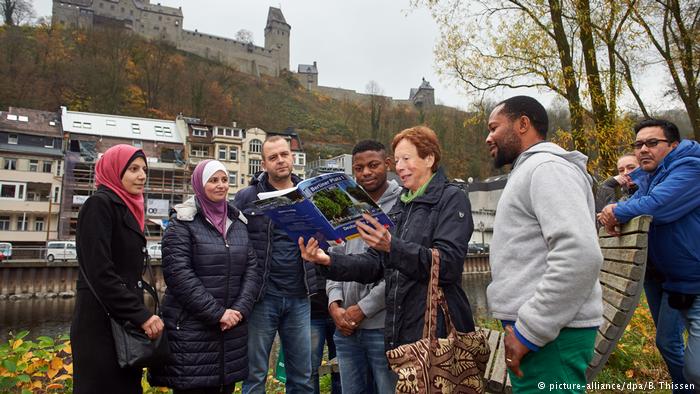 They were a sweet family with a good home, and best of all they were happy. But then came war, unsafe conditions. Bombs went off continually so close by that they could hear the falling rubble created from the blasts. They were on the wrong side of the fight. Sooner or later the invaders were bound to get to their street, their house. Sleep began to elude them. Their small children continually cried. They knew that they had to leave no matter how much they wanted to stay. They became refugees, members of a wandering group of people from war torn parts of the world searching for a safe place to live. They are unwanted in many places, thought to be pariahs, criminals, maybe even terrorists. All that they seek is safety, a new start, a place to call home.
  I’ve never been entirely sure how tall my paternal grandmother was at different times in her life. By the time that I knew her she was already in her seventies and had a very pronounced hump on her back caused from a serious case of osteoporosis. At that moment her height was under five feet, but her body had been so twisted by her disease that I suspected that she might have once been taller. She always used to tell me that I was exactly like her, and as I have aged I have begun to believe that she was absolutely correct. I seem to not only resemble her in appearance, but also am inclined toward many of her health problems. I’m bolstered by the knowledge that she was a high energy woman until shortly before her death at the age of eighty eight, and even that might have been prevented until a later time had she paid more attention to the symptoms of cancer that were slowly stealing away her life.
  All It Takes Is A Little Love