A Real Prince Charming

16387028_1775779989114585_7402720216695978748_n

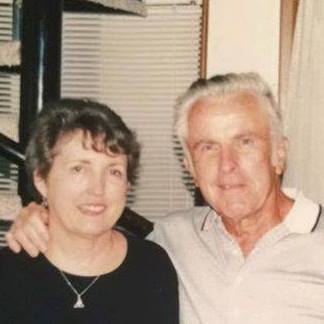
He was a man who never met a stranger, someone with a smile so big that he instantly lit up a room. He liked to laugh and being around him always felt so comfortable. He was a very handsome man who stayed perennially fit with his devotion to exercise and athletics. He was a brilliant man with a degree in Chemistry who headed a laboratory for decades. He loved his beautiful wife and his two daughters. He was a Godly man who gave enthusiastically of his time and talents to his church. He was a friend who died quietly and peacefully last week. Those of us who knew Ed Millin have beautiful memories of him that we will treasure for the remainder of our days.

Ed Millin was from New York and he bore the characteristic accent of people from there even after living and working for decades in Texas. He came south for work and found love with a very sweet and pretty girl named Judy. Together they built a home and a family and along the way my husband Mike and I met the two of them. We enjoyed many wonderful times together at parties, gatherings and dinners. Ed was easy to get to know, because he was always open and inviting. He loved to tell stories and to listen with an intentness that meant that he really cared about what people were saying. He had a knack for making everyone feel good about themselves, and an evening spent with him was always relaxing and fun.

Ed was a runner who might be found racing around a track or through the streets all of the time. He was a high energy individual who worked all day long at his lab, and then played a rousing round of tennis or pickle ball. He was always in great shape and seemed more like a someone half his age. In fact he never seemed to grow older the way the rest of us did. His secret to what seemed like never ending youthfulness was certainly because of all of his physical activity, but it was also his big grin and the fact that he never took life too seriously that appeared to contribute to his good health.

Years ago I taught one of Ed’s daughters in a religious education class at our church. I had a the ridiculous idea of inviting the parents to attend one of the sessions so they might witness what their children were doing. The problem was that I was working with seventh graders, and anyone with even an ounce of experience with that age group understands that they are easily embarrassed, particularly when it comes to their parents. None of the other moms and dads came, most likely because their children had asked them not to do so, but Ed arrived with his always friendly demeanor and eagerness. When his daughter saw him she turned fifty shades of red and bolted from the room. Ed was dumbfounded, but rather quickly flashed a knowing grin as he realized that showing up had been a breach of teenage etiquette. Without missing a beat he made a quick exit and never mentioned the affair again. I can only imagine what the conversation at home with his child must have been, but I always believed that Ed handled it with finesse. He was a great student of human nature.

Because I thought that Ed was ageless it was particularly shocking when I sadly learned that he was afflicted with an early onset of Alzheimer’s disease. He slowly drifted into a state of confusion and became more and more of a recluse under the loving care of his wife Judy and his daughters. I missed seeing him and enjoying his warm personality. Eventually many members of the group with whom we had enjoyed such wonderful times together began to grow ill and die. Judy and I began to see each other far too often at funerals, but Ed hung in there even though his mind became more and more clouded with the passage of time.

Nobody should ever have to endure the slow deterioration that Ed endured, but it was especially poignant given his former vibrancy. I suppose that there is some consolation in knowing that he had lived life with a vengeance, and put every bit of his being into all of the minutes before illness ultimately took its toll. I suspect that we will all remember him running like the wind, chasing after a tennis ball, and always always grinning with a kind of joy that was infectious.

Ed was blessed to have the most remarkable partner. Judy was devoted to him and rarely complained about her role as his caretaker for so many difficult years. She demonstrated the kind of love that is the stuff of romantic novels even as her handsome man became less and less focused. The two of them were known in their circles of church and work and neighborhood as a generous and compassionate team, always together and doing so much good.

Ed’s daughters are as beautiful and good natured as he was. They returned the love that he had given them a thousandfold. I’m sure that they will hold fast to the wonderful memories that they shared with their remarkable father. He blessed them in ways that few ever enjoy.

Some people have a charisma that is difficult to explain. That was Ed Millin. All I have to do is think of his name and I can see him once again looking so dashing, laughing so heartily and enjoying every person and every situation with a kind of rare innocence. He was a very good man who led a very good life. I suppose that he’s running in heaven and maybe even challenging St. Peter to a quick game of tennis. No doubt he has enchanted them already because Ed Millin was a real life Prince Charming.

The Face That We Must See

AAEAAQAAAAAAAAoxAAAAJGYwYWNmM2FlLTk5ZjEtNGU1MS05ZTMxLThjMjVkZGNmN2Q1Nw

Two hundred thousand is a number, twenty percent of a million. It’s an amount that is difficult to imagine, a little less than half the number of people who fit into Kyle Field, the stadium at Texas A&M University. If dollar bills representing this amount were stacked one on top of another they would be around ninety thousand feet high, forty five times higher than the largest building in the world. In other words the more we think about it, the more we realize that two hundred thousand is a very large number, and yet it still doesn’t quite register when a headline announces that two hundred thousand immigrants from El Salvador are quite suddenly in danger of losing the protection which has allowed them to live legally in the United States since the early nineteen nineties. A number does not really tell a story or reveal a human face, and yet with a flick of the pen an entire group of people has been lumped together in a move that does not take their individual struggles and successes into account.

Back in 1991, President George H.W. Bush gave citizens of El Salvador who were living in the United States temporary protective status after a devastating earthquake hit their native country. Every eighteen months the immigrants were required to pay hundreds of dollars in fees to maintain their work authorization. Most of them gladly performed the the required registrations rather than facing the growing violence and poverty in their home country. In the process the vast majority have become thoroughly integrated into the communities in which they live. They have held down jobs, purchased homes and raised families. They have been Americanized in almost every since other than becoming citizens and earning the right to vote. For the most part they began to take their status for granted as Presidents Clinton, George W. Bush, and Obama continued their protective status, particularly in the face of the rise of dangerous gangs in El Salvador like MS13. The people thought that they would be safe here, and they built their lives around that belief. Now the Trump administration has suddenly announced that they will no longer enjoy protected status, throwing into question what will eventually happen to them unless Congress somehow provides them with a reprieve via immigration reform.

Most people don’t pay much attention to such actions because they do not affect them in any personal way, but I happen to know a lovely family whose lives have already been touched  by this decision, and I am both fearful and heartbroken that they must endure the uncertainty that lies ahead. They are literally at the mercy of lawmakers who have no idea just how wonderful they actually are, and I worry that it will be more important to members of Congress to take a hard line to impress voters than to do the right thing. Friends of mine are in trouble and few people in the United States even care or want to know about them. It is a situation that makes me immeasurably sad, not just for this wonderful family but for the character of our country which has grown so seemingly cold hearted.

I learned of these Salvadorans when their daughter attended the high school where I was working. She was the eldest in her family, a young woman determined to take full advantage of the sacrifices that her parents had made to insure that she would have a good life. They had left their homeland behind in the hopes of protecting their child from the horrors that were unfolding there. They found solace in Houston, Texas and began working hard to prove themselves and to be role models for their children. They were quite successful in their quest to be the kind of people that we all hope to be. They attended church regularly and inculcated a strong value system in their children. They emphasized the need for education and encouraged their young ones to work hard. They paid their bills and saved their money and eventually became owners of a lovely home where their extended family lived together in great harmony.

Their daughter, who was one of my students and has over time become a dear friend, lived every single day with determination and gratitude. She earned a high school diploma with honors, demonstrating extraordinary leadership skills. She was selected to attend a youth conference in Washington D.C. where she shone so brightly that she was interviewed by NPR. She spoke with the grace and wisdom of the maturity that her parents had helped her to achieve. She went on to attend the prestigious Bauer School of Business at the University of Houston where she continued to demonstrate her exceptional attitude and abilities. She headed student organizations and maintained exemplary grades, eventually being highlighted as one of the premier students at the school. All the while her parents reregistered every eighteen months and did all that was asked of them. They were good people who more than deserved the protection that the government gave them. They and their children contributed to the welfare of our city, our state and our nation in extraordinary ways, and they were proud of their accomplishments.

This past December the young lady graduated from the University of Houston with honors. I was there to watch her walk across the stage and I rejoiced with her and her parents. I attended a gala at her home to celebrate her accomplishment with her many friends. Her boyfriend surprised her with a proposal of marriage on that evening, and it seemed as though all of the hopes and dreams that the family ever had were coming true. It was the happiest of times for all of us until news of the suspension of their protective status was announced. Now for the first time they are very afraid of what will happen to them. They wonder if all of their hard work will only lead them back to a place from which they fled. They worry that they will somehow be split apart. The situation has become an uncertain nightmare for them, and I find myself feeling so helpless. I want to do something for them, but have no idea what that might be. I feel their pain intensely and I grow more and more angry that they must endure this at all.

They are but a few of those two hundred thousand people who never thought that they would one day find themselves in such a situation of uncertainty. They are our students, our neighbors, members of our churches, hardworking employees, people about whom we truly care, and we want everyone else to really know them as we do. It is only when they become flesh and blood and real that it is so apparent that we cannot let them down. We must help them to stay in the place that is now most truly their home. We must ease their concerns and embrace them as the incredible people that they are. To do less is a travesty of the highest order.

I honestly don’t know what will happen. I cry at the though of somehow losing them. I pray with a sense of desperation that our lawmakers will find a sense of decency and fairness in their hearts and save them. My voice is so small, but I want to shout loudly from atop that ninety thousand foot platform of dollar bills that represents people like them. I want all of the world to understand the importance of demonstrating our collective compassion by reaching out to them in kindness. I want the uncaring attitudes that have made them so insecure to evaporate. I want all of us to think about who we are as people and to remember how many of us came from ancestors not so different from the members of this family and the other thousands who truly believed that they had found comfort in our midst. I want them to feel welcomed once again. I want their status to allow them to be one of us. I want everyone to see the face that we all must see.

Unrest

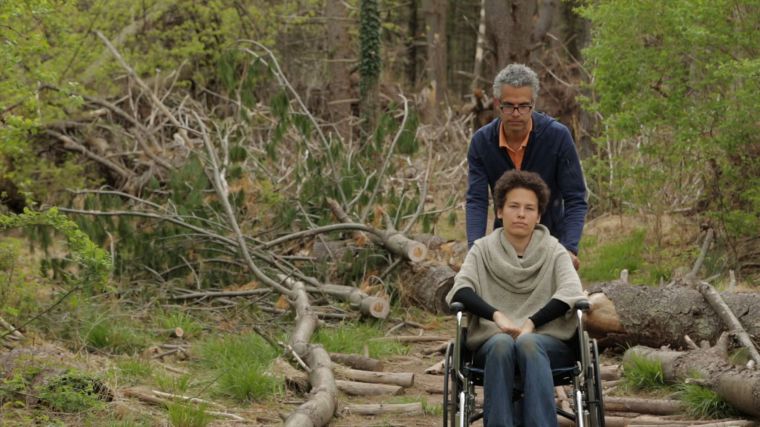
omar-jen-wheelchair-woodsShe is incredibly bright and beautiful, a graduate of Harvard who was about to complete her doctorate at Princeton. She was in love with a brilliant man and the two of them travelled the world together. They made plans to marry, have a family, build their stunning careers together, and then she caught the flu. It was a particularly harsh case with fevers of one hundred four degrees. When she was well once again she felt debilitated, but thought little of the residual effects. She had after all been very ill. She told herself that it would simply take time to regain her energy, but something was very wrong because instead of growing stronger she began to feel more and more weak. There were even times when her mind did not seem to work properly. She was unable to find the proper words to express herself. It was all so frightening.

Eventually her symptoms became so concerning that she sought the expertise of a medical doctor. He insinuated that it was all in her head, diagnosing her with what used to be known as hysteria. He suggested that she was reacting to some deep seated trauma that she most likely was unable to remember. He sent her home with no real explanation for what was happening, and she began to wonder if she was indeed going crazy. That’s when she got an idea.

The next time her symptoms became so severe that she literally collapsed in pain, unable to move or express herself, she asked her husband to film the incident. She took the video to a neurologist who was stunned by what he saw. He eventually told her that she had ME. Myalgic Encephalomyelitis, a strange disease that is thought to afflict ten to fifteen million people worldwide. There is no definitive test for the illness and no cure. The diagnosis is made based on symptoms alone which include excessive fatigue after mental or physical activity, intolerance to exercise, joint and/or muscle pain, memory problems, difficulty walking, sore throats, headaches, flu-like symptoms, sleep disturbance, bowel problems and mood swings.

The disease is also known as chronic fatigue syndrome and affects those who have it along a spectrum from individuals who endure a mild attack and then recover fully, to those who become completely homebound and bed ridden. There is no known cause but the disease appears to follow otherwise fairly typical and minor illnesses like the flu. Some believe that the roots of the problems lie in hormonal or allergy issues, but none of the research has proven any of the theories. It is a greatly misunderstood disease that sometimes results in psychiatric diagnoses rather than physical ones.

The woman whose life was so impacted by ME is Jennifer Brea, and she has a debilitating case of the disease that has radically altered the trajectory of her life. In a fashion keeping with her personality she decided to film her journey along with that of four other victims so that she might shed light on a mostly misunderstood illness. In conjunction with Sundance Films she created the documentary. Unrest, that chronicles her experiences as well those of the four others whose lives have been so radically changed after contracting ME. The film debuted on the PBS program Independent Lens this January and its power to visually explain what happens to those who have ME is emotionally visceral.

Jennifer Brea holds back nothing in her depiction of what ME has done to her and the relationship that she shares with her husband. She honestly expresses the fears and disappointments that plague her as much as the symptoms. She presents a compelling argument for more research by noting that those who are stricken often become like missing persons as they are forced to be hostages to their illness. She tells a compelling story of families broken apart and individuals losing their identities all while the rest of the world remains mostly ignorant of the horrors of this strange condition.

Her own story is one of the love that she and her husband share in spite of the problems that have so changed the way that they once thought they might live. She wants to be able to give him the kind of relationship that she had thought they would have, but instead is continually thwarted by recurrences of the most trying symptoms. Her husband has nobly stood by her, but even his patience is often tried by the confusing nature of his wife’s illness.

Ms. Brea shows a family in Sweden whose child was institutionalized in a psychiatric facility because doctors there were unwilling to accept a diagnosis of ME for her. Brea also introduces us to a woman who had been a happy wife and mother, one who had no idea that she would eventually be confined to bed with her own husband believing that she was just insane rather than physically ill. Her marriage deteriorated and she struggled to survive. When one of her daughters came down with the same disease her world unraveled even more.

The film is so personal, so real that those of us viewing the stories become involved with the characters, particularly Jennifer Brea herself. We watch her gaining strength and find ourselves hoping as much as she and her husband do that she will somehow miraculously improve. We cry with empathy as we become all too familiar with the struggles associated with ME.

Unrest is a touching and important documentary and quite worthy of the accolades that it has received. Hopefully it will also become the impetus for more research into the mysterious illness that it depicts with so much unflinching insight and compassion. At the present time very little is being done to learn how and why this illness affects certain people. There is only a smattering of interest in finding something that will cure those afflicted with its devastating symptoms. It is a grand mystery that shows no signs of being solved while real people suffer from the misunderstandings and lack of knowledge surrounding it. Hopefully Jennifer Brea has opened a door of awareness that will ultimately lead to the studies that will eradicate it or at least lead to more hopeful treatments. Perhaps just by spreading information about ME Unrest will at the very least bring more compassion to those who deal with its tragic effects.

Yesterday Today and Tomorrow

default-1464355425-834-scientists-believe-they-have-explained-the-great-flu-outbreak-of-1918A hundred years ago in the fall of 1918, there were many who seriously wondered if the world was coming to an end.  A great war was still raging in Europe and decimating the young male population. Across the globe there was unrest and a general feeling that life would never be quite the same again. The worst surprise of that autumn was to come in the form of a tiny virus not yet visible to the human eye with the microscopes of the day. It would lead to an outbreak of influenza that eventually killed as many as five million people worldwide and hundreds of thousands in the United States. One sneeze from an infected person had the potential to infect ten thousand, and for a time nobody knew what to do.

It appears to have begun at a military base in Kansas where it was first thought to be little more than the typical seasonal outbreak of illness. It soon became apparent that the new strain was unlike anything doctors and biologists had ever before seen. It started with coughing and a fever that quickly grew ever more severe. It filled the lungs of the ill with so much fluid that they literally drowned. Before long there were not enough beds or doctors for the affected, and not enough coffins for those who died. During the months of September and October of that year the disease spread like wildfire, sparking dire accusations that the Germans had somehow planted germs in the bodies of soldiers fighting in the trenches. The fact that German troops were just as susceptible to the sickness did not allay the fears of those who were losing loved ones and friends so rapidly that it felt as though there was nothing that was going to stop the rampage of death.

More American citizens died during those weeks than in all of the wars of the twentieth century, and yet there was no cure, no idea of what the cause might be. For some reason the virus was more likely to spare the very young and old, but was most deadly for strong and healthy adults in their twenties and thirties. It would be years later before researchers found the virus that had wreaked such havoc on the population, and began to understand that the sickness had burned itself out when those who survived became immune without any form of medical assistance. Our understanding of such diseases grew over time, but always there continues to be a silent fear that something similar may one day return to infect humanity like a plague.

I had never heard about the horrific influenza of 1918, until I read a book shared by my daughter. She is a nurse and science teacher who has a great deal of interest in such things, and she thought that I might find the topic interesting as well. I was stunned to learn about the horrific events and to realize that none of the older people I had known who would have been young adults during that period had ever mentioned the event. I was particularly surprised that my grandfather who was well known for his vivid stories of the past had not brought up the topic. Since I was unaware of that part of history I had not known to quiz him about what he remembered regarding that sad chapter, and so I was not privy to his eye witness account.

Historians conjecture that this particular episode must have been so personally horrific that those who had endured it did not want to speak of it again. Perhaps it was the impetus for the roaring liveliness of the twenties when people appeared to throw all caution to the wind. Living through such tragedy must have caused people to view the world much differently than they otherwise might have. Most certainly they would have wanted to blunt the memories that must have been quite horrific. When the next decade of frivolity was followed by a worldwide depression and eventually another war, the personal stories of illness and death might have seemed trivial to them by comparison. In truth, they would have been right to wonder if the bad news would ever stop, and when it finally did they most probably decided never to speak of it again.

My father-in-law served in Korea during the war there. He has only mentioned what he saw there once in all of the years that I have known him. His eyes filled with tears as he recounted his experience and his voice was shaky. It was much too painful a memory for him to think about for very long. I have noticed that my uncles who fought during World War II were just as reluctant to share stories of their adventures as were my peers who fought in Vietnam. I suppose that there are events that are so horrible that we prefer to bury the thoughts of them deep within our psyches. It is simply too much to dwell on them for very long. 

I suspect that those who were witness to the 1918 influenza epidemic simply did not want to speak of the unspeakable. They lost loved ones and friends in a matter of days and weeks. They worried that the horror might return at any moment. To dwell on their heartbreak and fears would have been unbearable and so they did not include mention of the outbreak in their tales of living. The story languished until curious souls began to ferret out the details and bring them to light once again. What is a curiosity for those of us removed by a hundred years was all too real for those who were there when it happened.

Each generation has its share of tragedy. For those of us who grew up just after World War II the events etched permanently inside our brains include the good, the bad and the ugly. We recall with clarity exactly where we were when John F. Kennedy was assassinated. It pains us to think of the deaths of Martin Luther King, Jr. and Robert Kennedy that made is wonder if anarchy was going to rule the day. Many of have personal tragedies that affected us as well, the death of a father or hearing that a friend was killed in Vietnam. We smile when when we think of the first man to walk on the moon, and recoil at the vision of the twin towers in New York City falling like toy constructions before our eyes. These things affect us and change us and our ways of viewing the world, but we don’t often speak of them because the thoughts associated with them are too powerful and emotional. I suppose that the reality is that no matter how conversant we are there are no words sufficient to describe such things, and so we are silent just as my grandparents were about so much of the history that affected them.

Today we have new worries, but mostly go about our business hoping and praying that none of our biggest concerns will ever take place. Our natures compel us to be optimistic and to carry on even when situations seem dire. Like Scarlett O’Hara we believe that tomorrow will be a better day and we concentrate our thinking on the future rather than the past and the present. It’s how we survive. Still, there is something so fascinating about events like the influenza epidemic of 1918, that we can’t avert our gaze. We have to look if only for a moment so that we might remember that we are not immune to the same kinds of heartbreaking situations that plagued our ancestors. We are as human as they were, and we can only hope that when faced with tragedy we will respond well and not be judged too harshly for any mistakes that we make.

It’s all too easy to form opinions of what might have or should have happened. but we will never know what we might actually have done if we had faced similar hardships. It must have been a dark time, but somehow those who came before us found a way to keep moving forward without focusing too much on a past that they could not change. Perhaps we might learn from them and embrace each new day as an opportunity rather than dwelling on the heartache of the past. Yesterday is gone, today is an opportunity, and tomorrow allows us to repair any mistakes we have made. It’s the cycle that keeps the story of humanity alive. 

Love Honor Cherish

15975072_10211601975865667_328586816067567646_oParenting is one of the most difficult tasks that we humans attempt to master. It pains us to see our children hurting, but we know that we will never be able to completely eliminate struggles from their lives, so we teach then how to effectively deal with both trials and tribulations. We hope that our foundation will help them when we launch them into the adult world. Mostly we pray that they will know how to surround themselves with good people who love and care about them as they begin their independent journeys without us. So it was with my two girls.

Like any other parent I did my best and hoped with all of my heart that my efforts would be enough. My eldest Maryellen had always made me proud, and she appeared to have a good head on her shoulders as she left our home to become educated by others at the University of Texas in Austin. There were some shaky moments in her early days there when I received phone calls and heard the strains of uncertainty in her voice, but she managed to make it through the rough patches and secured a place for herself among friends both new and old. Along the way she met a young man named Scott through the encouragement of one of her more gregarious friends.

At first Maryellen was tentative about being more than just a good pal to Scott, but before long she was drawn to his good nature and his intellect and they began to date. Her face would light up whenever she spoke of him and I could tell that her relationship with him was far more special than any that she had ever experienced. He had a way of understanding her and treating her as an equal that pleased her. Even his gifts to her at Christmastime were astutely thoughtful and romantic. I found myself believing that she had found the man of her dreams and when I finally met him I was pleased to sense that he was a truly good person who respected and cherished her as much as I did.

Maryellen and Scott enjoyed a delightful courtship at the university, peppered with serious study sessions and fun times with a group of remarkable friends. They cheered the Longhorns at football and basketball games and enjoyed the same music and movies. Mostly they talked and realized how neatly their hopes and dreams meshed with one another. They fell in love.

I was quite pleased when they announced that they were engaged. They were both mature and thoughtful individuals who had transitioned well into adulthood. They both were within striking distance of earning degrees in the respected fields of business and engineering. Their futures were promising and together they were certain to be a power couple, but more importantly they shared values that would help them to build a life of love and devotion.

Twenty five years ago today they exchanged their vows at St. Frances Cabrini Catholic Church. It was a beautiful service shared with a crowd of friends and relatives. Maryellen glowed with the flush of love and anticipation and Scott had “the look” in his eyes that assured me that he would be forever faithful and loving to my daughter. Our family priest John Perusina said the mass and Scott’s Lutheran minister assisted with the proceedings. The bridesmaids wore blue and one of Maryellen’s childhood friends sang Sunrise, Sunset like an angel, making everyone in attendance cry as we recalled how quickly the years had gone by since the bride and groom had been children. It was a gloriously happy day that bode well for the future.

Maryellen and Scott moved to Beaumont after a memorable honeymoon in Yosemite National Park, yet another idea of Scott’s that was so perfectly suited to Maryellen. They set up housekeeping in a cute apartment and began their careers. It was a fun time and it was wonderful to see how happy they were and how well things were going for them.

Eventually Scott received an offer that he couldn’t refuse from a firm in Indiana and so the two of them were on the move. They purchased a lovely house in Lafayette and began to explore the midwest during their free time. They were only two hours away from Chicago and so that exciting city became a frequent destination. It was a time filled with new adventures and new confidence for them when all of us realized that they had indeed become a powerful team.

Four years after they married their first child, Andrew, was born and our visits to Indiana became ever more frequent as we enjoyed visits with our grandchild. I always felt so intensely happy to see the relationship between Maryellen and Scott growing ever stronger and thus it would be as one year flowed into the next and three more children joined the family as they moved again to Beaumont and finally back to the Houston area.

Maryellen and Scott have been models of love and dedication. They are beloved pillars of of their community known for their dedication to being exceptional parents and generous neighbors. They inspire others with their devotion to each other and to their sons. Together they have weathered the rollercoaster ride that is life and managed to overcome every challenge that appeared on their horizon.

In a very troubled world where it almost seems old fashioned to hold tightly to values and traditions Maryellen and Scott Greene have proven that the power of love is still one of the most priceless treasures that any of us might possess. For twenty five years they have steadfastly honored one another and passed on their mutual love to their sons who are growing in the same wisdom and age and grace that they have so beautifully exhibited.

Somehow I am overwhelmed by the rapid passage of time. In my mind they are still the twenty something young adults with so much hope in their eyes and a whole lifetime ahead of them. They have done a remarkable job of cherishing the promise that they made on that day in the glow of tiny lights from the Christmas trees on the altar. They have fulfilled all of their vows and done the hard work of keeping the flame of their never ending love alive. It makes my heart burst with joy to know that they are such incredibly fine people.

Happy Twenty Fifth Anniversary, Mr. and Mrs. Greene. May you enjoy many more wonderful days together as you share a special love. You are a blessing to all of us.