
A Really Bad Day

7356295658_c810209e1d_bWhen my mother and I attempted to pay for our purchases the clerk at the register made it patently clear that she was irritated, even including an obvious eye roll as my mom fiddled inside her purse searching for the money that she was certain she had placed there before leaving the house. As the saleslady’s anger grew ever more palatable I suggested that we put the items on my credit card and worry about repayment later. Mama smiled at my ingeniousness and then noted that if we were going to do things that way she wanted to get another blouse that she had admired but had not brought enough cash to buy. Without even noticing how beet red the now furious cashier had become she dashed away and left me standing alone at the counter.

There were no other people waiting in line, and for a brief moment I considered lighting into the offensive woman who seemed intent on letting us know exactly how she was feeling without regard for the old saw that the customer is always right. Instead I casually began chatting her up. I thanked her for being so patient with my mother as though I had not noticed her obvious irritation. I explained that my niece was getting married in a few days and my mother was excited about walking down the aisle as her grandmother. I continued by noting that Mama had purchased an elegant suit several weeks earlier but it no longer fit because she had lost a great deal of weight. We had found out after a visit to the doctor that she had lung cancer that was very serious. Her clothes hung on her because the disease was ravaging her body. Without even taking a breath I mentioned that my mom also suffered from bipolar disorder and sometimes became quite confused. I ended my tale by once again commending the worker for being kind and noting that Mama loved her little outings to the store as well as being able to talk with other people.

By this time the woman’s eyes were filled with tears. She took my hands and quietly spoke of how she truly understood. She revealed that her own mother had died of cancer and she told me how much she missed those special times when the two of them had done things together. Her demeanor was now soft and loving and we shared a quick moment of kinship just before my mother came back with her blouse and a big smile. The saleslady was effusive in her new found kindness for Mama. She gave her coupons to bring down the final cost of her items. She wrapped the purchases in tissue paper and placed them in a special shopping bag. She ended the transaction by wishing my mother Godspeed.

As we walked to the car Mama commented on how sweet the clerk had been. She appeared not to have even noticed the dramatic change in her behavior. She collared a store manager who was standing near the exit and heaped effusive praise on the lady. The manager beamed with pride and promised my mom that he would surely make note of his employee’s exceptional customer service in her file.

We encounter so many people in our daily dealings. Not all of them are pleasant and when we find the surly ones it is usually tempting to read them the riot act. We make lots of assumptions about the individuals that we meet without ever really knowing them or allowing them to know us. It is often easier to respond to rudeness in kind rather than to attempt to diffuse the situation. There are indeed some individuals who are simply as mean as snakes and will never change, but in most cases displays of anger or irritation are not personal. Instead they are an indication of something brewing in the person’s life that is affecting the way they act. Time and again in both my private and professional dealings I have found myself in emotionally difficult situations in which I have somehow faced hostility for no apparent reason. When I take a deep breath and delve a bit deeper I almost always learn that the person screaming at me is shouldering incredible levels of stress and my encounter is only the last straw in a long series of difficulties. By putting myself in their shoes for a moment I have almost always been able to bring the tension down to a reasonable level.

As both a teacher and an administrator I more than once found myself listening to a parent who was ready to choke me. I generally allowed him/her to vent for a brief time and then countered the ugly comments by saying that I could tell by the powerful words how passionately the individual cared about the welfare of the child. I spoke to them as a parent who had now again found myself defending one of my girls. I noted that I was happy to know that we all cared very deeply for the student under discussion because that concern would translate itself into developing a useful plan for making the necessary changes for success. By ignoring the meanness and concentrating on our commonalities as people I was usually able to bring control to the situation and provide the parent with a satisfactory conclusion. I was not faking my understanding. I truly know that there are times when each of us comes undone by life’s events. At those moments we can only pray that the people with whom we interact will show us the concern that we need.

Whenever my mother was in a state of full blown mania she could be meaner than a junk yard dog. Her personality at such times was nothing like the almost angelic person that she really was. Her brain was out of balance, chemically causing her to behave in ways that even she did not like. Thank God she was generally surrounded by people who knew and loved her who ignored the rantings and ravings that spewed from her mouth. They would quietly call me to report that she wasn’t doing well and once I got her back on track with her medications she would return to the person who was adored by all of us who were lucky enough to bask in her unconditionally loving nature.

Of late we have seen a number of situations that went ridiculously out of control. People have been assaulted simply for delivering bad news. We’ve seen riots at airports and road rage that leads to murder. I would strongly suggest to everyone that we do our best to stay calm even in the most concerning circumstances. Someone has to maintain a cool head when times get tough or things will be said or done that are regretful. We should always attempt to understand the other person’s point of view before going off into a tirade of our own. Sometimes it is even best to just quietly step away when we realize that nothing that we do or say will quell the anger. Engaging in a war of words is never a solution. Demonstrating an attempt at making peace on the other hand will sometimes lead to a satisfactory resolution. Stay calm. Try to understand. Don’t take so many things personally. It may not be you who is having the really bad day.

The Secret

devil-in-the-white-mansion-556-1415558594.jpgI’ve been told that I should have been a psychologist or maybe a detective or perhaps a lawyer. I am a fan of murder mysteries and true crime. My interest in such things have not so much to do with enjoying the macabre as having a profound curiosity about human nature. People are fascinating to me and I often find myself wondering what leads someone to perform dark deeds. I have friends who are fellow travelers in my hobby of studying the facts in a murder trial or attempting to solve a crime. Among them is my godson who is only a fifth grader. He and his mom listen to podcasts on his way to school and among his favorites is Martinis and Murder. When I visited with him last week he and his mother recommended several movies and television series that I should watch. Among them was Foxcatcher, an Academy Award nominated picture based on the true story of John DuPont, a man from one the wealthiest families in the United States. It was a great film with a fascinating tale and incredible acting particularly from Steve Carell.

I mention this movie not so much to review it or to be a spoiler but to comment on the fact that even those who seemingly have everything are sometimes actually bereft. John DuPont was believed to have well over two hundred million dollars back in the nineteen eighties, an amount that is unimaginable to most of us. He lived on a vast estate, traveled in his own private plane and was virtually able to enjoy his wildest dreams and yet he suffered from a personality disorder that eventually devolved into mental illness. He had been alone and friendless for most of his life and seemed to be a disappointment to his mother. He struggled to find a place for himself in spite of philanthropic efforts designed to bring himself attention. He seemed to be an individual who was unable to connect with others and form healthy and loving relationships. In the end his life was a tragedy.

How often do any of us hear that money can’t buy happiness? Our next thought is that we would surely like to try our hand at proving that having a large bank account may in fact be the golden ticket to satisfaction. I know I’ve daydreamed about such things before. I imagine myself paying for college educations for my grandchildren and those of friends. I insist that I won’t change my lifestyle that much, but will just make a few renovations to my home and take some exotic trips. I plan to give large donations to the University of Houston and don’t exactly blush at the idea of having a building named after me even though I claim that I want my largesse to be anonymous. I protest that I want no attention drawn to my good deeds, and I only desire to possess a fortune so that the people that I know and love will not have to endure the stress of worrying about making a living and such. Of course, once I reflect on such ideas I realize that it is impossible to receive such a large windfall without having it change everything about my life, and I realize that I would never be ready for the attention that would surely come my way.

I suspect that there is something gloriously wonderful about the anonymity of being a regular working stiff that most of the folks who live in River Oaks or other such places never have. They have to constantly worry about people’s motives in befriending them. They are watched so closely that a bad hair day becomes a headline. They are criticized continuously for the things that they do or don’t do. They sometimes have to find ways to isolate themselves just to get away from prying eyes whereas nobody cares how I look when I make a quick run to Walmart or even that I choose to shop there.

I remember how shocked the world was when Jacqueline Kennedy remarried after her beloved husband John was assassinated. She made a curious choice in the person of Aristotle Onassis who was much older than she was and not known for his good looks. He whisked her and her children away to an island, however, which was no doubt precisely what she wanted for her family. He had the means to allow her to live for a time without the pressures that come from being a wealthy and famous celebrity. Hre children were able to grow outside of the limelight. It was a brilliant choice on her part and I suppose that she loved him for giving her this great gift.

After all is said and done we are all just human. It is certainly important to have enough income to have a home stocked with food and the basic necessities. It helps to be able to provide for our children’s educations and everyone enjoys the ability to afford a little fun now and again. Essentially none of us need millions or billions of dollars. What we do require is love and comfort. Abuse and heartache have no economic bounds. We tend to think that having more money will allow us to solve any problems that arise but time and again we are reminded that such is not the case. The darker side of our natures has been known to assert itself all across the financial spectrum. Somehow we find ourselves being more shocked when there is violence in a family of means than when it occurs on the so called other side of the tracks.

Some of the happiest people that I have ever known have had very little. Their wealth lay not in bank accounts, real estate holdings, or possessions but in their relationships. They are the souls who inspire us with their big hearts. What they have to give is compassion. I continually learn of the angels among us who perform good deeds that are astounding. They take the last of their paychecks to quietly purchase a wheelchair for the victim of an accident or to buy groceries for a family in need. They rarely mention their kindnesses. They do not look for gratitude. They teach their children the value of people rather than things. They enjoy the simple pleasures of long conversations with friends or walks on cool spring days. It doesn’t take much at all to make them smile. They love good jokes and laugh from the bottom of their bellies. They may have to pinch pennies to pay for an unexpected repair, but they choose not to worry because somehow they always find a way to get things done.

Our human experience brings us many emotions. We all have moments of suffering. Money if used in the proper way will most certainly eradicate some of our troubles and woes but it is never the panacea. How we feel almost always boils down to how we approach the realities that test us. If we believe that things are the secret to a wonderful life we will probably find disappointment again and again. It is in truly honoring every person that we encounter without ulterior motives or unrealistic expectations that we find the happiness that we seek, and that rarely costs a thing.

The Angels We Call Mother

Baby-touching-mothers-hand.jpgWe each begin our lives inside our mothers’ wombs. We hear their heartbeats and share the nutrients they consume. We give them heartburn and send them scurrying to the ladies room so often that those jaunts become a form of exercise. Sometimes their hormones change so quickly and dramatically that they wake up feeling lightheaded and nauseous. Their bodies change with each passing week. They think that they look like beached whales, but everyone sees them as the beautiful women that they are. Their faces glow with the loveliness of anticipation. They laugh and stroke their bellies each time we kick or stretch our legs. We love them already because they keep us safe in the quiet little world inside their wombs. When it is time to leave our comfortable havens they must endure pain, but they don’t really mind. They are anxious to see us and to begin our lifelong relationships in earnest.

We depend on our mothers. They feed us and keep us clean and dry. They watch over us with love and deep affection. They are our first teachers and entertainers. They laugh at our antics and smile when they see our faces. They spend sleepless nights as we attempt to adjust to our new environment. We seem to be constantly hungry and in need of comfort, and they are ready to provide us with whatever we require. They do not complain. They are more than happy to spend so much of their time just loving us. They are our biggest fans. They enjoy our every move and think that we are remarkable simply for existing. They photograph us and record our milestones. They are our biographers and best friends.

Eventually we mature enough to walk away from our mothers. We go to school and interact with friends our age. We want to be independent, on our own. We think that we don’t need our mothers anymore. We assert ourselves and insist that we want to be left to fend for ourselves. Our mothers’ step back just a bit. They allow us to explore, but they are never really far away. They watch from a distance, ready to save us if we get into a precarious position. They still come into our rooms to check on us in the still of night. They provide us with the guidance that we need in spite of our objections. They love us more and more with each passing moment.

The day comes when we leave our mothers’ homes for good. We launch our careers and maybe even find someone to love in a romantic way. Perhaps we will have our own children and begin to comprehend better than ever just how much our mothers did for us. We see them in a different light as we realize the sacrifices that they made just so we might be comfortable and happy. We now share some of the feelings that they had. We understand their worry, their pride and their unrelenting love.

As we grow older, so do our mothers, but we remain their beloved children. Even as their strength and energy fails they fret over us. They need to know that we are doing fine. Their final thoughts are about us, and they pray that they have taught us well enough that we will carry on without them. Mothers give us the gift of themselves and provide us with both roots and wings.

One day a year is never enough to show our gratitude for our mothers. Somehow our efforts to honor them are never quite equal to the thousands of wonderfully selfless moments that they have given us, but we try nonetheless to show them how we feel if we are lucky enough to still have them here on earth.

I think of my mother often and miss her so. She had a smile and a laugh that lit up a room. She devoted most of her adult life to me and my brothers, serving as both mother and father after our dad died. Virtually every decision that she made was based on consideration of our welfare. She did a remarkable job of parenting and I doubt that we ever thanked her enough. I hope she knew that we thought that she had hung the moon.

I look at old black and white photos of my mother and I am stunned by how young she was when she became pregnant with me. In every picture she is a beautiful twenty year old beaming from ear to ear expressing her joy for all the world to see. Once I was born she carefully kept a record of my first teeth, my beginning steps, my report cards, my visits to the doctor for checkups. She wrote anecdotes about my personality and talents. Her pride jumps out from the pages of the lovely baby books that she so carefully created and preserved. That careful attention to me and later to my brothers would never wane. When she was taking her last breaths she made certain that we knew of her love. She asked my husband to watch over us in her absence, a job that he has taken quite seriously. She was as wonderful a mom as ever there was and she lives on in us and in our children and grandchildren. I see glimpses of her in each of them.

Perhaps there is no more important role that a woman performs than caring for a child and guiding him/her to becoming an adult. Our mothers form the bedrock of civilization. They do their jobs with little or no fanfare, not because they must, but because it is a pleasure for them. They love us from those very first moments when they learn that we are on the way and all the way into eternity. There truly are angels and they are the ones that we call, “Mother.”

The Numbers In My Head

numbersThis morning I sent birthday greetings to a school friend who turned sixty nine. I’ll be joining her in the last year of my sixties in November. The numbers that I carry in my head just don’t compute. My living aunts are now in their mid to late nineties. My children are well into their forties. I have grandchildren in college. Most of the time I feel much younger than I actually am, but then something happens that sobers me and sends me into a tizzy, like hearing that the son of one of my friends from childhood has died from a heart attack, or that a young woman that I once mentored at work is being treated for cancer.
I am at a somewhat lovely age in that I no longer have to report to work each day. I am free to travel or do whatever pleases me from hour to hour. I still possess almost boundless energy but when I exert myself too much my body reminds me that I am no longer a spring chicken. I’ve got arthritis in my knees and I administer a daily injection of an experimental drug in the hopes of producing stronger bones than the ones left in a lacy swiss cheese condition by my osteoporosis. I act as though I have all of the time in the world to fulfill the goals and dreams that I continue to create for myself, often forgetting that my time on this earth is becoming more and more limited. Those numbers in my head as well as the realities of our human existence talk to me in the dark of night and urge me to seize each day.

I have already lost so many friends with whom I spent my youth. In my mind’s eye I still see them as being vibrant and beautiful. They ran with me and laughed at the clock and thought little of illnesses or endings. It did not occur to me that they would be missing at the very time when we might have had the most fun together, when our labors were done and we were free to roam the earth in search of more adventures. Watching them leave has been difficult and has prompted me to think of my own mortality. Even worse have been the deaths of the children of my peers, the young adults whose passing seems so terribly out of sync with the way things should be. In a perfect world I have the ability to order from least to greatest. In truth occurrences are random in their probabilities.

Mostly I don’t dwell on such things, but there are moments when there is so much suffering around me that it is impossible not to face the facts of life. I realize that if I add multiples of ten to my age I become very old, very quickly. In my mind the nineteen nineties were only yesterday but they actually happened almost thirty years ago. Each day, week, month, year is flying by at warp speed taking me into a future that is more uncertain than any era in which I have so far lived. The dominoes of my life will begin to fall with greater and greater rapidity. I don’t want to think about those things until tomorrow, but they will surely come at a steady pace. The numbers in my head are truth tellers. The math leads to one and only one conclusion, and like J. Alfred Prufrock I rage against the dying of the light.

I want to be prepared for what lies ahead. I want to meet my fate with optimism and courage. I do my best to find happiness even in the darkest hours, but I now understand the fear and the anger that my best friend felt as she understood that her cancer was slowly stealing away her life. I am more open to being sympathetic to the relentless monotony of my aging aunts who are confined to wheelchairs and small rooms. I think of my mother measuring out her days as she grew ever more ill and weak, wanting desperately to leave me with her wisdom. I was confused when my hundred year old grandfather continually spoke of being tired and missing all of his friends and loved ones. I had little patience with the thought of surrendering to fate. I viewed myself as someone who might be dancing jigs right up until my very last breath. That was, of course, before I witnessed people my age being cut down by illnesses that changed them. They had once been warriors like me and it was incongruously difficult to imagine them bedridden and unable to take on the world by storm as they always had. The numbers caught up with them just as they will one day do with me and everyone else that I know, which means that I must begin to focus more and more on what is really important. I have to face the fact that I do not have forever.

People are always more important than things, but things steal our time and energy. When the clock is ticking we have to choose what to push aside. That visit that we speak of making needs to be put on our calendars today, ahead of the cleaning and the repairs of our stuff. Those thoughts that we have wanted to express must be recorded now, not after we take out the trash. The dishes will wait but the call to someone important may come too late if we hesitate. The numbers are there, telling each of us that there is a limit to the count of the days that we each have on this earth. We have to make the best of every single moment before we are no longer able.

I suspect that I may sound a bit morose today. I am thinking of the lost opportunities that I had to celebrate with those who are now gone forever, the moments when I was too preoccupied to really listen to what they had to say. I wrongly believed that there was plenty of time and that I had far more important tasks to perform than lingering just a bit longer with them. Now I see. Now I understand.

My life has been all about numbers. I am a mathematics teacher. I have told my students that the ciphers and algorithms never lie. They link us to both the past and the present. They explain the workings of our world. Now the numbers tell me to embrace the beauty of love and friendships every moment of every day. They remind me of the limits that I am approaching and of the need to prioritize my energies. The numbers will eventually terminate, just as they should. My faith tells me that I will one day find the infinite peace of everlasting life, but until then I must listen to the gentle whispers of the numbers chiding me to live with gusto and an open heart.


When Happiness Is Lost

635954839284874644-229042456_Depression

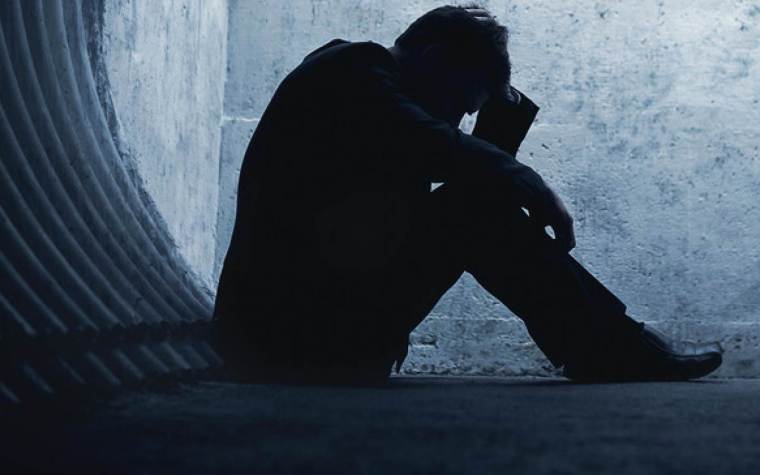
I often write about being optimistic and choosing to be happy. Of course such prescriptions are fine and dandy for those of us who are not afflicted with clinical depression, but for those who are it is virtually impossible to simply will away dark feelings.

My mother was one of the happiest people on the planet as long as she was not in the throes of her bipolar disorder. When the illness hit, she was literally unable to just wish its debilitating symptoms away. One of the characteristics of her disease was a profound sadness that would overtake her with life changing consequences. She often sat in the dark, drapes drawn tightly closed, crying and worrying for no real reason at all, unable to even venture into her front yard. It was both frightening and heartbreaking to see her in this condition. It was so contrary to the person that she really was.

Mama had shown early signs of her illness that my brothers and I failed to understand. There were times when she would suddenly take to her bed for several days. We always just assumed that she had a bad cold or a virus but it was far more sinister than that. She was fighting away the melancholy that paralyzed her. In the years before her disorder became full blown and noticeably chronic she would feel down for a few days or a week and then somehow return to the person that we knew so well. Unfortunately, in 1969, she experienced a psychotic break that began with crying jags and paranoid fears. Eventually she literally believed that the FBI was trying to frame her for selling drugs. She was convinced that all of us were going to be sent to jail. Her anxiety was so acute that she was in terrible physical pain and even thought that she had died and then miraculously come back to life.

I remember one of my very sweet uncles coming to visit her during this time. He pleaded with her to pull herself together. He reminded her that she had children for whom she needed to care. He argued that she had a wonderful life, filled with love. He felt that she only needed to choose to be happy and all would finally be well. Of course we all learned that such wishful thinking was not going to materialize. It was only after a long hospital stay and medication that she was able to return to us as the person who had always possessed a sunny disposition.

My mother mistakenly believed that her illness had been an anomaly, something that would never happen again. She insisted that she was cured and that she knew how to care for herself in the future. We naively agreed with her, thinking that the worst was behind us. Little did we realize that her condition was chronic, a never ending series of ups and downs taking over the chemistry of her brain. Only with the continual help of psychiatrists would she be able to function. It was a bitter pill for her and a challenge for those of us who loved her. We had to monitor her life to an almost invasive extent because whenever we became lax so did she, and the symptoms would return even worse than the times before.

My mother was known to her doctors as a noncompliant patient. She never admitted that she had a psychological problem, instead blaming me and my brothers for her condition. She wanted desperately to prove that she never needed psychiatric care and that her illness was a figment of our imaginations. Her reluctance to accept her diagnosis and continue her therapy on a regular basis lead to one relapse after another. Her life became far more difficult than it had to be.

Mama had brilliant and caring doctors who became frustrated with her unwillingness to follow their directions. They knew as we did that as long as she followed their instructions she was able to work and be like a ray of sunshine in everyone’s lives. Sometimes her medications had to be changed, but the results were always miraculous. To her detriment and our frustration she chose to discontinue her treatments again and again. As she did so the magnitude of her depression and mania increased. It was as though she was stressing her brain to the point of bursting.

I always understood that my mother wanted to feel normal, and visiting psychiatrists and taking numbing medications with troubling side effects was annoying to her. She gained enough weight from using her drugs to go from being a slender woman to one who was rather heavy. She experienced involuntary tongue flicks and other nervous system twitches. Her ankles would swell to three times their normal size. She hated those things and would quit taking her pills in the hopes of ridding herself of their effects. Of course she would ultimately become very sick again and her doctors would have to restart her therapy from ground zero. It was a hard way of living and I always empathized with her. I tried to imagine what it was like to feel so seriously sad as she often did. I wanted to understand her pain.

Depression is a very real disease for many unfortunate souls. It is not related to an inability to see the glass as half full. Nobody consciously wants to endure its effects. Happily there are ways of improving as long as one is willing to ask for and accept help. It can be a tricky process with a great deal of trial and error in implementing a viable plan. Because it is often a lifetime disorder it can become overwhelming. The important thing is for the depressed person and those around him/her to understand that it is a true medical condition much like diabetes or heart disease. There are treatments that will ultimately work, but they often take time.

Our laws prevent us from forcing adults to accept psychiatric care unless they are deemed to be a danger to themselves or others. While this protection prevents innocents from being falsely forced into therapies that they do not need, it also sometimes makes it very difficult to get a recalcitrant patient the care that they require. All too often families simply look the other way when their loved ones refuse to accept the treatments that they most certainly need. Such situations create very uncomfortable relationships that are painful to everyone concerned. Still I am convinced that it is up to those who love the sick person to insist by hook or crook that they receive the medications and therapies that they need. We can’t just walk away and hope for the best for them.

Mental illness and particularly depression too often results in dire consequences if left untreated. It is a lifetime battle but it need not overcome those who are afflicted. Each of us must learn to see the symptoms and guide those that we know and love to find the help that they need. Perhaps if we all agree to become more educated about the effects of such chronic diseases we will be more likely to deal with their effects more openly. There is nothing about depression or mental illness that should make us feel ashamed. Just as we would seek the best possible treatments for cancer or heart disease so too must we learn how to properly react to mental health issues. We can all be happy but some of us require a little push to get there. Our happiness and that of others need not be lost.