Those Kids

bad kids

A cousin shared a story from The Washington Post written by a teacher who considered the dilemma of THAT kid, the one that drives teachers crazy and worries the parents of the “good” children. I was sobbing by the time that I reached the end of the very well crafted piece because I thought of all of THOSE kids who crossed my path during my teaching career. They touched my heart when I taught them and to this very day I worry about what may have come of them. They were the youngsters whose lives were riddled with troubles that not even an adult should have to face. Their behavior all to often reflected the pain that they were feeling and the confusion that they riddled their minds in having to face situations that were beyond their control. I hope that I helped them in some way, but I also know that there were times when they frustrated me so that I let them down. I see their faces with those looks of longing for compassion that were often masked by actions that seemed so horrid.

The first of them was a child of only ten who disrupted class on a regular basis. Most did not know that she lived in dire poverty with absentee parents. She was followed by the nine year old boy whose mother left him to watch his little sister while she worked nights as a prostitute. There was the young man whose mother had attempted to set him on fire when he was only an infant and the girl whose uncle impregnated her when she was only twelve. I’ll never forget the teen who witnessed his father murdering his mother or the one whose mother shoplifted to keep the family from starving. They were all part of a band of children whose lives were often defined by poverty and parents struggling to fight their own demons. They did not start life as troublemakers. They did not want to be viewed as bad seeds. They were innocents who got chewed up by a world that they did not fully understand. In their fight for survival they asserted themselves and pushed back. They became angry and difficult to handle.

How many of us would have been able to endure some of the horrors that they faced? Fate had subjected them to ordeals that no child should ever encounter. They acted out. They behaved badly. They were screaming for someone to help them.

I did my best with most of them but sometimes I became tired and frustrated and passed them along in anger. I wanted them to be punished for ruining the calm of my classroom. I disliked them for the distractions that they were. I fell into the pattern that they had already experienced hundreds of times from adults, that of being ignored or punished for the sin of reacting to adversity the way most of us probably would given the circumstances of their lives. I feel guilt for the times when I gave up on them.

There was a young man from a decidedly dysfunctional family. He exuded a tough guy image. It was his way of coping with abuse by those who were supposed to love him. He made an ugly racist comment to another student. He claimed that he was only joking, but I knew that he was really just crying for help. Our answer was to expel him from our school. A counselor sobbed for him and begged us to reconsider. I was afraid to counter the majority opinion even though I did not believe that sending him away was an appropriate answer. I voted with the group rather than following my instincts. He only became worse because in a sense we had convinced him that he was as worthless as his parents constantly told him that he was. I still grieve over my lack of courage in defending him along with his braver advocate. He needed love at that moment, not rejection, but we we not willing to listen.

So it often is with THOSE students. We adhere without thought to sets of rules that do not take into account what is behind the reprehensible behaviors. We wash our hands in innocence insisting that exceptions only make matters worse. It’s easier to operate from words on a paper, set in stone without consideration of all of the facts.

I think of one of my very best principals, a woman who cautioned me to be flexible with my rules and consequences. She urged me never to paint myself into a corner. She warned me that there will always be those for whom the so called rules do not really apply. She was as wise as Solomon in guiding me when I was just a pup in the beginning of my teaching career. I understood what she meant as I met more and more of THOSE kids. I realized that I had to attempt to reach them rather than judge them. I had to love them as much as I did the ones who were no trouble at all.

I witnessed transformations. The boy who threw books and told me to F off graduated with honors as the president of his class. The young man who ran with gangs doing despicable things changed his ways and became a police officer. The kid who nobody could control went to college and earned multiple degrees because “somebody took the time to care.” Nobody should ever wantonly be tossed on the dustbin of society while they are still young. Our goal should be to redeem them rather than to urge retribution against them.

I still cry at the thought of what some of my students had to endure. I flinch with guilt at the realization of how I may have failed them too. I hope that I made a difference for most of them. I’d like to think that perhaps they are now doing well. I still love THOSE kids. I hope they know.


You Just Came Later

past-future-750828

I don’t think that I have ever watched one of Bill Mahr’s shows. I know about him mostly from hearsay, and in that regard I often find my thinking at odds with his. Nonetheless he sometimes hits the mark with his commentaries, and recently I found myself mentally applauding his commentary on one of his shows. It were as follows:

 “People need to stop pretending that if they were alive back when, they wouldn’t have been the same asshole as everyone else. You would have driven without seatbelts and drank when you were pregnant… Because woke-sight is not 20/20, and you don’t have ESPCP: extrasensory politically correct perception. If you were around in the 1980s, you would have worn those horrible colors and the big shoulder pads. You just would have. You’re not Nostradamus. And if you were around in the 1780s, and you were rich and white, you likely would have had slaves. … Stop being surprised we used to be dumber than we are now. The humans of tomorrow will be horrified by us…Do you really think future generations will look at what you’re doing…and say, ‘That was the moment civilization peaked. We can add nothing more?’ You’re not morally better than your grandparents, you just came later.”

The truth is that we humans are imperfect now, always have been, and always will be. We are influenced by the time and place in which we live. We learn from the people around us and evolve over time. Over the course of my seventy decades on earth I have changed the way I think and live multiple times. My beliefs have been influenced by new information and innovations, which is the way it has always been for mankind.

I am from the generation that was the first to grow up with television. It’s reach into hearts and minds is incalculable but certain. As a teen I watched the walls of racial segregation being kicked down. As a young woman I witnessed the landing on the moon and more equal opportunities for women. It was my generation that halted the boom of babies with birth control. Life has become ever more comfortable for larger and larger numbers of people during my lifetime. I have things in my home that were the stuff of dreams when I was born. Polio and other dread diseases have been all but wiped out over my seventy decades. I’d like to think that we have rid ourselves of injustices that were once quietly tolerated. Nonetheless we have made mistakes, just as our parents and grandparents did. Ours is an imperfect rendering of the world and I’d like to think that future generations will not judge us too harshly but will instead be willing to balance our offenses with the good things that we have done.

Our children and their children are nudging progress forward much as every generation has, but they are also no doubt doing things that may one day be questioned by people of the future. Mankind’s journey is one of incremental progress which is more often than not somewhat imperfect. All we can hope for is that the miscalculations that we make will not be so disastrous that they set humanity back.

In the long history of civilization there have been moments of renaissance and those which have been a blotch on our progress as people. On the whole the arc has lifted us upward toward wiser and more thoughtful ways of meeting the challenges that we face. It does us little good to waste our efforts on indicting our ancestors when we will never truly understand what their world was actually like.

I’ve searched fruitlessly for information on my paternal grandfather. All that I know about him comes from things that he told me. He always said that he was Scots Irish, a term that I never really comprehended. Only recently have I learned about the journey of people from Scotland who were encouraged to leave their homeland to settle in northern Ireland where their culture and characteristics became a blend of English, Scottish, and Irish thinking. They tended to be independent souls who were speaking of liberty and freedom long before such ideas came to fruition in the new world known as America. They were often buffeted by circumstances of poverty and political clashes that lead them to wander from one place to another in search of a modicum of peace. My grandfather’s people found their way to Appalachia.

Grandpa often spoke of growing up in an isolated area devoid of any sort of modern conveniences. It was hot in the summer and cold in the winter but he and the grandmother who raised him learned to adapt to their situation. The world of his boyhood was nothing like the luxury that he would eventually enjoy by the end of his one hundred eight year lifetime. He was a living witness to the history and evolution of mankind over the course of a hundred years. He marveled at what humanity had accomplished and focused more on success than failure, because the evidence convinced him that we the people may falter, but we eventually find a way to make things better. That slow progress made him a relentless optimist.

We all know the problems that we face. We all see things that we would like to correct. Grandpa and Bill Maher are correct in believing that we need to understand that we are but workers in the job of moving the world forward. We will have great victories and we will make great blunders. In eschewing self righteousness we are more likely to help forge a future that will move us closer to the perfection that we may never realize, but that we nonetheless dream of achieving. We are no better or worse. We just came later.

Finding Beauty In Life and Death

red rose flower
Photo by Cindy Gustafson on Pexels.com

I’ve seen more than my share of death. As the calendar moves relentlessly forward I have had to watch the passing of my elders, the people who loved and guided me when I was a child. Of late I have seen far too many of my peers leaving this earth as well. Death is inevitable and yet still such a frightening and unwanted state for most of us. We cling tenaciously to life even as we understand that not one of us is immortal.

A friend posted an article that defined the ways in which one might experience a “good” death. It was filled with all sorts of ideas that might work if one has the luxury of knowing that the end is near because of an illness that points in that direction. For many death is more sudden and unexpected, making it impossible to take charge of the event as described in the article.

My mother always spoke of being ready to die at any moment. She did not broach this topic in a morose manner, but rather from the standpoint of living life in such a way that no matter what might happen she would be ready whenever her time on earth was over. She did this with several routines from which she rarely diverged and from open discussions about her preferences long before there were any signs that her death was drawing near. As a result her passing was beautiful, and done on her terms just as she had always wished.

Mama never let a single day end in anger or hurtfulness. She asked for forgiveness for her transgressions which were always of the very minor variety anyway. She communicated her love for the people that she knew daily. There was no need at the end of her life for her to make an act of contrition to either God or family members. We already knew as I’m sure God did as well that she was sorry for anything that she had done that hurt anybody.

My mother expressed her desires to refuse all artificial means of prolonging her life on many occasions. She only hoped to be as free of pain as possible, but beyond that she insisted that we not take any extraordinary measures. We therefore felt comfortable conveying her wishes to her doctors who all smiled in agreement with her wisdom.

Mama lived a faith filled life that never wavered. She believed with all of her heart that our earthly home is only temporary and imperfect. She looked forward to an eternity of peace and happiness with God. On her last day of life she had an angelic glow and a beatific smile as she motioned toward heaven whenever we asked how she was feeling. She believed that her reward for a life well lived was coming soon. She had no anxiety and her peacefulness spread to each of us who visited with her in those final hours.

One by one the people who had meant the most to her came to pay their last respects. She made each visitor feel her love as she held hands and did her best to help them to accept the inevitable. She orchestrated final moments that none of us would ever forget, and gave us a gift of peacefulness that is unimaginable. In fact, even the nurses who cared for her in the ICU felt the joyousness that she projected. One of them cried as she left her shift, telling me and my brothers that she had never witnessed such a blessed ending to a life. She understood as we did that my mother had chosen this way of spending her final hours by living her entire life in preparation for the end.

My mother was always a caretaker who sacrificed for the needs of others. She asked for very little for herself and she certainly had moments when she was filled with all of the human frailties that we have. Somehow she always found her way back to a kind of inner peace and a total dependence on God to comfort her. She never asked Him for things or even to take away her sorrows or pain. All she wanted from Him was a bit of help in managing her attitude toward whatever was happening. Sometimes it took awhile, but always she found the serenity that she sought.

Mama’s life was difficult from beginning to end and yet she was one of the happiest people that I have ever known. From the time that I was a child she explained her joy by reasoning that she was able to tackle any challenge because she always knew that God was not going to leave her to act alone. Even, and perhaps most especially, in death she had a certainty that He was with her and that the best was coming. She was never angry with Him for the difficulties that mounted at her door. She accepted her travails as being a part of life.

I understand that it is difficult for many of us to curtail our anger, resentments, suffering and sorrow. Life can appear to be very cruel and death is often prolonged and painful. Keeping the faith and finding a way to smile even under the worst of circumstances can seem impossible, and yet I saw firsthand the power and beauty of my mother’s unwavering determination to be in charge of her life and her death by choosing an attitude of trust, faith, hope, and joy. She showed me and those who knew her how to have a beautiful death. I only hope that I will be able to follow her lead whenever that day comes for me.

“Without Forgiveness There Is No Future”

Desmond-tutu

“If you want peace, you don’t talk to your friends. You talk to your enemies.”– Desmond Tutu

“Without forgiveness, there is no future.” – Desmond Tutu

During the summer months a nice breeze finds blows into my backyard along about dinner time,  so my husband and I usually enjoy our dinner outside each evening. We talk and enjoy the birds that find their way into the trees on our property and onto the fountain that they use as their personal birdbath. We hear the voices of neighbors who are bustling about on walks or doing a bit of work while the temperature is bearable. We linger at our seasonal dinner table until the sun is about to set and then we go back inside to end our evenings with reading or a television program before we retire for the night.

The big three channels are filled with silly summer offerings that are of little interest to us, a waste of our time. We search instead for more riveting fare and for that Netflix and Amazon Prime are difficult to beat. Recently we encountered a movie starring Forest Whitaker and Eric Bana called Forgiven that proved to be both entertaining and enlightening. It was set in South Africa in the days just after apartheid became illegal and Nelson Mandela had been elected President of the country.

In a spirit of unity Mandela had insisted that it was a time for reconciliation between all of the people so that they might all move forward together. He appointed Archbishop Desmond Tutu to head the Truth and Reconciliation Committee, a group tasked with examining crimes against humanity that had taken place in the past and determining how to deal with the both the victims and the perpetrators in a fair and compassionate way. Archbishop Tutu was a brilliant choice for this endeavor because he had worked tirelessly for social justice for most of his life, receiving the Nobel Peace Prize for his efforts.

The movie uses a fictional character played by Eric Bana to portray the racist and murderous nature of those who had previously inflicted murderous treatment on the native peoples of South Africa. The film creates a storyline to demonstrate the intent of the Truth and Reconciliation Committee in which Forest Whitaker as Desmond Tutu is frustrated by discoveries of mass graves and extreme violence. In the process Tutu becomes personally interested in the tragedy of one mother whose daughter simply disappeared on day never to be heard from again. He promises the woman that his commission will find the answers that she is seeking even while he struggles to fully understand what happened.

Archbishop Tutu receives a letter from a prisoner, the Bana character, seeking amnesty for his crimes. The convicted murderer is vile and violent, unrepentant for the horrific things he has done, virtually challenging Tutu to maintain his composure and his belief in the ultimate goodness of all people. The movie is a thoughtful and well acted commentary on mankind itself.

As I watched the plot unfold I found myself contemplating the differing schools of thought regarding how to deal with violence, racism, and other evils in the world. Some like Archbishop Tutu and Nelson Mandela chose models of kindness and reconciliation as a tool to bring people together. Others in history have eschewed such behaviors for aggressive militancy. Today we appear to be in a time in which passive resistance is out of fashion, and instead an unwillingness to even consider alternate points of view is the more popular problem solving methodology. Those who find ways to expose flaws and judge without understanding are winning the day and I find the trend to be difficult to stomach. My personal heroes are people like Mother Teresa, Dr. Martin Luther King, Jr., and Archbishop Tutu.

In my own country I find it difficult to watch the ways in which we are tearing one another apart. The trend has been simmering for some time and now it is in full blown mode. I was certain that President Donald Trump would be rejected for his bullish ways, but instead he has been viewed by many as a kind of hero for his brash insults. Now we have some candidates for the Democratic nomination for President vying to bring down even those who mostly share the same points of view as they do.

Frankly I was quite embarrassed when Kamala Harris chose to publicly chastise Joe Biden for his past even as she insisted that she did not really think he is a racist. If that is true then I wonder why she felt it necessary to even bring up the matter. I was stupefied when the very person who began the “food fight” of the debate condemned what she saw as the childish behaviors of the other candidates. Even more confusing to me is the fact that her popularity has suddenly increased as many see her antics as a breath of fresh air rather than the bullying that it is. 

I am quite saddened by today’s political environment. It seems to be propelling us backward in time rather than pushing us forward. I do not believe that it will bring us to solutions to our problems nor will it heal the divisions that are growing like an ugly crack in the windshield of a car. We desperately need a peacemaker to step forward to lead our country back into a place of forgiveness. As Archbishop Tutu so brilliantly contends without it there is no future. 

Forgiveness

gray scale photography of jesus christ head
Photo by Alem Sánchez on Pexels.com

When I was twenty years old I became the caretaker for my mother when her bipolar disorder sent her into a psychotic state. At the time I was sorely ignorant of mental illness and lacking confidence in my own abilities to assess the situation and advocate for the very best care for her. I would make a decision regarding her therapy that would haunt me for well over forty years. I allowed my own instincts to fold under pressure from her doctor mostly due to my ignorance and non confrontational nature. I agreed to a treatment for her that I knew she would hate. I did not have the courage to stand my ground and insist that the doctor try something else. Nonetheless I learned from this incident and grew exponentially into a person who would never again be influenced to act against my own sense of right and wrong. Sadly, even though I changed I was never quite able to forgive myself and whenever my mother’s illness reared its most profound ugliness she would remind me again and again of what she saw as my betrayal of her. It took a great deal of internal reflection and wise counseling for me to finally accept that I was worthy of mercy.

Each of us has a story of something that we handled badly, something that we replay in our minds over and over again as though we might somehow change the outcome or at least assuage our guilt. On a rational level we know that we just need to genuinely apologize to anyone whom we have hurt, and then demonstrate through our actions that we have genuinely learned and changed. If we are willing to become better then there is little reason to continue to berate ourselves or to be reminded by others of our transgressions. Forgiveness should mean that our faults will never be mentioned again, and yet we all know of situations in which an offender is never allowed to fully transform because someone continually thinks of them as the incarnation of their sins rather than their contrition.

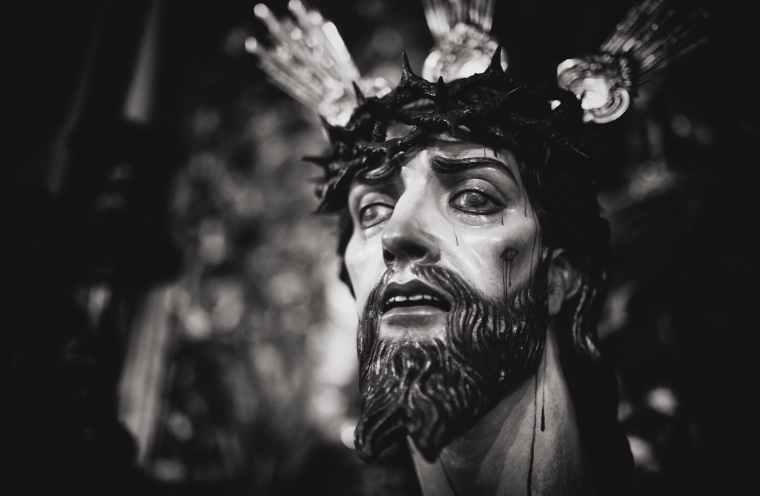
In the gospel of a few Sundays ago Jesus had died, risen from the dead and was with some of his apostles once again. Lovingly he chose not to remind them of how some of them had denied him when he most needed their support. He did not focus on the moments when their human frailties caused them to react badly. Instead he loved them for coming back to him and demonstrating their belated faith in him. It did not matter what had happened in the past because he knew that they loved him at that moment.

The Christian message is one of forgiveness, and yet so many of us pridefully hold grudges against people whom we believe have hurt us. Particularly in today’s society once an individual has displayed egregious behavior we tend to forever hold that person in infamy even when he/she makes attempts to repent. It is a prideful thing that we do forgetting that each of us has fallen from grace at one time or another. We want understanding for ourselves without granting it for those whom we have stereotyped with a broad brush of negative judgement.

Certainly there are acts that seem unforgivable and make it almost impossible to associate with any kind of absolution. When we think of the Holocaust we sense a special kind of evil that only God himself might unravel and pass judgement upon, but for the most part the hurts that we inflict on ourselves and others can be reversed. When people truly attempt to become better it is important that like Jesus we embrace them as they have become rather than what they used to be. Continually reminding them of the past is as cruel and hurtful as any wrong that they may have done.

I’ve always been impressed by stories of forgiveness and the people who demonstrated great love and compassion to those who had wronged them. They abound in our history, but of late they are the exception rather than the rule. Abraham Lincoln understood that if our country was to survive as a union we would have to have to embrace the people who had attempted to rebel against the nation, forgiving them for what they had done and moving forward without continually chastising them. Of course he was tragically assassinated and the resulting tendency to punish has bled over into the current political environment. As a society we focus on missteps rather than the evolution of character. It is not what a man or woman may have once done in a moment of thoughtlessness that should matter, but rather what kind of person he or she has ultimately become. 

I am a huge fan of Robert Downey Jr. not just because he is a highly entertaining actor but because I believe him to be a good man. There was a time when his addictions were so severe that he almost lost himself and his career. He was slowly dying in a haze of drugs and alcohol that made him unreliable. Nobody trusted him even after he had done much work to rehabilitate himself. He could not get the insurance necessary to land even a minor part in a motion picture. It was Mel Gibson who was fighting demons of his own who came to the rescue, offering his own money as faith in Robert Downey, Jr. Ultimately Downey’s career was resurrected, but the loveliest thing about him is that he never forgot the kindness form Gibson who also became a pariah because of an outburst when he was drunk and under the influence of his own mental illness. Downey has appealed to the motion picture industry and one time fans to demonstrate some compassion for Mel Gibson just as he was given. He understands as well as anyone that life is a continuum, a journey in which we struggle to become better versions of ourselves. He knows how important it is to cherish those who make great efforts to change.

We seem to forget that Jesus modeled forgiveness again and again. The stories of his mercy resound in the Bible, and yet even many who profess to believe in his words turn their backs on those who fall. It sometimes feels as though our society has become a judgmental nag when what we really need is more absolution. The strongest people in our world are not the ones who are unwilling to see the goodness emerging in a fallen soul, but those who embrace those who change with love and clemency.