Unrest

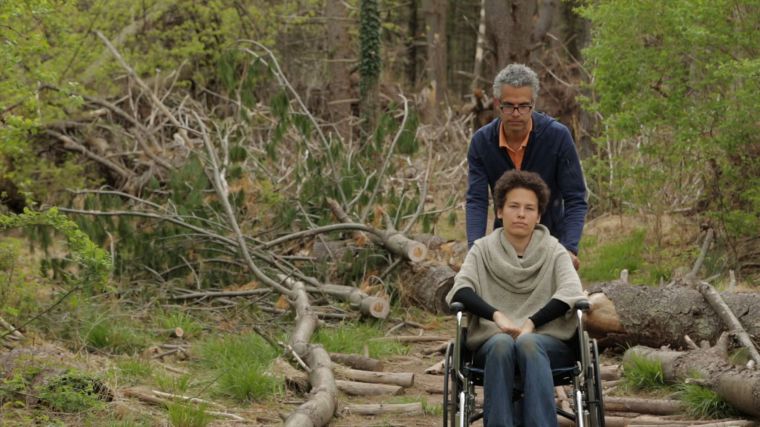
omar-jen-wheelchair-woodsShe is incredibly bright and beautiful, a graduate of Harvard who was about to complete her doctorate at Princeton. She was in love with a brilliant man and the two of them travelled the world together. They made plans to marry, have a family, build their stunning careers together, and then she caught the flu. It was a particularly harsh case with fevers of one hundred four degrees. When she was well once again she felt debilitated, but thought little of the residual effects. She had after all been very ill. She told herself that it would simply take time to regain her energy, but something was very wrong because instead of growing stronger she began to feel more and more weak. There were even times when her mind did not seem to work properly. She was unable to find the proper words to express herself. It was all so frightening.

Eventually her symptoms became so concerning that she sought the expertise of a medical doctor. He insinuated that it was all in her head, diagnosing her with what used to be known as hysteria. He suggested that she was reacting to some deep seated trauma that she most likely was unable to remember. He sent her home with no real explanation for what was happening, and she began to wonder if she was indeed going crazy. That’s when she got an idea.

The next time her symptoms became so severe that she literally collapsed in pain, unable to move or express herself, she asked her husband to film the incident. She took the video to a neurologist who was stunned by what he saw. He eventually told her that she had ME. Myalgic Encephalomyelitis, a strange disease that is thought to afflict ten to fifteen million people worldwide. There is no definitive test for the illness and no cure. The diagnosis is made based on symptoms alone which include excessive fatigue after mental or physical activity, intolerance to exercise, joint and/or muscle pain, memory problems, difficulty walking, sore throats, headaches, flu-like symptoms, sleep disturbance, bowel problems and mood swings.

The disease is also known as chronic fatigue syndrome and affects those who have it along a spectrum from individuals who endure a mild attack and then recover fully, to those who become completely homebound and bed ridden. There is no known cause but the disease appears to follow otherwise fairly typical and minor illnesses like the flu. Some believe that the roots of the problems lie in hormonal or allergy issues, but none of the research has proven any of the theories. It is a greatly misunderstood disease that sometimes results in psychiatric diagnoses rather than physical ones.

The woman whose life was so impacted by ME is Jennifer Brea, and she has a debilitating case of the disease that has radically altered the trajectory of her life. In a fashion keeping with her personality she decided to film her journey along with that of four other victims so that she might shed light on a mostly misunderstood illness. In conjunction with Sundance Films she created the documentary. Unrest, that chronicles her experiences as well those of the four others whose lives have been so radically changed after contracting ME. The film debuted on the PBS program Independent Lens this January and its power to visually explain what happens to those who have ME is emotionally visceral.

Jennifer Brea holds back nothing in her depiction of what ME has done to her and the relationship that she shares with her husband. She honestly expresses the fears and disappointments that plague her as much as the symptoms. She presents a compelling argument for more research by noting that those who are stricken often become like missing persons as they are forced to be hostages to their illness. She tells a compelling story of families broken apart and individuals losing their identities all while the rest of the world remains mostly ignorant of the horrors of this strange condition.

Her own story is one of the love that she and her husband share in spite of the problems that have so changed the way that they once thought they might live. She wants to be able to give him the kind of relationship that she had thought they would have, but instead is continually thwarted by recurrences of the most trying symptoms. Her husband has nobly stood by her, but even his patience is often tried by the confusing nature of his wife’s illness.

Ms. Brea shows a family in Sweden whose child was institutionalized in a psychiatric facility because doctors there were unwilling to accept a diagnosis of ME for her. Brea also introduces us to a woman who had been a happy wife and mother, one who had no idea that she would eventually be confined to bed with her own husband believing that she was just insane rather than physically ill. Her marriage deteriorated and she struggled to survive. When one of her daughters came down with the same disease her world unraveled even more.

The film is so personal, so real that those of us viewing the stories become involved with the characters, particularly Jennifer Brea herself. We watch her gaining strength and find ourselves hoping as much as she and her husband do that she will somehow miraculously improve. We cry with empathy as we become all too familiar with the struggles associated with ME.

Unrest is a touching and important documentary and quite worthy of the accolades that it has received. Hopefully it will also become the impetus for more research into the mysterious illness that it depicts with so much unflinching insight and compassion. At the present time very little is being done to learn how and why this illness affects certain people. There is only a smattering of interest in finding something that will cure those afflicted with its devastating symptoms. It is a grand mystery that shows no signs of being solved while real people suffer from the misunderstandings and lack of knowledge surrounding it. Hopefully Jennifer Brea has opened a door of awareness that will ultimately lead to the studies that will eradicate it or at least lead to more hopeful treatments. Perhaps just by spreading information about ME Unrest will at the very least bring more compassion to those who deal with its tragic effects.

Yesterday Today and Tomorrow

default-1464355425-834-scientists-believe-they-have-explained-the-great-flu-outbreak-of-1918A hundred years ago in the fall of 1918, there were many who seriously wondered if the world was coming to an end.  A great war was still raging in Europe and decimating the young male population. Across the globe there was unrest and a general feeling that life would never be quite the same again. The worst surprise of that autumn was to come in the form of a tiny virus not yet visible to the human eye with the microscopes of the day. It would lead to an outbreak of influenza that eventually killed as many as five million people worldwide and hundreds of thousands in the United States. One sneeze from an infected person had the potential to infect ten thousand, and for a time nobody knew what to do.

It appears to have begun at a military base in Kansas where it was first thought to be little more than the typical seasonal outbreak of illness. It soon became apparent that the new strain was unlike anything doctors and biologists had ever before seen. It started with coughing and a fever that quickly grew ever more severe. It filled the lungs of the ill with so much fluid that they literally drowned. Before long there were not enough beds or doctors for the affected, and not enough coffins for those who died. During the months of September and October of that year the disease spread like wildfire, sparking dire accusations that the Germans had somehow planted germs in the bodies of soldiers fighting in the trenches. The fact that German troops were just as susceptible to the sickness did not allay the fears of those who were losing loved ones and friends so rapidly that it felt as though there was nothing that was going to stop the rampage of death.

More American citizens died during those weeks than in all of the wars of the twentieth century, and yet there was no cure, no idea of what the cause might be. For some reason the virus was more likely to spare the very young and old, but was most deadly for strong and healthy adults in their twenties and thirties. It would be years later before researchers found the virus that had wreaked such havoc on the population, and began to understand that the sickness had burned itself out when those who survived became immune without any form of medical assistance. Our understanding of such diseases grew over time, but always there continues to be a silent fear that something similar may one day return to infect humanity like a plague.

I had never heard about the horrific influenza of 1918, until I read a book shared by my daughter. She is a nurse and science teacher who has a great deal of interest in such things, and she thought that I might find the topic interesting as well. I was stunned to learn about the horrific events and to realize that none of the older people I had known who would have been young adults during that period had ever mentioned the event. I was particularly surprised that my grandfather who was well known for his vivid stories of the past had not brought up the topic. Since I was unaware of that part of history I had not known to quiz him about what he remembered regarding that sad chapter, and so I was not privy to his eye witness account.

Historians conjecture that this particular episode must have been so personally horrific that those who had endured it did not want to speak of it again. Perhaps it was the impetus for the roaring liveliness of the twenties when people appeared to throw all caution to the wind. Living through such tragedy must have caused people to view the world much differently than they otherwise might have. Most certainly they would have wanted to blunt the memories that must have been quite horrific. When the next decade of frivolity was followed by a worldwide depression and eventually another war, the personal stories of illness and death might have seemed trivial to them by comparison. In truth, they would have been right to wonder if the bad news would ever stop, and when it finally did they most probably decided never to speak of it again.

My father-in-law served in Korea during the war there. He has only mentioned what he saw there once in all of the years that I have known him. His eyes filled with tears as he recounted his experience and his voice was shaky. It was much too painful a memory for him to think about for very long. I have noticed that my uncles who fought during World War II were just as reluctant to share stories of their adventures as were my peers who fought in Vietnam. I suppose that there are events that are so horrible that we prefer to bury the thoughts of them deep within our psyches. It is simply too much to dwell on them for very long. 

I suspect that those who were witness to the 1918 influenza epidemic simply did not want to speak of the unspeakable. They lost loved ones and friends in a matter of days and weeks. They worried that the horror might return at any moment. To dwell on their heartbreak and fears would have been unbearable and so they did not include mention of the outbreak in their tales of living. The story languished until curious souls began to ferret out the details and bring them to light once again. What is a curiosity for those of us removed by a hundred years was all too real for those who were there when it happened.

Each generation has its share of tragedy. For those of us who grew up just after World War II the events etched permanently inside our brains include the good, the bad and the ugly. We recall with clarity exactly where we were when John F. Kennedy was assassinated. It pains us to think of the deaths of Martin Luther King, Jr. and Robert Kennedy that made is wonder if anarchy was going to rule the day. Many of have personal tragedies that affected us as well, the death of a father or hearing that a friend was killed in Vietnam. We smile when when we think of the first man to walk on the moon, and recoil at the vision of the twin towers in New York City falling like toy constructions before our eyes. These things affect us and change us and our ways of viewing the world, but we don’t often speak of them because the thoughts associated with them are too powerful and emotional. I suppose that the reality is that no matter how conversant we are there are no words sufficient to describe such things, and so we are silent just as my grandparents were about so much of the history that affected them.

Today we have new worries, but mostly go about our business hoping and praying that none of our biggest concerns will ever take place. Our natures compel us to be optimistic and to carry on even when situations seem dire. Like Scarlett O’Hara we believe that tomorrow will be a better day and we concentrate our thinking on the future rather than the past and the present. It’s how we survive. Still, there is something so fascinating about events like the influenza epidemic of 1918, that we can’t avert our gaze. We have to look if only for a moment so that we might remember that we are not immune to the same kinds of heartbreaking situations that plagued our ancestors. We are as human as they were, and we can only hope that when faced with tragedy we will respond well and not be judged too harshly for any mistakes that we make.

It’s all too easy to form opinions of what might have or should have happened. but we will never know what we might actually have done if we had faced similar hardships. It must have been a dark time, but somehow those who came before us found a way to keep moving forward without focusing too much on a past that they could not change. Perhaps we might learn from them and embrace each new day as an opportunity rather than dwelling on the heartache of the past. Yesterday is gone, today is an opportunity, and tomorrow allows us to repair any mistakes we have made. It’s the cycle that keeps the story of humanity alive. 

Put Yourself On the Bright Side of Life

laughter-new I more than realize that there are many serious issues that we humans face, but I often wonder if we have generally become far too humorless. I believe that there is no better cure for what ails us than a really good belly laugh, but these days cracking a joke is akin to walking through a mine field. There will almost always be someone who takes offense from words intended only as a joke. As a society we just don’t seem to have a healthy sense of humor anymore, and I suspect that being that way has become the source of many of our problems.

The old saying suggests that if we laugh the world will laugh with us. I tend to believe the truth of that platitude, as long as the comedy is not intended to be mean spirited or cruel. It’s been proven time and again that laughter is indeed a form of medicine, but we have become very thin-skinned and more and more likely to find offense in what once might have made us roar with delight. I think that people would find themselves to be less likely targets if they would instead simply enjoy the humor and join the fun. I’ve found laughter to be an incredible release of tension that has the power to join people together rather than pull them apart. God knows that we could use a bit of unity.

I heard about a school in India where children are literally given classes in laughter. They are encouraged to learn how to engage in deep belly shaking howls of hilarity that bring grins to their faces and make them feel renewed. While it may seem like a somewhat strange concept, the reality is that the ability to laugh is one of nature’s greatest gifts to us that we sometimes forget to use.

Some of my fondest memories center around hilarious moments when I laughed so hard that I literally had tears streaming down my face. My best teachers were the ones who engaged us with stories that made us chuckle and those who were willing to join us in our merriment. I recall the time that we created hydrogen sulfide in the science lab and then blew the rotten egg smell toward our mathematics teacher’s classroom. When we enticed him to open his door we grabbed our sides with glee even as he feigned anger to please us.

Then there was the occasion when our English teacher recounted his trip to a proctologist. We nearly fell out of our chairs we were laughing so hard. Few comedians have ever entertained me as much as our beloved instructor did. He definitely secured our attention and kept it even when he needed to be serious. We loved him so much that we were in awe from the moment that we walked into his classroom each day. The fact that he encouraged us to enjoy a good joke with him was a powerful motivator and one of the most powerful tools that he used with us.

There are movies with scenes so classically funny that they tickle me every single time that I see them. Mel Brooks was a master at creating situations that were hilarious, and it’s almost impossible to watch Monty Python without breaking out in a great big grin. We revisit movies like Christmas Vacation and Elf year after year because they make us smile, something that always feels good no matter what our life has otherwise been like.

I always appreciated that both George W. Bush and Barrack Obama were willing to become part of jokes about themselves. They enjoyed the idea of humor rather than feeling hurt by the skits and word play. They were eager to be part of the fun because they understood that we can’t be serious all of the time. Sometimes laughter is our saving grace. The trick is in knowing when it is appropriate and when we must be more solemn.

Years ago when my husband Mike was receiving chemotherapy for a very serious fungal disease a friend of his came to the hospital to visit. He had us in stitches with an imitation of a farmer providing advice on how to get rid of the offending infection. He suggested that Mike should get some Green Light fungicide and create a curative cocktail. He went on and on with the joke until Mike almost fell out of his bed with unrestrained laughter. It was the best medicine that he had received and the first time that he had felt so good in many weeks.

Much like Mike’s irreverent friend the Irish are known for their wakes that often become rather raucous. I once worked with a teacher from Ireland who told us tales of one occasion when she and her friends went to great pains to install a spring inside the coffin of one of her relatives. When unsuspecting visitors were kneeling in front of the deceased, they would push a button that caused the corpse to rise into a sitting position. She and the other pranksters would howl with delight as the frightened guests nearly fainted from fright. My friend impishly told this story with a mischievous twinkle in her eye and as we laughed at her antics I always found myself wondering if she had actually put one over on us with a fictional tale or if her story was actually true. Whatever the case she always noted that the purpose of the trickery had been to bring some levity into an occasion that was far too laden with tears and that their plan actually worked.

We may not be quite ready to follow my Irish friend’s lead when it comes to funerals but the point is that laughter can be a cure for the blues. Instead of huffing with indignation so often, we would do well to let ourselves go and put ourselves on the bright side of life. 

Splat! Bam!

laziness-2

I’m generally known for my high energy approach to life. I’m the sort who can’t sit still for long and I tend to drive folks a bit crazy because of that trait. I am the Martha rather than the Mary of biblical fame. I am a rather determined soul who gets things done one way or another. Long after everyone else has collapsed into a heap of exhaustion I tend to find that last bit of liveliness that allows me to complete a task. I’ve been that way for my entire life, but another aspect of my vitality is rarely seen by anyone other than those who are closest to me. Those are the moments when the big event is over, the exams are completed, the end has successfully arrived. That is when I hit the wall like a bird flying into a clear glass window. Splat! Bam! I become a useless puddle of goo. I take to my recliner or perhaps my bed and literally waste away an entire day recharging my inner batteries for the next big push.

I seem to do nothing halfway. I’m either blowing and going like a crazed bunny, or I’m as listless as a spent dishrag. That’s been my nature for as long as I remember. I was the kid who would be dancing around the room one minute and then asleep on the floor in the blink of an eye. I throw myself into life and adventures with so much abandon that I’ve been the butt of jokes within my family. There have even been suggestions that I may have been the model for Hermione Granger of Harry Potter fame. Others wonder if perhaps I’m a bit more akin to Charlie Brown’s friend Lucy. My daughter thinks I’m a kindred spirit to Hillary Clinton and a recent quiz on Facebook did indeed verify that I appear to be more in line with her than any other First Lady. The difference is that I am driven mostly by a need to do things properly rather than a quest for power which I tend to eschew. I am a self confessed control freak, but I have never wanted to run the show.

Then there are my limitations. Like any ordinary human I eventually run out of steam and I do it with the same level of enthusiasm that I attempt to apply to my other accomplishments. When I  rest I am all in, and on the day after Christmas this week I immersed myself into a state of total relaxation.  I was done, caput, unable and unwilling to make any unnecessary moves. Luckily it was a dreary day and nobody came calling either on my phone or at my door, so I was able to become a virtual hermit for a full twenty four hours.

I vegetated in my bedroom with no plan, no idea of how I would choose to spend my hours other than doing as little as possible. I comforted myself with leftover mac and cheese and an assortment of cookies that I had made for Christmas. I indulged in a marathon of programs on Netflix and dozed off into wintery naps more than once. I found myself longing to be a bear hibernating inside a cave and wondering what it would be like to spend the winter months resting up for the sunnier days of spring. I luxuriated in the gloriousness of unadulterated sloth, telling myself that I had more than earned the right to such an extravagance of listlessness.

Wishing that the SciFy Channel would run it’s Twilight Zone marathon on the day after Christmas rather than New Year’s Eve I stumbled upon a Netflix series called The Mindhunters. It captured my fancy so much that I watched one episode after another, transfixed by a well written story and interesting characters who were on a quest to understand what makes serial killers tick. Their research lead them to question whether individuals are born evil or made to be that way by the environment. In particular they began to wonder if there is a critical point at which deviant inclinations might be eliminated by a proper intervention. Of course the topic was fascinating to me and I became a junkie for hours as I lay in repose nursing my tired body.

I woke up the following morning with my batteries fully charged and my usual enthusiasm for making outrageous plans that will fill my days in the coming weeks. I have little doubt that I will over do it just as I always have and eventually find myself only fit for a lost day dedicated to appreciating my sluggish inclinations. Fortunately I have always understood when it was time for such an interlude and I have managed to renew myself time and again.

I feel for the souls who do not have the luxury of selfishly devoting a full twenty four hours to themselves. I know that there are circumstances that preclude such excess. Babies don’t wait for their mamas to feel better. Some jobs demand attention no matter how one is feeling. Little wonder that we often hear of a major star landing in the hospital from sheer exhaustion. Our humanity has few super powers no matter how much we attempt to push ourselves to create them. The reality is that we really do need to pace ourselves lest we wind up with more than an overwhelming tiredness. We also must be willing to accept that even our leaders require time away from the clock or they will ultimately crash and burn.

Our expectations for ourselves and others are all too often beyond mere perfection. We chide ourselves for being less than we think we ought to be even as our bodies and minds tell us that we need to stop and reconsider the abuse that we are piling on ourselves. We are sometimes too unwilling to accept our limitations or those of the people around us. When a political candidate requires a day of rest while on the campaign trail we tend to write that person off as being too weak for the task of governing. If a coworker has to miss a day we become judge and jury and find that person guilty of being too soft. We create false images of perfection that are generally impossible to achieve and then chide ourselves and those around us for their inability to be all things to all people.

The wisest among us know none of us is made of iron or steel. We have frailties which make us more beautifully human and understanding. They are not bad things, but rather simply an essential aspect of who we are as people. Now and again it is essential that we learn how to embrace our need for R and R. It is a far better tactic than waiting until we have made a big mess in the act of slamming into a wall. Perhaps we would be wise to build in days of nothingness as part of our routine just as the good Lord appears to have intended. According to the Bible even God had the good sense to rest at the end of his labors. It’s time that we all learn to do the same, so go ahead and indulge in leisure. It’s a very good thing to not do anything.

A Good Year After All

main-qimg-296478081c816a7cde7561d1337b3514-cAnother year is drawing to a close, and what a year it has been. I find myself thinking of the Ghost of Christmas Present in Charles Dickens’ A Christmas Carol, a character so full of vigor in the beginning who gradually grew old and weary by the end of his time. Perhaps more than most of our three hundred sixty five day journeys around the sun this one has been treacherous for me and most of my friends. Those of us who made it are far from unscathed, but determined and hopeful for better results in our coming opportunity to try the new revolution of around our favorite star. I’d like to believe that the future will be brighter in the coming months, but that is something that remains to be seen.

So many truly good people left us this year to begin a new and eternal life with the angels. They were joined by beloved pets as well. I have shed more than a few tears in saying goodbye to dear friends with whom I shared so many wondrous moments and  sweet animals who so often delighted me. My Google calendar is dotted with far too many reminders of death and the ultimate reality of our mortality. This year has taught me not to take anyone for granted because in the blink of an eye they might be gone forever. I have learned the importance of appreciating each pleasant moment that I share with someone whom I love, and of letting each of them know how much I care. The point has been driven home that we never ever know what is going to happen from one second to the next. All of our plans sometimes change in the blink of an eye, so rather than constantly worrying and thinking ahead we should all learn how to revel in the wonder of a moment.

Mother Earth has been speaking to us this year, and she has not been happy. The devastation that we have witnessed has been great from California to Florida to Puerto Rico to my hometown in Texas. Surely instead of worrying so much about how people choose to live, it is in our best interest to consider how we might change our ways and improve our structures to meet the demands of storms and fires. We have a tendency to concern ourselves with things that don’t really matter that divide us into camps, and then when horror strikes we somehow manage to pull together. Wouldn’t it be nice if we were able to live together in more harmony all throughout the year? I suspect that if we did not allow ourselves to be manipulated by politicians and the media the world would be a much kinder place to be. We shouldn’t have to get fifty one inches of rain that floods our homes to realize that ultimately we are all in this exciting thing called life together.

Politics have gone crazy, but there are small signs that we have grown weary of all of the sound and fury and that we are generally more decent than those who would lead us. The good folks in Alabama sent a message to the world that they will not accept unworthy and immoral people as their leaders. The margin by which they chose goodness was slim, but nonetheless won the day. I’d like to think that all politicians are now on notice that we expect more of them than they have been giving us of late. The new year will bring a big election and a great deal of posing behind a screen of smoke and mirrors. Hopefully we the people have learned how to see beyond the tricks and illusions.

We still have evil among us, but we have to remember in all cases that we cannot draw stereotypical conclusions from the actions of the few. Republicans should be reminded that a handful of terrorists is not representative of the millions of good people who hale from the same religions, countries or political persuasions. Democrats need to understand that from the millions of gun owners only a tiny percentage choose violence. We all need to calmly approach our problems with a willingness to provide solutions based on facts rather emotions. The news isn’t really fake, but the ways in which it is interpreted for us often is. This past year it has become increasingly difficult to know the truth because so many are preying on our fears rather than trusting us with the truth.

We are ending this year feeling wounded and even beset upon. It would be easy and even natural to feel cynical and sad after all that has happened, but I would like to suggest a different point of view. The truth is that we are all still here. We may have cuts and scrapes and feel more weary than at any other time in our lives, but if we are still drawing a breath we have time to change our attitudes just as Ebenezer Scrooge decided to do. When the whole world seems to be out of control the only thing over which any of us have sway is how we choose to feel. We can defeat the naysayers and the blues by having the determination to dust off our troubles and just keep trying. We don’t ever have to feel defeated.

I once attended the musical premier of a story about Holocaust survivors. It was a moving experience that brought me to tears multiple times. One song that has followed me spoke of our human resilience with the simple words, “I’m still here.” I’ve echoed that phrase many times over whenever there appears to be a conspiracy to bring me down. It taught me that even if I am stripped of every possession and many of my loved ones I have the capacity not just to survive, but to flourish. It all depends on how I choose to react to both my good and bad fortune.

So goodbye to 2017, a year that sorely tried my patience and my energy. If I am truly honest I will admit that there were far more positive days than those that almost broke my spirit. I watched two men pledge their love for one another on a beautiful beach. i witnessed the fulfillment of the dreams of many of my former students. I laughed and cried with friends and realized how loved I truly am. I did not lose my best friend and husband when he had a stroke, but instead received a second chance to help him become healthy and to show him how much I love him. I met new people who have already enriched my life. I learned that my city is one of the most glorious places to live on planet earth, something that I had always suspected but now know for certain. I watched my favorite baseball team win the World Series. I had my faith in mankind renewed by two incredible athletes and a man who owns a furniture store. I saw the light of understanding in the eyes of the students whom I have tutored and taught. I attended the weddings of former students so demonstrative of love that they filled my heart with great hope. I spent quiet moments with friends and others that were boisterous and filled with laughter. A grandson earned all A’s in his first year of college and other grandchildren won races and contests while still being the kind of young people that our world needs. How can I not think that when all is said and done it was a good year after all?