
Honesty

deep-sorrowI do my best to maintain an optimistic outlook on life, particularly in public. I often write about how to enjoy the simple aspects of existence and speak of the positive effect that my faith has on me. Recently my husband had a stroke that has profoundly changed our lives. He has a seventy percent blockage in his brain that is not treatable, so the possibility of his having another stroke is strong. In his first foray he was lucky enough to be in the company of our entire family and was near a great hospital. There were no residual effects of the attack, so now he is driving again and performing most of the tasks that he did before the incident. Still, his doctor has warned us that the possibility of a second stroke in the ninety days after the first one is very high. All in all this news has left both of us floundering, but determined to do whatever it takes to keep him healthy.

With the support and love of friends and family we are attempting to carry on and enjoy each moment of each day with a new appreciation. I am not one to surrender to challenges and so the fighter in me has come to the fore. So many people have mentioned how wonderful and inspiring I appear to be. This worries me just a bit because I imagine that other folks who are also struggling with horrific situations may misunderstand my strength and wonder why they don’t seem to be able to muster the courage and hopefulness that I demonstrate. I suspect that in my quest to never surrender to the dark feelings that creep into my mind, I may have inadvertently presented a picture of myself that is not complete. Because I strive to be honest and to help those who are really hurting I think that it is important for me to unveil some of the angst and horror that has stalked me since the day that I saw my husband lying helplessly on the floor.

I’m not nearly as brave as I sometimes appear to be. I’m about as human as they come and as such I have been shaken to the very depths of my soul. There have been moments when I had never ending conversations with God in which I was generally begging Him to lift the burdens from my shoulders. Eventually those prayers became less and less demanding and finally led me to ask for the strength to do whatever I need to do. First, however, I had to rage at the heavens. Thankfully I believe that God is quite understanding about our weaknesses. Before I was able to hand myself back over to Him I went through a very dark period of doubt and fear. It is what most of us do. It is part of our makeup to question and falter. He waits patiently for us to trust Him once again.

I have spent quite a bit of time inside my closet feeling very sorry for myself as I wailed in grief for all that I thought that I had lost. My confidence was shaken. My plans were dashed. I was afraid and angry and confused. I felt as though I would not be able to take another breath. I also felt guilty for being so selfish at a time when my husband needed me so. I chided myself for even considering my own feelings. It took me quite a long time to sort things out in my mind and compose myself once again.

I have always been a control freak. I abhor situations that are uncertain. The specter of a future that I cannot plan is unnerving and for a time it paralyzed me. I thought of my life as being over in a sense. I felt that the joy that I had shared with my husband in our travels would be a thing of the past. I imagined us living in a chronic state of panic. I was intensely jealous of family and friends who had the luxury of continuing their lives as though nothing had happened. I felt very alone and vulnerable.

I knew that it would be impossible to continue along such a path of despair. I slowly began to use my talents and resources to regain a semblance of control over our lives. I know that I can’t repair the occlusion in my husband’s brain, but I am able to create a diet that will help him to lose weight and keep his blood pressure low. I have the power to support him as he takes his medications and to keep our home as happy as possible. I have had to remind myself of my own belief that the best moments in life are actually the simple pleasures that come our way. I have begun to rejoice over dinners in our backyard, times with family, pleasant moments with friends. I try to find something upbeat about each day and mostly I have learned to express the loving feelings that I have for people as soon as I experience them.

One thing I know for sure is how very much I love my husband. I feel almost as though we are dating again. I like holding his hand and smiling at him. I find that spending time with him is what is most important  right now, no matter where we go or what we do. It’s funny how just sharing a joke or walking together makes both of us incredibly happy. A trip to Walmart can be as much fun as an extravagant trip.

I count my blessings literally every second now. I try not to let the inevitable irritations that come my way bother me, but now and again I lose my cool. I still find myself worrying more than I should but I’ve learned to be kind to myself. I am far more conscious of other people and my empathy for their suffering has increased a hundredfold. I spend my time controlling what I can and letting go of the rest. For now I need so little. All of the things that I dreamed of one day owning seem rather inconsequential. On some days I feel as though I am floating aimlessly in shark infested waters, and I try not to be fearful. A bit of bad news here and there has the power of sending me back to my closet to cry, but I know now that I will somehow somewhere find the strength to come back out and face the demons that stalk me.

I am no better nor any stronger than anyone else. I make the same mistakes and have the same questions that have plagued humans for eternity. I try to think less of myself and more about others. I rein in my tendencies to overthink the future. Right now I am fragile but I am also strong. Thus is the irony of the human spirit.

I appreciate the compliments that my friends shower upon me. They really do help me to keep going. The people who truly care about me have been indispensable. They have encouraged me and helped me to understand that we are never as alone as we might imagine. There is much goodness in the world if only we ask. Sometimes we need that helping hand and most people are only too willing to extend it. We just have to be willing to admit that none of us are capable of being perennial towers of strength.

I am fine for now, but I am quite certain that something will come along to shake my resolve once again,. I will try to remember that it is okay to lose one’s way from time to time. The important thing is to face the emotions that work to bring us down. In admitting our weaknesses we actually become stronger, and we learn how to overcome the feelings that are holding us back from being our best selves. As for me, I am choosing to find the beauty in my new situation and to grab whatever joy I might find. Time slips by far too quickly to spend it in a state of dread or pessimism, but we shouldn’t be too hard on ourselves when we temporarily fall victim to an horrific case of the blues. So long as we do our best to cope with whatever situation we are facing, we will make it again and again.


A Born Again Health Nut

healthy-foods-veggies-512x342

My mother-in-law was born with a serious heart defect. As a result she lived her life far differently than most of us. When she was in Junior High she was told that she would probably only live to her mid twenties, and then only if she was very lucky. When she married she was cautioned not to have children because the stress of being pregnant and giving birth would surely kill her. Always the independent woman she nonetheless risked her own life to bring my husband into this world. She often recounted the lengths to which she committed herself to having him. The story was quite harrowing and demonstrated both her courage and love.

She was put into a state of sleep shortly before her baby was due. The doctors then brought her son into the world by way of Caesarian section. She was kept in a slumber until it was deemed safe to bring her back into consciousness. Since she lived on the same street as her mother she was able to rest each afternoon while her mom did much of the heavy lifting with the baby. Slowly but surely she recuperated and surprised her doctors with her resilience.

All of this happened in 1947, so the advances that have been made in the treatment of the heart had not yet been discovered. She was still at high risk of dying if she overexerted herself. In many ways her life and that of my husband were miracles that had a great deal to do with my mother-in-law’s determination to employ whatever means necessary to extend her life.  As a result she became an expert at pursuing a healthy lifestyle even before such an idea was popular.

I was admittedly bemused when I first saw my-mother-in-law’s kitchen. She always kept a scale for weighing foods at the ready and her cookbooks had exotic titles with recipes from nutritionists and doctors. She was conscientious in recording her intake of salt, calories, cholesterol and such. She was a student of nutrition and an advocate of proper exercise. Sometimes I grew a bit weary of her lectures on how to live, but in retrospect I realize that she was way ahead of her time. She outwitted death and made her doctors’ predictions of her early demise appear to be akin to voodoo. She lived all the way into her late seventies, far past the age that most thought she would attain, and she did so with a sparkle in her eyes and a zest for life that was incredible. She had done everything possible to defy the odds that were so heavily stacked against her, enriching everyone that she encountered in the process. Never once do I remember even an ounce of negativity or lack of faith in her approach to each day. She was truly a warrior.

Now I am doing my best to recall the many lessons that my mother-in-law so patiently taught me. That son that she risked her very life to bring into this world is now facing his own health problems, and as with her there is no miracle cure, but there are ways to help the situation. My goal is to support him as he adopts the very life style that worked so incredibly well for his mother. To that end he and I are both changing our ways, perhaps a bit belatedly, but in the hopes that our efforts will provide us with more time to enjoy this beautiful world together with our children and grandchildren.

Our kitchen now sports a scale for weighing our foods along with an array of cookbooks touting heart healthy recipes. Our larders are filled with fresh fruits, vegetables and lean meats and fish. Our treadmill which had become dusty from disuse is churning away. We keep records of every morsel that goes into our mouths and have learned the joys of hydrating with water. We have become as serious about taking care of ourselves as my mother-in-law ever was, and I often feel her spirit guiding us on this new journey of ours.

I have to admit that I have at times been a bit irritated by people who spend so much of their time honoring their bodies with proper foods and exercise. I have rolled my eyes more than once at their focus on health just I as sometimes grew weary of hearing my mother-in-law describe the latest foods or techniques that she had discovered. Now in the moment of crisis I find myself wanting to walk around wearing a sandwich board that urges everyone to eschew their bad habits now. If I could, I would burn down every tobacco field on planet earth. Like Jesus with the money changers I would overturn the tables of candy and fatty foods that tempt shoppers in all of the grocery stores. I would insist that children do as well with physical activities as we ask them to do with mathematics and reading. I have become a fanatic overnight because I have seen what happens when we ignore the common sense notion that our bodies are as important as our minds.

My daughters are fearful that there may be a genetic tendency for stroke that they carry and may have passed on to their children. They worry about what they might do to prevent the kind of health emergency that we all recently endured when my husband had a stroke. I have told them that the solution is quite straightforward, and it was outlined magnificently by their Granny long ago. We must all do our very best to lead healthy lives from this day forward. That means that we are careful every single day of what we choose to eat or drink and how much activity we provide for our bodies.

There are so many wonderful resources in our world today that my mother-in-law never had. We now know much about how to best treat our bodies. I am finding that my husband and I are eating quite well and never feeling underfed or somehow beset upon. There are incredible recipes that use very little fat, salt, sugar or carbohydrates. Vegetables have become our staples and we prepare them in a variety of tasty ways. We are consistently losing the excess pounds that have been stressing our hearts. Our muscles and our stamina are growing stronger. Both of us are developing a kind of glow. It feels good to be on the right track and thankfully many of the people who once annoyed me with their crusades for health are helping me to launch my own odyssey. They are more than eager to help a fellow convert, no matter how late to the game I may be.

Perhaps I’ll do my part by sharing some of my favorite tasty recipes in the future. I’m trying different things and taking notes. The key appears to be in starting with a weekly menu plan, something that I used to laugh at my mother-in-law for doing. Now I understand that having good meals doesn’t just spontaneously happen. It takes a bit of effort that pays huge dividends in the end.

So here I am now, a born again health nut. Who knew that I would come to this? It’s a great feeling actually, and I’m not afraid to proclaim that we should all do ourselves a favor by mending our ways. There are no guarantees in this life, but it won’t hurt any of us to treat our bodies with the respect that proper care and feeding provides. My mother-in-law fought for her life. Now I will honor her by fighting for the lives of all of her descendants who are only here because of her courage and sacrifice. Mea culpa for the sins of gluttony and abuse that I have inflicted on myself and my family. From this day forward things will change.

A Good Dog

20106475_10213628315602894_3653417267467797884_nA good dog is more than just a pet. He is a member of the family, a true and loyal friend. A good dog asks for very little, a bowl of water, a bit of food, a hug or a belly scratch, and every once in awhile an “Atta boy!” A good dog loves unconditionally, dotes on having its people around and waits patiently for their return when they are gone. A good dog is a protector and a comforter. There is nothing quite like a good dog, but sadly good dogs have much shorter life spans than we do, so once we have a good dog it is more than likely that we will one day have to say goodbye. It is always a very difficult thing to do.

Shane, my grand dog, was a very good dog, a quite handsome golden retriever. He was found wandering the streets of San Antonio, homeless and confused. The people at the shelter gave him his name because they imagined his owners calling for him and begging him to come back home just as the little boy did when his friend left at the end of a classic western movie. Sadly Shane was hopelessly lost and nobody ever stepped forward to claim him. Happily his world changed when a family of four little boys fell in love with him and decided to adopt him. For the next eleven years he would be hugged and wrestled and and adored by his people. He became a beloved member of the family and he was very happy indeed.

Eventually Shane got a little brother, a pal, who was a pug named Cooper. He was content to share his home with the silly little tyke for there was more than enough love and affection for everyone. He showed Cooper the ropes and the two of them developed a routine that rarely varied. He was a great big brother, smart and kind and sharing. Cooper loved him as much as the family did. They got along quite well and became a kind of Mutt and Jeff twosome with Shane always being a patient teacher.

The years went by and Shane watched the little boys grow into fine young men, but they never became too old to play with him. They bought him toys and made sure that he was part of all of their celebrations. He stood by them when they were sick and made them feel good when all they really wanted to do was to cry. He gave them whatever they needed from him because he understood that that is what a good dog does. He was patient, vigilant and trustworthy. When little babies came to visit the family he showed them that a big dog can be gentle. He let them pull on his fur and grab him with delight. He never harmed them even when their enthusiasm hurt just a bit. He was ever a good dog.

Shane grew old. His muzzle began to turn white. His energy waned but his love never did. He was the first to announce that visitors had arrived. He greeted the them at the door with his tail wagging a friendly “hello.” If a stranger came he sent a notice that they better not harm his people. His bark and his growl told them that he meant business. He knew all too well that a good dog has a duty to protect his family from danger.

Shane sometimes came to spend vacation time with me and my husband Mike. He was always so polite, so clean, so unassuming. He did his best to have a good time with us, but he always missed those boys of his. He’d run to the front window every time he heard a car passing by. He’d watch the street wondering when they would return. At night he liked to sleep in our bedroom and he did his best not to disturb us while we slumbered.

I liked talking with him and reassuring him that he would soon be back home again. He loved lying on the couch next to Mike getting his rump scratched. When I let him outside he always announced to the neighbors’ dogs that he was the king of our domain. He wanted those other critters to know that he was going to take care of us just as well as he did his family back home. I loved having him over because he was always such a good dog. I missed him when he left but he never forgot me. He was always so happy to see me when I came to visit at his house.

The last time I saw Shane he was quite lethargic. He didn’t seem to have enough energy to move from his post outside one of his boy’s room. When I called him over to where I was sitting he slowly complied and shuffled over to get my hug and strokes on his back. He seemed exhausted but still determined to be a good dog. When his buddy Cooper barked for food he followed their routine because he knew that Cooper wouldn’t eat without him, but it seemed to take great effort for him to be a big brother. He was very ill but none of us realized it. We thought that maybe he was just a bit sad and worried because some of his boys were away from home.

A few days after my visit Shane seemed to have given up. He soiled himself, something that would have normally been abhorrent to him. His family noticed that he was almost listless. His oldest boy felt that something was terribly wrong so he took Shane to see the veterinarian. The news was very bad. Shane was in great pain. He was dying.

The boy called his mother and one of his brothers. They all went to sit with Shane until his suffering was no more. They sobbed with grief. Their good dog was gone and they could not imagine how they would be able to live without him. That is the way it is with good dogs. They burrow into the hearts of the people whose home they share. We want them to live forever. It is heartbreaking when their time comes to an end.

I went to see my grandsons and their mother on the evening of Shane’s death. It was my daughter’s birthday but she was not ready to celebrate. We were all so sad. Shane’s little friend Cooper seemed worried and lost. He sensed that something was terribly wrong. We couldn’t explain what had happened, we could only try to comfort him and each other.

A good dog is a very special gift. A good dog steals our hearts. A good dog takes care of us even more than we take care of him. Shane was a very good dog, the best of the best. He earned his angel wings in the finest tradition. We will miss him. We hope that he always knew how much he was loved.

Put the Fun In Dysfunctional

Jumping with balloonsI recently attended a Hans Zimmer concert (which would be a great topic for another day) and toward the end of the event he urged all of us to find the playfulness in everything that we do. He used the performances of his musicians as examples of how that might look. It wasn’t difficult at all to see that they were working hard but also having the time of their lives. They had taken their jobs to the ultimate level of fulfillment by actually finding happiness in the very act of executing their skills.
We often fail to find the fun in the tasks that we must do. So many people are stressed by jobs that seem to be a daily drudge, or they find themselves in situations that bear down on them unremittingly. It would be so nice if each of us were able to find ways to make the best of whatever we happen to be experiencing at any given moment. All of us have known individuals who appear to be  quite adept at doing so. We sometimes confuse their upbeat personalities as being a kind of innate trait that they were simply lucky enough to possess from birth. We rarely consider that they may have consciously worked to develop playful spirits that allow them to navigate even the roughest of waters.

The Italian movie Life Is Beautiful tells the story of a Jewish father and son who become imprisoned in a concentration camp during the German occupation of Italy. The loving parent finds ways to protect his child by using humor and turning their ordeal into a kind of game. It is a moving account of survival even under the most horrific conditions, and it showcases the power of the human spirit in dealing with evil. In fact, many Holocaust survivors often speak of having found ways to laugh as a means of dealing with the daily horrors that they witnessed. Psychologists have in turn suggested that the people who willed themselves to joke and smile were far more likely to make it in such inhumane conditions. It is in our playful natures that we often find the courage that we need to overcome our most critical challenges.

The first born cousin in our family is a man imbued with optimism. He recently underwent a serious treatment for his heart. When a nurse told him that he was going to receive the anesthetic propofol he remembered that this was the substance that Michael Jackson was using as a sleep aide when he died. My cousin jokingly inquired if he would wake up from the surgery with amazing abilities to sing and dance. In other words he transformed a tense moment into one in which everyone in the room no doubt laughed and then relaxed a bit. His antics demonstrated both his confidence in the team that was operating on him and his own belief that all would go well.

I used to love the television program M.A.S.H.. It was a situation comedy featuring characters who were part of a M.A.S.H. unit in South Korea during the Korean War. The doctors and nurses were charged with the responsibility of saving the lives of soldiers under almost impossible circumstances. To keep from going insane with the pressures under which they worked, the crew turned to humor in the form of sarcasm and practical jokes thereby easing the tension. While their humor was sometimes over the top, so were their responsibilities. It was in their playfulness that they found the courage to do their duties. The show was not just based on the imagination of some writer. In fact, an uncle of mine who also served in a M.A.S.H. unit in South Korea confirmed that the behaviors portrayed in the show were indeed based on reality. In fact, he noted that many surgeons even in modern day hospitals rely on fun to keep the seriousness of what they are doing in perspective.

I know that every teachers’ lounge in which I partook of my lunch was filled with lighthearted banter and laughter. Our lunch time antics were a relaxation technique that evolved naturally from the stressful nature of our jobs. We released so much of the tension that we were experiencing with the inanity of our conversations. Lunch with my peers was an almost sacred time for renewing our collective spirits. Luckily there always seemed to be at least one soul with an especial knack for making us chuckle. I’m certain that we would not have been nearly as effective had we not been allowed to behave as playfully as our students sometimes did. Even better was when we felt confident enough to banter humorously with our students as well. I often accomplished more after my pupils and I had laughed than when I was all seriousness.

My happiest times at work were often the craziest. I recall one school where the end of school year tradition was to hold water gun and balloon fights in the hallways after the students were all gone. We behaved like the teenagers whom we had taught all year. The building was filled with joyful screams and belly laughs while we hurled balloons at each other. It was a grand celebration of our accomplishments during what had sometimes been very difficult school years. It bound us together and brought out the best in all of us.

Life can become quite unbearable at times. There are even moments when laughing and joking would not be appropriate. Still we need to allow ourselves the gift of being light hearted now and again. I actually have signs in my home to remind me not to be too somber. One urges me to live, laugh and love. Another simply tells me to laugh. Still another says, “I put the fun in dysfunctional.” I have such impish reminders all over my home. Some might see them as kitsch, but I know that they are not so subtle hints that I often need to remember to lighten up.

There is a playful spirit inside all of us. It is there to help us to keep our perspectives properly aligned. Having fun and learning how to really laugh is actually quite healthy. As the old adage says “All work and no play makes Jack a dull boy.” It’s a platitude of which we all need to be mindful. It really does help to find the lighter side of life as often as we can. I sometimes wonder if many of the problems that we witness in today’s world are the product of being too darn serious all of the time. I fear that we have somewhat lost our societal sense of humor. Even our politicians can’t seem to take a joke in stride.

My father in law has a number of long playing albums from the sixties that are filled with hilarity. They mock the Kennedy family, the pope, and even the death penalty. Mostly they are satire that made us laugh at our human foibles. Luckily back when they were popular we all seemed to understand that they were not so much meant to hurt anyone as to point to our flaws in a very amusing way. I recommend that we all learn to laugh again or we will be doomed to buckets of tears.

Find the little bits of playfulness that abound in each and every day. It really is okay to use humor to struggle through the difficult times, and it can often be the best way to deal with our most serious problems. Smile. Be impish. Have fun. Don’t think of life as being short, nasty and brutish. Find ways to make it delightful and humane. It will make all of the difference in each of your days.

When Children Lose Hope

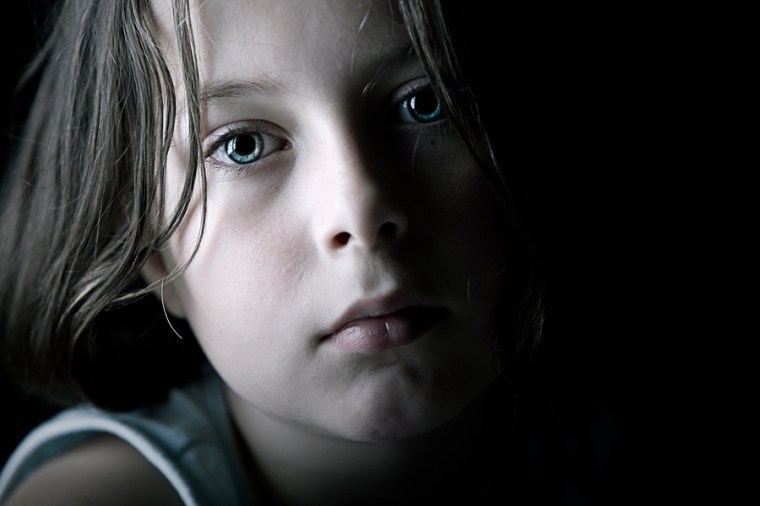
Sad ChildA recent study reported that for the first time ever more middle school students are dying from suicide than from car crashes. Not only that, but the number of suicides among children as young as eight, nine or ten years old is also increasing. Researchers are only guessing as to why so many of our children and teenagers are ending their lives in such record numbers. The trend has become an epidemic that is rarely mentioned and far too many parents are unaware of the signs that there is trouble.

There are a number of possibilities suggested as to why suicide has become such a problem. Young people today increasingly see the world as being a dangerous and violent place. News stories often make them feel as though they are living under constant threat of harm. In addition there has been a breakdown of healthy relationships in many families leading children to feel insecure and sometimes even unloved. Ours is a fast paced world that stresses hard work and excellence. Some kids feel unrelenting pressures to excel in every aspect of their lives. Television and movies all too often depict suicide as a good way to end problems. Of course there is also the specter of social media which sometimes serves as a catalyst for bullying and the creation of unrealistic expectations of beauty, luxury and unending happiness. There is also a problem with adults, particularly parents failing to acknowledge the signs of depression and its power to lead their children to suicide.

There have always been young people who decided to take their lives, but never in the numbers that are being recorded today. When I was young virtually everyone sat down together with members of the family to share dinner. We took that opportunity to talk about the days’ events and to reinforce the idea that we cared for one another. All too often today the tradition of gathering around the table has been replaced with meals quickly consumed in front of the television or on the go. Members of the family are often moving in so many different directions that opportunities to actually talk with one another are brief or rare, especially once children become teenagers.

Latch key kids are abundant and they spend their afternoons unsupervised. They may become isolated by hours of playing video games or may even find inappropriate television programs to watch. They spend hours texting friends with their parents rarely being privy to what kind of messages are being exchanged. They may be engaged in dangerous situations for which they do not have the maturity to react in a healthy manner. In a sense they often lead secret and disturbing lives apart from their parents without anyone knowing the extent of the treacherous paths down which they are travelling.

There are ways that adults should more closely monitor their children rather than just assuming that all is well. When my own daughters were teenagers a very good friend advised me to find out as much about what they were doing as possible. I did so in both overt and covert ways. I talked with my girls constantly and observed their behaviors, watching for even subtle changes. I also listened to their friends and the parents of their friends to find out more information about their habits. I enlisted the help of an army of caring people to make sure that all was well. Even then I missed cues now and again.

My youngest daughter suffers from depression just as my mother did. She began to exhibit more and more isolated behavior and seemed to be in a continual state of tears when she was in high school. I remember the night when I found her sitting in the dark in her bedroom rocking back and forth while crying. I sat on the floor with her and held her in my arms as though she was a toddler, coaxing her to tell me about her feelings and what was driving them until she finally admitted that she felt lost and confused. I made an appointment for her to see a doctor the next day and began to engage in more and more frank conversations with her. She made it past that valley of despair, but she often told me that ultimately it was her profound belief in God and the sanctity of life that had prevented her from harming herself. Ironically my mother had often told me the same thing about her own moments of mental distress. Needless to say I rejoiced in knowing that by providing my child with a religious foundation I may have saved her life.

If parents see dramatic changes in their children it is dangerous to simply assume that the new behaviors are hormonal or typical. Warning signs come in the form of falling grades, difficulties sleeping, headaches or other physical manifestations. Children who lose interest in hobbies or friends are sending signals that something is very wrong. Changes in personality are another clue. Frequent tears, outbursts of anger, long periods of isolation inside a darkened room may all be pointing to problems that must be addressed. While teenagers are infamous for their constant texting, if this habit also appears to be associated with aggression or a lack of self esteem there may be a need for getting to the bottom of what kind of information is being exchanged.

We’ve always had bullies but never to the twenty four seven extent that some kids now endure. Social media all too often becomes a minefield for attacking youngsters. Sometimes those participating in the emotional assaults don’t even know the people that they are intimidating. For them it is just a sick game, but for the teenager who is the butt of their commentaries it can become unbearable. There is nowhere to hide, no way to stop the misery. They all too often hide what is happening out of a feeling of shame. Being so alone bears heavily on them. They need help but don’t know how to find it. It is up to adults to be conscious of such situations and work to assist the victims in retrieving their sense of security and self respect.

It’s become popular for some adults to refer to youth who struggle to adjust to the many challenges that they face as “snowflakes” as though they are simply so delicate that they cannot adjust to the realities of life. This is akin to the people who would urge my mother to get control of herself when she was in the midst of a psychotic episode as part of her bipolar disorder. At the time the chemistry of her brain was so askew that she did not possess the power to stop the madness that engulfed her. She needed the help of caring family members, friends and medical professionals to get her life back on track. The lack of understanding that she continually faced made her challenges even more difficult than they needed to be. Such it is for youngsters who are in crisis. Shaming them for falling victim to depression so debilitating that they have suicidal thoughts is not an answer. Instead we all must be vigilant in assisting anyone whose ideation becomes dark and worrisome.

Teachers are often the first to notice problems with a young person. Instead of ignoring such concerns it is paramount that they contact the school counselor, the nurse, the parents or all of the above. Sometimes kids are so good at hiding their pain that their families are the last to know that there are difficulties. Honest conversations have to take place, always punctuated with love and concern. At the same time we should teach our kids to be good friends who are willing to let us know if someone is struggling more than normal. We must then either contact the school or the parents to alert them to what is happening. Those are difficult conversations, but they may save lives. 

Rescuing our children from thoughts of suicide should be of paramount concern to all of us. We need to spend more time talking with them and helping them to feel safe in confessing their problems. We need to watch for the warning signs and take aggressive and loving action before the worst happens. It is up to all of us to bring down the distressing suicide statistics among the youngest in our society. We need to begin some difficult discussions with ourselves, each other and our children. Nothing else that we do is more important.