Shoes

Isa-Tapia-featuredConfederate troops were looking for a shoe factory when they became engaged in a bloody battle at Gettysburg. It seems that they were in dire need of footwear for their soldiers. The fact that they were searching for something so basic often gets lost in the historical record that focuses instead on the brilliant oratory of President Abraham Lincoln in the address that he delivered in the aftermath of that terrible loss of lives. Those of us living in the United States in the modern era often take the shoes that line our closets for granted, but it hasn’t always been so.

My grandfather loved to tell of the time that he finally received a beautiful pair of high top lace up boots to wear to school. It was the finest pair of shoes that he had ever worn and the leather felt like butter next to his feet. It never occurred to him that he was a still boy who was likely to become taller, or that he might outgrow his beloved shoes, but the day came when he did indeed. His toes pressed so painfully against the end of the boots that he could barely walk. When he told his grandmother that he needed a new pair she explained that she would not have the funds for such a purchase for many months. Since the weather was already warm and they lived in the country, she thought it would be best if grandpa just roamed freely in his bare feet rather than distorting his toes in the cramped enclosure of the shoes.

Grandpa said that he was so proud of those shoes that he couldn’t bear the idea of walking through burrs and stepping on rocks without their protective sole. Still he worried that his feet would become deformed if he continued to torture himself by curling his toes just enough to keep them from pushing hard on the edges of the ill fitting boots. He devised a plan that he thought was brilliant. He went to the barn and found an axe which he used to carefully chop off the leather on the toes without harming the sole beneath. When he tried on his new creation he was happy to note that his feet now fit perfectly in the makeshift open toe style. His grandmother praised his inventiveness and laughed at the sight that he must have been. The strange looking shoes kept him going for many more months. 

My mother always spoke of how shoes were passed down from one child to another in her family of eight children. Since she was the youngest her footwear was often on its last leg. The leather on the sole of the shoes sometimes had a tendency to sprout holes which meant that she was often walking directly on wet pavement when it rained. Her inventive mother would save cardboard for instant repairs. She traced around the bottom of the shoe and then fit the protective paper inside to keep the elements off of Mama’s feet. Not too surprisingly my mother developed a thing for insisting that my brothers and I always had the best shoes for daily wear that her money could buy. She would scrimp on almost everything, but never on shoes.

I usually had two pairs of shoes at any given time. One was the set that I wore to school each day and the other was for church. Mama bought high quality brands like Life Stride and Buster Brown. A family from our church had a mom and pop shoe store where Mama always took us. Mr. and Mrs. Lippie took great care in fitting our shoes and literally refused to sell us a pair that didn’t hug our feet as though it had been made by magical cobblers for our unique specifications. Sometimes a visit to their store took well over an hour but Mama felt secure in the knowledge that our shoes would do no harm to our feet. My shoes were ever so practical which didn’t much matter when I was wearing a school uniform but as I grew into my teenage years I found myself drawn to the flashy numbers enticing me from the show windows of shoe emporiums at the mall. My mother often reminded me to be wary of their pointed toes and high heels, insisting that they would do irreparable damage to my pampered feet. Of course her warnings went in one ear and out the other.

As soon as I had the independence that comes from having a decent job and living away from one’s childhood home I became addicted to shoes. Given the choice between a lovely pair of pumps and a new frock I would invariably prefer to purchase yet another fashion for my feet. Because my mother had made certain that my feet were so well cared for I was able to stuff them into virtually any style known to man. As long as the price was right, I did, even as my mother complained and predicted that I was dooming my precious feet to a painful future.

My collection of shoes grew and grew in my adult years until I had enough to rival Imelda Marcos. I rarely met a shoe that I didn’t like and in spite of my mom’s predictions, I had no difficulty wearing the highest heels or the most confining styles. Shoes were like a drug to me. Nothing made me smile more than finding a new pair that was unlike any I had owned before. Sadly my joyful hobby of acquiring shoes for any occasion eventually came to a very sad end.

Just as my mother had prophesied I found myself developing more and more problems with my feet. I had to give all of my stiletto heels away because I could only wear them for a few minutes before my feet and my knees were screaming in pain. Those with the lovely pointed toes were the next to go when my feet rebelled against being so grotesquely constricted. More and more often I found myself purchasing “Granny Gump” styles from Clarks. I preferred the idea of actually being able to walk over the practice of enveloping my feet in portable torture chambers.

I have always loved the summer because I am able to achieve a bit more stylishness with sandals even as I age. People have commented that I have pretty feet and I try to keep them looking good for the warmer months when I can allow them to be free in flip flops and cute gladiator styles that show off my slim ankles. Now even that little slice of vanity is no longer available to me. Just a few weeks ago someone dropped a heavy can on my foot while I stood in line at the grocery store. My big toe throbbed in pain for days and turned completely black. Eventually the entire nail came off leaving me in a very unattractive state. Google tells me that it will take from six months to one year for things to return to normal. For now I will be wearing closed toes in public, which is particularly irksome because I am traveling to Cancun in June. I laugh because it somehow seems to be karma, a mild scolding for my prideful behavior and lack of true appreciation for the gift of good feet that my mother sacrificed to give me.

I keep thinking of the old saying, “I complained because I had no shoes, and then I saw a man who had no feet.” Maybe it’s time for me to lay my shoe fetish to rest and return to the days of practicality. My damaged toe is a sign that I need to get my priorities straight. I’ve been so vain and now it’s time to focus on something that is actually important. The fact that I can still walk freely around my neighborhood is a gift that I won’t take for granted. My own good health and fortune are all the blessings I need, but I must admit that I did drool over those gorgeous sandals that would be oh so cute for Easter. I guess it will take some time before I completely change my shoe loving stripes.    
Tick Tock

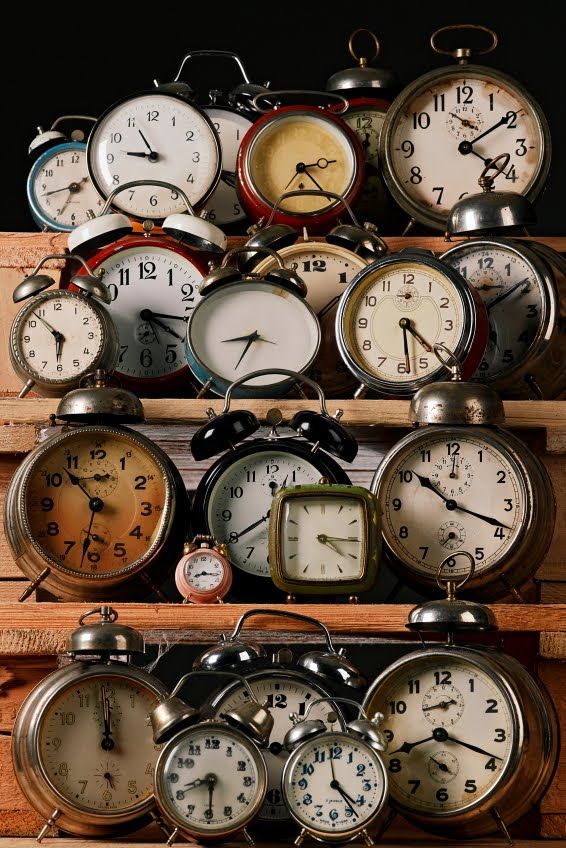
collection of vintage alarm clocksChange, chaos, confusion! No, I’m not speaking of the political realm but something far more insidious, the springing forward to Daylight Savings Time that occurs each March. Even after a week people are still dragging around trying to adjust their internal clocks to the loss of an hour and wondering just why we insist on torturing ourselves by moving the hands of our mantlepieces twice a year. Who thought of this process and does it really make a difference of any kind?

During World War I someone decided that Daylight Savings Time might help the country save energy. Maybe it was a good idea back then but somewhere along the way as our world turned into a twenty four hour frenzy of lights, television programming, computer use and shopping the concept of everyone quietly turning off their lights and going to bed doesn’t appear to be what it might once have been. Research shows that having an extra hour of daylight does little to curtail the use of electricity, gasoline, natural gas or any other form of energy, not the least of which is because we use the same hour’s worth of lighting when we rise in the dark each morning that we would have used if night came a bit earlier in the evening.

I recently read that more people have heart attacks and wrecks in the first weeks after a time change than at other moments in the year. Farmers report that their animals have difficulty adjusting to changing routines as well. So the burning question that keeps coming back to mind is why we torture ourselves by doing something that most of us dread? Why don’t we just choose either Daylight Savings Time or regular time and then stick with it forever? It would certainly be easier on the constitution.

I generally reach the point at which I am fully accustomed to the new timing just shortly before it is about to readjust again. I sleep well in those last weeks and feel a level of energy that is unbounded. Once we go through the gruesome alteration process I find myself dragging for weeks and I am plagued by insomnia for months. I suspect from comments that I hear that most people feel the way that I do. I don’t particularly care if my mornings are dark or my evenings come a bit earlier as long as I get to become acclimated to one way of marking time or another and then never again have to change unless I choose to travel to a different time zone.

Unfortunately we seem to be doomed to continuing the silly tradition of switching from one method of timing to another simply because we once started it. Have you ever noticed how reluctant we are to abandon a process once we decide to try it? It is some crazy aspect of human nature to prefer sticking with a plan even if that plan proves to be ridiculous. We see it most especially in government where that status quo becomes the way of doing things ad infinitum. We fear the idea of admitting that we my have been wrong about the merit of an idea and so we commit ourselves to absurdities again and again. It almost takes a rebellion to repeal a rule once we have made it part of our routine.

I applaud states like Arizona and Indiana that don’t go along with the time change shuffle. They merrily buck the tide and enjoy the certainty of no loss or gain in hours. They have no need of clock changers who must spend wasted time moving the hands of timepieces back and forth, back and forth twice each year.

I once saw an interesting documentary detailing the unbelievable number of days that it takes just to adjust all of the clocks that belong to the Queen of England. Many of them are complex antiques that must be very carefully calibrated and only experts are able to do so properly. It is a herculean task that is both expensive and time consuming.

I feel as though we have so many truly important problems in the world and recalibrating the time again and again should not be one of them. I advocate for suspending this policy and freeing ourselves from the tyranny of sleepless nights and energy-less days. I call for letting the natural rotation of the earth determine the timing of our habits just as it did for the thousands of years before someone got the not so bright idea of artificially determining when our days should begin and end.

Since it is more than likely that we will never rid ourselves of this onerous habit I instead extend my sympathies to those who become discombobulated each March and then again in the fall. I feel for all of the teachers who must spend the next many weeks looking at students slumped lazily on the tops of their desks. My heart goes out to the mothers of babies who insist on keeping to their sleep routines regardless of what the clocks may say. I understand the frustration of pet owners whose kitties and puppies react to the sun rather than the manmade schedule. For those like me who are now spending their nights staring at the ceiling I give you the hope that this too shall pass sometime around September or October just in time for it all to begin again.

What a piece of work is man. We sure know how to make things more complicated than they need to be. Maybe instead of making so many more new rules we may want to consider getting rid of some of the ones that make our lives more difficult. Starting with omitting all of the time changes seems to me to be a great place to start.

Finding Marion

shamrocksThere is a theory that most people will be completely forgotten within three generations. After that time nobody still living will have heard the sound of their voices or felt the impact of their personalities. They may leave behind photographs or documents attesting to their presence on this earth but essentially they are defined not by memories but by images. Of course the modern era is rectifying this with digital footprints that might include recordings and moving pictures. Such used to be the purview of only the wealthy but now even common folk have access to technology. This is not the case for most of those who came before us and so they are slowly but surely being forgotten.

I have a great grandmother who is a mystery. I think that her name was Marion Rourke but of that I am not certain. She was the mother of my grandfather, William Mack Little. He told us that she died three days after he was born. There is no record of any of this. In spite of my relentless searches, Marion remains a cipher, as though she never even existed.

Of course there has to have been such a person because William was not just found in a cabbage patch. He had a father named James Mack who took him to live with a woman that he called his grandmother known as Sarah Reynolds. Sadly I have been unable to find any records for these individuals. They walked on this earth as though they were ghosts, phantoms of my grandfather’s imagination.

William never knew Marion but he thought enough of her to name his first born daughter after her. It was his touching way of honoring her. I suspect that he always wondered who Marion was and what she was like, just as I do. It saddens me to think that she died at what should have been one of the happiest moments of her life. She had a good strong son who would ironically live to be one hundred eight years old. He was a very kind and intelligent man who treated women with the highest regard. He no doubt would have been a dutiful son to the woman who brought him into the world.

Marion’s last name indicates a connection of some kind with Ireland. My grandfather always claimed to be half Scottish and half Irish and I have verified such roots with a DNA test that I once took. I wonder if she was born in the Emerald Isle or if she was a descendent of someone who originally came from there. She had a beautiful name and was someone’s daughter, but who might that have been? She was obviously quite poor according to what little my grandfather knew of her. He was her first child and I wonder what happened that made her so ill that she died.

When I had my first daughter my labor was long and hard. There were complications and my doctor later told me that in the old days I might have lost the baby or even died myself. I wonder if I somehow inherited the same genetic disposition for difficult birthing that Marion had. Do I have an idea of what she might have endured? Was she alone and frightened as things went awry? Did she realize that she would not live long enough to see her son grow into a man? Such thoughts haunt me as I attempt to remember her without any facts to steer me in the right direction.

I try not to forget Marion. Someone has to think of her. Each St. Patrick’s Day I celebrate the Irish in me and attempt to imagine my great grandmother. I cook corned beef and cabbage and celebrate my own life that would not exist were it not for the sacrifice of her own. I so want to know her and probably never really will.

My grandfather is not quite sure where he was born nor where he spent his childhood. It was somewhere in Virginia where he was able to see hills in the distance. By the age of thirteen he was orphaned again when his grandmother died and he became a ward of the state. He chose John Little as his guardian because he was an honorable man, a graduate of West Point. Grandpa took “Little” as his last name in honor of the individual who helped him to complete his journey into adulthood. Sadly John Little died of typhus when he was in his early thirties leaving my grandfather all alone again. Grandpa had to fight hard to find reasons to to stay alive, and somehow he always did. He had an optimism that was inspiring. I wonder if he inherited that trait from Marion? Would she have been proud to see him overcoming one challenge after another?

I feel a kinship with Marion both as a woman and as her great granddaughter. I know that she lives somewhere in me. I would love to know where she was born, what she did as a child, how she met James and where she was finally buried. It has been a kind of holy grail for me to find out who she really was and I am not yet ready to give up even though I have spent years searching for someone who seems not to have even existed. She deserves to be known and loved and treasured.

On St. Patrick’s Day I will once again prepare my traditional meal and think of her. It is possible that I will be the last person to do so. She will one day become forgotten just as the countless individuals who came before her. I am determined to tell her story even if I have to fill in the blanks to describe the details. I know from the scant information regarding her untimely death that she had been loved enough by James to bring forth a child and that hers was a difficult existence devoid of the medical help that might have insured her survival.  I know that her son was a strong, bright and healthy man who would have been a joy to her. I know enough about genetics to realize that she must have been an intelligent woman. Her DNA has helped to produce some quite outstanding descendants.

Marion is a name said to have derived from the Hebrew “Miryam” which means “sea of sorrow.” I hope that this is not an accurate description of hurt and pain that my great grandmother may have endured. I would like to believe that she found peace and that somehow she knows how well things turned out for her son and his son and finally for me.

Searching for Love and Truth

normamccorvey6The world is filled with interesting stories, some more than others. So it is with Norma McCorvey, AKA Jane Roe. Norma grew up in the same era in which I lived. In fact she was very close in age to me. She was born in Louisiana to parents who seemed ill prepared to raise children. Her father was an abusive alcoholic and her parents’ union ended in divorce not long after Norma was born. Some women have a very unfortunate habit of falling in love with bad boys and so it was with Norma’s mom who forged a second relationship with a man who sexually abused Norma on a regular basis. By the time that Norma had reached her adolescence she was continually at odds with the law and ended up in juvenile detention centers and foster homes. Hers had been a confusing childhood without guidance, loving protection or opportunities. Little wonder that she was married and pregnant by the time that she was only sixteen.

Norma, like her mother before her, made many bad choices and was left by her husband to raise the child on her own. Realizing that she did not have any of the resources needed to care for herself much less a youngster, Norma gave the little girl to her mom. After that her life became a continuing series of unfortunate events. She became pregnant again and decided to give the little one up for adoption. She repeated her mom’s mistakes, seeming to be unlucky in love and life in general. When she became pregnant a third time she wanted to have an abortion but it was still illegal to do so in the state of Texas where she resided. A couple of lawyers who were looking for a test case to challenge the law took Norma under their wings and fought all the way to the Supreme Court for her rights and those of others to abort fetuses that were unwanted, claiming that particularly because Norma had been raped she should not have to have the baby.

The court case took well over three years to complete so Norma was forced to bear the little girl that she carried all the way to birth. She gave that child up for adoption just as she had with the earlier baby but ultimately won her case in the famous Roe vs. Wade decision that forever changed the way many women would view unwanted pregnancies. Norma never again became pregnant nor did she ever require or receive an abortion but she nonetheless became a celebrity in the pro choice ranks and even worked for many years in an abortion clinic. She seemed to find finally find her footing when she settled down with another woman in Dallas continuing to fight for women’s rights on a regular basis.

Along the way Norma met members of a Dallas pro-life group. They discussed with her their own beliefs that a fetus is a human being with its own rights as a person. Initially she scoffed at their arguments and in the feisty way that was her trademark made fun of their religious thinking. Somehow in an unlikely alliance they began to respect one another and Norma was taken by the way in which her opponents seemed to love her in spite of their differing opinions. Nobody had ever treated her with so much respect. She began to listen to what they had to say and to consider the possibility that perhaps their thoughts were valid.

She found herself feeling bothered by what she saw happening in the abortion clinic where she worked. Finally she renounced her pro choice position claiming that she had been used by the two lawyers who represented her in the landmark case. She even insisted that she had lied about being raped in order to make her situation appear to be more worthy of sympathy. She was baptized and in a stunning reversal became a spokesperson for the pro-life movement. Eventually she even left her long term partner and became a Catholic.

Norma was living in Katy, Texas not far from where I live when she died a couple of weeks ago. She never again saw the two children that she had given up for adoption but she is said to have thought about them often. The daughter that her mother had raised was by her side as she breathed her final breaths.

I was particularly taken by the sadness of Norma’s life. I encountered so many young girls like her when I was a teacher, sad souls who were forced into adult roles long before they were ready because their parents were unable or unwilling to care properly for them. I have taught twelve year olds who were raped by family members and became pregnant. They were angry, confused and fearful over what had happened to them. Their children became more like younger brothers or sisters than someone for whose life they were responsible. They were totally unprepared for the difficulties that lay ahead of them.

I have seen the loving results of children who have been saved from such situations through the process of adoption. When paired with genuinely caring adults they generally thrive and lead incredibly wonderful lives. There is something quite special about the realization that they have been chosen that helps them to grow to be strong and confident. I’d like to think that Norma’s adopted children found happy homes and that they were able to break the cycle of poverty and abuse that had been the definition of Norma’s lifestyle.

The question of abortion is a complex one that will not soon go away. There is much disagreement about when an unborn child becomes a person. We are inching further and further into the developmental cycle of the fetus in determining where the line is drawn in determining what state defines viability.  There are now places where abortion is permitted all the way up to twenty four weeks. Many consider it a form of birth control and each year millions of women end their pregnancies not because they have been raped or have health issues but because they do not want to have a child.

On the other side of the argument are those who believe that conception is the defining moment of personhood and that abortion is murder of a human being. They find the practice to be barbaric and morally wrong and fight continuously to outlaw the abortion once and for all. Many consider such individuals to be little more than religious zealots but they see themselves as soldiers in a battle against an evil that must be stopped.

Ironically Norma McCorvey was the face of both sides during her lifetime. She believed that she had seen the light in her later years when she became a pro-life advocate. She felt that she had been used and abused for most of her life and that it was within a community of faith-filled individuals that she finally found the love and respect for which she had been searching since she was a child. She died convinced that her part in Roe vs. Wade was flawed and terribly wrong.

It appears that Norma somehow found a modicum of peace and even built a loving relationship with the one daughter with whom she still had contact. She found friendships that she enjoyed and her life became bearable. I would like to think that she is now enjoying the peace that had been so elusive for her for so much of her existence. Hers was a search for love and truth that is now at an end. May she forever rest in peace and may those of us still here find the answers to the questions that she posed and the strength and wisdom to work for what is right just as Norma tried to do.

Finding Courage

confusionI have written a book. It has essentially been finished for more than two years and yet it languishes in the memory of my computer and in a distant hard drive that is protecting it lest my laptop suddenly crashes. If I were to take the time to do so I might have it uploaded as a Kindle or Apple book in less than a week. I would be a published author albeit by dent of my own initiative rather than interest from a company. For some reason I have been reluctant to take the final risk of revealing my story to the public. Upon self reflection I realize that my procrastination comes from enormous fear. Even though I place my ideas on public view five days and week, when it comes to my most personal essay ever I feel anxious about being misunderstood.

We live in a very contentious society. Words are continually being parsed and twisted into meanings that were never intended. Good people are all too often portrayed in very misleading and untrue ways. We take sentences out of context and figuratively burn people at the stake for having the temerity to suggest something with which we do not agree. We place our own interpretations on all utterances often to the detriment of what is actually true. Our sense of self-righteousness and judgmental natures have no bounds. It takes great courage to come forward in a very public way and so far I have to admit to being somewhat of a coward.

The topic of my book is quite delicate. It outlines my family’s journey through the tragedy of my father’s death and into the despair of my mother’s battle with bipolar disorder. Because we each perceive reality in different ways I have little doubt that my telling and interpretation of events my vary from others who shared some of the moments that I describe. They may disagree with how I have seen things and even feel betrayed that I have even spoken of some of our very private moments. I suspect that there will be those who do not understand that the intent of my book is to inspire and comfort anyone who has ever had occasion to deal with the complexities and difficulties of mental illness. It is not to embarrass or be disloyal.

Even in our very modern era we tend to have somewhat primitive reactions to mental illness. We do not understand the many forms that it may take. We still hide such diseases and too often treat them as personal defects rather than medical conditions. Our ignorance is indicative of our unwillingness to bring discussions of mental difficulties out into the open. If I mention that my husband has heart disease nobody recoils but if I speak of the bipolar disorder that so tragically invaded my mother’s brain I can visibly see the discomfort on people’s faces. Such conversations often stop abruptly because as a society we are not yet ready to face the realities of conditions that cause our brains to work differently.

There were times when my mother’s illness was quite frightening. She was consumed with paranoia and unable to complete even simple tasks. She became a victim of the delusions that raced through her brain and it was exhausting for her and for those of us who attempted to help her to get the care that she needed. She was not bipolar, she had bipolar disorder. The difference in the wording is significant. She was never defined by her illness. There were times when she appeared to be a very different person but she was merely exhibiting symptoms of her diagnosed disorder. Her true essence could only be found when she was doing well and the ravages of the depression and mania were not affecting her thoughts and actions. Most of the time with diligence on the part of everyone she was able to function in what we often describe as a normal fashion. At other times she experienced setbacks much like anyone with a physical problem might have. It often took time to return her to good health. Her condition was chronic. Like diabetes it could be controlled but it was never going to just miraculously go away.

My mother did nothing to create her illness. It did not come from bad habits or wrong choices. It was a disease that infected the chemistry of her brain without her consent. Her psychiatrist once told me that she might have never had a psychotic experience had my father lived. She may have just appeared to be a bit eccentric, a little manic or melancholy now and again. The stress of losing her husband and being a single parent to three small children only increased the likelihood that her bipolar disorder would become more pronounced without intervention. Since none of us had any idea that she was walking around with a time bomb slowly building up pressure inside her. We were all shocked when she had her first breakdown. It was an event that none of us were able to understand. We would have known what to do if she had been diagnosed with cancer but our knowledge of mental diseases was nil.

For years I was silent about my mother’s condition. Only those closest to me knew the extent of her countless breaks from reality and our efforts to get her the help that she needed. She herself denied that she had bipolar disorder, instead insisting that my brothers and I were being brutally cruel and unfair to her. She was very good at hiding her symptoms from other people but doing so was tiring for her. She often missed work because she worried about being unmasked. She did not realize that her coworkers had figured out what was happening and they quite lovingly allowed her to play out her charade. They were exceptionally good people who alerted me each time that she began to show signs of becoming ill again. They were courageous allies in our family’s fight to keep our mother as healthy and independent as possible.

These are the kinds of things that I want my book to portray. I want people to understand that mental illness is a legitimate medical condition and that each person afflicted with it responds differently. I believe that if we are ever going to effectively treat such disorders we have to become very honest about the mere fact that they exist. We have to teach the public how to cope with such situations in loving and rational ways. Right now we are a long way from being where we need to be but I believe that the more we are willing to learn, the more likely we are to bring such diseases out of the shadows.

Right now there are millions of people suffering needlessly simply because neither they nor those who love them understand that mental illnesses can affect anybody and that they are not signs of weak character. Having a mental illness does not mean that someone is doomed to an abnormal life any more than having cancer is a death sentence. We still have much to learn about how and why such illnesses affect individuals. I believe that with determination we may one day eradicate many of the mental disturbances that now wreak havoc on so many lives, but we have to have open minds and a willingness to honestly dialogue about the realities of mental illness if we are ever to bring the kind of relief and understanding that we need. We have to have courage, something that I am attempting to find inside myself so that I will be willing to share what I believe to be a very important and inspiring story.