I Needed This Reminder

MLK_500x500

One of the best aspects of being retired is that I now have time to ponder more than I did when work required me to adhere to a strict schedule. I am able to read more and even to indulge in moments of sitting in silence with my thoughts for long stretches of time. I still serve my many grandchildren with my educational expertise whenever they require a bit of guidance or encouragement with their studies. Each summer I read the same books that they are assigned for their pre-advanced placement and advanced placement classes, so that I might help them to analyze and discuss the works when they return to school in August.

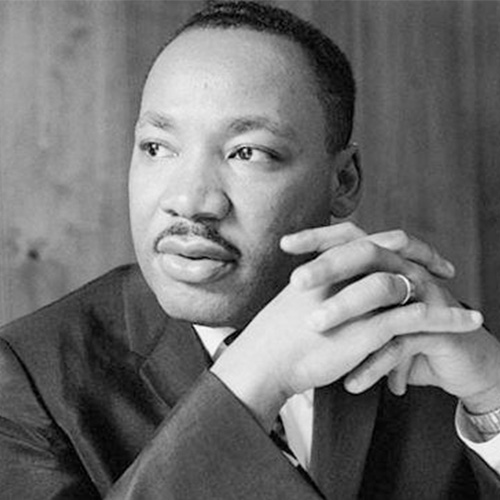
One of my grandsons is reading Martin Luther King Jr. I Have A Dream: Writings & Speeches That Changed the World edited by James M. Washington. When my daughter requested that I familiarize myself with the text so that my grandson and I might talk about its implications I was more than eager to delve into the heart of the essays. I have long considered Dr. King to be one of the greatest orators and most influential leaders of the twentieth century and indeed the entirety of history. He is a hero of mine, one of the people I would love to meet when I eventually make it to heaven.

I grew up in the era during which Martin Luther King Jr. did his incredible work. In the year I was born Dr. King was ordained a minister following in the footsteps of both his father and grandfather. He had been a child during the Great Depression, growing up in Atlanta, Georgia when segregation was still very much a fact of life for blacks just as it still was for most of my own youth. In 1954, when the Supreme Court ruled in Brown v. Board of Education that racial segregation was unconstitutional Dr. King was the pastor of the Dexter Avenue Church in Montgomery, Alabama and I was about to head to the first grade.

A year later, in 1955, Rosa Parks famously refused to surrender her seat on a Montgomery bus to a white man, an act for which she was arrested. Her brave action led to a boycott and Martin Luther King Jr. was elected president and voice of the efforts to integrate the buses in Montgomery. By then I was joining droves of Baby Boomer children in second grade classrooms that were still mostly segregated in spite of the earlier Supreme Court ruling. I would overhear rumblings of discussions from my father and grandfather who believed in those days that children should be sent from the room when politics were the subject of conversations. I was a nosy child who would hide behind a wall listening to their voices as they spoke of the coming changes.

In 1957, President Eisenhower federalized the Arkansas National Guard to allow nine black children to enter a previously all white school in Little Rock. I did not watch or witness the historic moment on television back then, but I vividly recall the many times that my dad and granddad talked about it when we visited my grandparents’ farm in Arkansas. That year Martin Luther King Jr. was elected as president of the Southern Christian Leadership Conference and  the reach of his crusade for justice widened. I would enter the third grade at the same time that those little children so bravely struck a blow for freedom in Arkansas. I was not totally unaware of the importance of that school year in the struggle to end segregation but I would not be affected by it in the little bubble that was my neighborhood.

The work to break the hold of Jim Crow laws and segregational policies continued throughout my elementary and middle school years. By the time I entered high school the Civil Rights movement was in full force and Dr. King had become one of its most admired voices. The concept of non-violent passive resistance was being used to integrate restaurants and universities and to expand the voting power of black citizens. Just before I entered my second year of high school the famous march on Washington D.C. captured my attention and I listened to Martin Luther King’s I Have a Dream speech with rapt admiration. I was hooked by its message and forevermore there would be no turning back to the ugliness and injustice of segregation for me. I was a devoted disciple of Dr. King and would hang on his every word and action. His influence over me would be enormous.

Just before I entered my senior year of high school President Lyndon Johnson signed the 1965 Voting Rights Act. Sadly the arc of justice was still far from complete. In college I would become more and more passionate about causes of equality and fairness. My generation was literally taking to the streets to protest all signs of legally condoned injustice. The laws of separate but equal were no more, but the seeds of racism still grew like weeds and I was eager to pluck them wherever they grew.

In the spring of 1968, I was planning my wedding when I heard the news that Martin Luther King Jr. had been assassinated in Memphis, Tennessee. I had been washing dishes when the word came and I remember slumping onto the floor in front of the sink where I sobbed uncontrollably. I was devastated beyond words and wondered how our country would be without the conscience and profound thoughts of this great man. His insights stay with me and guide me for the next fifty years of my life.

I am a seventy year old woman now. Martin Luther King Jr.’s words and influence have been a defining force for me even to this day. Reading his speeches and essays once again has brought me to tears and helped me to consider both the progress and the difficulties that remain in the long fight for justice. We have yet to achieve his dream, and of late we seem even to have slid back into a kind of ugliness that he had hoped to one day eradicate.

If Dr. King were still alive today he would be a very old man. I wonder what he might say about the state of our union. There are certainly things of which to be proud, but the work is not done. Would we be farther along in our progress if we still had his voice of reason and love, or would he be discouraged that we still have remnants of violence and hate? Whatever the case, reading his words has enlivened my own spirit and told me that the road to making his dream a reality is a worthy albeit difficult pathway.

As I write this I am gratified in knowing that my grandson is unfamiliar with concepts of segregation. I love that he innocently sees no color in his friends. The fact that I have to explain the evils that Dr. Martin Luther King Jr. spoke of indicates to me that we have indeed moved the arc of history ever closer to the ideals of agape which Martin Luther King so eloquently explained as “an overflowing love which seeks nothing in return…when we rise to love on the agape level we love men not because we like them, not because their attitudes and ways appeal to us, but because God loves us. Here we rise to the position of loving the person who does the evil deed while hating the deed that the person does. With this type of love and understanding good will we will be able to stand amid the radiant glow of the new age with dignity and discipline. Yes, the new age is coming”      (Dr. Martin Luther King, Jr. Facing the Challenge of a New Age, 1957)

I needed this reminder!

That’s Not What I Meant At All

toys letters pay play
Photo by Pixabay on Pexels.com

Words matter. The words we use and how we choose them matters. Even when we are careful the things that we say may appear to be offensive. Communication can be like walking through a minefield. One misstep in how we express ourselves may lead to irreparable misunderstandings. Even the tenor of our voice might be misconstrued. When we write things down the potential for imprecise interpretations of our thoughts becomes even more likely. For that reason it’s generally a good idea to really think before speaking or writing lest the nuances of our communication become twisted into something that we never intended.

The Love Song of J. Alfred Prufrock has always been one of my favorite poems because it encapsulates so much of our fragile humanity succinctly in some of the most clever lines ever written. For some reason I have often thought of the words of the protagonist of that work when he stammers, “That’s not what I meant at all.” Each of us has found ourselves in situations in which we meant one thing, but were thought to have said something completely different. Crawling out of such a hole is both difficult and dangerous because as we attempt to set things rights we often find ourselves falling deeper and deeper into trouble. This is particularly true whenever we speak without much forethought or in the heat of an argument. Our words become muddled, distorted and capable of taking on new life in a manner that we never intended. In the world of education we refer to such situations as having unintended consequences.

I was once participating in an exceedingly heated discussion of school policy that turned nasty when one of the members of the committee verbally attacked another member. Thinking that the moment called for a bit of diplomacy I attempted to forestall the ugly comments by reminding the speaker, who was a black man, of the kinder methods of Dr. Martin Luther King, Jr. The combative nature of the meeting cooled down and we ultimately found solutions without insulting one another, or at least that’s what I thought was happening. I later learned that many members of the faculty who had not even been at the gathering were intensely angry with me for what I had said to the man who was verbally attacking another member of our group. I was befuddled because my intent had only been to find a way to cool the heat of the arguments in a non combative way. I did not see that I had done anything wrong and wondered why the argumentative man was seen as the good guy while I was being viewed as he villain.

I immediately went to the man who had been so outspoken in his criticism of the other faculty member to find out how and why what I had said had been so insulting that it had created a frenzy of anger and mistrust aimed at me. He was not shy about insisting that my mistake had been in using the words of the great Dr. King against a black man when I was a white woman who had no way of truly understanding what they had meant to an entire people who still struggled for their rights. I was so shocked and taken aback that I burst into tears in front of him, something that I rarely do. He was stunned by my stammering, “But I love Dr. King too! He is my hero. I was honoring him, not insulting you.” With my admission our mutual understanding of one another was suddenly complete and we hugged by way of apology.

I’ve thought about that incident for years. I did not understand in the moment in which I chastised the man who was haranguing another that I might as well have stabbed him in the heart. He heard my words as just another attempt by a white person to cut him down. The insult was compounded by my use of the words of someone who, like him, had suffered the indignities of racism. I thought that I was simply defending a colleague, but what actually happened was steeped in a long history of struggle. I had embarrassed this man publicly and in the worst possible way without ever realizing what I had done. Luckily the evidence of my sorrow as witnessed in my tears demonstrated to him that I had not meant to hurt him at all.

My mother repeated the old saw about taking care with how we communicate over and over during my childhood., “If you can’t say something nice. Don’t say anything at all.” We might do well to make that a national goal for a time much like the campaigns against smoking or drugs or drunk driving. We take our freedom of speech so for granted that we have pushed it to a new level of insult and hurtfulness. We bandy about words and phrases without really thinking about how they may sound. It’s just way too easy to tap our fingers on a keyboard and post our grievances in the space of seconds. We react without considering who may be hurt by what we say. Even when we believe that we are protecting some person or some group we may inadvertently be inflaming another. We think ourselves immune from the consequences of our utterances because we have grown to honor the most outspoken among us and thought of those who measure their words out of respect as wimps. Little word bombs go off all around us and we have grown immune to the dangers. Friendships erode. The tension rises.

There is nothing good about verbally attacking someone. We should all agree on this, but it is also wrong to be unwilling to admit and clarify unintended mistakes or misunderstandings. We are not less of a person when we make amends for hurtfulness that we did not expect to happen. It is a sign of courage to be willing to hear and understand differing points of view and to attempt to come together as people with the common goal of bettering the world. The bravest among us think before they speak, and strive to unite rather than to tear apart. Maybe we’d all be in a better place if we were more circumspect when we speak. Words are powerful and we must bear that in mind each time we choose to utter them. 

The Backbone of Society

pencils in stainless steel bucket
Photo by Pixabay on Pexels.com

It’s that time of year when the sun bears down hotter than ever and we feel as though we are in the true grip of summer, which means it must be nearing the end of July and the time to purchase those school supplies. I still work with a handful of kids so I usually head for the stores about now to replace my Expo markers, pencils, spiral notebooks and such. The prices are just too good to ignore, and come January not only will everything cost more but it will be difficult to find.

Lots of big box stores are offering discounts to teachers which is a grand idea because every educator that I ever knew spent a good portion of the first paycheck of the school year readying the classroom. I kept mountains of lined paper, sharpened pencils, and pens in my cupboard for those students who came in without supplies. I never minded helping out even those who carelessly came to class without the things they needed. I had no patience with lecturing them about being responsible during the short time allotted to me for teaching them mathematical concepts. It was far easier to just wordlessly point them to the table where I always had some necessary items waiting for anyone in need. The remarkable thing is that the students often rewarded my generosity by repaying me with even more than they had initially taken, so I rarely ran out of my little offerings for them.

I wanted to have an inviting classroom so I was one of those teachers who joined the crowd at the teacher supply store that used to be a big draw in southeast Houston. It was like Christmas in July as my fellow educators filled the parking lot and jammed the aisles with carts filled with all of the items that might make the classroom environment more exciting for the kids. I got tired of the crank pencil sharpener breaking down at an inopportune moment, so I invested in a heavy duty electric one that cost almost a hundred dollars. It was quite an extravagance but it lasted until the day I retired at which time I passed it on to my nephew along with the mathematical manipulatives, and algebraic thinking books that I used for problem solving sessions.

I’d be at the school readying my classrooms days before the official return date. I learned over the years that administrators provide very little time for the actual process of putting a classroom in working order in the frantic week before the students arrive. Somehow principals always seem to think that the lovely environments created by the staff just miraculously pop up like mushrooms over night. Luckily I learned the tricks of the trade over time from real pros who had stayed the course and demonstrated their dedication to the ideals of teaching.

The teachers in Texas will receive a raise of some kind this year depending on how each school district decides to dole out the funds provided by the state legislature. It isn’t a great deal of money, but every little bit counts. No doubt much of it will be poured right back into the classrooms by educators eager to make a difference to their students. Altruism runs deeply in the hearts of most of the teachers I have known. Those who are less concerned about the welfare of their students usually burn out in a few years and head for more lucrative and less stressful careers.

Society spends a great deal of time discussing the pros and cons of the worth of teachers. What they rarely discuss is how exceedingly devoted the vast majority of them are. Theirs is a difficult job beyond measure. The rewards rarely come in the form of pay or bonuses. Instead they receive intangible feelings of great purpose, a sense of doing something special for thousands of individuals, many of whom rarely stop to realize how much teachers are responsible for the successes that they ultimately achieve.

I was listening to a discussion of how various occupations are valued. Most of the time the highest paying professions are the ones that return most monetary compensation to a company. Invariably such analyses point out that teachers do not generate income therefore they are more of a drain on resources. Such thinking contributes to the lower salaries that educators have historically made. In truth each teacher ultimately provides vast amounts of capital to the economy. It does not happen directly, but over time the students that educators have prepared will enter the workforce and contribute mightily to the coffers. Teachers are the foundation of the economic system, helping to mold future doctors, lawyers, inventors, and entrepreneurs. Bill Gates certainly has a level of natural genius, but along the way there were teachers who helped him to become the person that he is today. Educators are the silent force that keeps our world moving forward, and they do it without a great deal of fanfare or recompense.

I applaud any efforts to recognize our nation’s teachers. In reality we should be celebrating them even more than we presently do. They are the backbone of any nation, in many ways the most important people in society. You may soon see them in a Target or Walmart near you. They will be the ones filling their carts with extra supplies to make life better for your children. The least you might do is to thank them. 

Oh Honey!

IMG_0655

My Aunt Polly was a hoot, a fireball, an original, my godmother. She was the most energetic person I have ever known until she wasn’t anymore. Age caught up with her and she began to slow down around the time she was in her nineties. Before then few would have been able to guess her age. She appeared to be a good ten or twenty years younger than she actually was, but life events caught up with her, leaving her with a more careworn look on her face. Soon after her ninetieth birthday her house burned down with along with all of the photos and home movies and other small treasures that meant so much to her. She and her husband had been setting out Christmas decorations when the flames began. They were both safe but the stress of losing their home took its toll.

Aunt Polly settled into a new life style in independent living quarters where she hosted domino and card games on a regular basis. Her children and grandchildren often joined her in those pursuits and her laughter and gregarious spirit returned once again. Then she endured a series of deaths of people near and dear to her. She sat at my mother’s side only hours before my mom, her little sister, died. Not long after that her son Jack also passed and she showed up to his funeral bent and using a cane. She was subdued and even though she tried to be her old self I knew that she was suffering greatly from the loss. When I next saw her at her husband’s funeral I hardly recognized her. She sat quietly in a wheelchair looking frail and vulnerable. This was certainly not the tough courageous woman that I had always known.

Last week my Aunt Polly died quietly, but even as she slipped away most of us who knew her thought that she would recover and soon enough be her old feisty self, because more than anything she was a fighter. She never backed down from asserting herself or taking care of weaker souls like myself. Many a time she became my hero as I watched her in action. She was a true feminist before there was such a thing or such a word for it. My mother used to say that her sister Polly wasn’t afraid of the devil himself.

When my parents decided to hurriedly enroll me in the first grade when I was still five years old I was terrified and miserable. The fact that my mother made me some new dresses to wear and bought me a lunch box did not ameliorate my fears or discomfort. I felt abandoned and alone as I tried to adjust to a new environment. It was my Aunt Polly who came to the rescue.

One day I was at school eating lunch and flicking away the ants that always seemed to invade the inner sanctum of my tin lunch container when Aunt Polly suddenly appeared like a super hero. She had come to see how I was doing and when she saw the state of my food with all of those critters swarming on it her immediate response was to hug me and declare, “Oh honey! I’m going to take care of this” and she did. She marched straight to the principal’s office and raised a ruckus. Not only did the surprised administrator get me something without insect infestation to eat, but also ordered a thorough cleaning and extermination for the building. Never again did I have a problem.

My Aunt Polly was one of the first women that I knew who held a full time job and raised a family. She worked a number of different places before finally settling down at the Post Office. For a time she added to her coffers by serving as a cashier at the Trail Drive Inn and her extra perk for that job was to get free admission to the movies for family. I loved feeling like a celebrity as she waved our car into the vast parking lot without paying a fee. We saw so many movies there and she often joined us for the second feature once the box office closed. It was so much fun to hear her and my mom talking about the stories and the characters as though they were a couple of teenage girls rather than adults with children. I learned that Aunt Polly had a crush on Jeff Chandler which didn’t much surprise me because a had an uncanny resemblance to her husband Jack.

We spent lots of time at Aunt Polly’s house and she at ours. No invitations or even announcements were needed. We simply got together anytime anyone felt like it. Thus it was that on the night of my senior prom Aunt Polly showed up at our house. I was moping in the dark while pretending to watch television because I did not get to go to the big event. My mother had tried to cheer me up earlier by insisting that those kind of venues are always overrated and I was missing nothing of importance. Somehow her encouragement had fallen flat on my bad mood. It was Aunt Polly who once again saved the day when she came in and asked me what was wrong. When I told her what was going on and how I felt she took me in her arms and said “Oh honey!” while I cried. In that simple phrase there was so much truth and compassion. It was exactly what I needed to hear.

Aunt Polly gave me a beautiful bridal shower before I married. She came to visit me when I had my babies. Somehow she was always there when I needed her most and she did so without fanfare and few words even though her normal personality was akin to Rosalind Russell’s in Auntie Mame. I was in awe of her because she was the counterpoint to my own quiet nature.

Aunt Polly was born Pauline Ulrich in 1923, along with her twin sister Wilma whom we variously called Speedy or Claudia. She grew to be tall and beautiful with slender frame, blonde hair and blue eyes. My mother always said that Aunt Polly had to learn how to be tough in a family of eight kids or be pushed around by her siblings or the kids from the neighborhood who ridiculed the members of the immigrant family. Aunt Polly learned quickly how to fend for herself and she rarely backed down from a challenge of any kind.

My aunt married one of the sweetest men I have ever known named Jack Ferguson and the two of them had two sons, Jack Jr. and Andrew. My Uncle Jack died rather young and Aunt Polly eventually married another Jack when she was in her sixties and still looking as pretty as a thirty year old. The mantra of her life was to have as much fun as possible and she was known for the big parties that she held in her backyard with mountains of food and musical entertainment. She traveled all over the world once her children were grown and she regularly stopped by for visits with my mother, bringing her little gifts and checking on her well being.

A bright light has gone out with her passing. She was truly one of a kind and totally irreplaceable. I doubt that I will ever forget the moment when she came to see my mother who was dying in the hospital. She sat beside my mother’s bed along with her twin sister and she reassured my mom with words that only she knew how to deliver, “We’re here now honey. Everything is going to be okay.” The look on my mother’s face told us all that it was just what she needed to hear.

I am certain that my Aunt Polly has joined her siblings, her husbands, and her son in heaven. She was a good woman, my aunt, and my godmother. She taught me much about how to live.

“Without Forgiveness There Is No Future”

Desmond-tutu

“If you want peace, you don’t talk to your friends. You talk to your enemies.”– Desmond Tutu

“Without forgiveness, there is no future.” – Desmond Tutu

During the summer months a nice breeze finds blows into my backyard along about dinner time,  so my husband and I usually enjoy our dinner outside each evening. We talk and enjoy the birds that find their way into the trees on our property and onto the fountain that they use as their personal birdbath. We hear the voices of neighbors who are bustling about on walks or doing a bit of work while the temperature is bearable. We linger at our seasonal dinner table until the sun is about to set and then we go back inside to end our evenings with reading or a television program before we retire for the night.

The big three channels are filled with silly summer offerings that are of little interest to us, a waste of our time. We search instead for more riveting fare and for that Netflix and Amazon Prime are difficult to beat. Recently we encountered a movie starring Forest Whitaker and Eric Bana called Forgiven that proved to be both entertaining and enlightening. It was set in South Africa in the days just after apartheid became illegal and Nelson Mandela had been elected President of the country.

In a spirit of unity Mandela had insisted that it was a time for reconciliation between all of the people so that they might all move forward together. He appointed Archbishop Desmond Tutu to head the Truth and Reconciliation Committee, a group tasked with examining crimes against humanity that had taken place in the past and determining how to deal with the both the victims and the perpetrators in a fair and compassionate way. Archbishop Tutu was a brilliant choice for this endeavor because he had worked tirelessly for social justice for most of his life, receiving the Nobel Peace Prize for his efforts.

The movie uses a fictional character played by Eric Bana to portray the racist and murderous nature of those who had previously inflicted murderous treatment on the native peoples of South Africa. The film creates a storyline to demonstrate the intent of the Truth and Reconciliation Committee in which Forest Whitaker as Desmond Tutu is frustrated by discoveries of mass graves and extreme violence. In the process Tutu becomes personally interested in the tragedy of one mother whose daughter simply disappeared on day never to be heard from again. He promises the woman that his commission will find the answers that she is seeking even while he struggles to fully understand what happened.

Archbishop Tutu receives a letter from a prisoner, the Bana character, seeking amnesty for his crimes. The convicted murderer is vile and violent, unrepentant for the horrific things he has done, virtually challenging Tutu to maintain his composure and his belief in the ultimate goodness of all people. The movie is a thoughtful and well acted commentary on mankind itself.

As I watched the plot unfold I found myself contemplating the differing schools of thought regarding how to deal with violence, racism, and other evils in the world. Some like Archbishop Tutu and Nelson Mandela chose models of kindness and reconciliation as a tool to bring people together. Others in history have eschewed such behaviors for aggressive militancy. Today we appear to be in a time in which passive resistance is out of fashion, and instead an unwillingness to even consider alternate points of view is the more popular problem solving methodology. Those who find ways to expose flaws and judge without understanding are winning the day and I find the trend to be difficult to stomach. My personal heroes are people like Mother Teresa, Dr. Martin Luther King, Jr., and Archbishop Tutu.

In my own country I find it difficult to watch the ways in which we are tearing one another apart. The trend has been simmering for some time and now it is in full blown mode. I was certain that President Donald Trump would be rejected for his bullish ways, but instead he has been viewed by many as a kind of hero for his brash insults. Now we have some candidates for the Democratic nomination for President vying to bring down even those who mostly share the same points of view as they do.

Frankly I was quite embarrassed when Kamala Harris chose to publicly chastise Joe Biden for his past even as she insisted that she did not really think he is a racist. If that is true then I wonder why she felt it necessary to even bring up the matter. I was stupefied when the very person who began the “food fight” of the debate condemned what she saw as the childish behaviors of the other candidates. Even more confusing to me is the fact that her popularity has suddenly increased as many see her antics as a breath of fresh air rather than the bullying that it is. 

I am quite saddened by today’s political environment. It seems to be propelling us backward in time rather than pushing us forward. I do not believe that it will bring us to solutions to our problems nor will it heal the divisions that are growing like an ugly crack in the windshield of a car. We desperately need a peacemaker to step forward to lead our country back into a place of forgiveness. As Archbishop Tutu so brilliantly contends without it there is no future.