A Kind Revolution

solar panels

I think about things all of the time. Some people might call my mental gymnastics worry or anxiety. I simply see myself as having a very active mind. Some people have difficulty standing still. They are always moving about. I find it hard to shut down the thoughts inside my brain. I am always observing, asking questions and considering solutions for problems. Sometimes my mental processes are so active that I have to calm myself just to relax enough to sleep.

Lately I’ve really been considering the effects of climate change and ways in which we might address the issues associated with the storms and droughts and other weather events that are plaguing our earth more and more often. When I look for guidance from experts and I ask probing questions I generally find myself feeling as though nobody is actually prepared to consider all of the consequences, unintended or certain, that may occur from choosing one plan of action over another. It’s frustrating because it sometimes feels as though the issue being presented as a zero sum game regardless of which of the extreme sides one decides to choose. Instead I think that there is surely some alternative that is more viable.

On the one hand we are being told that our time for hesitation is long gone. We must begin to accept draconian measures if we are to avoid economic collapse and social/political chaos. The warnings are dire and not totally unfounded based on scientific research but they also seem to ignore some very basic questions that seem to have no real answers. The very scenario of economic doom might also come to pass if the most exacting sacrifices are indeed enforced. Little thought has been given to how to radically change the ways in which we do almost everything so that people do not lose their livelihoods. It’s difficult to get a major road built in under ten years so why should we believe that we can totally redesign how we live in a short time without leaving large sectors of the world’s population in economic danger?

On the other hand there are the climate change deniers who seem stubbornly unwilling to accept the facts about how we humans have literally changed the workings of the earth. They are gambling with our futures by insisting that the whole idea of climate change is little more than a hoax being propagated on the world as a means of upending political systems. If they have their way we may in fact one day find ourselves having to relocate the people of entire cities and the hardships of the Great Depression will seem like a cakewalk compared to the human upheavals that may transpire.

Somehow I find myself thinking that the most invested groups are running the show while the rest of us sit back ignoring the possibilities. My innate logic tells me that there must be a better way. If we all agree to work hard to do things to lessen the impact of climate change then perhaps we can forestall scenarios of doom and gloom while continuing to search for more intelligent solutions.

The truth is that we have too many cars rolling down the road at any given hour. Back when I was young most families owned a single vehicle. The drivers had to take turns using the family car. I remember going on the bus with my mom to do our shopping because my dad had to take the auto to work. When we had appointments in places not serviced by buses we would drop my father off at the bus stop and he would ride to work that way. We lived by the school so we were able to walk everyday. In fact, we walked and rode our bicycles to a number of places. We managed to get everywhere we needed to go by being flexible and inventive.

With a bit of sacrifice and a willingness to consider other alternatives to having multiple cars much of the carbon footprint from driving might be mitigated. Even better would be to make more and more autos that are hybrids or reliably electric at affordable prices. Neighborhoods should consider allowing residents to move about in electric golf carts or community trolleys. Bike lanes should automatically become standard on side streets. Businesses should encourage employees to ride share by providing bonuses or parking for those who do.  Governments might provide tax incentives for those willing to take such steps as well. Cities need to invest in more viable and environmentally friendly mass transportation systems and be rewarded for doing so. The modern world should begin to look like the imaginary one of futuristic thought. 

There is a home in my neighborhood that is fitted with Tesla solar panels. Our climate is particularly well suited for such innovation but the cost of installing such systems is prohibitive for most people. If lawmakers are truly serious about taking bold steps to reduce the carbon footprint then they need to help make it financially feasible for the average homeowner to invest in solar energy or other alternatives. Just as the government built the nation’s highways after World War II this can be a national campaign to redesign the way we get energy for our homes but it has to be affordable for it to work.

We must also encourage all forms of energy innovation. I know of a man who has been attempting to sell the idea of having personal windmills in every backyard but he has encountered far too much opposition. While his inventiveness may need a bit of tweaking I wonder why nobody has encouraged his designs by investing in research to make it better. Think of how Thomas Edison changed the world as it was known in a very short time because the movers and shakers of Wall Street saw merit in his ideas. Capitalism does not need to be a foe of climate change believers but rather a source for encouraging new ways of doing things that will make the world a better place for everyone.

There has been much criticism of older and past generations of late but we might also take some pages from their stories. They built houses that have lasted for centuries. The designs took advantage of cross breezes so that air conditioning was not required to be cool. They built foundations on pillars that raised homes from the water of floods. They installed clotheslines in every backyard to use the sun for drying laundry. They recycled virtually everything including packaging for purchases. I wore many a dress handmade by my grandmother from the cloth of flour sacks. Old clothes were turned into warm quilts that were used in piles to eradicate the need for heat. Most people kept vegetable gardens in their yards.

We have to educate the populace to be flexible and willing to think outside of the box. This means taking the brilliance of mankind and using it not just to create an uproar but to formulate more efficient and evironmentally friendly ways of living. We can incentivize good habits and create a movement that works for everyone in an ever changing world. We need to begin to think ahead planning our moves with a willingness to quickly adapt them to whatever situation arises.

Most people despise lectures about what they have done wrong but they enjoy the idea of  being part of progress through innovation. Surely the same people who were able to put a man on the moon in only a decade can move the environment to a better place without robbing the rich or leaving the poor in a state of desperation. We can do this as surely as we went from a sleepy and isolated nation to the heroes of World War II. It may take a few sacrifices and changes in the way we live but it will also include exciting new ways of doing things that will be better than anything we have ever seen. We should join together in a spirit of optimism to design a kind revolution for saving our planet that respects everyone. We can do it!
The Journey to the Future

pioneers-usa-02

I’m beginning to understand my paternal grandfather more without gaining any concrete knowledge about his life before he met my grandmother. I’ve been researching the hints that he gave me about his heritage and in the process my understanding of what life may have been like for him has become clearer. At the same time I’ve learned more about life in the United States in the part of the world where he grew up as a boy. By following the tiny red thread of comments that he left I see a picture of the influences that touched him both as a boy and a young man.

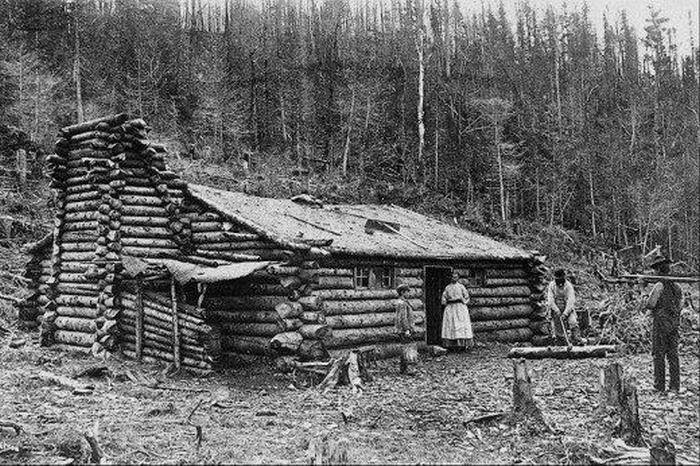
He always insisted that he was Scotch Irish which always seemed to be an oxymoron until I learned about the people from southeastern Scotland who journeyed on a odyssey that took them first to Ireland and eventually to the hills of Virginia and Kentucky in search of a home where they might be free to live and think without rancor. In the woods and secluded areas of what we now call Appalachia they found a way to be left alone, at least for a time. Just as my grandfather described they lived far from towns and cities in isolation among the forests and in the shadow of the mountains. They mostly farmed and kept to themselves often retaining the distinctive accents that they had brought from across the ocean.

The Civil War changed things for the entire country and the people in western Virginia were particularly affected by the strive and divisions that were literally tearing the nation and whole families apart. In choosing sides brother sometimes turned against brother and hard feelings, combined with the violence of war, left a lasting impact on the people who had always wanted little more than to live their lives without interference. With the end of the war the feuding that had disrupted routines often continued and as shown in a recent episode of American Experience on PBS it sometimes reached epic proportions as in the violent rivalry between the Hatfields and McCoys.

By the waning years of the nineteenth century the Industrial Revolution was changing the face of the United States and few were entirely immune to its effects. In the parts of Virginia, West Virginia and Kentucky near where my grandfather spent his boyhood businesses from the northeast came in search of coal to drive the industries that depended on that black substance from the earth. The land on which my grandfather lived was filled with it. In fact he told vivid stories of his grandmother owning a small coal mine on her property.

With the mines came railroads and strangers whose interests had little to do with the people in their way. The once pastoral land was stripped of trees and filled instead with mining operations including barracks style housing for the workers. Sometimes the labor of digging into the earth imposed itself on the land of the farmers. Where people and animals had once roamed free there were now restrictions on where passage was afforded.

Those with enough gumption to leave generally did better than those who decided to keep their families intact by staying. Once my grandfather lost the woman who had raised him (his grandmother) he had little reason to remain on the land. He was barely thirteen at the time and mostly on his own although he stuck around long enough to help out his father for a time. As soon as he was able, however, he struck a blow for freedom traveling in search of an acceptable way of life just as his Scotch Irish ancestors had done before him. He only returned to his boyhood home once and learned that there was nothing to keep him there.

My grandfather often spoke of the hardships of his youth and the intelligence of his grandmother in keeping both of them fed and safe. She was a rather amazing woman, living alone with a child and commanding respect from the community. She was light years ahead of the general customs of the time with her independent spirit and folksy knowledge of medicine. She owned rights to a coal mine on her property and kept her farm going without the aid of any man other than a boy. From what I can tell she was somewhat like the other hardscrabble women in that part of the country where shrinking violets never made it very well.

Grandpa entered the twentieth century ready to be part of the great move of progress that defined the United States throughout that era. He was part of the building boom that created iconic structures from sea to shining sea. He was on the move not so much to hide away but to experience the modernization of the country. He was proud of the work he did and the inventiveness of the United States. He saw his life from the promise of the windshield and not from the nostalgia of the rearview mirror. His philosophy was to embrace progress and to build a better future. I suppose that’s why he said little about his world back in the hills of Virginia. The past didn’t matter to him as much as the present and what was still to come. Perhaps he understood that standing still and looking back leads to stagnation and stagnation leaves one without hope.

The world is ever changing and my grandfather taught me not to be afraid of letting go of the past. He believed that the good old days are always ahead of us, not behind. We can treasure our history but it would be foolish to be mired in it. Progress marches on and the wise know when its time to join the future.

It’s Time to Clear the Rubble

rubble

On September 11, 2019 the citizens of the United States once again remembered the events of 9/11. Somehow overcast weather in my city matched the solemn feelings that most of us have on this day each year as we recall where we were and what we saw with vivid clarity. It was an unbelievable, unexplainable moment when it became clear beyond a doubt that so much of who we are and what we believe was vulnerable and under attack.

I usually write and post a blog about this event more appropriately on its actual anniversary, but this year I found myself struggling for words to describe the evolution of my thoughts over the ensuing eighteen years since that day. Instead I simply read the touching feelings of others and felt that visceral punch in the gut that hit me almost two decades ago when we were still a somewhat naive citizenry. On that day we grieved together both for those who had so suddenly and tragically died and for the death of our innocence.

In the aftermath of the tragedy we stood together as a nation in our resolve to show the world that we would not be defeated by evil. We thought that we had the strength to overcome the forces that hoped to divide us, and at the time it seemed as though we would remain united and strong. At first it was our collective grief that kept us together, but over time it was our fear that began to tear us apart. We had different ideas about how to proceed forward and our debates became more and more brutal and personal until our discussions were no longer dialog but instead vicious arguments. Our united front crumbled as surely as the twin towers had done leaving us in a chronic state of war with one another. Instead of building our nation stronger than ever we became our own worst enemies.

In the eighteen years since 9/11 we have taken our political discussions to new lows. It’s been awhile since we showed respect for the offices of our government. There were those who hated George W. Bush and demeaned him in cartoonish ways. There were those who hated Barack Obama and demeaned him in racist ways. Now there are those who hate Donald Trump and demean him to the point of attempting to drive him from office. Our Congress is paralyzed by the infighting and unwillingness to compromise in a bipartisan way that is good for the country. It is now fashionable to destroy those who think differently by ravaging their character and their beliefs. In other words, whether we realize it or not, those men who so viciously attacked our nation on September 11, 2001, have accomplished more than just killing three thousand souls and bringing down two buildings. They have punched a hole into the very heart of democracy, and we have played into the their hands with our unrestrained anger which we now focuses inward rather than at the true source.

We began by restricting freedoms for safety’s sake and then we began pointing fingers here in our own country as though knowing who to blame for the tragedy might somehow make us feel better. Our debates ran the gamut from invoking punishing retribution to demonstrating kindness to our enemies. We were in new territory, not really knowing what to do. So many mistakes were made just as throughout all of history. We were so anxious to resolve our troubles that we let our impatience get the best of us. We were being ruled more by emotions than logic. Our feelings overtook us and led us to lose our focus. Every little thing was steeped in hyperbole that eventually evolved into propaganda.

We felt very lost and confused and when we turned to the media for understanding they only fanned the flames of our divisions. Soundbites became our arguments and dissolved into petty catch phrases that offered no real solutions. The media had a field day with our worries and our feuding, making hay from our fears and driving us further and further apart.

On the morning of the eighteenth anniversary of 9/11 the headlines in most of the major news outlets were not about remembering that horrific event but about clashes with the White House and innuendo about members of Congress and the Supreme Court. Stories of 9/11 were in small print, hidden among headlines about celebrities and sports. This alone told me much about where we find ourselves eighteen years after perhaps the most horrific moment in our country’s history.

It is long past time for all of us to regain our wits and demonstrate the true strength of this country that is found in good people everywhere. We are not the stereotype that some would have us believe we are. Ours is a flawed history just as that of every other country in the world, but it is a story based on an idea of freedom and dignity that we are still attempting to perfect. We must choose to be the people that we want to be rather than a fearful mob focused on degrading the very foundations of our country. We need to insist on a return to logic and calm in our national debates and understand that sometimes we only progress by accepting compromises. We each must be willing to address the needs of a changing world and do so with dignity.

There is great truth in the adage that “we have nothing to fear but fear itself.” It is time that we work together and without rancor. Eighteen years have done great damage to our republic. While we were arguing the rubble in New York City was cleared and magnificent structures were erected in its place. We need to begin the process of doing the same for the government of our country otherwise those terrorists will have won. We can’t allow that if for no other reason than to be certain that those who died did not do so in vain. It’s time to clear the rubble.

Conversations in the Hallway

AlexisHowes_EvolutionPoster_TelephonePicture4

I was recently reminded of the time when I was a teenager and every home had one phone that was usually attached to a wall in the hallway of the home. It’s central location was designed to make it accessible to everyone in the family who needed to use it. It also made every conversation a bit more public than one might desire, especially a high schooler intent on talking privately with a friend.

When I was still a small child my mom and dad purchased a bench with a couple of built in shelves that held the family phone and a couple of ginormous directories that supplied the numbers of individuals and businesses. Someone had gone to a great deal of trouble to make the strange piece of furniture look attractive with its mahogany finish on the wood and brocade upholstery on the seat. Our family kept it dusted and our mom swept under its legs regularly to insure that it appeared to be a purposeful and attractive addition to our home’s decorating scheme. In spite of its important function it never looked quite right.

I vividly recall a time when our phone was on a party line which other neighbors shared. It was not unusual at all to pick up the receiver only to hear the voice of the lady next door babbling away with a friend. In such cases making a call became a game of first come first serve unless there was an emergency. We had to wait patiently for the line to become free and so my mom instructed me in the etiquette of sharing phone time with others. It required a quick hang up at the first sound of other voices using the services and a pledge to never reveal what might have been heard in the brief second of listening. It was indeed a rather strange situation that only lasted during my earliest childhood years.

My family moved the telephone bench from one home to another, proudly ensconcing it midway in the hallway of each new address. I found it to be extraordinarily uncomfortable for a call that lasted more than a couple of minutes which probably played right into my mom’s parental plans. By the time I was a teen it had become intolerable to be tied to such a public place when talking seriously with my friends. I eventually convinced my mother to invest in a long cord that allowed me to stretch the phone into one of the rooms located along the hallway where I might close the door to gain a small sense of privacy. Even then my brothers mischievously found excuses to walk in and out of whatever entry way I had chosen, gleefully stepping over me and laughing at my attempts to enjoy a bit of dignity during my conversations.

I was at least happy that our family phone was not located in the kitchen as I had seen in some other homes. I tried to imagine attempting to have a serious conversation in the most central part of a house. Somehow I managed to be grateful for the long cord and that provided me with a semblance of freedom from being observed while I engaged in what I considered to be quite serious discussions with my peers. The only setback was my mother’s insistence that I make my phone calls as brief as possible to keep the one phone free for the use of other members of the family.

Over time the bench that had once been a source of pride for my parents became worn. Its legs were wobbly and the brocade fabric on the seat began to fray. Almost everyone had observed my ingenious way of using the long cord to escape the prying eyes and ears of anyone else who happened to be in the hallway, and before long everyone was escaping behind one of the doors to talk. The bench sat forlornly empty and without purpose. I’m not certain when it disappeared but one day it just wasn’t there anymore. When not it use the phone sat on one of the bookcases that lined one wall of the hall.

I eventually moved out of the house and into a place of my own. It was a small apartment with a phone located in the expanse of the combined living room and kitchen. By the time my husband and I purchased our first home the age of multiple phones had arrived, so we had one conveniently hanging on the kitchen wall and one in our bedroom. Our daughters would never experience the frustration of being on full display to the family while attempting to engage in a serious conversation with a friend. Nonetheless I found myself becoming my mother as I restricted the amount of time they were allowed to spend in the frivolous pursuit of talking with people that they had spent an entire day with at school. With the invention of the portable phone that required no cord the transition to an audience free phone call seemed complete but there was so much more to come.

My how the world has changed! We actually have landline phones all over the house that are so rarely used that I often wonder why we bother having them. For now their main purpose lies in being connected to the home alarm system and serving as a backup in case of a cell phone malfunction. Whenever anyone comes to visit they arrive with their own phones which they are able to use wherever and whenever the mood strikes them. Those phones are not only a source of communication but also entertainment. They are encyclopedic in the amount of knowledge that they are able to convey with just a few strikes of the keys. The young folks using them would be appalled at the idea of having to share one device with an entire family. They can’t even imagine being tied down by a cord  that is connected to a wall. The very idea is so foreign to them that even careful description don’t convey what it was like back in the day. They laugh at the very oddity of it.

I admittedly never leave home without my phone. It is my map on the road, my guardian angel in an emergency. With rare exceptions it has made my life easier. I can call or text and almost instantly be in contact with the people I need to reach. It has kept me linked to friends in faraway places and to the happenings of the world. I now know when a child is missing or a cataclysmic event has taken place within minutes. I sit more patiently waiting my turn in some office because I have games to amuse me. I don’t have to carry a bulky camera on my trips because my phone takes and stores images of all of the places I have been. Who knew that a tiny object that fits inside my purse would have more power than the entire room of computers at NASA that were used to safely guide a human to the moon? I never imagined such a thing back when I picked up the receiver only to learn that I would have to wait until our neighbor finished her conversation on the party line that we shared. We have come such a long long way and as long as we don’t become addicted to the power of our phones, it is good.

They Just Set Women Back

St Frances Cabrini

For many years in my adult life I was a member of St. Frances Cabrini Catholic Church. I spent some of my happiest times there, making lifelong friends who literally changed me for the better. At one point I even became one of the Directors of Religious Education which was a groundbreaking move for the parish which had before only employed nuns in such positions. I was honored to have been chosen, but always felt humbled and a bit lacking in the ability to fill the shoes of the two inspirational religious ladies who had come before me. Not everyone in the community was happy with having lay people in charge of such an important program but the times were changing and it was incredibly difficult to find nuns willing to work at such jobs.

My co-leader and I met with a great deal of opposition and worked for an abysmally low salary. The Parish Council had yet to realize that they needed to balance out our pay with the reality that they were not furnishing us with a house, car and food as they had done for the religious women who before had literally lived at the church in a makeshift convent. Because I was able to make four times more working as a teacher I eventually left that job and upon my departure recommended my dear friend Pat as a replacement and that they actually pay her more than the four thousand dollars a year that they had given me. They understood and deferred to my wisdom in both choosing Pat and providing her with an income that was worthy of all of the hard work that the job required.

While I was St. Frances Cabrini Church I was always a bit too busy to learn much about the woman for whom the parish was named. It was not until much later that I took the time to read about her and that is when I understood that I should have made more effort to unravel her story while I was still in charge of the religious education of so many children. Indeed her life should be an inspiration to people of all faiths.

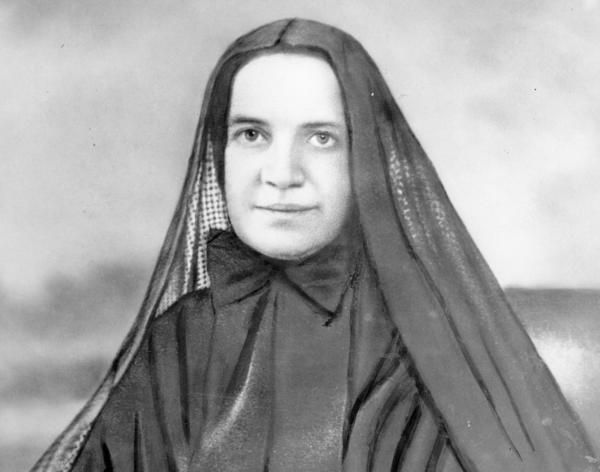
St. Mother Frances Xavier Cabrini was born in Italy the last of thirteen children near the midpoint of the nineteenth century. The times were quite difficult for her family which was hardworking but barely able to live adequately due to grinding poverty. Most of Mother Cabrini’s siblings died before reaching adulthood and she herself was always in poor health. Nonetheless she possessed a great faith in God and decided to dedicate her life to helping others by joining a religious group.

At first St. Frances was rejected by several orders because she was deemed too weak to handle the routine and rigors of religious life, but she persisted and finally found a place to begin her religious life. She proved to be incredibly dedicated to helping the poor. So much so that her work caught the eyes of the bishops in her country. They asked her to travel to the United States of America where millions of Italians were going in hopes of finding a better way of life. Unfortunately they rarely moved beyond New York City itself and the conditions in which they lived there were almost as bad as those they had left behind. Mother Cabrini agreed to lend her compassion and abilities to get things done for them.

While in New York City she worked tirelessly to help not just Italian immigrants but those of all kinds who were pouring into the country from all over the world. She founded schools, hospitals and orphanages that made a stunning difference in the lives immigrants struggling to get a foothold in the new land. She found time in the midst of her work to become an American citizen and before long she was taking to her talents to other cities and states like Chicago and places as far away as Colorado. In spite of recurring illnesses she was a tireless advocate for the downtrodden and by the time of her death at the age of sixty eight she had accomplished wondrous things for the poor. Eventually she would be named a saint by Pope Pius XII and be known as the patron of immigrants, the first ever American citizen to have such an honor.

Recently the wife of the mayor of  New York City headed an effort to honor women who had contributed to the development of the metropolis in a drive called She Built NYC. The intent of the program was to choose a group of women who would have statues erected in their names to correct the unbalance of male versus female icons. A committee was formed to determine who the outstanding women might be. In order to include the voice of the people of NYC a contest was held and not so amazingly St. Mother Frances Xavier Cabrini was the unmatched winner. Sadly the committee chose to ignore the votes and instead choose four women who did not even appear on any of the ballots that people sent to them. This was done with no explanation and has thus infuriated many of the people who had supported St. Frances Cabrini, particularly because she was such an advocate of the immigrant. Instead of honoring the peoples’ choice the committee decided to go with an abortion activist and two drag queens whom they deemed to be more in keeping with the intent of the project. 

I am saddened that the work of a woman as dedicated and giving as St. Frances Cabrini would somehow be considered less important and perhaps less woke than those with more radical contributions to the city. If the committee had always been looking for only those women who had upended traditions then that should have been made clear from the outset. Instead the title of the the drive is She Built NYC, and it is impossible to argue that building schools and hospitals for immigrants is not as meaningful as being a rebel. Thus a furor has arisen within the city of New York and across the country.

I have no problem with honoring unconventional women but I would argue that leaving one’s native country and traveling to New York City in the early years of the twentieth century to work in the bleak conditions of Italian ghettoes was as challenging a task as one might ever accept. To deny Mother Frances’ contribution to the City of New York because she was not audacious or minority enough is certainly to miss the essence of her work. This was a woman whose character was made of steel and she should be serving as an inspiration to women all over the world. It would have been courageous and proper for the committee to choose her, especially given that so many thought of her when considering who best deserved the honor. I’m sorry to say that the committee blew it in some contrived way of appearing to be progressive. Their efforts will forever be tainted by the kind of stereotyping that has challenged women for all time. They just set women back.