
A Nation of Hermits

Hermit-crab-GettyImages-597303469-58b66f6f5f9b586046c36d9e.jpgI have been told that my grandfather went shopping every Friday after work. He visited a bookstore and purchased a new volume to read during the coming week and then bought a few groceries which he carried home in a reusable mesh bag. (He was obviously way ahead of his time.) It was an outing that he enjoyed. As a child I accompanied my mother on Saturday shopping excursions. Sometimes we rode the bus into the downtown retail district, but mostly we went to the malls that were just then becoming a new phenomenon all across America. I looked forward to those times with great anticipation because they meant that I would receive a quarter to spend in any way that I chose. When I became an adult I kept the Saturday tradition going with my own daughters and I have warm memories of fun times together.

Eventually my girls left home and I enlisted my mother as a shopping partner once again. As she grew older I religiously visited her every Friday afternoon after work and our adventures always included dining out followed by an excursion to one of her favorite stores. She literally spent hours studying the items displayed in every aisle and buying only those offered for the best possible prices. She always appeared to be so happy just window shopping and I loved being with her talking about this and that as we went about our weekly routine. I suspect that I somehow developed a psychological connection between retail therapy and joyful memories of my mother, because to this very day I find wandering around my favorite stores to be calming.

I sometimes worry that the act of browsing inside boutiques and such will go the way of the dinosaur. I recently heard a news story in which an economist predicted that three fourths of all of the retail merchants that we now know will be gone within a couple of decades, replaced mostly by online giants and mega stores like Walmart. People are more and more often using existing brick and mortar establishments to see what products are like so that they might order the same things from Amazon for lower prices. More and more often we hear of stores closing their doors forever for lack of customers, and even those that appear to be doing well are struggling to keep up with the momentum of online shopping. It seems that people would rather spend their time on weekends enjoying family activities and traveling than perusing racks of clothing inside buildings. Furthermore the cost of renting space and paying for upkeep makes it difficult for traditional establishments to compete with the deals that online businesses are able to provide. The American shopping experience is rapidly changing.

Ironically we are in a sense returning to the old days of the catalog. In the early days of the twentieth century people who lived in more rural areas often shopped from a Sears or JC Penny catalog. Virtually anything that they might have wanted was available including kits for building homes. My father-in-law lives in a house in the Houston Heights that was made from designs sold in the early nineteen hundreds. It is a style that might be seen all across the country because it was a favorite of the catalog buying public during that era. Now we have online inventories from which we can choose most of the things that we use and have them delivered directly to our homes, often without having to pay shipping costs. With a few keystrokes we are able to order our medications, appliances, clothing, gifts and even groceries. There is little reason to get dressed up and venture out. It’s just so much easier to visit the electronic stores.

I have often believed that given enough reasons not to have to leave my home I would easily evolve into being a hermit of sorts. I wonder if today’s world is so fast paced and stressful that most of us are tempted by the idea of finding solace inside the walls of our homes as often as possible. We now have the capacity to enjoy movies, music and culinary experiences without ever venturing into crowded establishments. With Netflix and the like we are able to spend an evening watching great entertainment with all of the snacks we might desire for less than a third of the cost of going to a theater. Best of all we can do it in our pajamas and pause the action at will.

The world is always changing and those of us who cling to past memories may have to learn how to keep up. It appears that the big malls of yesteryear may become empty caverns of curiosity that our grandchildren and great grandchildren will view with wonder. They will marvel at the quaint idea of wandering from one shop to another as a form of entertainment. They will laugh at the impracticality of such ideas as they order their goods and receive them within hours from drones that drop them on their doorsteps.

In some ways the ever changing way of doing business is actually quite wonderful for seniors like me. As we become less and less able to get around we will still be able to procure the items that we need for comfortable and happy living. We will have little need to have a car or worry about transportation. With Uber as our chauffeur and Amazon as our marketplace we will be able to be independent far longer than previous generations. The only thing that worries me is that as we as a society spend more and more of our time inside our homes we run the risk of becoming isolated. Unless we couple the convenience of home shopping with concerted efforts to stay connected with other people we will fall prey to some very unhealthy habits.

It will be quite interesting to see what actually happens in the coming years. The stores that I frequent are still quite busy and I find it difficult to believe that everyone will be accepting of the idea of reinventing the ways of commerce and abandoning the brick and mortar experiences. Nonetheless I have been proven wrong many times before. I laughed at the idea of recording television programs for future viewing. I never dreamed that Blockbuster Video would become a memory of the past. I believed that Amazon was only a phase along with home computers and smart phones. There is no telling what actually lies ahead.

I now have devices in my home that turn on lights and monitor the area while I am gone, ready to alert the police in the event of trouble. I can view the rooms from hundreds of miles away. I receive my medication at my doorstep and purchase all of my Christmas gifts each year without ever having to search for parking spaces at a mall. I watch programs at my own leisure and truly believe that one day I will not have to drive my car because it will be programmed to get me from place to place on its own. I have a robot that cleans my floors just like Rosie in the Jetsons. I eat meals that only require a few minutes of heating time in the microwave. I am as automated as a science fiction story of old and there is definitely going to be more to come. I only hope that in our quest to make our homes all providing castles we do not fall into the trap of becoming a nation of hermits. The temptation is there. We will have to make certain that we find other ways of interacting with our fellow humans. I’m sure that someone already has ideas about how to accomplish that.

Speak Out

censorship-1.gifAttending college was one of the most exciting times of my life. My professors challenged the status quo of my beliefs and taught me how to think critically. They were never satisfied with having me simply regurgitate what I had learned. They insisted that I show evidence of having considered the pros and cons of every argument or theory. They showed me the importance of viewing the world from multiple points of view. I remember attending events featuring some of the most controversial speakers of the era. It mattered not whether I agreed with them, but rather that I allow myself to widen my own horizons. Some of those that I heard were brilliant and I wrote others off, but always there was the sheer enjoyment of becoming familiar with new and intriguing philosophies.
When I became a teacher I was enthralled with the idea of showing my students how to become critical thinkers. Even in mathematics classes we compared and contrasted differing methods for solving problems and began to discuss the merits of each. I once prefaced such an exercise by having my students read accounts of a Revolutionary War battle written by four quite different individuals. One was the eyewitness account of a patriot, another was from a letter written by a British soldier. Still another was penned by Winston Churchill for his famous history and the last was from the point of view of a bystander who had little interest in choosing sides. The students immediately realized that how we see the world is influenced by all of the complexities of our lifetime. They began to question who had been in the right and wondered if we ever get a totally unbiased reporting of events. It was quite rewarding to watch the scales fall from their eyes and to experience their enthusiasm in being able to engage in a debate.

I am and always will be a staunch proponent of free speech. Unlike many people that I know, I actually enjoy hearing from individuals whose opinions are diametrically opposed to mine. When in their company I listen with as open a mind as I might possibly muster, realizing that my own thinking is rooted in the totality of my lifetime. My goal is not to catch them in mistakes but to truly learn from them. It is rather amazing how much I derive from even the most ridiculous sounding ideas. I have always felt that we tend to spend too much time composing our responses and not nearly enough attempting to understand why people believe as they do.

Obviously there are many instances in which I am not even minutely swayed by someone’s beliefs, particularly when I sense that they are evil or violent. I have read Mein Kampf not because I am a follower of Nazi propaganda, but because I think it is important to know what lies in the minds of such people. Perhaps the biggest mistake that too many make is running away from the rants of those who would impinge on our freedoms. In truth we should make ourselves aware of even their most rancid and unbearable thinking. I agree with the Godfather that it is important to keep our enemies close.

I abhor censorship of any kind. Free speech is perhaps our most important right as citizens. When I write my blog each weekday I am fully aware that I will annoy or even anger some who read my words, but I will fight to the death for my right to state what I believe. I will do the same for anyone else, even those with whom I totally disagree. The hallmark of totalitarianism is the tendency to eliminate the written or spoken words of those voicing alternative points of view. A free nation insures free expression of ideas in all phases of society. If someone urinates on a cross and calls it art I may choose to disagree and even feel offended, but I will never insist that the offering be destroyed.

I am somewhat befuddled by the current trend to shut down free speech at universities that were once bastions of open expression. I don’t personally like Ann Coulter but I have no problem with having her speak on the campus of any college including my alma mater. I don’t have to attend the event and I certainly don’t have to agree with anything that she says. What I should insist on is that she have her opportunity to speak her mind without interference. Sticks and stones may break my bones, but her words will never hurt me. In fact, I suspect that her audience would be rather small if not for all of the unearned publicity that she gets each time a group of students threaten violence if she shows up to give a speech.

The history of the world is filled with instances of book burnings and executions of people whose thoughts and words seemed controversial. The Spanish Inquisition was a dark time of squelching ideas. Members of ISIL destroy anyone and anything that is offensive to them. Surely the examples of Nazi and Communist oppression should teach us that it is in an open society that we progress as humans, not one in which we refuse to allow alternative points of view. Unfortunately I fear that we are presently on a razor thin line between wanting to be inoffensive and becoming unthinking censors. It is my love of liberty that tells me that we must be very careful in protecting our rights as free men and women. All of us should be loudly complaining any time that there are attempts to silence any among us, regardless of whether we agree with that individual’s beliefs or not.

With regards to what I am presently witnessing I am reminded of the now famous words of Pastor Martin Niemoller:

First they came for the socialists and I did not speak out because I was not a socialist. Then they came for the trade unionists and I did not speak out because I was not a trade unionist. Then they came for the Jews and I did not speak out because I was not a Jew. Then they came for me and there was no one left to speak for me.

Speak out loudly and clearly. Let no one take away the free speech of any among us.

The Old Is New

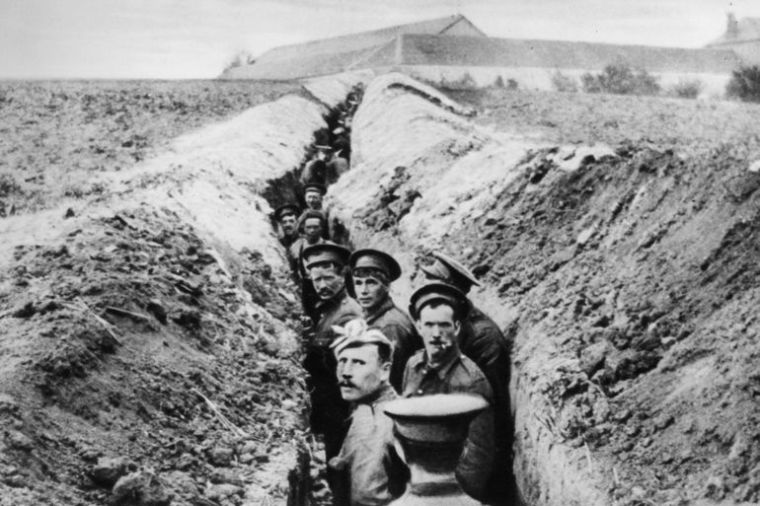
In The TrenchesIt was a dark time in history. The world was engaged in a heinous war whose purpose seemed unclear to most who tried to understand why millions of young men were dying. The brutality of the battles was unimaginable. Modernity had changed the nature of fighting in truly horrific ways. Mankind had not yet outlawed the use of chemicals as weapons. Nothing, it seems, was taboo, and so young men were permanently mutilated by agents like bombs and sarin gas. Never before had there been such murderous activity in mankind’s seemingly relentless quest for power. World War I is a war that we often ignore when in reality its effects continue to plague us to this very day.

The United States initially watched events unfold from afar. It’s hard for us to believe but our nation was very much a kind of backwater region at the onset of the twentieth century. Most of the world powers still thought of our government as a fluke in the annals of history, hardly worth noticing when compared to the vast influence of Austria-Hungary, Germany or Great Britain. Militarily the United States was ranked number seventeen, just behind Serbia. Few paid much attention to our still very young country as they engaged in an epic struggle in Europe.

At the beginning of World War I the United States was in debt and still far more rural than urban, but it had incredible natural resources and manpower which became a lifeline for nations like Britain and France during the fighting. With so many of their young workers unable to farm or work in factories it fell to the United States to supply the food and material needed to survive. The USA became a beehive of activity all while insisting on a neutral stance regarding the war. Initially most Americans were disinclined to become involved in a dispute that seemed to be more of a disagreement between royal relatives than a meaningful cause. Instead they enjoyed the fruits of commerce that were occasioned by the war.

The war that was supposed to be resolved in a matter of weeks dragged on with horrible consequences for European nations. The citizens watched helplessly as their youth were killed or maimed in heretofore unseen numbers. After almost four years of fighting France was on the verge of capture and collapse. Britain was little better. Russia was boiling over with a revolution that would dramatically alter the course of that country for the next hundred years. It appeared that Germany would soon dominate Europe. The United States enjoyed its relative safety and newfound prosperity while Europe burned.

Germany believed that it might break the will of Britain and France, thereby winning the war, if only the United States were prevented from sending supplies, and so they boasted that ships traveling across the Atlantic toward Europe would no longer be safe. Their gamble backfired and resulted in a declaration of war from the United States. Within months hurriedly trained American soldiers and weapons, began arriving to bolster the Allies, breaking the stranglehold that Germany seemed to have on the continent. By turning the tide of the war and helping the Allies to win the United States earned the respect of all the world. Suddenly our country had become a superpower and a king maker. For better or worse we have played that role ever since.

A hundred years ago President Woodrow Wilson justified our country’s involvement in war as a way of spreading liberty and democracy. It is an idea that is bandied about to this very day, but then as now a sizable number of people question the arrogance of interfering in the affairs of other nations. Such thinking was again used successfully as a rationale for World War II but lost its luster during the engagement in Vietnam. Presently the world finds itself in a confusing quagmire in the Middle East, a part of the world many of whose problems began with the peace negotiations at the end of World War I. One hundred years later we are seeing the results of arbitrarily dividing the spoils by redrawing colonial maps in a manner meant to punish the losers rather than consider the needs of the people living in the areas once ruled by European monarchs. The roots of today’s problems were unwittingly planted by power brokers whose intent had little to do with spreading freedom.

The world changed dramatically a hundred years ago particularly for the United States. We took on a mantle of responsibility back then that has always had an aura of discomfort. By nature we want to be the good guys, the heroes, but tiny voices of caution echo inside our heads. Part of our nature wants to be left alone, just as our forefathers who fought for their independence from an ever invasive government. Another side of our personalities feels compelled to constantly fix whatever we see as being broken including other governments. The tension between these two points of view are as prevalent today as they were back then. Our divisions are in reality nothing new.

One hundred years ago even as we appeared to be saving the world conditions were ironically far from ideal in our own backyard. Women were still fighting to win the right to vote. Race riots broke out in cities across the country in the summer of our victory. Many of those who had spoken against going to war languished in prisons. We still had much to do at home before serving as advisors to the world. Hypocrisy quietly reigned much as it often does.

Everything old becomes new again. After a hundred years much of the idealistic thinking of those who supported World War I has been tarnished by reality. We find ourselves feeling anxious as the world smolders as though coals of discontent from our past have once again caught fire. We ask many of the same questions and silently worry that a truly peaceful world is a pipe dream, the stuff of fools. We wonder if our warlike natures will always and for all time inevitably take hold. We would sometimes like to wish ourselves back to a time when we were number seventeen in the world and nobody expected much from us, but we know that our ship has sailed and now we much pray for the wisdom to find answers that will do the least harm. As we do so we would do well to remember the lessons from history.

A Winter Tale

BM_Comfort476x290I vividly remember having the measles. It seemed to be the final insult in a year that had brought me nothing but grief. My father had died only months earlier leaving me confused and bereft as our family struggled to find its footing. We had moved into a house that was nothing like the ones we had been considering at the time of his death, but it had brought us great comfort in the short time that we had lived there. We had gone full circle, returning to the neighborhood and the school that we had left only a year before. The people who lived near us and those who attended our church had been welcoming and we had been gradually settling in to a new way of life without Daddy.
My mother’s selection of a home for us had been a very wise choice, but we were still navigating through a year of milestones that reminded us over and over again that the man who had been such an integral part of our lives was gone. Somehow we had made it through birthdays, Thanksgiving and Christmas, starting the new year with the realization that we were going to actually make it on our own. Still I was feeling those sudden bursts of grief that seem to come and go in the first year after a loved one’s death. I often felt sorry for myself and my family, silently hoping that our tragedy had only been a dream. As the months went by it had become more and more certain that our new reality would never again include our father, so when I felt the first symptoms of illness that winter I thought that I was just having another bout of sadness. I felt so tired that I uncharacteristically retired to bed early.

By the following morning I was raging with fever and my head felt as though it was going to explode. I felt so dizzy that I hesitated getting out of my bed so I called my mother for help. My throat felt dry and scratchy and it seemed as though every bone in my body ached. I had at times dramatically wished I were dead like my father, but that was just a way to garner attention from my overworked mom. Now I wondered if my bizarre request had somehow been granted because I truly felt as though I had one foot in the grave.

My mother took a quick look at me and asked me to lift the top of my pajamas. Underneath the soft flannel was a scarlet colored rash that caused her to shake her head and declare that I had the measles. She immediately went into action, calling our family doctor who agreed with her assessment and advised her over the phone rather than having me come to his office. He did not want me to expose the rest of his patients to my highly contagious disease, so he and my mother discussed how to best treat my illness.

It was a bitterly cold winter that year in keeping with the somber tone of our household. The heater seemed to whir away continuously and I was so happy that our neighbor, Mr. Sessums, had put it in fine working order for us. I felt quite snug under quilts that my grandmother had made and somewhat relieved that I did not have to go to school on that day. My teacher was a woman who terrified me and any time spent away from her was welcome in my mind. I willingly stayed in my bed and fell into a deep sleep.

When I awoke my room was quite dark and I wondered if I had slumbered all day. Mama informed me that I was not to look out my window, watch television or turn on the lamps in my room lest the lights damage my eyes. She explained that having measles was very serious and that I needed to follow her instructions to the letter so that I might recover quickly and without any long term side effects. Since my fever was still quite high I had little inclination to disobey her. For the most part movements of any kind sent my head into a tailspin and so I languished in my room listening to the sounds of my family going about its routine.

As my seemingly endless bad luck would have it, Houston had one of the biggest snows in its history only a day or so after I was afflicted with the measles. I could hear my friends and family celebrating the uncommon occasion up and down the street. My brothers had snowball fights and built a snowman with my mother. They breathlessly recounted how glorious their fun had been from the safety of the hallway. Their cheeks were tinged with a bright red glow of excitement and I wanted more than anything to experience the adventure that they described to me.

Mama reminded me again and again that I was not to even peek through the blinds to view the white stuff on the ground. She was a good nurse but I truly doubted that her extreme caution was necessary. When she and my brothers returned to the winter wonderland to make snow angels I saw my opportunity to find out for myself what a true snowy day looked life. I gingerly squinted through a tiny gap in the wooden slats of the blinds and saw a glorious sight unlike any I had ever experienced in my hometown. The yards were covered with a lovely white dusting of frozen precipitation. Snowmen smiled in front of every home and children were bundled up in winter wear that they hardly ever had occasion to use. The sound of laughter filled the air as the winter party delighted young and old alike, everyone it seemed but me.

My mother never knew that I had so blatantly disobeyed her. For a time I worried that as punishment for my transgression I would become permanently blind, but when that never happened I felt justified in seizing that daring moment. Soon enough I was back in school and forever immune from catching the measles, something that seemed to make my mother quite happy. I would not understand the full extent of what I had endured until later in life when I was pregnant with my own children. It was then that I was told of the dangers of catching the measles while carrying a baby in the womb. None of those fears would apply to me, and later when they were born my girls would receive an immunization that would insure that they would never have to worry about catching the measles as I had.

The World Health Organization has officially declared that measles have been eradicated in the United States. My childhood experience is a thing of the past, an historic event that no longer happens in our country. Much like my grandfather’s stories of smallpox, my recollection of having the measles is a curiosity that my children and grandchildren will never truly understand. Thank God for that.   

Remembering the Lessons

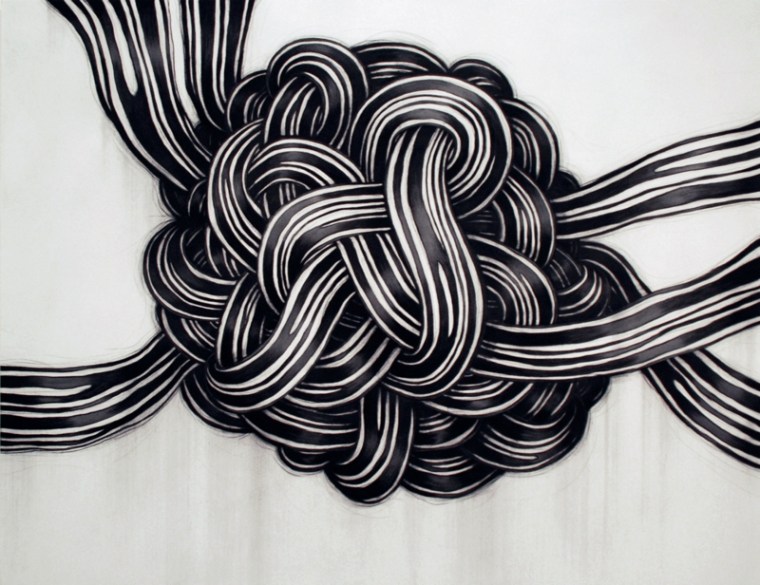
KnotTry to imagine this scenario. Groups of Americans from the United States begin to peacefully demonstrate against the president of our country in locales all across the country. The government sends in the military to quell the disturbances and in a show of force they gun down protesters. This angers even more people who join the rebellion which grows angry and violent. There are enraged armed mobs in your town fighting against the soldiers. You watch as the disturbances grow into all out civil war. The lines between enemies are blurry and take on a religious aspect as well as political. Splinter groups form, some of which are barbaric. You and your family members are caught in the crosshairs. Bombs from the government come into your neighborhood. Bullets from the rebels forces lodge in the walls of your home. Terrorists taking advantage of the unrest kill your friends and relatives in the most brutal manners. What was once a place of peace has become hell on earth. You do not want to leave your home but fear that if you do not, you and those that you love will surely die. A final blast of chemical weapons from the government forces convinces you that it is no longer safe to stay in the place that has always been your refuge. You watch children who live near you dying in the cruelest manner. You can’t take the horror any longer and so you decide to flee.

At first you make your way to Mexico or Canada. You are placed in a refugee camp with thousands of others. You are told that you may not stay indefinitely. There are too many of your kind seeking escape from the war. Your temporary residence is infested with crime and want. You live in a tent that is either too hot or too cold. Disease breeds freely in the unsanitary conditions. You feel only slightly better than you did in the place from which you have fled. You try to get to other places that might be more welcoming or more pleasant. The process is difficult and even if you are lucky enough to gain a passage to some nice town in Europe the residents of those places view you with suspicion and disdain. All you really want is to be able to sleep at night without fear. Your dream is to one day be able to return to your home and begin your life anew. Your whole world is upside down and none of it is of your own doing. It all feels so hopeless.

In the meantime, different nations are choosing sides in the battle that rages back in the United States. Not only are there disagreements to resolve between the government and the rebels but also different factions within factions as well as other countries. It is such a tangled mess that you despair that it will ever be possible to sort things out and find the peace that you so desire. You cry for your country and for yourself as years pass without resolution and the gordian knot of trouble only grows tighter.

Of course, these events are not unfolding in the United States but in Syria. Try as we may we will never know the heartache that has so defined the lives of the people of that country since 2011. Their nation sits on the Mediterranean Sea just across from Egypt bordering the countries of Turkey, Iraq, Lebanon and Jordan. The war has displaced more than two million people and stretched the resources of their neighbors and countless European nations. Diplomatic and military efforts have failed to broker any kind of resolution and all the while terrorist groups like ISIL have taken advantage of the situation to make their own claims on the land and its citizens. Shia Muslims have taken to fighting with Sunni Muslims. Russia, China, and Iran side with Syrian President Assad. The United States, Germany, Britain and France have attempted to aid the rebels. It is a standoff that threatens the Middle East, Europe and much of the rest of the world.

I cry for the people of Syria. I understand that the vast majority of them simply want to be left alone and allowed to return to their homes where they might live in peace. None of the rest of us want war either. Nobody seems to have any idea of what is the most effective solution to a daunting problem. Here in the United States we have learned that sending troops and treasure to fight battles can be a solution with no endgame. We have also seen that diplomacy does little. We are caught in a conundrum in which the choices are all unpleasant and the results are uncertain. Do we do nothing and let the people of Syria figure out the path to eventual peace or do we choose a side and commit to fighting for what we believe is right?

The answer to such a question is both confusing and frightening. If we stay out of the fray, things may only escalate and make the situation even more dangerous for all of the world. If we show force we may become involved in a fight from which we cannot extricate ourselves without great loss of life. It feels as though even the wisdom of Solomon might be wanting in knowing what to do.

Today is Good Friday, a day on which we remember the crucifixion and death of Jesus of Nazareth. Politics and religious debates were in full force in the time of Christ just as they are today. An innocent man was put to death for fear that his teachings might result in a rebellion that would topple the power structure. Two thousand years later mankind is still feuding over differences in beliefs but millions in all parts of the globe now follow the lessons of Jesus. His message was powerful and his disciples spread the good news of his word in spite of their own persecutions. It is rather amazing to realize that Jesus Christ is even more revered today than he was when he walked in the Middle East two thousand years ago.

This is a time of reflection and prayer in the world. Perhaps it should also be the moment when we join with people of all faiths in imploring the heavens to help us find a resolution to the unrest that so threatens all of us. We can be inspired by the life of Christ whose constant admonition and example was that we forgive and love. I wonder how we can possibly solve the problems of other nations when we continue to be so hateful with one another right here in the United States. It is truly time for us to set our personal differences aside one individual at a time. It is the moment for us to shed our pride, our hypocrisies and our obstinance. Those are the elements that lead to a Syrian-like war. First come the words and then come the weapons. We must do whatever we need to bind the wounds that have turned  brother against brother right here in our own nation. Perhaps once we have learned to be civil with one another again we will enjoy the combined wisdom of many points of view in finding solutions to the problems that plague our world. I truly fear our future if we fail to return to a state of understanding and humanity within our own ranks. It is only in valuing our collective differences that we will be able to exert the power needed to propel ourselves and the world in the direction of good.