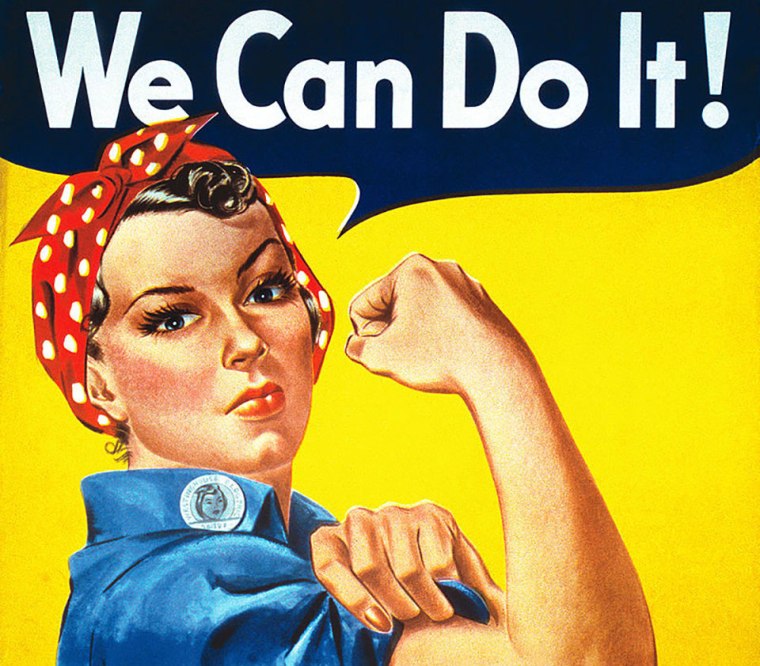
We Can Do It!

We_Can_Do_It-960-fragmento

So here we are in early March, a time for the Houston Rodeo, Spring Break, March Madness, St. Patrick’s Day celebrations. Our nature is to enjoy the promise of this time of year when the flowers begin to bloom again, at least in my part of the world. We are creatures of habit and regardless of how much we protest any insinuation that we are not flexible, we feel the earth move a bit under our feet when things don’t go as planned.

We are a generally lucky lot here in the United States of America, at least those of us who are members of the middle class. We plan trips and decorate for Easter and watch sporting events on our big screen televisions. Worries come now and again but we generally work through them. Sometimes Mother Nature brings destruction to our front doors like it did when hurricane Harvey hit Houston, but we take pride in taking control of such situations and putting things back to normal as quickly as possible.

We Americans are notoriously independent souls. We don’t like to be told what to do. Some among us even insist that the government should stay out of our business as much as possible. We can be quite vocal and sometimes even a bit brash when it comes to our ideas about how things should be done, but more than anything we tend to think that we can conquer almost any challenge better than most. We got to the moon, didn’t we? Surely we’ve got the best of everything in the world! We don’t think of it as boasting because it seems to just be the truth.

Suddenly the whole world is turned upside down by a virus that is new and strange. We’re not completely sure what it will ultimately do or how we will put it down. Our instinct is to ignore it as long as it doesn’t come near us. We’ve been saved by those two big oceans that have protected us from wars and left us relatively unscathed by rumblings in other parts of the world for most of history until terrorists found a way to bring fear into our midst. Now we hear warnings that the current threat will not be intimidated by our advanced technology, or national wealth, or borders. It does not respect our traditions or our freedoms. It does not see us any differently than it does the citizens of Wuhan or Padua or Kirkland, Washington. To it our bodies are all just targets for destruction, some more vulnerable than others, but all capable of carrying the deadly disease deeper into our midst.

Leaders across the globe are making decisions without any guarantees. They may as well be blind because there is no certainty as to what will actually work to halt this novel virus. We cannot compare it to the flu or measles or any other known disease because we have no scientific basis of doing so. We have yet to learn all of its mysteries and capabilities. We only have numbers of the sick and dead and the anecdotal stories of those on the front line of the battle against it to guide us.

Covid 19 seems to affect the elderly in more dangerous ways, as well as those who have other health issues. Children and young adults seem to generally have milder cases, but they are not automatically immune to the more critical symptoms and everyone who becomes infected is a carrier. Nations that have insisted on enforcing social distancing protocols early on have generally done better than those that waited until the toll of sickness rose to unbearable numbers. At this very moment there are countries whose healthcare systems have been overwhelmed and the end to their trials does not yet seem in sight. They send furtive warnings to the rest of us to take cautionary measures before it is too late.

This virus is not just a seasonal flu that is being overblown. It is not a hoax. It is not the fault of China or Democrats or President Trump. How we handle it will surely define us in history. We can rise to the occasion and do whatever is needed to end the contagion as quickly as possible or we can whine about inconveniences that we do not normally have. We can demonstrate our concern for all people everywhere by doing our utmost to cooperate with the efforts to contain the virus or we can demonstrate a false bravado by ignoring the requests that we stay home as much as possible.

The NBA season is done for now. Tom Hanks and his wife Rita are among those who have the virus. The world seems to be spinning out of control, to have suddenly gone insane. It will be up to everyone of us to restore calm and reason by following directives and doing our individual best to comply with each request for temporary changes in our behavior. This is a time for prayer, not just for those who are ill but for those who might become that way as well as for the medical personnel across the globe who are or will be fighting this demon virus. This is the time for unity and mending of the divisions that have produced so much rancor in recent times. This is the time for understanding, compassion and flexibility. This is the time to remind the people in our lives how much we love them.

If all goes well most of us will never be personally affected by the horrors of this virus. Hopefully when all is said and done we will actually be able to wonder if it was all much ado about nothing or if we did indeed prevent a more horrific scenario by doing whatever was needed at each juncture of the battle. We can only hope that by this time next year we will have dodged a bullet but for now it is  time to arm ourselves with calm and the good sense to do what is asked of us. Nobody is immune from the consequences if we presume to know more than the good souls who are attempting to protect us. Take care. Keep in touch with one another. We are a strong species that has faced down danger before. We can do it but it will take the combined efforts of everyone!    
We’ll See

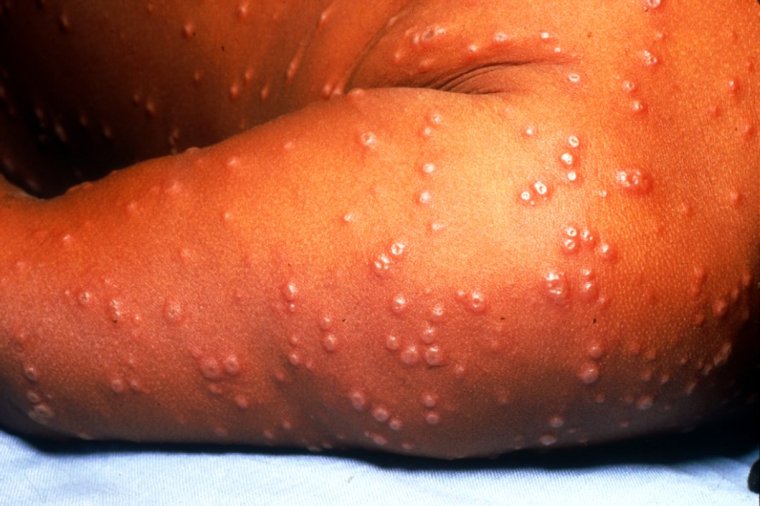
smallpox

My grandfather was a natural born storyteller. He had a tendency, however, to repeat the same tales again and again which didn’t actually bother us at all. He had a way of recounting the narratives that was fascinating. We each had our favorites from his repertory. I was spellbound by his account of helping his grandmother to amputate the crushed leg of a miner. I tried to imagine a world in which a twelve year old would have to do such a thing before the dawn of the twentieth century in an area so isolated that people had to take care of themselves for lack of a nearby doctor.

Grandpa also spoke of a time when he was a bit older during which his father and stepmother contracted smallpox. He became their caretaker and endured a forced quarantine that involved having an armed guard walk the perimeter of the property to ensure that nobody other than a doctor went in or came out of the house. My grandfather was a virtual prisoner while his folks struggled for their very lives. He says he never really thought about his own safety until the ordeal was finally over. In the meantime he was certain that his father was going to die. In fact he noted that it almost appeared as though his dad’s nose was going to fall from his face because he was so ravaged with the puss filled sores.

Grandpa’s two charges eventually beat the disease and the people of the town marveled that he never came down with the illness given how contagious it was. They began to treat him with a new regard as though he were some sort of super human. They hired him to travel around the county shooting stray dogs that they believed might be responsible for carrying the disease. While my grandfather was a bit squeamish about taking the lives of innocent critters he could not be certain that they were guilt free with regard to being carriers of smallpox and so he went on the hunt and put a bit of change in his pockets to boot.

Grandpa was as surprised as his neighbors that he never caught smallpox from his parents but he explained away the mystery by noting that he had always been rather immune to sickness. I suppose that his theory was somewhat proven by the fact that he lived to be one hundred eight years old and rarely even had a cold.

After he was gone I first heard about the 1918 Spanish flu pandemic that killed millions of people worldwide. I would have liked to ask him how he did during that viral outbreak. I’ve often wondered if he managed to escape illness even in the dire circumstances of that epidemic.

While I’d like to believe that I might have inherited some magic gene from him that will protect me from major contagions, experience has taught me that I generally fall to whatever illness is on the prowl. I had the mumps before I even started first grade and the chickenpox overtook me shortly after that. I caught the measles in the winter of 1958 when I was in the fourth grade and I do believe that I may have been the sickest of my lifetime then. I’d later develop a case of hepatitis that stuck with me for over three months. I literally worried that I had a chronic type because my body refused to shake the illness. Back in about 2009, I caught the swine flu which ended up being a real humdinger. My temperature lingered in the 103 degree range for several days and I felt a bit delirious at times. Still I have always managed to fight off diseases with no lasting effects. Maybe I’m not so much like my grandfather as like his father who appeared to reach the brink of death with smallpox but came miraculously back to life to live many more years.

My doctors tell me over and over again that I am a strong and healthy woman. They sometimes can’t believe how well I am doing given my age. I’ve got some brittle bones, an esophagus that likes to narrow, some arthritic knees, and a bit of elevated cholesterol but otherwise my heart is fabulous and I show signs of being someone who may live long enough to tell my own stories of life in the “old” days.

I have to admit to being concerned about the coronavirus. I’m attempting to prepare for a worst case scenario while also remaining optimistic that the worldwide medical community will somehow manage to keep its spread in check. I worry a bit about the fact that it appears to have the worst effect on older individuals which would include large numbers of my family and circle of friends. I also somewhat selfishly would hate to think that it might somehow interfere with my planned summer trip to Scotland. More importantly though is the pain and disruption that it might potentially inflict on so many people in the world. I really don’t want anything like the 1918 pandemic to ever happen again. I’ve read enough about it to understand how terrifying it must have been.

I take small comfort in my grandfather’s story of survival in a time when there were few alternatives to simply suffering through the impact of disease. Somehow we humans made it then and I have little doubt that we will do so again. In the meantime I’m setting aside lots of soap and disinfectants and prepping for whatever may come. Hopefully it will just be a normal summer with a trip to Scotland and Olympics in July. We’ll see.

Explorations of Our Being

mind-thoughts-warp_1024

What is this mind that we humans have? How does it work and how much of it goes unused because we have yet to tap into the totality of its power? Why is there a disconnect between how I see myself from the point of view of my thoughts and how I really appear in my physical reality? What causes some of our memories to remain vividly intact for all time and others to fade into oblivion? What happens when a mind becomes muddled, filled with extreme sadness, fears or paranoid thoughts? These are questions that have confounded me for years. They are the kind of queries that have guided the thoughts of brilliant individuals and ordinary souls for centuries. Somehow we have obtained more and more of a grasp on our physical being over time but clear knowledge of the complexities of our brains still remains somewhat elusive.

We humans don’t simply react to the world around us. We contemplate it sometimes to the point of obsession. We have an innate desire to dream, analyze and restructure. There is no reason for us to enhance the world beyond our most basic physical needs and yet we do. We don’t simply endure the unfolding of our lives but instead reflect on all that has happened to us, sometimes with joy in such remembrance and sometimes with great sorrow.

Memories are a remarkable aspect of our humanity. We quite often retain vivid pictures of things that we have experienced even decades after they occurred. Ironically the very incidents that we would most like to forget because of the pain that they brought us are sometimes the ones that remain the clearest in our minds. What is it about trauma that etches it so deeply in our psyches?

On the day of my father’s death I was only eight years old and yet I can recall details about every aspect of that horrific event from the time that I awoke to hear my mother weeping until the end of the evening when she and I cried in each other’s arms. I can see colors and hear sounds as though all of my senses were somehow heightened in a way that I had never before experienced. Even more than sixty years later thoughts of that day bring feelings so visceral that they still cause pain.

So too it has been with more generalized occurrences that impacted the whole of society with profound consequences. I know exactly where I was sitting and what I was doing when I first heard of the assassination of President Kennedy. I do not know if we had a Thanksgiving dinner that year but I can tell you where I was and what went through my mind when I watched the president’s funeral procession and witnessed the murder of Lee Harvey Oswald.

I still catch my breath when I think of the planes flying through the twin towers of the World Trade Center. I literally get a flutter of anxiety in my heart when I picture their dramatic collapse. I hear the screams and feel the terror that filled my thoughts in the split second in which I realized the reality of what was happening.

Over the years it has been the most horrific moments that have stayed permanently embossed on my psyche. I am filled with grief when I think of the first time that I truly understood the extent of my mother’s mental illness. It coincided with the first landing on the moon which is only a blur in my mind compared to the recollections that I retain of her pain.

I am haunted by images of the flooding from hurricane Harvey in my beloved city and the aftermath of destruction in the homes of family members and friends. I still get a catch in my throat when I think of how I felt when I saw what had happened after hurricane Katrina in New Orleans, a place I think of as a sister city.

So it goes with my memories. I barely recall the details of my college graduation or even my carefully planned wedding but I can describe the tiniest of particulars on the last days of my mother’s life. I wonder what it is about my mind that clings so tenaciously to thoughts of events that I would prefer to forget. What kind of chemical or physical reactions occur in our brains that causes such impressions to stay with us? What is it about our very humanity that stirs us to contemplate such things?

I try not to become too obsessive about such ideas. I purposely busy myself when my ruminating ventures into territory that is too dark and yet I am fascinated by the mere possibilities of unlocking the inner workings of our complex being. Understanding the mind was at one time forbidden fruit. Now we have discovered so much about how it all works and yet there is still so much mystery when it comes to comprehending the most spiritual aspect of our being. Exploring the territory of our very being has been the quest of philosophers, physicians, scientists and theologians and still we are in the dark when it comes to the how and why of our deepest thoughts.


Pairing the Past with the Future

history_2It’s been nine years since I retired from education but I have continued to regularly work with students. I can state without hesitation that they are learning mathematics at a much higher level and faster pace than any program that was around when I was a student back in the nineteen fifties and sixties. They are seeing quite advanced material but I’m always a bit concerned that there are still too many who are struggling for mastery of the concepts. I fear that we still operate from a one size fits all mentality when it comes to the pacing of our teaching when we still have students chomping at the bit to move forward and even more struggling to keep up with the flow of information. We seem to have made a race of the learning process rather than tailoring it to the individual needs of each student.

Part of the problem that we have is that as we progress there is more and more material to cover within any discipline in the same amount of time that there was over a hundred years ago. This becomes a particular problem when it comes to and subject but particularly with history, whether it be about the state, the nation or the world. Choosing what to cover and what to leave out has created well known problems with the historical knowledge that young people possess after finishing the required coursework in school. When I was a student the curriculum essentially ended with World War II, leaving more time for in depth emphasis on critical topics. It’s been more than fifty years since I formally studied history and so much has happened since then that needs to be presented and discussed, but what has to go to make room for more recent events?

I suppose that if I were to suggest one very major change to the general education programs in our school it would be to have history be an integral part of every single year of school rather than providing a bit here and a bit there as it now is. American History should be taught in the the fourth or fifth grade, again in the eighth grade and for two years in high school with World History being given at least that much time as well. Courses such as psychology and sociology are certainly interesting but they are not as essential as learning about the past and understanding its impact on both today and tomorrow.

We need a better educated population not just in the STEM subjects but also the social science of history. There is great wisdom in the old saw that history helps us to learn from the mistakes of the past. It furthermore helps us to make connections that provide us with tools for analysis of the present.

I sometimes shudder when faced with the ignorance of history that I encounter with far too many of today’s young. I recall talking with a group of students who knew little or nothing about the political differences between John Adams and Thomas Jefferson which lie at the very heart of the arguments dividing our nation even today. They were unaware that we live in a republic rather than a pure democracy and have no idea what that fact implies. They were unsure of what actually happened in the holocaust and new virtually nothing about the Russian Revolution and the Cold War. They seemed to get most of their information from dubious sites on social media and much of what they did know      was either limited or outright wrong.

While we certainly need our mathematicians and scientists to combat our the problems that plague us, we also should demand that our young graduate from high school with a clear understanding of where our world has been and we must insist that the knowledge that our teachers impart is done so without a tinge of propaganda or editorializing. History is best taught from primary sources that demonstrate the differing points of view that led to decisions that influenced events. Students should be able to see how and why such choices affected outcomes. They need to learn that none of us ever operates in a vacuum and that how we react to events is almost always determined by the worldview of our own time in life.

I studied English grammar and literature in college along with mathematics. I learned that analyzing language or writing requires an understanding of the times in which a tract was written. It is far easier to understand characters of a story when we have a concept of what it was like to be them in a certain time and place. History is as important to the study of the great artistic works of writing as knowing literary devices. Our human experience as portrayed in art is dependent on the times in which the works were created and we will never fully understand them if we do not have some knowledge of history to guide us.

Education has essentially been done in the same basic manner for some time now with only a bit of experimentation here and there. We’ve had a kind of revolution with the teaching of mathematics and science that emphasizes both theory and practice using abstract, visual and concrete examples. It’s time that we rethink the scope and sequencing of history classes as well to allow enough time to study events and ideas in depth. It’s a challenge that we seriously need to undertake as overwhelming as it may seem. We owe it to our children to adequately prepare them for the future and the key to doing that well lies in understanding the past.   

What We Need

common-ground-dove

There were horrid things happening across the globe before I was born. There were horrid things happening across the globe when I was a child and a teen. I have witnessed horrid things happening as a young adult and now that I am in my seventies I still see horrid things happening both near and far. For a cockeyed optimist like myself it can be quite distressing to admit that there is something in our human natures that is sometimes violent and cruel. I always wanted to believe that mankind has been slowly evolving into a better version of itself, and I still think that is indeed true, but sadly it is such a slow process that it’s difficult to define the progress at times.

On a more personal level I see goodness in each of my friends and family members, people striving even sacrificing to be kind, loving, wise. Each individual has small moments of imperfection but on the whole they are grand examples of what mankind might aspire to be. They give me hope for the population at large because I do not believe that they are the aberrations, but rather that it is in the hateful and violent members of society that we find the outliers. Normal is good, abnormal is an unusual data point removed from the cluster of morality that defines most of the people in the world.

There are those who believe that the current times are somehow worse than other eras, but I would urge them to more carefully and thoughtfully study history because there is little that is actually new in the ways of our relationships and our politics. People have been lead astray by demagogues and tyrants for all time whether it be in a family, a friendship, a neighborhood, a town, a state or a nation. You would think that we would be more circumspect given all of the information about past troubles that we have, but in truth most of us are busy taking care of ourselves and those that we love. We tend to only have time to react rather than to reflect. Besides, with so many ideas and ideologies being thrown at us at once it is daunting to determine what is actually best. Instead history has often been a vast experiment of trial and error with some decisions enhancing mankind and others being dangerously abysmal failures. All too often hindsight becomes our teacher.

We can indeed learn from past mistakes but even then it’s important to realize that we are different from our ancestors. Times continually change and we are influenced heavily by our environments, what we love and what we fear or even hate. Making choices that will affect us and the people around us can be a gamble. Because each person on earth is unique there is no one size fits all way of educating or governing and yet we try even as we know that it is impossible to exactly meet everyone’s needs. Someone always seems to feel left out, abandoned either by family or nation. Such is the conundrum of our human attempts to make sense of the world and the reason why it is so difficult to enact solutions to the problems that plague us.

Freedom is a word with many meanings. Taken too far it can lead to trouble. Constricted too much it creates hostility. The key to a healthy person and society is providing just the right dose of fairness which may mean that the balance will sometimes seem unequal. Even within families a wise parent understands that no two children are identical, not even twins. So too it is with societies that attempt to be fair and just. It is difficult to know the best course of action.

As a school administrator I learned that some of my teachers wanted to be free to be themselves without much direction while others actually desired to have precise sets of rules by which to guide themselves. The trick in working with them involved crafting individual plans that took their specific needs into account. Allowing for differences sometimes created tensions because there were always those who insisted that everyone had to be treated exactly the same. The trouble with that logic is that it does not consider our human uniqueness and sounds good until it is executed in a real situation.

I find myself becoming increasingly disturbed by the urge of various forces to make us all think and act the same. We become enraged when we witness someone deviating from the thoughts and actions that we find the most appropriate. We harangue or shame those who disagree with us in the false hope that we might force them into submission to our way of looking at the world. Such has become a national pastime with celebrities being lauded or ostracized based on what they believe. In truth it is a kind of nationalized bullying that we need to abandon. We should be extremely careful that we are not ruining people’s reputations based solely on a desire to force agreement to our individual thoughts about how things should be. 

Propaganda and unwillingness to allow freedom of speech is growing all around us. Such efforts to control beliefs has been tried throughout history but it has never worked. We should be wary of those who would insist on conformity and resistance to divergent ideas. Right now we have people on both the far left and far right attempting to shut down our freedoms. What we need is for those who treasure liberty to lead by example which means acknowledging that we must make more efforts to consider the needs of each voice, not just our own. We must curb the outrage and find ways to understand and respect the very natures of our humanity. In doing so we might find the common ground that we both desire and need. As long as we keep censoring one another we will escape from the current cycle of outrage.