Policing Our Information

advertisements batch blur business
Photo by brotiN biswaS on Pexels.com

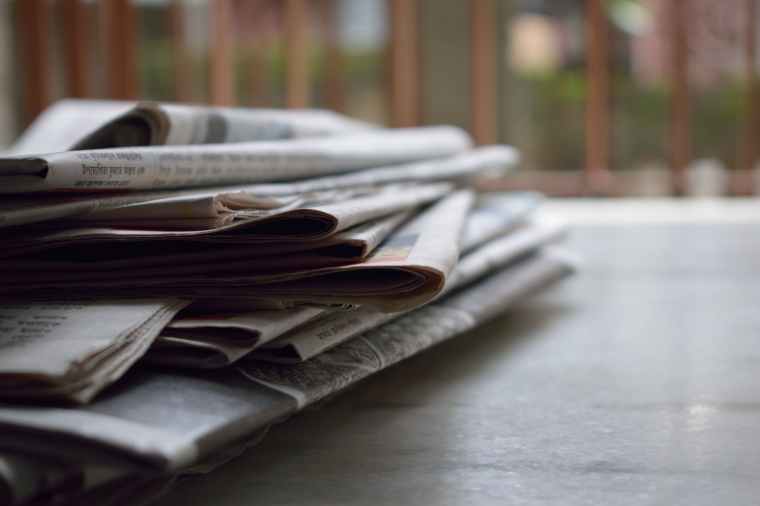
Long ago I was a daily subscriber to The Houston Post, a newspaper that ceased to exist after a time. It’s competitor, The Houston Chronicle, had never had great appeal to me, but in the aftermath of the Post’s failure I began to have the Chronicle delivered to my house each day. When I moved to a new home about thirteen years ago I was so busy with work and other responsibilities that I decided to only sign up for weekend delivery. Even then I hardly had the time to stop to read all of the Sunday sections. The paper often lined the bottom of my trash can without ever having been adequately digested. With the advent of online news sources I was more likely to sit with my laptop on my knees while I sipped on my morning tea and munched on my breakfast. I eventually decided to stop the delivery of a newspaper to my home and instead subscribe to national sources offering coverage on my computer.

A couple of Sundays ago when I visited with my in-laws I noticed a copy of the Sunday Houston Chronicle lying on their kitchen counter. I was horrified to see how much it had shrunk in size. It looked more like something that might be distributed on college campuses by the journalism students than the local news source of the fourth largest city in the United States. I suppose that it has come to this dire end because of people like me who abandoned the paper when it became more of a vehicle for want ads and inserts from merchants than a purveyor of good quality information. In fact, such appears to be the fate of many newspapers around the country.

It makes me sad to watch the demise of good old fashioned reporting in local papers because there was a time when I wanted nothing more than to be a journalist. I dreamed of gathering information on the happenings around my city and then writing stories about them. I imagined one day garnering the respect of a byline with my name on it. The thought of being a newspaper reporter sounded exciting and important to me. Never did I imagine that news outlets would find themselves struggling to stay afloat, even in places with large populations. I did not conceive of a revolution in electronic reporting that would displace almost all but the most notable newspapers with online information delivered to computers in nanoseconds.

Not even when I got my first home computer was I able to foresee the future as it unfolded. Things changed so quickly that I hardly noticed what was happening. In the nineteen nineties when I was earning an advanced degree my professors urged me to learn about email and the Internet. Both methods were still clunky and not so easy to use, but I proudly complied and thought of myself as being modern and adventurous. By the turn of the century things were progressing online at warp speed and inventive minds were finding more and more ways to simplify the process of garnering information so quickly and easily that even small children learned how to use the worldwide web. It was a brave new world that was exciting and intoxicating, and it was being used more and more often in ways that most of us never thought possible.

Suddenly we were instantly linked to people all around the world with only a few keystrokes. Those old fashioned news sources made of paper that invariably contained old information by the time they were delivered seemed outdated and inconvenient and even overpriced given that they were so late in providing us details about the world’s happenings. I suppose that only those who contrived ways to stay relevant have remained robust, and even they must worry that the day may come when the marvelous invention of the printing press will seem as insignificant as a horse drawn plow or a buggy, the kind of things relegated to museums.

When Facebook came along it was initially the domain of college students, a way to get to know and communicate with more people than ordinary means allowed. By sharing photos and messages it was supposed to bring people together, and for a time that’s mostly what it did. Eventually adults long past their younger years entered the fray, and users began to realize the power of the comments on those walls. Facebook became a vehicle for presenting points of view, and setting up discussions. It was almost inevitable that it would also be a way of sharing news stories and political opinions. Editorializing and propaganda and stories whose veracity was questionable found their way onto people’s feeds without even asking. With information flooding in from hundreds of unnamed sources it became more and more necessary to fact check virtually everything that appeared on the Facebook walls. It also lead to abuses by information gathering sources that then used their data to target certain users with political propaganda.

By now everyone has heard the accusations of attempts by the Russians to influence the 2016 presidential election by using Facebook and other outlets to spread false information. Mark Zuckerberg has defended his organization by noting that his original intent was to do good by bringing people together, and to that end he did not want to become a judge and jury for who and what should appear in the newsfeeds of his billions of users. Nonetheless he has been criticized for not being more vigilant in monitoring the information that subscribers send and see on their walls.

I’m rather libertarian when it comes to any form of censoring. I find the idea of having someone determining what I may see on my Facebook page to be far more frightening than knowing that some of what is there is false and misleading. I would prefer taking the time to fact check on my own than to be limited by some kind of algorithmic board that scans the offerings and comments. While I understand that there is some exceedingly contemptible and frightening information being passed along as truth, I stand by the idea that it is up to each of us individually to decide what we choose to accept as fact versus fiction. In fact, I think that even if Facebook were to totally change it’s standards tomorrow by only allowing greetings and photos of family and puppies there would still be places where shenanigans rule.

Teachers have told me for my entire lifetime to beware of propaganda which may be found even in old fashioned newspapers and on television and in the speeches of our politicians. We’ve had the rainmakers and traveling medicine peddlers forever. Those who bang on drums and attempt to fool us into believing fake ideas have been around since the beginning of time, and one way or another we humans have had to be careful not to fall for their snake oil routines. It’s in our own best interests to always and without exception be wary. If something sounds too incredible to be true, it’s possible that it actually is a tactic to mislead us. There are so many ways to unfold the veracity of ideas, and we have to learn how to use them before following our emotions rather than our reason. We must always be willing to determine fact rather than opinion, truth rather than lies. We shouldn’t require Facebook to be our police and more than we asked that of our old newspapers. That’s why we have the ability to think. Let’s put that talent to use rather than asking a stranger to do it for us.

“Adulting”

close up photo of man wearing black suit jacket doing thumbs up gesture
Photo by Lukas on Pexels.com

The conversation was with a young man in his early twenties. He remarked that he was struggling with the act of “adulting.” I told him that if that was the case then he is rather normal. In fact, it’s not all that unusual for even a senior citizen to sometimes long to run away from adult responsibilities.

I just celebrated my fiftieth wedding anniversary. I was not quite twenty when I walked down the aisle on my brother’s arm. I made a number of pledges on that day that I soon enough found were easier to voice than to actually follow. Before my first anniversary my mother had a nervous breakdown. I attempted to lay all responsibility for her care at the feet of my aunts and uncles, but they were as befuddled by her illness as I was. They passed the torch back to me. I found that not even the pastor of my church was willing to assist me, so I took a deep breath and accepted the challenge of finding care for her. In the process I was transformed from a shy naive childlike young girl into someone able to argue for my mother’s cause and ultimately for my own. I found strength that I did not know was there, and I was all the better for my baptism by fire.

In the meantime my husband was struggling with being a full blown adult in his own right. He was not yet fully ready to become the hard working person that would ultimately emerge. He was in graduate school and often stayed out late with his buddies. He was unhappy with his classes and the arc of his future. He found himself feeling confused and wanting to just chuck it all. It was when he saw me struggling to accept and meet the challenge of my mother’s care that he rose up to support me, a habit that would become his forever crusade.

Often it is in meeting the trials and tribulations that befall us that we find our inner selves. All humans suffer in one way or another. We are beset with problems that force us to make choices about how we will live. That is when “adulting” often feels the most painful, but it is also the moment when we have the most potential to find out who we really are.

Throughout my life of almost seventy years I have encountered difficulties from which I wanted to flee. Most of the time running away was not an option. I sometimes initially reacted by screaming or crying in frustration. I literally begged God to take away the pain I was feeling.  I vented the anxiety that I was experiencing, but over and over again faced whatever demon was attempting to bring me to my knees. On most occasions I made I through with a sense that I had made all of the right choices. In others I knew that I had made terrible mistakes. Even then I learned that there are few decisions, no matter how poorly conceived, that cannot be corrected.

None of us are perfect or capable of always demonstrating maturity. We become tired or frightened and “lose it” as the saying goes. I’ve had moments as a mom, a wife., or a teacher when I’ve done or said things that later embarrassed me. Most of the time this resulted because I had simply had enough of stresses that seemed to pile up higher than I was able to stand. Our coping mechanisms are wired to only take so much before we blow a gasket. As long as our explosive moments don’t become habit, we are actually entitled to a loss of control now and again. Nonetheless, if our comments or actions have hurt someone, we are obligated to reach for our adult sides and fix the damage.

When I was in high school one of my teachers cautioned us to have as much fun as possible while we were still young. He advised us to sow our wild oats in our youth rather than waiting until we were middle aged. He pointed out that there was nothing quite as pathetic as a forty year old suddenly going through a second childhood. He spoke of individuals who eschewed their parental or marital responsibilities simply because they felt entitled to more “fun” than the day to day grind was allowing them. He painted a picture of how pathetic such people might be. We had visions of a balding guy riding around in a red convertible with a blonde woman young enough to be his daughter while his long suffering wife and kids were left behind. I have to admit that it was indeed a disgusting image.

I would not want anyone to have to deal with the difficulties that I faced at a very young age. There are other ways of slowly but surely becoming a responsible adult than having to face tragedies. My advice is to enjoy the freedom of youth as much as possible while also building a foundation that will ultimately support a strong sense of responsibility. The early twenties are a time for exploring and even making mistakes and learning from them. It’s when we begin to understand ourselves and the world around us, and when we develop the skills that will lead us through even the toughest trials. At the same time it can be one of the most enjoyable and liberating eras of our lives. In the end, if we have kept a balance between having a good time and building meaningful skills and relationships “adulting” will almost naturally come to pass.

An Encyclopedia of Knowledge

books education knowledge encyclopedias
Photo by Pixabay on Pexels.com

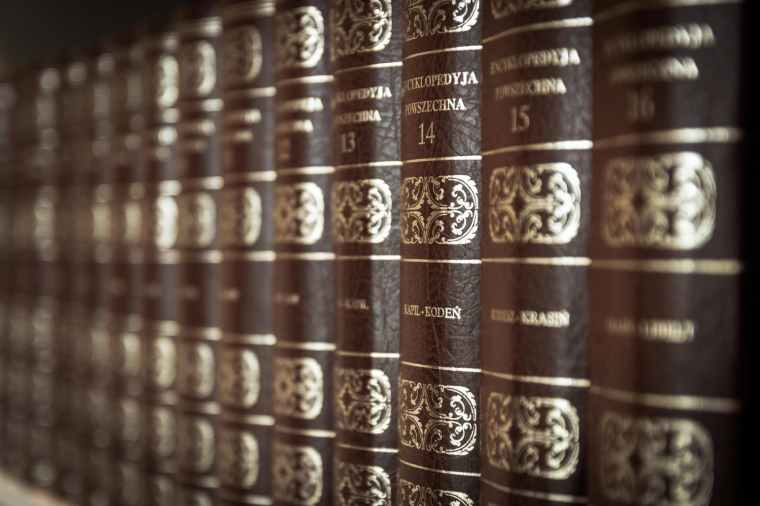
Discovering something brand new is quite exhilarating, and with the Internet it is far easier to do ever before. There was a time when a family set of encyclopedias often formed the basis of new learning, and many a curious person spent large amounts of time scanning the pages of those glorious collections of facts and ideas. Even the old volumes that were somewhat outdated still offered a cornucopia of information about the world in a time when the only other alternative for vicarious exploring was the library. Many a child lucky enough to live in a house with a set of Encyclopedia Brittanica held a world of excitement from “A to Z” at the fingertips.

Of course those old collections of Wikipedia like information have gone the way of the dinosaurs making it less and less necessary for young children to learn how to spell “encyclopedia” from Disney character, Jiminy Cricket. The Internet has taken the place of those rows of volumes that grandly announced that certain homes were purveyors and supporters of knowledge, and the extravagant investment in companies like Britannica or Compton or World Book was physical proof of dedication to learning.

There were often installment plans for encyclopedias back in the day. Patrons would purchase one volume at a time on a monthly payment plan. Each beautifully bound book would arrive along with a bill. My own father being consumed with a devotion to knowledge, books, and libraries had signed on for a set of Compton encyclopedias that were of dubious age by the time my brothers and I had learned to read. Nonetheless, most of the historical information was sound, and they became a kind of centerpiece in our family library that was lovingly stored in bookcases that lined our hallway. When my dad died, purchasing books became a luxury replaced by regular visits to the library. The encyclopedias became cracked and the pages began to rot. At some point my mother must have decided to divest herself of them because I don’t know what eventually happened to them.

Now the Worldwide Web is my go to source of quick research. As with the old books that I used, I have to be a bit wary of what I see, and I must check data against multiple sites. I find that there is always at least one address that contains quite accurate and up to date facts. It’s like living inside the great library that once graced Alexandria. I can lounge in my pajamas and munch on my breakfast while traveling through a virtual universe. Nothing is beyond my scope, and I revel in the excitement of it all.

I often think of my father and how intrigued he might have been by the technology that makes it so easy and affordable to discover faraway worlds and cultures. A good laptop provides more data at a far lower price than even the best encyclopedia. I can almost picture my dad surfing from one topic to another and enjoying all of the latest innovations with the same glee that he demonstrated for his prized books. He was a futurist who enjoyed reading about travels to the moon in an era in which such thoughts seemed to be the purview of dreamers. He had a wanderlust that he satisfied with his vacations and subscriptions to The National Geographic Society. He devoured literature and history, and never seemed to be able to find enough reading material to satisfy his voracious appetite. Having so much available with a few strokes of his fingers on a keyboard would have no doubt made him as giddy as a child on Christmas day.

Like my father I am perennially searching for interesting new ideas, and my trusty laptop is one of my most valued possessions. It takes me to places both sought out and unexpected. Each day I find that I am surprised by the new learning that it brings my way. I am admittedly as addicted to its power to transport me as my dad was to the books and the libraries that satisfied his academic thirst.

A good example of how the Internet sates my curiosity occurred recently when I was reading an article and an image popped up in a corner of my screen that distracted me for its color. As soon as I had finished the essay I clicked on the photo. It was the first in a series of slides about human towers. It seems that each year in Catalonia thousands of people converge to enjoy the tradition of watching organized groups take turns building a “castell.” These castles  are formed by creating a foundational base called a “pinya” upon which two additional bases are built before people then climb as high as nine to twelve feet into the air to form a tower of humans. Each group wears white pants and a solid colored shirt of a single color. Around their waists are sashes that also serve as a means of climbing. The process involves arranging the strongest and sturdiest of the members on the bottom level and then slowly moving upward until the lightest and most acrobatic form the summit. Then the process is reversed, all in a smooth flowing and systematic manner.

The photos that I saw were stunning in their beauty and so tickled my curiosity that I did additional research and learned about the history and terminology of this traditional event. I became quite intrigued by the difficulty of creating this human work of art, and wondered why I had never before heard of it. I suppose that next I will find some videos that show the process from start to finish.

We often complain that all of the technology that surrounds us is taking too much of our time or invading our privacy. We don’t stop to realize just how wonderful it has been in helping us to quickly and conveniently learn about the world in which we live. While the Internet has the power to drive us apart, it also might be the very thing that ultimately brings us together. We now have the capacity to see how true it is that we humans are amazing and to understand how much alike in our dreams we really are. Those dusty encyclopedias were once our bridges to understanding, but the new peddlers of information found at the stroke of a few keys are far more glorious.   

Anyone Can Do It!

black and grey casio scientific calculator showing formula
Photo by Pixabay on Pexels.com

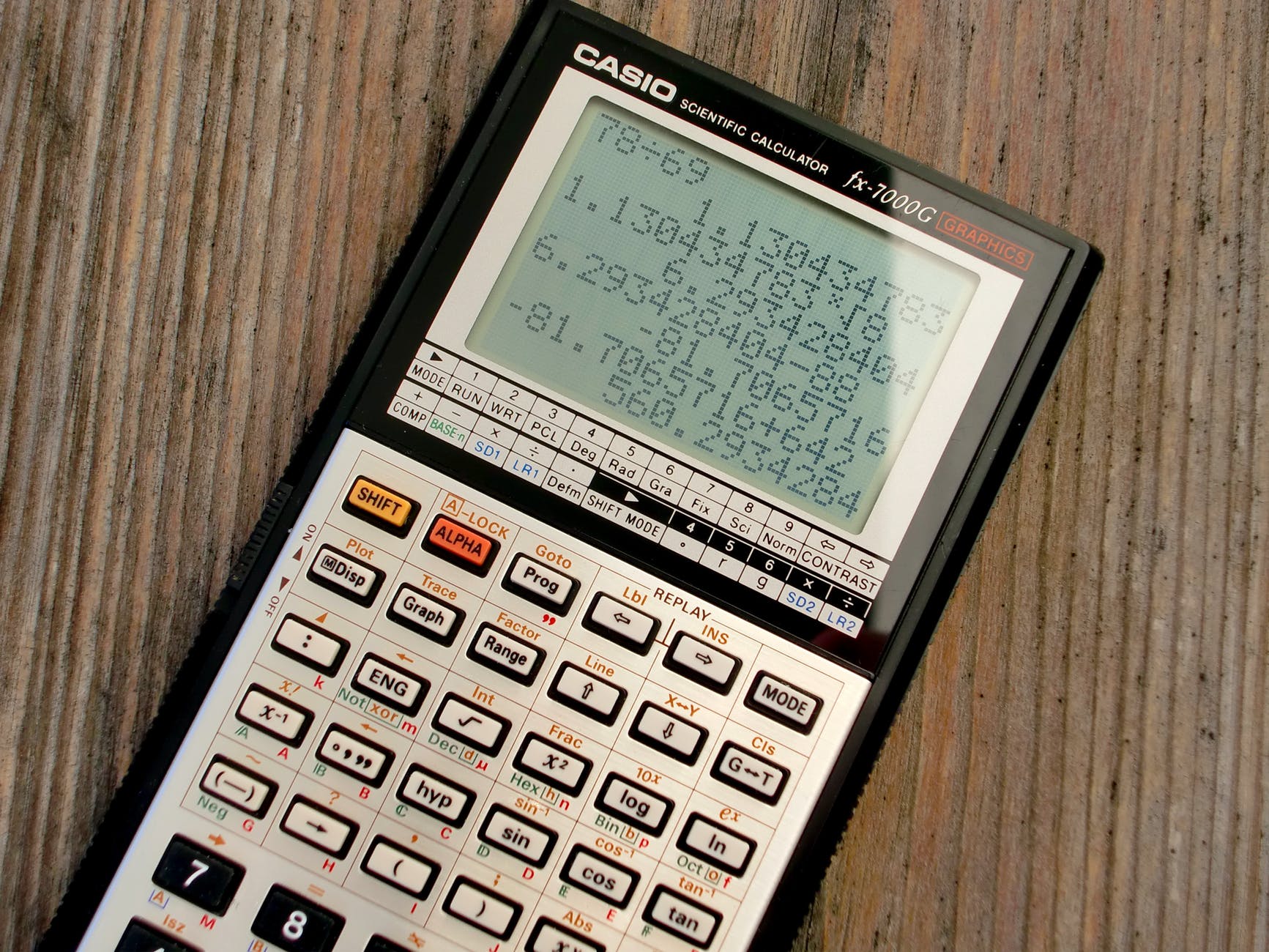
In all of my years of teaching mathematics the refrain that heard most often was, “I’m no good at math.” My job became to convince my students that anybody has the ability to learn the algorithms and fundamentals of math given a willingness to invest time and effort.

We all know someone who has a natural ability with all things mathematical. In my own case it wasn’t me. It was my brother. I had to go home from school each evening with my math book and my notes and work through problems until a light bulb lit up inside my brain. Sometimes that took just a few minutes and other times it took a couple of hours, but in the end I mastered one concept after another.

Most of my students have insisted that it is impossible to study for a math test. They are accustomed to memorizing facts for their liberal arts classes and they tell me that one will never know what problems will be on the quiz. Therefore they assume that working sample problems is fruitless, but I insist that it really helps. Just as doing reps in the various sports generally brings about improvement in muscle memory, so too does practicing mathematical ideas help imprint problem solving methods on the mind.

It took me several years before I understood the value of homework in math. I used to grudgingly do the problems as quickly as possible and I was unwilling to ask questions about things that I did not comprehend lest I be regarded as being not so bright. I was literally in college before I understood the value of asking my professors for help. I not only became more enlightened, but I also became known by them which was a big plus in my large university. I encourage anyone who is struggling with anything, particularly mathematics, to take full advantage of tutoring opportunities with teachers. It is one of the keys to mastering skills that may at first seem far too difficult.

I like to think that my own struggles with mathematics in my early years led me to being a better and more understanding teacher. I know how it feels to read a word problem and draw a complete blank. I recall tearful sessions with my mother after school when I would insist that I was never going to be good at solving problems. She taught me how to first work with the words, taking them apart enough to discover what I was being asked, and then applying the knowledge that I had learned. With pictures, highlighters and diagrams I now find that I am able to tackle any challenge, but it wasn’t so until I followed my mom’s advice.

I have a granddaughter who used to think of herself as being a bit slow on the uptake when it came to math. It bothered her that her brother never seems to have a problem to immediately understand even the most difficult concepts. She and I talked for a long while about my own struggles when I was her age, and she took my advice regarding the value of hard work in mastering her math lessons. Last year she was anxious about the end of course Algebra I exam that she would have to take. She spent hours studying definitions, processes and different types of problems. Whenever she came up with an incorrect answer she found out why and then worked dozens more until she was consistently getting the correct answers. In the end she received one of the highest scores in her class, but more importantly she learned that it is not only possible to study mathematics, but preferable indeed.

Confidence is usually the element that is missing whenever a student who is bright in every other way does poorly in math. At some point in time he/she has become convinced that it is useless to even try. Such students truly believe that they are missing some gene that would allow them to do better. They take tests feeling defeated before they have even lifted their pencils. It’s up to their parents and teachers to help them to find the good feelings that they need to do well with mathematics, and to show them how to work hard to get there. That means eschewing a temptation to tell the young ones that they come by their dread of mathematics naturally because difficulty with math runs in the family. There is little worse than instilling such fear.

We have to be certain not to create self fulfilling prophecies in our young. It is possible to master mathematics slowly but surely and often with a great deal of work. It is no different than practicing a butterfly stroke or learning a new techniques for drawing. It takes patience and determination in some cases, but it can be done. I have watched hundreds of my students become adept in a subject that had previously been terrifying for them. My job was not to trick them, but to show them the way.

The best mathematics teachers that I have known all rejoice when someone who has struggled finds the light. There is no better feeling. If I were able to accomplish one thing in my lifetime it would be to replace comments like “This is too hard. I can’t do it. I’ve always been terrible in math.” with ideas that speak to the value of practice, asking questions and being positive. One day I hope to hear more of “I don’t get it now, but I know I will. I know that anyone can do it.”   

My Horn of Plenty

abundance agriculture bananas batch
Photo by Pixabay on Pexels.com

I knew a man who had suffered greatly during the Great Depression. He and his family oftentimes went hungry and their mealtime staple was usually a pot of beans. When he finally made it into the middle class as an adult he refused to have beans at his table, not even red beans, although he was a bonafide Cajun.

My mother sometimes struggled to put food on the table, but she liked to brag that in spite of our meager budget we never once missed a meal. She was incredibly creative when it came to stretching the offerings in the pantry. She was such a good cook that we rarely noticed that we were sometimes nearing the end of our stores. Only once in a great while would the refrigerator be almost empty, and the cupboards be bare. Even then Mama used her ingenuity to whip up what felt like a feast. She told us that she had learned from her mother who fed a family of ten during the great depression. She told us the story of how our grandmother would cook a whole fish with head still attached. After everyone had taken their share Grandma would eat the head. Mama laughed and said the her mom was actually getting the part with the most vitamins.

I was a skinny girl who barely weighed eighty eight pounds on my wedding day. Food didn’t really matter that much to me. I rarely ate breakfast which was no doubt a bad thing, but I never really missed it. I took a sack lunch to school and it usually consisted of either a bologna sandwich on white bread or a fried egg sandwich. The egg was the more delicious of the two, but it embarrassed me to open the wax paper and let the aroma of cold egg waft across the cafeteria. Someone invariably made a comment, and I quietly did my best to disavow the idea that it was all that we had for that day.

It was supper time when my mother became like the Julia Childs of the low economic set. She was literally able to make hot dogs into a gourmet dish, often making up recipes to use the ingredients that she had on hand. After my Grandmother Little she was the best cook that I have ever known.

I suppose that I was much more affected by the scarcity of food in our home than I ever dreamed because I eventually developed a kind of fetish for fresh fruits and vegetables as well as lean cuts of meat. I like to have my larders well stocked at all times, and I get a bit nervous when they are not. I’m not much for purchasing junk food because that was never something that we kept around my childhood home. Instead I take great joy in visiting a farmer’s market or a really good produce department. I become like a kid in a candy store in such places. In fact, I actually enjoy going to such venues for fun. I suppose that if I am honest I must admit to carrying a hidden fear that the food will one day run out.

Nothing pulls at my heart strings more than seeing photos of starving children in distant lands. My mama used to caution us not to waste food, reminding us that children in some places would be more than happy to have the plenty that she put on our table. My brothers sometimes joked when she was not around that it wasn’t as though we could put our waste in a little box and send it somewhere that it would be appreciated. Of course, that was before we grew up and realized that even though we lived on the edge, we still had more than millions of souls whose misfortunes made ours seem like nothing.

I worked as a volunteer at the Houston Food Bank a number of times. Some of the students that I have taken with me ironically had used the services on a regular basis. It was humbling to realize that even within my own city there are families struggling to get the proper nourishment. I’ve often thought of my own mother and her incredible knowledge of ways to create a healthy diet on a very small income. We may have eaten beans and greens, but she understood the value that they gave to our diet, and cooked them so that they were also delicious. A problem that far too many people have, is a lack of understanding of how to feed themselves and their loved ones with only a small number of ingredients.

I have a good friend who is much like my mom. She uses every part of every kind of food that she purchases. She boils the tops of beets and the peelings from potatoes and all the rest of the seemingly unusable parts of vegetables to make broth that is filled with vitamins and flavor. She purchases big bags of overripe bananas that are practically being given away and freezes them for the smoothies that she makes her husband each morning. Whenever I’m looking for a good way to use food to its utmost she provides me with dozens of ideas. She even knows how to make her own chocolate and has devised a method for making ice cream that doesn’t even require a machine.

I used to shudder whenever I had cafeteria duty in the schools where I worked as I watched the garbage cans filling with perfectly good items that the children simply did not want to eat. I thought of those babies with bloated bellies and wondered if they would have been more than happy to munch on the food that would end up in a landfill. I found myself understanding what my mother had been thinking when she told me and my brothers not to take what we did not think we could eat. 

Food is one of our most basic needs. It is also a way to celebrate and gather with friends and family. We humans have turned eating into an art form. It is one of life’s great joys, and as I grow older it has also become a source of contentment for me to choose a juicy red tomato or find a display of perfectly formed apples. As I store away the meats, fruits, vegetables and grains I feel so thankful. Now when I make an egg sandwich for myself I see it as a great gift. The horn of plenty that is my refrigerator and pantry makes me feel quite thankful, particularly for having a mother who so quietly and courageously fed me an my brothers with no complaint and great joy. She taught me to have an appreciation for whatever I have and to never forget those who have so much less.