Those Kids

bad kids

A cousin shared a story from The Washington Post written by a teacher who considered the dilemma of THAT kid, the one that drives teachers crazy and worries the parents of the “good” children. I was sobbing by the time that I reached the end of the very well crafted piece because I thought of all of THOSE kids who crossed my path during my teaching career. They touched my heart when I taught them and to this very day I worry about what may have come of them. They were the youngsters whose lives were riddled with troubles that not even an adult should have to face. Their behavior all to often reflected the pain that they were feeling and the confusion that they riddled their minds in having to face situations that were beyond their control. I hope that I helped them in some way, but I also know that there were times when they frustrated me so that I let them down. I see their faces with those looks of longing for compassion that were often masked by actions that seemed so horrid.

The first of them was a child of only ten who disrupted class on a regular basis. Most did not know that she lived in dire poverty with absentee parents. She was followed by the nine year old boy whose mother left him to watch his little sister while she worked nights as a prostitute. There was the young man whose mother had attempted to set him on fire when he was only an infant and the girl whose uncle impregnated her when she was only twelve. I’ll never forget the teen who witnessed his father murdering his mother or the one whose mother shoplifted to keep the family from starving. They were all part of a band of children whose lives were often defined by poverty and parents struggling to fight their own demons. They did not start life as troublemakers. They did not want to be viewed as bad seeds. They were innocents who got chewed up by a world that they did not fully understand. In their fight for survival they asserted themselves and pushed back. They became angry and difficult to handle.

How many of us would have been able to endure some of the horrors that they faced? Fate had subjected them to ordeals that no child should ever encounter. They acted out. They behaved badly. They were screaming for someone to help them.

I did my best with most of them but sometimes I became tired and frustrated and passed them along in anger. I wanted them to be punished for ruining the calm of my classroom. I disliked them for the distractions that they were. I fell into the pattern that they had already experienced hundreds of times from adults, that of being ignored or punished for the sin of reacting to adversity the way most of us probably would given the circumstances of their lives. I feel guilt for the times when I gave up on them.

There was a young man from a decidedly dysfunctional family. He exuded a tough guy image. It was his way of coping with abuse by those who were supposed to love him. He made an ugly racist comment to another student. He claimed that he was only joking, but I knew that he was really just crying for help. Our answer was to expel him from our school. A counselor sobbed for him and begged us to reconsider. I was afraid to counter the majority opinion even though I did not believe that sending him away was an appropriate answer. I voted with the group rather than following my instincts. He only became worse because in a sense we had convinced him that he was as worthless as his parents constantly told him that he was. I still grieve over my lack of courage in defending him along with his braver advocate. He needed love at that moment, not rejection, but we we not willing to listen.

So it often is with THOSE students. We adhere without thought to sets of rules that do not take into account what is behind the reprehensible behaviors. We wash our hands in innocence insisting that exceptions only make matters worse. It’s easier to operate from words on a paper, set in stone without consideration of all of the facts.

I think of one of my very best principals, a woman who cautioned me to be flexible with my rules and consequences. She urged me never to paint myself into a corner. She warned me that there will always be those for whom the so called rules do not really apply. She was as wise as Solomon in guiding me when I was just a pup in the beginning of my teaching career. I understood what she meant as I met more and more of THOSE kids. I realized that I had to attempt to reach them rather than judge them. I had to love them as much as I did the ones who were no trouble at all.

I witnessed transformations. The boy who threw books and told me to F off graduated with honors as the president of his class. The young man who ran with gangs doing despicable things changed his ways and became a police officer. The kid who nobody could control went to college and earned multiple degrees because “somebody took the time to care.” Nobody should ever wantonly be tossed on the dustbin of society while they are still young. Our goal should be to redeem them rather than to urge retribution against them.

I still cry at the thought of what some of my students had to endure. I flinch with guilt at the realization of how I may have failed them too. I hope that I made a difference for most of them. I’d like to think that perhaps they are now doing well. I still love THOSE kids. I hope they know.

When One of Us Hurts

facesbottom_V2_tripleline

We can’t run and we can’t hide. Problems will find us no matter how hard we try to escape from them. Not only that, we can’t avoid the reality that all of us live in a symbiotic relationship even when we have never met each other. In fact, we intersect with all things on this earth and in our universe. The old adage that we feel a butterfly flap its wings in Africa is not that far fetched. Sooner or later the cumulative effect of our interactions and those of the natural world have an impact on us. To deny this simple truth is to threaten the very health of all humans and the survival of the earth.

We like to believe that when one person is hurting it has nothing to do with us. We may not have caused that individual’s problems, but there is almost always a kind of ripple effect that reaches out in all directions from someone with a shattered heart. In a million little ways each person has an impact not just on the people who know and love them, but on strangers who may not even realize their existence.

As parents we attempt to instill character and family values in our children. We often forget that they won’t always be with us. They will encounter people who may ultimately misguide or misuse them. Nothing hurts us more than seeing a loved one who has been degraded and disappointed by someone that they trusted. We would rather have to deal with something terrible ourselves than have to see family members or dear friends in pain, and yet such situations are very much part of human life. It’s critical that we teach our young how to work their way through the tough times because none of us fully escape them. It is impossible to be totally sheltered from hurt and betrayal.

Flexibility and resilience are two often ignored and underrated characteristics that help us to deal with tragedy. It’s critical that we take time to demonstrate to our young how to keep moving forward even when our path seems to be impossibly blocked. Providing them with a place where they feel free to vent and then communicate their fears is a first step in helping them to find solutions to the difficulties that plague them. Every person should understand the simple idea that there is always a way to resolve the conflicts in their lives. The outcome may be far different from anything they have ever imagined, but nonetheless a way of crawling out of the muck.

We don’t have to be filled with rainbows and unicorns and unrealistic expectations. Going to Disneyland is not always an answer to our prayers. Sometimes we have to endure tough times and work harder than we ever thought possible just to keep from falling into a pit of despair. It is in those times that we find our truest allies and friends and then it is incumbent upon us to always remember them when their moment of uncertainty occurs. We are in this crazy mixed up world together, and brawling over who is right and who is wrong only clouds the issues and delays solutions. Someone has to be the adult in the room.

Years ago my husband was critically ill with a disease that more often than not killed people back then. He was in the hospital for months undergoing chemotherapy in the hopes of a cure. I had two little ones at home that needed my care so I wasn’t always able to be with him. His mother on the other hand was able to sit by his side throughout his treatments. In all honesty I became jealous of her attention to him while I was stuck at home with the children. Even when I showed up at the hospital she took control of the situation and made me feel as though my concerns did not matter. I allowed a smoldering anger to build up inside until I was about to burst. I finally admitted my feelings to my mother who gave me absolutely perfect advice.

She reminded me that my mother-in-law loved her son as much as I loved my two daughters. She asked me to imagine how I would feel if one of my girls was in the hospital fighting to win a battle with a deadly disease. She said that this was not a time to have a contest of who loved my husband best because he was in a very difficult position and should not have to choose between his mother and his wife. Then she said that what was needed most was for someone to emerge as the adult in the room, someone who loved everyone so much that he or she was willing to step back and just go with the flow of things.

Of course she was not so subtly hinting that I needed to be that person. She suggested that I keep the home fires burning in my husband’s absence and let his mother sit by his side. She pointed out that each of us has a role to play in the many chapters of our lives and if we work together everyone will ultimately come out better. It was wise advice that I decided to follow. In the process I began to better understand just how interconnected we all were in the challenges that we face. I realized the love that prompted my mother-in-law’s seemingly overactive concern. Instead of thinking of how I was feeling, I began to empathize with her and with my husband. In that moment of understanding I saw the importance and the power of working as a team.

We delude ourselves if we believe that we can close our borders, lock our doors, hide in our rooms. The world will find us and if we have not embraced it before hand it will overtake us. For our own sakes and those of our children we must be willing to accept differing points of view and find ways to eliminate hurt and pain whenever we encounter it. When one of us hurts, all of us hurt and the best way to counter the suffering is to demonstrate compassion. One day it may be our turn to suffer and hopefully there will be unselfish souls to help us.

Keep On Keeping On

U-Turn section

When we are young we tend to be impatient. We see life as a sprint rather than a marathon. Every mistake we make feels like the end of possibilities. We fret over our futures and worry that our lives are over before we even get started. I recall thinking that I would never experience any of the things that I dreamed of doing. I was in a hurry, and life rarely works that way. Over the decades I’ve learned that there are some things that we can’t rush, but they happen all in good time.

When I graduated from high school I enrolled in college but I honestly felt totally confused about what I wanted to do with the rest of my life. I found love with the man who is now my husband, and nothing mattered more to me at the time. So many young men that I knew were being drafted into the army and shipping off to Vietnam where some of them died or were severely wounded. The nation was in a state of upheaval far worse than anything we are now experiencing. Somehow I lost my way and when the chance arose to marry the one person who made me feel good every minute that I was with him I leaped at the opportunity.

I was determined to continue my education even as an incredibly young married woman and for two semesters after my wedding I was as good as my word. Then my world came crashing down around me when my mother’s mental illness advanced to a stage that was more than she was able to bear. I became her lifelong caretaker even as I had little idea of what to do or how long this journey was going to take. I was playing each moment by ear and hoping for the best. On top of everything else I suddenly found that I was pregnant with my first child. Nonetheless I kept taking classes in spite of the reality that none of them felt right for me.

My mother’s battle with mental illness would recur again and again and I would need to focus my attention on her whenever she was especially sick. I decided to take a sabbatical from my university studies after my first child was born. I vowed to return to complete a degree of some kind but for the moment I had my hands full. Things became more complicated when a second daughter was born and my mom’s illness became a constant in our lives. My husband also developed a life threatening disease when we were in our mid twenties that required many months of hospitalization and chemotherapy. Any thoughts of college that I may have had were set aside as I buckled down to take care of my mom, my children and my husband. Somehow the years slipped by and any promise of graduating from college seemed remote so I found little jobs here and there teaching preschool or working as the Director of Religious Education at my church. I had turned thirty before I once again became determined to finish my studies.

I brought a great deal of wisdom and experience to my second foray into education. I found that I enjoyed my classes and gave extra effort to them out of joy for learning. I finally knew exactly what I wanted to do with my life and that certainty gave meaning and purpose to each of the courses that I took. Before long I had earned my degree in education and began teaching in earnest. I would spend the rest of my working days with children and teens. I found that I truly enjoyed my job and the real life experiences that I had encountered were as important in preparing me as my studies had been.

I earned a high level of satisfaction and success in my career. By the time I retired I had taught thousands of students in grades from preschool to middle school to high school to college. I had been an administrator and a mentor to teachers. I felt fulfilled and happy. Since my last full time job I have tutored students and taught children who are being homeschooled. I write every single day as well which was a secret dream that I had long held.

I like to tell my story to young people because I think that I am a living example of the adage that it is never too late to be the person one wants to be. I was thirty two when I earned by degree. I was in my forties when I received a masters degree. I have been learning and working hard for all of my life. I have been willing to think out of the box and try things that had never occurred to me to do. I have never given up on myself, and even when times were tough I believed that brighter days were most assuredly ahead.

Sometimes it takes a bit of sacrifice to get where we want to be in life. We may not get there in the normal ways. Our paths may be rugged and difficult to endure, but with determination we can and will overcome the obstacles that seem to stalk us. I was unable to control all of the situations that overtook my life but I could take one or two classes at a time each and every semester until I finally walked across the stage for my diploma.

I have genuinely had it all, and so can almost everyone. Where there is a will to accomplish something there is always a way. I never belonged to a sorority or lived on campus at a university, but I still made friends in my classes. I had to forgo vacations and all sorts of luxuries for years, but eventually I was doing well enough to treat myself. I had a grand purpose in caring for my family, and I’d like to think that I inspired my daughters to live their lives to the fullest. I’ve tried to help my students also understand that the problems that have daunted them are only temporary detours. If they just keep on keeping on they will emerge into the highway that leads them to their grandest dreams and a few surprises that are even better.

Longevity

OldAgeNE-Post

The leaders of Naples, Florida have embarked on a program designed to help its citizens live longer, happier healthier lives. To that end they studied five places around the globe where the average life span is above those of other cities and countries. Their research has revealed that there are indeed some things that we can do that appear to help individuals find better ways of living longer. Since embarking on this program the money spent on medical care has gone done and the life span of the populations has dramatically increased in Naples. So what are the simple ideas that seem to be doing wonders there?

Everyone is encouraged to eat healthier by particularly including more plant based menus in diets. Stores feature products and options that are known to produce longevity, and restaurants are vying to offer entrees that use healthy ingredients. The populace is responding positively by choosing healthier foods and exercising more. In fact, many employers are providing time during the work day for physical activity and offering attractive incentives and bonuses for those who participate. People are walking, biking and making exercise part of their daily routines. Schools are even opening early each morning so that children will have time to play outdoors or in gyms before settling down to academic routines.

The studies all demonstrated that having one glass of red wine each day also does wonders for the health and well being of adults. It’s becoming commonplace for the locals to pause for a glass of wine and fellowship each afternoon or evening. Whether it’s the wine or the time spent with others that is making the biggest impact isn’t certain but results are happening.

Those who have some type of religious beliefs or philosophies also appear to live happier and longer lives. Religion seems to lessen stress and provide people with a sense of belonging to something bigger than themselves. Those who have a purpose in life also do better, and so many religious activities encourage service to the community where everyone wins.

City planners are deliberately changing the environment of the city so that the locals almost naturally begin to adopt lifestyles that lead to better mental and physical health. There is an emphasis on being outdoors, gathering together, and eliminating stress when possible. Even the landscaping and building of roads is designed in the hopes of slowing down and enjoying the moment. Pleasant walkways have been added all over town and old roads have been reconfigured. There are cycle lanes that make it possible to get to work and run errands without ever needing a car.

The increased level of participation in the various programs has been almost exponential. As one person gets healthier others are encouraged to see what happens if they also change their ways. Everyone begins to benefit. The city’s longevity age has gone up to 83.1 years while that of the rest of the country is declining. People are enthusiastically embracing the lifestyle movement, even attending discovery classes that provide them with ideas as to how to feel more productive and part of the fabric of  society.

The hope is that the people of Naples will live longer without chronic illnesses or pain and that when it is time to die the end will be quick. In many parts of the world this is already happening, and aside from genetics, the places where this occur share the kinds of lifestyles that Naples is trying to implement for its citizens.

I suppose that I would not mind living to one hundred or beyond like some of my relatives have done. My only concern is that I might become a burden to my family and spend my final years in a reclusive state of pain or dementia. If I were able to enjoy my days as my grandfather did until the last few months of his one hundred eight years I would be eager to hang around for a very long time. Sadly I have too often seen the exact opposite of this where elderly individuals are confined to beds and wheelchairs with little stimulation or purpose day after day for years. They grow weary of waking up to yet another morning of slowly watching the hours tick by. Their children grow old themselves and become less and less able to care for their parents. Often the ancient ones end up all alone and at the mercy of care givers who may or may not be dedicated to making them comfortable and happy. It is one of the big secrets of our society that we tend to avoid because the thought of it is so unpleasant.

My doctor tells me that medicine is making great strides with hundreds of diseases that used to greatly restrict the lives of the elderly. He is confident that even within the next ten years people will be free of illnesses and conditions that now plague us. If that is so then we will need to plan for more and more old people living longer and longer. Hopefully those added years will be good ones.

They Just Set Women Back

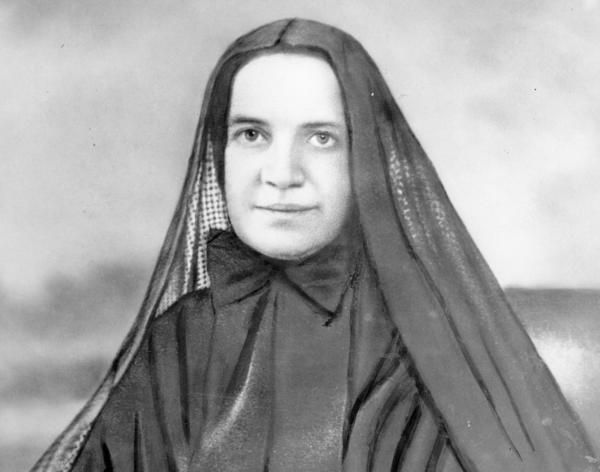
St Frances Cabrini

For many years in my adult life I was a member of St. Frances Cabrini Catholic Church. I spent some of my happiest times there, making lifelong friends who literally changed me for the better. At one point I even became one of the Directors of Religious Education which was a groundbreaking move for the parish which had before only employed nuns in such positions. I was honored to have been chosen, but always felt humbled and a bit lacking in the ability to fill the shoes of the two inspirational religious ladies who had come before me. Not everyone in the community was happy with having lay people in charge of such an important program but the times were changing and it was incredibly difficult to find nuns willing to work at such jobs.

My co-leader and I met with a great deal of opposition and worked for an abysmally low salary. The Parish Council had yet to realize that they needed to balance out our pay with the reality that they were not furnishing us with a house, car and food as they had done for the religious women who before had literally lived at the church in a makeshift convent. Because I was able to make four times more working as a teacher I eventually left that job and upon my departure recommended my dear friend Pat as a replacement and that they actually pay her more than the four thousand dollars a year that they had given me. They understood and deferred to my wisdom in both choosing Pat and providing her with an income that was worthy of all of the hard work that the job required.

While I was St. Frances Cabrini Church I was always a bit too busy to learn much about the woman for whom the parish was named. It was not until much later that I took the time to read about her and that is when I understood that I should have made more effort to unravel her story while I was still in charge of the religious education of so many children. Indeed her life should be an inspiration to people of all faiths.

St. Mother Frances Xavier Cabrini was born in Italy the last of thirteen children near the midpoint of the nineteenth century. The times were quite difficult for her family which was hardworking but barely able to live adequately due to grinding poverty. Most of Mother Cabrini’s siblings died before reaching adulthood and she herself was always in poor health. Nonetheless she possessed a great faith in God and decided to dedicate her life to helping others by joining a religious group.

At first St. Frances was rejected by several orders because she was deemed too weak to handle the routine and rigors of religious life, but she persisted and finally found a place to begin her religious life. She proved to be incredibly dedicated to helping the poor. So much so that her work caught the eyes of the bishops in her country. They asked her to travel to the United States of America where millions of Italians were going in hopes of finding a better way of life. Unfortunately they rarely moved beyond New York City itself and the conditions in which they lived there were almost as bad as those they had left behind. Mother Cabrini agreed to lend her compassion and abilities to get things done for them.

While in New York City she worked tirelessly to help not just Italian immigrants but those of all kinds who were pouring into the country from all over the world. She founded schools, hospitals and orphanages that made a stunning difference in the lives immigrants struggling to get a foothold in the new land. She found time in the midst of her work to become an American citizen and before long she was taking to her talents to other cities and states like Chicago and places as far away as Colorado. In spite of recurring illnesses she was a tireless advocate for the downtrodden and by the time of her death at the age of sixty eight she had accomplished wondrous things for the poor. Eventually she would be named a saint by Pope Pius XII and be known as the patron of immigrants, the first ever American citizen to have such an honor.

Recently the wife of the mayor of  New York City headed an effort to honor women who had contributed to the development of the metropolis in a drive called She Built NYC. The intent of the program was to choose a group of women who would have statues erected in their names to correct the unbalance of male versus female icons. A committee was formed to determine who the outstanding women might be. In order to include the voice of the people of NYC a contest was held and not so amazingly St. Mother Frances Xavier Cabrini was the unmatched winner. Sadly the committee chose to ignore the votes and instead choose four women who did not even appear on any of the ballots that people sent to them. This was done with no explanation and has thus infuriated many of the people who had supported St. Frances Cabrini, particularly because she was such an advocate of the immigrant. Instead of honoring the peoples’ choice the committee decided to go with an abortion activist and two drag queens whom they deemed to be more in keeping with the intent of the project. 

I am saddened that the work of a woman as dedicated and giving as St. Frances Cabrini would somehow be considered less important and perhaps less woke than those with more radical contributions to the city. If the committee had always been looking for only those women who had upended traditions then that should have been made clear from the outset. Instead the title of the the drive is She Built NYC, and it is impossible to argue that building schools and hospitals for immigrants is not as meaningful as being a rebel. Thus a furor has arisen within the city of New York and across the country.

I have no problem with honoring unconventional women but I would argue that leaving one’s native country and traveling to New York City in the early years of the twentieth century to work in the bleak conditions of Italian ghettoes was as challenging a task as one might ever accept. To deny Mother Frances’ contribution to the City of New York because she was not audacious or minority enough is certainly to miss the essence of her work. This was a woman whose character was made of steel and she should be serving as an inspiration to women all over the world. It would have been courageous and proper for the committee to choose her, especially given that so many thought of her when considering who best deserved the honor. I’m sorry to say that the committee blew it in some contrived way of appearing to be progressive. Their efforts will forever be tainted by the kind of stereotyping that has challenged women for all time. They just set women back.