Forgiveness

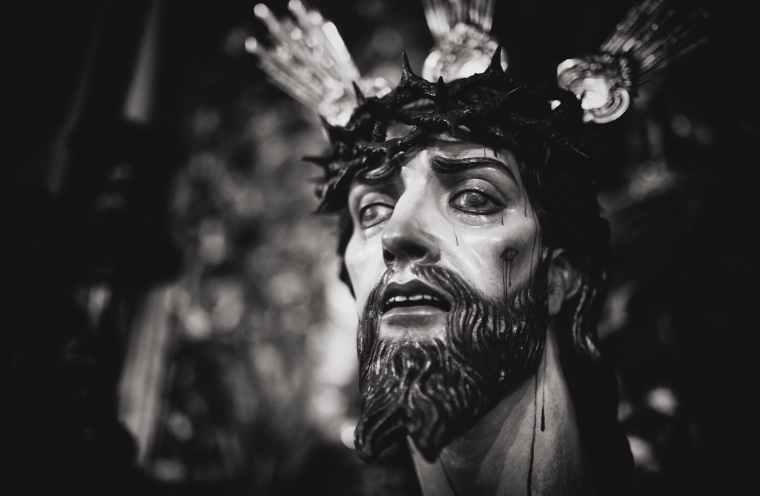
gray scale photography of jesus christ head
Photo by Alem Sánchez on Pexels.com

When I was twenty years old I became the caretaker for my mother when her bipolar disorder sent her into a psychotic state. At the time I was sorely ignorant of mental illness and lacking confidence in my own abilities to assess the situation and advocate for the very best care for her. I would make a decision regarding her therapy that would haunt me for well over forty years. I allowed my own instincts to fold under pressure from her doctor mostly due to my ignorance and non confrontational nature. I agreed to a treatment for her that I knew she would hate. I did not have the courage to stand my ground and insist that the doctor try something else. Nonetheless I learned from this incident and grew exponentially into a person who would never again be influenced to act against my own sense of right and wrong. Sadly, even though I changed I was never quite able to forgive myself and whenever my mother’s illness reared its most profound ugliness she would remind me again and again of what she saw as my betrayal of her. It took a great deal of internal reflection and wise counseling for me to finally accept that I was worthy of mercy.

Each of us has a story of something that we handled badly, something that we replay in our minds over and over again as though we might somehow change the outcome or at least assuage our guilt. On a rational level we know that we just need to genuinely apologize to anyone whom we have hurt, and then demonstrate through our actions that we have genuinely learned and changed. If we are willing to become better then there is little reason to continue to berate ourselves or to be reminded by others of our transgressions. Forgiveness should mean that our faults will never be mentioned again, and yet we all know of situations in which an offender is never allowed to fully transform because someone continually thinks of them as the incarnation of their sins rather than their contrition.

In the gospel of a few Sundays ago Jesus had died, risen from the dead and was with some of his apostles once again. Lovingly he chose not to remind them of how some of them had denied him when he most needed their support. He did not focus on the moments when their human frailties caused them to react badly. Instead he loved them for coming back to him and demonstrating their belated faith in him. It did not matter what had happened in the past because he knew that they loved him at that moment.

The Christian message is one of forgiveness, and yet so many of us pridefully hold grudges against people whom we believe have hurt us. Particularly in today’s society once an individual has displayed egregious behavior we tend to forever hold that person in infamy even when he/she makes attempts to repent. It is a prideful thing that we do forgetting that each of us has fallen from grace at one time or another. We want understanding for ourselves without granting it for those whom we have stereotyped with a broad brush of negative judgement.

Certainly there are acts that seem unforgivable and make it almost impossible to associate with any kind of absolution. When we think of the Holocaust we sense a special kind of evil that only God himself might unravel and pass judgement upon, but for the most part the hurts that we inflict on ourselves and others can be reversed. When people truly attempt to become better it is important that like Jesus we embrace them as they have become rather than what they used to be. Continually reminding them of the past is as cruel and hurtful as any wrong that they may have done.

I’ve always been impressed by stories of forgiveness and the people who demonstrated great love and compassion to those who had wronged them. They abound in our history, but of late they are the exception rather than the rule. Abraham Lincoln understood that if our country was to survive as a union we would have to have to embrace the people who had attempted to rebel against the nation, forgiving them for what they had done and moving forward without continually chastising them. Of course he was tragically assassinated and the resulting tendency to punish has bled over into the current political environment. As a society we focus on missteps rather than the evolution of character. It is not what a man or woman may have once done in a moment of thoughtlessness that should matter, but rather what kind of person he or she has ultimately become. 

I am a huge fan of Robert Downey Jr. not just because he is a highly entertaining actor but because I believe him to be a good man. There was a time when his addictions were so severe that he almost lost himself and his career. He was slowly dying in a haze of drugs and alcohol that made him unreliable. Nobody trusted him even after he had done much work to rehabilitate himself. He could not get the insurance necessary to land even a minor part in a motion picture. It was Mel Gibson who was fighting demons of his own who came to the rescue, offering his own money as faith in Robert Downey, Jr. Ultimately Downey’s career was resurrected, but the loveliest thing about him is that he never forgot the kindness form Gibson who also became a pariah because of an outburst when he was drunk and under the influence of his own mental illness. Downey has appealed to the motion picture industry and one time fans to demonstrate some compassion for Mel Gibson just as he was given. He understands as well as anyone that life is a continuum, a journey in which we struggle to become better versions of ourselves. He knows how important it is to cherish those who make great efforts to change.

We seem to forget that Jesus modeled forgiveness again and again. The stories of his mercy resound in the Bible, and yet even many who profess to believe in his words turn their backs on those who fall. It sometimes feels as though our society has become a judgmental nag when what we really need is more absolution. The strongest people in our world are not the ones who are unwilling to see the goodness emerging in a fallen soul, but those who embrace those who change with love and clemency. 

The Appointment

blue and silver stetoscope
Photo by Pixabay on Pexels.com

We never really know when something that we say or do will have a stunning effect on someone. I can think of instances when certain people briefly entered my life and left impressions so strong that I still think of them and feel thankful that my path crossed with theirs. In such moments it felt as though we had been meant to encounter one another for all time in a kind of spiritual appointment.

When I entered my sixties I had mostly been lucky enough to have little need of doctors, but I decided that it was time for me to have a better than usual checkup. I’d heard of an executive screening at Kelsey Seybold Clinic that included all kinds of tests and a conference with the doctor all within the span of a couple of hours. The appointment included breakfast after the required fasting and a personal conference with the doctor to discuss problems and further steps. It was a kind of concierge setting with no waiting and a very personal feeling.

I didn’t know any of the doctors at the clinic so I randomly chose a Dr. Dickerson and then jumped through each of the diagnostic hoops. When the time came for my diagnoses I met a man who exuded interest in my case, but admitted that he had almost nothing to discuss in our guaranteed time together because he had found nothing troubling about my health. He laughingly asked me if there was anything concerning me that I wanted to share with him. Thinking quickly I began to discuss my mother’s difficulties with bipolar disorder and the toll her illness had taken on her and on me in the forty years since she first showed symptoms of being mentally ill.

Our discussion began with generalizations but soon led to my full-blown admission of the struggles that had continually worried me. I spoke of the guilt that I often felt for having to be so aggressive in my mother’s care. I described the chasm that had developed between my mother and me because of the role reversal in which I so often had to become the adult. Not long into the conversation I realized that Dr. Dickerson had a crystal clear understanding of what was happening and how both my mother and I felt about it. He admitted that psychiatry was one of his areas of interest and continued to to probe my state of mind, sometimes helping me to fill in the blanks when I struggled to describe my frustrations. Ultimately I cried openly, letting out all of my fears and anger without filters. It was something that I had never before done.

Dr, Dickerson allowed our conference to continue for over an hour during which time he gave me a new and healthy perspective regarding my role as a caretaker for my mother. He suggested that I use my experiences to help others in similar situations. He believed that my teaching skills and my love of writing might gain even more purpose if I were to honestly describe the journey of our family and the love that had glued us together even in the most desperate times. He asked me to focus more on my own compassion and strength rather than on the mistakes I felt I often made, and his parting prescription was that I write a book about what our family had learned about mental illness.

I have written that book which still languishes because of fears that I have of hurting someone who may misunderstand my message. I’ve had to think about that conference with Dr. Dickerson again and again because his words indeed made me feel healthy and brave. His name is included in my dedication because I don’t believe that I would have had the courage to put my feelings and my history into words without him. As I do my best to finally go public with my story I also cling to the advice that he so wisely gave me on that fateful day. When my story eventually sees the light of day it will be in great part because of the encouragement that I received from Dr. Dickerson.

I never had the privilege of returning to see Dr. Dickerson again. Changes in insurance and the policies at Kelsey Seybold Clinic made that impossible. Nonetheless I have always believed that somehow he and I were fated to meet if only that one time. Never before or since had anyone tapped so clearly into the turmoil that raged inside my head over the uncertainty that I had always felt regarding the role I played in getting psychiatric help for my mother. I had the support of very close individuals but I still constantly questioned myself and worried that I was not doing enough or even perhaps doing too much. Dr. Dickerson cleared the demons from my head and demonstrated kindness at a time when I surely needed it.

It’s amazing how such chance encounters happen. They always feel planned even as they are serendipitous. It is as though the heavens themselves conspired to create the intersection that made the powerful moments occur. There is a miraculous feeling to them, an other worldly aspect that can’t be explained. They are beautiful and memorable, but often fleeting, a single moment in time that provides us with whatever it is that we truly need.

I know that somehow I was supposed to meet Dr. Dickerson and that I was deigned to heed his words. I will always be thankful for my encounter with him as well as other times when I suddenly found myself in the right place at exactly the right time. Those appointments seemed random, but I believe that they had been made before I even knew that I needed them. Miracles abound.

Saving A Mind

colorful fluorescent lamps
Photo by Timea Kadar on Pexels.com

The world can often seem to be far more violent than it once was, but even a brief glance at the past proves that we have always had evil in our midst. The biggest difference between now and then is that we hear about every instance of criminal or terroristic behavior almost instantly regardless of where it happens. Not that long ago we maybe heard a one minute blurb on the nightly news or read about the incidents in our local newspaper. It was easy for knowledge of such things to slip through the cracks so to speak. Those who committed heinous crimes usually did not achieve the level of notoriety that they do in the current climate. There was not as much incentive for copy cats. There was not as much information for those with sick minds to emulate.

I have a fascination with people and the way they do things. My interest made me a good educator because I did not just provide information to my students, but I was also understanding of who they were and what they needed to be confident and successful. I quickly learned that the teen years are difficult for even the most gifted and mentally healthy young people. In following my students after they graduated from college and entered their twenties I realized how confusing it can be to transition into the adult world. What I found in my observations is that there are certain situations that lead to more frustrations and tendencies to feel lost and abandoned. Our journeys through life require love and support which is not always forthcoming for every person. Feelings of alienation are amplified by mental illnesses and a sense of aloneness.

If we examine the lives of criminals and those who do horrendous things there are often commonalities. Loss of a parent or loved one can trigger unresolved anger, particularly at certain critical ages or when the individual has other mental problems. So many of our offenders are people who have been abused or who have disorders of the mind that have been improperly treated. They are already filled with frustrations and then some comment or incident triggers the rage that has been seething inside of them. In the aftermath of their criminal acts there always seem to be individuals who noted disturbing behaviors in them but felt helpless to do anything about them.

The conundrum that we have is how to balance our right to individual freedom with common sense approaches to treating conditions that may lead to tragedy. At the present time our society bends in favor of caution with regard to personal rights. We are more likely to defer to a person’s decision to be left alone, even when our instincts tell us that trouble is brewing in his/her mind. Our laws only allow us to force therapies and treatments in extreme cases. Furthermore, we often ignore cues as being just the way a certain individual is rather than seeing them as signs of greatly needed attention.

When we couple all of this with the generalized anger that is so commonplace today, we are creating human time bombs that have the potential to go off at any moment. While we rant over things that make little or no difference in people’s lives we miss opportunities to help someone overcome the war raging in the mind. Over and over again we ask why we have so many guns or bombs or implements of violence while showing little or not interest in discovering why we have such broken beings. Maybe because we are still too timid to speak of the diseases that exist in the mind or to tackle childhood abuses that so often lead to monstrous adults.

We ask when we will have enough courage to take away the means of violence, but we rarely ask when we will have enough courage to attack the problems of the mind that so often lead to that violence. We act as though noting the mental problems of a criminal are akin to excusing the acts rather than admitting that we somehow missed the cues that might have prevented the murderous rage from ever happening, and there are always signs.

There were teachers, students and parents who expressed their fears of the young men who wreaked mayhem at Columbine long before anything happened. Their concerns were all but ignored. There was a psychiatrist who noted that the crazed attacker of a movie theater was dangerous, but she was ignored. Nobody really listened to the mother of the autistic loner who was afraid of her son who would later kill little children at an elementary school. The list goes on and on and on yet we still do not insist that our system of mental health needs a full overhaul. We continue to avoid the family with the strange acting child or teen. We forget to support and counsel someone who has experienced a tragic loss.

When my father died I was only eight years old. Few adults thought that I had any real idea of what had happened or that my emotions were developed enough to really matter. The truth is that I was filled with a mixed bag of confused feelings. I was depressed but mostly angry. Luckily my mother created an environment in which I was able to eventually sort the toxic thoughts that ran through my mind. I experienced stability and kindness that helped me to feel secure in a moment when my world felt so chaotic. It took a long while to reach a point of well being, but the healthy routine of my world along with an entire village of people who were interested in helping me led me out of the darkness. As an educator I know that far too many young people in similar situations who feel totally alone and hopeless. Unless their anxieties are addressed they will only grow more and more angry over time. Before long society will simply view them as troublemakers and evil doers. We will have missed the opportunities to help them to become better versions of themselves.

When a shooting or other violent act occurs it should be a reminder to us that we have much work to do to save more minds. We inoculate against disease and treat illnesses of the body routinely, but we are still way behind when it comes to the mind. It’s time we attempt to catch up.

Discovering a Remarkable Story

beige analog gauge
Photo by Ylanite Koppens on Pexels.com

I loved my maternal grandmother, Maria Bartacovik Ulrich, but never really knew her. She was a sweet presence in my life, but because she spoke little or no English and I had no knowledge of her Slovakian language we communicated mostly with facial expressions. She was a short, round woman filled with the wrinkles of old age. She kept her hair in a long braid that trailed down her back, at least until she became seriously ill and her daughters cut it to make the task of maintaining it easier. She seemed to be of another world, another century and I always longed to be able to ask her questions and learn more about the girl she had once been. Instead we exchanged smiles as she called me “pretty girl,” and while I loved the simplicity of her greeting I wondered if she actually knew my name or those of my many cousins.

Grandma Ulrich padded around her home in her bare feet which were tiny but often appeared swollen. At gatherings she prepared cups of coffee for all of her guests, bringing the watery brew proudly in enamel cups filled with more milk and sugar than java. I loved that gesture which she repeated hundreds of times when the members of her family filled her home with raucous conversation. I saw her as an exceptional hostess who wanted us to feel welcome in her domain, and we always did.

Grandma Ulrich had lovely blue eyes, and as I gazed into them I wondered what thoughts were behind them. It would not be until long after she was dead that I would do enough research and ask enough questions to learn a tiny bit about her. It amazed me to find that this shy and unassuming woman had traveled alone from her hometown in the Slovakian region of Austria Hungary to Bremen, Germany where she boarded a steamship bound for Galveston, Texas. She came to meet my grandfather who had arrived before her to pave the way of their new life together. Somehow it almost seems inconceivable that such an unassuming woman would have the courage to embark on a journey to a world of which she knew very little. She must have been very much in love, and perhaps she was guided by the exuberance of youth as well.

She arrived not too many years before the outbreak of World War II and for all intents forever lost track of her family back home. My eldest aunt says that Grandma worked as a cook for the laborers on a large farm in an area of Houston on the east side of town. Later she tried a variety of jobs including laboring as a cleaning woman in a large downtown building. When her English improved she even found work behind the counter of a small bakery. This was a daring Grandma Ulrich that I had never known, and even now I have a difficult time imagining the woman who was frightened to leave her home as such a courageous person.

My grandmother was a woman of her times without benefit of any form of birth control other than abstinence, and so she had one baby after another. There were nine pregnancies in a row including one in which she carried twins. By the time my mother, the youngest of her children, was born Grandma had buried two of her babies. Her body must have been in a state of hormonal hell as she yo-yoed from conception into post partum depression again and again. Her tiny home and her life was dominated by rowdy children whom she dearly loved, but I can’t fathom that she ever had a moment to herself.

At some point my grandmother showed signs of a mental breakdown and she was taken away by force to the state hospital in Austin. It was a traumatic time for her and for her children who rarely spoke of it, carefully guarding a secret that was too painful to mention. Once Grandma returned home she would never again have enough trust to leave the safety of her house without putting up a fight. She was content to simply create a daily routine and quietly live out the rest of her days.

I am fascinated by the woman who was my grandmother. I suppose that if truth be told we, her grandchildren, took her for granted. She was someone who was just there, an almost invisible presence in our lives. She seemed simple and yet she was so complex. We thought her witless and yet she must surely have had thoughts and dreams. Like so many women her contribution to the world was unseen and under appreciated. We did not think to connect the dots of her existence and the incredible impact it has had on the world. We assumed that she would not have been interested in knowing that from her humble beginnings in America have come engineers, doctors, teachers, accountants, business leaders, athletes, lawyers. Members of her now very extended family are brilliant and beautiful, and genetics tells us that her contribution to such success is present in all of us. Most importantly the lessons that she taught her children have been passed down through the generations. We may not have been able to communicate with her but her children knew and understood her messages of integrity and hard work. She modeled a steadfastness for them that they emulated often without even realizing how deeply her character had imprinted on them.

If by some magic I were able to see my grandmother again and actually speak with her without the restrictions on communication that once defined our relationship I would want to know everything about her. I have grown to understand how amazing she was and how worthy of my attention to her story should be. Like so many many women she was dutiful and in her role she built the foundation of a family and the future. Her contributions are incalculable but her legacy continues to blossom. Now I finally realize through discovery of her remarkable story that this tiny quiet woman was a tower of strength and I feel honored to be part of the world that she helped to build.

The Metaphor

fire wallpaper
Photo by Pixabay on Pexels.com

In early spring our yard was a mess. Weeds filled the flowerbeds and the lawn. Our neglect of simple maintenance was in full view. It was time to begin the restoration process in earnest if we were to reclaim what had once been a lovely sanctuary for birds, bees, and ourselves. We spent whole days pulling the offending stray plants, adding new soil, spreading mulch, and fertilizing grass, roses, azaleas, and hibiscus. We had to rebuild barriers to keep the nutrients where they belonged, instead of allowing them to run into the street when it rained. To do that we hauled heavy stones, one after the other for hours. By the time we had completed our tasks we were covered with scratches and scapes, insect bites and allergic reactions. Our backs ached and our hands were worn, but the view from our windows was enchanting. With the help of God and nature we had created a bit of heaven on earth.

It was during the renovation phase that I found myself thinking of the past, and the kind of hard labor that our ancestors had done. I viscerally felt what it must have been like to haul stones to build some magnificent structure, or to be bent over in a field under a hot sun. My work had been brief in the grand scheme of things, but many humans spent their entire lives engaged in brutally harsh conditions, and they didn’t have the luxury of retreating inside an air conditioned home at the end of the day. I felt a kind of kinship with them, and an appreciation of their efforts.

As I labored I somehow thought of people who had been forced into cattle cars and taken to concentration camps to either be worked to death or killed immediately for no real reason. I realized that there had been individuals as old as I am among the prisoners, and I understood that they would have had to prove their mettle or die. I am certain that I would not have made it more than a week or so before being tapped for extinction. I felt their pain as I pushed back my own, and wondered why we humans are sometimes so cruel.

As I grow older I feel the presence of God and our human history all around me. I now have the time to slow down and think. I realize both the beauty and the ugliness of what we have wrought in ways that eluded me when I was raising a family, working, and balancing a million different responsibilities. Now I see the past, the present and the future with far more clarity. I appreciate small things that I had ignored before. Seeing a butterfly flit across my yard makes my day exhilerating. Hearing the joyous giggling of the children on my street is all I need to make even a dreary day seem perfect. My needs are little, and I find happiness in the most unexpected places.

Just as we were completing the reclamation of our yard I learned that the glorious Notre Dame cathedral was on fire. I had never seen it in person, but I have an image of it in my mind from the countless times that I have viewed it in the photos from friends and family who traveled there. I have visited its smaller reproduction at Notre Dame University. As a Catholic Notre Dame has always been a symbol of my faith, and as a human it has spoken to the efforts of humankind to rise from the muck of the earth toward heaven. Seeing it in flames tore at my heart and left me pondering for days and then weeks. The event was a metaphor, a symbol, a message that I needed to consider.

I thought of how nothing about our humanity is a forever thing. We are from dust and to dust we shall return. We create things and ideas and sometimes seem to have little need for higher powers than ourselves. It is possible to live a very good life without religious fervor, but I often wonder if such an existence is missing something essential. We are a truly great species, but we are also flawed. We can build soaring structures that stand for centuries after we are gone, but without attention they become cracked and weak, just as do our hearts and souls when we become more enchanted with power and wealth than with the needs of our collective humanity.

I saw a commentary from a stranger asking why God had allowed the destruction of the cathedral. Wasn’t the Lord after all powerful enough to save it if he is actually real? I thought of how Jesus had performed miracles but did not use his abilities to save himself from an excruciating death on the cross. That is not how any of it works. God does not prove himself in that way, and yet somehow I heard a message whispering from the ashes of Notre Dame, a lesson or reminder of how we are supposed to be.

On the day after the fire there were videos of people of all nations, economic status, political persuasions, and religions holding hands and singing in a united sense of determination. I viewed a photo of the inside of the church demolished save for the altar and the cross. I felt it was truly God’s way of telling us that even as we sometimes attempt to destroy ourselves, he never leaves us. I thought of Jesus reminding us again and again that we need only remember to love one another and we will have understood his teachings and the reason why he lived and died among us.

I believe that there is hope for us in the burnt structure of Notre Dame. The grand lady will indeed rise again just as we humans keep finding our way even as we sometimes become lost. What we have in our souls is the capability to bend the arc of our history in the right direction as long as we remember that our first duty is to love.