A Rainy Afternoon

rainy-afternoon-zadar-93e60d499c2f267c33de164c89ad35caLast Sunday was a dreary day, a kind of last hurrah for winter in the south that always seems to arrive in the first weeks of March. The rain washed out my plans to tinker in my yard so I ended up at Costco along with a huge crowd that included some of my neighbors. I suppose that we all decided to go in spite of the weather, or maybe because of it.

I played a game of noting what everyone had in their carts. It’s always a ton of fun to see what items people select from the vast inventory of televisions and popcorn, clothing and canned goods. The winner always seems to be one of those big batches of toilet paper, the reason that I was there, but there are also many boxes of cereal and cartons of eggs lolling inside the grocery baskets of almost everyone.

Some people appear to be preparing for Armageddon with many years’ supplies of everything from vitamins to dog food. They literally need rolling pallets to carry all of their selections and I find myself wondering where they will be able to store all of the makeup and motor oil. I imagine rows of shelves along the walls of their garages with labels indicating when each item of inventory expires. I like to picture their families and the reasons that compel them to choose certain things.

I limited myself to purchasing only the basics, toilet paper, paper towels, two chickens, a pot roast and some pork chops. I have to control my impulses or I will walk out with more than will fit in my car and even worse, more than I will ever use. With no children in the house a flat of apples tends to be an overabundance that will lead to rotting fruit at the bottom of my produce drawer. Still I am often tempted to purchase enough facial tissues to last through several flu seasons simply because the price is so fetchingly low.

I almost always enjoy lunch while I am there. After all, I can’t resist the idea of getting a huge polish sausage on a bun with endless refills of Pepsi for only a dollar fifty. Besides, sitting at a table munching on my feast allows me a bit more people watching time and it is definitely a show. I find myself wondering who all these folks are and from whence they come. They are a diverse bunch who seem to represent every possible strata of American society. Somehow the buyers at Costco have managed to carry all of the items that they seek, including motorcycles and tires. I laugh a bit when I think of how much joy a place like this would have brought my mom. The two of us might have sat for hours just soaking in all of the entertainment that comes from viewing such a large a slice of life.

Once I got home the downpour had increased and it was obvious that there wasn’t going to be a break in the weather. I sat in my favorite chair and read one of my several latest books. I tend to be in the middle of three or four at a time which may sound a bit strange but I write it off to the effects of my attention deficit disorder. The one that seemed appropriate for a rainy day was a volume that I found on my last trip to New Orleans entitled 1 Dead in Attic. It is a compilation of articles written by a reporter from The Times Picayune written in the aftermath of hurricane Katrina. Each essay is short and quick to read so I can enjoy one or multiples depending on how much time I have to devote. The author, Chris Rose, shares his love of New Orleans and the stories of despair and revival that kept him and his fellow citizens from going insane in a time that was almost beyond the capacity of words to describe. His sense of humor and humanity captures the appalling images as well as the can do spirit of people who refused to declare their home town dead on arrival. It is a joyful dirge and intimate portrait of a city in total disarray that somehow found the where with all to overcome the most unimaginable tragedy. It will make you laugh and cry at one and the same time which is an oddly appropriate way of thinking about New Orleans.

I thought of the first time that I returned to New Orleans after Katrina. The city was still devastatingly somber. The crowds that had so often filled the streets were decidedly small. There were diehards attempting to keep the spirit of revelry alive but they were definitely struggling. We had breakfast at Brennan’s and there was still an odd aroma of mildew in the air. We didn’t need reservations because hardly anyone was there. The waitress who served us literally cried when we told her that we were from Houston. She and her family had found refuge in our city after hers had been so destroyed. She thanked us for our hospitality and told us that this was literally the very first day that the famous restaurant had been open since the storm. I almost lost my composure as she fell all over us trying to express her happiness that things were beginning to return to normal.

I remember how we drove around on the highways trying not to look like buzzards as we gazed at entire neighborhoods that had been reduced to rubble. It was like a scene out of a dystopian movie and it broke my heart. As I read Chris Rose’s descriptions of what he encountered only days after the hurricane it was difficult to imagine that I had first seen the city after it had actually made great progress in coming back to life.

I have always loved to watch rain from my windows. It comforts me. Sadly many of the people who came here from New Orleans after that horrific storm confided that for quite some time the sound of rain was terrifying. I remember having to console children and teachers who literally came undone whenever the weather became frightful. Some of them cried and related tales of things that they had seen that would never really fade from their memories. In reading 1 Dead in the Attic I have truly begun to understand just how much their lives were forever changed.

Its been twelve years since that unbelievable natural disaster. New Orleans was rocking on my last visit and yet it had still somehow changed. The people who stayed and those who came later have continued the traditions and still harbor the unexplainable feelings of devotion that they have for this very special place but now there is always an element of fear and caution in the back of their minds. Only recently they were once again reminded of just how fragile their home is when tornadoes ripped through an area of town that had barely been reclaimed from the ravages of Katrina. It takes a special kind of personality and resilience to live in New Orleans but Mr. Rose explains quite well why there will always be those who are willing to endure hell and high water just to experience the magic.

All in all I have to admit that people watching at Costco and reading vignettes from a well written book made for a very fine Sunday afternoon. It’s good to have a change of pace now and again. Sunshine is always nice but there is much to be said for the comfort of a gentle rain and a view of the ever present parade of humanity.

A World At War

usa-la_-nola_-wwiimuseumIt’s difficult for most of us to even imagine what the world was like in 1941. The United States was not thought to be a powerful force. In fact it was ranked eighteenth in the terms of military might. The country was only beginning to recover from the effects of the Great Depression. Most of the country was rural and there were still a majority of homes without electricity or indoor plumbing. The mood was isolationist as the populace here watched events unfolding in Europe with horror but an intense belief that our nation needed to stay out of the fray. My mother was fifteen and my father eighteen as December began that year. They were yet to meet one another and naively unaware that life for every American citizen was about to change dramatically.
My mother often spoke of December 9, 1941 when the Japanese bombed the American fleet in Pearl Harbor. It was a fearful and shocking moment. She along with her countrymen listened to President Roosevelt as he reassured the nation. She remembered how quickly people answered his call for all Americans to participate in the coming war effort. She saw her brothers enlisting in various branches of the Armed Forces one by one, and saw high school friends leaving the classroom as soon as they were old enough to lend their help to the cause.

World War II was like no other engagement in history. Its influence stretched across the globe, affecting people on virtually every continent. Here at home citizens of every age contributed in one way or another. Women who had traditionally kept the home fires burning took over manufacturing jobs. Industries were cranking out planes and ships and munitions at a fevered pace. Everyone rationed their use of critical materials, including paper. My mother-in-law often showed me the yearbook from her senior year of high school. It was thinner than a monthly magazine, made only of the cheapest quality pulp. It mirrored the reality of the time with row after row of photos of mostly young girls. The boys had dropped out of school and to join the fight.

When our troops first went to faraway places like northern Africa and the Pacific they were ill prepared to battle the well trained and experienced Germans and Japanese. They often found themselves overwhelmed and in retreat in the earliest forays. They learned on the job and became just a bit better as they slowly understood the demands of the new ways of fighting. I have often wondered how those of us living in today’s world might react to news of battlefield losses and situations requiring our troops to run for safety. Would we have the heart to continue the fighting or would we give up quickly? Luckily the generation who fought World War II was made of stern stuff. They were determined to do whatever it took to free Europe from the grip of Nazi Germany and the Pacific from the Japanese.

There was much at stake and the American people understood that they could not be deterred from seeking total victory. In that regard both Japan and Germany had greatly underestimated the will of our country. There are those who wonder if the world might indeed look very different today had the United States not allied with Great Britain and Russia in that great fight against fascism and tyranny.

The World War II Museum in New Orleans, Louisiana is a repository of the remarkable history of that era. It is filled with the stories of both the leaders and the common people who worked together to defeat the enemies and free the world from their dominance. With hundreds of photographs, artifacts, videos and research texts it leads visitors from the beginnings of the conflict to its horrifying end with the explosions of atomic bombs over Hiroshima and Nagasaki. It is a touching and personal journey that is honestly and beautifully told.

The city of New Orleans was chosen as the site of the museum because it was the birthplace of the the inventor of the Higgins boat which was used to bring troops ashore at Normandy on D Day. Mr. Higgins was already making shallow draft boats for fishing in the bayous and swamps when the military expressed a need for a military version of such craft. He was ready to design a larger boat capable of transporting troops. The Higgins boats that were manufactured in New Orleans have often been credited with helping to win the war in Europe.

It’s been seventy five years since our nation entered World War II. By the end of the conflict the United States was viewed as a major political power. With an infrastructure unharmed by the devastation of the war we were poised to enjoy an economy exploding with innovation and production. The soldiers returned to an exciting time that included creating a new generation of children that would become known as the Boomers. The United States was slowly but surely transformed by the building of a system of interstate highways that made travel from one ocean to the other quicker and more open to all people. The same spirit that drove the success in the war continued its inventiveness all the way to the moon and back.

Those of us who were the children of the men and women who endured the uncertainties of war would inherit the fears of the atomic age. We would wear dog tags for a time to identify us in case of a nuclear attack from the Soviet Union. We practiced air raid drills each Friday afternoon, crouching under our desks in wonder and confusion. Our generation would be drafted into a new and different war in Vietnam that somehow never made as much sense as the one our parents had fought. We would march for the civil rights of our Black neighbors and those of us who are females would blaze new trails in education and work.

World War II was never just a long ago historic event to us. We saw those photos of our dads and uncles in their uniforms. We heard the stories of life under siege. We watched the old black and white movies that celebrated the accomplishments of our generals and troops. We saw the sadness in the eyes of those who lost loved ones in places so far away that nobody had even known that they existed before the battles. We were the link between the past and the present, the generation that watched the world change at such a rapid pace that it was sometimes difficult to keep up. We truly appreciated what the brave men and women of the world endured to secure a time of promise and opportunity for us.

Few people in 1941 might have imagined a nation so filled with the bounty that we now have. Ordinary citizens enjoy lifestyles that once belonged only to the wealthy. We live in modern homes and watch our big screen televisions that bring the world into our living rooms. We travel the world and study at universities at a rate that our parents never saw. We have much for which to be thankful and most of it resulted from the brave and unselfish acts of a generation that chose to defeat the forces of pure evil. Their story is on full view seven days a week at the World War II Museum in New Orleans. Every one of us should take the time to absorb the importance of the stories that are told there and to thank the veterans of that war and those who serve today to protect us. 

A Frugal Aroma

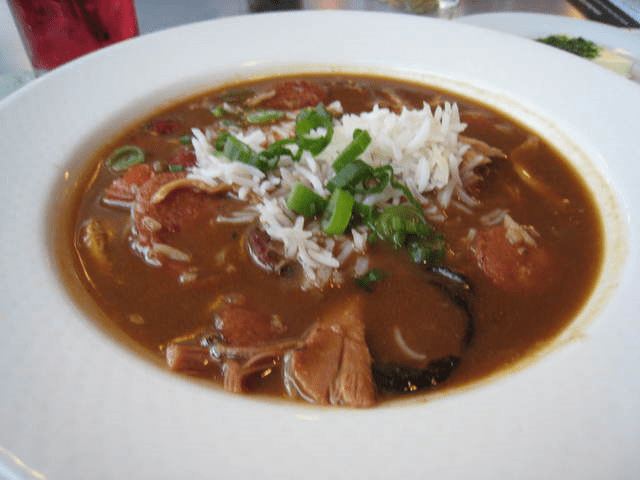
gumbo-bowl-with-rice-and-green-onionsWhen my chicken andouille gumbo was simmering on the stove a couple of days ago I had one of those deja vu moments that sometimes waft over me unexpectedly. It felt as though I was back in my mother’s house and she was creating a kind of stew from the vegetables and leftovers that she had on hand. The aroma of chicken, onions, green pepper, and tomatoes brought back unmistaken memories of the mash up hash that Mama regularly created in her effort to use every single scrap of food stuff that we had. Her budget was always tight and we were always hungry like most kids. She became masterful at blending all sorts of things into delightful soups that filled our bellies and kept odds and ends from prior meals from going to waste. She had a natural talent for knowing how to create taste tempting flavors and never used a cookbook to make her delightful dishes. She simply had a sixth sense about cooking and rarely made anything that we disliked while rarely threw anything in the trash.

Mama never made gumbo but she used many of the same ingredients that are found in the many varieties of the Cajun recipes that originated for the same reasons that her cooking did, to use what was on hand to create culinary delights. Gumbo, stew, soup, hash are all the poor man’s answer to hunger. As a little old man once told me when I was about to toss a tiny crab back into the ocean, “Everyting makes da gumbo. Don’t trow dat away.” 

I suppose that my childhood eating experiences made me a prime candidate for enjoying the delightful mashup of flavors in gumbo but I needed a few lessons before I had mastered the techniques for consistently making a yummy fusion of flavors. I quickly learned that the secret of cooking well lies as much in the prep time as it does in the actual process that occurs on the stove. I have become almost fanatical in my insistence on doing things in a particular way to control the consistency of my final product. So here is my drill for making Chicken Andouille Gumbo with a tip of the hat to The Gumbo Shop in New Orleans for providing me with the basis of the recipe that I have tweaked a bit here and there.

You will need:

1 whole uncooked chicken (Don’t attempt to cut corners by purchasing a baked chicken and using canned chicken stock. I did that once and while the gumbo was edible it did not have the same burst of flavor that comes from cooking a whole chicken from scratch and creating a broth from that process.)

3 quarts of water (or enough to cover the chicken)

1 lb. of okra (frozen and already cut works best and is easier to find)

2 tbls. of oil for cooking the okra

1/2 cup of oil for making the roux

1/2 cup of flour

1 medium onion

1 green bell pepper

1 stalk of celery

16 oz. of diced canned tomatoes (You will not find a 16 oz. can so you will need to save any leftover tomatoes for another day.)

1 package of Andouille sausage

1 bay leaf

1 tsp. of thyme

1 tsp. of basil

1/2 tsp. of sage

1/2 tsp. black pepper

1/2 tsp. white pepper

1/4 tsp. cayenne pepper

2 tsp. salt

Take the gizzards and liver from inside the chicken carcass then cook the chicken in three quarts of water. I usually do this the day before I plan to make the gumbo so that I will be able to clean the chicken from the bones when it is no longer hot. Save the broth and cut the chicken meat into small pieces. Store both in the refrigerator. Discard the bones and the skin.

The following day measure all of the ingredients and have them at the ready in bowls. Chop the onions, green bell pepper, celery and Andouille sausage (make 1/4 inch rounds). If you are using fresh okra slice it into 1/2 inch rounds.

I use a heavy skillet for browning the okra. First place 2 tablespoons of oil in the skillet and saute the okra for 10 to 15 minutes or until the ropiness is mostly gone. Set the okra aside.

Next I use a large Dutch oven type pot to create the roux. First turn the heat to medium and put in 1/2 cup of oil and let it get a little bit hot. Then pour in the flour and begin stirring constantly. You must watch the mixture carefully during this process. After a time the ingredients will become bubbly and you will smell something akin to popcorn. It won’t take long after that for the roux to begin to achieve the lovely dark brown color that you are seeking. Be careful not to burn the mixture or it will affect the taste of your gumbo.

Once you have a nice brown color with the roux add the onions, green pepper and celery and mix them in. Let them saute until they are tender being certain to stir them during the process. It is okay to let them stick to the bottom of the pan as they cook but scrape the residue with a spoon if that happens because it will create a good flavor in the mix. Don’t let the vegetables burn.

Once the vegetables are tender add the tomatoes, sausage and okra. Stir the new ingredients into the mixture and cook for about 15 minutes. Then add all of the spices and mix well. Finally Pour in about 8 cups of the chicken stock that you made the day before. (I usually heat it just a bit before I need it so that it won’t be cold when I put it into the gumbo mixture.)

Bring the ingredients to a boil and then lower the heat and simmer for one hour stirring about every fifteen minutes. Finally add the cut up chicken and more stock if you need to thin down the broth. Simmer for 15 more minutes.

Serve with rice, a nice green salad and French bread. It is especially yummy on a cold day and much milder than seafood gumbo for those who don’t like their food to be too spicy. 

But for the Grace of God

RTX2L1P6

Home is supposed to be a safe place, somewhere to rest, recharge and be free. We select the places where we live according to our means and our preferences. We fill our houses with people and things and memories. Our abodes often hold clues as to who we are and what is most important to us. A home is more than just a structure. It is a backdrop for our experiences, the slate on which we express the inner workings of our very souls. When the places where we live are invaded either by mankind or nature it is grievously wrong. Somehow we all understand the sense of loss when we learn of someone whose home has been destroyed. The feeling is visceral and basic to our natures. When the tragedy is close to our own homes it becomes even more real. “But for the grace of God…” we utter and wonder how we have been so fortunate while others suffer.

Living along or near the Gulf Coast has always been a kind of crap shoot. The land is barely above sea level and storms from the sea are inevitable. Over time the manmade stretches of concrete and buildings make it more and more difficult for the water from the rains that fall to find a way back to the ocean. The land is often swampy, spongy after a deluge. Humans must engineer retention ponds, irrigation systems and levees to overcome nature’s tendencies to flood the land in such areas. As our populations grow we become more daring and build on acreage that has been empty for all time. The developers assure us that we will be fine because there have never been floods in this area. We forget to consider that there have never been people in such places either. We really don’t know for certain what will happen until the rains pound on the land. When we find that we were wrong it is too late to prevent the human misery.

The metropolitan area of Houston is my home. I have lived here for most of my sixty seven years. I know which areas are high enough to withstand heavy rains and which have flooded over the years. I have watched in horror as deluges from the sky have inundated entire neighborhoods. I have been stranded and unable to reach my home when the skies opened up in fury. I both fear and respect the ways of nature because I have witnessed their destructive forces. I have been lucky in that regard but I never feel completely immune from the possibility of one day finding water seeping into the rooms of my house. I have long ago prepared for the worst. I carry insurance for both the winds of hurricanes and floods caused by incessant rain. There is an ax carefully stored inside my attic in case I must create an exit to my roof in order to find refuge from rising water. I have a ladder that will allow me to climb safely from one of my second story windows. I have these things because of images that I have seen again and again. I want to be ready for any eventuality but hope that I never have to use the tools that allow me to sleep more soundly even when the storms are raging over my head.

The state of Louisiana is like a beloved relative to me. The people there are simpatico with those of us from Houston. We share common experiences much like cousins. The same plants that thrive in New Orleans do well in my backyard. The heavy blanket of humidity that marks summers here are found in the cities and towns of our neighboring Gulf Coast state. We are friendly people who embrace life. We face the same dangers from the storms that inevitably come our way.

The recent floods in Baton Rouge have been heartbreaking. This wasn’t supposed to happen there. When Hurricane Katrina threatened New Orleans many of those who fled from its fury sought refuge in the capitol city. It was farther inland and surely a safer way to hunker down until the storm passed. When New Orleans was seemingly destroyed beyond repair eleven years ago there were thousands of people who gave up on the idea of ever living there again. They did not have the emotional strength to risk enduring such an ordeal one more time. They had lost everything and would have to rebuild but they would do so in a more secure place. Some of them chose Baton Rouge or Houston  or San Antonio, anyplace that offered shelter from the horror.

I watched the people from New Orleans pour into my town like refugees with barely the clothes on their backs. They were frightened every time lightning lit up the sky, thunder roared and rain pounded on the roof. Their scars slowly healed and they moved on, leaving entire lifetimes behind. It was gut wrenching to witness and I remember feeling grossly inept in helping them. I also realized that none of us are entirely immune from such tragedy. Be it hurricanes, storms, tornadoes, wildfires, earthquakes or tsunamis we are all potentially in harms way. We never quite know when our circumstances will change. Mother Nature surprises us again and again.

This summer has been especially difficult. Fires still rage in both northern and southern California. Windstorms blow in Arizona. Floods have overtaken cities and towns in a swath that stretches across the country. Among those affected is the city of Baton Rouge, a place that has endured unspeakable manmade and natural tragedies in the space of only weeks. Somehow their sorrow seems all too personal and terrifying.

I listened to an interview with a woman whose home was under water following the rains that unrelentingly fell a couple of weeks ago. She had once lived in New Orleans but when the levees broke eleven years ago the waters swept away every possession that she had ever owned. She found a welcoming kindness when she fled to Baton Rouge and decided to stay. She worked hard to create a new life for herself and her family. She only recently purchased a new home. She was happy and proud of herself. She had been strong and resilient. She was careful. She had asked if her new neighborhood had ever flooded. She wondered if she needed to purchase flood insurance. She was told over and over again that she need not worry about such things. She was safe. She was finally home.

She loved everything about her new house. She didn’t have much to put in it but the place was filled with love. The people around her were friendly and helpful. Her terrible journey seemed to be over. She felt that she might finally rest. When the unthinkable happened and she once again watched the water encroach on her world her resolve wavered. She feels broken but determined. She tries to smile but only tears come from her heart. She wants to believe that she will one day feel safe again but somehow that seems to be an impossible task. When I saw this woman trying so desperately to be optimistic and brave my heart literally burst open in a flood of empathy. I felt her pain.

It is fine to wait for our government to come to the aid of those who are in need. We certainly hope that our President will understand their situation. What matters most is that those of us who have the means find ways to help them through their ordeal. They will need much in the coming days and weeks. There are ways to make a difference. We can give of our time, our talents and our treasure. Every tiny effort is multiplied a thousand fold whenever we work together. New Orleans rose from the dead because love poured into that city from all around the world. So too must we do our part to assist the good people of Baton Rouge. We need to loudly send the message that we will not forget them in their hour of need.

“But for the grace of God…”