Our Glorious Cause

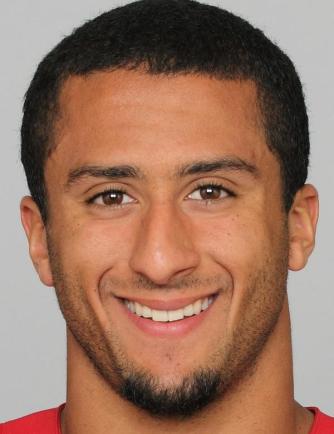
colin-kaepernick-football-headshot-photoI’m a quiet person who doesn’t generally like to make waves. I prefer having a routine but enjoy an occasional adventure. I shy away from conflict but sometimes throw caution to the wind and take a stand. Like most people my days are mostly devoid of drama and I prefer it that way. In spite of my efforts to walk the middle road and keep the peace there have been times when I have felt compelled to speak my mind. Life has a way of placing us in situations that demand our attention whether we desire to become involved or not.

When I was nineteen years old my mother had the first of many psychotic breakdowns. I had never seen anything like her frightening behavior in all of my life. With no father and younger brothers still incapable of navigating the rough seas of caring for someone with a mental illness I was on my own. I still was not of legal age but I had to quickly learn how to make decisions on behalf of my mother and my family. The biggest mistake that I made on the first occasion of her illness was maintaining total respect for and deference to the doctor who treated my mom. I agreed to whatever he suggested even when my heart and soul told me that he was wrong. I had been raised to be polite and my gentle demeanor resulted in a series of decisions that I would always regret.

I’m a fast learner and when my mother’s next psychiatric episode occurred I was ready to take on the devil himself if need be. I was assertive with her new doctor and everyone else involved in her care. I became an outspoken advocate for her and her cause. My life and my personality changed forever. I finally understood that we may not wish to do so but sometimes we are forced to speak out for what we strongly believe is right and just. For each of us the causes that we embrace are highly personal, derived from life experiences that somehow made an indelible mark on our hearts. While others may believe that they understand our motivations the reality is that nobody else will ever completely know exactly how we feel.

I was judged for the way I handled my mother’s mental illness by people who had not walked in my shoes and who had turned away when I asked them to help me. Some people see me as a saint and others quietly whisper that I did more harm to my mom than good in the choices that I made. It is difficult for people to understand that even when I made mistakes or did things differently than they would have my motives were pure. My mother now rests with the angels in heaven but to this very day I speak of her life changing illness and the way I tried to help her without apology. I want the world to be aware of mental illness. I feel the need to open people’s eyes even when doing so makes them intensely uncomfortable. Honesty and a willingness to speak of the horror that my mother and my family endured is the only way that I may help to one day bring about a cure or at least a better way of dealing with this very real problem.

Mental illness is my cause along with education. These are the topics that I hold dear and I am thankful that I live in a time and place that allows me to voice my thoughts and opinions. My audience is small so my ideas are not nearly as impactful as I would like for them to be. I am one of many nameless faces in the world shouting in the wilderness. I would love to have a status so recognizable that my ideas would become news. Then perhaps my words might actually make a difference but for now I must be content with changing one mind at a time in a very tiny circle.

There are famous people with causes who have the power to move larger audiences. Glenn Close has become a beacon of hope for those of us who know the tragedy of mental illness. George Clooney is an outspoken advocate for human rights. Gary Sinise has devoted time and treasure to the Wounded Warrior Project. We usually applaud such efforts because they fall within the boundaries of our comfort zones. It is only when one of our heroes chooses to make us aware of something that we would rather ignore that we begin to make judgements about them that are not always fair.

Until recently I had no idea who Colin Kaepernick was. I don’t live in San Francisco and I don’t care that much about football. In all likelihood I would have gone my entire life without ever even hearing his name were it not for a moment when he chose to shine a light on something that bothers him as much as mental illness bothers me. His method for drawing attention to his cause was to remain seated during the playing of the national anthem. Some of those who witnessed his protest have gone ballistic in criticizing him both for that action and for the reasons that he has given for them.

The reality is that he has managed to do something remarkable. He has started a conversation about our rights as citizens of this country. Regardless of which side people espouse they are chattering away which is exactly what he hoped to accomplish. The problems that worried him are out in the open. He has shed a bright light on an uncomfortable topic and has done so with the possibility of damaging his reputation and his livelihood. That takes great courage, the kind that few of us, myself included, possess.

Mr. Kaepernick wants us to notice that a significant portion of our populace lives in fear of law enforcement. He wants us to understand that even a young black man raised by white parents is not immune to the forces of racism that still exist in some quarters of our country. He insists that in spite of education and success he and other black men and women endure the sting of hate simply because of the color of their skin. Whether we totally agree with him or not we have to admit that we have never walked in his world. We will never be able to know his reality. We must take him at his word and then begin to consider how we might begin to exchange honest dialogue about the situation that he has described.

Whether or not Colin Kaepernick stands for our national anthem is irrelevant. Our Constitution provides him with the right to rebel just as our forefathers did when they believed that they were living under a yoke of tyranny. Their actions were seemingly outrageous but they were cries for liberty. Theirs was a noble cause that sadly ended without assurances for a considerable portion of the citizenry. Over time we have slowly but surely attempted to correct their omissions. Traditions should never be so sacred that we allow them to stand when they are so obviously flawed. We had to outlaw slavery and give the vote to blacks and women. We had to find ways to include everyone in this great democratic experiment. Even to this day it is incumbent on all of us to correct the mistakes of the past. If so many who live among us are feeling so left out of our national pride then we need to take the time to hear them and to accept that they may know something that we don’t

I believe that we the people need to suspend our moral outrage each time someone alerts us to a festering problem. If King George had taken the time to listen to the protests of the colonists we might still be part of Great Britain. We need to stop the name calling and the madness. It does absolutely nothing to help in dealing with the issues. It is a diversion, a distraction that keeps us from hearing all sides of the discussions that we need to have. Perhaps what we really should do is simply listen to Mr. Kaepernick and celebrate that we are a country where freedom allows each of us to have an opinion. We have the opportunity to be part of the ongoing solution of mankind’s deepest problems. If we truly want to honor our country we will lower our voices and join in an effort to understand our disparate needs. It is our glorious cause.
A Saint For All Mankind

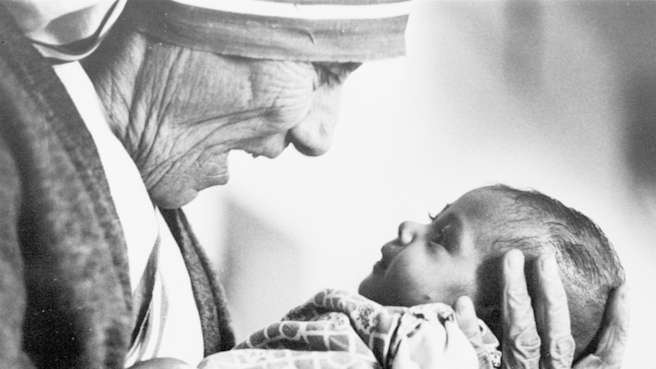
Mother-Teresa-of-Calcutta-to-be-made-saint-VaticanThis Sunday there will be a new saint in the Catholic Church, St. Teresa of Calcutta, A.K.A. Mother Teresa. Pope Francis didn’t just choose her as he might a staff member. Instead her canonization followed strict guidelines that have long been used to decide just who deserves the honor. First someone nominates a candidate. A group of clerics examine all of the evidence pointing to saintliness. Once they are satisfied that the individual was indeed holy they send the nomination to the Pope who decides whether or not to beatify the person. Once two proven miracles have been attributed to the candidate the Pope announces that we have a new saint.
Almost everyone in the world is familiar with Mother Teresa, an Albanian nun who worked with the poorest most forgotten people in Calcutta. She witnessed intense suffering that at times tested her own faith in both mankind and God. She was far from a perfect person but somehow she found the resolve to rise each day, mask her darkness with a smile, and bring comfort to the sick and dying. For decades she toiled among the most shunned and desperate people imaginable, often wondering how they had been so abandoned by God. She prayed for the strength to believe and to continue her work.

So great were her works of mercy that after her death she was beatified quickly. Then a woman with incurable cancer asserted that she was healed after praying to Mother Teresa. A man from Brazil diagnosed with an inoperable brain tumor also prayed to Mother Teresa and the tumor somehow miraculously evaporated. In both cases doctors were unable to explain why the people were cured. Mother Teresa was given credit for the miracles.

I’m excited about having this new saint with or without the so called miracles attributed to her. The life that she chose to live would have driven most of us to despair. It is doubtful that we would have been able to survive in the circumstances that defined her daily life. She was a courageous woman who ignored societal rules and considered the needs of her fellow men before her own. She was driven to provide succor for souls who would otherwise have lived in isolated neglect and misery. She was a tiny but mighty woman who loved even the unloveable. The fact that she was also so humanly imperfect only makes her more inspiring.

Who among us has not experienced moments when we questioned everything sacred? How many times have our lives been so difficult that we raged at God? I know that God has always been a part of my life but there have also been times when I felt betrayed by Him. I wondered how He could possibly test me more than I believed I was capable of enduring. Ultimately I knew that He had been with me all along but I often felt intensely guilty and inadequate for questioning Him. Having a bonafide saint who experienced the same confusion and doubt is glorious. She will be not just the patron saint of the sick and suffering but also of those who stumble and lose their way.

I believe that saints are for everyone, not just Catholics. It is not in their natures to only serve those who share their beliefs. Mother Teresa in life was there for anyone who needed her, so she will also be as a saint. She was a practical person less concerned about theology than being certain that her patients received the care that everyone deserves.

Mother Teresa had a profound respect for all lives, including the unborn. She was outspoken about what she saw as the horrors of abortion even when facing powerful politicians who disagreed with her. She believed that eliminating a fetus was akin to murder and even went so far as to proclaim that the profligate use of abortion as a method of birth control was destroying the human family. In spite of the suffering that she witnessed in the crowded and overpopulated streets where she worked she still thought that killing the unborn was an horrific crime which all of mankind should detest. She was unafraid to voice her concerns and held tightly to them throughout her life. Nonetheless she also warned us that when we are busy judging someone we cannot love them. 

Mother Teresa was hunched over from continuously bending down to care for the sick and dying. In many ways she is both an unlikely saint and one who will no doubt become a powerful spiritual example for those of us whose imperfections daunt us continually. Through her we learn how to overcome our weaknesses and how to stand for our principles no matter how controversial they may be. According to her letters and diary entries there were times when it took every ounce of her energy to carry on her work and in spite of those reluctant times she never gave up. What a powerful message that is to all of us.

Each of us have our causes, things for which we long. Perhaps a loved one is battling a life threatening disease or a friend is dealing with crippling depression and loneliness. St. Teresa of Calcutta will be our go-to gal. She is the one who will understand our pleas and hopefully provide us with the courage to withstand the challenges that dog us.

I suppose that many people today laugh at the oh so unscientific and irrational idea that someone who is no longer alive has any remaining power. Still, even someone who  does not believe in God can be inspired and guided by the example of St. Teresa. It doesn’t require faith or a particular religion to realize that we are at our best as humans when we take time to minister to those in need. We can all be just a bit saintlike. Nurses bring compassion to the sick. Teachers enlighten those hungering for knowledge. A fair and just businessman services the people in the community with integrity. An honest politician who seeks the good of mankind rather than power works for the betterment of all of us. A doctor who cures disease performs miracles everyday. Each of us are called upon in so many ways to demonstrate kindness and to perform corporal works of mercy.

I suppose that in many ways St. Teresa of Calcutta is a someone who while on this earth understood and exemplified the beatitudes so well. She fought continuously for the poor in spirit, the mourning, the meek, the hungry and thirsty, the persecuted and above all she was a merciful peacemaker.

Blessed are the poor in spirit, for theirs is the kingdom of heaven.

Blessed are they who mourn, for they shall be comforted.

Blessed are the meek, for they shall inherit the earth.

Blessed are they who hunger and thirst for righteousness, for they shall be satisfied.

Blessed are the merciful, for they shall obtain mercy.

Blessed are the pure of heart, for they shall see God.

Blessed are the peacemakers, for they shall be called the children of God.

Blessed are they who are persecuted for the sake of righteousness, for theirs is the kingdom of heaven.     

As we face an uncertain world that harbors evil and hate I implore, “St. Teresa of Calcutta, pray for us.”

Dun Da Da Dun


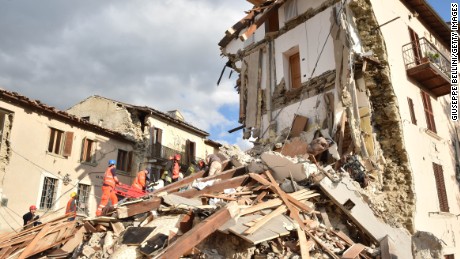
“Dun da da dun” is the sound of trouble in the middle of the night. It is an alert warning me that something significant has happened while I am sleeping. It comes from my husband’s phone which he 160824110618-italy-earthquake-debris-large-169charges on his bedside table each evening. It is tells me that the BBC has an important story. It usually signals bad news.

In the early hours of Central Time on August 24, I heard the familiar alarm and knew that somewhere something of import had taken place. The fact that it was still quite dark outside made it most likely that the occurrence was from another part of the world. When the sun finally peeked through my bedroom window it teased me from my slumbers. Remembering the sound that had roused me earlier I immediately checked my own phone to see what event had been so earth shattering that it merited a signal. As I stared at the headlines still blurred by my not quite awake eyes I learned of a horrible earthquake in the middle of Italy that had destroyed towns and taken far too many lives.

I sadly scanned the images and the details while clearing my head with my morning jolt of caffeine. I felt a great sadness wash over me as I read of the suddenness with which the rumbling earth had destroyed so many lives. One moment it was a beautiful day on which tourists and townspeople filled the streets, a time when the populace planned for weekend festivals. The next brought unimaginable horror as buildings that had withstood wars toppled to the ground burying the humans unfortunate enough to have been inside of them.

I next checked Facebook to see if any of my friends of Italian decent knew anyone who had been affected by the quake. Before I was even able to locate their posts I noticed a plaintiff cry for prayers from one of my cousins, a young woman with a beautiful family and an even more lovely soul. She revealed that she had been diagnosed with lymphoma and requested that we all ask God to help her. I felt as though I had been stabbed in the heart. I was shaken.

After gathering my wits I noticed a comment from a childhood friend whose family had immigrated from Italy long ago. She shared an image of the damage caused by the earthquake in the country of her ancestors and remarked that we should all live with the realization that everything that we take for granted can change in a heartbeat.

I was reminded for the millionth time just how fragile our lives really are. We assume that we will arise each morning and begin our routines. We make plans for the future never believing that anything will impede them. We have great intentions to do this or that but somehow become distracted with the mundane. We complain about small irritations that are generally easy to resolve. We act as though we have all the time in the world to do the things that are most important. We rush from appointment to appointment and often find ourselves apologizing for not having enough time to call a friend, check on a neighbor, visit someone who is lonely, send a card to someone who is sick.

We only have so many hours in a day and we have to prioritize, save our energy. “I’ll think about that tomorrow,” we reply echoing the now famous words of Scarlet O’Hara. All too often tomorrow never comes. We pile up regrets. The regrets turn to sorrow. We don’t quite know how to slow down the pace of our lives just enough to engage in a concerted effort to enjoy our blessings.

Of course our immediate responsibilities must come first. We have jobs. Our family members require our care and attention. We must maintain our own health. The drive just to accomplish those things may begin before dawn and only end in the dark of night. Our energy is limited. We can’t and shouldn’t push ourselves into to an early grave by attempting to be all things to all people. We know that this is true and yet each of us have known individuals who managed to redirect their lives just enough to be able to reach out to someone every single day. They demonstrate that it requires only a bit of organization and practice to include acts of kindness in the fabric of our daily routines.

I know people who keep rolls of stamps and boxes of generic greeting cards at the ready to send their love and concern to those who may need a burst of sunshine. It takes only a few minutes to jot down a note of encouragement but that tiny slice of time has the power to change someone’s entire day. Our phone calls don’t have to be long or move beyond a few sweeps of the clock. Just a quick few words tell someone that they are important. It need take no more than the time to say, “I was thinking of you. How are you doing?” At work we can give someone a thumbs up, acknowledging effort and the  importance of what they do. We shouldn’t wait for another day to express our sorrow or offer our contrition for mistakes or mend a broken relationship. A simple wave, a post on Facebook, a smile, a hug are gestures that take so little of our time and energy but have profound consequences. We should all strive to insert a few more of such endeavors into every one of our days. By doing so we are less likely to be filled with the regret of leaving our words unsaid, our actions undone.

The clock is slowly ticking. Each day is filled with uncertainty. It is a waste of time to dwell on the possibility of sudden tragedy but it is wise to realize that we only have so many opportunities to accomplish the most important tasks that center on the people about whom we care.

Last week I watched a biography of Jimmy Carter. It mentioned that President Carter loved and respected his father but sometimes felt that he was a bit too stern, unemotional and formal in his relationships. He didn’t think that his father’s business dealings merited much praise. He would have preferred to see his dad performing corporal works of mercy and charitable acts.  Upon his death Jimmy learned how wrong he had been in estimating his father. The funeral brought an overflow crowd and even more praises for the many kindnesses that Carter’s father had extended quietly and humbly to virtually everyone that he had ever encountered. Story after story told of small gestures and sacrifices that had made enormous differences in people’s lives. President Carter at that moment began to realize that it is in those everyday encounters that we touch the most hearts.

I will most assuredly once again hear the “dun da da dun” from the BBC announcing the latest news. My phone may ring to tell me of births, accomplishments, joys, sorrows, death. The unrelenting rhythm of life will march forever forward. The clock will tick. Hopefully I will have set aside a tiny slice of my day to live my best life. I can’t afford to wait until tomorrow to think about the things that deserve to be done today.


Higher Ground

4-ways-to-prevent-office-bulliesI’ve observed bullying for most of my life. I was once the victim of bullying, a situation that I nipped in the bud by ignoring my antagonist whom I considered to be sadly damaged. I successfully defended a classmate who was the brunt of ugly jokes and taunts. As an educator I witnessed incidents of cruelty that were horrific. I did my best to teach both my children and my students the importance of living by a moral code imbued with sensitivity, integrity and kindness. When necessary I entered the fray to protect those who had become emotionally broken from the barrage of insults that they had experienced. Sadly I have noticed that over time the game of bullying has only seemed to grow stronger and more common as social media provides a powerful conduit for harming individuals with words and ideas.

Bullying appears to have evolved into a worldwide blood sport these days. We have a presidential candidate who is lauded by his supporters as a kind of warrior because of his fearlessness in accusing an opponent’s father of being somehow associated with an assassin or remarking on the physical flaws of women that he finds threatening. He hurls insults at entire religions and countries. Instead of admonishing and spurning him, large groups of people provide him with attention and adulation as though his lack of manners is a sign of courage rather than crudeness. What are our children to think?

We have countless commercials in which people quite subtly demean others in an attempt at humor. Why do we find it funny when an individual pokes fun at a friend’s command of grammar? What is so wonderful about a woman rolling her eyeballs at a husband being portrayed as a total moron? Why do we laugh when we know we should instead feel uncomfortable?

Facebook and Twitter abound with ugly derisive posts. We encourage bad behavior by sharing and retweeting comments that might once have been considered too rude to repeat. We say that we abhor bullying of any kind and yet we do little to stop the ceaseless chatter that demoralizes and demonizes individuals and groups alike. In today’s world none of us are immune from unwanted and often unsolicited hatefulness. It is little wonder that so many people are choosing to tune out.

Prince William and Princess Kate are attempting to vanguard a movement to bring attention to the horrific effects of bullying. Their campaign reminds us of the often unfair and sordid gossip that swirled around Princess Diana, William’s mother. The poor woman was hounded by cameras and invasions of her privacy. Rumors smothered her attempts to live normally. In the end she died in a tragic accident as she attempted to evade her stalkers. It might be said that she was the victim of a form of salacious and relentless bullying from a public all too hungry to learn her dirty little secrets.

I have generally found that bullies are quite insecure. While they may appear to exude confidence the truth is that they have a need to exert power over others to assuage their own fears. When stripped of their boorish behaviors they often have very little to offer. They are generally very unhappy people and many times are the product of abusive parenting practices. They struggle physically, academically and emotionally. Their bravado masks the emptiness that they feel. They need to dominate others so that they might may pretend to be powerful. They become particularly happy whenever they attract a following for their contemptible behaviors. Like the boorish dictators that they are, they mistake fear for respect. In most cases the quickest way to shut them down is to leave them alone and isolated, a tactic that is all too many times easier said than done.

Back in high school I ran for student body secretary. One morning I had a minor skirmish with a fairly well known bully. I stood at the entrance of my school handing classmates campaign material and requesting votes. Most people politely acknowledged my greeting but one fellow decided to speak his mind. He tore the paper that I had given him in half, spat on it, let it fall to the floor and then crushed it with his shoe. He looked me in the eye and proclaimed that nobody liked me and that I espoused a special hatred in him. He told me that I was so unattractive that it was hard for him to even look at me. As a parting shot he gave me directions as to where he thought I should go.

I suppose that he wanted me to cry or react in some manner but I was determined not to give him the satisfaction. The only thought that I had was a deep sense of sadness that his life was so bereft that he found some sense of joy in putting me down when I barely knew him. His actions only registered in my mind because they seemed so overblown and indicative of an individual who was headed nowhere in life. I’ve always remembered that occasion because I wanted to understand what kind of poison might have created someone so hateful. His cruelty was stunning to me because it said more about him than it did about me.

We all have a vested interest in helping not only those who are bullied but the bullies as well. Our children need counseling in how best to handle such negative situations but we also must consider how to help those whose actions are so obviously toxic. We can begin teaching our kids by modeling healthy behaviors ourselves. We have to speak out against anyone who wrongly uses words and actions to demean or harm. We must show our young that it sometimes requires courage to stand up for what is right. We have to be careful that in defending we do not sink into the morass. We can demonstrate how to debate with facts and ideas rather than insults.

There have been bullies throughout history. We have yet to find a sure fire way of ridding ourselves of them. Sometimes the answer is as simple as ignoring them. Other times we have to provide them with counseling and help. When all else fails figuratively bloodying their noses is our final option. Mostly though the most effective method for dealing with bullies involves being assured within ourselves. When we have confidence nobody can touch us. Feeling good about who we are is the first line of defense against bullies. Our goal for stopping the current trend toward ugliness should be to show our children how to rise to higher ground. When we provide them with a strong moral compass they will be ready to overcome any taunts that come their way and they will do so with the strength and conviction that we have imbued in them.

This I Know For Sure

carnivorous_glow_worms_imitate_starry_sky_to_lure_prey_m7.jpgWe humans often have a tendency to accept ideas and pronouncements as fact that may or may not be true. I know that most of the mathematical formulas that I used in my classroom have weathered the burden of proof over time. I also realize that just since I was born theories regarding the universe and its beginnings have changed. If I had taken the earlier pronouncements as fact, I would have been wrong. I have faith that there is a God but as far as I have found, there is no way to definitively demonstrate that I am more correct than someone who belies the idea of a divine being. I think that I know my friends and relatives well but I also admit that I can’t get entirely inside their heads. I believe that the sun will set this evening and rise again in the morning but I can’t be entirely certain that nothing will happen to interfere with the centuries old rotations of our earth. The fact is that what we think to be totally true may indeed be debatable. Somehow in understanding this my outlook on life has become an oxymoron for I am definitely a cynical optimist. In other words, I question virtually everything understanding that ignorance and evil often reigns supreme, but have faith that good will ultimately win the day.

I learned today that Adnon Syed, a young man convicted of murdering his girlfriend fifteen years ago, will receive a new trial mostly as a result of questions raised by the podcast Serial that captivated the world’s attention a couple of years ago. Most of the evidence against Mr. Syed was circumstantial with the exception of testimony from a friend who claimed that he helped Adnon bury the body of Hae Min Lee on the day of the murder. Many of the other witnesses told conflicting stories and aside from cell phone records placing Syed at the park where the young girl’s body was found, there was no DNA, no fibers, no blood to tie the defendant to the crime. The only thing that any of us know with certainty is that a promising young woman lost her life and that nobody has ever admitted to the crime. Being a juror on such a case must be an enormously difficult task. It requires the wisdom of Solomon. On the one hand there is a desire to find justice for Hae Min Lee and her family. On the other hand nobody wants to convict an innocent individual which Adnon Syed claims to be.

I’ve served on a number of juries and each time I have approached my duties with anxiety. I want my ultimate decision to be right and just. I have found that my fellow jurors were as determined as I was to be fair. We each spoke of losing sleep over the momentousness of our task. In the end we could only pray that we had come to an accurate conclusion. The Perry Mason moments that we see on television rarely occur in a trial. Only those intimately involved will ever know the whole truth and they are generally silent.

Aside from ironclad laws of physics and events that we see with our own eyes much of what we take as gospel is based more on our innate philosophies than on any concrete proof. I am violently opposed to abortion because I believe with all of my being that it is murder. Still, I am not so vain to think that I am one hundred percent right. My conclusions are based on my own thinking that life is life whether it is a blob of cells that will one day become a baby or a fully formed viable human being. As such I cannot imagine anyone defending the barbarous methods of abortion but I wonder if I am wrong and those who see it as a right of choice are indeed the ones who have the higher ground. I only know for sure that I cannot abide by abortion but I am reluctant to foist my beliefs on others. I am caught in a painful conundrum because I worry that by being so I may be guilty of condoning a practice that I should vigorously oppose.

I myself don’t like guns. I am a bit afraid of them and have little desire to either be around them or fire them. Nonetheless, I know so many people who have them and use them wisely, even the scary ones that seem to have no purpose for normal use. I grew up with uncles and cousins who went hunting each year. When I visited my grandmother’s house as a child I saw my uncle’s loaded pistol displayed on his dresser. I understood that I was never to touch it. My husband has guns that once belonged to his relatives. They are family heirlooms in his mind. He keeps them safely locked away. Once in a great while he takes them to a shooting range to practice his skill at hitting targets. He doesn’t like to hunt and as far as I know he has never actually killed another living thing. He is as comfortable around guns as I am uncomfortable around them. Who is right and who is wrong? I can’t say with any degree of confidence. I believe that my gun toting friends and relatives have been portrayed in a negative light that they do not deserve. I know that they are sensible in their use of weapons. I also understand that few of the mass shootings that we have witnessed of late would have been prevented with the legislation that is currently being proposed. I find myself seesawing between arguments and wondering if we are truly getting at the heart of the matter regarding violence in America. The issue is so much more complex than our politicians would lead us to believe.

I read that Neil DeGrasse Tyson recently suggested that we create a state of Rationalia, a place in which scientific reasoning is our guiding light. It would definitely be a welcome change from the emotionalism that presently reigns but I find it doubtful that it would work in all situations. Ultimately in cases like a murder trial or judgements about abortion or gun control there is no hard data or inarguable evidence to guide us. We cannot always determine the truth without a shred of doubt. Our humanity all too often puts the lie to even the best theories. People find ways to demonstrate that it can be lethal to put our faith in a single idea. Instead we have to approach every situation that we encounter with a realization that we are limited in what we know to be true. When we do that we open ourselves to possibilities that may allow us to rethink our own philosophies and consider opposing views. Being open minded is one of the most difficult states of mind to achieve but it is the place where we surely need to go.

I often think of a graduate class that I took in which I was required to work with a diverse group of individuals to create a single project. We were all bright and self assured which created a rather rocky beginning for our work. Each person was somewhat insistent that she was destined to be the leader in developing the group’s ideas. Eventually we managed to move beyond the norming and storming stage just enough to admit that no one person had all of the answers. In fact, as we began to unemotionally consider each of the points of view we all changed. We realized the great power in a variety of ideas. In the end we were the most dramatically struck by the wisdom of the one member that we had at first thought to be the most deficient in knowledge. I learned from that experience that the only thing that is definitely true is that there is so much that I don’t know for sure. Admitting this has changed my life. I have learned to pledge my allegiance to seeking the truth, not to joining a particular crowd or way of thinking. We have to be open to the possibility that what we have long believed may be wrong. I am optimistic that most good people agree with me. It is how we always seem to find the answers we are seeking. This I know for sure.