Fish Sticks

vp-sticks-beauty-shotI’ve seen a great deal of change during my life that I tend not to even think about most of the time. I am a Catholic and until I was a teenager there was an ironclad rule that none of us were to eat meat on Fridays. The idea behind that ruling was that Jesus died on that day of the week and in remembrance of his suffering we were to abstain from meat as a kind of penance and sacrifice. In 1966, the year that I graduated from high school, Vatican Council II amended that dictate to require only that Catholics avoid eating meat on Ash Wednesday, Good Friday and all Fridays during Lent. A council of bishops later clarified the church’s stance on the consumption of meat on Fridays by suggesting that all Catholics over the age of fourteen perform some type of penance on every Friday of the year with avoidance of meat being one of the suggested forms of meeting that goal. For all intents and purposes the vast majority of Catholics today are no longer concerned about whether or not to eat meat on Fridays. The times of worry about sinning by eating a hamburger are long gone for most who follow the Catholic faith.

I remember the old days when my mother did her best to create menus that did not contain any form of animal flesh. We’d often have tuna fish salad or pimento cheese sandwiches and sometimes she would prepare my favorite grilled cheese. Old standbys were tomato or cream of mushroom soup with slices of bread. We never had access to nice varieties of fish after my father died so the chief version of seafood that hit our family table was in the form of fish sticks, a staple that American Catholics kept afloat for years. Sometimes Mama would use butter rather than bacon to prepare scrambled eggs or she would boil the fruit from chickens and make egg salad. Shrimp was too rich for our budget and we rarely went out to eat but when we did it was usually to a cafeteria and on Fridays our entree was always fried fish.

Some of my aunts and mothers of my friends attempted to become a bit more creative by putting together tuna casseroles and topping cheese pizza with tuna as well. I tended to prefer my mom’s less ambitious Friday efforts that made no bones about eating simply at the end of the work week. Somehow she made those tuna sandwiches and stacks of pancakes seem more exotic and delicious than the pot roasts that she sometimes prepared on Sundays.

When meatless Fridays became a thing of the past for most of us we often joked about the people who had cheated by enjoying a thick steak when they were supposed to be dining on chicken from the sea, and wondered if they were going to stay in hell for their transgressions or if there had suddenly been a release of centuries of Friday meat eaters into heaven. We also watched our liturgies and ways of doing things change rather dramatically in one fell swoop as our mass was finally recited in English rather than Latin, and the priest faced us rather than showing us his back. It was all so democratic and inviting. Suddenly we began to imagine a Jesus who walked among people rather than elevating Himself as someone more special than the rest of mankind.

One of the traditions that had always irked me was that women were required to wear a head covering inside the church. For that reason our school uniforms included little brown beanies for use whenever we attended mass or other religious ceremonies. As we grew older we were allowed to exchange the ugly headgear for chapel veils that perched lightly on our bouffant hairdos without destroying the effect of the coiffures we had created. I vividly recall the silliness of women placing sheets of Kleenex on their heads whenever they arrived at church without the requisite hats or veils. It was commonplace to see the thin white paper hurriedly pinned tightly to strands of hair in an attempt to show respect for the occasion. I had to stifle my laughter at the ridiculousness of the whole idea. Somehow I didn’t think that God cared a wit whether or not a woman was showing her beautiful hair and eventually the church leaders agreed with me and dropped the archaic requirement.

Of course the changing of the rules was not always met with complete agreement. There were those who were horrified that the old traditions were going the way of the buggy whip. They bemoaned the use of English in the mass and declared it to be almost profane. They continued to wear their hats and kept up the practice of avoiding meat on Fridays. They could hardly bear to look at the face of the priest smiling down at them during the mass, preferring to view his backside instead. It took a bit of convincing to get the naysayers to calm down but at the same time there were also those like me who began to question more of the ideas that seemed to have little or nothing to do with the message of love that Jesus so eloquently preached. We insisted that our church become ever more inclusive and less rigid in its dictates. That lead to a great deal of rebellion particularly in the United States where even the most faithful Catholics now sometimes debate the need for many controversial practices.

Still there are those who tend to be nostalgic regarding the old ways. The conservative versus liberal dichotomy is alive and well in the religious world. I remember listening to a man of my age who regaled us with memories of how much he enjoyed the old fish stick days, and how he wished with all of his heart that they would return. He thought the women looked nice with their long sleeved dresses and pretty bonnets on their heads. He longed to return to a past that seems rather quaint and perhaps even a bit unfair today, but I can’t concur. I think of the fact that none of those old fangled rules were created by Jesus but by men who simply came up with ideas that over time that may have once made sense but not so much today.

Now we are allowed to go to church wearing slacks and some even go so far as to show up in shorts, which may be pushing the envelope a bit too far. Few women wear hats and luckily they no longer have to worry that some over zealous cleric will pass over them at communion for the sin of wearing a dress without sleeves. Eating a burger on Friday is no longer a condemnation to hell, if it ever actually was. The edicts concentrate more on ways of living than dress and what is consumed for dinner. Still there are many questions that for now remain unanswered for those of us who see remnants of laws that seem to be out of touch with the compassion that Jesus always demonstrated so freely. Perhaps the time will come when they too are deemed to be unfair and even unnecessary.

I am a woman of great faith but I have trouble with most organized religions that cite edicts that are manmade interpretations of the word of God. I believe that religion is at its best when it is kept as simple as possible. Over and over again Jesus defied many canons that he found to be without merit. He healed the sick on the Sabbath. He befriended individuals who were deemed to be undeserving outcasts. He walked among the lepers, the poor and the suffering. His message seems very clear to me and it is not one of exclusion of anyone. Instead it is one of unconditional love. I believe that as long as we follow His example as best we can, we are on the right track. Sometimes we sadly get so caught up in attempting to judge that we actually lose our way. Instead of worrying about how we look or what we eat we are on the right track when we welcome all.

The Colony

historic-colony-map-smMy husband still owns a house that his grandfather built in Houston in the nineteen thirties. It is on a tract of land that was part of the original Stephen F. Austin Colony that was deeded to Mike’s family before Texas won its independence from Mexico. The Sharman family traveled to Texas from Georgia in the hopes of starting a new life after experiencing hard times in a south dominated by large landowners. The parcel that they purchased lies just north of what is now downtown Houston and is bordered by Interstate 45 and Cavalcade Road.

When the Sharman’s first came it was wooded and undeveloped. They built a homestead and did some farming, never thinking that one day their place would be located in the fourth largest city in the United States and the second fastest growing metropolitan area. At the time that they arrived Mexico was hoping to develop the large swath of land to the north that was mostly wild and barren. They made a deal with groups like the one to which Austin belonged to provide low cost grants to anyone willing to settle down and develop the land. The Sharman family was willing to risk everything for a new start.

They used to own an area that included the place where the freeway now sits but that was taken by the state when it was deemed to be a good route for a major highway linking Houston to parts north. Mike recalls playing in the woods that lead down to the bayou when he was a young boy but that was before there was a concrete ribbon obscuring the once pastoral view. Later he rode his bicycle on the unfinished ramps while I-45 was being constructed. Sadly the finished roadway changed the feel of the neighborhood forever.

I often laugh whenever I read articles about that part of Houston. Nobody seems to realize the real history of the area. They speak of developments that happened long after my husband’s clan arrived in a time before there was even a Republic of Texas. Over the years much of the property has changed hands but Mike, his grandfather and his mother have kept the family legacy intact against all odds. In fact it was not until the nineteen eighties that one of them did not actually live on the land that has so much historical significance.

My mother-in-law was quite proud of the fact that her ancestors had been among the first settlers in what would eventually become the state of Texas and the city of Houston. She had so many stories of what life had been like for the pioneers. Those tales were handed down to her from her own grandmother who even told of her dealings with the native Americans who lived nearby as neighbors. We still have photos of family members standing in front of log cabins looking like visitors from the wild west. They worked hard and somehow overcame diseases, floods and many obstacles that might have driven away lesser souls. In many ways my mother-in-law became the unofficial historian of their trials and tribulations, a task that she enjoyed enormously. She loved being a Daughter of the Republic of Texas and kept up a membership for her grand daughters as well.

Her father’s home was built shortly after she was born. It is a quaint looking cottage that speaks of a simpler time. It was so well constructed that it will probably last for many more decades. Some of the nearby homes are even older and were the living quarters of her grandmothers, aunts and uncles. It was really a family compound where everyone contributed to the well being of everyone else. Being the only girl back then made my mother-in-law the center of attention and while she was quite spoiled by her adoring relatives, their love made her into a strong, generous and confident woman.

I would have enjoyed meeting her kin but they had all died by the time that I came into the picture. They were a tough lot, particularly the ladies. The Houston area was a harsh environment back then with outbreaks of yellow fever being commonplace due to the rainy weather and swarms of mosquitoes. Somehow the clan tended to stay quite healthy and live long lives in spite of the less than inviting conditions that they had to endure.

The part of north Houston where the family land still lies became downtrodden over time and my mother-in-law eventually moved after she inherited an uncle’s house in the Heights which is a gentrified area that is home to artisans and professionals. It felt safer there than in the home that had always been her residence. Lately however her childhood neighborhood is slowly but surely being beautified once again. It even has a new name that would undoubtedly horrify my mother-in-law with its ordinariness, Northside Village.

A Metro rail line runs only a block or so away from the property and its construction has prompted new interest in a part of town that lies only minutes away from the central business district. There are nearby lots selling for millions of dollars and tiny nineteen twenties houses are inching up in price. For now nothing particularly exciting is happening on the old Sharman tract but there are those who insist that it will one day become high dollar real estate.

I love the house that my husband’s grandfather built and always have. I can almost see myself living there with only a few updates to make it more amenable to twenty first century living. It is almost like a dollhouse in its design and even better in the love and care that went into building it. Right now there is still a great deal of crime in the area and the future of the street is uncertain. It’s difficult to know if it will become yet another rediscovered jewel or be ignored as it has been for the last couple of decades.

My daughter and I dream of rebuilding a kind of family village there. She wants to use some of the land to create a modern home for herself and I would be content with staying next door in the older house. We imagine the two of us riding the rails to shop in downtown or to visit the Medical Center. We think of buying our produce in the open air of the nearby farmer’s market or enjoying the of view of the skyscrapers that loom on the horizon. We envision a rebirth of the place with my mother-in-law serving as our guardian angel. We both know just how much she treasured the legacy that belonged to her and now is owned by her descendants. From the time that I met her she dreamed of the day when her homestead would be loved once again. She died without witnessing a renaissance but insisted that it was near. I’d love to see that happen before I too am gone. There would be something quite special about returning to the land that made her ancestors so very proud. We modern folk are so prone to throwing out the old in favor of the new. How grand it would be to find value in a place that has meant so much to generations of Texans who so proudly called themselves Houstonians.

East Meets West

captionI recall learning how to write a proper letter in elementary school. At the end of our practice the teacher surprised us by announcing that she had a list of children from Japan who wanted to communicate with an American pen pal. I immediately agreed to send a well written epistle if chosen for the honor of meeting a new friend in a faraway land. Happily I was one of the lucky ones who received the name and address of a Japanese girl who was waiting to hear from me.

My mother took me to a stationary store where I found some lovely lightweight paper with matching envelopes that would work well for sending an airmail post. It was a pale sea foam green and had tiny pink rosebuds imprinted in the background. It was the most beautiful parchment that I had ever seen. I was quite proud to have such a lovely means of getting to know my Japanese counterpart.

Following the instructions that my teacher had taught me and using my very best penmanship I introduced myself hoping that I would sound interesting enough to elicit a response. Once the letter was complete I carefully and nervously folded the sheets and enclosed them along with a school photo of myself inside the envelope. Mama drove me to the post office to be certain that there was enough postage on my letter to get it to Kyoto, Japan as quickly as possible. Then I waited and waited, checking my mailbox as soon I as got home from school each day.

It seemed like an eternity before I received a response. Some of my friends who had also written their pen pals had already brought letters from their correspondents to school to show the rest of us. I was beginning to wonder if I had sounded too boring to be worthy of a reply when a huge manila envelope came with my name printed neatly on it. Inside was a lovely book filled with exquisite photos of Kyoto. There were also multiple photographs of my pen pal who was a true dark haired beauty wearing a school uniform in one and traditional Japanese dress in another. She enthusiastically wrote about her excitement in receiving a letter from me and then told me all about herself. I was beside myself with wonder at the very idea of communicating with someone who lived so far away and in such a lovely place.

Over time we often wrote back and forth and made the kind of pledges that children often do that we would be best friends forever and that one day we would meet each other in person when we visited each other’s homes. I liked to imagine her walking through cherry blossoms and drinking exotic teas while she seemed intent on insisting that I must surely know lots of Texans who rode horses and did tricks with ropes. We both fantasized quite a bit and I suspect that we each became a bit disenchanted when we realized that life was actually rather mundane for both of us, filled with studies and the challenges growing up.

Eventually we hit our teenage years and became busier and busier and the letters came and went less and less frequently. Finally we were lucky to manage to write each other one time a year and then our longtime correspondence came to an end. I told myself that I would resurrect our friendship soon enough but I never seemed to find the time. What had been so much fun simply fizzled out but not without leaving a dramatic imprint on me. I had developed an enduring fascination with Japan that even decades later has not abated. I love to read about Japan, watch movies about Japan and I have even been known to have crushes on Japanese actors. In the back of my mind there has always been a dream of one day traveling there, especially to Kyoto.

I still have the book that my long ago friend sent to me. Sadly I did not keep the letters and time has erased my memory of her name. I have no address that might lead me to her again but I often think of her and wonder how her life has been. I’m curious to know if she married and had children. I try to imagine what type of job she may have held. She was quite artistic so I suspect that she did something creative. I hope that she has been happy and healthy and been able to accomplish her dreams. I’d like to think that she remembers our brief friendship and enjoyed it as much as I did. I feel guilty that I did not try hard enough to keep in touch and worry that something may have happened to her that prevented her from writing. I wish that I had inquired about her even if only in a brief message letting her know that I cared.

I never got to Japan. There were always other places to go and things to do. I was busy raising a family, taking care of my mother, working, sending my children to college. The years went by so quickly that I hardly noticed. I eventually rode horses now and again which I think she may have liked to know. I hiked to the top of mountains where it seemed as though I could see forever and I imagined her enjoying life somewhere off in the distance.

I did not forget her. How could I? Those letters from her gave me so much pleasure. They made me feel as if I had been part of a grand adventure. She and I shared our stories and our secrets and found that the east and the west were more alike than they were different. We were two girls who dreamed of conquering our respective worlds and I would like to believe that both of us did.

These Are The Good Old Days

il_340x270-1167766621_5l2mBack in the nineteen seventies my mother and one of my brothers took a Sunday afternoon ride to Galveston Island which was about fifty miles away from where I lived. I was recovering from hepatitis and it was meant to be a relaxing excursion. My mama always believed that the ocean air was good for whatever ailments one had. Going down to the sea was one of her most frequent destinations.
We rode along the seawall built by heroic Galveston residents who refused to be chased away by the 1900 storm that killed more than 2000 people in one dark night. It was a lovely early spring day and it felt wonderful to escape from the confinement that I had endured for many weeks. My mother always knew exactly how to nurse me back to health.

Mama wasn’t much for driving on freeways so we took an old highway back home that was less traveled at the time. Along the way her car broke down, a not so uncommon occurrence for her because she tended to keep her autos until the wheels fell off. There was no sign of life anywhere near where we were and of course there were no cell phones back then. We had to rely on our own ingenuity to find a way out of our dilemma.

For quite some time we pushed the car hoping that either it would spontaneously come back to life or that we might encounter a phone booth or service station where we might find help. I soon grew quite weary. I had been instructed by my doctor not to over exert myself and the effort of moving a heavy object down an asphalt runway soon sapped what little energy I had. We decided to simply get the car out of the road and walk until we found signs of life.

It felt as though we had to travel several miles before we finally found a place of business where we were able to call my husband who rescued us quickly after that. He drove us back to Mama’s car and noticed that she had run out of gasoline which he remedied as well. The incident became one of those laughable family moments and a memory of life in times past.

I can’t help but think of how much easier it would have been for us to find the assistance that we needed if only there had been cell phones back then. It is highly likely that at least two of us would have been able to take care of the problem with a few keystrokes. The modern world with its many inventions has made our lives so much easier than it has ever been.

I often see photos of what it was like when I was young on Facebook. My friends sometimes reminisce about the good old days. We even had a politician who won the presidency with the promise to make America great again. The problem that I find with such nostalgia is that going backwards in time is not generally something that we should want to do. I like the progress that we have made and I see little point in turning back the clock. Instead I try to enjoy the days that I have right now.

My grandfather was born in 1878 and did not die until the nineteen eighties. He often laughed when people asked him to tell about the good old days. “These are the good old days,” he would always insist. He easily recalled the hardships of living without refrigeration or electricity. He remembered the first time that he saw a town lit up with lights and the sense of wonder that overcame him. He read the headlines cheering the first flight of an airplane and watched with elation as a human walked on the moon. He remembered how his grandmother treated illnesses with herbs and  what it was like watching people die of terrible infectious diseases that were eventually eradicated by modern medicine. The level of comfort that he experienced in his later life had been unimaginable when he was a child and he appreciated all of the advancements that had made the world a better place to be.

I hark back to the nineteen fifties and sixties, a time of great scientific exploration that changed the way we live and work at rocket speed. I am able to tell horror stories about attempting to type a long research paper without mistakes on an old typewriter with keys that would stick and smear ink on my fine white paper. My efforts were always so homely because I had to cover my errors with blobs of liquid paper that dotted my manuscripts like droplets of snow. If I had to have multiple copies that meant using carbon paper that left purple stains on my fingers and anything else that it touched. Creating documents was a time consuming and onerous task for me that thankfully is a thing of the past.

Like my grandfather I might list hundreds of examples regarding the difficulties that existed simply because the solutions to the various problems had not yet been invented. Any of us who did research of during the nineteen sixties shudder at the thought of spending hours combing through a card catalog in a library only to find that the very book that we needed had already been checked out by someone on a similar mission. Almost everything was in hard copy form back then. Sometimes documents were photographed and stored on little reels that had to be read using a machine that invariably broke in the middle of the process.

If I were to begin to list all of the changes that have occurred in my own lifetime it would require pages and pages. Man’s ingenuity has indeed been an engine that has driven progress inevitably forward and there is little reason for us to wish to turn back the clock which, by the way, we don’t have to wind anymore like we did in the past. The history of mankind is one of advancement with a few hiccups along the way but inevitably we seem to find better and better ways of enjoying life. I suspect that my very wise grandfather had it right all along when he would insist that these are the good old days.

Karma and Lessons From History

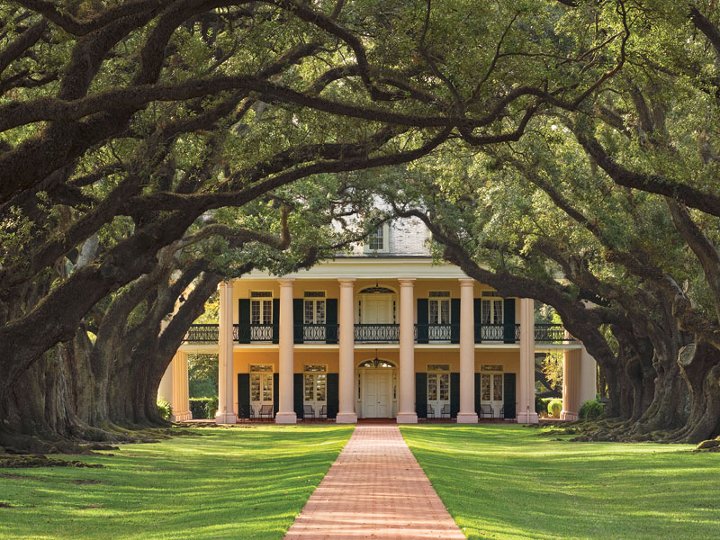
gallery-121Way back in the 1700’s someone planted two rows of oak trees in land facing the Mississippi River. More than a hundred years later Jacque Roman, a wealthy French Creole, saw the avenue created by those trees and purchased the land to build a mansion for his wife and a plantation as a business. The estate that he created would one day become known as Oak Alley and it stands today as a reminder of a controversial time in our nation’s history.

Jacque Roman was a handsome, wealthy and well educated fellow who grew up in the French Quarter of New Orleans. He was considered a promising catch for some fortunate young lady. He thought that he had found the woman of his dreams when he saw Celine, a high spirited soul who lit up drawing rooms and parties wherever she went. Jacque was as shy as Celine was outgoing, but he impressed her with his gentlemanly devotion to her. They married and he promised to one day create a magnificent home for her. Thus he knew that he had found just the place when he saw those elegant oaks.

Jacque started his sugarcane business first. He added more than a hundred fifty slaves to those who came with the land. He paid top dollar for some of them and even sent one to France to train as a chef for the time when Jacque would bring Celine to his dream house. He thought of every little detail that might make her happy and indeed when she first set eyes on the place she was overwhelmed. Sadly her joy was not long lived. She birthed six children in seven years. She had to watch three of them die from diseases like yellow fever and tuberculosis that were the norm for plantation life. It was a sad lifestyle for a social butterfly like Celine. The only people around for miles and miles were Jacque’s relatives with whom she had little in common. Her dislike for them only grew to total disdain as the tedium overtook her once delightful personality. She came more and more to hate the plantation and the dreary routine that her husband had created for her.

When news came that Celine’s mother had died and that her father needed help raising her younger siblings she jumped at the opportunity to leave the plantation. She took her remaining children with her to New Orleans and her visits to her husband grew farther and farther apart until she was no longer even pretending to want to go back to what had been a home built just for her. She made one final visit when Jacque was dying from tuberculosis. After that she attempted to run the plantation from afar racking up huge debts from her profligate spending habits. By the time that her eldest son took over the plantation was mostly in ruins and the Civil War would sound its death knell.

Celine and Jacque’s three children abandoned the family estate. One of the girls lost her left leg in a terrible accident and with no prospects of marriage after becoming disabled she entered a Carmelite convent. The other daughter lead a rather mundane life with a husband and four children. The son was a successful businessman but had to sell the plantation at a huge loss which barely covered the family’s debts.

The house itself languished in ruins until the nineteen twenties. By then the roof had caved in and animals roamed freely through the once elegant rooms. The Italian marble floors were broken and it seemed as though the old place was destined to be destroyed but for a woman from south Texas who had met and married a wealthy New Orleans businessman by the name of Stewart who had promised her that when he retired he would purchase a farm or ranch for her. When the time came Mrs. Stewart became enchanted with the idea of resurrecting the old structure. With an investment double the price of the property the house was renovated and made more modern. Mrs. Stewart brought cattle and horses to the land. She lived happily in the house until the nineteen seventies. She had no children and fearing that her heirs might neglect the estate, Mrs. Stewart created a foundation to care for the antebellum home in perpetuity. Today it stands as a reminder of a time long ago, open to visitors seven days a week.

The story of Jacque and Celine was touching but my feelings for them were offset when I walked to the area that would have once held the slave quarters. The names of the people who built and cared for the house and the land are listed on a wall. They are souls with only first names whose dignity and freedom were stripped from them without regard to their humanity. There were implements of punishment and torture on view. Chains and shackles that were used to hold and torture them. There were copies of letters in which Jacque gave his overseer instructions on how to imprison and punish disobedient slaves. Somehow those very clear words erased the pity that I had felt for this man who was making millions of dollars off of the free labor of two hundred souls. I imagined them living in cramped quarters without heat. I thought of how oppressive it must have been for them in the summer when the humidity was at one hundred percent and the mosquitoes were swarming. The contrast with the way that they were forced to live versus the members of the Roman family was heartbreaking.

One of the things that most struck me was the irony that Jacque thought enough to have his slaves baptized in the Catholic church but he did not see the immorality of his actions toward them. On the one hand he saw them as God’s people but on the other hand he considered them his possessions. He carefully recorded their names and the prices that he paid for them in a ledger. His handwriting was neat and precise and without feeling of any sort. They were simply part of the inventory of his possessions. While they served his every need, he was inside his elegant mansion with ice transported in barrels from the north to the tune of three hundred pounds each week. Somehow I began to feel that his estrangement from his wife and his family’s ultimate downfall was a kind of karma.

I realize that it was a different time. Slavery was legal and very much the rule in both the north and the south. The slaves were the human engines who drove the economic machines. Somehow the vast majority of people had convinced themselves that what they were doing was just, but the fact is that the abolitionists were already quite active when Jacque first decided to build his plantation. He would have heard their calls for emancipation but obviously ignored their arguments. It would take many more years for a war to break out between the states that would ultimately become a means of freeing the slaves. Sadly amidst all of the splendor of the remarkable home there is a stain that somehow can never be erased. Perhaps touring this place should remind us of our own duties to speak up for the rights of those who have no voices for themselves. We will all ultimately be judged by history. Let us hope that we will be on the right side.