Karma and Lessons From History

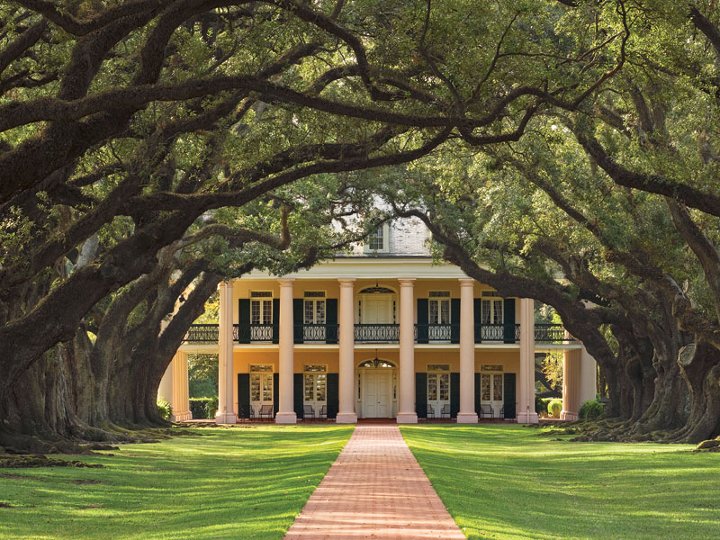
gallery-121Way back in the 1700’s someone planted two rows of oak trees in land facing the Mississippi River. More than a hundred years later Jacque Roman, a wealthy French Creole, saw the avenue created by those trees and purchased the land to build a mansion for his wife and a plantation as a business. The estate that he created would one day become known as Oak Alley and it stands today as a reminder of a controversial time in our nation’s history.

Jacque Roman was a handsome, wealthy and well educated fellow who grew up in the French Quarter of New Orleans. He was considered a promising catch for some fortunate young lady. He thought that he had found the woman of his dreams when he saw Celine, a high spirited soul who lit up drawing rooms and parties wherever she went. Jacque was as shy as Celine was outgoing, but he impressed her with his gentlemanly devotion to her. They married and he promised to one day create a magnificent home for her. Thus he knew that he had found just the place when he saw those elegant oaks.

Jacque started his sugarcane business first. He added more than a hundred fifty slaves to those who came with the land. He paid top dollar for some of them and even sent one to France to train as a chef for the time when Jacque would bring Celine to his dream house. He thought of every little detail that might make her happy and indeed when she first set eyes on the place she was overwhelmed. Sadly her joy was not long lived. She birthed six children in seven years. She had to watch three of them die from diseases like yellow fever and tuberculosis that were the norm for plantation life. It was a sad lifestyle for a social butterfly like Celine. The only people around for miles and miles were Jacque’s relatives with whom she had little in common. Her dislike for them only grew to total disdain as the tedium overtook her once delightful personality. She came more and more to hate the plantation and the dreary routine that her husband had created for her.

When news came that Celine’s mother had died and that her father needed help raising her younger siblings she jumped at the opportunity to leave the plantation. She took her remaining children with her to New Orleans and her visits to her husband grew farther and farther apart until she was no longer even pretending to want to go back to what had been a home built just for her. She made one final visit when Jacque was dying from tuberculosis. After that she attempted to run the plantation from afar racking up huge debts from her profligate spending habits. By the time that her eldest son took over the plantation was mostly in ruins and the Civil War would sound its death knell.

Celine and Jacque’s three children abandoned the family estate. One of the girls lost her left leg in a terrible accident and with no prospects of marriage after becoming disabled she entered a Carmelite convent. The other daughter lead a rather mundane life with a husband and four children. The son was a successful businessman but had to sell the plantation at a huge loss which barely covered the family’s debts.

The house itself languished in ruins until the nineteen twenties. By then the roof had caved in and animals roamed freely through the once elegant rooms. The Italian marble floors were broken and it seemed as though the old place was destined to be destroyed but for a woman from south Texas who had met and married a wealthy New Orleans businessman by the name of Stewart who had promised her that when he retired he would purchase a farm or ranch for her. When the time came Mrs. Stewart became enchanted with the idea of resurrecting the old structure. With an investment double the price of the property the house was renovated and made more modern. Mrs. Stewart brought cattle and horses to the land. She lived happily in the house until the nineteen seventies. She had no children and fearing that her heirs might neglect the estate, Mrs. Stewart created a foundation to care for the antebellum home in perpetuity. Today it stands as a reminder of a time long ago, open to visitors seven days a week.

The story of Jacque and Celine was touching but my feelings for them were offset when I walked to the area that would have once held the slave quarters. The names of the people who built and cared for the house and the land are listed on a wall. They are souls with only first names whose dignity and freedom were stripped from them without regard to their humanity. There were implements of punishment and torture on view. Chains and shackles that were used to hold and torture them. There were copies of letters in which Jacque gave his overseer instructions on how to imprison and punish disobedient slaves. Somehow those very clear words erased the pity that I had felt for this man who was making millions of dollars off of the free labor of two hundred souls. I imagined them living in cramped quarters without heat. I thought of how oppressive it must have been for them in the summer when the humidity was at one hundred percent and the mosquitoes were swarming. The contrast with the way that they were forced to live versus the members of the Roman family was heartbreaking.

One of the things that most struck me was the irony that Jacque thought enough to have his slaves baptized in the Catholic church but he did not see the immorality of his actions toward them. On the one hand he saw them as God’s people but on the other hand he considered them his possessions. He carefully recorded their names and the prices that he paid for them in a ledger. His handwriting was neat and precise and without feeling of any sort. They were simply part of the inventory of his possessions. While they served his every need, he was inside his elegant mansion with ice transported in barrels from the north to the tune of three hundred pounds each week. Somehow I began to feel that his estrangement from his wife and his family’s ultimate downfall was a kind of karma.

I realize that it was a different time. Slavery was legal and very much the rule in both the north and the south. The slaves were the human engines who drove the economic machines. Somehow the vast majority of people had convinced themselves that what they were doing was just, but the fact is that the abolitionists were already quite active when Jacque first decided to build his plantation. He would have heard their calls for emancipation but obviously ignored their arguments. It would take many more years for a war to break out between the states that would ultimately become a means of freeing the slaves. Sadly amidst all of the splendor of the remarkable home there is a stain that somehow can never be erased. Perhaps touring this place should remind us of our own duties to speak up for the rights of those who have no voices for themselves. We will all ultimately be judged by history. Let us hope that we will be on the right side.

A World At War

usa-la_-nola_-wwiimuseumIt’s difficult for most of us to even imagine what the world was like in 1941. The United States was not thought to be a powerful force. In fact it was ranked eighteenth in the terms of military might. The country was only beginning to recover from the effects of the Great Depression. Most of the country was rural and there were still a majority of homes without electricity or indoor plumbing. The mood was isolationist as the populace here watched events unfolding in Europe with horror but an intense belief that our nation needed to stay out of the fray. My mother was fifteen and my father eighteen as December began that year. They were yet to meet one another and naively unaware that life for every American citizen was about to change dramatically.
My mother often spoke of December 9, 1941 when the Japanese bombed the American fleet in Pearl Harbor. It was a fearful and shocking moment. She along with her countrymen listened to President Roosevelt as he reassured the nation. She remembered how quickly people answered his call for all Americans to participate in the coming war effort. She saw her brothers enlisting in various branches of the Armed Forces one by one, and saw high school friends leaving the classroom as soon as they were old enough to lend their help to the cause.

World War II was like no other engagement in history. Its influence stretched across the globe, affecting people on virtually every continent. Here at home citizens of every age contributed in one way or another. Women who had traditionally kept the home fires burning took over manufacturing jobs. Industries were cranking out planes and ships and munitions at a fevered pace. Everyone rationed their use of critical materials, including paper. My mother-in-law often showed me the yearbook from her senior year of high school. It was thinner than a monthly magazine, made only of the cheapest quality pulp. It mirrored the reality of the time with row after row of photos of mostly young girls. The boys had dropped out of school and to join the fight.

When our troops first went to faraway places like northern Africa and the Pacific they were ill prepared to battle the well trained and experienced Germans and Japanese. They often found themselves overwhelmed and in retreat in the earliest forays. They learned on the job and became just a bit better as they slowly understood the demands of the new ways of fighting. I have often wondered how those of us living in today’s world might react to news of battlefield losses and situations requiring our troops to run for safety. Would we have the heart to continue the fighting or would we give up quickly? Luckily the generation who fought World War II was made of stern stuff. They were determined to do whatever it took to free Europe from the grip of Nazi Germany and the Pacific from the Japanese.

There was much at stake and the American people understood that they could not be deterred from seeking total victory. In that regard both Japan and Germany had greatly underestimated the will of our country. There are those who wonder if the world might indeed look very different today had the United States not allied with Great Britain and Russia in that great fight against fascism and tyranny.

The World War II Museum in New Orleans, Louisiana is a repository of the remarkable history of that era. It is filled with the stories of both the leaders and the common people who worked together to defeat the enemies and free the world from their dominance. With hundreds of photographs, artifacts, videos and research texts it leads visitors from the beginnings of the conflict to its horrifying end with the explosions of atomic bombs over Hiroshima and Nagasaki. It is a touching and personal journey that is honestly and beautifully told.

The city of New Orleans was chosen as the site of the museum because it was the birthplace of the the inventor of the Higgins boat which was used to bring troops ashore at Normandy on D Day. Mr. Higgins was already making shallow draft boats for fishing in the bayous and swamps when the military expressed a need for a military version of such craft. He was ready to design a larger boat capable of transporting troops. The Higgins boats that were manufactured in New Orleans have often been credited with helping to win the war in Europe.

It’s been seventy five years since our nation entered World War II. By the end of the conflict the United States was viewed as a major political power. With an infrastructure unharmed by the devastation of the war we were poised to enjoy an economy exploding with innovation and production. The soldiers returned to an exciting time that included creating a new generation of children that would become known as the Boomers. The United States was slowly but surely transformed by the building of a system of interstate highways that made travel from one ocean to the other quicker and more open to all people. The same spirit that drove the success in the war continued its inventiveness all the way to the moon and back.

Those of us who were the children of the men and women who endured the uncertainties of war would inherit the fears of the atomic age. We would wear dog tags for a time to identify us in case of a nuclear attack from the Soviet Union. We practiced air raid drills each Friday afternoon, crouching under our desks in wonder and confusion. Our generation would be drafted into a new and different war in Vietnam that somehow never made as much sense as the one our parents had fought. We would march for the civil rights of our Black neighbors and those of us who are females would blaze new trails in education and work.

World War II was never just a long ago historic event to us. We saw those photos of our dads and uncles in their uniforms. We heard the stories of life under siege. We watched the old black and white movies that celebrated the accomplishments of our generals and troops. We saw the sadness in the eyes of those who lost loved ones in places so far away that nobody had even known that they existed before the battles. We were the link between the past and the present, the generation that watched the world change at such a rapid pace that it was sometimes difficult to keep up. We truly appreciated what the brave men and women of the world endured to secure a time of promise and opportunity for us.

Few people in 1941 might have imagined a nation so filled with the bounty that we now have. Ordinary citizens enjoy lifestyles that once belonged only to the wealthy. We live in modern homes and watch our big screen televisions that bring the world into our living rooms. We travel the world and study at universities at a rate that our parents never saw. We have much for which to be thankful and most of it resulted from the brave and unselfish acts of a generation that chose to defeat the forces of pure evil. Their story is on full view seven days a week at the World War II Museum in New Orleans. Every one of us should take the time to absorb the importance of the stories that are told there and to thank the veterans of that war and those who serve today to protect us. 

Memories of Another Time

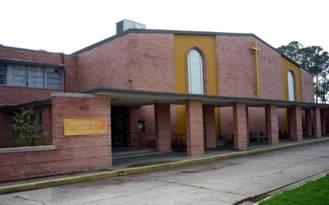
cristoreyhoustonI return to the neighborhood where I grew up at least once a week to tutor high school students in math. The area has changed more than a bit since I once walked the short blocks from my home to the high school that I attended. I suspect that only a few if any of the people who once lived there are still around. It was a working middle class suburb back in the day with a mix of blue collar types and professionals. The entire subdivision centered on the Catholic Church and school that most of us attended. There were other denominations and public institutions as well but Mt. Carmel was the main attraction. Everybody knew everybody and the community spirit was probably the best aspect of living there. It’s not an exaggeration to boast that it was heaven on earth for kids.

Our parents were quite active in providing us with a faith filled life, a great education and lots of after school activities. There was always something wonderful happening and the whole neighborhood felt like a combination of “Leave It To Beaver” land and an episode of “The Wonder Years.” My mother was quite wise to find us a home there after my father died. Our little place provided us with a sense of stability as we were growing up as well as hours of fun.

Of course things never seem to stay the same. Once I was grown and gone the whole area began to change as the old timers moved to newer homes in newer parts of town or to land they had purchased for retirement. It was just never quite the same. The new folks who moved in stayed mostly to themselves and my mother lost her sense of security. Her home was burglarized so many times that on the last break-in the thieves left without taking anything. We joked that we were surprised that they didn’t feel sorry for her and leave something behind. All of her valuables were long gone. Because she was alone and no longer had old friends on whom to depend nearby she became more and more frightened. Each time that she came home to discover an invasion of her property she was less and less willing to stay in the place where we had all shared so many memories. She decided to sell.

It was truly a shame because she had managed to pay for the house in full. She enjoyed having the extra income to make repairs and purchase a luxury now and again.  Because the area had generally deteriorated, at least on our street, she was unable to get a good price for the place. Essentially she had to start all over again making payments on a home that was little better but at least felt more safe. It stretched her already small income to the breaking point but she was always optimistic, believing that the good Lord would work things out, and somehow He always did.

I don’t think that Mama ever went back to see how our old homestead was doing which was actually for the best. The people who bought it did little to keep it in good condition. By the time that I finally drove by a few years back it was a sad broken down property. The roof was sagging and it looked as though it hadn’t been painted since the last time that Mama and me and my brothers had put a fresh coat on it. Mama had always taken pride in having a nice garden and had planted trees, bushes and flowers over the years. Literally all of that was gone. There wasn’t even much grass growing in the yard. It was stark and ugly in the saddest imaginable way. It literally hurt to see it like that. I couldn’t decide whether to be angry or just to cry.

I haven’t dared to go back again. I really don’t even like to think about how battered and neglected the house looks. I drive to my tutoring sessions from a direction that doesn’t take me near the old place. That way I keep only the positive memories of my youth that were so delightful. I picture our home at its best when it represented love and safety.

On sunny days when the temperature isn’t too hot there is a certain kind of breeze in the neighborhood that gives me a strong sense of deja vu. I can close my eyes and listen to the planes flying overhead as they approach nearby Hobby Airport and feel transported back to a time when the subdivision and the school were among the best in town. The sounds of the birds are just like they were when I was a kid and I can almost hear all of the old neighbors laughing and living inside their homes at a time when people still left their windows open and their doors unlocked. For a moment I find myself believing that they are all still there and that I might go see them after finishing my tutoring, but then something always stirs me back to reality and I remember.

The school where I was once a student has a new name now. It used to be Mt. Carmel but the Carmelites and the School Sisters of Notre Dame left and over time there wasn’t enough interest or financial help to keep things afloat. The school began to operate in the red without enough students or help from the diocese and finally was forced to close its doors. It was threatened with destruction until the Jesuits purchased the property and renovated the inside, creating a whole new high school called Cristo Rey. They brought in wealthy individuals willing to help support the education of students who might not otherwise have the privilege of an exceptional private school education. I now tutor some of those same kids and I have to admit that I am quite impressed with how well the hard working teachers and administrators have revitalized things for them.

It sometimes feels quite strange to be back in my old school fifty years after graduating. I tell my tutees about my own adventures there and they stare back at me as though I have two heads. I suspect that it is difficult for them to imagine an old lady like me as a young person with all of the same hopes and dreams that they have. I somehow feel that I am supposed to be there helping them. I have a deep connection and respect for the history of all of the wonderful things that happened inside those walls over the years. So many lives have changed for the better in the classrooms and the laboratories. I feel the spirit of all of us who launched our own lives there with the knowledge and confidence that we developed under the guidance of teachers and parents who truly cared about us.

As I walk through the hallways toward the library where I once devoured the words from books that opened whole new worlds to me I see the newest students experiencing the same emotions of joy and fear and discovery that were once mine. I know that we are somehow brethren. Some things like the freedom and wisdom and growth that come with knowledge never change. Whether they realize it or not those young men and women are part of the same long red thread of learning that wove through my mind so many years ago. We are bound together and no matter how different the world may become that red brick edifice will always represent the everlasting power and beauty of education.

Ever Forward

childhood-011I suspect that there are often times when those of us who are adults wish that we might return to that age of innocence that was ours when we were children. We long for the times when we were yet to realize that evil and hatred exist in our midst. We ask ourselves when we began to lose our sense of wonder. How is it that we find ourselves lacking in trust? What makes us so afraid and reluctant to take risks? When do we begin to pull back on exploring the people and the world around us? Is it in fact true that ignorance is bliss? Does knowing too much make us unhappy?

Perhaps the lessons that we learn from life’s hard knocks teach us to be wary. One of my grandmothers came all the way from Slovakia all alone with little more than a few meager possessions and a profound faith that joining my grandfather in this foreign land would be a good move. For a time she threw herself wholeheartedly into work and learning about her new country but the strain of caring for an ever growing family and dealing with prejudice aimed at her and her kids sent her into a mental tailspin. She had a breakdown and ended up in the state mental hospital. Her trust was broken by this experience. When she returned home she never again left with the exception of the time when her appendix burst and she had to be rushed to the hospital. She was content to stay in the safety of the tiny house that defined the rest of her days. She chose to be purposely insulated from the horrors of the outside world. Her children became fully responsible for her care, paying bills, doing shopping, and repairing her home.

Most of us would not want to withdraw so permanently from reality and yet there is something rather tempting about no longer having to deal with the irritations that seem to take up so much of our time. Such are the dreams of hermits but the truth is that there is little chance that any of us might successfully ignore the ebb and flow of progress. We allow ourselves mental health days and vacations but we ultimately have to return to our duties. It is ridiculous for anyone to believe that there is a way to avoid the hurts that we begin to experience from our earliest childhood days.

We all remember the schoolyard bully who terrorized recess as well as the hero who shut him/her down. We learned how to watch for such people and how to avoid them when possible. We formed friendships that were based on immature connections. Sometimes they didn’t work out and we felt the sting of abandonment and loneliness. With each new experience we catalogued the pluses and minuses of how to react. The Forrest Gump in our natures slowly faded away but oh how we loved to see someone like him operating so fearlessly. It reminded us of the times before we skinned our knees and understood that putting our hands over a flame might result in a burn.

Of course we need to learn caution and how to interpret cues if we are to survive. Fright and flight is an instinct that we must have. We must discover how to tell the difference between good and bad just as importantly as we need the skills of reading and writing and arithmetic. We have to become adults and learn to fend for ourselves. It is the way things are.

The real problem is that even with careful attention and research we find ourselves wondering how we should respond. Should we open our hearts with openness and kindness or is it in reality a dangerous game to be so guileless? Is it wiser to enjoy life while we have the opportunity or should we be more inclined to saving for a rainy day? Do we allow ourselves to love and possibly be hurt or do we lock ourselves away in safety? Is the best person the one who works tirelessly or the one who makes time for family and friends? Who are we? What are our responsibilities? These questions and the like keep us awake at night and make us anxious and sometimes even filled with guilt. We see those who seem to care less than we do and wonder if they have found the secret to a good life or if they are simply selfish. Why can’t we go back to that lovely state of ignorance and should we even think of doing so?

We have watched bright lights among us being snuffed out far too soon because they relied on foreign substances to still the worries in their hearts. They became addicted to the false promises of alcohol and drugs, silent killers murdering their bodies and their souls. We have seen broken souls who were trampled by people to whom they gave their trust and their love. We wonder what we might have done to help them and why we were so busy looking the other way when they were in trouble. Why did we pretend to be ignorant. Did the not knowing really bring us the bliss that we wanted?

The wounded souls are all around us. It is difficult to see their pain and even harder to attempt to do something to help them and yet we all know of brave individuals who open themselves to criticism and misunderstanding by having the courage to take a stand. Whenever someone steps forward to admit to being human they are invariably subjected to insults. It is not easy to walk out of the dark shelter of a closet and tell the world exactly who we are and who we want to be. Just as my grandmother’s children had rocks thrown at them only because they were different from their neighbors, so too do we have a tendency to laugh at and torment those who appear different from ourselves. Where do we learn to do such things? Is it a fact that  ignorance is not bliss at all but instead an evil that causes us to do and say ridiculous things? Is the truth that in learning we actually begin to free ourselves from the chains that bind us to our narrow minds? Should we be less afraid of venturing into unknown territory and more of never going outside? Does our isolation lead to the very heart ache that we most fear?

Each life is a blessed creation that should receive care and feeding. We are born to interact with the universe and to learn as much about ourselves and the people who share the world with us as we possibly can. The happiest souls are not the ones who shutter their windows and never risk being hurt. We become stronger and better even from the most difficult moments of our lives if we are willing to grow from each experience. Ignorance is a false bliss. Knowledge can be frightening but it can also bring truth and truth is ultimately what we all seek. No matter how much we want, it is unwise to turn a blind eye to reality. If we are to find happiness we must first be honest with ourselves. That means having a willingness to learn new ideas and to accept that nobody ever has all of the answers. Ours lives should be exciting adventures in which we steadily increase our knowledge of the world and its people. Regardless of the number of times that we stumble and fall its up to each of us to keep moving forward, ever forward.   

Learning To Be A Woman

Valentine's Day In ChinaAround this time each year I think about my mother-in-law Mary who would have been ninety years old on her February birthday. She has been gone for thirteen years now and it seems as though I miss her a bit more with each passing year. She was a very wise and intellectual woman, a feminist before anyone had even coined that term. She was, however, not exactly like many of those who march today. She was someone who believed that the true definition of a liberated woman was someone able and willing to do and believe whatever she wished. She never restricted her possibilities with narrow platforms of acceptable philosophies. She was a trailblazer in her own right but she felt just as strongly that every other woman should have the right to live without judgement according to her own desires.

Mary attended Rice University when it was still known as Rice Institute. There weren’t many young ladies there at the time and some of the professors were hell bent on discouraging those who dared to invade the ranks of the male dominated student body. Ironically it was a woman who gave her the most grief, believing that the women in her mathematics class had little or no right to be there. Mary didn’t hold it against the university. In fact she was always quite proud of studying there and was an ardent alumna for all of her life. She enjoyed taking continuing education classes there and loved to exuberantly share stories with me about the things that she had learned. The two of us huddled together on so many memorable Sunday afternoons. She would prepare a pot of tea in the manner that she had learned from her English mother and we would sit at her mahogany dining table while she regaled me for hours with fascinating facts and bits of information.

She especially enjoyed courses on history and politics. Her knowledge was years ahead of everyone that I knew. She predicted events long before they happened based her studies. She kept me informed so that I was always able to vote rationally rather than just with my heart. I so looked forward to those Sunday afternoons when she demonstrated her encyclopedic grasp of the world.I would love more than anything to hear her views on today’s political scene. I have little doubt that she would study each situation with an eye to discerning the truth. She would excitedly tell me the history and the psychology of how we have arrived at the present impasse and such dramatic divisions. In fact she hinted at the possibility of such things almost twenty years ago.

I always thought that she would have been a remarkable teacher but she chose a career in business instead. She had been inspired by her mother who successfully managed an electric company in an era when most women had little idea of how to do such things. Eventually Mary kept did the accounting for a variety of companies and even a wealthy church with a very complex set of books. She was as meticulous and interested in her work with numbers as she was in learning about the ebb and flow of history.

Ironically her very best friend Rosemary shared the same February birthday. Rosemary might have seemed more traditional than Mary at first glance but she also had an incredible story. She grew up in Chicago, the daughter of a plumber. She studied to be a nurse and joined the military where she met her husband, an Army cardiologist. The two of them settled down in Houston where he became one of the most renowned doctors in the world and she raised five independent minded and high achieving daughters. She encouraged her girls to dream big and all of them did, becoming superstars in their respective fields. Rosemary herself is an accomplished world traveler literally able to converse with kings and potentates as easily as she does with me. Rosemary is still spreading joy and uplifting all of us who know her, but she is much older now and somewhat frail. Still her inner spirit continues to radiate her positivity lighting up any room where she is found.

When Mary and Rosemary were together they were like an inspirational power couple. I so wanted to be just like them, women of the highest distinction who were unafraid of anyone or any situation. I liked nothing better than sitting quietly and observing them in the mode of watching and learning that my mother had always urged me to do. 

As I prepare myself a cup of hot tea each afternoon I invariably think back to those lovely times when I shared a cup with those two. They were the best of times. I can almost hear Mary providing her well researched opinions on all of the topics that dominate the news today. She would have been well prepared to state a definitive point of view about each. She often mentioned that her secret goal in life had been to move to Washington D.C. to be a translator and a diplomat. She would have been gloriously wonderful in that regard but I am selfishly happy that she changed her mind and stayed here in Texas where I was able to make her a central figure in my life.

Mary was what some refer to as a pistol in a very complimentary way, a twin of women like Ann Richards. I don’t think she was afraid of anyone in her entire life. She had a way of raising her eyebrow when she was displeased that would have stopped the devil himself. She brooked no hysteria nor senseless chatter. She went straight to the point like a championship debater and had a persuasive manner that was difficult to ignore. I like to believe that I developed much of my gumption under her tutelage.

Mary and Rosemary were two larger than life women when ladies were not yet acknowledged so much for their intellect as for their beauty. They successfully challenged the status quo without being overbearing or insensitive. They expressed themselves as independent thinkers and individuals without feeling a need to demean the men that they knew or women who chose other paths. They respected and loved  people with such passion that their feelings were invariably felt and returned with immense gratitude.

February is a time when we think of love and remember great leaders in history. It is also fitting that it is the month when I always fondly recall the two women who have had such a profound impact on the person that I am today. From them I have learned how to think for myself, ferret out the truth, make wise decisions and most of all cherish the vast diversity of ideas, religions and cultures in our world. They showed me how to live life by saying to all, “I see you. I hear you. You matter.” That is what makes a mighty woman.