A Kinder Gentler Man

american flag close up design flag
Photo by Octavio Suarez on Pexels.com

Barbara Bush often mentioned that she had been enthralled by George Bush from the moment that they met as teenagers. He was handsome, athletic, bright, and most of all kind. George was a gentle soul with an inner courage that demonstrated itself during World War II when he enlisted at the age of eighteen in the Navy and became the youngest pilot. The love between him and Barbara only grew during the years when he was gone. He named his plane after her and sent her letters that unabashedly expressed his feelings for her. They married in 1945 and became partners in a life that would bring them both tragedies and great joy.

Barbara was George’s helpmate, supporting him in following each of his dreams. Their journey together led them to places like Midland, Texas where George would make his fortune. Later they moved to Washington D.C. and points all around the world when George decided to serve his country once again in a number of positions that ultimately led him to the White House. Along the way the two of them created a beautiful family, but also suffered the grief of losing a child. Through it all their love and optimism only grew.

Barbara was always there for George. She waited for him to return home from the war. She was the first person he saw when he came home from work. She was the source of comfort when he was dealing with the problems of the entire world. They were a real team, and their’s was the kind of marriage that stands as a model of equal partnership and mutual sacrifice. They became icons of togetherness that we all loved to see. Their union represented the best of love and devotion.

George H. W. Bush was an energetic and driven man. He did well at anything that he attempted to accomplish. He appeared to have a Midas touch, but it was in fact hard work and the backing of his family that kept him going. Mostly it was also his profound love for the United States of America and his belief that it was his duty to serve the country in any way in which he was called upon to do. He had learned that from his father and he passed the lesson on to his children. He knew that our nation had to be tough at times, but he also felt that we should strive to be kind and gentle.

George H.W. Bush was humble. Angela Merkel has called him “the father of the unification of Germany” because he was indeed the person who orchestrated the diplomacy that resulted in the demolition of the Berlin Wall. When celebrations of that event took place he insisted that the spotlight be shone on the German people. He refused to take credit for his work, instead noting that the moment belonged to Germany alone, not a particular man.

George H. W. Bush was fair minded. He loved to compete and wanted to win as much as anybody ever did, but when he was defeated in his bid for a second term as President he conceded without rancor. He hid his disappointment and worked to make the transition for President Clinton as smooth as possible. He left a generous note of encouragement for his successor even as he buried his own disappointment in his heart. Eventually he and President Clinton would become great friends, partners in efforts to help the victims of natural disasters like Katrina. Bill Clinton would become known as “Bubba” in Bush’s family, and the two would become such good friends that they were almost like father and son.

George H. W. Bush taught us so much about dignity, family, dedication, optimism and openness. In his later years he and Barbara lived in Houston, Texas and enjoyed all of the same kinds of things that we all do in this often misunderstood city. He regularly ate pizza at a family restaurant in his neighborhood. He became good friends with the owner and with all of the people that he encountered on his walks with Barbara and his dogs. As he grew frail and wheelchair bound he still found ways to get out to support the Astros and to attend  football games at Texas A&M where his presidential library is located. There was nothing stand offish or patronizing about him. He was as genuine as they come, and we Houstonians loved him and treasured him. He was one of us.

George H.W. Bush impressed those that he met with his earnest attempts to make them feel comfortable. He liked to laugh and enjoy the small moments of his life, especially when Barbara was by his side. He became one of the most brilliant points of life in our city, our country and our world.

I suppose that to me the words “Make America Great Again” would mean to find leaders more like George H.W. Bush, a hero, a statesman, a dignified, humble and honorable man who loved his God, his family and his country with all of his heart. No doubt Barbara was waiting for him when he entered heaven just as she always did here on earth. He is at peace and enjoying his just reward, but we will surely miss him. 
What’s In A Name?

Screen Shot 2017-12-28 at 7.15.29 PM

My maiden name was Little, a moniker that I milked for a very long time because I was under five feet tall until my junior year in high school. I’d tell people that they would remember my name just from looking at me. It was a bit of humor that actually worked and made me a somewhat unique. It was not until I was an adult that I learned from my grandfather how our family actually got the handle.

My paternal grandfather was born William Mack. His mother died within days of his birth and his father decided that fatherhood was not a good fit, and so Grandpa went to live with his grandmother. Sadly she was advanced in age and when he was thirteen she died leaving him orphaned for all intents and purposes. She left him a small amount of money that required a guardian, and so he ended up in family court choosing the person whom he believed would do the best job of protecting his interests. Since his father had shown given little or no attention to my grandfather’s welfare up until that point, it was decided that an uncle would assume responsibility for both my grandfather and his inheritance.

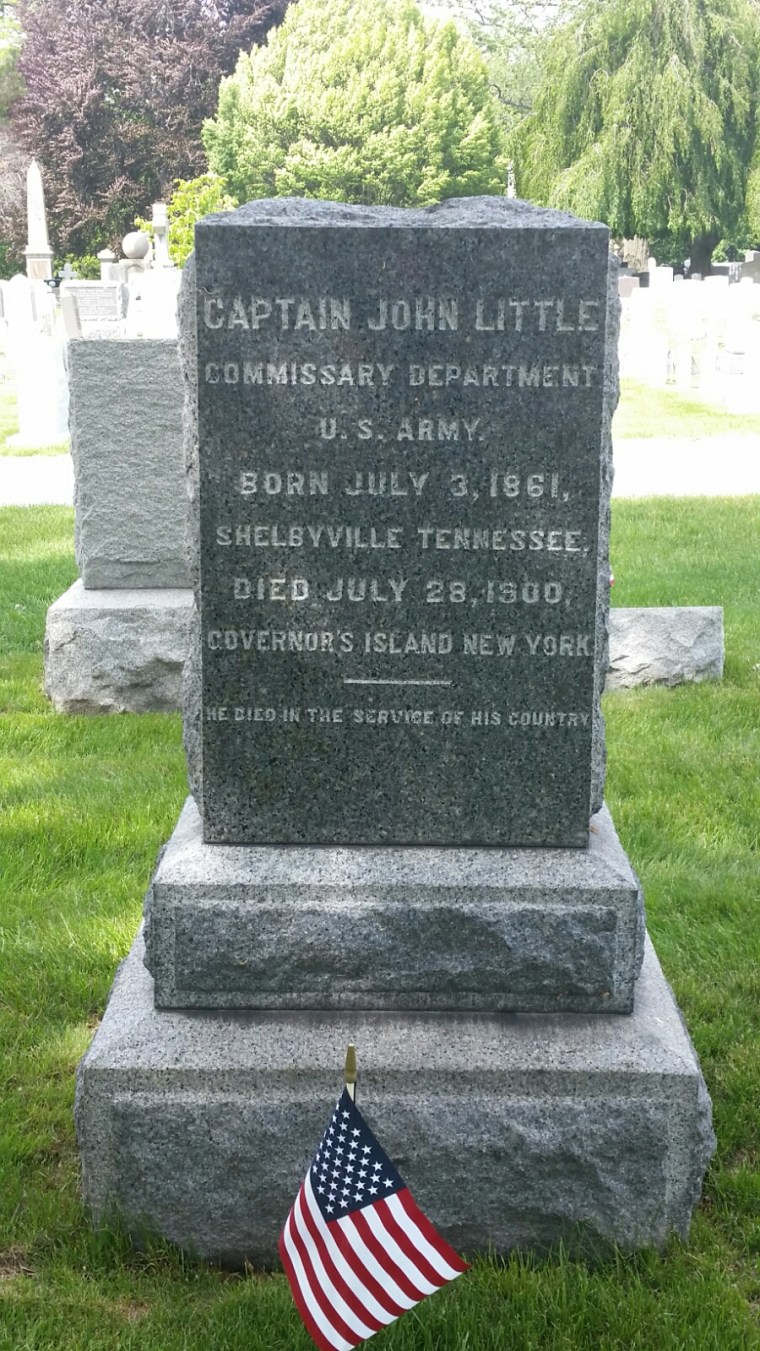
Grandpa told me that his uncle was an honorable man who graduated from West Point. His name was John Little and he had a grand if short lived military career. In the early 1900’s there was a devastating hurricane in Puerto Rico and Captain Little was sent to head the recovery efforts. He was doing a yeoman’s job until he contracted typhus which unfortunately was fatal. By then my grandfather was a full fledged twenty one year old adult so he no longer required his uncle’s guidance, but he still felt a strong sense of gratitude toward the man who had helped him to reach the age independence. To honor the good man Grandpa had his name officially changed to William Mack Little.

I haven’t been able to find any information about my grandfather on ancestry.com, but I have learned that John Little was born in Tennessee. After attending West Point he married a niece of General Sherman of Civil War fame. The two of them had a daughter but their happy life together was brief. I’ve contacted members of his family to see if anyone ever heard of his guardianship of my grandfather, but nobody knows of any such thing. I suppose the history of his relationship to me has somehow been lost, a reality that pains me. It also saddens even more me to think of how many losses my grandfather had to endure before he was even fully launched into the adult world. He never knew his mother. He was abandoned by his father. His beloved grandmother died when he was just entering adolescence, and the man that he most admired died far too early. 

John Little’s obituary outlines his service to his country. It mentions that his career was promising before his sudden demise. He is buried at Governor’s Island New York on the ground of the West Point Military Academy. I would very much like one day to visit the grave of the man who so impressed my grandfather that we ended up carrying his name.

We’ve struggled a bit to keep our last name going, because only one of the youngest male descendants has married and had children, three of whom are girls. There is a lone boy who will continue forward as a Little and I would like very much to one day be able to tell him how he came to have that name. I think he would bear it even more proudly if he knew of the honor bestowed upon it by my grandfather’s uncle.

There must be other Littles out there who are distantly related to me and my brothers and our children and grandchildren. They don’t know us and we don’t know them. Our connections are lost to unfortunate circumstances and time. Still, it would be fun to find out who they are and to speak of the gratitude that my grandfather had for a long ago member of their family.

A name is little more than a string of letters unless it is attached to someone that we can identify. I feel a sense of pride in knowing what I do about John Little. I can imagine him toiling in the tropical heat of Puerto Rico to help the people of the devastated island. There is something particularly noble about that, much more so than fighting on a battlefield. I’m sure that he saved many lives before he became ill. His was an enormous sacrifice that makes me proud to continue to use his name as the middle part of my own. I somehow feel as though I know and understand him.

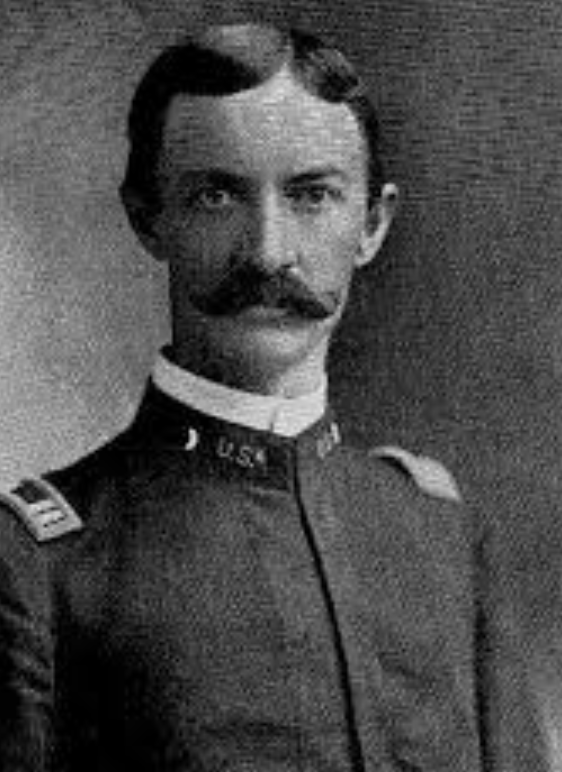
His photo shows a handsome, serious individual, but I suspect that he also had a sense of humor and enjoyed a good laugh now and again. How good of him it was to agree to be the guardian of an orphaned boy. Little wonder that my grandfather admired him so. I’d like to think that somehow, some way he knows that I too appreciate all that he did.

I now understand that Little is a grand name, the name of a hero, a compassionate man. It makes me hold my head a bit higher. It tells me why my own grandfather was such an honest and hard working man. In a brief moment he learned the qualities of an exceptional person from an uncle who was there when he was most needed. Thank you, John Little. We will never forget you. 

John Little

Honor the Young

person wearing hearing aid
Photo by rawpixel.com on Pexels.com

Every single time that I  hear some older person calling young people “snowflakes” I go into a slow burning rage inside my head. It is an epithet invented to cast aspersions on the thinking of  teens and twenty somethings who hold progressive points of view. The idea is that the youngsters are so fragile that they simply can’t bear critiques or differing ideologies. The insinuation is that they are silly, close minded and of little substance.

While there may very well be some young folk who are a bit spoiled and unwilling or unable to accept philosophies that run counter to theirs, the truth is that there are also middle aged individuals of more conservative bent who have the same trouble. Some of them are actually in high political positions and they often tweet their discontent. For the most part, however, I find the current crop of young men and women to be exceedingly hard working, earnest and determined to make a very positive difference in the world. The fact that they are a bit more liberal than their more aged counterparts has little to do with their level of courage or good intent.

It has long been a trend for young adults to be on a kind of search for truth and meaning in their world. It is in their natures to question the status quo and seek changes that they deem to be fair and more just.


Socrates once said, “The children now love luxury. They have bad manners, contempt for authority: they show disrespect for elders and love chatter in places of exercise.” This of course was noted about four hundred years before Christ walked on the earth, and I find it remarkable how it might have been said last week by some pundit making observations about today’s kids. In fact there are many such quotes that are part of our discussions of the young versus the old in political matters. We’ve all heard the quote, “If you are not a liberal at twenty five, you have no heart. If you are not a conservative at thirty five you have no brain.” It is a bit audacious in its sweeping assumptions, but we laugh at it because it bears a grain of truth. Indeed we often become more cautious as we grow older, but that does not make us wiser or more righteous. Thus, I find it beneficial to show more respect to the thinking of our younger generation than we generally do.

In 1776, when our Founding Fathers signed the Declaration of Independence their average age was forty four. That being said more than a dozen of them were younger than thirty five and among those some were still teenagers. In fact, the American Revolution as with all such sweeping changes was much more of a young man’s cause than that of older men. James Madison was only twenty five when he penned his name on the Declaration of Independence and the current hero on Broadway, Alexander Hamilton, was a mere twenty one. Young adults are more often than not as passionately concerned about the world as those thought to be more mature.

I enjoy the conversations that I have with my former students and my grandchildren regarding the political conditions of the world today. I prefer listening to them and asking them questions rather than challenging their ideas. I find it enlightening and quite hopeful to hear just how much they have considered the various issues with which we continually grapple. They are far less likely to simply accept a particular way of thinking without considering many different possibilities. Their beliefs are mostly based on a great deal of thought and research. They are involved in internal debates as they search for the best ways of doing things. They have the audacity to think outside of the box and come up with ideas as radical as revolting against the most powerful government in the world to create a new nation conceived in liberty.

I find myself spending hours listening to young men and women who are more than ready to do their share of the heavy lifting in the world. Of course they differ somewhat from me because many of their experiences have been different from mine, but they are not unpatriotic or inconsiderate or lazy or spoiled. They simply look at the challenges that we all face from the vantage point of having an entire lifetime ahead of them rather than having walked through a lifetime. Their youthfulness does not make their thoughts any less valid than mine or any other older adults, but it does tend to make them more inclined to envision new and exciting possibilities. I find that when I listen respectfully the favor is returned when I speak. A rational and fruitful discussion ensues. It is when we disregard the fervor of a young person’s enthusiasm that we create an emotional impasse.

Each of us longs to be heard, to be understood. All we ask is that we be accorded an opportunity to speak our minds with impunity. All too often we create situations by dismissing certain forms of speech before they are even uttered, leaving us in a “them or us” kind of division. Hurling insults without thought only further inflames the situation.

During the height of the Vietnam war when so many of us were protesting what we believed to be a terrible mistake, far too many adults treated us as though we did not love our country. They did not seem to understand that it took great courage and much patriotism to speak out against what we saw as a wrong. There was a great divide that lead to unnecessary violence and clashes that might never have happened if only each group had been willing to sit quietly and consider each point of view. The frustrations came from all of the misunderstandings that came from assigning insulting labels to each cause, and pitting young people against their elders. Sadly we did not seem to learn from those mistakes.

The next time you find yourself wondering what a young person might possibly be thinking, instead of writing him/her off as a snowflake, try encouraging a true conversation with the intent of learning rather than judging. I believe that you will find that we are all seeking most of the same things, we simply have different ideas about how to achieve them.

Honor our young. They will one day be taking the reigns of leadership and helping us in our final days. I for one feel comfortable that we will be in very good hands.

The Wedding of a Die Hard Democrat and a Die Hard Republican

midsection of woman making heart shape with hands
Photo by Pixabay on Pexels.com

One of my cousins recently posted a commentary about his parents that made me smile. He remarked that one of his folks was a die hard Democrat and the other was a die hard Republican. They used to joke that when they went to vote they canceled each other out. Mostly though they were good people who taught their son to be tolerant and to love his country. He served proudly in the military and learned how to be a  good person in his own right by following their example. He wonders, however, what has changed to cause so much derision, division and incivility today. He wants to know why it is increasingly difficult for people with differing philosophies to get along.

His post got me to thinking about my own parents. In all honesty I don’t really know what political persuasions they had. I only recall my father arguing about a political topic on one occasion and that was with his father. Since I was only privy to the noise of their voices rather than the actual debate I will never really know who advocated what position. It was not any easier to discern what my mother’s thinking might have been. She was an enigma when it came to voting and such. She often told me that she considered Franklin D. Roosevelt to be the greatest of all the American presidents, insisting that he had saved the nation in more ways than one. She broke into tears when remembering how she had once seen him when he visited Houston. She always spoke glowingly of Harry Truman and John Kennedy as well, but on the other hand, she felt almost as much allegiance to Ronald Reagan as to Roosevelt. In all honesty I can’t think of many times that she even spoke of politics or her feelings about them. To her a vote was a sacred and private thing between her and God. She didn’t discuss her leanings nor did she find it necessary to know about those of anyone else. Her only commentary was that it was glorious to have such a right, even if the elections didn’t always go her way.

Mama was from an immigrant family that was not always treated in the most welcoming way. She told us that her father insisted that in spite of a few prejudices here and there the USA was still preferable to the land that he had left. He insisted that his children take full advantage of the opportunities of being citizens and in turn pay forward the favor by demonstrating their pride in being Americans. When my mom and her siblings were taunted as being foreigners, their father urged them to just ignore the slights. He taught them that there are ignorant folk everywhere, and they need not nurse their anger. Instead he wanted them to become educated and fully involved in the culture and ways of the country. All eight of his children were patriotic, and his sons confirmed their love for the USA by enlisting in the Armed Forces and serving during World War II.

I suspect that my mom would be both confused and amused by the craziness on display these days, but she would have also insisted that everyone has a right to voice their opinions if they so choose. She would often tell us how important that cornerstone of democracy was to her father and ultimately to her and her siblings as well. It was something all too often denied in their homeland of Slovakia, so they were quick to welcome all ideas.

What would have most baffled my mother is the way that so many people are now determining friendships based on political beliefs. She would have first noted that it is none of anyone’s business to judge others, especially with regard to their political beliefs. She would have also wondered why we are talking about such things so openly and so much. Mostly she would have been utterly appalled at the idea of friendships and relationships being based on how people feel about particular hot button topics. I suppose that she had the same high level of tolerance as her older brother who was so fittingly described by his son in the Facebook post.

I often muse that the media is too much with us. There was a time when there was a news hour around dinner time. Thirty minutes were devoted to national events, and thirty to local happenings. Most stories merited only two to three minutes of discussion, rather than the twenty four hour blathering on and on that is possible today. Something has to fill those hours and unfortunately there is a great deal of sensationalism used to attract our attention. We have become news junkies and can’t even escape the grasp of the drama when we are away from our televisions. Our phones and computers constantly alert us to the latest breaking story. There is little or no rest and after a time we become so emotionally involved that we can’t seem to turn off the feelings that send us into emotional frenzies. It sometimes appears as though we are puppets being manipulated by some unseen master.

The reality is that we don’t really need to see every single kook who does something outrageous. The truth is that on any given day most people are busy going about their lives. They are not sitting at home plotting ways to make other’s miserable. They are not evil or uncaring or hoping to undermine the government. Most people are just trying to get by and get along. They do their duty as mothers, fathers, friends, employees, and citizens. They appraise the issues and make choices, and unless they do something illegal or hurt us in some way, it really should not matter to us what their political philosophies may be. Instead we should be focusing on what kind of people they are and admitting that if it actually is possible for a die hard Democrat and a die hard Republican to have a beautiful and loving marriage then maybe we also need to try harder to get along. 

A Kinder Gentler Way of Doing Things

pexels-photo-776633.jpeg

I suppose that we are all feeling a bit of whiplash when it comes to the current political scene. If you are like me just want it all to go away, but know that ignoring it might be more lethal than getting involved. I heard a number of commentaries just last week from sociologists and medical doctors decrying the situation, so I know that I am not alone in wanting things to calm down. Then I watched the finale of Homeland and realized that even the world of fiction is weary of all of the bickering.

A group of doctors have done some research and found that people are actually getting stress induced illnesses which can be traced back to politics. When they are honest with their physicians many folks are reporting stomach distress, headaches, insomnia, anxiety and other symptoms all based on fears related to the current political scene. Such tendencies according to the doctors are not found in any particular set of beliefs or allegiances, but appear to simply be an alarming trend indicating just how much fear is overtaking the populace. While the doctors know that this phenomenon is occurring more and more often they admit that they don’t quite know how to tell their patients to deal with it. They also suspect that the highly charged environment won’t be changing anytime soon, because we now seem to be engaged in a perennial round of campaigning for the next voting cycle. There is no longer a resting interval from one election to another, but rather a constant debate that only seems to be getting uglier and uglier.

The sociologist that I heard indicated that the normal curve of politics is changing. Whereas there have traditionally been outliers to the left and the right with the bulk of the voters in the middle, the new trend shows the middle shrinking while the extremes continue to grow. She pointed out that the moderate independent voters have been the true defenders of our democracy with their willingness to consider all sides of an argument to forge alliances and compromises. She maintains that it was the moderate who built our Constitution and later continued our progress through subsequent necessary changes. She worries that without a dominant middle ground we will erupt into a kind of deadlock that will ultimately endanger all of us.

This season of Homeland was art imitating life with its topics of political upheaval. It was a fictional call for people of character to defend our country with diplomacy and acts of understanding. It suggested that our only way forward is to begin reaching across the aisle even to those with whom we disagree. It will take trust to do so, and at least for the present such willingness to believe in our innate goodness is in short supply. We have become almost paranoid when it comes to dealing with anyone who does not think exactly as we do. Thus we are not only ripping apart the country with our demands, but also sending ourselves into frenzies of illness. I wonder what it will take to make this stop.

The sociologist suggested that some mega event may pull us together, but such happenings often bring a great deal of shared pain before the healing begins. Wars have been known to create strange bedfellows. Natural disasters often bring out our best tendencies. Somehow we need a cause that is not as horrific as either of those things, something like John Kennedy’s idea that we should race to the moon. I simply wonder if we have anyone with enough imagination to create a coalition of people who want the noise and the distrust to stop. It has been far too long since we have had much success in that regard.

I’m one of those folks who has stuck with the middle. I refuse to align myself with any party because I generally find that I don’t entirely agree with anyone or any group. I simply vote for the closest approximation to what I believe. I am more than willing to hear the arguments from both sides and I find both good and bad points all around. I find that very few individuals are perfect nor are many of them so evil that I must dismiss them. I myself hold many contradictory opinions, but some of them are stronger and more important than others. I’m willing to compromise on just about anything as long as doing so does not hurt someone.

I’ve been hearing some wonderful sermons and readings from the Bible in church each Sunday. This week began with the reminder that Jesus was all about love, regardless of our differences. We desperately need some real dialogue with one another, especially those whom we most fear. We need to honestly learn what is driving the varying thoughts and behaviors. We may find that others are not really as different from us as we may think. There are certainly those who crave power, but most of us just want to lead quiet and secure lives. Perhaps it’s time to send a message that we are tired of the anger and the fighting and are looking for people who are willing to bring our country back together again.

Sadly all of the doctors and researchers are simply screeching in the wind if we as individuals do not combine our power to create change. A brief study of politicians demonstrates that the majority of them will change when they see that we the people want something different from them. Instead of following the shrieks of the outliers, it’s time for the great big middle to save us all from ourselves. it’s time that we insist for the good of our country and our own health that we return to a kinder gentler way of doing things.