Learning From the Past and the Present

GETTY_INFLUENZA_1120

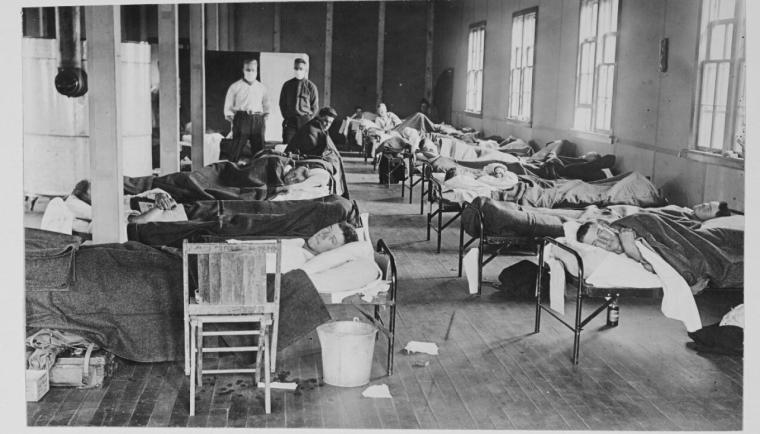
Several years ago I read a fascinating book about the 1918 Spanish flu pandemic. It was one of those page turners that I was unable to set aside, so I found myself neglecting all of my other duties until I had reached the final page in the hours after midnight. After reading the story of the world’s battle with the unknown disease I had a difficult time thinking about anything else.

I suppose that aside from my fascination with the vivid first person descriptions of the horrific time was the fact that I had never before heard of this event. My grandfather who was a storyteller of the first order had spoken of small pox, the Great Depression, the Cleveland Panic and all sorts of historic events but not once had he even cursorily mentioned the pandemic that killed millions of people worldwide. Sadly, by the time that I had finally learned of this historic emergency Grandpa had died so I was unable to question him about what he might have known.

Today we get minute by minute updates on Covid-19 with our twenty four hour newsrooms and breaking headlines on the internet. We get texts from local authorities with news of what is happening near us. We learn how our friends and members of our family are doing from social media and any number of communication platforms. In 1918, I suspect that the average person was mostly privy to what was happening nearby and only peripherally concerned with faraway events. It’s possible that my grandfather was untouched by the Spanish flu and so he simply went about his work and thought little of it.

On the other hand I have often suspected that my grandmother, Minnie Bell, was more personally impacted by the events of 1918 of something that I found as I was researching my family tree. She had been married to Orville Thompson prior to meeting my grandfather. Her first husband who was still rather young died in 1918, and her son seems to have somehow vanished in the same year. The next thing I know about my grandma is that she and my Aunt Opal were working in a boarding house a couple of years later where she met my grandfather. They had a kind of whirlwind courtship that lead to marriage and eventually the birth of my father.

I knew that my grandmother had been a widow but she never once spoke of her first husband, nor did she ever tell me that she had a son other than my father. Of course adults rarely spoke of their personal business to children back then so I knew very little about the most private feelings that my grandmother may have had, but I have since become intrigued by the possibility that her first husband may have been a victim of the pandemic. I wonder if what she witnessed was so horrific that she chose not to speak of it ever again. Since the official death records of Oval Thompson do not list the cause of death I will never know but I think that my conjecture may hold some truth.

The Spanish flu coincided with the end of World War I and the homecoming of soldiers who had served in battle. The first recorded outbreaks were in military bases. There was so little knowledge of the illness that doctors were uncertain how to treat it. There were no vaccines, no drugs, nothing of particular impact and the numbers of the sick began to rise exponentially especially in places like Philadelphia where the city leaders had decided not to cancel a celebratory parade that attracted thousands of people even though there were credible warnings that such an event would be dangerous. That city would become one of the hardest hit places in the country.

When word of the rapid rate of infection began to spread to middle America many cities and towns essentially locked down just as we are now doing. The incidence of illness and death in those places was considerably less than locales where the people continued as though nothing was happening. Thus the historical precedence that is guiding our activities today.

Back then researchers worked feverishly to understand the nature of the Spanish flu and to find ways of protecting people from its ravages. It would be many years later before they unlocked the mysteries of that virus. By then the world was fighting new battles that would ultimately lead to another war, but the knowledge gained would keep us relatively safe from another such occurrence for a hundred years.

The scientific and medical communities have been studying diseases that affect humans for decades. Since 1918, they have found vaccines for chicken pox, measles, polio and the common seasonal flu. My generation still came down with serious illnesses like the measles, chicken pox and mumps but our children and grandchildren have never known such diseases. I had friends who were struck down by polio but now it is a disease of the past. I suspect that within a very short time there will be a reliable vaccine for Covid-19 along with viable measures for better treating those who contact the disease in the future. 

Nonetheless those on the forefront of medical science tell us that we will face new challenges as viruses and bacteria mutate in their natural tendency to fight for survival. It would be good for us to learn from the Covid-19 experience just as our ancestors may have done with the Spanish flu. Each family, state, city, country and organization must include the possibility of a worldwide pandemic in their risk management plans so that the mistakes that we have made this time around will not be repeated in the future. I suspect that there will be many discussions as to how to successfully prepare for any health eventuality once we are clear of our current danger. We need to take such conversations seriously and be willing to respond to honest critiques. It is imperative that we prioritize such efforts rather than becoming so relaxed that we dismantle programs designed for readiness because they appear to be unneeded. 

It would be a grave mistake to simply bury this event in the pages of history. Instead it is an opportunity to honestly reassess our responses and our institutions. If we are very lucky we will never again witness such a thing, but we must nonetheless be cautious about becoming complacent. Just as we sometimes grow weary of fire drills we do them anyway lest the practice session becomes a reality one day. So too must we adapt to the new emergency requirements that Covid-19 has revealed. The first step will be listening intently to those whose life’s work is to know more about these tiny microbes that lurk among us. They will tell us how to proceed. 

Explorations of Our Being

mind-thoughts-warp_1024

What is this mind that we humans have? How does it work and how much of it goes unused because we have yet to tap into the totality of its power? Why is there a disconnect between how I see myself from the point of view of my thoughts and how I really appear in my physical reality? What causes some of our memories to remain vividly intact for all time and others to fade into oblivion? What happens when a mind becomes muddled, filled with extreme sadness, fears or paranoid thoughts? These are questions that have confounded me for years. They are the kind of queries that have guided the thoughts of brilliant individuals and ordinary souls for centuries. Somehow we have obtained more and more of a grasp on our physical being over time but clear knowledge of the complexities of our brains still remains somewhat elusive.

We humans don’t simply react to the world around us. We contemplate it sometimes to the point of obsession. We have an innate desire to dream, analyze and restructure. There is no reason for us to enhance the world beyond our most basic physical needs and yet we do. We don’t simply endure the unfolding of our lives but instead reflect on all that has happened to us, sometimes with joy in such remembrance and sometimes with great sorrow.

Memories are a remarkable aspect of our humanity. We quite often retain vivid pictures of things that we have experienced even decades after they occurred. Ironically the very incidents that we would most like to forget because of the pain that they brought us are sometimes the ones that remain the clearest in our minds. What is it about trauma that etches it so deeply in our psyches?

On the day of my father’s death I was only eight years old and yet I can recall details about every aspect of that horrific event from the time that I awoke to hear my mother weeping until the end of the evening when she and I cried in each other’s arms. I can see colors and hear sounds as though all of my senses were somehow heightened in a way that I had never before experienced. Even more than sixty years later thoughts of that day bring feelings so visceral that they still cause pain.

So too it has been with more generalized occurrences that impacted the whole of society with profound consequences. I know exactly where I was sitting and what I was doing when I first heard of the assassination of President Kennedy. I do not know if we had a Thanksgiving dinner that year but I can tell you where I was and what went through my mind when I watched the president’s funeral procession and witnessed the murder of Lee Harvey Oswald.

I still catch my breath when I think of the planes flying through the twin towers of the World Trade Center. I literally get a flutter of anxiety in my heart when I picture their dramatic collapse. I hear the screams and feel the terror that filled my thoughts in the split second in which I realized the reality of what was happening.

Over the years it has been the most horrific moments that have stayed permanently embossed on my psyche. I am filled with grief when I think of the first time that I truly understood the extent of my mother’s mental illness. It coincided with the first landing on the moon which is only a blur in my mind compared to the recollections that I retain of her pain.

I am haunted by images of the flooding from hurricane Harvey in my beloved city and the aftermath of destruction in the homes of family members and friends. I still get a catch in my throat when I think of how I felt when I saw what had happened after hurricane Katrina in New Orleans, a place I think of as a sister city.

So it goes with my memories. I barely recall the details of my college graduation or even my carefully planned wedding but I can describe the tiniest of particulars on the last days of my mother’s life. I wonder what it is about my mind that clings so tenaciously to thoughts of events that I would prefer to forget. What kind of chemical or physical reactions occur in our brains that causes such impressions to stay with us? What is it about our very humanity that stirs us to contemplate such things?

I try not to become too obsessive about such ideas. I purposely busy myself when my ruminating ventures into territory that is too dark and yet I am fascinated by the mere possibilities of unlocking the inner workings of our complex being. Understanding the mind was at one time forbidden fruit. Now we have discovered so much about how it all works and yet there is still so much mystery when it comes to comprehending the most spiritual aspect of our being. Exploring the territory of our very being has been the quest of philosophers, physicians, scientists and theologians and still we are in the dark when it comes to the how and why of our deepest thoughts.


Dear Diary

pathtothefutureI received a lovely gift for my birthday this year from Araceli. It was a book with 200 writing prompts to help inspire my blogs. In that spirit the following is a diary entry that might be written ten years in the future. Check back in a decade to see how prescient I was.

Dear Diary,

I celebrated my eighty first birthday a couple of weeks ago. Never did I imagine myself as and octogenarian. I’m still filled with optimism and energy but I don’t get around as quickly as I once did. I suppose that I’ve felt my age more in my joints than in my brain but the glories of medicine and engineering have come to my rescue with all of the conveniences that now do work that I once had to do.

My home is kept tidy by the little robots that whir around each day. I don’t know who invented those little “Hazels and Jeeves” but they make a world of difference in my lifestyle. I haven’t had to pick up a broom or dust cloth or mop for quite some time. The self cleaning toilets are the best. The porcelain is squeaky clean all the time allowing me to concentrate on keeping my body in shape with exercise and my mind working with continual learning. I’m enrolled in an online seminar right now that makes me feel as though I am communicating with the great writers of all time. It is mind boggling to consider how much technology has changed the world.

It was touch and go on earth for a time. We all had to adjust to the changing climate but in rushed the best minds, including those of some of my grandchildren, to invent better ways of living while conserving the resources of our earth. It has been like watching science fiction unfold in reality. I always believed that we humans would find solutions to the problems and people have not disappointed. We suffered for a time and then we get to work doing whatever we need to do. I am so proud of all the people who devoted blood sweat and tears to the cause. Mankind’s intellect is such a glorious gift when it is used for the good of all.

I especially like that I can stay independently in my home without fear or inconvenience to anyone. I have a checkup with a nurse practitioner each morning via a computer program that monitors my health all day long. I felt no pain at all when they inserted the chip that sends my vitals to my physicians 24/7. The surgery that repaired my knees was almost bionic. I really enjoyed hiking in the mountains near my brothers’ Colorado cabin last summer just like I was still in my twenties. I no longer need my glasses either after a painless thirty minute procedure. It’s all quite amazing.

I’m a great grandmother now and it is so much fun. The little ones are bright and happy. I “see” them several times each week via a new kind of Skype that is almost like having them in the same room thanks to Virtual Reality. I never feel alone because all of the people that I love are just a few voice commands away and when they actually visit the new transportation systems get them here almost as quickly as teleporting. I keep thinking back to the world of Star Trek and realize that I now live in it in so many ways.

My grandchildren are doing such remarkable things. They all graduated from college and found exciting jobs in the fields that they studied. They are so sweet about coming to visit me often. I’m hosting a big Christmas dinner this month just as I always have except that now my robots are doing all of the work. All I have to do is program them and then sit back and enjoy the party.

It’s difficult to believe that my daughters and sons-in-law are nearing retirement. Where did the years go? Perhaps when they no longer have to report to jobs each day we can travel together. I’m anxious to try that new high speed plane that reaches Europe in only two hours. I especially want to see Notre Dame Cathedral now that it has been repaired. There are still so many journeys that I hope to make.

I feel a bit like my grandfather once did whenever he spoke of all of the innovations that he had witnessed during his lifetime. I suppose that I often took progress for granted until it was threatened by the whims of mankind. Those years of anger and political divisions were worrisome but we finally realized the necessity of working together rather than continually arguing. We fought a kind of battle against our human failings and have come out stronger than ever. Things are not perfect but then they never really are. Nonetheless we have come a very long way in only ten years. It is truly a better world for the majority of the world’s people. We humans are slowly but surely continuing to evolve in positive ways.

If I live as long as my grandfather did I still have almost thirty years to go. I suspect that I will see many glorious advances and have the privilege of watching my family grow and prosper. There will no doubt be tough times here and there but one thing that never seems to change is the inventiveness and resilience of the human spirit along with the grace of God. I look forward to whatever lies ahead.

Our Hunter Gatherer Past Present and Future

evolution

Attempts to understand the many conflicts between people across the world can be rather confusing. Sadly most of them occur because of perceived religious or ethnic differences. Race is often seen as a dividing factor when in reality the genetic differences between one group of people and another are generally superficial. The reality is that when taken down to a biological level we homo sapiens are more alike than different. The things that divide groups generally have more to do with environment than biology. Mankind’s history is sadly one of creating alliances to maintain or grab power and using manmade concepts like ethnicity or religion as rationale for struggles to get a fair share of the world’s resources.

Survival has always lay at the heart of the human experience. Our ancestors moved from place to place in search of food and shelter for thousands of years before learning how to take control of nature through farming. Suddenly the idea of claiming the land and settling down became a way of life for much of the world’s population. Obviously  this new advance created unexpected problems that are still the focus of most of the problems that plague us today. Determining who gets what and how to divide resources is the stuff of politics and conflict particularly as the population grows. Over the course of history the concept of survival of the fittest has all too often meant the ones with the biggest clubs and the most stuff.

Our genetic ancestors were often a violent bunch not so much because of the DNA that they carried as for the need to fight for food and a place to sleep at night. Scientists have found the remains of people from tens of thousands of years ago that show signs of blunt force trauma. Life was often brutish and short for those from whom we descended. It’s likely impossible for any of us to truly understand what kind of daily challenges they faced. We judge them from a perspective of hindsight.

Wars between people still rage today. Most of the problems in the Middle East center on religious differences that take the form of political ideologies. All across the globe we humans argue over sociological concepts and their effects on the fair distribution of resources and justice. We create alliances and rant about differences when the reality is that what we all really want is a place to call home that is safe and filled with the comforts that we need to survive our time on this earth. We long for the freedom to be left alone even as we cling to relationships. We are living breathing contradictions and keeping us all happy seems to be an almost impossible task. Thus we can’t seem to all settle down into peaceful coexistence in spite of one valiant attempt after another throughout the long stretch of history.

There are only so many ways to tell a story. There are major themes that tie together the human search for peace and tranquillity. When all is said and done the king is not so different from his servant. The things that separate us from one another have very little to do with our natures, but everything to do with how we view each other. We create artificial structures and definitions in our attempts to explain things that we don’t understand. Sometimes that process leads us to false conclusions and grave misunderstandings.

In a sense we are all still hunter gatherers of a sort. From the time that we are young we begin the training that we will need to one day leave our homes in search of work that will provide us with the funds that we need to purchase our food and clothing and necessities. Our daily grind may be less dangerous than that of the primitive people from whence we descended, but the idea of finding a way to survive is still the basis of our endeavors.

The most remarkable thing about humans is that we long to for lives that are more than just an unending repetition of work. We are innovative and our creations have given us incredibly rich and remarkable existences that were unimaginable to our ancestors. History has not been just about our wars with one another. It has also included our better natures and the creation of arts and sciences. We have used our remarkable intellect to impose our will on medicine and music. We have civilized our barbaric ways so much that we are gravely appalled when we see evidence that we have not evolved as much as we would like to think that we have.

Our human past is filled with both horrendous mistakes and great advances. We often learn through trial and error. Our best efforts seem to occur whenever we set aside our differences and operate from a sense of concern for a common good. None of us are perfect and neither are our decisions, but it is possible to rise above anger and fear. Such moments created the Magna Carta, freed slaves, and eliminated murderous tyrants.

As I look around today I see a preponderance of alliances formed out of concern for a world that seems to be out of sync. It’s difficult to know how to think or feel. We are weary of the battles with one another because we instinctively understand that we should not be enemies. We want the same things but have different ideas about how to achieve them. Sadly the old ploy of dividing us into warring camps is being used rather effectively all across the globe. Our ethnicities, religions, socio economic statuses and political leanings are part of a grand power struggle that is in fact little different from all such maneuvering in the past. It’s a dangerous game that we should refuse to play.

I will continue to speak out against the death penalty but I will not turn my back on those who believe that it is an effective tool to fight crime. I believe in the tenets of my Catholic faith but I will not use them to hate those who think I am deluding myself with religion. I respect the human made differences in philosophies and ways of living because I understand that when all is said and done they are only superficial aspects of our most basic desires. People are breathtaking and the fact that they represent so much variety makes them all the better. Perhaps one day we may even learn how to hunt and gather in peace.

A Kind Revolution

solar panels

I think about things all of the time. Some people might call my mental gymnastics worry or anxiety. I simply see myself as having a very active mind. Some people have difficulty standing still. They are always moving about. I find it hard to shut down the thoughts inside my brain. I am always observing, asking questions and considering solutions for problems. Sometimes my mental processes are so active that I have to calm myself just to relax enough to sleep.

Lately I’ve really been considering the effects of climate change and ways in which we might address the issues associated with the storms and droughts and other weather events that are plaguing our earth more and more often. When I look for guidance from experts and I ask probing questions I generally find myself feeling as though nobody is actually prepared to consider all of the consequences, unintended or certain, that may occur from choosing one plan of action over another. It’s frustrating because it sometimes feels as though the issue being presented as a zero sum game regardless of which of the extreme sides one decides to choose. Instead I think that there is surely some alternative that is more viable.

On the one hand we are being told that our time for hesitation is long gone. We must begin to accept draconian measures if we are to avoid economic collapse and social/political chaos. The warnings are dire and not totally unfounded based on scientific research but they also seem to ignore some very basic questions that seem to have no real answers. The very scenario of economic doom might also come to pass if the most exacting sacrifices are indeed enforced. Little thought has been given to how to radically change the ways in which we do almost everything so that people do not lose their livelihoods. It’s difficult to get a major road built in under ten years so why should we believe that we can totally redesign how we live in a short time without leaving large sectors of the world’s population in economic danger?

On the other hand there are the climate change deniers who seem stubbornly unwilling to accept the facts about how we humans have literally changed the workings of the earth. They are gambling with our futures by insisting that the whole idea of climate change is little more than a hoax being propagated on the world as a means of upending political systems. If they have their way we may in fact one day find ourselves having to relocate the people of entire cities and the hardships of the Great Depression will seem like a cakewalk compared to the human upheavals that may transpire.

Somehow I find myself thinking that the most invested groups are running the show while the rest of us sit back ignoring the possibilities. My innate logic tells me that there must be a better way. If we all agree to work hard to do things to lessen the impact of climate change then perhaps we can forestall scenarios of doom and gloom while continuing to search for more intelligent solutions.

The truth is that we have too many cars rolling down the road at any given hour. Back when I was young most families owned a single vehicle. The drivers had to take turns using the family car. I remember going on the bus with my mom to do our shopping because my dad had to take the auto to work. When we had appointments in places not serviced by buses we would drop my father off at the bus stop and he would ride to work that way. We lived by the school so we were able to walk everyday. In fact, we walked and rode our bicycles to a number of places. We managed to get everywhere we needed to go by being flexible and inventive.

With a bit of sacrifice and a willingness to consider other alternatives to having multiple cars much of the carbon footprint from driving might be mitigated. Even better would be to make more and more autos that are hybrids or reliably electric at affordable prices. Neighborhoods should consider allowing residents to move about in electric golf carts or community trolleys. Bike lanes should automatically become standard on side streets. Businesses should encourage employees to ride share by providing bonuses or parking for those who do.  Governments might provide tax incentives for those willing to take such steps as well. Cities need to invest in more viable and environmentally friendly mass transportation systems and be rewarded for doing so. The modern world should begin to look like the imaginary one of futuristic thought. 

There is a home in my neighborhood that is fitted with Tesla solar panels. Our climate is particularly well suited for such innovation but the cost of installing such systems is prohibitive for most people. If lawmakers are truly serious about taking bold steps to reduce the carbon footprint then they need to help make it financially feasible for the average homeowner to invest in solar energy or other alternatives. Just as the government built the nation’s highways after World War II this can be a national campaign to redesign the way we get energy for our homes but it has to be affordable for it to work.

We must also encourage all forms of energy innovation. I know of a man who has been attempting to sell the idea of having personal windmills in every backyard but he has encountered far too much opposition. While his inventiveness may need a bit of tweaking I wonder why nobody has encouraged his designs by investing in research to make it better. Think of how Thomas Edison changed the world as it was known in a very short time because the movers and shakers of Wall Street saw merit in his ideas. Capitalism does not need to be a foe of climate change believers but rather a source for encouraging new ways of doing things that will make the world a better place for everyone.

There has been much criticism of older and past generations of late but we might also take some pages from their stories. They built houses that have lasted for centuries. The designs took advantage of cross breezes so that air conditioning was not required to be cool. They built foundations on pillars that raised homes from the water of floods. They installed clotheslines in every backyard to use the sun for drying laundry. They recycled virtually everything including packaging for purchases. I wore many a dress handmade by my grandmother from the cloth of flour sacks. Old clothes were turned into warm quilts that were used in piles to eradicate the need for heat. Most people kept vegetable gardens in their yards.

We have to educate the populace to be flexible and willing to think outside of the box. This means taking the brilliance of mankind and using it not just to create an uproar but to formulate more efficient and evironmentally friendly ways of living. We can incentivize good habits and create a movement that works for everyone in an ever changing world. We need to begin to think ahead planning our moves with a willingness to quickly adapt them to whatever situation arises.

Most people despise lectures about what they have done wrong but they enjoy the idea of  being part of progress through innovation. Surely the same people who were able to put a man on the moon in only a decade can move the environment to a better place without robbing the rich or leaving the poor in a state of desperation. We can do this as surely as we went from a sleepy and isolated nation to the heroes of World War II. It may take a few sacrifices and changes in the way we live but it will also include exciting new ways of doing things that will be better than anything we have ever seen. We should join together in a spirit of optimism to design a kind revolution for saving our planet that respects everyone. We can do it!