We Will Persist

da vinci

We hear about wars, violence, poverty and other ills almost instantly these days. The problems that people face with health and relationships are openly discussed. We debate how to deal with them while also feeling a sense of satisfaction that we are becoming a more “woke” society even as some cling anxiously to old ways of thinking and doing things. We are so anxious that we consume medications, alcohol and even illegal drugs to still our pain. We begin to wonder if we are somehow mucking up our own existences and those of our children. We believe that surely we are capable of doing far better in our efforts to make the world safer, kinder, more peaceful. We believe that we have the tools but somehow fall short. We hear lectures about our imperfections and feel guilt. At least we are led to believe that we have somehow been complicit in the demise of all that is good.

Now that I am retired I have time to indulge in classes in history, travel to places whose evolution of thought shaped the world in which we live today. I have learned that if there are any strict conclusions to be drawn about the state of the society in which we now exist it is that we have come a very long way from the darkness that once ruled. In centuries of old not even kings and queens were immune from travails that were devastating and deathly while the common folk were at the mercy of the whims of a ruling class into which they had little hope of gaining admittance. Slowly but surely the marvelous imagination of humankind has changed all of that.

Queen Anne, of the Stuart line in English royalty, endured seventeen pregnancies only one of which resulted in the successful birth of a child. That son died at the age of eleven. At the close of the seventeenth century life was often brutal even for the wealthiest. Families toiled with little hope of reprieve from their labors. It was not uncommon for a worker to earn less than twenty pounds in a year. The idea of freedoms was only beginning to take hold and would burst forth in the next century in an imperfect but revolutionary form that would slowly but surely change the trajectory of potential for all people.

I think that we all too often underestimate the miracles that are all around us. While we have yet to achieve human perfection in any of our social constructs we have come farther than even our most courageous and enlightened ancestors dared dream. Women still lose babies but not to the extent of long ago times. When a child is born there is a sense of assurance that he/she will grow into adulthood, a luxury that we take for granted in ways that would astound the parents who came before us. We complain about injustice, just as we should, without celebrating enough that we already have so many freedoms that did not exist in the long ago. In other words we may be living in the best of times without even realizing it.

That does not mean that we should be content with the status quo. There is always room for improvement, but our guilty breast beating may be overly dramatic. The truth is that most of the evil and want in the world is an anomaly rather than a way of life. When I drive down a crowded freeway in my city I notice the jerk who weaves in and out of the traffic without regard for safety because he is the exception, not the rule. Millions of people across the globe are living with a sense of decency, thus we take note of those who are cruel and unjust. We see them because they are so unlike what we have come to expect.

I only need sit in the room where I write to witness the ingenuity and glory of humans. I hear music coming from a device that brings the greatest talent of the world into my home. I work by the lights that were unknown for thousands of years. I tap my fingers on the keys of a computer that holds more knowledge than the great library of Alexandria. I am immune from cruel diseases that my grandfather saw firsthand. I have works of art hanging on my walls that might have once been only the possession of kings. I am warm in the winter and cool in the summer because machines that keep me comfortable whir away. I hear the buses conveying the neighborhood children to schools where they receive educations that were at one time only the purview of the wealthiest. I am free to worship and think as I wish and even to openly tell people my thoughts without fear of being imprisoned. How can I not be thankful for my many privileges when I think of how wonderful life has become for an ordinary soul like me?

No, we are not yet perfect, but we are far from being deplorable. We are moving forward continuously and often at a pace more rapid than at any time in history. We will no doubt see many more great wonders that are products of our human capacity to think and invent. There are geniuses and thinkers and visionaries among us who will lead us forward and past the turmoils that threaten our well being. It is our way and I have every confidence that we will persist.

A Kind Revolution

solar panels

I think about things all of the time. Some people might call my mental gymnastics worry or anxiety. I simply see myself as having a very active mind. Some people have difficulty standing still. They are always moving about. I find it hard to shut down the thoughts inside my brain. I am always observing, asking questions and considering solutions for problems. Sometimes my mental processes are so active that I have to calm myself just to relax enough to sleep.

Lately I’ve really been considering the effects of climate change and ways in which we might address the issues associated with the storms and droughts and other weather events that are plaguing our earth more and more often. When I look for guidance from experts and I ask probing questions I generally find myself feeling as though nobody is actually prepared to consider all of the consequences, unintended or certain, that may occur from choosing one plan of action over another. It’s frustrating because it sometimes feels as though the issue being presented as a zero sum game regardless of which of the extreme sides one decides to choose. Instead I think that there is surely some alternative that is more viable.

On the one hand we are being told that our time for hesitation is long gone. We must begin to accept draconian measures if we are to avoid economic collapse and social/political chaos. The warnings are dire and not totally unfounded based on scientific research but they also seem to ignore some very basic questions that seem to have no real answers. The very scenario of economic doom might also come to pass if the most exacting sacrifices are indeed enforced. Little thought has been given to how to radically change the ways in which we do almost everything so that people do not lose their livelihoods. It’s difficult to get a major road built in under ten years so why should we believe that we can totally redesign how we live in a short time without leaving large sectors of the world’s population in economic danger?

On the other hand there are the climate change deniers who seem stubbornly unwilling to accept the facts about how we humans have literally changed the workings of the earth. They are gambling with our futures by insisting that the whole idea of climate change is little more than a hoax being propagated on the world as a means of upending political systems. If they have their way we may in fact one day find ourselves having to relocate the people of entire cities and the hardships of the Great Depression will seem like a cakewalk compared to the human upheavals that may transpire.

Somehow I find myself thinking that the most invested groups are running the show while the rest of us sit back ignoring the possibilities. My innate logic tells me that there must be a better way. If we all agree to work hard to do things to lessen the impact of climate change then perhaps we can forestall scenarios of doom and gloom while continuing to search for more intelligent solutions.

The truth is that we have too many cars rolling down the road at any given hour. Back when I was young most families owned a single vehicle. The drivers had to take turns using the family car. I remember going on the bus with my mom to do our shopping because my dad had to take the auto to work. When we had appointments in places not serviced by buses we would drop my father off at the bus stop and he would ride to work that way. We lived by the school so we were able to walk everyday. In fact, we walked and rode our bicycles to a number of places. We managed to get everywhere we needed to go by being flexible and inventive.

With a bit of sacrifice and a willingness to consider other alternatives to having multiple cars much of the carbon footprint from driving might be mitigated. Even better would be to make more and more autos that are hybrids or reliably electric at affordable prices. Neighborhoods should consider allowing residents to move about in electric golf carts or community trolleys. Bike lanes should automatically become standard on side streets. Businesses should encourage employees to ride share by providing bonuses or parking for those who do.  Governments might provide tax incentives for those willing to take such steps as well. Cities need to invest in more viable and environmentally friendly mass transportation systems and be rewarded for doing so. The modern world should begin to look like the imaginary one of futuristic thought. 

There is a home in my neighborhood that is fitted with Tesla solar panels. Our climate is particularly well suited for such innovation but the cost of installing such systems is prohibitive for most people. If lawmakers are truly serious about taking bold steps to reduce the carbon footprint then they need to help make it financially feasible for the average homeowner to invest in solar energy or other alternatives. Just as the government built the nation’s highways after World War II this can be a national campaign to redesign the way we get energy for our homes but it has to be affordable for it to work.

We must also encourage all forms of energy innovation. I know of a man who has been attempting to sell the idea of having personal windmills in every backyard but he has encountered far too much opposition. While his inventiveness may need a bit of tweaking I wonder why nobody has encouraged his designs by investing in research to make it better. Think of how Thomas Edison changed the world as it was known in a very short time because the movers and shakers of Wall Street saw merit in his ideas. Capitalism does not need to be a foe of climate change believers but rather a source for encouraging new ways of doing things that will make the world a better place for everyone.

There has been much criticism of older and past generations of late but we might also take some pages from their stories. They built houses that have lasted for centuries. The designs took advantage of cross breezes so that air conditioning was not required to be cool. They built foundations on pillars that raised homes from the water of floods. They installed clotheslines in every backyard to use the sun for drying laundry. They recycled virtually everything including packaging for purchases. I wore many a dress handmade by my grandmother from the cloth of flour sacks. Old clothes were turned into warm quilts that were used in piles to eradicate the need for heat. Most people kept vegetable gardens in their yards.

We have to educate the populace to be flexible and willing to think outside of the box. This means taking the brilliance of mankind and using it not just to create an uproar but to formulate more efficient and evironmentally friendly ways of living. We can incentivize good habits and create a movement that works for everyone in an ever changing world. We need to begin to think ahead planning our moves with a willingness to quickly adapt them to whatever situation arises.

Most people despise lectures about what they have done wrong but they enjoy the idea of  being part of progress through innovation. Surely the same people who were able to put a man on the moon in only a decade can move the environment to a better place without robbing the rich or leaving the poor in a state of desperation. We can do this as surely as we went from a sleepy and isolated nation to the heroes of World War II. It may take a few sacrifices and changes in the way we live but it will also include exciting new ways of doing things that will be better than anything we have ever seen. We should join together in a spirit of optimism to design a kind revolution for saving our planet that respects everyone. We can do it!

We Can Do It!

c1950sbellaire

It’s true that the city of Houston floods, and that flooding affects large numbers of people whenever it happens. What is not necessarily true is that the floods that we see are something new in the grand scheme of Houston city life. As a matter of fact there are recorded incidents of inundated streets from time to time dating back over one hundred years. Both my mother and my mother-in-law spoke of witnessing Mother Nature’s soggy fury in their childhoods. The city’s proximity to the Gulf of Mexico which is only about fifty miles away makes it vulnerable to violent storms that dump indescribable amounts of rain in a short period of time. Add to that the countless bodies of water that dot the landscape and a recipe for periodic trouble emerges. 

Before World War II Houston was a rather small town. Neighborhoods ringed the city center which has the highest elevation in the area. People studied the behavior of the bayous and the patterns of storms and built homes accordingly. To this day it is extremely rare for the houses near where my mother and mother-in-law grew up to flood. There was a certain care taken in choosing a site on which to build a homestead but the war created a demand for oil and Houston became a boom town with its location near production sites and its port to deliver the products.

The growth of Houston necessitated new neighborhoods and the new suburbs were sometimes built rather hastily with little regard or knowledge of flooding patterns. Nonetheless there was still so much open land that drainage was often accomplished by vast open fields. In the meantime the population continued to expand so that more and more of the raw land was being developed into roads, businesses and houses. The prosperity continued without any sign of slowing all the way into the nineteen eighties and with it came construction in areas that previously might have been considered unsuited for safe habitation. The old timers had always had a sense of where the water might flow in a big storm, but the push for expansion negated all of their concerns. 

All of the places where I lived as a child in Houston often became islands when big storms came but literally they have never once taken on water inside. Not Allison nor Harvey nor our most recent Imelda have encroached on them. My husband’s experience has been the same. Many of the places around town that flood regularly were built from the nineteen sixties to the present. They were erected on land too close to bayous and river ways which made them attractive in dry spells but posed danger when the rains came. The demand for housing created more and more risk taking thus increasing the likelihood of damage and loss when the inevitable storms come our way.

My husband lived within walking distance of Interstate 45 and remembers when it was being constructed. He used to watch the construction crews create the roads and the overpasses. In the evening when they went home he rode his bicycle on the unopened highway. He pointed out that the massive system was actually designed to serve as a place for water to go when it rained so that the side streets in the neighborhoods would be spared. Whenever he sees images of a flooded freeway near his home he notes that the construction is working as it was supposed to do. His old house is always high and dry and the addition of that massive expanse of concrete has actually protected it from harm.   

It has only been recently that there have been serious discussions about how to deal with the big storms that are certain to rage over Houston and flood the streets just as they always have. The question becomes how we might manage to provide housing that will withstand the effects of the weather. It is apparent that some areas will need to be turned into parks or wildlife refuges and construction will need to take storms into account. Hunkering down in safe conditions until the rains end is not all that inconvenient, but having to repair thousands of homes that fill with water is unnecessary and untenable.

Stricter rules about where and how construction takes place have to be considered. Advanced drainage systems should be installed. More land needs to be left open. Bayous should be deepened and widened. The city should invest in studies and partnerships with engineers in places like the Netherlands where once historic flooding has been virtually eliminated with modern technologies. There are things that can be done with a bit of imagination and sacrifice if only we have the will.

Houston proves again and again that it is a magnificent city because of its people. When disaster strikes ordinary folks come to the rescue without regard to race or socioeconomic status. Nobody riots or loots or burns places down. Instead they rise to the occasion again and again. Perhaps the time has come to think of improvements that might prevent some of the destruction. It won’t be easy and it will cost a great deal but the investment will make Houston stronger in every conceivable way. Our ancestors understood the dangers from the periodic flooding. They built for safety and long lasting value. With all of the modern technology that we have we should be able to do things even better than they did to transform this glorious and worthy city into a model of human ingenuity.

Conversations in the Hallway

AlexisHowes_EvolutionPoster_TelephonePicture4

I was recently reminded of the time when I was a teenager and every home had one phone that was usually attached to a wall in the hallway of the home. It’s central location was designed to make it accessible to everyone in the family who needed to use it. It also made every conversation a bit more public than one might desire, especially a high schooler intent on talking privately with a friend.

When I was still a small child my mom and dad purchased a bench with a couple of built in shelves that held the family phone and a couple of ginormous directories that supplied the numbers of individuals and businesses. Someone had gone to a great deal of trouble to make the strange piece of furniture look attractive with its mahogany finish on the wood and brocade upholstery on the seat. Our family kept it dusted and our mom swept under its legs regularly to insure that it appeared to be a purposeful and attractive addition to our home’s decorating scheme. In spite of its important function it never looked quite right.

I vividly recall a time when our phone was on a party line which other neighbors shared. It was not unusual at all to pick up the receiver only to hear the voice of the lady next door babbling away with a friend. In such cases making a call became a game of first come first serve unless there was an emergency. We had to wait patiently for the line to become free and so my mom instructed me in the etiquette of sharing phone time with others. It required a quick hang up at the first sound of other voices using the services and a pledge to never reveal what might have been heard in the brief second of listening. It was indeed a rather strange situation that only lasted during my earliest childhood years.

My family moved the telephone bench from one home to another, proudly ensconcing it midway in the hallway of each new address. I found it to be extraordinarily uncomfortable for a call that lasted more than a couple of minutes which probably played right into my mom’s parental plans. By the time I was a teen it had become intolerable to be tied to such a public place when talking seriously with my friends. I eventually convinced my mother to invest in a long cord that allowed me to stretch the phone into one of the rooms located along the hallway where I might close the door to gain a small sense of privacy. Even then my brothers mischievously found excuses to walk in and out of whatever entry way I had chosen, gleefully stepping over me and laughing at my attempts to enjoy a bit of dignity during my conversations.

I was at least happy that our family phone was not located in the kitchen as I had seen in some other homes. I tried to imagine attempting to have a serious conversation in the most central part of a house. Somehow I managed to be grateful for the long cord and that provided me with a semblance of freedom from being observed while I engaged in what I considered to be quite serious discussions with my peers. The only setback was my mother’s insistence that I make my phone calls as brief as possible to keep the one phone free for the use of other members of the family.

Over time the bench that had once been a source of pride for my parents became worn. Its legs were wobbly and the brocade fabric on the seat began to fray. Almost everyone had observed my ingenious way of using the long cord to escape the prying eyes and ears of anyone else who happened to be in the hallway, and before long everyone was escaping behind one of the doors to talk. The bench sat forlornly empty and without purpose. I’m not certain when it disappeared but one day it just wasn’t there anymore. When not it use the phone sat on one of the bookcases that lined one wall of the hall.

I eventually moved out of the house and into a place of my own. It was a small apartment with a phone located in the expanse of the combined living room and kitchen. By the time my husband and I purchased our first home the age of multiple phones had arrived, so we had one conveniently hanging on the kitchen wall and one in our bedroom. Our daughters would never experience the frustration of being on full display to the family while attempting to engage in a serious conversation with a friend. Nonetheless I found myself becoming my mother as I restricted the amount of time they were allowed to spend in the frivolous pursuit of talking with people that they had spent an entire day with at school. With the invention of the portable phone that required no cord the transition to an audience free phone call seemed complete but there was so much more to come.

My how the world has changed! We actually have landline phones all over the house that are so rarely used that I often wonder why we bother having them. For now their main purpose lies in being connected to the home alarm system and serving as a backup in case of a cell phone malfunction. Whenever anyone comes to visit they arrive with their own phones which they are able to use wherever and whenever the mood strikes them. Those phones are not only a source of communication but also entertainment. They are encyclopedic in the amount of knowledge that they are able to convey with just a few strikes of the keys. The young folks using them would be appalled at the idea of having to share one device with an entire family. They can’t even imagine being tied down by a cord  that is connected to a wall. The very idea is so foreign to them that even careful description don’t convey what it was like back in the day. They laugh at the very oddity of it.

I admittedly never leave home without my phone. It is my map on the road, my guardian angel in an emergency. With rare exceptions it has made my life easier. I can call or text and almost instantly be in contact with the people I need to reach. It has kept me linked to friends in faraway places and to the happenings of the world. I now know when a child is missing or a cataclysmic event has taken place within minutes. I sit more patiently waiting my turn in some office because I have games to amuse me. I don’t have to carry a bulky camera on my trips because my phone takes and stores images of all of the places I have been. Who knew that a tiny object that fits inside my purse would have more power than the entire room of computers at NASA that were used to safely guide a human to the moon? I never imagined such a thing back when I picked up the receiver only to learn that I would have to wait until our neighbor finished her conversation on the party line that we shared. We have come such a long long way and as long as we don’t become addicted to the power of our phones, it is good.

I Am the Median

road sky clouds cloudy
Photo by Gratisography on Pexels.com

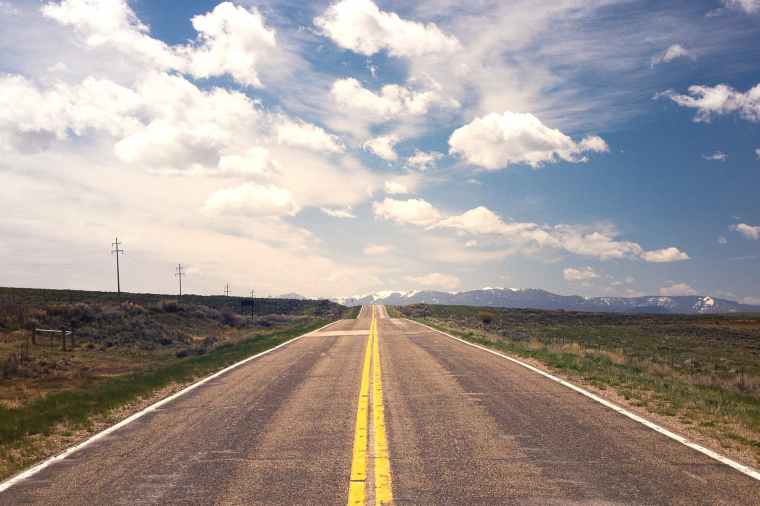
From a statistical point of view my life has hovered around the median. I represent continuity and moderation and a mix of conservative and progressive points of view. While my life was tragically made a bit unusual for the times in which I lived by my father’s early death, that anomaly was mediated by the environment in which I grew into an adult. I am a product of a small and insular neighborhood in a time when my native city of Houston was still more of a town than a city. My life was guided by routines and traditions that rarely varied. There was an entire village of people both familial and unrelated by blood who watched over me. I grew strong and happy and so loved that I was ready to tackle any challenges that came my way. As an adult I was so busy attempting to reconstruct my own sweet world for my children that I barely noticed how much the times were actually changing.

When I was seven years old I was uprooted from everything and everyone that I had ever known to accompany my family on a journey west where a quiet revolution of opportunity and change was overtaking people like a fever. My days there were painful because I had lost the anchor of extended family and friends that always made me feel so secure. I was among people who were so busy building dreams that they had little time to welcome us. I went to school each day feeling nameless and misunderstood. Ironically my father felt the same way at his work. None of us ever fit in to the race for something unknown that so dominated life in the part of California that would one day be the epicenter of Silicon Valley. Before long we all just wanted to be back home in Texas.

With little more than a wing and a prayer we slowly made our way back to what we had known. Along the way my father searched for a job. His efforts to find work lead us all the way back to Houston, and for the very first time in a long time I recall feeling quite relieved even though we had not yet settled into a permanent home. My father’s deadly car accident left my mother bereft and scrambling to create a sense of continuity for all of us. Luckily we had returned to the people for whom we had longed when we were far away and they gathered in unison to help us every step of the way. Oh, how I loved them and still do!

My mother wisely returned us to the very neighborhood from whence we had moved only months before. We were welcomed like the Prodigal Son. Our life began its constant revolution around church, school, family and friendships. There was a lovely sense of calm about the way we lived. We stayed in the same house until all of us were grown and on our own. We had the same neighbors for years. It was rare for anyone to move away back then. When we went to church each Sunday we saw the familiar faces of people who smiled and greeted us by name. We attended the same school with the same kids who are friends with us even fifty years later. Each Friday evening we visited my maternal grandmother in a gathering that included all of my aunts and uncles and cousins. In the summer we traveled to visit with my paternal grandparents on their farm.

We constantly heard stories from our elders about the history of who we were that carried little nuggets of expectation without being overbearing. At church we learned about the comfort that is always available from God and the ways of compassion and love that Jesus taught the world. Our teachers and our parents spoke openly to us about both the greatness and the imperfections of our country, urging us to always remember our responsibility to maintain a healthy democracy.

We were always a bit behind the fads and movements along the two coasts of the country. We were more inclined to study how things went there before jumping into the idea of adopting radical change without much thought. Our lives were slow and steady like the tortoise. We knew that we would eventually get to our desired destinations, but we did not want to lose sight of more important things like family and friends along the way.

Suddenly it seemed as though both the innovations and the cautions that were brewing along the two poles of our nation roared up around us, forcing us to see the world through different eyes. The titans of media and advertisement from the east coast were burrowing into our brains with television. The movie moguls influenced us with films. Finally the masters of Silicon Valley invaded our lives with computers and smart phones and a burgeoning social media. People began moving around and moving up. Extended families had less and less time for each other and friends were often on the go. We woke up one morning and the city of Houston had become the fourth largest metropolitan area in the country.

Some of what happened while we were sleeping was very good. There were breakthroughs in civil rights that were imperfect, but steps in the direction of equality. Women were provided more opportunities than ever and their voices began to be heard. We acknowledged that love is love regardless of whether the people who express it for one another are man and woman or man and man, woman and woman. Medicine and science made our lives easier and our affluence grew.

At the same time we have lost many things as well. Our neighborhoods flux and flow to the point that the relationships that we form there are constantly changing as people move from one place to another. Our extended families are in far flung places and gathering our relations together becomes more and more complex. Our churches and our beliefs are continually challenged. We fear for our children to play outside alone. We argue and rankle with one another and wonder if how far we change is enough or too much. We feel as though we are being ruled by extremes, either far too cautious or far too willing to upend all that we have known. We have lost our sense of history and our willingness to accept that none of us, not even ourselves, are free from the taint of bad decisions or hurtful behaviors. We judge and decry those who do not share our own philosophies. We honor those who boast and demean while turning our backs on the people who live with quiet dignity and respect. It feels as though we are somehow being manipulated by some unseen hand as though we are merely robots. None of it feels good, and some of us long for the good old days not because we are unaware of the problems that some people faced while we were comfortable, but because we need to bring the village of diverse people who loved us back together once more. We need to feel that sense of chest bursting pride in our families and friendships and churches and cities and states and our country that might have once brought us to a sense of belonging to something special.

We have many folks attempting to understand our thinking and our motivations and I suspect that they are getting us all wrong. They tend to make assumptions about us based on their own backgrounds rather than ours. Suddenly I find myself feeling untethered much as I did when I was seven years old in an environment so different from what I had always known. I understand how it must have been to be my father daring to dream, but realizing that he did not quite fit into a way of life so unlike his own. I am the median, an average person with a big heart and a dream of embracing the people to both the right and the left of me in a hug that says,  “You might want to know how folks like me really feel rather than foisting your ideas on everyone. Your constituency reaches from sea to shining sea and there is a great deal in the middle that you are yet to understand. Maybe it’s time for you to learn.”