
When In The Course

228935-room-where-the-declaration-of-independence-was-signed-at-independence-hall-in-philadelphia-pa-philadelphia-united-states

It always amazes me how we humans generally follow the rules. On any given day millions of people adhere to speed limits, stop at red lights even if there is nobody around, stay inside their designated lanes. There is always an implied threat of being caught and given a citation for breaking the law, but mostly people do what they are supposed to do because they realize that the statutes have been set in place for safety and the common good. We innately understand the value of working together for the benefit of all even if it is sometimes a bit inconvenient.

There are thousands of examples of how most of us know, understand and appreciate conformity to the directives that keep our society running smoothly. Now and again, however, we encounter situations in which it becomes uncomfortable to simply sit back and adhere to the status quo. In those moments we feel a grip in our stomaches and ask ourselves what our role should be. Do we sit back and quietly watch or do we rise up to voice our concerns? When is it best to avoid the fray, and when must we say something lest we no longer be able to gaze at ourselves in the mirror? How do we decide which aspect of a complex disagreement is the most right and just?

Since I am a huge fan of history I tend to be a documentary fangirl. Netflix is all too aware of my viewing preferences, and they continuously alert me to any new features that are available for my viewing pleasure. Recently they suggested that I might enjoy a program about Winston Churchill and his role during World War II. The story began at a time when much of the world was doing its best to ignore the warning signs that Adolf Hitler was a maniacal and dangerous dictator. Churchill was one of the few who consistently voiced concerns about the direction in which Germany was heading, in part because he was so vocal, Churchill’s views were initially thought to be a bit kooky. Nobody wanted to engage in controversy, and doing so was thought to be risky. Thus most of the world donned rose colored glasses and went about their routines hoping that the shenanigans in Germany would at worst be little more than an annoyance. Of course we know that such was not the case and Churchill was proven to be the right voice at the right time. His analysis of Adolf Hitler was insightful and he never quelled his criticisms of the dangers that he saw unfolding in Europe. If not for his steadfast diligence, Britain might have endured the same fate as Czechoslovakia, Poland and France.

Churchill somehow sensed that quietly accepting Adolf Hitler and hoping that he would simply fade away was an untenable stance. He raised his voice at a moment in time when it was unpopular to do so. People were tired. They had lost much in World War I. They worried that becoming divisive might shatter the peace that was precarious at best. it felt better to just ignore the craziness, keep the boat from rocking. Eventually the entire world would be forced to take a stand, choose a side, something that most had hoped to avoid. The question that lingers to this day is what people might have done from the very beginning to prevent the carnage that ensued. How different would that phase of history have been if Hitler had been defied not just by other nations, but by the German people from the moment that his ideas began to appear unhinged? 

The problem with such wishful thinking is that it is utterly useless after the fact. It is only in the moment that each of us has an opportunity to be heard and to do what we believe to be right. The trick is in unravelling the complexities of a situation and reaching the heart of the matter. To be willing to stand on a mountain top warning our fellow human beings of danger, we must first believe with all of our hearts that we will not be viewed as just another boy crying wolf. We must sense that what we have to say is so important that to secret it away in our hearts would be morally wrong. In such instances we sense that we must bend or even fracture the mores and rules that confine us so that our warnings might be heard.

My Facebook wall has been filled with impassioned pleas for love and understanding of late. Mothers worry about the contentious world in which their children must grow into adults. It feels as though hate is festering in the most unexpected places. We can’t even get a sense of well being from listening to our president, because he is more concerned with defending himself than being a beacon of hope. It feels as though we are being torn apart as a nation and within our relationships. So many are choosing to lock themselves away from it all. Only a few brave souls are willing to take the heat of criticism by voicing their concerns. The rest try to pretend that the unrest will soon all just go away, but even recent history has shown us all too clearly that the issues that trouble us only become more and more complex when we ignore them. Furthermore, they are rarely resolved when we are unable to find ways of working together.

I truly believe that the evil of this world represents a small minority, but it is nonetheless up to all good people to keep it in check. The hate that we see must always be called out for what it is. There can be no excuses, no watering down of our contempt. We cannot just look the other way when we see it, for it is when the good people join forces that they transform into an immovable power. They cannot be stopped until the depravity is eradicated. This truth has been demonstrated time and time again, so I wonder why we are so often reluctant to use it.

The fact is that there are groups of people in our country today who advocate the most detestable ideas possible. Under the guise of protecting an object, a statue, such groups held an abhorrent rally in Charlottesville that ultimately resulted in the death of an innocent young woman and the injury of others. Their only intent was to spread their poisonous ideas, not to somehow save the history of the south. They travel from venue to venue hoping to gain attention and new followers. They besmirch the legacy of the generation who defeated Hitler and all for which he stood when they parade through towns imitating the one of the most vile regimes that the world has seen. They are petty and lost souls who fester in anger, blaming imagined  slights for their own inconsequential lives. Any good thinking person should shun them and their despicable ideas, not find excuses for their behavior and thereby fuel their momentum. In other words, this is a watershed moment in which decent people must stand together to let such groups know that we will not accept their torches, their Nazi salutes, or their philosophies of hate. We will not allow them to enlist us in their misdirected causes. We will not find ways to mitigate their responsibility for spreading a disease of prejudice. We will make them the pariahs that they deserve to be.

Don’t turn away. Don’t tune out. Sometimes we have to make noise. Sometimes we have to demonstrate our courage. Our children are watching. Let’s show them what to do when in the course of human events we have no other choice than to stand firmly, proudly and publicly for what is right.
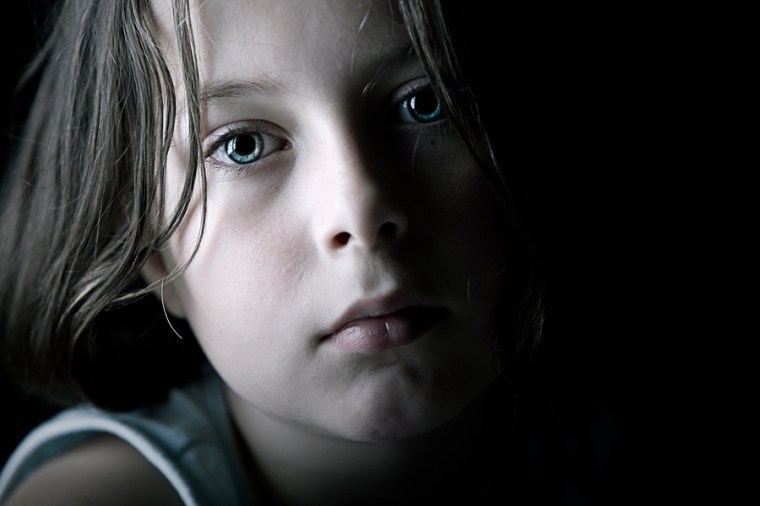
When Children Lose Hope

Sad ChildA recent study reported that for the first time ever more middle school students are dying from suicide than from car crashes. Not only that, but the number of suicides among children as young as eight, nine or ten years old is also increasing. Researchers are only guessing as to why so many of our children and teenagers are ending their lives in such record numbers. The trend has become an epidemic that is rarely mentioned and far too many parents are unaware of the signs that there is trouble.

There are a number of possibilities suggested as to why suicide has become such a problem. Young people today increasingly see the world as being a dangerous and violent place. News stories often make them feel as though they are living under constant threat of harm. In addition there has been a breakdown of healthy relationships in many families leading children to feel insecure and sometimes even unloved. Ours is a fast paced world that stresses hard work and excellence. Some kids feel unrelenting pressures to excel in every aspect of their lives. Television and movies all too often depict suicide as a good way to end problems. Of course there is also the specter of social media which sometimes serves as a catalyst for bullying and the creation of unrealistic expectations of beauty, luxury and unending happiness. There is also a problem with adults, particularly parents failing to acknowledge the signs of depression and its power to lead their children to suicide.

There have always been young people who decided to take their lives, but never in the numbers that are being recorded today. When I was young virtually everyone sat down together with members of the family to share dinner. We took that opportunity to talk about the days’ events and to reinforce the idea that we cared for one another. All too often today the tradition of gathering around the table has been replaced with meals quickly consumed in front of the television or on the go. Members of the family are often moving in so many different directions that opportunities to actually talk with one another are brief or rare, especially once children become teenagers.

Latch key kids are abundant and they spend their afternoons unsupervised. They may become isolated by hours of playing video games or may even find inappropriate television programs to watch. They spend hours texting friends with their parents rarely being privy to what kind of messages are being exchanged. They may be engaged in dangerous situations for which they do not have the maturity to react in a healthy manner. In a sense they often lead secret and disturbing lives apart from their parents without anyone knowing the extent of the treacherous paths down which they are travelling.

There are ways that adults should more closely monitor their children rather than just assuming that all is well. When my own daughters were teenagers a very good friend advised me to find out as much about what they were doing as possible. I did so in both overt and covert ways. I talked with my girls constantly and observed their behaviors, watching for even subtle changes. I also listened to their friends and the parents of their friends to find out more information about their habits. I enlisted the help of an army of caring people to make sure that all was well. Even then I missed cues now and again.

My youngest daughter suffers from depression just as my mother did. She began to exhibit more and more isolated behavior and seemed to be in a continual state of tears when she was in high school. I remember the night when I found her sitting in the dark in her bedroom rocking back and forth while crying. I sat on the floor with her and held her in my arms as though she was a toddler, coaxing her to tell me about her feelings and what was driving them until she finally admitted that she felt lost and confused. I made an appointment for her to see a doctor the next day and began to engage in more and more frank conversations with her. She made it past that valley of despair, but she often told me that ultimately it was her profound belief in God and the sanctity of life that had prevented her from harming herself. Ironically my mother had often told me the same thing about her own moments of mental distress. Needless to say I rejoiced in knowing that by providing my child with a religious foundation I may have saved her life.

If parents see dramatic changes in their children it is dangerous to simply assume that the new behaviors are hormonal or typical. Warning signs come in the form of falling grades, difficulties sleeping, headaches or other physical manifestations. Children who lose interest in hobbies or friends are sending signals that something is very wrong. Changes in personality are another clue. Frequent tears, outbursts of anger, long periods of isolation inside a darkened room may all be pointing to problems that must be addressed. While teenagers are infamous for their constant texting, if this habit also appears to be associated with aggression or a lack of self esteem there may be a need for getting to the bottom of what kind of information is being exchanged.

We’ve always had bullies but never to the twenty four seven extent that some kids now endure. Social media all too often becomes a minefield for attacking youngsters. Sometimes those participating in the emotional assaults don’t even know the people that they are intimidating. For them it is just a sick game, but for the teenager who is the butt of their commentaries it can become unbearable. There is nowhere to hide, no way to stop the misery. They all too often hide what is happening out of a feeling of shame. Being so alone bears heavily on them. They need help but don’t know how to find it. It is up to adults to be conscious of such situations and work to assist the victims in retrieving their sense of security and self respect.

It’s become popular for some adults to refer to youth who struggle to adjust to the many challenges that they face as “snowflakes” as though they are simply so delicate that they cannot adjust to the realities of life. This is akin to the people who would urge my mother to get control of herself when she was in the midst of a psychotic episode as part of her bipolar disorder. At the time the chemistry of her brain was so askew that she did not possess the power to stop the madness that engulfed her. She needed the help of caring family members, friends and medical professionals to get her life back on track. The lack of understanding that she continually faced made her challenges even more difficult than they needed to be. Such it is for youngsters who are in crisis. Shaming them for falling victim to depression so debilitating that they have suicidal thoughts is not an answer. Instead we all must be vigilant in assisting anyone whose ideation becomes dark and worrisome.

Teachers are often the first to notice problems with a young person. Instead of ignoring such concerns it is paramount that they contact the school counselor, the nurse, the parents or all of the above. Sometimes kids are so good at hiding their pain that their families are the last to know that there are difficulties. Honest conversations have to take place, always punctuated with love and concern. At the same time we should teach our kids to be good friends who are willing to let us know if someone is struggling more than normal. We must then either contact the school or the parents to alert them to what is happening. Those are difficult conversations, but they may save lives. 

Rescuing our children from thoughts of suicide should be of paramount concern to all of us. We need to spend more time talking with them and helping them to feel safe in confessing their problems. We need to watch for the warning signs and take aggressive and loving action before the worst happens. It is up to all of us to bring down the distressing suicide statistics among the youngest in our society. We need to begin some difficult discussions with ourselves, each other and our children. Nothing else that we do is more important. 

Forgiveness

636218183085011754-1819095975_15a25241I listened to a TED talk in which a man described what he would have done to Adolf Hitler if he had somehow had the opportunity to meet with him back during the height of the Fürher’s power. It was a violent depiction which even frightened the individual who was outlining it. He noted that he was a generally peace loving person, against gun ownership and war. He pointed out the human tendency to be vindictive and admitted that he was no better than anyone else when it came to that aspect of our natures. In truth we sometimes fantasize how to get even with those who have harmed us or others. We sentence murderers to death and consider it just to hang those who commit crimes against humanity. At the same time we question acts of forgiveness that seem to be unwarranted. We have great difficulty with the concept of mercy even though many of us purport to follow the Golden Rule.

I’ve been there myself. Even after many years I struggled to find compassion for a man who emotionally abused my mother when she was the most vulnerable. I despised his politics which bordered on white supremacy, but mostly what I hated about him was the fear that he used as a means of controlling my mom. To this day I wonder if he was a great part of the reason that my mama succumbed to the tragic symptoms of bipolar disorder. One of her psychiatrists once told me that if she had lived a less stressful life she might have been merely eccentric rather than psychotic. This man was a major contributor to her descent into madness. She tried over and over again to get away from him, but he manipulated her with tales of having contacts willing to get rid of anyone that he wanted gone forever. She was terrified of what might happen to her and to us if she crossed him. Ultimately she broke down completely one night while in his presence. It distressed him so much that he backed away from his threats. A nudge from my uncles completed his departure from our lives which was a welcome relief to me and my brothers. He is the only person that I has ever made me feel utterly hate-filled.

I have been thinking about such things because a cousin who is wise and loving recently posted an article about a man who believes that we need to forgive everyone for everything. That is a major but interesting challenge for all of us. I think that it is possible in most cases, including with regard to my mother’s nemesis, Nonetheless I have to ask if there are indeed times when forgiveness simply can’t be forthcoming, as in the instance of Adolf Hitler. Certainly his crimes were egregious enough that it would almost seem to be naive and foolhardy to even consider giving him a pass, and yet I wonder if there is a tiny bit of merit in the idea of forgiving all people at all times.

If I think carefully about the man that I have literally hated for decades I find myself understanding why he was like he was. He was one of three brothers and his siblings were incredibly successful men. He on the other hand never amounted to much other than being movie star handsome. His wife had died of cancer and he was raising two children on a rather meager and unstable income. His son was ultimately killed in a robbery gone awry and his life showed little promise of getting better. I think he actually loved my mother but did not know how to demonstrate his concern for her properly. His boasts and putdowns were meant to make him look better in her eyes, and he saw his jealousy as a way of demonstrating how much he cared. Sadly his way of doing things was foreign to us and he and my mother were a grotesque mismatch.

One of the things that happened when she had her first psychotic break was that she came home from the hospital for a weekend furlough and refused to return. I was beside myself because she was not out of the woods. She turned to him because she had lost her trust in me. To his credit he told her that the best way to get everyone off of her back was to cooperate with them. He was the one who talked her into going back for continued treatment. That certainly demonstrated a level of goodness in him that I had never before noticed. In other words he was not as fully evil as I had imagined. I ultimately found it in my heart to forgive him, but with the caveat that I did not want him to ever be around anyone in my family again. I think that while total absolution is a good thing there must sometime be restraints associated with it.

For the most part forgiveness has the potential of being a healing act for the person who finds it in his/her heart to set aside the anger and negativity that lurks in the soul. It is a powerful way of restoring calm and optimism. It does not however need to include association with the person or persons who inflicted the hurt. For example, I would never ask someone who had been betrayed in a relationship to return to that individual. In fact it would no doubt be harmful. Forgiveness does not mean submission.

I also think that there are indeed some actions that are so egregious that it is impossible to find forgiveness. In the case of Adolf Hitler I can’t imagine anyone being so magnanimous as to absolve his sins against humanity other than God Himself. Still, I would rather see him rot in prison that to inflict bodily harm. In fact, I think that putting him away in chains forever would have been a fitting punishment had he not chosen the cowardly act of suicide. Then again perhaps he did us all a favor by taking care of the problem for us.

Most of us will be faced with minor inflictions of hurt against us. Only the individual who has been betrayed will be able to decide if he/she is able to harbor no malice against the person who has produced the pain.  It may take time for the wounds to heal as in my own case with the man who had brought so much fear into my mother’s life. Like my situation a pardon may ultimately be a somewhat selfish act designed to eliminate the poison of loathing that so pollutes the heart and that is okay.

Forgiveness demonstrates the ultimate act of love. Jesus absolved the thief while he was dying on the cross, but he did so only after the sinful man truly and deeply uttered his contrition. We are told that the other man who was being crucified with them was not willing to show that he was sorry and thus did not receive the same favor. I suspect the Jesus, the teacher, wanted us to know that while it is noble and just to exonerate those who have come to see the error of their ways, it is not necessary to be magnanimous with anyone who remains dedicated to evil.

I think that the world would indeed be a better place if we truly learned to be more loving and forgiving. We often hold onto grudges and anger long after it is healthy to do so. Reaching out to one another and understanding that we all make terrible mistakes is something that we should all strive to do. In the end the vast majority of people are good even if misguided. Our goal should always been to bring out the best in everyone that we encounter and to love them and welcome them into our world until they prove to be harmful. Then I think that even Jesus Himself would encourage us to walk away.

Words As Weapons

words-are-weapons“The tongue has no bones but is strong enough to break a heart. So be careful with your words.”

How often do we hear of words “killing” someone’s soul? Jesus tells us that gossip is like letting a bag of feathers loose in the wind. No matter how hard we try we are never able to get them all back. What we say has repercussions that are sometimes irretrievable. We know this and yet time and again cruel sentences leave our lips or end up floating in the ether on Twitter or Facebook. Sometimes this happens in a moment of anger but other moments are the result our intent to brutally harm someone with our most ugly thoughts. We say that sticks and stones can break our bones and words can never hurt us, but we know that this really isn’t true.

Sadly we read again and again of young people who are so harassed by their peers that they are driven to killing themselves. I suspect that none of the individuals who poke at someone and make them feel weak actually intend for harm to happen but all too often it does. I recently watched a program about a young woman who was recently found guilty of manslaughter for taunting a depressed friend into committing suicide. Texts on his phone showed that he was reluctant to take his own life, but eventually went through with it at the urging of this young lady who assured him that his family might grieve briefly, but would quickly get over their loss. When he admitted to her that he was scared to follow through on his plan she insinuated that he needed to man up. Eventually he did the deed. The jury felt that without the woman was complicit in his death because he was trying to back out, and she pushed him to follow through on what he had started.

While this is an extreme example of how words have the power of being lethal there are so many examples of youngsters whose confidence is ravaged by the horrific comments of their peers. It’s all well and good to teach our children how to ignore such behaviors, but we also must implore them never to be part of such destructive actions. We’ve all witnessed individuals who become the butt of jokes and sometimes we do so little to help them. It’s very difficult to stand up to kids who are popular or powerful, and yet we need to show our kids how to draw upon the courage to always do the right thing. We cannot sit back and watch the suffering of another even if it means losing our own place in the pecking order. Our children need to understand that they will ultimately be much happier if their own character is strong and just.

Most of the time none of us become involved in such extreme examples of using words as weapons, but we do sometimes say things to the people with whom we are the closest in the heat of a moment. We know their weaknesses and we charge ahead ready to hurt them with a little sting. We have to be very careful in such situations because once our barbs have landed we can’t really take them back. We would all do well to think before we speak and to consider the damage that our words may cause.

We seem to believe that we have a certain level of anonymity whenever we post comments on social media. We believe that out of the millions of words being slung around each moment there is little reason to think that ours will be noticed, but time and again people have lost jobs, tested relationships and angered friends over a snarky response, when the truth is that the only result that is likely to happen in such instances is to upset someone. We rarely change anyone’s opinion with our insulting remarks, so why would we take the risk of speaking out and possibly hurting feelings?  I have literally cringed over the words that I have heard people express or seen them write.

We have almost unlimited freedom of expression in this country, but it is up to each of us to know when saying certain things goes beyond the pale. A joke about assassinating the president isn’t funny. Racist comments about those who are different from ourselves have no place in the public forum. While we cannot and should not restrict speech, it is up to each of us to monitor our own utterances and to consider the effects of what we say. Perhaps it is time to instruct our young in such things as well.

Words can be as sharp as any sword. They can mortally wound a soul. We really do need to watch what we say. Gossiping, lying, bullying, threatening, hurting should all be anathema to us. We would not point a gun at another human being, so why do we so blithely allow our words to sting? Whether we shout them or whisper them or write them down they should always be intended for the betterment of the people that we encounter, but never to tear them down.

A Facebook Story

h0fvargheeyaybm4oyytI’ve been a member of Facebook for some time now, so I’ve watched it change. In the beginning it was a great way for me to keep up with friends and even to find people that I had lost along the way. Over time I accumulated a rather large following and I suppose that it was the same for most of the people who had signed up for the service. I understand that it would be rather chaotic if the posts from my hundreds of friends were to show up on my wall each day. It somewhat made sense that the folks at Facebook had to find a way to tame the beast so to speak. The result was the creation of various algorithms designed to ferret out the main people whose posts they thought I would most like to see. Unfortunately the rendering of a mathematical analysis resulted in my losing touch with a number of individuals with whom I had happily reunited. Facebook appears to think that I mostly want to hear from relatives and people who are my own age. While I have definitely enjoyed hearing from those individuals I have to admit that I am angry that I no longer see the posts from so many of my younger friends. The Facebook methodology is a rather presumptuous way of determining whose photos and comments I will see from day to day and who will see mine.

Since I write a blog each weekday I eventually created a special page on which to share the information. The idea was to find a larger audience for my stories. Admittedly it has been a bit of a bust in the last year or so, and I suspect that it is because Facebook is doing the same kind of things with that account that it does with my main one. In other words over half of the people who I number as my friends never see the post. Adding insult to injury is the fact that Facebook is perfectly willing to boost my reach if I pay them a certain amount each month. Since I am unwilling to give them any money we appear to be at an impasse.

I suppose that I should be happy enough that Facebook provides me with an advertising platform, albeit quite small, but a few years ago I was managing to inform around four to five hundred people a day in the same venue. Now I am lucky to gain the notice of a hundred. Perhaps it is the result of my writing having grown dull, or maybe it is because of another one of those strange Facebook algorithms, which leads me to another bone that I wish to pick.

Since setting up a page for my blog I have written over four hundred fifty entries, each with a special image attached. I tend to believe that a photo has a certain ability to entice people to read my thoughts, so I never simply use words. Awhile back I composed a piece about Heinrich Himmler. I had seen a documentary about him that prompted me to consider how often we have monsters in our midst whose physical appearance and background seems so harmless. The theme of my essay revolved around the horrors that this seemingly innocuous individual managed to perpetrate. My composition was in reality a verbal takedown of Himmler and his henchmen, and as usual I included a picture to illustrate my points.

For some reason out of the four hundred fifty odd other images that I had posted Facebook chose to single out the Himmler photo and display it prominently on my page as an example of what I have to offer. Seeing that horrible face again and again quickly began to irritate me, but I hoped that it would eventually be replaced by a newer offering. Day after day after day I had to look at that mugshot and wonder what someone who did not know me might think about that image being so prominently displayed on my wall. I began to worry that Facebook had some kind of algorithm designed to find right wing extremists and that perhaps they had pegged me as someone to watch because I had used that picture.

I’m a bit hard headed so I decided just to wait and see what might eventually happen, but the image never went away. They did not replace it with the lovely photos of my students or Mother Theresa or the heavens. Somehow the people who decide such things thought that it should stay. Finally in sheer desperation, and my own aversion to constantly viewing that mug, I simply deleted the entire post. He is gone forever from my wall but I truly wonder what kind of indelible and erroneous impression I may have made on someone who has never met me or read my ideas.

The world of social media can be a very scary place in which we take risks each time that we reveal a bit of ourselves. We never really know who is seeing our posts nor how they are interpreting them. I suspect that from time to time we all draw hasty conclusions about things that we see without ever bothering to read more about them or even to ask questions about why they are there. We fall for stories that are dubious without following up to determine their veracity or lack of it. We make instantaneous judgements and read between the lines overlaying our own thoughts on others. We question the intelligence of someone because of grammatically confusing posts and poor word choices when sometimes those errors are the result of autocorrect. What we think we see can be a real slippery slope of incorrect judgement, and in today’s world lots of people are being tried and found guilty in the court of public opinion without virtue of valid evidence.

I have so few visitors to my blog Facebook page that I’m probably okay, especially now that Himmler”s ugly mug is gone, but my own story made me think about how we all too often indict people without ever seeking explanations for the things that we think we see them doing. Mine is a good lesson in both being circumspect in how we present things and taking care not to draw swift conclusions. I have long held that our first recourse should be to give people the benefit of doubt. In most cases they are innocent of bad intentions. Only after we have assembled facts and evidence should we make judgements that might prove them guilty.

We are all too often manipulated by a steady barrage of opinions and innuendo from questionable sources. A good way to combat the propaganda is to always start by assuming the best and then put in the time and work to uncover the truth.