On the Road or At Home

arrows bike communication conceptual
Photo by George Becker on Pexels.com

We humans are funny. We want to explore, but we also need a sense of security, safety. Who among us has not had the urge to just drive away, while still longing for the tranquility and familiarity of home? We love those glorious vacations when we throw caution to the wind, but almost always find ourselves longing for the comfort of the routines that await us. We oscillate between wanting to just chuck it all and drive away, and needing to spend time wrapped in blankets in our beds. It is as though we can’t really decide what makes us the most happy, and so our level of contentment all too often wavers.

We have so many choices, and yet it seems as though we have too few. Why is it so hard to decide what we really want? Would we indeed be better off if our lives were more constricted to fulfilling our basic needs rather than offering endless opportunities? Such is the conundrum for those who question what form of government intervention is best for the most people. The socialists offer a safety net for all when it comes to what Franklin Roosevelt called the four freedoms of speech, want, fear and worship. In an ideal world each of us would have total assurance that we would never again have to worry about whether or not we had food on the table, a place to live, healthcare when we needed it, the ability to speak our minds or to praise the God of our choice. Still the cost of such programs would almost certainly lessen the likelihood of having great differences in the manner in which we all lived. Our choices would be reduced, but we would not be without.

In a free enterprise, capitalist system each person has the possibility of making it big, attaining levels of wealth that also insure a life without want. The very nature of the system is competitive and results in disparities, but there is a great deal of freedom to experiment and try all sorts of ideas. It breeds creativity and excitement, but also some fear. It’s difficult to rise up from the bottom of the socio-economic heap, but not impossible. Many a person has found great success because the opportunities are indeed abundant. Still there are constant fears of losing all in the event of a tragedy or disaster. There is a push and a pull that creates tension and worry while it also nurtures our adventurous spirits.

It’s difficult to decide what is actually best for a society. I know that human nature is such that if we remove all of the incentives characteristic of a capitalist society we tend to be less inventive. At the same time if we are too worried about our futures our stress can work against us as well. Then too there will always be souls who are plagued with the bad fortune of illnesses and tragedies over which they have no control. I think of my mother who was left to raise three children with so little money that just surviving was a constant worry that was exacerbated by her mental illness. She somehow muddled through, but I wonder if our society would not be better if we had more mechanisms for assuring people such as her that they need never worry, because we will not let them down.

I truly believe that we might do such things without completely tearing down our economic system. Thee are brilliant aspects of capitalism that bring hope and dreams to all of us. At the same time we need to find ways of supporting those who truly are unable to help themselves. We have much room for improvement without taking away from those who have worked hard to achieve success. The problem is that the differing ways of thinking about economic matters have created such a chasm that we find it difficult to find common ground. One side raves that the more fiscally cautious are little more than greedy ogres, and the other side accuses the people who want more security of attempting to destroy our government. Surely there is a midpoint at which we might meet. Do we really need to throw the baby out with the bath water?

I grew up hearing stories of my grandparents who had fled from an authoritarian government that eventually had been forced to bow to Communism. I heard horror stories of what happens when there is a kind coup that overturns most of the customs and ways of doing things too quickly. For that reason I am still wary of trusting that quick overhauls will bring satisfactory results. I much prefer an approach that considers many different points of view and finds a way of fixing only the most broken aspects of society. I know that we need to do something, I just don’t want that process to be extreme.

I’ve read a great deal about the Russian Revolution. It is true that the common people were suffering, but the promises from Lennin and his ilk did not pan out the way most had hoped. Countless were purged simply because they disagreed with what was happening. Life was restrictive. The four freedoms were all but nonexistent. The new government was formed with too little thought, too little input from all sides. It was founded on fear rather than wisdom, tribal thinking rather than inclusion. I would hate to see such a movement take place in my own country.

At the same time the naysayers have to realize that we are reaching a tipping point. For too long there have been too many who feel like outsiders in a society that is supposed to feel free. Until we demonstrate a willingness to listen to what they have to say and then search for ways of helping them, the gap between groups will only widen.

I love my country with every fiber of my being. I think that in spite of its imperfections it is still a great place to be. I want to see progress in addressing our needs, our dreams, our wants. I want each of us to demonstrate care, concern understanding even for those whose ideas are complete opposites of ours. No president or lawmaker should be working for a particular base, but for everyone. Until we reach that point the uncertainty that we all seem to despise will continue. I hope that we are able to find solutions without creating so much division that we resort to embracing and enforcing only one way of thinking. We need variety in our government as much as we need it in our lives. Sometimes that means seeking adventure, and sometimes that means staying at home.


Show Them How Tough You Are

accomplishment action adventure challenge
Photo by Pixabay on Pexels.com

One of my educator friends posted an article about a more and more prevalent kind of enabler known as a Lawnmower Parent. In general this is not just one who constantly watches over children, but also goes out of the way to pave the way for them, make things smoother sailing. In the example presented in the article a father calls a teacher out of the classroom to ask her to deliver a water bottle to his child. The teacher is stunned that the father has gone to such lengths to accommodate the student, and proceeds to provide additional examples of a worrisome trend that she sees all too often.

About the same time that I read about Lawnmower Parents I listened to the moving eulogy of Meghan McCain for her father John. There was much to talk about in her words, but one of the ideas that really struck me was her description of an incident in which she was fearful and ready to give up. Her dad encouraged her by urging her to “Show them how tough you are.”

In my own childhood, my mom often reiterated stories of hard times when she was just a girl when her father insisted that she hold her head high and ignore the taunts of those who attempted to deter her from feeling confident. He even held weekly family meetings in which he insisted that each of his children had much of which to be proud even though they were often viewed as different, poor, immigrants. He wanted no excuses, no bad behavior, and to his credit they all turned out to be exceptionally hard working and honest adults who passed down the notion of self reliance to their children and grandchildren.

Luckily I have seen very little Lawnmower Parent behavior in my own dealings with the education of students. I suppose that there have always been well meaning adults who over pampered their kids, but on the whole it has not really been a trend in my circles. I was once offered a bribe from a wealthy father if I would change his son’s final average in mathematics. Of course I adamantly declined the offer and then explained to the man why I believed that aiding his son in that manner was an horrific idea. By the end of the conversation the parent had realized that softening the blow of a subpar performance by his son would be the worst possible way of dealing with the disappointment. I had made it very clear that the student would learn far more from the experience if the full responsibility were placed at his feet rather than those of the adults. It was time to demonstrate that life is about hard work and self reflection, changing bad habits rather than covering them up.

All of us have been faced with situations that nearly broke our spirits. There will also be moments that are so difficult to face that our inclinations will be to run away. Still there are situations in which the only honorable thing to do is to show the world how tough we are. We have to work through the pain, the sorrow, the humiliation and keep moving forward.

The people that I most admire are imperfect beings, many of whom failed horribly at something. Rather than giving up or relying on someone else to fight for them, they picked themselves up and kept trying again and again until they ultimately succeeded. They overcame great problems at great prices. They were unwilling to be defeated. They showed all of us who were rooting for them just how tough they were.

I was quite excited about a post from a young woman who had attended one of the schools where I worked. She had become pregnant in her senior year and it seemed that she would not be able to fulfill her dreams with her new responsibility of raising a child. She remained undaunted and worked sometimes to the point of exhaustion while she held down a job, took care of her child, and studied at one of the local universities. She literally took one step at a time day by day, and ultimately earned a college degree. Knowing that her earning capacity would be improved with an advanced degree she continued her regimen of working, mothering and learning until she had also earned a Masters degree. She found a wonderful job, married the father of her child, and before long bought a beautiful custom built home. She showed us how tough she was, and we all celebrated her as an inspiration, a model of determination and grit.

I also know about certain instances when parents are compelled to stand up for their children. They are not being overly protective in such situations, but rather making certain that justice prevails. I have seen many occasions in which teachers were unmoving, even rude when students requested consideration for extenuating circumstances. They were so hard nosed that parents had to intervene. I’ve had such encounters with unfair teaching practices with my own two daughters. I felt compelled to speak out, particularly after my children had been ignored.

As educators we certainly hope that parents will not constantly make excuses for their youngsters, but at the same time we have to ask ourselves if we are somehow being unreasonable. Sometimes our hard and fast rules simply do not work for specific situations. We must be willing to demonstrate flexibility and a willingness to listen to our students’ pleas. When we don’t, it should not be too surprising if parents intervene.

Teaching is quite demanding, but so is being a student. Kids today seem to have virtually every hour of every day filled with tasks they must perform. We ask much of them, and sometimes forget that we are not the only ones piling assignments on them. We would do well to hear what they have to say before exhorting them to “deal with it.” We all reach a point after which we simply can do no more.

I’ve had to be tough throughout my life, but there have indeed been times when I knew that I was about to break. I often allowed myself the luxury of a bit of self pity, a mental health holiday, a pile of unfinished duties. It was how I built up the strength that I needed to keep moving forward, and because I understood how easily such a state of mind can appear I tried to be understanding with my students, my teachers, and the parents. Perhaps instead of pointing fingers at one another with insulting labels we just need to take the time to find out what is really going on. It is then that we will begin helping our young to learn how to show how tough they are.

Why I Love Men

man and boy standing on bridge
Photo by Agung Pandit Wiguna on Pexels.com

A professor from Northeastern University recently wrote an opinion piece for the New York Times entitled Why I Hate Men. It was a kind of screed outlining all of the worst traits of the male half of the population and lamenting the unfair inequality of women. The author argued that it was time for all women to begin telling the truth about the horrific treatment that they have historically been forced to endure so that much needed changes might be made. She furthermore insisted that all of us who proclaim our support for feminism stop making excuses for the males who have, according to her, held us down.

I found myself feeling increasingly uneasy as I read her arguments and wanting to debate so many of her points. Mostly I wondered what had happened to her that had made her so angry. I suspect that if truth were ever told she would have a heartbreaking story in her past that had to do with abusive treatment from a man. Otherwise I can’t imagine why she would bear such a grudge against an entire group of humans.

First of all, I was always taught that the best way of living was to learn from the past, put it behind, and then look to the future. All of this dredging up of horrific acts committed by ancestors from another time reminds me of those folks who run around in hair shirts and have whips to beat themselves as penance just for having human frailties. I’ve always found such guilt trips to be nonproductive. To quote a feminist who recently ran for President of the United States, “At this point what difference does it make?” What was done was done. Now move on with resolve to do better.

Additionally, indicting the entire other half of society is akin to those times in school when the teacher punished the entire class for something that only a handful of students actually did. I recall with great disgust the times when I was subjected to a group detention or harangue and then told by the teacher that she knew that I had not been involved. I always thought that if that was the case, then why didn’t she leave me out of the indignity of the affair? It is not just bad psychology to use such methods, it also bad science. We all understand that we are a collection of individuals, each of whom differs from one another. While we might have similar traits, it is unlikely that we will all behave in the exact same manner simply because of gender.

It is true that there have been some very bad men in the world, and there are still far too many to this very day. There are men who are violent with women. There are men who are truly sexist in their thinking. There are men who are unfair to women. At the same time every one of us know men who are kind, loving, and eager to help everyone to be his/her very best.

I frustrate my husband from time to time, but in close to fifty years of living with him he has been mostly patient and loving with me. He has encouraged me to pursue my dreams more than any other person I have ever known. He is proud of my accomplishments and does not feel the need to be competitive with me or to somehow outshine me.

Is he an exception to the rule? I think not. I can name hundreds of wonderful men like him just from my own small circle of family, friends and acquaintances. In fact I would argue that the oafs and mysoginists are more the exception than the rule. We are horrified by their behavior because it is so unlike most of the men that we know.

Certainly we need to do a better job of protecting women from anyone who would do them harm. We must take firm measures to send the message that acts of abuse are not ever to be tolerated. We might also work harder to narrow the gaps between men and women in their careers. We have already achieved a great sense of progress in sending more women to college than men, but we must be careful that those same women do not emerge with their degrees intent on wreaking vengeance on the males.

I have six grandsons who are true gentlemen. They have learned how to treat all people from both their mothers and their fathers. They have terrific role models in that regard. I would be crushed if I thought that they were going to be hated even before someone knew the essence of their character. It would worry me if I thought that they were going to be denied possibilities simply because they are male. The way to reach true equality is not to take away from one group to give to another. That just creates yet another lopsided situation. The best way to even the playing field is to provide everyone with the education and the training that will ensure that their talents will be utilized to the fullest extent.

I am who I am and where I am today because of a huge cast of both men and women who loved me, taught me, mentored me and pushed me to be the person I wished to be. There was nothing in the equations of my life that was marked with a preponderance of male domination. Both sides were kept equal by people who supported me. I encountered a few men who attempted to use their masculinity to side track me, but other men (and women) always helped me to move right past them.

I have to say in all truth that I love men because I know all too well that they are an important part of our world. We need them and they need us. Together we make a great team. I will continue to fight for more opportunities for women, but I refuse to hate men as a weapon for achieving that goal.


Our Mothers, Our Angels

adult elder elderly enjoyment
Photo by Pixabay on Pexels.com

I recently participated in a podcast dealing with the question of how to form meaningful relationships. As I told my own stories I realized how much I had learned about compassion, gratitude, courage, loyalty, trust and other important morals from my own mother and those of my friends and cousins. I suppose that in many ways I lived a kind of unblemished childhood with the exception of my father’s untimely and unexpected death. From the many women that I encountered, the mothers of my peers, I learned the lessons of being someone on whom others might depend. These were wonderful women who opened their homes and their hearts to me little realizing what an impact they would have on my own development and worldview.

I have sadly been reminded again and again of what these ladies meant to me as they one by one die from the diseases of advanced age. Just last week I learned of the death of the remarkable mother of one of my high school friends. I had only met this woman once, but in that brief encounter I was taken by the way in which she welcomed me and made me somehow feel quite special. I would tell people about her and that brief encounter from time to time as the years passed. It was only in reading her obituary that I realized what a truly stunning life she had lived, and I felt proud to have known her no matter how fleetingly. 

The women who were my role models were children of the Great Depression. They were young and on the verge of beginning their lives as adults during World War II. Their early years were often punctuated with sacrifices that few of us born in the second half of the twentieth century will ever completely understand. In spite of varying hardships they all maintained a strong sense of optimism and can do spirit that followed them into their roles as mothers. They passed down their love of family to all of us, both male and female. They were devoted to their children without hovering like helicopters. They worked hard to maintain a sense of peace and contentment inside their homes. They rarely complained, instead celebrating the blessings that they had, regardless of how small they were. They were an exceptional group, and it pains me to see their generation slowly leaving our earth, because they were living breathing angels who gave their all to be certain that we would have good lives.

These were not women who were always barefoot, pregnant and under their husband’s thumbs, even though many of them never worked outside of the home. They were strong and able to overcome incredible challenges. They worked for the betterment of their little corners of the earth through jobs, volunteer work, keeping their families safe and happy. Often their responsibilities included elderly parents for whom they lovingly took into their homes. I used to enjoy visiting with the old ones who became part of the big extended families of my friends. It was not until my own mother came to live in my home in her final year of life that I realized the difficulties of caring for an adult day in and day out. The women I had witnessed had always made it seem so easy.

The women who continue to inspire me thought it natural to pitch in whenever someone was in need. They’d bring food, condolences, and a helping hand to any tragedy. They were not the least bit afraid of long hours of back breaking work. They did whatever needed to be done with little fanfare or need of accolades. 

If I were to make a list of the women who taught me how to live a purpose driven life it would begin with my own mother but then continue almost endlessly, for I always found something remarkable about the generation that came before me. Mrs. Barry showed me what love and loyalty really meant when she stepped forward to help me during my mother’s first mental breakdown. Mrs. Daigle taught me how to be the consummate hostess regardless of who came to my door. Mrs. Bush demonstrated courage over and over again, even in situations that might have overwhelmed a lesser soul. My aunts showed me how to keep family close. Mrs. Janot helped me to understand how to balance the daily toil of living with fun. Mrs. Frey demonstrated how to fully utilize my own talents and creativity. Mrs. Wright helped me to discover my own worth. Mrs. Loisey was my teacher who showed me the impact of a great educator. Mrs. Pryor helped me to understand the possibilities found in giving myself to the community. Mrs. McKenna brought beauty and music into my life. Mrs. Martin showed me the new worlds to be found in books. Mrs. Brochtrup seemed to be a living saint whose faith inspired me. Mrs. Caldwell, Mrs. Gallerano, and Mrs. Cash made my life more fun and interesting by spending hours  guiding me in Girl Scouts and on our school’s drill team. Mrs. Mandola was elegant and made me feel that way as well. All of them had a way of making it clear that they genuinely cared for me. They listened to me and valued what I had to say. They understood the importance of every relationship, but probably never realized what an enormous impact they had on me.

Our mothers were our angels on earth, and now so many of them are our angels in heaven. I do miss them and the calmness that they always brought to me. When we speak of women’s rights and the roles of women we would do well to look to these wonderful ladies for examples and guidance. They were far more amazing than our society gives them credit for being. From them I learned what it really means to be a woman.

The Stranger

active adults bars blueprint
Photo by Fancycrave.com on Pexels.com

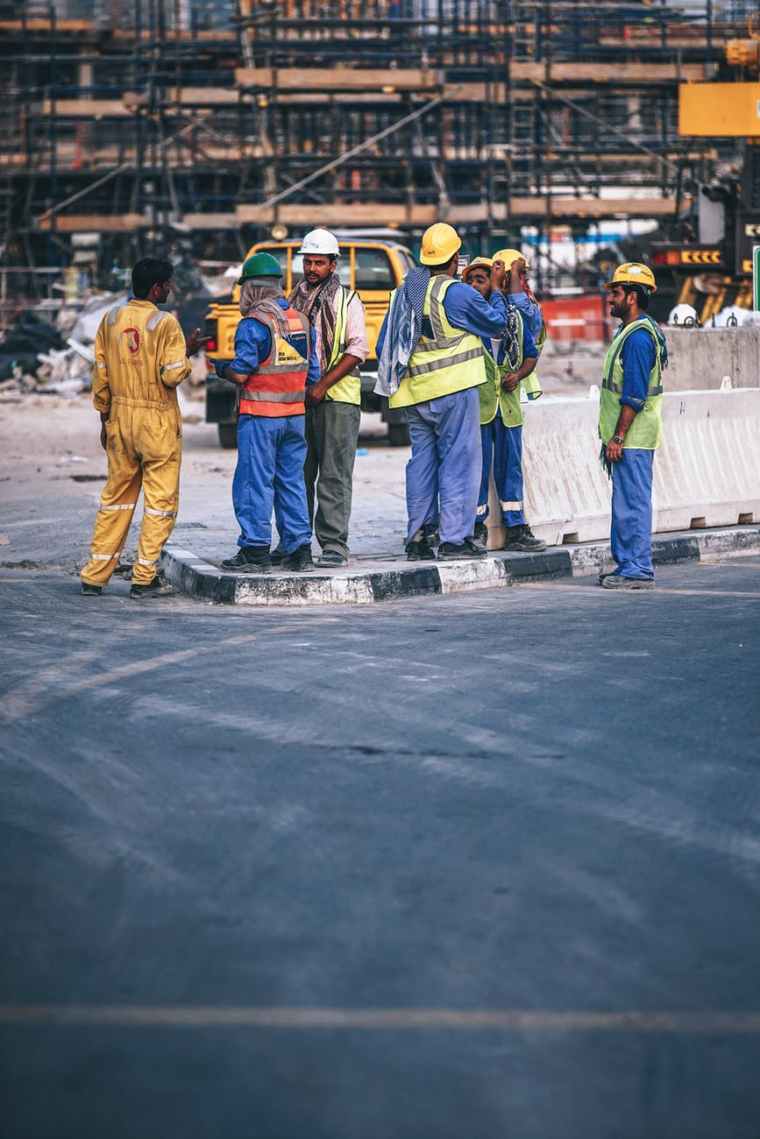
It was a very hot August day when the sky began to darken and lightning cracked nearby. I was a passenger riding in the comfort of my truck when a I saw him, an elderly man with skin darkened to the color and texture of leather from working outside all day. He was on a riding lawn mower, desperately attempting to finish his job before the rains came. He wore a straw cowboy hat and a bandana was tied around his neck to prevent the sun from burning his skin. His work clothes included a pair of khaki pants and a long sleeved shirt, a uniform well suited for the kind of labor he performed. I thought of how noble he looked as he continued to cut the grass and the weeds even as the threat of a storm became more and more imminent. I found myself wondering who this stranger was, where he and his family lived, how he had come to be so dependable and hard working. I wanted to know his story, for he reminded me of my grandfather who had once labored in a meat packing plant cleaning carcasses and dirty floors. He too had worked proudly and reliably to feed and clothe and house his wife and children.

All too often people like this man go unseen, invisible figures in the routine of our lives. We do not think to notice the challenges that such people face or to wonder how the world is treating them. Does he get stereotyped merely because of his complexion or the dirt and sweat on his clothes and skin? Do people turn up their noses at him simply because he does a task that few of us would ever want to do? Is he viewed as an outsider, an outcast, someone that we would not care to have near us even though he is doing an honest day’s work? How often is he misjudged?

I found myself thinking of this man long after our brief encounter. The rains started within minutes after I drove past him, no doubt either drenching him or interrupting the cadence of his work. I thought of how there are so many individuals who labor long and hard day after day only to earn barely enough to stay afloat, and yet they show up to perform their duties again and again because they are unwilling to simply exist through the charity of others.

I recalled a conversation that I once had with one of my students who revealed that he and his mother cleaned office buildings until the early hours of the morning. It was how they paid their rent and kept food in their pantry. He would return home each evening to sleep on the couch rather than in a bed because his siblings had already filled the bedrooms. He snoozed for a few hours and then awoke to go to school to wrangle with his teachers before heading to his night time job. He was a bright boy, but his grades were dismal because he had little time to complete homework assignments. He had to choose between studying and helping his family, and, of course there was no contest as to which to do in his mind. He was perennially exhausted, so he considered dropping out and maybe getting a second job and a bit more sleep. So many people thought that he was lazy, having little idea of how truly wonderful he actually was. Eventually his fate was determined by the economic demands that he faced. He left school, knowing of the dreary prospect of living from hand to mouth for the rest of his life unless some miracle allowed him to return to his studies.

We only think we know and understand those who struggle with poverty or live differently from the ways that we do. We pontificate about the importance of education and working hard and adhering to a budget as though the people who are facing unimaginable challenges are always responsible for their own fates. We choose not to see through their eyes, instead passing unfair judgements that are not backed up with evidence.

Another of my students once cried in my office as he spoke of his mother. This was a big and tough young man who seemed to have no fears. In truth he worried about the woman who loved him so much that she worked double shifts even though her health was rapidly failing. He described how she often came home from her job so tired that she fell asleep in the car, unable to make those last steps into the comfort of her home. When she did manage to stumble inside he would see that her ankles were swollen twice their normal size and the veins in her legs were bulging. She would be out of breath, almost unable to even speak. It was a sight that worried him, but he felt as though there was little more that he might do than earn a high school diploma, become certified for a trade, and then support her so that she might finally rest. He hid is concerns behind a kind of bravado peppered with jokes and attitude. He too was often estimated wrongly by well meaning adults who truly believed that he would never amount to anything. Their expectations for him were nonexistent, so he created his own goals and dreams.

I’m happy to say that both of these young men eventually did well through sheer will and a great deal of hard work. They have survived in ways that few of us would be able to manage and created bright futures for themselves in spite of their circumstances and little encouragement or support. They make me quite proud because I know what it has taken for them to make the changes in their lives and those of their family members. They are glorious in my mind just as that man on the tractor and my grandfather are.

It is sadly true that far too often those who do not match our own standards are thought to be somehow inferior. If we were to take just a moment to walk in their shoes we might learn that they are instead quite remarkable. Such wonderful souls deserve a salute for they are truly the salt of the earth. Think about that next time you see someone toiling away.