Honor the Young

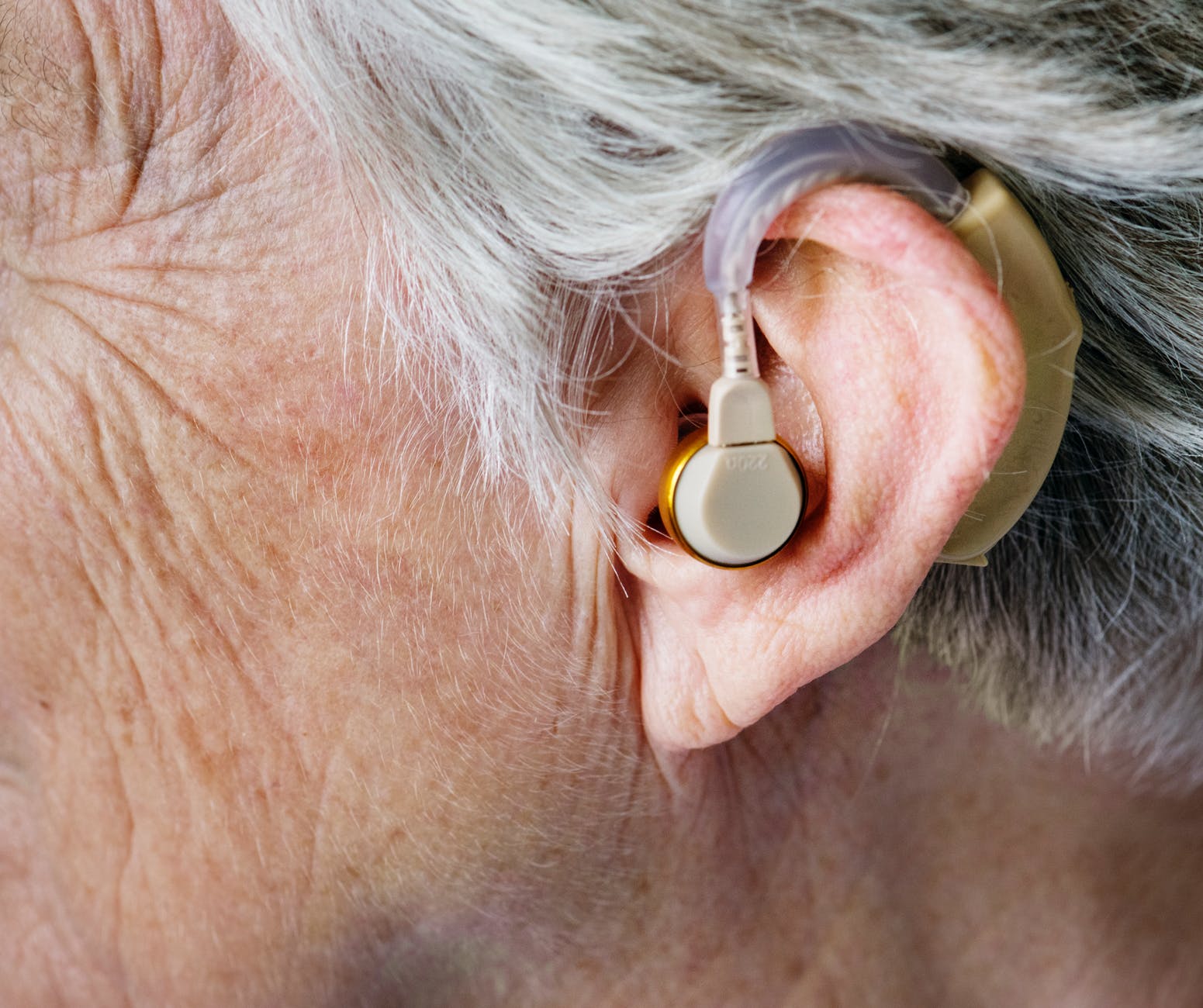
person wearing hearing aid
Photo by rawpixel.com on Pexels.com

Every single time that I  hear some older person calling young people “snowflakes” I go into a slow burning rage inside my head. It is an epithet invented to cast aspersions on the thinking of  teens and twenty somethings who hold progressive points of view. The idea is that the youngsters are so fragile that they simply can’t bear critiques or differing ideologies. The insinuation is that they are silly, close minded and of little substance.

While there may very well be some young folk who are a bit spoiled and unwilling or unable to accept philosophies that run counter to theirs, the truth is that there are also middle aged individuals of more conservative bent who have the same trouble. Some of them are actually in high political positions and they often tweet their discontent. For the most part, however, I find the current crop of young men and women to be exceedingly hard working, earnest and determined to make a very positive difference in the world. The fact that they are a bit more liberal than their more aged counterparts has little to do with their level of courage or good intent.

It has long been a trend for young adults to be on a kind of search for truth and meaning in their world. It is in their natures to question the status quo and seek changes that they deem to be fair and more just.


Socrates once said, “The children now love luxury. They have bad manners, contempt for authority: they show disrespect for elders and love chatter in places of exercise.” This of course was noted about four hundred years before Christ walked on the earth, and I find it remarkable how it might have been said last week by some pundit making observations about today’s kids. In fact there are many such quotes that are part of our discussions of the young versus the old in political matters. We’ve all heard the quote, “If you are not a liberal at twenty five, you have no heart. If you are not a conservative at thirty five you have no brain.” It is a bit audacious in its sweeping assumptions, but we laugh at it because it bears a grain of truth. Indeed we often become more cautious as we grow older, but that does not make us wiser or more righteous. Thus, I find it beneficial to show more respect to the thinking of our younger generation than we generally do.

In 1776, when our Founding Fathers signed the Declaration of Independence their average age was forty four. That being said more than a dozen of them were younger than thirty five and among those some were still teenagers. In fact, the American Revolution as with all such sweeping changes was much more of a young man’s cause than that of older men. James Madison was only twenty five when he penned his name on the Declaration of Independence and the current hero on Broadway, Alexander Hamilton, was a mere twenty one. Young adults are more often than not as passionately concerned about the world as those thought to be more mature.

I enjoy the conversations that I have with my former students and my grandchildren regarding the political conditions of the world today. I prefer listening to them and asking them questions rather than challenging their ideas. I find it enlightening and quite hopeful to hear just how much they have considered the various issues with which we continually grapple. They are far less likely to simply accept a particular way of thinking without considering many different possibilities. Their beliefs are mostly based on a great deal of thought and research. They are involved in internal debates as they search for the best ways of doing things. They have the audacity to think outside of the box and come up with ideas as radical as revolting against the most powerful government in the world to create a new nation conceived in liberty.

I find myself spending hours listening to young men and women who are more than ready to do their share of the heavy lifting in the world. Of course they differ somewhat from me because many of their experiences have been different from mine, but they are not unpatriotic or inconsiderate or lazy or spoiled. They simply look at the challenges that we all face from the vantage point of having an entire lifetime ahead of them rather than having walked through a lifetime. Their youthfulness does not make their thoughts any less valid than mine or any other older adults, but it does tend to make them more inclined to envision new and exciting possibilities. I find that when I listen respectfully the favor is returned when I speak. A rational and fruitful discussion ensues. It is when we disregard the fervor of a young person’s enthusiasm that we create an emotional impasse.

Each of us longs to be heard, to be understood. All we ask is that we be accorded an opportunity to speak our minds with impunity. All too often we create situations by dismissing certain forms of speech before they are even uttered, leaving us in a “them or us” kind of division. Hurling insults without thought only further inflames the situation.

During the height of the Vietnam war when so many of us were protesting what we believed to be a terrible mistake, far too many adults treated us as though we did not love our country. They did not seem to understand that it took great courage and much patriotism to speak out against what we saw as a wrong. There was a great divide that lead to unnecessary violence and clashes that might never have happened if only each group had been willing to sit quietly and consider each point of view. The frustrations came from all of the misunderstandings that came from assigning insulting labels to each cause, and pitting young people against their elders. Sadly we did not seem to learn from those mistakes.

The next time you find yourself wondering what a young person might possibly be thinking, instead of writing him/her off as a snowflake, try encouraging a true conversation with the intent of learning rather than judging. I believe that you will find that we are all seeking most of the same things, we simply have different ideas about how to achieve them.

Honor our young. They will one day be taking the reigns of leadership and helping us in our final days. I for one feel comfortable that we will be in very good hands.

Changing the World One Person At a Time

36285163_10214036549806978_1792077685531344896_o.jpg

I watched an interesting movie, An Inspector Calls, a few nights ago that has stayed on mind. It was based on a play written by the English author J.B. Priestly and was first performed in 1945. It alludes to the impact that each of us has on the people that we encounter, even when those meetings are impersonal and brief. Each day as we go about our lives we are leaving impressions that either enrich or hurt the people with whom we interact. What we say and do is affecting someone’s psyche in deep and meaningful ways, making it imperative that we think before we act. 

All too often we are wrapped up in our own trials and tribulations, forgetting the power that we yield in even the most mundane situations. If we are irritable, taking out our frustrations on complete strangers we may think little of our actions, but our anger may in fact ruin the day of the person who is the recipient of our barbs. How we choose to treat people actually matters, and may in fact have lasting consequences of which we are completely unaware. So why wouldn’t we continually do our best to more pleasant and understanding?

According to a recent 20/20 episode road rage has become a national problem. In city after city there have been tragic cases of individuals who become so angry that they lose their composure and end up creating mayhem in the process. Far too many people are coming unglued and overreacting to snarls of traffic. Everyday folk become Mr. Hyde when they take command of the driver’s seat in a car. They forget that the automobile can become a weapon with fatal consequences when emotions take hold.

Extreme examples of people snapping and resorting to violence are still mostly rare, but we all too often use our words to tear people apart. It has become more and more acceptable to speak our minds, as though being brutally forthright is a badge of honor rather than the destructive force that it actually is. We sometimes even applaud those who utter vile things about the people with whom they disagree. It’s supposed to be a sign of toughness to be able to take an insult on the chin, but I find myself wondering how much damage is being caused by the deep hurt that is being so nonchalantly used to win arguments. Sticks and stones may indeed break our bones, but words are often even more powerful in breaking spirits.

I have to admit to feeling a bit sad these days as I see so much mean spirited behavior being bandied about without much thought. I find myself wondering how many souls are quietly hurting because of the suspension of manners in so many situations. Surely we must all be somewhat affronted by commentaries that threaten and insult. Where is the kindness that we know is far more effective in healing?

I was impressed by former President Barack Obama’s speech in South Africa upon the occasion of what would have been Nelson Mandela’s one hundredth birthday. He pointed out that Mr. Mandela understood the importance of forgiveness and understanding in leading a nation. Even though he had been imprisoned and treated badly, he chose not to hold grudges against those who had tormented him. He realized that the only way to bring his country together was to mend the divisions and bring all of the people together.

I have found that the greatest people of all time have understood the basic principle and power of love. Abraham Lincoln, Gandhi, Dr. Martin Luther King, Jr., and of course Jesus Christ followed a righteous path of justice, inclusion, and above all nonviolence. They were willing to forgive, to understand, to create alliances between people of different beliefs. In the final analysis we are all stronger when we come together in a spirit of forgiveness and peace.

I have a friend named Andriel who personifies the way in which each of us may play a small role in making our world a better place to be. Andriel’s life was shattered a few years ago when her beautiful daughter was killed in an automobile accident. The tragedy touched many of us, but its effect on Andriel was unimaginable. From the ashes of that time, Andriel has worked her way back to wholeness not by stewing in anger over the unfairness of her plight, but by reaching out to one hurting soul at a time and embracing them in their moment of need. She has healed herself by healing others, and continually being conscious of the power of even the smallest of her actions. She encourages  and inspires all who know her to consciously embrace and appreciate the people around them with positivity. She is a life coach who has walked in a valley of pain and sorrow only to emerge more whole than ever before. Her secret to being a joyful minister lies in opening her heart in all that she says and does, remembering how fragile each of us sometimes may be.

Andriel has advised those who follow her to spend some time each and everyday helping to mend someone who is broken. Make that phone call. Send that text. Say those words that are in your heart but somehow remain unspoken. Let people know how much they mean to you, how much you love them. Your efforts may make all the difference in someone’s life.

We don’t have to be victims of a movement of so called strong men and women who would abase and belittle us. We can do what we know is right and muffle the sounds of ugliness. There are more good people than bad. That has always been true. We have the power to change the world, one life at a time.

The Good, The Bad, and The Ugly

backlit-clouds-dusk-853168On any given day the headlines of any publication include the good, the bad and the ugly. That trend pretty much sums up the nature of humanity and history itself. As people it’s actually easier to find the good among and about us, but more often than not we focus on the bad or the ugly. I suppose that is because horrific things are actually more unusual than generosity and compassion. We are fascinated with the bad and the ugly even as we abhor such occurrences. 

I scan the headlines each morning as I eat my breakfast. Last week the front page announced the bad news that a six figure income just over one hundred thousand dollars a year in San Francisco qualifies a family to be considered low income and possibly in need of government assistance to provide the basics of food and shelter in that city. It was shocking to realize that such a fine sum of money is insufficient in a town where the median price of a home is over a million dollars. It is a beautiful city that has become almost inaccessible to anyone but the very wealthy. In fact, it suffers from one of the most tragic homeless problems in the nation, and residents complain that the plight of individuals with no place to go is growing exponentially. I find myself wondering how it is so that a city that prides itself in being advanced in so many ways has become more and more segregated by economics.

Yet another quite ugly story from out of California told of an elderly man from Mexico who was severely beaten by a woman in Los Angeles who shouted that he should go back from where he came as she pummeled him with a brick. It’s more than difficult for me to imagine how someone might possibly become angry enough to inflict suchg harm on a stranger. Had she taken the time to determine his story she would have found that he was simply visiting his very legal family as he has done countless times. His vacation turned into a needless nightmare because someone jumped to conclusions that weren’t even accurate. Even if he had been attempting to come to this country without proper paperwork, the violence that he endured was terribly wrong. I suspect that it would not even have warranted mention in the newspaper were it not so unusual, but I worry that there is a kind of growing contagion that encourages more and more people to demonstrate their prejudices with this form of extreme ugliness.

We certainly do in fact have very real problems, and of late we don’t appear to be inclined to work together to solve them, but sometimes something quite extraordinary happens and we see the goodness of our better natures in all of its glory. Thus it was with the rescue to the soccer team and coach from Thailand. For many days the entire world seemed to be holding its collective breath and praying in unison for the young men trapped inside a cave in a very dangerous situation. Help came from around the globe, and models of courage and sacrifice kept people from far corners holding their breaths in the hope that all would turn out right. In the end the entire crew was rescued in a daring operation that sadly took the life of one man who perished while helping with the endeavor.

There was no preening here. No requests for glory or paybacks. The faces of the those who worked tirelessly mostly remain anonymous. They had a cause that was gloriously important and nothing else seemed to matter. People worked together to solve a grave problem and succeeded just as mankind always has whenever people have been willing to set aside differences for a common good. When the entire group was finally safe we all heaved a collective sigh of relief and shed tears of genuine joy. We realized in that moment how incredible we humans are when we use our potential for something good. The rescue represented the best of who we are as people, and it felt so wonderful to experience such pure elation without the recriminations or critiques that split us apart more often than we desire.

I just wish that we would think of all that is happening to us on any given day and emphasize the truly good things that take place, relegating the bad and the ugly to the back pages where they belong. We give far too much attention to evil and violence, and not nearly enough to our grand accomplishments. We need not ignore problems, but we would do well to put them into perspective. Most of the time the truly ugly stories are judged to be so because they are indeed the exception rather than the rule. The bad ones generally mean that we need to put our heads together to find solutions. The good ones show us just how much capacity we have to create a better world for everyone.

I remain a cockeyed optimist because I truly believe that when all is said and done we time and again grow weary of the bad and the ugly and decide that it’s time to do what we know to be right. It’s just too bad that we don’t hear a bit more about such instances because every single day there are wondrous and heroic actions taking place. Even now someone is saving the life of another human being. Somewhere a great new discovery is taking place. Children are learning the foundations of a just society in many corners of our world. Some person is quietly helping another. Such unsung acts of goodness are the true nature of the world. Sometimes we actually get to know about them and it feels fabulous.   

Better Angels

angel art black and white clouds
Photo by Pixabay on Pexels.com

I’m not one to advocate fighting, especially among family and friends. A colleague once told me that I would probably be able to find something good about anyone, including Charles Manson. I suppose that I am the way I am because I so value life, and believe that each of us has the potential for great good. Nonetheless we are also imperfect, and I try to remind myself that I do not have all of the answers and neither does anyone else. Our humanity leads us in many different directions, and often it is only in retrospect that we are able to determine whether or not we have always chosen the best pathways for living. Each of us is so complex as is the world in which we live as well as the long history of mankind. I feel that we must be far kinder and less judgmental that we often are. Somehow of late we have become a very divided nation with each side virtue shaming the other. The rancor that I see is toxic, and even more troubling is that all too often anyone who attempts to bridge the ever growing gaps is viewed as lacking in values.

Mark Twain once said something to the effect that the two most important moments in a person’s life are when he/she is born and when he/she discovers why. I love the idea that each of us has a purpose, and firmly believe that it often takes us a very long time to know what that may be. In my own case I suspect that my suffering has lead me to be far more understanding and compassionate than I might otherwise have been. Losing my father taught me how fragile life truly is. My mother’s mental illness showed me that each of us has a kind of brokenness, some more severe than others. I learned to embrace people just as they are, not as I wish them to be. I have been humbled by the realization of my own imperfections. I have embraced the power of listening to each person’s story and learning from what I have heard. History speaks to the truth that humankind has struggled for centuries to survive and to understand the world’s many mysteries. That epoch journey has been wrought with both failures and glorious successes. I suspect that if we were to analyze every single person who has ever lived we would find it to be true that even the most gloriously amazing individual still had a share of doubts and mistaken beliefs. It is who we are, and something that we seem to forget from time to time.

So here we in 2018 fighting like Cain and Abel all across the world, hurling invective at one another to the point of insisting that anyone who doesn’t agree with our opinions is no longer a friend. We are defensive and angry and unwilling to stop our ranting long enough to realize that as a nation we have become our own worst enemies. It seems as though the warnings that my seventh grade teacher proposed over five decades ago have come to pass, for she was prescient in urged us to be wary of the power of propaganda. She taught us how to watch for it, and insisted that it was all around us, even when it was not apparent. It was a shocking revelation, but one that I have never forgotten. I see its impact now more than ever before, and realize that we are being manipulated into turning on people that we once may have loved simply because their ideas do not conform with ours. It is a truly sad state of affairs and it has caused me to grieve and to feel a sense of desperation as I attempt to draw people that I know back together. The din of the rancor has become oppressive and I have worries about where it will eventually end that might never otherwise have occurred to me.

In the midst of the darkness I have discovered a small ray of hope. I have heard about a group called Better Angels, an organized effort to bring disparate forces together in a spirit of understanding. The idea behind the movement is to sponsor what are known as red and blue conversations between groups of Republicans and Democrats. Participants agree to discuss issues in a highly structured environment that focuses on listening. The gatherings are weighted equally with people from both sides of the political spectrum, and kept somewhat small so as to allow each person time to speak. Using a number of formal structures there is an agreed upon topic and the emphasis is on simply hearing each point of view. Only one person speaks while everyone silently considers what is being said. It is not a debate, but rather an opportunity to learn from one another. Nobody is allowed to speak out of turn or launch into heated arguments. It is a controlled and quiet attempt to find understanding, areas of common ground and possible solutions. Those who have participated have generally reported feeling enlightened and far more open to considering new ways of thinking. The system is so powerful that many teachers and university professors use it in their classrooms to invoke more critical thinking and less emotional argument.

I have personally participated in similar groups in past years. They were not affiliated with Better Angels but they were constructed in a similar manner. Generally there were a very small number of people in the groups and there was no effort to keep them balanced, but there was a very structured set of questions and rules for speaking about them within a limited amount of time. Usually one person served as a mediator who insured that everyone followed the rules. Such situations almost uniformly resulted in more listening than talking, serving to quiet the mind and open possibilities that had not previously been considered. They worked to build a sense of team and family even among very different individuals.

I believe that we have been approaching our shared problems in the wrong manner. We only hear what we wish to hear in an atmosphere of shouting and accusations. We align ourselves with like minded people and unfairly judge those with whom we disagree. We behave as though we have it all figured out when the truth is that every problem is filled with complexities that require consideration of many different ideas. In truth it is only when we quiet our own souls and begin to listen to everyone that we will ever find ways to agree on solutions. My guess is that much like our ancestors we will have to make compromises that may not perfectly suit us, but which will settle our differences just enough to make progress. The better angels that live inside our souls need to overcome the demons that are leading us astray.

The Wedding of a Die Hard Democrat and a Die Hard Republican

midsection of woman making heart shape with hands
Photo by Pixabay on Pexels.com

One of my cousins recently posted a commentary about his parents that made me smile. He remarked that one of his folks was a die hard Democrat and the other was a die hard Republican. They used to joke that when they went to vote they canceled each other out. Mostly though they were good people who taught their son to be tolerant and to love his country. He served proudly in the military and learned how to be a  good person in his own right by following their example. He wonders, however, what has changed to cause so much derision, division and incivility today. He wants to know why it is increasingly difficult for people with differing philosophies to get along.

His post got me to thinking about my own parents. In all honesty I don’t really know what political persuasions they had. I only recall my father arguing about a political topic on one occasion and that was with his father. Since I was only privy to the noise of their voices rather than the actual debate I will never really know who advocated what position. It was not any easier to discern what my mother’s thinking might have been. She was an enigma when it came to voting and such. She often told me that she considered Franklin D. Roosevelt to be the greatest of all the American presidents, insisting that he had saved the nation in more ways than one. She broke into tears when remembering how she had once seen him when he visited Houston. She always spoke glowingly of Harry Truman and John Kennedy as well, but on the other hand, she felt almost as much allegiance to Ronald Reagan as to Roosevelt. In all honesty I can’t think of many times that she even spoke of politics or her feelings about them. To her a vote was a sacred and private thing between her and God. She didn’t discuss her leanings nor did she find it necessary to know about those of anyone else. Her only commentary was that it was glorious to have such a right, even if the elections didn’t always go her way.

Mama was from an immigrant family that was not always treated in the most welcoming way. She told us that her father insisted that in spite of a few prejudices here and there the USA was still preferable to the land that he had left. He insisted that his children take full advantage of the opportunities of being citizens and in turn pay forward the favor by demonstrating their pride in being Americans. When my mom and her siblings were taunted as being foreigners, their father urged them to just ignore the slights. He taught them that there are ignorant folk everywhere, and they need not nurse their anger. Instead he wanted them to become educated and fully involved in the culture and ways of the country. All eight of his children were patriotic, and his sons confirmed their love for the USA by enlisting in the Armed Forces and serving during World War II.

I suspect that my mom would be both confused and amused by the craziness on display these days, but she would have also insisted that everyone has a right to voice their opinions if they so choose. She would often tell us how important that cornerstone of democracy was to her father and ultimately to her and her siblings as well. It was something all too often denied in their homeland of Slovakia, so they were quick to welcome all ideas.

What would have most baffled my mother is the way that so many people are now determining friendships based on political beliefs. She would have first noted that it is none of anyone’s business to judge others, especially with regard to their political beliefs. She would have also wondered why we are talking about such things so openly and so much. Mostly she would have been utterly appalled at the idea of friendships and relationships being based on how people feel about particular hot button topics. I suppose that she had the same high level of tolerance as her older brother who was so fittingly described by his son in the Facebook post.

I often muse that the media is too much with us. There was a time when there was a news hour around dinner time. Thirty minutes were devoted to national events, and thirty to local happenings. Most stories merited only two to three minutes of discussion, rather than the twenty four hour blathering on and on that is possible today. Something has to fill those hours and unfortunately there is a great deal of sensationalism used to attract our attention. We have become news junkies and can’t even escape the grasp of the drama when we are away from our televisions. Our phones and computers constantly alert us to the latest breaking story. There is little or no rest and after a time we become so emotionally involved that we can’t seem to turn off the feelings that send us into emotional frenzies. It sometimes appears as though we are puppets being manipulated by some unseen master.

The reality is that we don’t really need to see every single kook who does something outrageous. The truth is that on any given day most people are busy going about their lives. They are not sitting at home plotting ways to make other’s miserable. They are not evil or uncaring or hoping to undermine the government. Most people are just trying to get by and get along. They do their duty as mothers, fathers, friends, employees, and citizens. They appraise the issues and make choices, and unless they do something illegal or hurt us in some way, it really should not matter to us what their political philosophies may be. Instead we should be focusing on what kind of people they are and admitting that if it actually is possible for a die hard Democrat and a die hard Republican to have a beautiful and loving marriage then maybe we also need to try harder to get along.