Let It Go

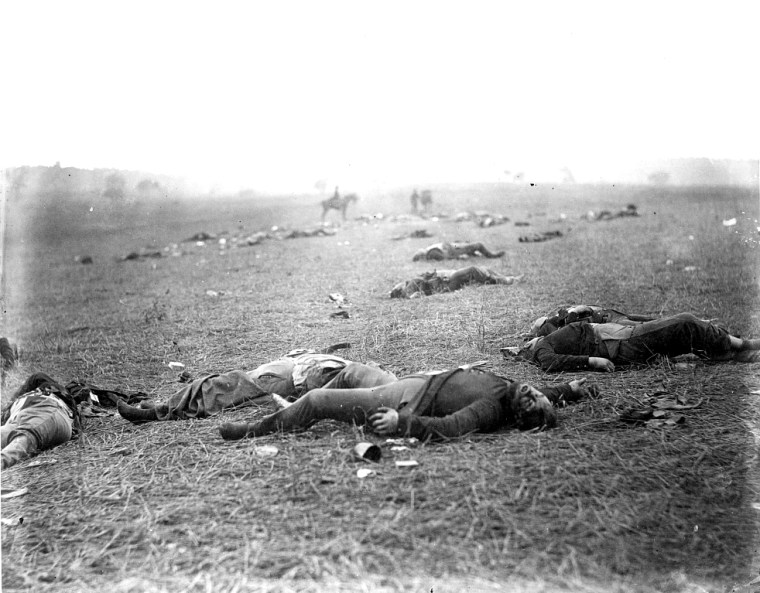
12-_00168v

I grew up in Houston, Texas in the south. As a child I remember hearing Dixie being played and sung now and again. When I was young I actually believed that I had descended from Confederate Rebels and it was only later that I found out how wrong I had been. Of course my mom’s ancestors were busy chafing under the rule of Hungarians while the Civil War raged here. It was from my father’s side that I assumed that I had come from bonafide Johnny Reb stock. Imagine my shock, and maybe even a bit of relief, when my genealogical searches revealed that my great grandfather, John William Seth Smith, was a Lieutenant in the Kentucky Volunteers and that he fought for the Union. In fact, he participated in a number of crucial battles and was around to bury the dead at Shiloh. It ends up that the inclement weather and horror of that event badly affected his health in later years and after the war he seemed rather intent on putting his days of fighting behind him. I suppose that those of us who are still arguing over the aftermath of that terrible conflict might be wise to follow his lead.

I’ve always had a fascination for history and so I have read a number of biographies and historical texts. Robert E. Lee was someone about whom I wanted to know more. In so many ways he was an enigma. He graduated from West Point and for a time was one of the most highly respected generals in the Army of the United States. He sometimes questioned the morality of slavery, but nonetheless held the odd belief that it served a purpose in helping the enslaved humans to learn the necessary skills to be full fledged members of society. He loved his country but felt a higher allegiance to his state. He saw secession as treason, but agreed to join the Confederate cause nonetheless. In other words he was a highly conflicted man who wanted to be honorable but often demonstrated profound confusion about how one should live. In the end he actually felt that the long war should never have happened, and he spent much of his later years attempting to free his soul from guilt. 

The aftermath of most wars becomes a time for trying and punishing those guilty of crimes or treason, while the rest of the population goes on to live ordinary and quiet lives like my grandfather. The days after the Civil War were different. Both Abraham Lincoln and Ulysses S. Grant felt that no purpose would be served in meting out vengeance against their fellow countrymen who had gone astray. There were no trials in which Robert E. Lee and other Confederate leaders were held accountable or punished. Instead they were allowed to live with only their own self reflection to determine the final chronicle of what they had done. For Robert E. Lee it was a bitter pill to ruminate on the utter folly of the war and its impact on the entire country. He must have asked himself time and again why he had gone against his own beliefs that secession would be a fools errand.

Time has a way of glossing over the ugly realities of history. As the years passed people from the south often found ways to excuse the actions of their ancestors who had believed that destroying the country was actually the only way to deal with political conflicts. They saw the war as being noble and courageous, but the truth is that it was a horror that need never have happened. To celebrate those who led their fellowmen into the very jaws of hell seems to be a rather ridiculous idea, and yet that is what happened in cities and towns all across the south where monuments and statues were erected to honor men who in many ways had been fools. Perhaps it was a way of ignoring the truth of how incredibly wrong the entire conflict had been.

It would be one thing to mourn the lost souls who died in those terrible battles that pitted American brother against American brother, but it is quite another to glorify those who had took the common people so far astray. It would be akin to building monuments in honor of Adolf Hitler all over Germany. We would surely see the inappropriateness of such memorials, but somehow we fail to realize how ludicrous it is to honor men who literally performed treasonous acts against the United States when they chose to go to war against the government. Perhaps Robert E. Lee said it best. “I think it wiser not to keep open the sores of war, but to follow the example of nations who endeavored to obliterate the marks of civil strife and to commit to oblivion the feelings it engendered.”

We have harbored the feelings of separation and divisiveness far too long. Walking through the Shiloh battlefield I felt no glory, but only a deep sadness that people were unable to find ways to settle their differences through any means other than fighting and killing. There is no magnificence at Gettysburg, only despair that man’s anger overwhelmed his ability to find common solutions. War is always hell. Slavery was wrong. We all know in our hearts that these are truths. Why then do we continue to quibble over hunks of stone and metal that remind us of a past that was horrific by anyone’s standards? We can remember all of those who lost their lives with compassion, but we need not attempt to honor those who were responsible for the carnage. Taking down the troublesome statues does not erase the history, for we can never forget how terrible it was. Instead it focuses on understanding and a willingness to move on and let go of feelings that seem to have festered long after they should have been set aside.

I suspect that if Robert E. Lee were to hear of the battles that now ensue over the appropriateness of monuments to in his honor he would remind us of his own words and respectfully ask us to take the monoliths down. We should do so not out of a sense of political correctness, but because it is time for healing that will never fully happen until we are willing to admit to the wrongness of that terrible chapter of our history. We can place those images on battlefields or inside museums where the story of that time might be told, but it is no longer necessary to glorify the mistakes of our past. We must move ever forward and remember the words of another contemporary of Robert E. Lee.

As the war neared its end and President Abraham Lincoln delivered his second inaugural address his mood was melancholy and compassionate. He pointed to the horrific waste of the war but also its necessity in bringing justice to our land. Still he wanted all of us to come together as brothers “with malice toward none, with charity for all, with firmness in the right as God gives us to see the right, let us strive on to finish the work we are in, to bind up the nation’s wounds, to care for him who shall have born the battle and for his widow and his orphan, to do all which may achieve and cherish a just and lasting peace among ourselves and all nations.”

This is our challenge as the American people. In the name of all 600,000 men who lost their lives as well as those who were forever altered, it is time for us to heed the words of our great president who himself became a martyr to his noble dedication to the proposition that all men are created equal. It is far past time to stop the fighting and to let it go.

Remembering A Wonderful Life

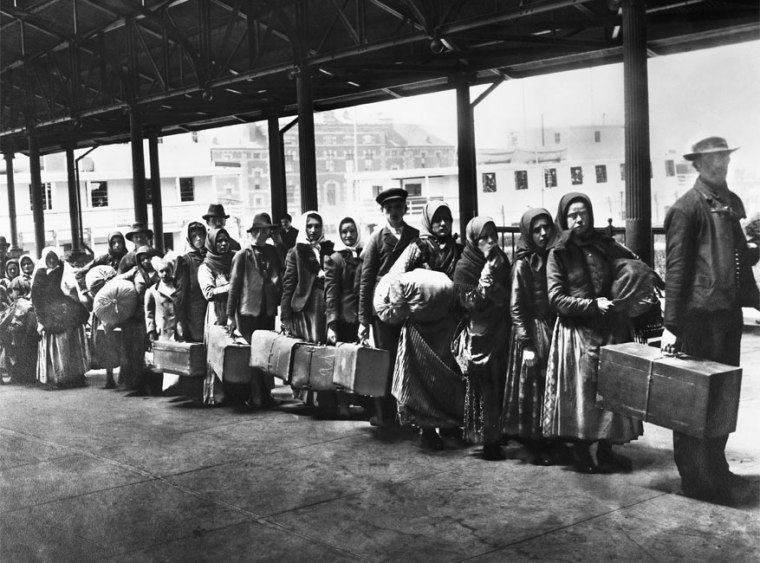
1892_small_fullsize

The classic movie It’s A Wonderful Life considers the difference that one individual might make in the world. The premise is that if the hero had never lived everything in his town would have turned out differently. It demonstrated that while each of us only touch a limited number of lives, our impact is nonetheless profound.

I was thinking about this when the new RAISE immigration plan was announced. I wondered what might have happened if such a law had been in effect when my grandfather first wanted to come to the United States from Austria Hungary. He had only minimal education and no real skills beyond a willingness to do the most detestable of jobs. His English was minimal. He came with little more than the clothes on his back and did the kind of manual labor that is brutal and dirty. He was frugal and saved money until he was able to send for my grandmother. She had even less to offer our great country than he did. She spoke no English and her education was virtually nonexistent. Once she had arrived she worked as a cook, a cleaning lady and at a bakery until she began to have children and then she rarely left her home again. My grandfather eventually settled on a job at a meat packing plant. He cleaned carcasses and equipment, hardly a grand career but certainly a noble way to provide for his family. From his meager salary he built a tiny house for which he paid cash and there he raised eight children.

According to the point system of the RAISE plan Grandpa would hardly have been a candidate for immigration. There was little to indicate that he would be of great economic use to the United States. I am rather certain that he would have been denied entry to our nation. What a loss that would ultimately have been.

All four of my grandfather’s sons served proudly in the military during World War II. During their lifetimes they worked hard at their jobs, rarely missing even one day of work. Two of them were employed by the United States Postal Service and two worked for Houston Lighting and Power. His daughters held a variety of positions that included teaching, doing research for a high blood pressure study, serving the United States Postal Service and working at a Naval Station. Their children, my grandfather’s grandchildren, were even more remarkable. Among them were accountants, teachers, managers, businesspersons, firefighters, and engineers. In fact my brother coauthored the program for the navigational system of the International Space Station. I wonder who would have done that if my grandfather had never come here?

It’s difficult to imagine how different the lives of countless individuals might have been had my grandfather never been granted permission to immigrate to the United States simply because his education was lacking, his skills were so basic and his English was wanting. On the surface he most certainly may have appeared to be a risk, and yet he was a proud American who encouraged his children to always work hard and be their very best. When many citizens were struggling to survive during the Great Depression he kept his family safe in a home that he had build one section at a time, paying for each addition as he went. He was frugal and refused to even accept even charitable gifts, insisting that he wanted to earn whatever he had. He was exactly the kind of American that has made this country great, but with a law like RAISE he might never have stepped on our shores.

With each successive generation his successors have become ever more important contributors to American society. There are medical doctors and those with PhD’s in public health and mathematics. There are teachers, accountants, nurses, electricians, business people, builders, athletes, ministers and scientists. The talent pool that has come from him has widened and the future of his great great grandchildren appears to be even brighter. His was the American dream and it was fulfilled beyond even his own expectations. Certainly it has made a difference to the country in a measurable way, but what if he had never been allowed to come?

My grandfather’s story is not that unusual. It has been repeated many times over in the history of our nation. Individuals who came with little or nothing to recommend them went on to build families whose impact was monumental. If we were to take away all of their contributions how different would our land be? How can we ever know who among us will be the teacher that we need, the inventor who will make our lives better, the leader who will find solutions to our biggest problems? Each of us traces our ancestry back to some distant place and in most cases the person who first ventured here was desperate to find a better way of life, but did not appear to be outstanding on the face of things. How can we use a point system to determine which people will ultimately have the best impact on our land?

I have taught thousands of immigrant children. Many of their parents spoke no English, but they were good people who did their share of work, often the dirtiest and least desirable. Like my grandfather they wanted a better life for their children and sacrificed greatly to make it happen, many times by working multiple jobs. Among my students from such families are college professors, medical doctors, nurses, engineers, teachers, police officers, soldiers, fire fighters, mechanics, builders, accountants, biologists, chemists, mathematicians, physicists, psychologists, public health administrators, computer programmers, public administrators, school principals, counselors, lawyers and even politicians. In a single generation they have fulfilled the hopes of their parents and are actively contributing to society in thousands of ways. They are the true face of immigration, not the hopeless gang members and welfare takers that fear mongers sometimes portray them to be. 

I respectfully submit that we should carefully consider what we might be missing if we restrict immigration to our country as outlined in the RAISE bill. Skimming what appears to be the cream of the crop from various foreign nations may or may not be the answer to a better economy. Sometimes the desire that comes from someone desperate to improve his/her condition cannot be measured by a rubric, just as the worth of my grandfather might have been considered rather low. What made him a good candidate for consideration was the “ganas” burning inside his belly. All he needed was an opportunity to demonstrate just how valuable he truly was. Thankfully he was given that gift and what a difference it has made to the United States.

We certainly want the best for our nation but we need to consider the consequences of limiting ourselves to rubrics that fail to recognize the intangible values that make truly good citizens like my grandfather and his descendants. The issue is far too complex to delineate with numbers. Human beings will surprise us again and again. We need to be open to thinking outside of the box, because it is beyond the confines of our imaginations that the best things happen. Let’s keep our lives wonderful and welcome the tired and the beleaguered. From them may come just the people that we have been waiting for.

The Playlist

hqdefaultWhat if you attempted to create a playlist for your life. What songs would be there? Would the collection describe you or would it be composed of music designed to motivate and inspire you? How would the selections actually apply to the person that you are? I decided to attempt such a project and it was a bit more difficult than I at first imagined. There is so much music that I love just for the pure fun of listening to it. Finding songs that really speak to who I am, who I have been and who I want to be is a bit more difficult.

While I am a big planner I have found that life is full of surprises, many of which seem intent upon challenging us in ways that sometimes seem insurmountable and even unfair. The kinds of traumatic things have have happened to me made my first choice of music to be You Can’t Always Get What You Want by the Rolling Stones. The most important idea in the lyrics has always been one of my mantras, namely that while I may not always get the things that I think I should, sometimes I get exactly what I need. As Garth Brooks so beautifully reminds us in Unanswered Prayers we sometimes fail to realize that a plan even better than the one that we have imagined is unfolding even as we struggle to free ourselves from pain. It is in our darkest hours that we often come to realize what that we are made of sterner stuff than we may have thought or as Kelly Clarkson notes in Stronger what doesn’t kill us makes us stronger.

I wouldn’t wish some of the tragedies that have befallen me on anyone, not even myself, but they happened and I only had two choices when facing them. I might either have just given up and let them defeat me or I might have attempted to find a way to carry on. Each time I somehow embraced the will and the courage to keep going, usually With At Little Help From My Friends as the Beatles say. Like Learning to Fly by Tom Petty I took a leap of faith in myself and dared to do things that I never imagined, often because I was forced by fate to do so. I generally emerged from such experiences feeling pretty good about myself, even a bit proud. I was actually a better person for having to stare into the darkness and defeat it. I feel that I have become a warrior over the years and so another of my theme songs should be Roar by Katy Perry. “I got the eye of the tiger, a fighter dancing through the fire.” The Mother of Dragons has nothing on me!

I suppose that the key to my victories over difficulties has been my unswerving faith that somehow, some way I will always overcome my problems or at least learn how to make the changes needed to deal with them. I’ve always loved Don’t Stop Believin by Journey because my mantra has always been to keep on trucking regardless of how dire a situation seemed. The crazy thing is that I have seen and endured great suffering but because I truly believed that I was never alone I tended to Always Look On the Bright Side of Life just as the guys from Monty Python. That tune has always made me laugh even when things looked rather grim. In fact, I suppose that without humor, sometimes of a very dark nature, I doubt that I would have made it this far. A good chuckle can make a difference in even the dreariest of days and I so love being around beings who know how to help me to release my feelings with a good old fashioned joke, especially when that bit of comedy pokes fun at me and my worries.

I truly learned from each of the happenings that almost seemed unbearable at the time. I became wiser and more compassionate. I realized how much spunk I actually had and my confidence soared. I have always loved I Can See Clearly Now by Johnny Nash because it encapsulates my evolution from being a more self centered, silly and frightened child to becoming someone who manages to feel brave most of the time and to understand that everyone is burdened with struggles. I know now that I am not unique in my cares and woes. It is part of the uncertainty of living. One thing of which I am certain is that eventually things always get better which makes my next song one of great hope. Here Comes the Sun by the Beatles makes me smile and lifts the weight from my heart each time I hear its lilting optimism. Ironically another Beatle’s composition is also one that brings a smile to my face every single time that it is played, particularly as I grow older. Good Day Sunshine reminds me to be grateful for the blessings that I have and to see the good in the world rather than focusing on the many hardships that still plague all of us. I consciously choose to be Happy and so I dance away when I listen to Pharrell Williams’ tribute to feeling lighthearted. 

The world is still so imperfect and there are serious issues that are cause for concern, but I am still convinced that in the end we humans will choose good over evil. I tend to agree with Sting in his lovely creation Russians that people of all societies love their children just as we do. As such they will ultimately strive to build a future that will be better for all of us. We just have to Imagine as John Lennon says and continue to look for leaders and ideas that take us into a more perfect version of life. We might begin by reflecting on ourselves and asking what we may each do to help eliminate injustice and hatefulness. Man in the Mirror by Michael Jackson should be an anthem for everyone. We should start each morning by repeating, “I’m starting with the man in the mirror. I’m asking him to change his ways.” It is only in attempting to perfect ourselves that we will truly impact the rest of humanity.

Ultimately I see the beauty of life. Like the Beatles’ In My Life I have seen so much love that I truly feel that it will be the power that transforms us. I would like to think that the most optimistic song that I know becomes a reality for mankind. When Louis Armstrong sang What A Wonderful World I don’t think that he realized what hope it would give us. Listening to its strains and stanzas describe all that is lovely and wonderful reminds me to look for the beauty that is everywhere. My hope is that others will find that moment of contentment that I seem to encounter more and more often as I look back on a life of which I am proud. I Hope You Dance just as I now do. There is great joy in the most unexpected places if only we learn how to look for it. If we are lucky we find also the most Amazing Grace which is ultimately the greatest gift of all.

Forgiveness

636218183085011754-1819095975_15a25241I listened to a TED talk in which a man described what he would have done to Adolf Hitler if he had somehow had the opportunity to meet with him back during the height of the Fürher’s power. It was a violent depiction which even frightened the individual who was outlining it. He noted that he was a generally peace loving person, against gun ownership and war. He pointed out the human tendency to be vindictive and admitted that he was no better than anyone else when it came to that aspect of our natures. In truth we sometimes fantasize how to get even with those who have harmed us or others. We sentence murderers to death and consider it just to hang those who commit crimes against humanity. At the same time we question acts of forgiveness that seem to be unwarranted. We have great difficulty with the concept of mercy even though many of us purport to follow the Golden Rule.

I’ve been there myself. Even after many years I struggled to find compassion for a man who emotionally abused my mother when she was the most vulnerable. I despised his politics which bordered on white supremacy, but mostly what I hated about him was the fear that he used as a means of controlling my mom. To this day I wonder if he was a great part of the reason that my mama succumbed to the tragic symptoms of bipolar disorder. One of her psychiatrists once told me that if she had lived a less stressful life she might have been merely eccentric rather than psychotic. This man was a major contributor to her descent into madness. She tried over and over again to get away from him, but he manipulated her with tales of having contacts willing to get rid of anyone that he wanted gone forever. She was terrified of what might happen to her and to us if she crossed him. Ultimately she broke down completely one night while in his presence. It distressed him so much that he backed away from his threats. A nudge from my uncles completed his departure from our lives which was a welcome relief to me and my brothers. He is the only person that I has ever made me feel utterly hate-filled.

I have been thinking about such things because a cousin who is wise and loving recently posted an article about a man who believes that we need to forgive everyone for everything. That is a major but interesting challenge for all of us. I think that it is possible in most cases, including with regard to my mother’s nemesis, Nonetheless I have to ask if there are indeed times when forgiveness simply can’t be forthcoming, as in the instance of Adolf Hitler. Certainly his crimes were egregious enough that it would almost seem to be naive and foolhardy to even consider giving him a pass, and yet I wonder if there is a tiny bit of merit in the idea of forgiving all people at all times.

If I think carefully about the man that I have literally hated for decades I find myself understanding why he was like he was. He was one of three brothers and his siblings were incredibly successful men. He on the other hand never amounted to much other than being movie star handsome. His wife had died of cancer and he was raising two children on a rather meager and unstable income. His son was ultimately killed in a robbery gone awry and his life showed little promise of getting better. I think he actually loved my mother but did not know how to demonstrate his concern for her properly. His boasts and putdowns were meant to make him look better in her eyes, and he saw his jealousy as a way of demonstrating how much he cared. Sadly his way of doing things was foreign to us and he and my mother were a grotesque mismatch.

One of the things that happened when she had her first psychotic break was that she came home from the hospital for a weekend furlough and refused to return. I was beside myself because she was not out of the woods. She turned to him because she had lost her trust in me. To his credit he told her that the best way to get everyone off of her back was to cooperate with them. He was the one who talked her into going back for continued treatment. That certainly demonstrated a level of goodness in him that I had never before noticed. In other words he was not as fully evil as I had imagined. I ultimately found it in my heart to forgive him, but with the caveat that I did not want him to ever be around anyone in my family again. I think that while total absolution is a good thing there must sometime be restraints associated with it.

For the most part forgiveness has the potential of being a healing act for the person who finds it in his/her heart to set aside the anger and negativity that lurks in the soul. It is a powerful way of restoring calm and optimism. It does not however need to include association with the person or persons who inflicted the hurt. For example, I would never ask someone who had been betrayed in a relationship to return to that individual. In fact it would no doubt be harmful. Forgiveness does not mean submission.

I also think that there are indeed some actions that are so egregious that it is impossible to find forgiveness. In the case of Adolf Hitler I can’t imagine anyone being so magnanimous as to absolve his sins against humanity other than God Himself. Still, I would rather see him rot in prison that to inflict bodily harm. In fact, I think that putting him away in chains forever would have been a fitting punishment had he not chosen the cowardly act of suicide. Then again perhaps he did us all a favor by taking care of the problem for us.

Most of us will be faced with minor inflictions of hurt against us. Only the individual who has been betrayed will be able to decide if he/she is able to harbor no malice against the person who has produced the pain.  It may take time for the wounds to heal as in my own case with the man who had brought so much fear into my mother’s life. Like my situation a pardon may ultimately be a somewhat selfish act designed to eliminate the poison of loathing that so pollutes the heart and that is okay.

Forgiveness demonstrates the ultimate act of love. Jesus absolved the thief while he was dying on the cross, but he did so only after the sinful man truly and deeply uttered his contrition. We are told that the other man who was being crucified with them was not willing to show that he was sorry and thus did not receive the same favor. I suspect the Jesus, the teacher, wanted us to know that while it is noble and just to exonerate those who have come to see the error of their ways, it is not necessary to be magnanimous with anyone who remains dedicated to evil.

I think that the world would indeed be a better place if we truly learned to be more loving and forgiving. We often hold onto grudges and anger long after it is healthy to do so. Reaching out to one another and understanding that we all make terrible mistakes is something that we should all strive to do. In the end the vast majority of people are good even if misguided. Our goal should always been to bring out the best in everyone that we encounter and to love them and welcome them into our world until they prove to be harmful. Then I think that even Jesus Himself would encourage us to walk away.

Words As Weapons

words-are-weapons“The tongue has no bones but is strong enough to break a heart. So be careful with your words.”

How often do we hear of words “killing” someone’s soul? Jesus tells us that gossip is like letting a bag of feathers loose in the wind. No matter how hard we try we are never able to get them all back. What we say has repercussions that are sometimes irretrievable. We know this and yet time and again cruel sentences leave our lips or end up floating in the ether on Twitter or Facebook. Sometimes this happens in a moment of anger but other moments are the result our intent to brutally harm someone with our most ugly thoughts. We say that sticks and stones can break our bones and words can never hurt us, but we know that this really isn’t true.

Sadly we read again and again of young people who are so harassed by their peers that they are driven to killing themselves. I suspect that none of the individuals who poke at someone and make them feel weak actually intend for harm to happen but all too often it does. I recently watched a program about a young woman who was recently found guilty of manslaughter for taunting a depressed friend into committing suicide. Texts on his phone showed that he was reluctant to take his own life, but eventually went through with it at the urging of this young lady who assured him that his family might grieve briefly, but would quickly get over their loss. When he admitted to her that he was scared to follow through on his plan she insinuated that he needed to man up. Eventually he did the deed. The jury felt that without the woman was complicit in his death because he was trying to back out, and she pushed him to follow through on what he had started.

While this is an extreme example of how words have the power of being lethal there are so many examples of youngsters whose confidence is ravaged by the horrific comments of their peers. It’s all well and good to teach our children how to ignore such behaviors, but we also must implore them never to be part of such destructive actions. We’ve all witnessed individuals who become the butt of jokes and sometimes we do so little to help them. It’s very difficult to stand up to kids who are popular or powerful, and yet we need to show our kids how to draw upon the courage to always do the right thing. We cannot sit back and watch the suffering of another even if it means losing our own place in the pecking order. Our children need to understand that they will ultimately be much happier if their own character is strong and just.

Most of the time none of us become involved in such extreme examples of using words as weapons, but we do sometimes say things to the people with whom we are the closest in the heat of a moment. We know their weaknesses and we charge ahead ready to hurt them with a little sting. We have to be very careful in such situations because once our barbs have landed we can’t really take them back. We would all do well to think before we speak and to consider the damage that our words may cause.

We seem to believe that we have a certain level of anonymity whenever we post comments on social media. We believe that out of the millions of words being slung around each moment there is little reason to think that ours will be noticed, but time and again people have lost jobs, tested relationships and angered friends over a snarky response, when the truth is that the only result that is likely to happen in such instances is to upset someone. We rarely change anyone’s opinion with our insulting remarks, so why would we take the risk of speaking out and possibly hurting feelings?  I have literally cringed over the words that I have heard people express or seen them write.

We have almost unlimited freedom of expression in this country, but it is up to each of us to know when saying certain things goes beyond the pale. A joke about assassinating the president isn’t funny. Racist comments about those who are different from ourselves have no place in the public forum. While we cannot and should not restrict speech, it is up to each of us to monitor our own utterances and to consider the effects of what we say. Perhaps it is time to instruct our young in such things as well.

Words can be as sharp as any sword. They can mortally wound a soul. We really do need to watch what we say. Gossiping, lying, bullying, threatening, hurting should all be anathema to us. We would not point a gun at another human being, so why do we so blithely allow our words to sting? Whether we shout them or whisper them or write them down they should always be intended for the betterment of the people that we encounter, but never to tear them down.