Children At Play

Photo by Sharefaith on Pexels.com

“Play is the highest form of research.” Albert Einstein

My mother always knew that my brother, Michael, was a brilliant soul even when others were not so sure. He was curious from the day he was born and his intelligence showed itself in the intensity with which he interacted with the world around him. She had photos of him among a flock of ducks with the most serious expression on his face while other children were laughing with delight at the antics of the birds. Mama treasured the picture because she felt that it demonstrated his intense concentration and the fact that he was quite seriously thinking about what made those ducks the way they were.

When Michael was a toddler he often got into trouble because he always seemed to be intent on discovery of some kind or another. Once he dove his hands into an ant bed because he wanted to know what had made such an interesting structure. Of course he quickly found out that the critters had an incredible sting that left him with a swollen body for a couple of days. 

On another occasion when he was about three years old he was playing with me and he managed to unscrew a part from a little doll swing that I had. Just as I was chastising him I watched in horror as he studied the metal screw as though he was deciding how it worked. First he tasted it but was smart enough not to try to swallow it. Then he put it up his nose and it disappeared. That little experiment landed him in the hospital and resulted in his tonsils and adenoids being removing. 

I think that most parents might have viewed his courageous interactions with nature and objects as the silliness of little ones but my mother seemed to understand that he was actually attempting to find out what made those things tick. It would be how he was for all of his life and sometimes it made him seem as if he was in another world as he put on his thinking cap as my mother often called his faraway looks.

My little brother walked around with books about how to tie knots and a large volume written and illustrated by Werner von Braun predicting a future journey to the moon when other kids were gazing at Little Golden Books. He was fascinated with numbers and science and my mother encouraged it in his play before he ever went to school. 

Because my brother was very quiet and seemed to be in a world of his own some of his teachers would initially view him as a slow student. He would surprise them when he silently completed his work with perfection and insight. Soon enough they too realized that he was alway learning from the world around him and they gave him a wide berth to do his thing. 

Michael wanted to know why and how everything worked so he all too often took things apart and then attempted to put them back together again. Sometimes he did not have the skill to make the repairs but both of my parents would just smile and insist that his learning was more important than any object. When he attempted to determine how the moving joints of my favorite doll worked he summarily undid the intricate balance of rubber bands and eye hooks and there she lay in pieces when I came home from school. Somehow as a seven year old I was not able to appreciate his experiments as much as my parents did so when they defended him I was confused. I would have to grow up before I fully understood what a precious gift he had.

I learned soon enough how bright and wonderful my brother is. He would attend Rice University and earn both a bachelor’s and master’s degree in mathematics and engineering. His mind was on a plain so much higher than anyone that I knew that I often wished that my brilliant father had been around long enough to enjoy the kind of conversations with Michael that only two peas in a pod would totally comprehend.

Micheal spent his entire career working as a contractor for NASA. He was the author of the software that sent astronauts to the International Space Station. He still reads constantly and pushes his mind beyond the limitations of most of us. I smile when he launches into a detailed discussion of the mechanics of why a plane crashed or how a mathematical calculation came to be. I remember that faith in him that my mother had from the time he was born and the joy that she and my father shared whenever they watched him exploring the world around him. 

We sometimes put limits on children out of fear that they may hurt themselves or that there may be something wrong with them if they do not seem to be just like all of the other kids. We would do well to believe like my mother whose intuition told her that play is evidence of a working mind attempting to make sense of the world. Big research is happening in them minds of children every single day and when we encourage them their minds go to the most wonderful places.

That’s Not What I Meant At All

Photo by Liza Summer on Pexels.com

T.S Eliot wrote The Love Song of J. Alfred Prufrock somewhere between 1910 and 1911 to express the difficulty that humans faced in adjusting to the modern world. In one of the lines of the poem Prufrock proclaims with frustration, “That’s not what I meant at all!” 

T.S. Eliot was way ahead of his time. I sometimes wonder what he might think of our present times when we humans seem to be misunderstanding and bickering with each other so much. Perhaps he would just suggest that people have not really changed that much and that we humans have always had a tendency to ascribe wrong beliefs to each other. He certainly had a clear understanding of human nature in his writing that is no doubt the reason that his work lives on as a classic.

We are at one of those moments in time that makes me scratch my head in total confusion because every single time I write down my thoughts somebody totally misunderstands what I am attempting to say. I have to wonder if I need to be clearer in the choices of my words and phrases or if we humans are hardwired to overlay our own feelings onto others. After all there have been situations in which we humans have completely missed the mark when it came to actively listening to the people around us without mentally drafting our rebuttals even as the person was still speaking. Perhaps it has always been true that we view the world through a lens that is protective of the essence of who we are. 

A few weeks ago I had scheduled a blog that was intended to discuss violent shooters in general. I write things sometimes as far out as a month, so not everything that I compose is related to the most recent events. On this day I woke up and realized that my commentary coincided with the tragic murder of Charlie Kirk. What I had written had nothing whatsoever to do with my feelings for Mr. Kirk one way or another so I mentioned at the top of the blog that my musings had been composed weeks before. I wanted people to know that my generalizations could not necessarily be attributed to my thoughts on Charlie Kirk’s death. I realized that it was almost eerie that my mention of guns and violence and disturbed young men had hit so close to yet another grotesque tragedy in our nation. 

Sadly, I really wonder how many people actually read what I had written. Many of their responses to me had nothing whatsoever to do with the text. Some went into long defenses of Mr. Kirk as though I had somehow very coldly disrespected him. They challenged my feelings and my personal beliefs and brought up other times when they disagreed with me, none of which had any connection to the blog for that day. I literally thought of J. Alfred Prufrock and the irony of our frequent difficulties in truly understanding each other. 

On another occasion I wrote about my sorrow over the death of George Floyd. I had watched him choking and calling out for his mother as he was dying under the knee of a police officer and it horrified me. I had also been contacted by one of my former students who was devastated by what he had seen. He told me that he knew that I would understand how to speak of the tragedy in a way that would help people know how he and other young Black men were feeling in that moment. That is what I tried to do, but even then I had people misunderstand the main idea of my essay and then accuse me of supporting riots.

Somehow our tendencies to simply talk over each other seem to have become worse in the hundred plus years since Eliot wrote his poem. Even when I attempt to clarify my thoughts and embrace a willingness to consider why the other person is so upset with me, I can’t seem to get through to him or her. It is as though we all live in different worlds speaking different languages. 

I have often suggested that whenever we feel that someone is very wrong in their thinking our first response should be to encourage them to tell us what made them feel so upset. I find that more often than not the person has had a life experience that was so terrifying that it strongly affects how they react to different situations When I hit near what is a trigger for them they go inside themselves and have difficulty really hearing me. In those cases I attempt to reflect what I hear them saying with respect rather than immediately defending myself. Given an opportunity I use active listening that goes something like this:

I hear you saying that my blog upset you. Is that right?

Wait for response.

What were the things that caused your feelings?

Wait for response.

What I hear is… Do I have the right idea?

Wait for response. 

Would you like to know why I wrote these things?

Wait for response.

And so it goes. 

Sometimes this really works and saves a relationship. Two people only intent on defending themselves rarely come to a state of understanding and respect for each other. 

Try this the next time someone goes off on you and you feel like J. Alfred Prufrock murmuring “That is not what I meant at all.” Honor people’s feelings and they are more likely to honor yours. If they stay angry then they have most probably made up their minds no matter what. That’s when it’s time to just let it go.  

A Success Story

Photo by Johannes Plenio on Pexels.com

“All you need is the plan, the road map and the courage to press on to your destination.” — Earl Nightingale

As parents, teachers, friends we do our best to encourage young people to follow their dreams, realistically decide how to so and then keep trying in spite of setbacks. What we too often forget  to understand is that sometimes that kind of journey can be far more difficult than anyone ever imagined and sometimes life makes it impossible to reach for the stars. 

In working with underserved, often misunderstood students I have learned that the roadblocks that some young people face feel insurmountable. Little wonder that many of them set their hopes aside and give in to the realities of their situations. Depending on a person’s situation in life it can be harder to press on to a destination. 

Children with loving parents, financial security, good health, excellent education systems, average to above average intellect and multiple support systems are more likely to be able to trudge forward to fulfill an imagined destiny than those living in abusive situations, poverty, and learning disabilities. Removing any of the safety rails that make life more likely to lead to success creates barriers that are sometime all but certain to overcome the determination of even the most dedicated individuals. We don’t all have the same start down the road. Being pushed far behind can be devastating and yet there are those who seem to believe that it is unfair to provide such a person a break when it is apparent that they will demonstrate all of the positive qualities necessary if given a fair chance to succeed.    

I can see the faces of students who found the courage to press on because a teacher or relative or even a friend saw something in them that nobody else was able to see. Instead of consoling them to accept their deficiencies someone helped them find the tools they would need to reach goals that seemed far out of reach. We all know someone who seemed to have it all who gave up after only a few disappointments and someone who was not deterred in spite of many naysayers and setbacks. 

I am particularly proud of a young man whose dreams seemed so far out reach that many adults tried to help him accept that his limitations would not get him where he wanted to be. He lived in the shadow of downtown Houston in an area with schools that regularly ranked low in academic excellence. His family did not possess the kind of wealth that would buy him tutors or experiences or references. He had some learning difficulties that tended to hide his actual brilliance. When he announced that he wanted to be an engineer few took him seriously. Even his grades seemed too average to get him a slot in a program at a university and yet he was unwilling to listen to the negativity. He knew that he had a propensity for mathematics and that he had always been fascinated with how things work. He applied to a college that was created for young people like him and eagerly dove into his classes. 

He benefitted from the fact that the university was in a place with little to do beyond taking classes and studying. The tiny town was perfect for keeping his attention focused on learning. He encountered challenging classes that threatened to change his trajectory but he gutted through each of them. After more years that he had expected he finally graduated with a degree in engineering but the fates were not going to be kind. His search for a job came during a downturn in the economy and then Covid hit. He worked but not at the kind of jobs that were worthy of his hard work and his degree. It seemed that in spite of his efforts he would never reach the heights that he knew he was capable of achieving. 

Out of the blue a friend from college called to tell him about an internship program at a small company in a small town. He was not too proud the take the offer even as he realized that he already knew everything they were teaching him. He worked harder than anyone. He was willing to arrive early and stay late. He worked on weekends and even holidays.The senior engineers saw that he was different from the others, more dedicated, more curious. They hired him for a regular engineering position. An older engineer became his mentor. The young man demonstrated that he was willing to work anytime they asked and for as many hours as they needed. They saw the go to attitude that had always been his. They encouraged him to take the exam to become a Professional Engineer. He will soon be trying for that distinction.

He has surpassed peers who at one time appeared to be more likely to succeed. He did it because he never stopped believing in himself. He did it because there was no amount of work that was too much for him. He continues to press toward a destination that he always believed he was capable of achieving. He had a plan and he stuck to it. He worked hard, was always nice and continues to plow on. He knows how its done even when everything seems to be stacked against reaching the destination. He is a success because he saw the road ahead and never stopped moving along. He’s not finished yet.

My Dreams From My Father

It’s amazing how much I remember about my father. Even though I was only eight when he died I have been able to piece together my memories of him into a more adult vision of who he was as a person. Perhaps because he was a creature of habit it has been easier to view him with the eyes of reality rather than only the childhood admiration that I had for him.

My father was a young man who faithfully went to work each day to care for his family. Ours was a typical nineteen fifties arrangement in which he brought home the income and my mother kept the home fires burning. We had a good life because he had worked hard to earn a college degree in mechanical engineering, but even I noticed his dissatisfaction with the work he was doing. I am rather certain that he moved from job to job hoping to find a way to use his knowledge meaningfully. Working in the oil and gas business, which was the most common route for mechanical engineers, was not challenging enough for him, nor did it feel like something that would make a difference in the world. The only time I saw him animated about his work was when he spoke about the potential of changing the salt water of the ocean into potable water that might be used for humankind. 

My father had so many talents that I suppose it was difficult for him to decide what he really wanted out of life. He was so incredibly well educated that he was able to discuss literature, history, philosophy, science, mathematics, music, architecture, art and even sports with the knowledge and confidence of an expert. Sometimes I imagine that there were two sides to him the artistic one that played to his greatest joys and the practical one that he used to care for his family. That those two aspects of who was were in conflict seems rather certain to me in retrospect.

Daddy would leave early in the morning and return each evening at a fairly regular hour. He liked to use the time before dinner to wind down from the day’s challenges. He would invariably put one of his favorite classical records on the turntable and then stretch across the living room couch with the evening newspaper or the most recent book that he was devouring. If I or one of my brothers came around vying for his attention he usually gave it to us in the form of lessons on whatever he had just finished reading about. He took adult themes and explained them the way even a little one might comprehend them. I was often exposed to literature that should have been above my understanding but my father nonetheless found ways to make learning so easy. 

My father liked to talk about what was happening in the world at large during dinner. He was never political so I have no idea if he was conservative or liberal, Republican or Democrat. Instead he talked in generalizations about current events and often offered what he considered to be sage advice to me and my brothers. Given our young ages I now laugh at his assurance that we were not too young to hear about topics that few of our peers even knew existed. 

He was a forward thinking man who was always bringing in new inventions, new discoveries, new philosophies. We were often the first in our extended family to purchase the latest appliances and cars. I vividly recall when the first television I had ever seen was delivered to our home. It was life changing for all of us and became a nightly way of sharing even more time with my father who was addicted to comedy of every kind. While others might have been watching dramas or variety shows or westerns my father and I caught all of the comedies, at least until it was time for me to go to bed. In retrospect I suppose that I heard some jokes that were a bit above my pay grade as as five, six, seven or eight year old but I was so naive then that I only laughed because my Daddy was filling the air with his chuckles. 

My father had been an outstanding student. I see that even more clearly now than when he was alive. The beauty of sites like Ancestry.com have allowed me to see his junior high and high school yearbooks. In those annuals I realize that he was active in clubs of every sort and even played football for a time. He won the American Legion award in the eighth grade and graduated from high school with honors. He was a perfectionist in his work and in his devotion to our family. 

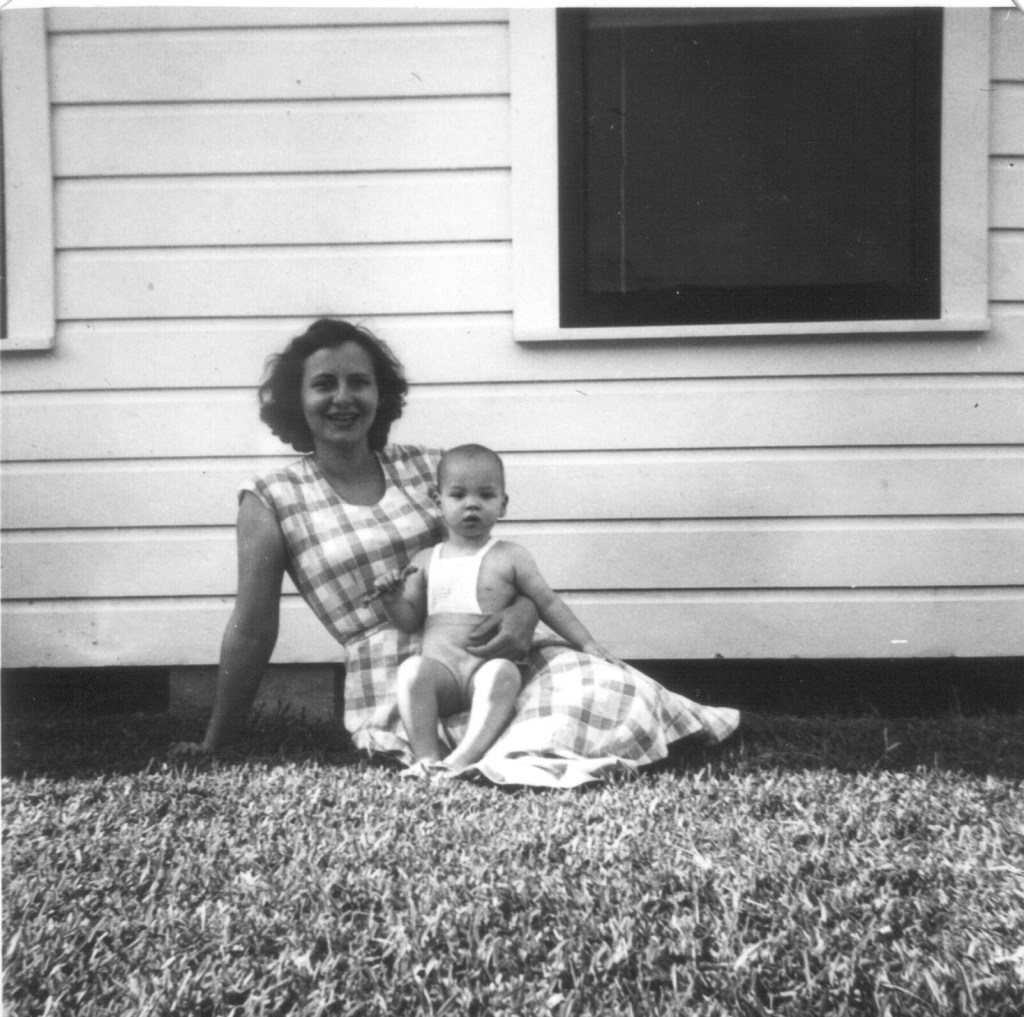
My father loved to travel and he took me and my brothers all over the United States. He was working on visiting all forty eight of the states that existed before he died. He took photos of me in museums and at historical sites from the time I was an infant in a baby carriage. He was happiest when he was seeing new places and excitedly teaching us about what we had seen. 

Just before my father died he lectured me to do my best in school. I had admittedly slacked off a bit and he had taken note of my lack of attention to my studies. He urged me to set goals and work hard and become the best of myself. He did not lecture. I saw his words as a sign of his love. When he died I became dedicated to carrying out the challenges that came before me. I suppose that I even became a teacher because somehow that is how I saw my father, a loving and exciting teacher who explained so much about the world to me. 

I still feel such a closeness to my father. When I travel I think of how much he would have enjoyed the places that I have visited. When I read a good book I wish I had the opportunity to discuss it with him. When I have to push myself beyond what I think I can do and then succeed I silently thank him for his sage advice. Isn’t it amazing how one person might have so much influence on a child that he lives on for decades as a guiding light. That is my father who lives in me even now. How lucky I have been.  

The Spirit of Confucius

Photo by Charl Durand on Pexels.com

“Our greatest glory is not in never falling, but in rising every time we fall.”

“The man who moves a mountain begins by carrying away small stones.”

“And remember, no matter where you go, there you are.” —Confucius

Who among us has never faced a situation in which we ultimately felt that we had done everything wrong? We chide ourselves for being failures and maybe even give up on whatever we had been attempting to achieve. The one act that left me feeling horrific for many years afterword involved the way in which I agreed to treat my mother’s mental illness the first time that her bipolar disorder raged to the point of depression and paranoia that frightened me. 

Looking back I have been able to ultimately forgive myself. I was quite young at the time, barely past the age of being legal to drink alcohol. I had never before experienced the confusing behavior of a person with mental illness. I knew nothing about doctors who offer care for such things. I was in fact groping in the dark while grieving that my mother was suffering in a most horrific way. Not even the adults with whom I conferred wanted to offer any kind of advice. I realized that I was on my own and would have to take a stab in the dark to make my mother well again. 

As it turned out I relied on the expertise of our family physician, which I suppose was a proper thing to do rather than bowing to old wives’ tales or the advice of laymen. He gave me the names of two psychiatrists whom he admired and I simply drew one of the names out of a hat. The doctor was kind enough to offer to help but instead of first seeing my mother in his office, he insisted that she had to be hospitalized immediately. (I would later learn that such a dramatic move was not necessary but at the time I had no way of knowing better.) 

It took some trickery on my part to get my mom to agree to go with me to the hospital. I did not like fooling her and just as I silently predicted the fact that I had not been totally honest when I conned her into signing herself in for treatment would haunt our relationship forevermore. Still, I was unable to think of any other way to get her the help that I believed she needed. 

Once she was in the hospital the doctor took over and to a large extent used psychology to get me to agree to procedures that I would later learn were not really necessary. Sadly the experience was so horrific for my mother that she found it difficult to trust me from that point until the day that she died. Part of her loved me in spite of what she saw as a betrayal and the other part allowed her motherly love to overcame the hurt that she felt. 

The next time that she became ill, and there were many next times, I was more mature and sure of myself. I set out in search of a doctor for her, taking time to insure that he or she would try to heal my mother without hospitalization and procedures that would terrify anyone. After speaking with many psychiatrists and asking them many questions I decided to take her to a doctor who had listened to my concerns attentively and who explained that he used a different approach to helping his patients than the person who had first treated my mom. He explained that different medical schools pushed different practices and as such he turned out to be exactly the physician that my mother needed. He treated both her and me with respect and she had a very long term and successful time with him. He had shown a willingness to help heal slowly and under my care in a home setting. It was a good match all the way around. 

Still, I carried feelings of guilt until my daughter was studying to be a nurse. By happenstance a discussion arose about the care of mental illness in one of her classes. She described the journey that my mother and I had taken together in the quest to keep Mama well. She furthermore described the horror of the first attempt and the subsequent negative feelings that I had carried for decades. The professor’s response was the the remedy that I had needed for so long. 

She explained to the class that dealing with a loved one who has a mental illness is one of the most difficult medical situations that we might ever encounter, especially if we have not had any previous experience with it. She insisted that even the medical teams who work with such individuals sometimes feel as though they are groping in the dark as they attempt to find the proper treatments for each individual. She told my daughter that I had done what I had to do to keep my mother from delving more and more deeply into the dark pit that was consuming her and that ultimately the initial treatment that she endured had obviously saved her. She applauded me for learning how to tailor future treatments to my mother’s feelings and needs and told the class that I was the kind of hero that doctors not often see. 

I am not writing about this to boast that I am somehow a terrific person but because the journey with someone who is afflicted with mental illness can become so dark and confusing that there are times when the individual seeking care for them is unable to decide whether what they are doing is good or bad. Everyone will experience deep emotions and mistakes will be made. The point is to rise again and be willing to keep trying for the sake of the person who is afflicted. In the end they are the ones who are feeling an indescribable and deep pain for which there is often no permanent cure. Their lifetimes become defined by the symptoms of their illnesses with moments in between when they find themselves again. It is important that we focus on them rather than our own failings. What we need is the strength and willingness to keep moving sometimes slowly forward and sometimes slowly backward. All the while we would do well to remember that the spirit of Confucius’ wisdom is cheering us on.