A Mind Is A Terrible Thing To Waste

lead_largeWe humans have a need to control our environment, to fix things that appear to be broken. All in all that is an admirable trait until it gets out of hand, which it often does. Then we become almost obsessive in our desire to find a kind of perfection in the world around us. We craft rules and laws hoping to improve everyone’s lives. Most of the time our motives are not evil or selfish. Our intentions are generally good but we sometimes miss the mark. Sadly we have a tendency to stick with our plans even when it becomes apparent that our ideas have not worked as intended. We change a little of this and a little of that, complicating our lives just a bit more with each new layer, refusing to admit that maybe we have been moving in the wrong direction all along.

For the vast majority of history only the most wealthy and powerful individuals were afforded the luxury of an education. The sons of royalty were taught to read and to cipher and once in a great while even their daughters had tutors to show them how to unlock the mysteries of numbers and words. Most of the great unwashed millions were illiterate which made them less likely to change their economic status from one generation to the next. Eventually there was a realization that societies might benefit from having a more educated populace and more emphasis was placed on providing youngsters with the basics of reading, writing and arithmetic. Still, the average soul never went very far up the educational ladder, especially if that person was a woman or a minority. Up to and including my grandfathers, nobody in my family had gone past the seventh grade in their learning and my grandmothers were both functionally illiterate.

The dawn of the twentieth century brought a whole new attitude about schooling in the United States. The Industrial Revolution had highlighted the need for a more educated populace than the more agrarian work of the past required. When the United States joined in the conflict of World War I it emerged from the isolation that had mostly defined it since its beginnings. Leaders of the nation imagined a better future for everyone and it began in the classroom. Suddenly there was an interest in education for all unlike anything that had come before. Even the poor and women were to receive the basics needed for a literate society. The debate over what knowledge and skills should be included in a publicly funded system began in earnest and it has been raging ever since.

At first it seemed as though the efforts to teach the children of the nation went fairly well, fairly quickly. More and more youngsters were reaching higher and higher levels of education. My own parents not only graduated from high school but also went on to earn college degrees, a rather amazing feat given the almost non-existent levels of education of their parents. Still there were numerous individuals within their generation who attended school only until they felt a need to drop out and begin working, sometimes as early as middle school. Blacks went to poorly funded schools that were segregated and rarely equal in the quality of supplies and books and programs being offered. There were still many reasons to note that we had not reached our goal of universally equal and excellent schooling for all.

By the time that I was in school the civil rights movement was in full bloom, highlighting the need for integration and fairness for everyone. More and more people began to take completion of high school for granted and enrollment in colleges began to increase. Nonetheless, there was a general feeling that we were still behind our counterparts from around the world. Educational research began in earnest and methods for improving schools were incorporated inside classrooms. We pushed not just to have bodies in the seats but to create real participation in the learning experience, to have teachers who inspired and created lifelong learners.

I mostly loved going to school. My teachers were dedicated individuals who had few supplies and little in the way of technology. They made up for the lack of such things with enthusiasm. I recall feeling relaxed in my classes and enjoyed the laughter that was always a part of the ones that were the most enjoyable. We had a few standardized tests here and there but very little mention was ever made of them so we took them without worry. Somehow they were a mysterious aspect of the school year that had no real meaning in our lives, at least that’s how it felt to me. It was only when we reached the moment of taking college entrance exams that we felt the pressure of achieving a particular score and even then most universities were less concerned about how we had done on a three hour test than what kind of effort we had demonstrated over the course of our four years in high school. In other words, my generation was somewhat spared the angst of continual standardized testing.

I became a teacher because I literally loved the magic of the academic process that had taken place in the schools of my youth. They made me feel happy in a strange kind of way. I wanted to help transfer my own joy of learning to the next generation. For a time it was a most rewarding way to earn a living but slowly the idea of measuring the success or failure of every aspect of education began to take a stranglehold on how things were done in classrooms. I initially supported the idea of requiring teachers to follow more stringent guidelines in the curriculum. As a result of such designs I received a more ready group of students each year. My job became easier because there were fewer gaps in learning than ever before. I believed that we were on the right track until the entire focus began to revolve around determining how well educators were sticking with the prescribed curriculum and that meant testing the students. Before long we were asking our kids to take tests to prepare for the tests. We had to throw out the fun lessons that took too long and push the students to keep moving forward even when we knew that they had not yet mastered the material. There was no time for lingering and sometimes not even for laughing. There would be a common assessment at a scheduled time. We all had to be ready lest we be judged to be poor teachers.

Now we seem to be stuck in an educational quagmire that is increasingly uncomfortable for our teachers, our students and even the parents. Every January campuses take on a sense of dread as the clock begins ticking in the countdown to the spring testing season. So much is at stake for everyone. Teachers will be appraised based on how well their kids do on the tests. Students know that the trajectory of their lives will move one way or another depending on their scores. Parents watch helplessly as their youngsters grow increasingly stressed. Administrators will rise in the ranks or be cast aside depending on the ultimate results of the children in their care. It is a situation in which few are happy and yet the insistence on adhering to high stakes testing continues unabated.

The cries for help are already appearing on the walls of Facebook and in blogs. A poet admits that questions on a seventh grade test about one of her works were too nebulous for her to answer correctly even though the words had come from her mind. A teacher recounts the horror stories that are pushing her out of the profession. A distraught parent wants to know why her child is so nervous and confused and why the teachers won’t slow down enough to allow her little one to master the materiel instead of moving from one topic to another at breakneck speed.

We have a sense that we have somehow gone astray and turned our educational system into a million dollar industry for testing companies rather than a place where learning is viewed as a pleasant experience. Our children have to be taught to think in a particular way so that they might beat the tests that they will take again and again and again.

We know that there are those among us who have the experiences that make them more likely to do well on those tests even without the instruction that they receive and others whose minds work differently who will overthink their answers and choose based on legitimate reasons that they are not allowed to explain on a bubble sheet. Our mathematics teachers are reluctant to give partial credit for answers that were calculated correctly but for one small error so that students who actually understand concepts are lumped with those who have no idea what they are doing. After all, the standardized tests will not differentiate between those who just need to check their subtraction on one step and those who have simply guessed and chosen the wrong response because they are clueless.

I don’t know what it will take to rid ourselves of this onerous situation which is forcing a generation of teachers, students and parents to become testing drones rather than thinkers. Perhaps instead of mounting a silent revolution with frustrated comments on social media we should all begin to insist that our voices be heard. Many groups are marching through the streets these days with their individual protests when the one cause that should unite us all is the education of our children. We should feel fervent in our desire to rid our schools of the plague that is killing the very liveliness and joy that should come with learning. It is in classrooms all across our nation that so many of the problems that trouble us begin. Our young women might feel more empowered if we quit subjecting them to tests that have been proven to favor their middle class male counterparts. Those who roam the streets of Chicago performing murderous acts might be more inclined to turn their attention to school if they were to find a more interesting atmosphere that is attuned to their needs rather than to constantly assessing how much they know. Our levels of poverty and unemployment will be greatly reduced if we work on providing our youth with real world skills that take note of their interests and talents rather than attempting to force them all to embark on STEM careers. It’s time that we demand that the lunacy of constant testing that is driving our entire educational system receive a major overhaul.

As the old saying goes, “A mind is a terrible thing to waste.” Right now we are sending far too many minds careening over a cliff. When will we insist that we have had enough?

The Crossing

children_crossingI stood at the corner just as I was told to do. It was early morning and the students were arriving on foot, in cars and on buses. I liked being all by myself because I was not yet fully awake. My post allowed me to enjoy the morning sunshine and organize my thoughts without the interruptions of the early risers who always seemed to be so boisterous and happy at an ungodly hour. It had been a last minute request from the principal. He needed to be certain that someone would be watching over the kids from that vantage point and he specifically wanted that person to be me. Luckily I had prepared my classroom for the day’s work the afternoon before so I wasn’t bothered at all by the unusual assignment.
I smiled quietly at the passersby. It was actually fun to watch the neighborhood on parade. It was a poor part of town but the people were vibrant and hopeful that theirs would be the last generation to know poverty. They sent their children to school full of dreams and most of the youngsters were responding well. Sadly gangs had infiltrated the area and often made plays for the same kids that the parents were working so hard to protect. Many of the leaders of those groups were my students. They generally behaved well in the classroom, attempting to fly under the radar lest they find troubles that might interfere with their after school work of plying illegal activities. Now and again one of them would be caught and sent to juvenile detention or even prison depending on age. I got along well with them and often let them know that I worried about them.

On that morning I saw many of them arriving at school as though their lives were totally normal. They waved at me as they passed and I felt secure in the knowledge that they might be safe for the next few hours while they were under our care.

I understood that danger was always a possibility. I had witnessed violent fights in the hallways that ended badly for those who became involved. I had talked students out of pursuing brutal encounters more than once. I knew that most of my kids were good-hearted and willing to defer to my wishes. Sadly they all too often found trouble once they left at the end of the day.

I liked standing at that crossing on that morning. It was a sunny day with almost perfect spring weather. I was in my element, ready to take on the challenges of the day whatever they may be. My time as a sentry was uneventful just as I had expected. I reported back to the secretary to assure her that all had gone well.

She sighed with relief when she heard my peaceful account, revealing that a tipster had alerted the school that a drive by shooting was planned for that corner on that very day. I wasn’t sure how to react to the disturbing news. I was certainly happy that nothing had happened but I wondered why I had not been informed earlier of the possibilities. I was stunned that I had been left all alone on that crossing when there was knowledge that I might witness or be victimized by violence. I laughed weakly as though I didn’t quite believe what she was saying and silently heaved a sigh of relief.

The more I thought about the incident, the more convinced I became that I had perhaps forestalled the plan because it may have been one of my students who had hatched the plot. Perhaps the perpetrator saw me and decided not to get me involved. I was still quite worried to think that such thoughts had ever occurred to anyone even if the entire incident had been nothing more than a prank. Knowing that innocents and I had been so close to danger bothered me for many weeks.

My situation became the subject of dark humor among my colleagues. We had learned to laugh at even the most dire events. It was our way of surviving much like the doctors and nurses of M.A.S.H. teams. One of my coworkers told her husband about what had happened and after that he showed up in his police car every single time I was on duty. He would flip on his siren for a few seconds and tease me about potential crime. I soon enough figured out that he was watching over me without drawing attention to his kindness. We shared that private joke even though I think we both knew that his patrol was deadly serious.

So many of my former students ended up in the penitentiary. I always cried when I learned of their fate. It was such a waste of intellect and talent and basically good souls. I knew that immaturity and a need to belong had most often prompted their thug life. I preferred hearing the stories of those who had managed to find their way out of the maelstrom. There were many who ultimately found success as firefighters, police officers and soldiers in the military. They belonged to new brotherhoods that gave them hope. Some of them came back to tell me of their success. I was moved by the hard work and determination that they had exerted to set themselves free.

I can still envision that morning at that school crossing. I’d like to think that all of our children will always be as protected and safe as they were on that day. Sadly the realities tell me that there are still so many innocents who become victims of poverty, ignorance and warring gangs. In Chicago the problem is so horrible that we have difficulty even knowing what to do to stop the violence. It is an awesome task filled with danger but we have to try.

One of my former students who seemed to be inextricably tangled with local gangs managed to eventually extricate himself. When I asked him how he found the courage to walk away from the ugliness of it all he explained that it was faith that brought him through. The faith that his parents had in him even at the lowest point made him realize that he already belonged to a loving family and he did not need the outside forces that taunted and tempted him. The faith of teachers who saw the positive aspects of his personality and intelligence helped him to understand his own potential. The faith of the members of his family’s church who prayed for him even when he seemed lost convinced him that there was a power greater than the thugs with whom he had allied himself. The faith of an assistant principal who refused to allow him to throw his life away made him see that he had never been alone. Ultimately he felt the power of that faith and began to believe in himself as well. He turned his life around and left the ugliness of the streets for good.

Each of us has a responsibility to our young. Sometimes it begins by being present at a crossing where they begin to learn of the strength that they have within themselves. We cannot simply give up on them because they have made mistakes. It is with the weakest among us that we have the most potential to change the world. Each of us has to try. We never really know how important a simple act of kindness or encouragement may impact a human soul. We need to be there to see them walk safely across.

Why We Love “This Is Us”

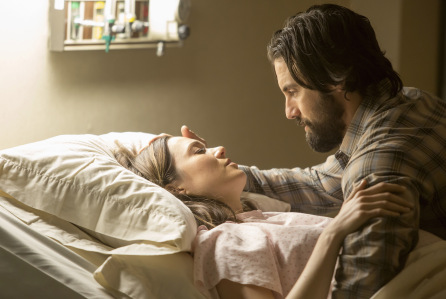
This Is Us - Season PilotJack, Rebecca, Kate, Kevin and Randall visit living rooms all across America on Tuesday evenings and the nation is in love with them. The hit series This Is Us tells the story of complex familial relationships through flashbacks and the present. The show provides us with a look at the dynamics of an unusual family that manages to seem so real and so much like us. It has stolen the hearts of fans and critics alike. After each new episode Facebook and Twitter fill with commentaries from devotees whose emotions have been aroused once again by the sheer humanity of the writing and the acting of the ensemble cast, but there is more to the This Is Us phenomenon than talent. There is something so relatable about the characters and stories that it reaches deep into our psyche’s and pulls out thoughts and feelings we have experienced in our own lives. It is so very real.

The series begins with Jack and Rebecca, a young couple very much in love but struggling with the fears that are part and parcel of married life, a lack of ample funds, worry about differing beliefs and the surprise of becoming the parents of triplets. Almost immediately there are kinks in their best laid plans that both strain and bless their lives. Their family’s journey into the present day is littered with the ups and downs that we all experience. Sometimes they seem to hit home runs with their wisdom and at other times they fall far short, creating damaging secrets and hurts that affect everyone.

Kate, Kevin and Randall are the children. There is a brilliant twist in their story that I will not reveal lest I be a spoiler for those who have not yet tuned in to this acclaimed show. Kate struggles with her weight and more importantly, her confidence. She has fought the temptations of eating from her childhood, a difficulty made even more intense because her mother seems to her to be a perfect and exceedingly beautiful woman. Kate is giving and loving and never appears able to put her own needs before those of her brothers and even her boyfriend. She lives to please but finds herself continuously unhappy and confused about what her true role in life should be. She has her own beauty and talents but has subjugated them for so long that she doesn’t even appear to know that they exist.

Kevin is handsome and seemingly full of himself. When we first meet him he is an actor in a successful television series that is nonetheless ridiculously silly. He longs to be more than a shallow caricature and seeks a more serious part, quitting his steady job in a fit of pique. In spite of all of his attributes he is as unsure of himself as Kate. There is an emptiness in his soul that he doesn’t know how to fill. He relies on his family, particularly Kate, for the reassurances that he seeks.

Randall is the odd man out. He is far different from his siblings, highly successful and brilliant. He is the only one who has a family of his own with a gorgeous wife and two adorable daughters. Still, he too longs to know himself better and in his quest for his identity he discovers long buried secrets that test his relationships with the other members of his family. 

This Is Us charts the dangerous waters of real life. It holds up a mirror to the human experience in which we see our own reflections juxtaposed with those of the very believable and lovable characters. They are us with their sibling rivalries, bad choices, and deep devotion to one another. We laugh and cry with them each week because we understand both their pain and their triumphs, for we have walked in their shoes both as children and as parents. We understand what it is to muck up situations when our intentions are so good. We have felt the same slights and unwanted jealousies in our own relationships. We all seek the best of ourselves but too often fall short of expectations. Our lives are wrought with failures and victories. We pick ourselves up from defeat over and over again and keep trying because that is who we are and how we are made. We feel the pain and the joy of Jack, Rebecca, Kate, Kevin and Randall in the most gut wrenching ways. We root for them as though they are real. That is how good the writing and the acting on this show is.

Even with the hundreds of channels and thousands of twenty four hour choices that we have for our watching pleasure in today’s media driven world television is still mostly a vast wasteland. This Is Us is one of those rare jewels that becomes an instant hit from the first moment that we meet the incredible and believable characters. It is a grownup version of The Wonder Years in which the angst of childhood has matured into the difficulties of being an adult. Human imperfections and resolutions drive a narrative that comes to life in the hands of incredible actors like Sterling K. Brown, Milo Ventimiglia and Mandy Moore. Each week the ensemble cast provides us with a tour de force of raw emotion and laughter that we discuss over the water cooler and dining table until the next installment as though we are speaking about our own families.

At times I feel like Rebecca, a mom doing her best to provide her children with the finest possible upbringing but being equally unsure that I have done things properly. At other times I am Kate walking in the shadow of a mother who seemed to be perfection itself and two brothers who never really understood what it has been like to be a woman competing for attention with men. I have known Kevin’s frustrations and the sense that I might do better things with my life than I have already done. I have known the same feelings of being an outsider that stalk Randall. Mostly I have been totally and unapologetically in love with my family just as these characters are with each other. I know that at the end of the day no matter what has happened my brothers will be there for me and I for them. Together we share a bond built on a lifetime of adventures. It is who we are.

If you haven’t yet begun to watch This Is Us I highly recommend that you do so when it returns for the winter season. Previous episodes are now available for catching up with the story. Start from the beginning to better understand why they are who they are. You won’t regret letting this lovable family into your heart. Be sure to bring some tissue with you because the tears will surely flow as you tag along with them and recall your own family memories. Their story belongs to all of us.


A Girl Who Can’t Say “No”

stress-2.jpgI’ve always been what people might call a “good girl.” People pleasing is in my DNA. I work hard to make everyone that I encounter feel good. I rarely make waves even when it is apparent that someone is taking advantage of my good nature. I smile and ignore slights and continue to behave the way that I always have. I like the way I am. It feels nice to do for others rather than for myself.

The trouble is that now again I realize all too well that I am being used and abused in certain situations. Not everyone operates from good intentions. Of that I am all too aware and yet I often fall into such devious webs without saying a thing. I quietly fulfill the obligations that I so meekly accepted and then move on, wiser but still unwilling to say that one word that comes so reluctantly to my lips, “No!”

My mother was much like me. I suppose that I am the way I am because of her influence. She was an obedient and giving soul who would not hesitate to give someone in need her last dime. She exhausted her energy and bank account taking care of others. Then she experienced her first mental breakdown. Her symptoms were quite frightening to most people and only those who were exceptional human beings and the inner circle of people who loved her unconditionally were willing to remain steadfastly by her side.

Our home had always been a mecca for individuals who wanted to feel the warm touch of comfort that my mom was so good at providing. Our door was as open as her heart. She always made time for anyone who sought her counsel or a quick loan that would never be repaid. After Mama’s mind was attacked by bipolar disorder most of the hangers on and acquaintances were never to be seen again, even when she generously invited them for a visit. She rarely mentioned the abandonment that was so obvious nor the way people often avoided her, but she knew that it was happening. She felt lonely and hurt now and again and once even insisted that I was spending too much time emulating her old persona which had proved to be ridiculously naive. She suggested that I instead determine who would be my steadfast friends if I were to suddenly become a pariah to society. “Those are the people and causes that deserve your time. Just say no to everyone else” she advised.

Unfortunately I had already been programed to be the first to volunteer. I actually enjoy the feelings that come from sacrificing my own needs. There is a kind of selfish gain in doing for others. Of late, however, my energy is not as ramped up as it has always been. I am in my sixty eighth year of life and I have more and more limits on what I am able to give. I tire more easily and my income is fixed. I understand that I must be more selective in my generosity lest I reach a point when I am no longer able to share my bounty. I think of things that my mother told me in her days of madness and realize that there was often great wisdom in her words. I can’t be all things to all people and so I must choose my causes well.

Learning how to say “no” is a difficult task at my age. I mentioned in a Facebook post that I was going to try to do so and I found out that I am not alone in my quest to bring more balance into my life. I received a barrage of “likes” and confessions of the guilt that often comes with the simple act of refusal. One of the acquaintances that I most admire reminded me that “no” is a complete statement and requires no further explanation. She is one of the most giving people that I know and yet she fully understands that we are under no obligation to respond to every plea that we receive. In fact, if we attempt to do so our efforts will be far less effective or meaningful than if we carefully consider which causes are most important.

My sudden insight into developing a healthier attitude came about the time that my cousin was dying. I was so busy with a number of responsibilities that I had accepted that I never quite found the right moment to visit him. I assumed that there would be plenty of time to do so once my self imposed duties calmed down. Of course the scenario did not play out the way that I hoped it would. He died before I was able to wish him godspeed. It was a heartbreaking and illuminating moment for me.

I had been chasing my tail working for a woman who demanded more and more of my time without showing even a tiny bit of gratitude. When I missed a deadline during the week of my cousin’s funeral she became exasperated with me and insinuated that I had been out having a good time while she was holding down the fort. When I tried to explain the situation to her, she was unmoved. After many sleepless nights during which my anxiety level peaked at the thought of returning to work for her after the holidays, I found the answer. It was as if my mother was speaking from the grave. I knew that I had to stand up for myself and leave the situation that was rewarding in the work that I did but painful in the way I was being treated. I took a deep breath and resigned.

Of course I still feel the pangs of guilt and wonder if I should have set aside my concerns. I am a novice in the game of asserting myself. I keep wondering if I acted in haste and yet I have slept soundly since finding the courage to eliminate a worry that I never needed. I feel as though a gigantic weight has been lifted from my chest. I am quite excited about returning to a tutoring gig at South Houston Intermediate where the students and teachers treat me with dignity and appreciation. I am looking forward to having more time for my grandchildren and godson. I plan to make the calls and visits to shut ins that I have heretofore only spoken of doing. I will now be able to give more quality time to my father-in-law who has expressed more of a desire to see me as he becomes older and less able to get about.

We humans often lose our way by trying to do too much. There are limits for all of us and those become ever more apparent as we age or lose our health. We have a tendency to put ourselves in last place, forgetting that if we wear ourselves down we become less and less useful and happy. Our bodies and our minds constantly send us cues as to what we need. It is in our best interest to listen to the voices in our heads that make us anxious. They are the sentinels designed to warn us when we have taken on more than we can bear. Taking charge of our lives is not a matter of recrimination. It is a must. It’s time that we taught ourselves to stand tall and utter the most powerful word of healing that we possess, “No!”

Follow the Star

14521142994558_700It’s the first week of the new year and the holiday decorations are gone. Stores are filled with valentines and spring colors. It’s time to move on to the next phase of our annual celebratory calendar. So much for Christmas traditions. We have better things to do than linger over a long drawn out yuletide. Besides, we’ll have plenty of time to enjoy tidings of the season when the first hints of the big winter holiday return to our local emporiums somewhere around the end of July. For now it’s time to pack away our memories of Christmas 2016 and plan ahead without sentimentality.

It wasn’t always so. There was a time when we were more likely to follow the lead of our European and South American counterparts who extend the holiday revelry through January 6. The full Christmas story as recalled in the Bible included the arrival of the three wisemen (or kings, if you wish) who followed a star in the east to the stable to honor the newborn who would eventually change the world. In the liturgical calendar that event is remembered on the feast of the Epiphany. In many parts of the world the twelve days of Christmas include holidays and celebrations from December 25 until January 6. The traditions and parties will continue in those places long after we North Americans have stored away our holiday boxes in closets and attics. 

When I was growing up my mother always left our Christmas tree in our living room until after January 6. We may have returned to school and work but the warm glow of twinkling lights and the aroma of pine greeted us upon our return home. My brother Michael was born on Three Kings Day so we had a big celebration that included gifts for him and a final opportunity to enjoy the joyfulness of the season. Only after that auspicious occasion did we turn our tree into lumber for the neighborhood fort that the kids always built with recycled firs and pines.

I’m not sure when we changed our ways and became more and more anxious to divest ourselves of the tinsel surrounding Christmas as soon as the sun had set on December 25. Perhaps it is because most women work now rather than keeping the fires burning at home. The pace of our lives is so swift that we need to return to our normal routines without fanfare and we can’t countenance the complications of extraneous accoutrements lingering in our homes for too long. More often than not, most of the things that we associate with Christmas are gone by the end of January 1.

I have a few friends who defer to the traditions of old. They enjoy the trappings of the season well into the middle of January. Their friends and neighbors often view them with a bit of derision and assume that they must be lazy folk rather than traditionalists. In reality they have become rebels of sort in their insistence on following a more leisurely calendar. I have to sadly admit that I left their ranks many years ago because I knew that I would have little time for the luxury of lingering over the holidays once I had to go back to the classroom where I worked. 

I was in Austria at the dawn of 2005. I stayed there until after January 6. I noted how the season remained in full bloom throughout the first week of the new year, climaxing in parades of young children moving from house to house dressed as the wise men. The people marked the occasion with lettering on their doors indicating that the children were welcome to come. They passed out treats and ate special meals. The custom was delightful and made me a bit jealous that we did not have such traditions in my own country.

My husband grew up with a Puerto Rican father who followed the ways of his native land. He remembers receiving a special gift on January 6 that did not come from Santa Claus or his parents but from the Three Kings. He says that the Epiphany was as exciting as December 25 in his home. There were prayers and visits to church to honor the miracle of the savior’s birth.

It has been a very long time since I have kept my Christmas spirit alive past January 1. I am always ready to move on with the rest of my neighbors and friends. I usually want to put the clutter of decorations back into storage and focus on my resolutions which tend toward accomplishments rather than reflections. For whatever reason, however, I have found myself wanting to end the season a bit more slowly this year. I like the idea of returning to the traditions of my youth. I have decided to keep my two Christmas trees looking bright and cheery until at least next week. I plan to honor my brother on January 6, just as I always have but also to spend time contemplating the miracle that happened so long ago in Bethlehem. Like the three kings who brought gifts to the Christ child I want to perform more acts of kindness and sacrifice for my fellow man. 

The very part of the world where Jesus was born and later preached His message of love is a powder keg today. There is much suffering and uncertainty in the Middle East. In our own country Chicago has become a murder capitol with over seven hundred killed in a single year, many of them innocent children. All of us long for answers to the problems that plague mankind. We want to stop the senseless violence but don’t really know how. Perhaps if we were all to slow down just enough to meditate on why we celebrate each year and why we shouldn’t rush the process, we might find our way once again. By remembering the true meaning of the historic events of over two thousand years ago we may find the keys to spreading the true Christmas spirit across the globe. We don’t need to hurry back to normal. Instead we should extend the generosity of the season for as long as we can. Don’t be so hasty to put it all away. Those lights are a symbol of the powerful force of sacrifice and kindness that we should all strive to emulate regardless of our individual beliefs. Be inspired this year to take the time to go out of your way to follow the star that leads to goodness and joy.